
Southlake Academic Family Health Teams Doing It Better
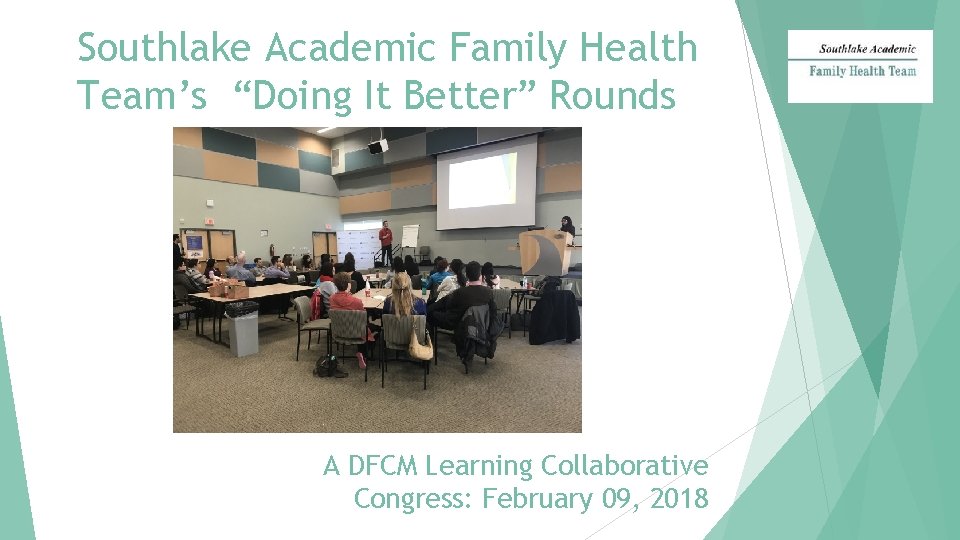
Southlake Academic Family Health Team’s “Doing It Better” Rounds A DFCM Learning Collaborative Congress: February 09, 2018
Patient Safety Leadership Team Dr. David Makary, Quality Improvement Director, Family Medicine Residency Program Ø Dr. Gurpreet Mand, FMTU Faculty Ø Dr. Monica Nijhawan, Site Director, Family Medicine Residency Program Ø J. C. Kirk, Executive Director, Southlake Academic Family Health Team Ø
Our Beginning Ø SAFHT collected and reviewed patient safety incidents arising from our FHT employed administrative staff and IHP Ø Reviewed/actioned upon by SAFHT’s executive director and medical director Ø While efforts had been made to ensure this was conducted within a safe and just culture, we recognized that a team approach was missing if the goal of patient safety improvement was to truly be disseminated across the entire organization.

Initial Goals Ø Learn from other Academic Sites. Of special thanks: Ø Sunnybrook Academic Family Health Team Ø Toronto Western Family Health Team Ø Build a sustainable project Ø Recognize capacity limitations of leadership team and our organization Ø Integrate patient safety into the culture of the organization, including our physicians and residents Ø Use our main site (academic site) as the initiator Ø Achieve an observable improvement in patient safety
Framework of our “Doing it Better” Rounds Ø Developed a communication strategy and rounds documentation (Excel Tracker and Power Point Template) Ø Goal: 1 hour rounds, 3 times per year Ø All sites invited, participation facilitated by webinar links Ø Guiding Principles: Ø Safe and Just Culture Ø Consistency and Fairness Ø Team Approach Ø Confidentiality
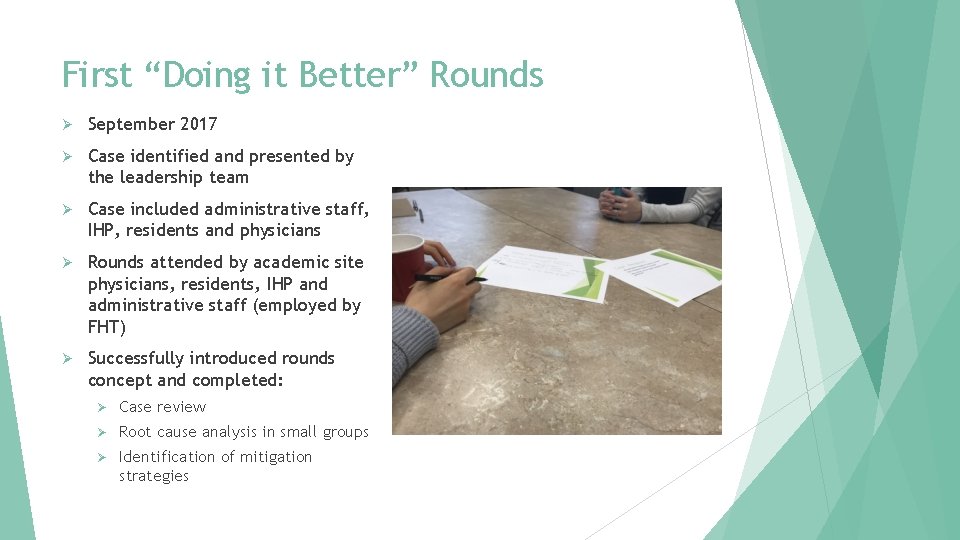
First “Doing it Better” Rounds Ø September 2017 Ø Case identified and presented by the leadership team Ø Case included administrative staff, IHP, residents and physicians Ø Rounds attended by academic site physicians, residents, IHP and administrative staff (employed by FHT) Ø Successfully introduced rounds concept and completed: Ø Case review Ø Root cause analysis in small groups Ø Identification of mitigation strategies
Results of First Rounds Ø Successes: Ø Participation from all teams (physicians, residents, IHP, admin) Ø Completed in one hour Ø Following the rounds, collaboratively developed a interim solution and a subsequent permanent solution to address the root causes identified Ø Lessons: Ø Barriers for webinar participation Ø Communication strategy had missed some individuals Ø Lack of participation from satellite sites Ø No feedback on rounds or tracking for statistical analysis
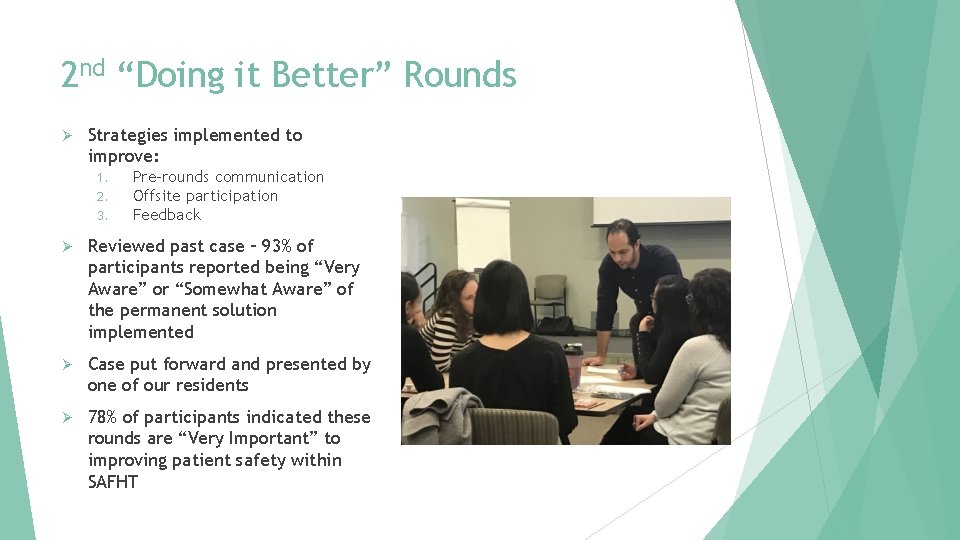
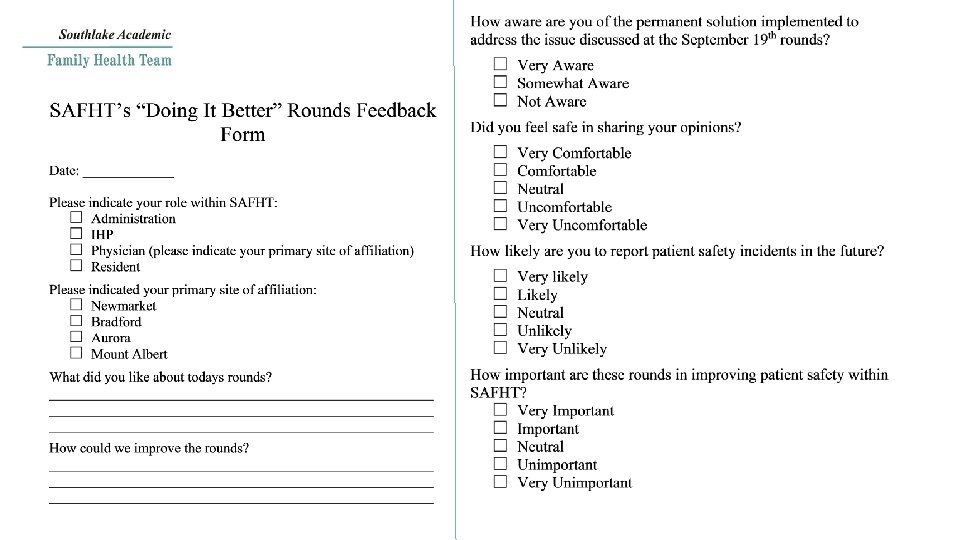
2 nd “Doing it Better” Rounds Ø Strategies implemented to improve: 1. 2. 3. Pre-rounds communication Offsite participation Feedback Ø Reviewed past case – 93% of participants reported being “Very Aware” or “Somewhat Aware” of the permanent solution implemented Ø Case put forward and presented by one of our residents Ø 78% of participants indicated these rounds are “Very Important” to improving patient safety within SAFHT
Future Direction Ø Continue Rounds Ø Cases Identification Ø Participation Ø Increase participation Ø Expand the Patient Safety Leadership Team Ø Expand the scope to include a review all patient safety incidents in the organization Ø Integration of “Doing it Better” Rounds with the Southlake Regional Health Centre
- Slides: 10