
SOUTHERN REGION FAASTeamArea 1 Approach and Landing Accidents

- Slides: 32
SOUTHERN REGION FAASTeam/Area 1 Approach and Landing Accidents Presented to: Clearwater Florida CFI’s & Pilots By: Dennis H. Whitley Date: March 1, 2011 Federal Aviation Administration
Approach and Landing Accidents • Over half of all accidents occur during these phases. • The leading accident factor for takeoffs and landings is loss of control (30. 2 % of takeoff accidents and 32. 8 % of landing accidents). • Other factors include obstructions, night operations, runway conditions and weather. Clearwater Florida December 6, 2008 March 1, 2011 Federal Aviation Administration 2 2
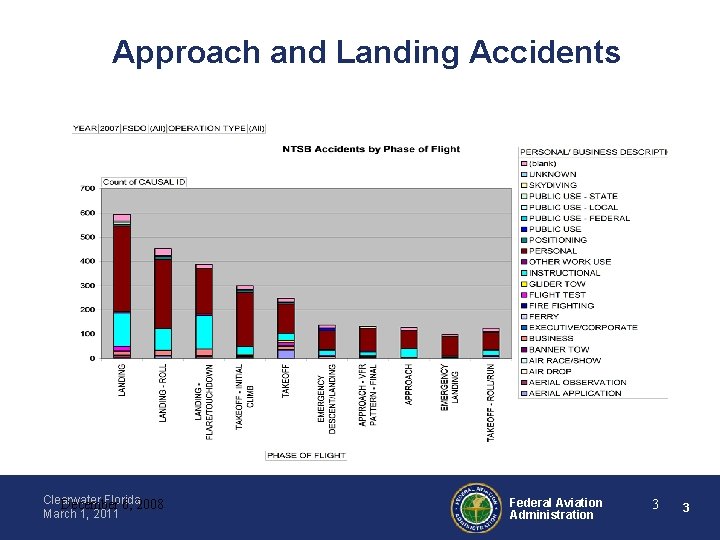
Approach and Landing Accidents Clearwater Florida December 6, 2008 March 1, 2011 Federal Aviation Administration 3 3
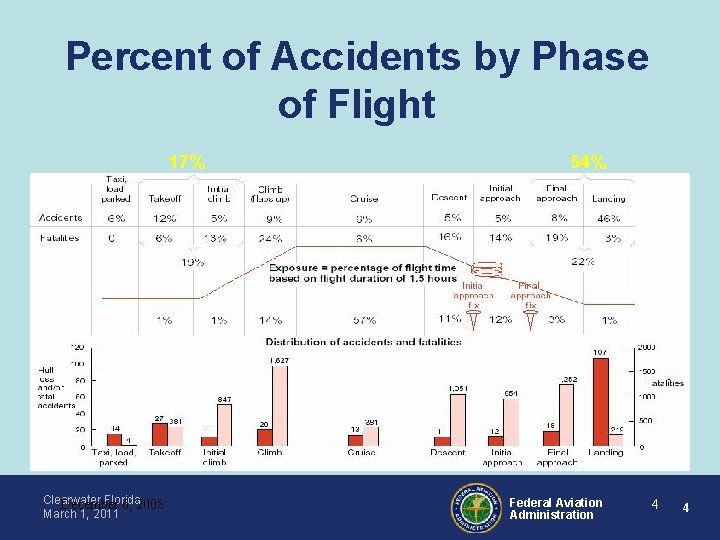
Percent of Accidents by Phase of Flight 17% Clearwater Florida December 6, 2008 March 1, 2011 54% Federal Aviation Administration 4 4
Approach and Landing Accidents • Major Factors To Consider – Lack of Situational Awareness - CFIT – Nonstabilized Approaches – Wind (Direction and Velocity) – Obstructions – Weather – Turbulence, Wind Shear, Microburst – Runway (Condition, Length, Slope) – Night (Decreased Visibility) Clearwater Florida December 6, 2008 March 1, 2011 Federal Aviation Administration 5 5
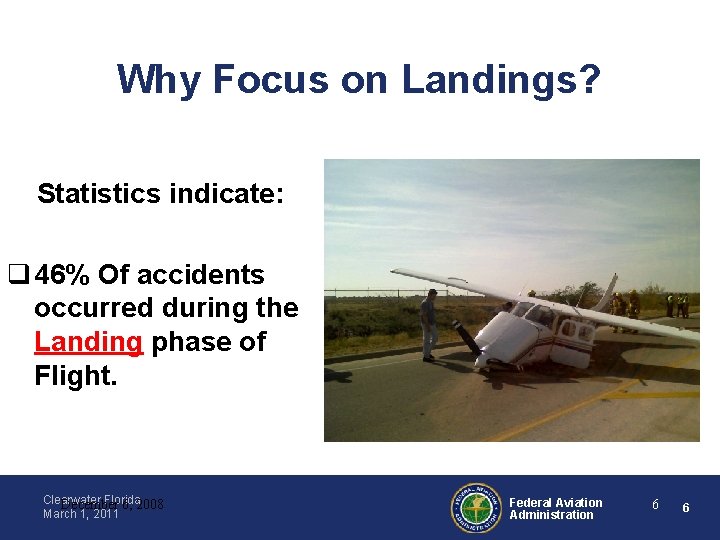
Why Focus on Landings? Statistics indicate: q 46% Of accidents occurred during the Landing phase of Flight. Clearwater Florida December 6, 2008 March 1, 2011 Federal Aviation Administration 6 6
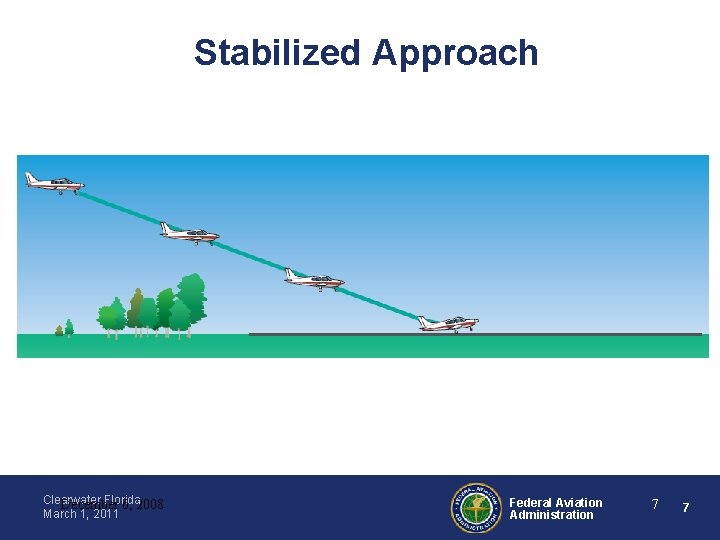
Stabilized Approach FAA-H-8083 -3 A Airplane Flying Handbook Clearwater Florida December 6, 2008 March 1, 2011 Federal Aviation Administration 7 7
Approach and Landing Accidents • The Stabilized VFR Approach – On Glide Path, On Airspeed • Profile –Approach Segment Airspeeds (Vref) – Downwind – Base – Final – Short Final Clearwater Florida December 6, 2008 March 1, 2011 Federal Aviation Administration 8 8
Landing - Common Errors Ø Un-stabilized approach. Ø Failure to allow enough room on final to set up the approach, necessitating an overly steep approach and high sink rate. Ø Too low on approach resulting in possibly landing short. Ø Too low an airspeed on final resulting in inability to flare properly and landing hard. FAA-H-8083 -3 A Airplane Flying Handbook Clearwater Florida December 6, 2008 March 1, 2011 Federal Aviation Administration 9 9
Landing - Common Errors (continued) Ø Too high an airspeed resulting in floating on round out. Ø Prematurely reducing power to idle on round out resulting in hard landing. Ø Touchdown with excessive airspeed. Ø Excessive and/or unnecessary braking after touchdown. Ø Failure to maintain directional control. FAA-H-8083 -3 A Airplane Flying Handbook Clearwater Florida December 6, 2008 March 1, 2011 Federal Aviation Administration 10 10
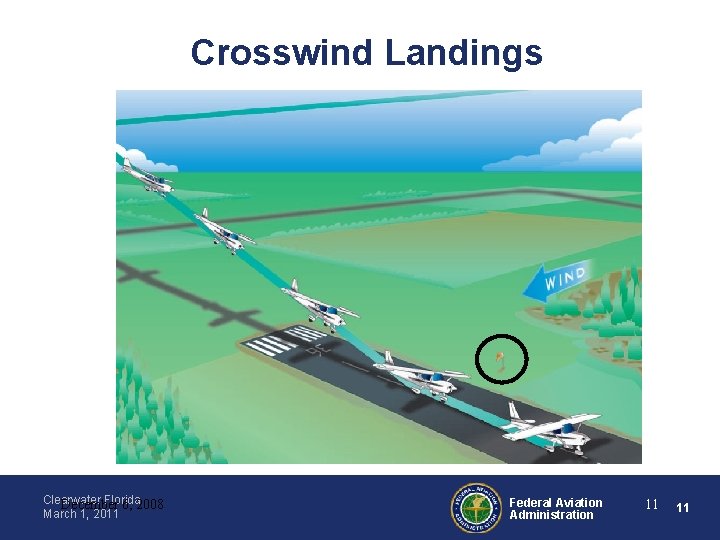
Crosswind Landings Clearwater Florida December 6, 2008 March 1, 2011 Federal Aviation Administration 11 11
Crosswind Landings Common Errors ØUnstabilized approach. ØAttempting to land in crosswinds that exceed the airplane’s maximum demonstrated crosswind component. ØInadequate compensation for wind drift on the turn from base leg to final approach, resulting in undershooting or overshooting. ØInadequate compensation for wind drift on final approach. FAA-H-8083 -3 A Airplane Flying Handbook Clearwater Florida December 6, 2008 March 1, 2011 Federal Aviation Administration 12 12
Crosswind Landings Common Errors (continued) Ø Failure to compensate for increased drag during sideslip resulting in excessive sink rate and/or too low an airspeed. Ø Touchdown while drifting. Ø Excessive airspeed on touchdown resulting in loss of control or excessive braking. Ø Failure to apply appropriate flight control inputs FAA-H-8083 -3 A Airplane Flying Handbook during rollout. Clearwater Florida December 6, 2008 March 1, 2011 Federal Aviation Administration 13 13
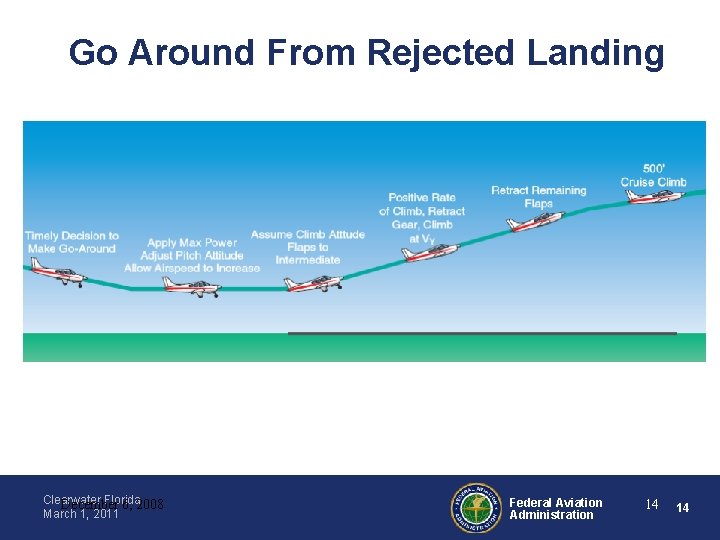
Go Around From Rejected Landing FAA-H-8083 -3 A Airplane Flying Handbook Clearwater Florida December 6, 2008 March 1, 2011 Federal Aviation Administration 14 14
Go Around Common Errors Ø Pitch attitude increased excessively resulting in a stall Ø Applying only partial power Ø Failure to reconfigure the aircraft (gear and Flaps) for climb Ø Retracting the flaps too quickly Ø Elevator trim (excessive forward pressures) FAA-H-8083 -3 A Airplane Flying Handbook Clearwater Florida December 6, 2008 March 1, 2011 Federal Aviation Administration 15 15
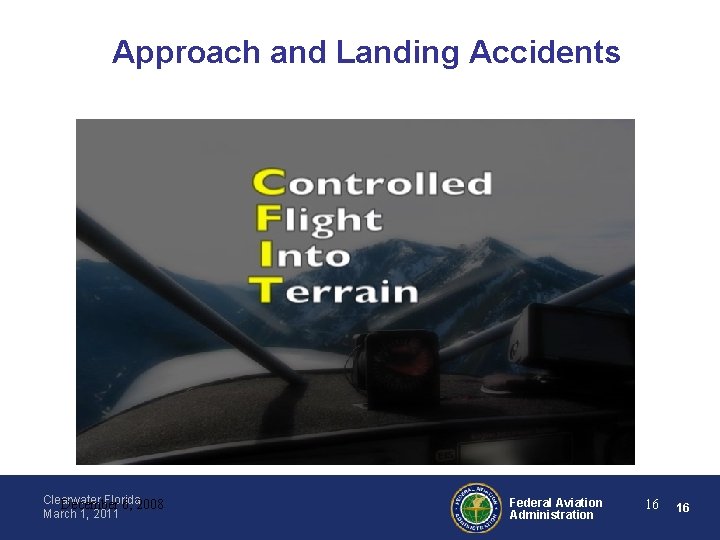
Approach and Landing Accidents Clearwater Florida December 6, 2008 March 1, 2011 Federal Aviation Administration 16 16
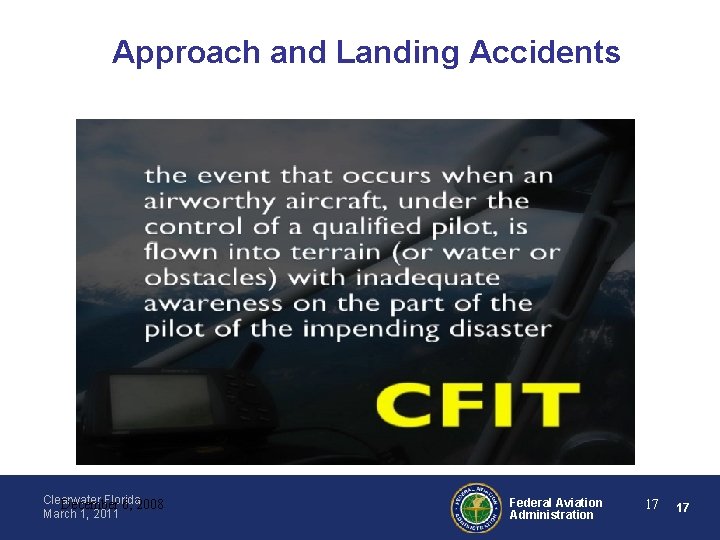
Approach and Landing Accidents Clearwater Florida December 6, 2008 March 1, 2011 Federal Aviation Administration 17 17
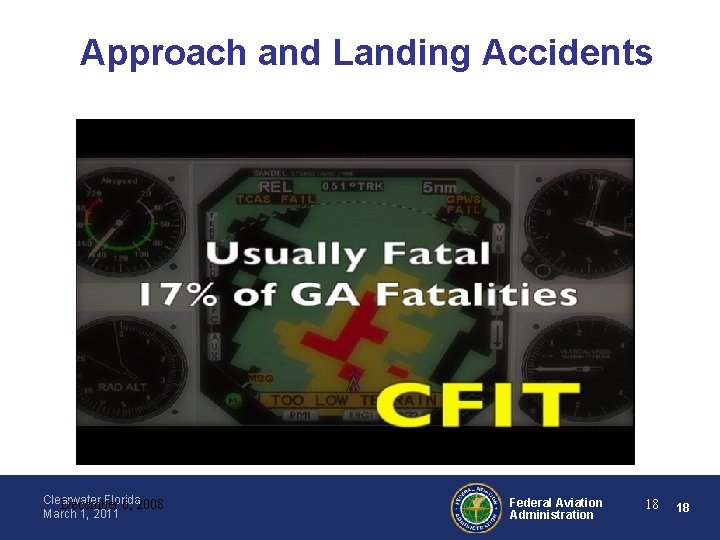
Approach and Landing Accidents Clearwater Florida December 6, 2008 March 1, 2011 Federal Aviation Administration 18 18
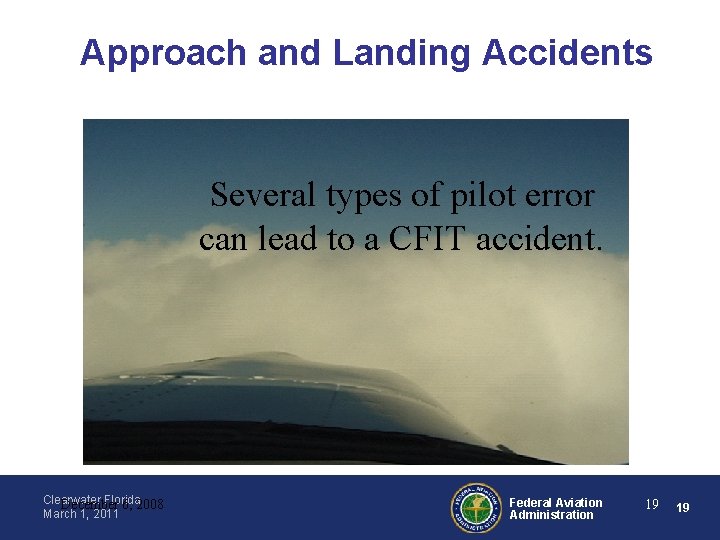
Approach and Landing Accidents Several types of pilot error can lead to a CFIT accident. Clearwater Florida December 6, 2008 March 1, 2011 Federal Aviation Administration 19 19
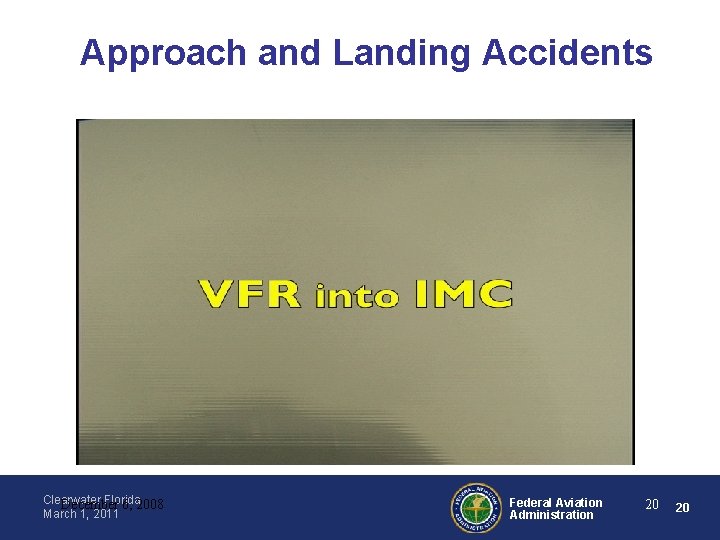
Approach and Landing Accidents Clearwater Florida December 6, 2008 March 1, 2011 Federal Aviation Administration 20 20
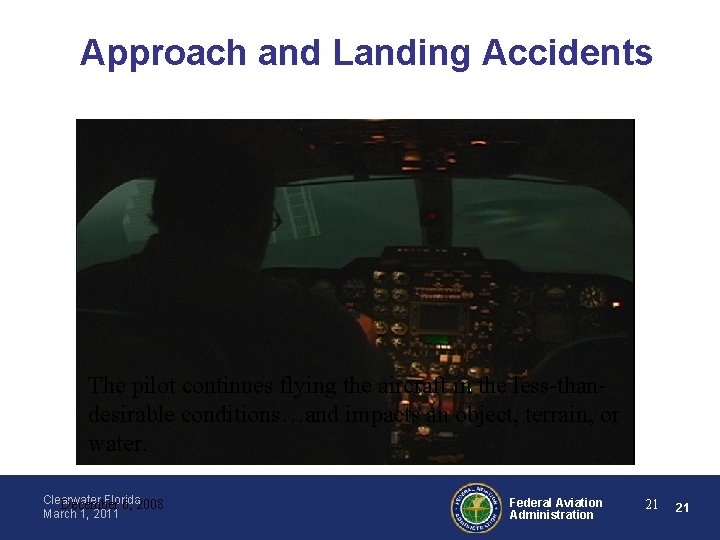
Approach and Landing Accidents The pilot continues flying the aircraft in the less-thandesirable conditions…and impacts an object, terrain, or water. Clearwater Florida December 6, 2008 March 1, 2011 Federal Aviation Administration 21 21
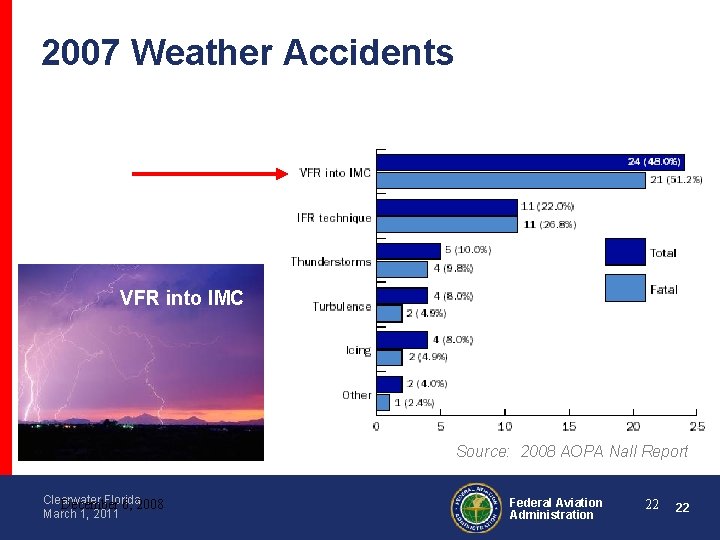
2007 Weather Accidents VFR into IMC Source: 2008 AOPA Nall Report Clearwater Florida December 6, 2008 March 1, 2011 Federal Aviation Administration 22 22
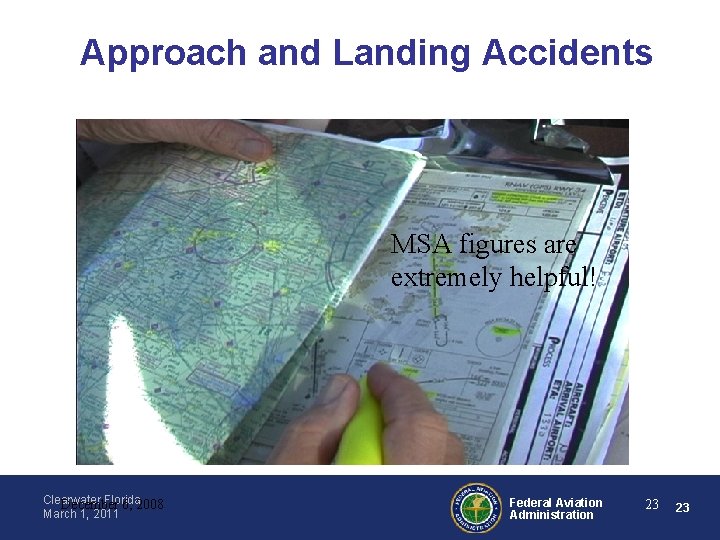
Approach and Landing Accidents MSA figures are extremely helpful! Clearwater Florida December 6, 2008 March 1, 2011 Federal Aviation Administration 23 23
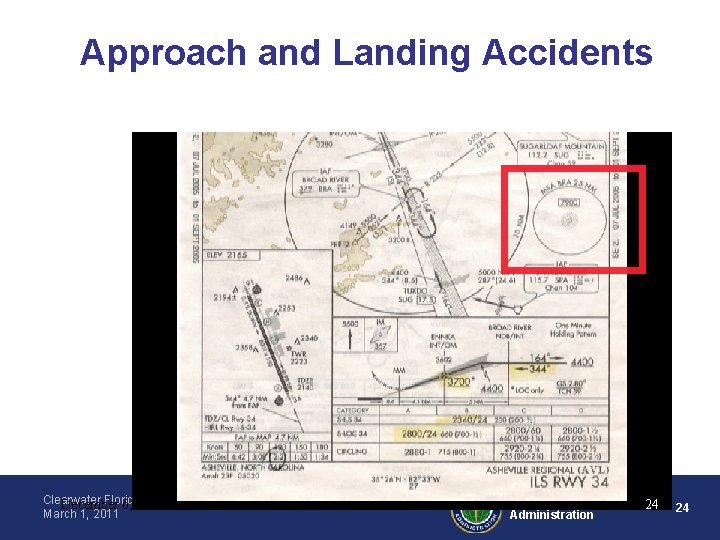
Approach and Landing Accidents • Know altitude and distance from landing airport • Be aware of your DA or MDA • Pay attention to the MSA Clearwater Florida December 6, 2008 March 1, 2011 Federal Aviation Administration 24 24
Approach and Landing Accidents • Controlled Flight Into Terrain (CFIT) • Key Factors – – – Situational Awareness – Active monitoring/scanning Weather – Marginal VFR or IMC Navigational/Communication errors Terrain Preflight Preparation and Planning Clearwater Florida December 6, 2008 March 1, 2011 Federal Aviation Administration 25 25
Approach and Landing Accidents Clearwater Florida December 6, 2008 March 1, 2011 Federal Aviation Administration 26 26
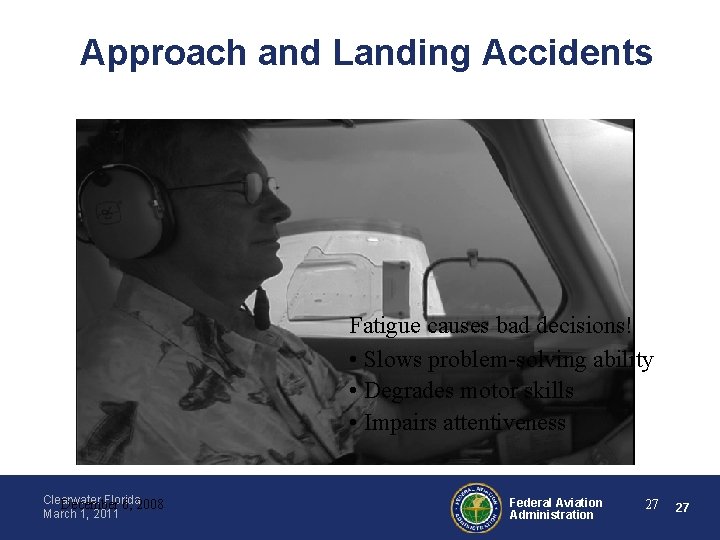
Approach and Landing Accidents Fatigue causes bad decisions! • Slows problem-solving ability • Degrades motor skills • Impairs attentiveness Clearwater Florida December 6, 2008 March 1, 2011 Federal Aviation Administration 27 27
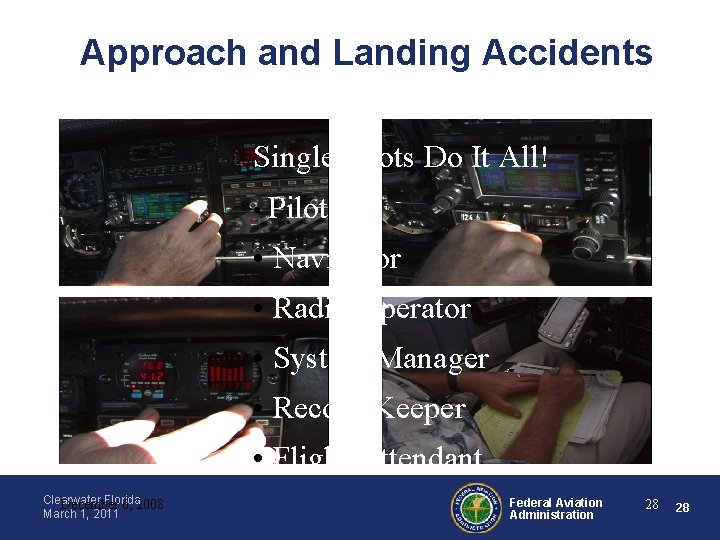
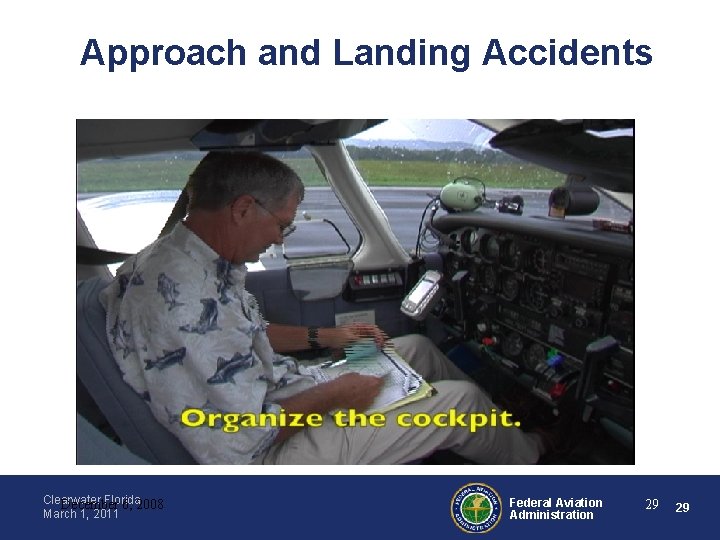
Approach and Landing Accidents Single Pilots Do It All! • Pilot • Navigator • Radio Operator • System Manager • Record Keeper • Flight Attendant Clearwater Florida December 6, 2008 March 1, 2011 Federal Aviation Administration 28 28
Approach and Landing Accidents Clearwater Florida December 6, 2008 March 1, 2011 Federal Aviation Administration 29 29
Approach and Landing Accidents • LESSONS LEARNED A current pilot and an airworthy aircraft can get into trouble. • The importance of preflight planning and preparation. • Night operations require extra planning. • Understand flap configurations. • Manage Your Focus of Attention. • Always fly the aircraft! Clearwater Florida December 6, 2008 March 1, 2011 Federal Aviation Administration 30 30
Approach and Landing Accidents • TRAINING SUGGESTIONS • Situational Awareness – Contingency plan for every takeoff and landing. • “Brief” the landing/go-around procedure, including flaps and airspeeds. • Review Graphs and Tables in the POH. • Teaching the Stabilized Approach - Profile • Practice emergency/evacuation procedures. Clearwater Florida December 6, 2008 March 1, 2011 Federal Aviation Administration 31 31
Thanks for Having Me!!! Clearwater Florida March 1, 2011 Federal Aviation Administration 32