
Southern California Forest Plan Revision and Environmental Management
- Slides: 17
Southern California Forest Plan Revision and Environmental Management Systems (EMS)
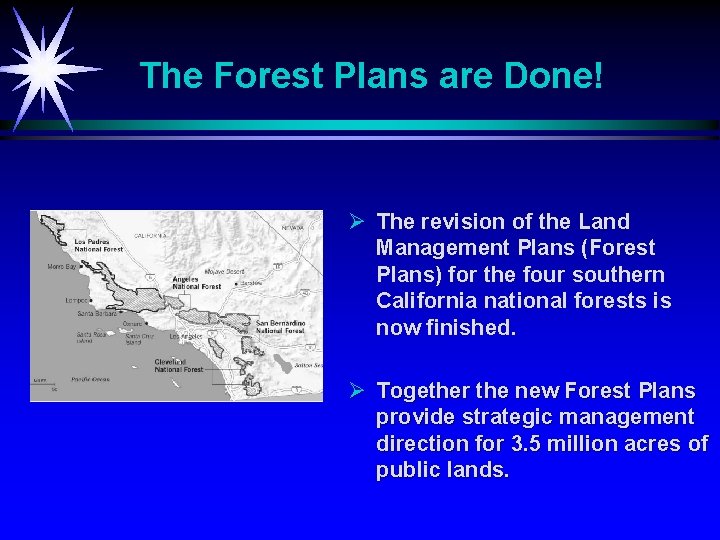
The Forest Plans are Done! Ø The revision of the Land Management Plans (Forest Plans) for the four southern California national forests is now finished. Ø Together the new Forest Plans provide strategic management direction for 3. 5 million acres of public lands.
Strategic Plans with no site specific decisions Part 1: Vision, Niche, Desired Conditions Part 2: Strategy to achieve Desired Condition Part 3: Design Criteria, Standards, & Rules
EMS is part of plan implementation Ø “EMS is a feature of planning and is the management framework that shows we intend to achieve the environmental objectives described in the Forest Plan. ” Fred Norbury
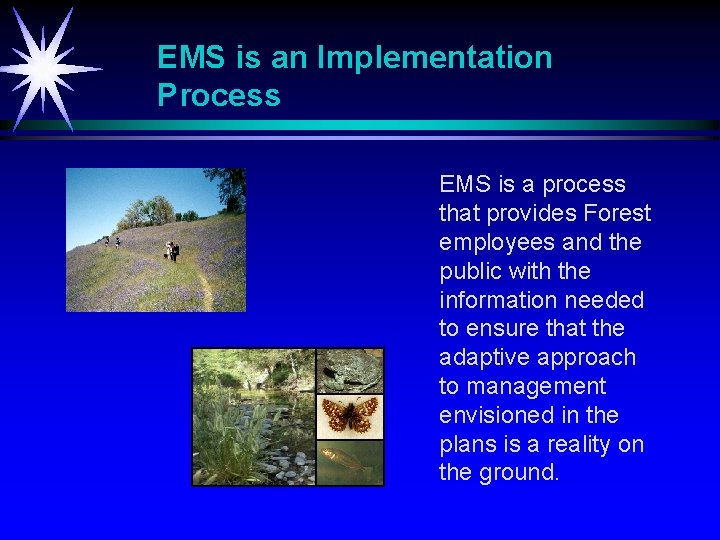
EMS is an Implementation Process EMS is a process that provides Forest employees and the public with the information needed to ensure that the adaptive approach to management envisioned in the plans is a reality on the ground.
Cleveland is the pilot Forest in R 5 for EMS ØForest Plan Revision in new format is in place ØCNF Staff Review Starts Next Week (Feb. 21 -23) ØEMS Ready for Document Review (April 10 -14) ØForest Starts to Implement (May – August) ØEMS Audit - August 2006
Process ØBuilt a ‘how to’ guidebook that shows how Forest Plan direction, FSM and FSH direction, annual program of work, and monitoring meet the requirements for the EMS standard (ISO 14001)
EMS Elements to LMP Crosswalk Ø Environmental Policy – Vision Ø Significant Aspects – Developed from a list of activities needed to meet the LMP Goals and screened for significance. Ø Objectives and Targets – Derived from Forest Plan Goals and Emphasis Programs Ø Operational Controls – Design Criteria Ø Monitoring – LMP Implementation and Effectiveness Monitoring Questions
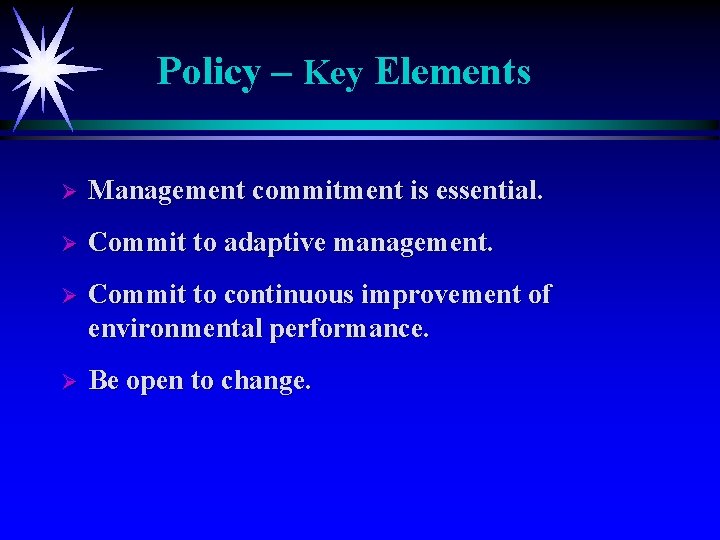
Policy – Key Elements Ø Management commitment is essential. Ø Commit to adaptive management. Ø Commit to continuous improvement of environmental performance. Ø Be open to change.
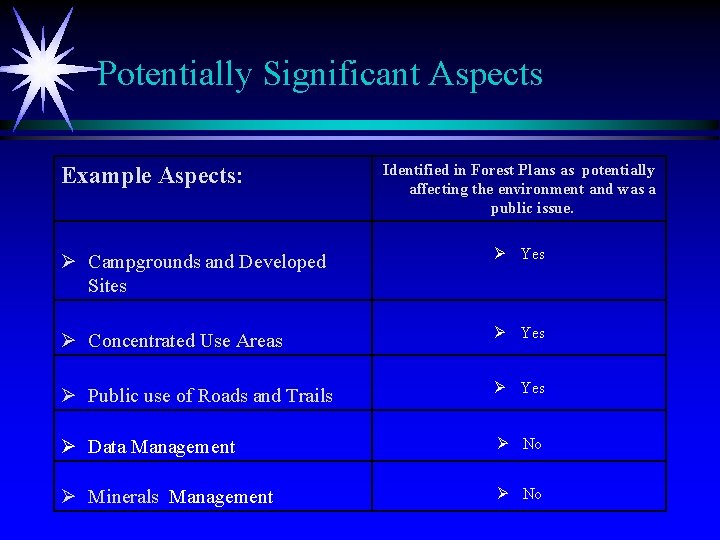
Potentially Significant Aspects Example Aspects: Identified in Forest Plans as potentially affecting the environment and was a public issue. Ø Campgrounds and Developed Sites Ø Yes Ø Concentrated Use Areas Ø Yes Ø Public use of Roads and Trails Ø Yes Ø Data Management Ø No Ø Minerals Management Ø No
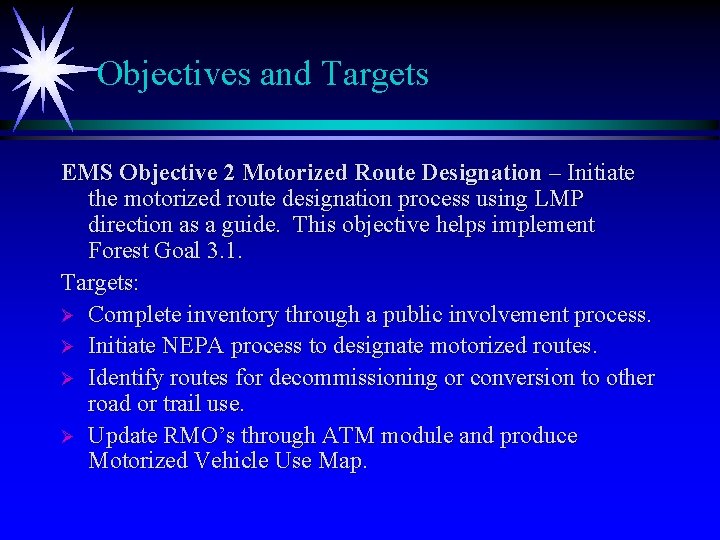
Objectives and Targets EMS Objective 2 Motorized Route Designation – Initiate the motorized route designation process using LMP direction as a guide. This objective helps implement Forest Goal 3. 1. Targets: Ø Complete inventory through a public involvement process. Ø Initiate NEPA process to designate motorized routes. Ø Identify routes for decommissioning or conversion to other road or trail use. Ø Update RMO’s through ATM module and produce Motorized Vehicle Use Map.
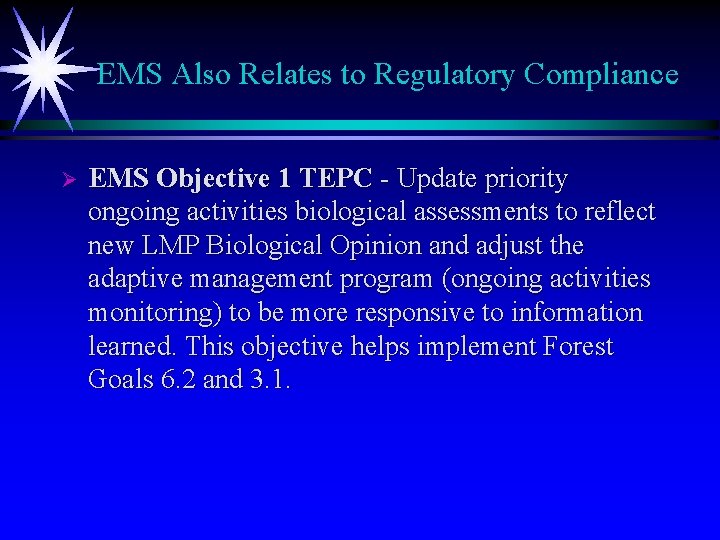
EMS Also Relates to Regulatory Compliance Ø EMS Objective 1 TEPC - Update priority ongoing activities biological assessments to reflect new LMP Biological Opinion and adjust the adaptive management program (ongoing activities monitoring) to be more responsive to information learned. This objective helps implement Forest Goals 6. 2 and 3. 1.
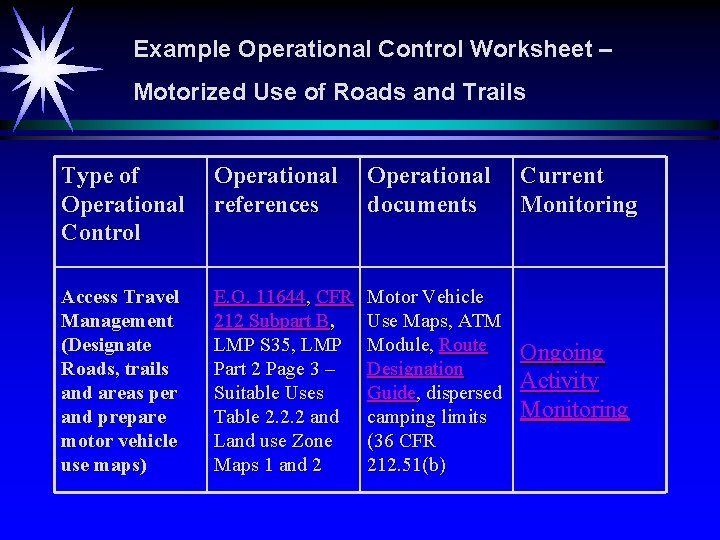
Example Operational Control Worksheet – Motorized Use of Roads and Trails Type of Operational Control Operational references Operational documents Current Monitoring Access Travel Management (Designate Roads, trails and areas per and prepare motor vehicle use maps) E. O. 11644, CFR 212 Subpart B, LMP S 35, LMP Part 2 Page 3 – Suitable Uses Table 2. 2. 2 and Land use Zone Maps 1 and 2 Motor Vehicle Use Maps, ATM Module, Route Designation Guide, dispersed camping limits (36 CFR 212. 51(b) Ongoing Activity Monitoring
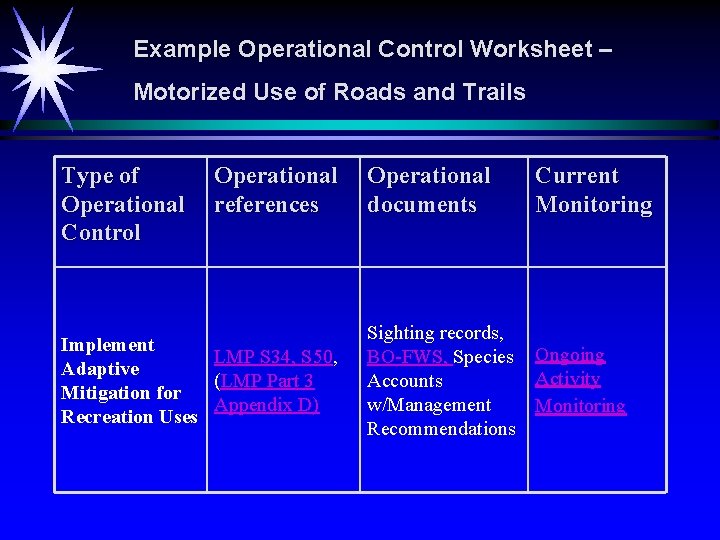
Example Operational Control Worksheet – Motorized Use of Roads and Trails Type of Operational Control Operational references Implement LMP S 34, S 50, Adaptive (LMP Part 3 Mitigation for Appendix D) Recreation Uses Operational documents Current Monitoring Sighting records, BO-FWS, Species Ongoing Activity Accounts w/Management Monitoring Recommendations
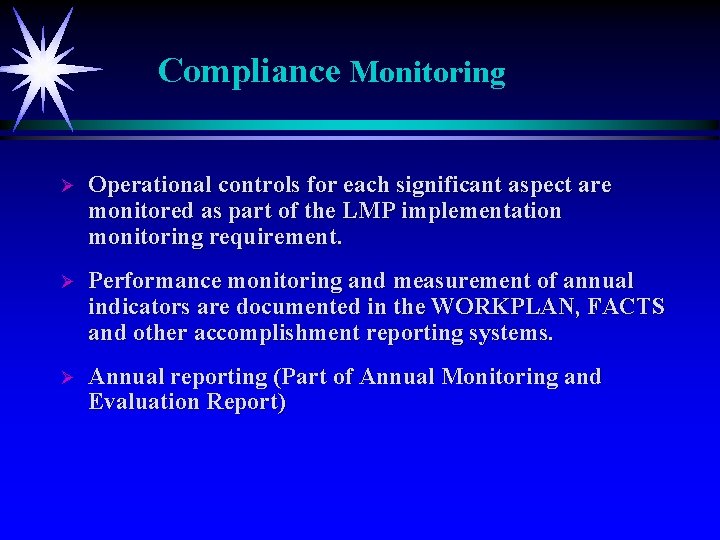
Compliance Monitoring Ø Operational controls for each significant aspect are monitored as part of the LMP implementation monitoring requirement. Ø Performance monitoring and measurement of annual indicators are documented in the WORKPLAN, FACTS and other accomplishment reporting systems. Ø Annual reporting (Part of Annual Monitoring and Evaluation Report)
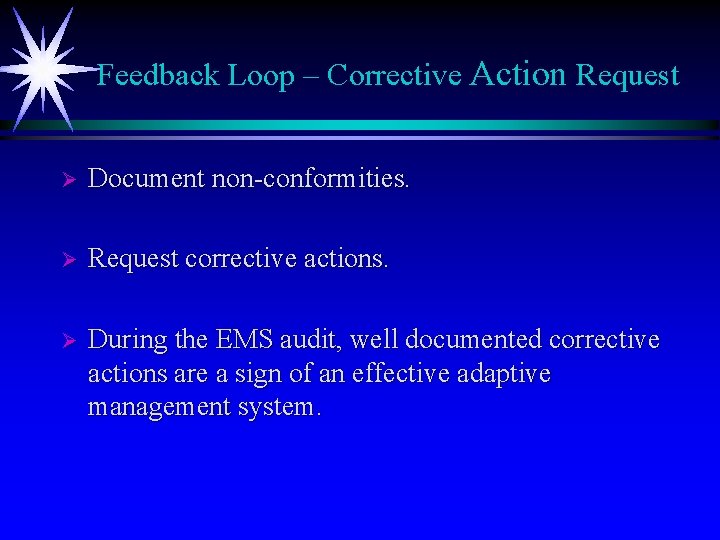
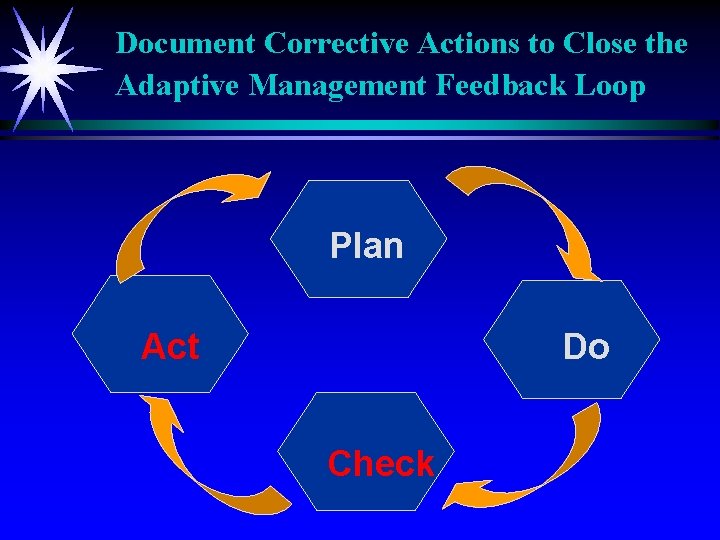
Feedback Loop – Corrective Action Request Ø Document non-conformities. Ø Request corrective actions. Ø During the EMS audit, well documented corrective actions are a sign of an effective adaptive management system.
Document Corrective Actions to Close the Adaptive Management Feedback Loop Plan Act Do Check