
South West MSK Rapid Access Clinics Primary Care


- Slides: 29
South West MSK Rapid Access Clinics Primary Care Webinar March 28, 2019
Objectives of today’s presentation 1. Status update: ü Process changes ü Onboarding requirements ü Launch dates 2. Answer your questions 3. Discuss our asks See the Appendices if you would like a refresher on the MSK Program. 2
What you need to know 3
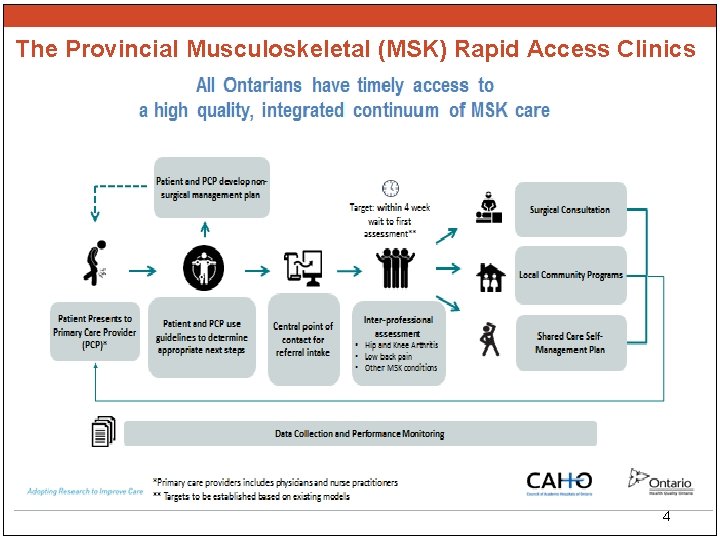
The Provincial Musculoskeletal (MSK) Rapid Access Clinics Program 4
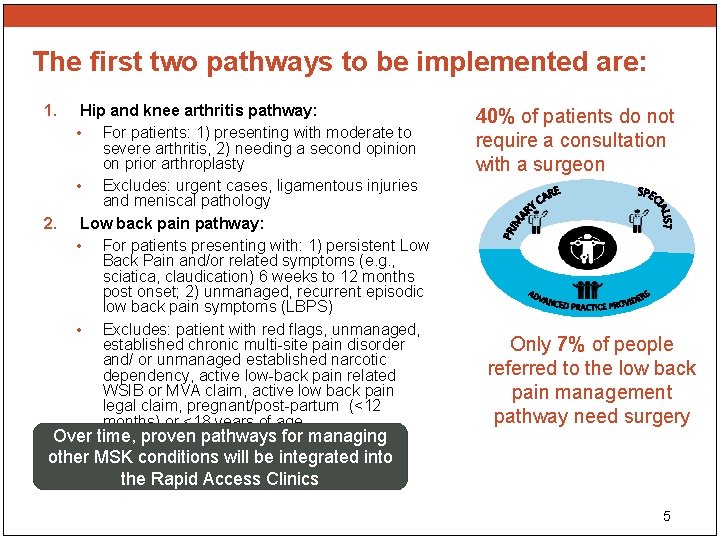
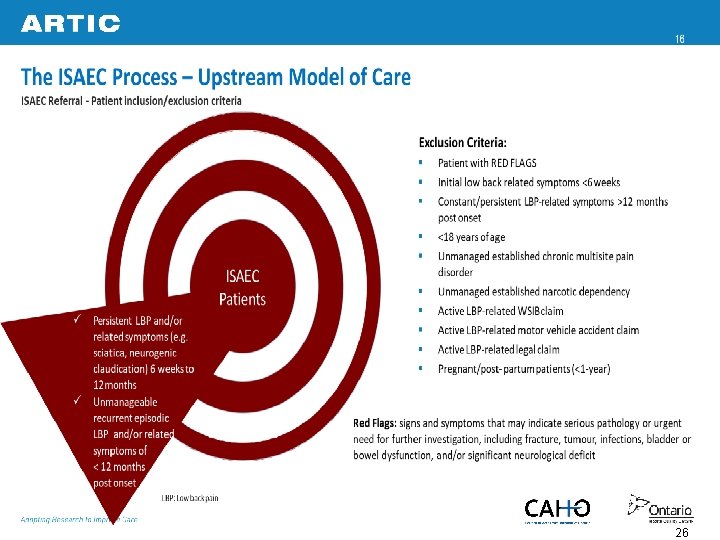
The first two pathways to be implemented are: 1. 2. Hip and knee arthritis pathway: • For patients: 1) presenting with moderate to severe arthritis, 2) needing a second opinion on prior arthroplasty • Excludes: urgent cases, ligamentous injuries and meniscal pathology Low back pain pathway: • For patients presenting with: 1) persistent Low Back Pain and/or related symptoms (e. g. , sciatica, claudication) 6 weeks to 12 months post onset; 2) unmanaged, recurrent episodic low back pain symptoms (LBPS) • Excludes: patient with red flags, unmanaged, established chronic multi-site pain disorder and/ or unmanaged established narcotic dependency, active low-back pain related WSIB or MVA claim, active low back pain legal claim, pregnant/post-partum (<12 months) or <18 years of age Over time, proven pathways for managing other MSK conditions will be integrated into the Rapid Access Clinics 40% of patients do not require a consultation with a surgeon Only 7% of people referred to the low back pain management pathway need surgery 5
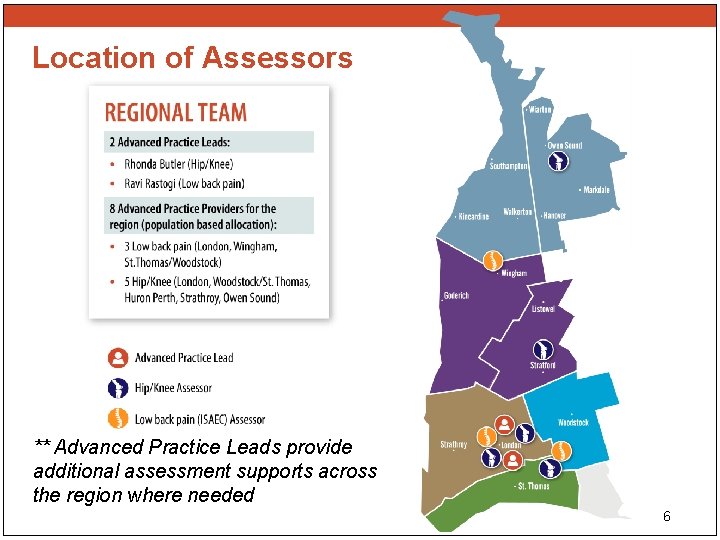
Location of Assessors ** Advanced Practice Leads provide additional assessment supports across the region where needed 6
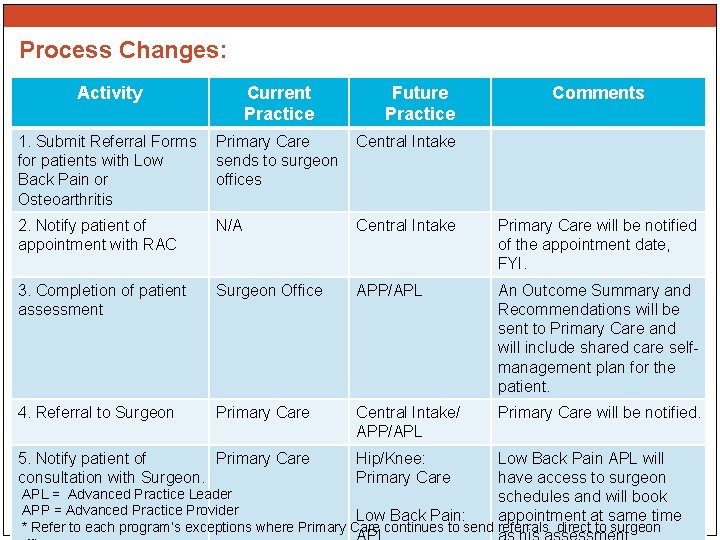
Process Changes: Activity Current Practice 1. Submit Referral Forms for patients with Low Back Pain or Osteoarthritis Primary Care sends to surgeon offices Central Intake 2. Notify patient of appointment with RAC N/A Central Intake Primary Care will be notified of the appointment date, FYI. 3. Completion of patient assessment Surgeon Office APP/APL An Outcome Summary and Recommendations will be sent to Primary Care and will include shared care selfmanagement plan for the patient. 4. Referral to Surgeon Primary Care Central Intake/ APP/APL Primary Care will be notified. Hip/Knee: Primary Care Low Back Pain APL will have access to surgeon schedules and will book 7 appointment at same time 5. Notify patient of Primary Care consultation with Surgeon. Future Practice Comments APL = Advanced Practice Leader APP = Advanced Practice Provider Low Back Pain: * Refer to each program’s exceptions where Primary Care continues to send referrals direct to surgeon
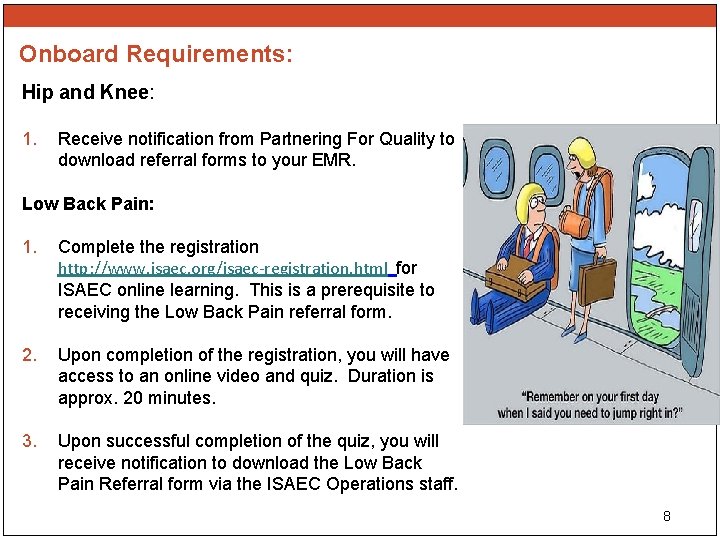
Onboard Requirements: Hip and Knee: 1. Receive notification from Partnering For Quality to download referral forms to your EMR. Low Back Pain: 1. Complete the registration http: //www. isaec. org/isaec-registration. html for ISAEC online learning. This is a prerequisite to receiving the Low Back Pain referral form. 2. Upon completion of the registration, you will have access to an online video and quiz. Duration is approx. 20 minutes. 3. Upon successful completion of the quiz, you will receive notification to download the Low Back Pain Referral form via the ISAEC Operations staff. 8
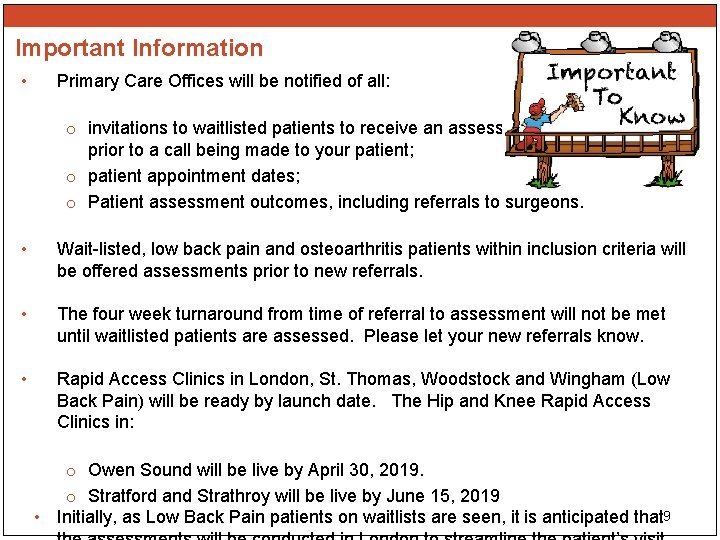
Important Information • Primary Care Offices will be notified of all: o invitations to waitlisted patients to receive an assessment prior to a call being made to your patient; o patient appointment dates; o Patient assessment outcomes, including referrals to surgeons. • Wait-listed, low back pain and osteoarthritis patients within inclusion criteria will be offered assessments prior to new referrals. • The four week turnaround from time of referral to assessment will not be met until waitlisted patients are assessed. Please let your new referrals know. • Rapid Access Clinics in London, St. Thomas, Woodstock and Wingham (Low Back Pain) will be ready by launch date. The Hip and Knee Rapid Access Clinics in: o Owen Sound will be live by April 30, 2019. o Stratford and Strathroy will be live by June 15, 2019 • Initially, as Low Back Pain patients on waitlists are seen, it is anticipated that 9
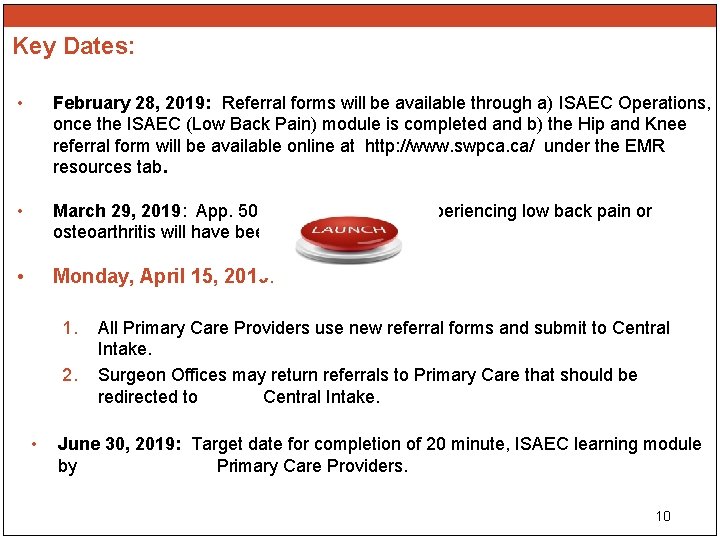
Key Dates: • February 28, 2019: Referral forms will be available through a) ISAEC Operations, once the ISAEC (Low Back Pain) module is completed and b) the Hip and Knee referral form will be available online at http: //www. swpca. ca/ under the EMR resources tab. • March 29, 2019: App. 50 wait listed patients experiencing low back pain or osteoarthritis will have been assessed. • Monday, April 15, 2019: 1. 2. • All Primary Care Providers use new referral forms and submit to Central Intake. Surgeon Offices may return referrals to Primary Care that should be redirected to Central Intake. June 30, 2019: Target date for completion of 20 minute, ISAEC learning module by Primary Care Providers. 10
11
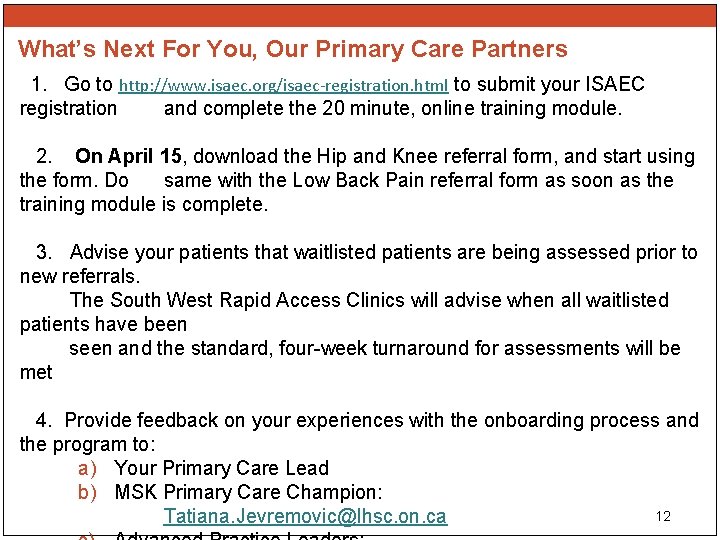
What’s Next For You, Our Primary Care Partners 1. Go to http: //www. isaec. org/isaec-registration. html to submit your ISAEC registration and complete the 20 minute, online training module. 2. On April 15, download the Hip and Knee referral form, and start using the form. Do same with the Low Back Pain referral form as soon as the training module is complete. 3. Advise your patients that waitlisted patients are being assessed prior to new referrals. The South West Rapid Access Clinics will advise when all waitlisted patients have been seen and the standard, four-week turnaround for assessments will be met 4. Provide feedback on your experiences with the onboarding process and the program to: a) Your Primary Care Lead b) MSK Primary Care Champion: 12 Tatiana. Jevremovic@lhsc. on. ca
Appendices: Overview of the MSK Strategy 13
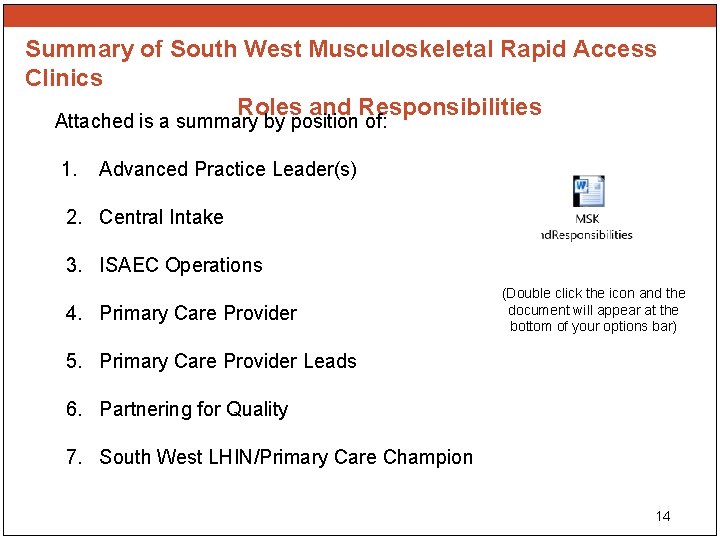
Summary of South West Musculoskeletal Rapid Access Clinics Roles and Responsibilities Attached is a summary by position of: 1. Advanced Practice Leader(s) 2. Central Intake 3. ISAEC Operations 4. Primary Care Provider (Double click the icon and the document will appear at the bottom of your options bar) 5. Primary Care Provider Leads 6. Partnering for Quality 7. South West LHIN/Primary Care Champion 14
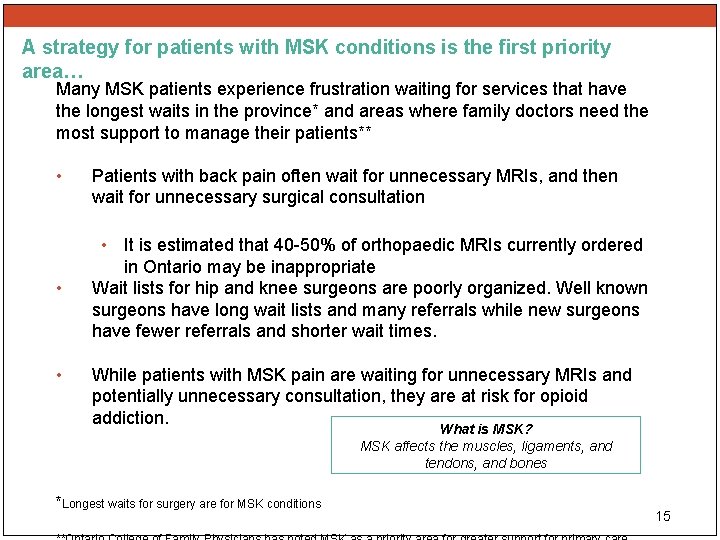
A strategy for patients with MSK conditions is the first priority area… Many MSK patients experience frustration waiting for services that have the longest waits in the province* and areas where family doctors need the most support to manage their patients** • • • Patients with back pain often wait for unnecessary MRIs, and then wait for unnecessary surgical consultation • It is estimated that 40 -50% of orthopaedic MRIs currently ordered in Ontario may be inappropriate Wait lists for hip and knee surgeons are poorly organized. Well known surgeons have long wait lists and many referrals while new surgeons have fewer referrals and shorter wait times. While patients with MSK pain are waiting for unnecessary MRIs and potentially unnecessary consultation, they are at risk for opioid addiction. What is MSK? MSK affects the muscles, ligaments, and tendons, and bones *Longest waits for surgery are for MSK conditions 15
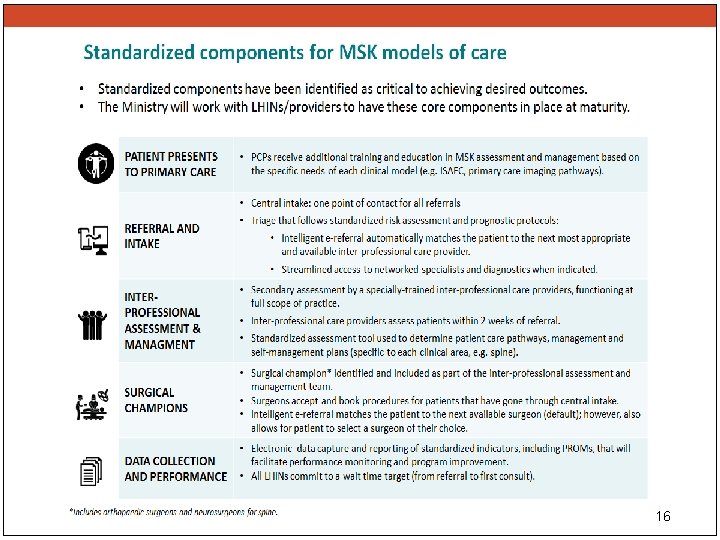
16
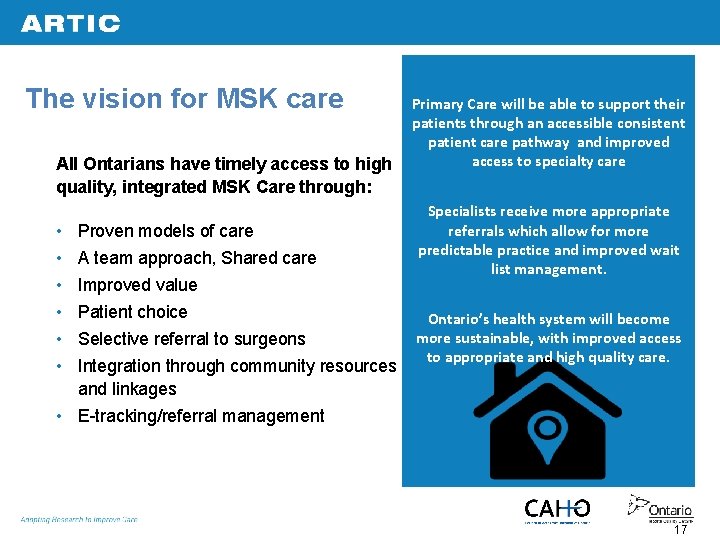
The vision for MSK care Primary Care will be able to support their patients through an accessible consistent patient care pathway and improved access to specialty care All Ontarians have timely access to high quality, integrated MSK Care through: • • • Proven models of care A team approach, Shared care Improved value Patient choice Selective referral to surgeons Integration through community resources and linkages Specialists receive more appropriate referrals which allow for more predictable practice and improved wait list management. Ontario’s health system will become more sustainable, with improved access to appropriate and high quality care. • E-tracking/referral management 17
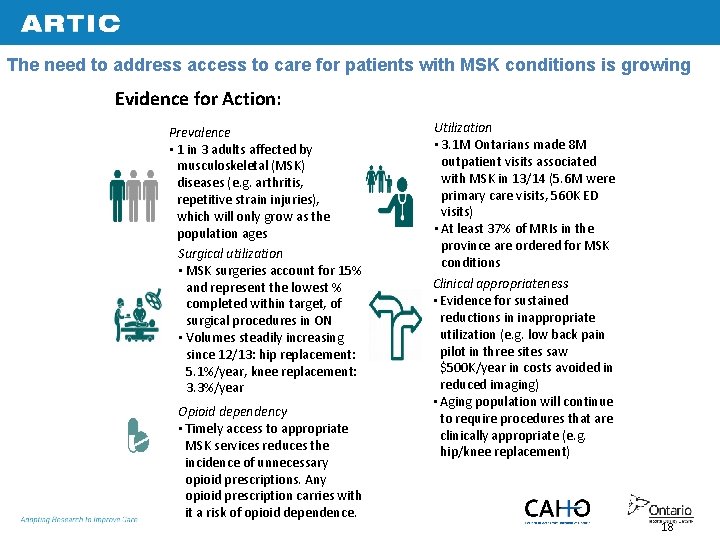
The need to address access to care for patients with MSK conditions is growing Evidence for Action: Prevalence • 1 in 3 adults affected by musculoskeletal (MSK) diseases (e. g. arthritis, repetitive strain injuries), which will only grow as the population ages Surgical utilization • MSK surgeries account for 15% and represent the lowest % completed within target, of surgical procedures in ON • Volumes steadily increasing since 12/13: hip replacement: 5. 1%/year, knee replacement: 3. 3%/year Opioid dependency • Timely access to appropriate MSK services reduces the incidence of unnecessary opioid prescriptions. Any opioid prescription carries with it a risk of opioid dependence. Utilization • 3. 1 M Ontarians made 8 M outpatient visits associated with MSK in 13/14 (5. 6 M were primary care visits, 560 K ED visits) • At least 37% of MRIs in the province are ordered for MSK conditions Clinical appropriateness • Evidence for sustained reductions in inappropriate utilization (e. g. low back pain pilot in three sites saw $500 K/year in costs avoided in reduced imaging) • Aging population will continue to require procedures that are clinically appropriate (e. g. hip/knee replacement) 18
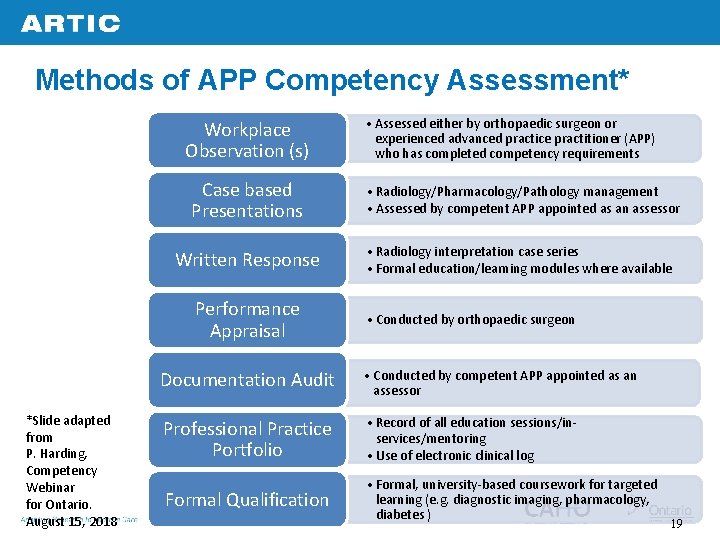
Methods of APP Competency Assessment* Workplace Observation (s) Case based Presentations • Radiology/Pharmacology/Pathology management • Assessed by competent APP appointed as an assessor Written Response • Radiology interpretation case series • Formal education/learning modules where available Performance Appraisal *Slide adapted from P. Harding, Competency Webinar for Ontario. August 15, 2018 • Assessed either by orthopaedic surgeon or experienced advanced practice practitioner (APP) who has completed competency requirements • Conducted by orthopaedic surgeon Documentation Audit • Conducted by competent APP appointed as an assessor Professional Practice Portfolio • Record of all education sessions/inservices/mentoring • Use of electronic clinical log Formal Qualification • Formal, university-based coursework for targeted learning (e. g. diagnostic imaging, pharmacology, diabetes ) 19
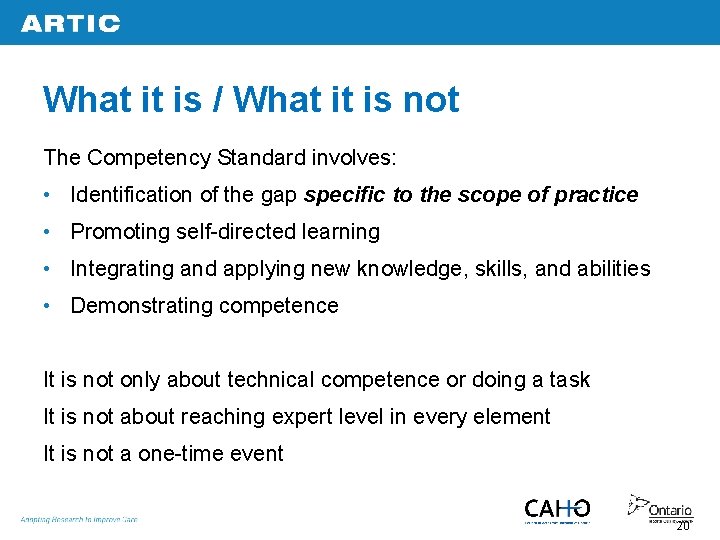
What it is / What it is not The Competency Standard involves: • Identification of the gap specific to the scope of practice • Promoting self-directed learning • Integrating and applying new knowledge, skills, and abilities • Demonstrating competence It is not only about technical competence or doing a task It is not about reaching expert level in every element It is not a one-time event 20
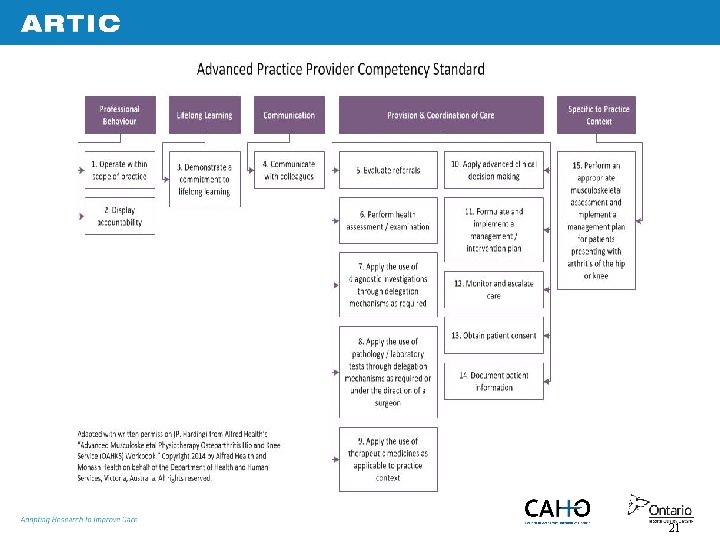
21
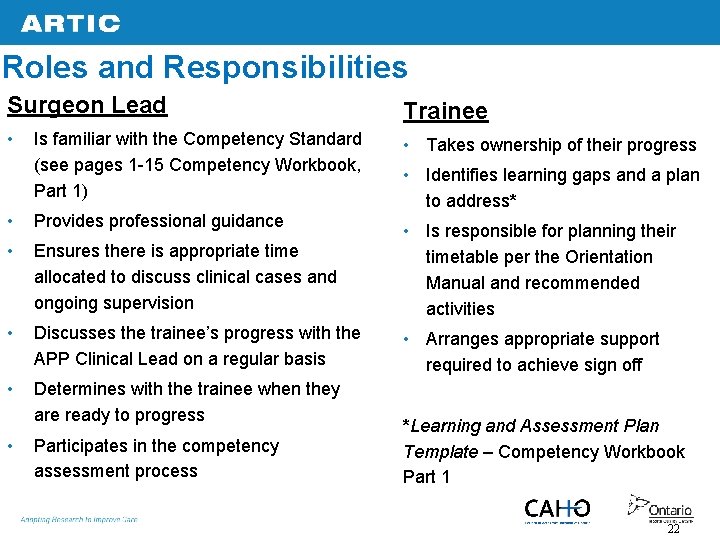
Roles and Responsibilities Surgeon Lead Trainee • • Takes ownership of their progress Is familiar with the Competency Standard (see pages 1 -15 Competency Workbook, Part 1) • Identifies learning gaps and a plan to address* • Provides professional guidance • Ensures there is appropriate time allocated to discuss clinical cases and ongoing supervision • Is responsible for planning their timetable per the Orientation Manual and recommended activities • Discusses the trainee’s progress with the APP Clinical Lead on a regular basis • Arranges appropriate support required to achieve sign off • Determines with the trainee when they are ready to progress • Participates in the competency assessment process *Learning and Assessment Plan Template – Competency Workbook Part 1 22
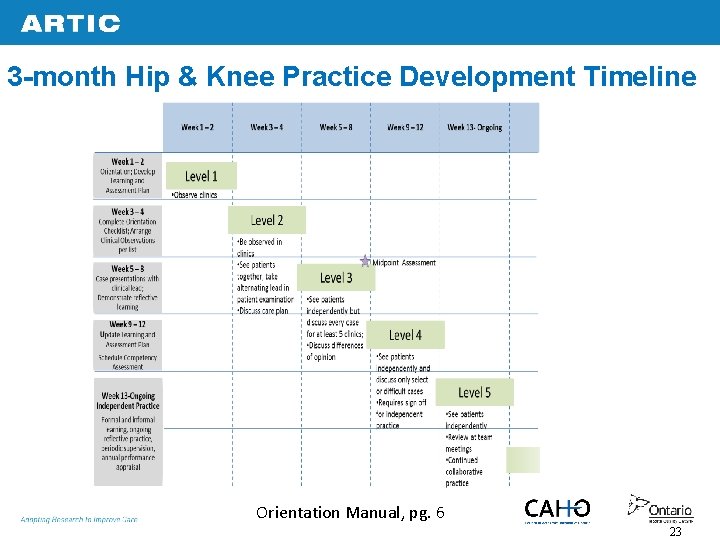
3 -month Hip & Knee Practice Development Timeline Orientation Manual, pg. 6 23
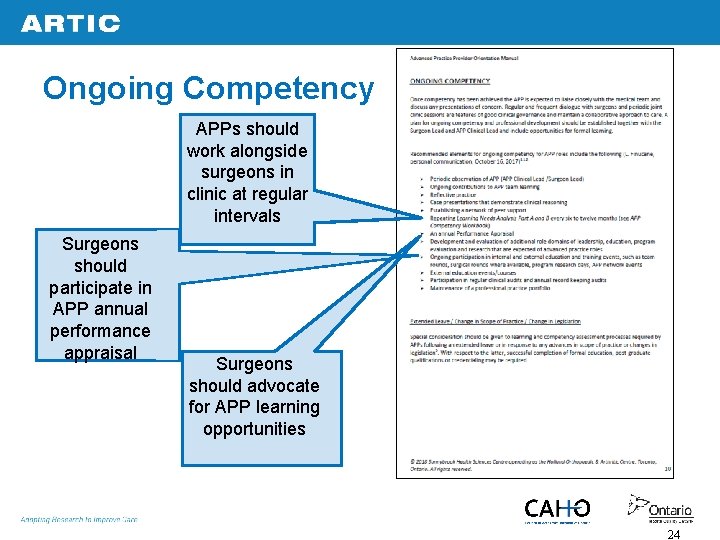
Ongoing Competency APPs should work alongside surgeons in clinic at regular intervals Surgeons should participate in APP annual performance appraisal Surgeons should advocate for APP learning opportunities 24
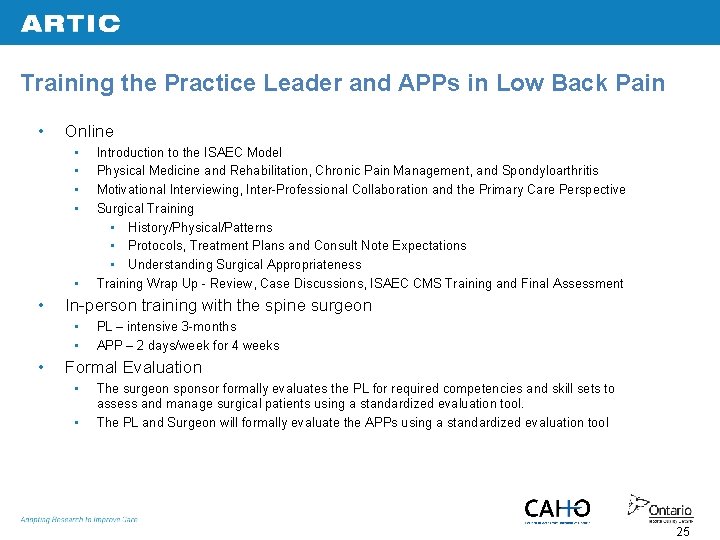
Training the Practice Leader and APPs in Low Back Pain • Online • • • In-person training with the spine surgeon • • • Introduction to the ISAEC Model Physical Medicine and Rehabilitation, Chronic Pain Management, and Spondyloarthritis Motivational Interviewing, Inter-Professional Collaboration and the Primary Care Perspective Surgical Training • History/Physical/Patterns • Protocols, Treatment Plans and Consult Note Expectations • Understanding Surgical Appropriateness Training Wrap Up - Review, Case Discussions, ISAEC CMS Training and Final Assessment PL – intensive 3 -months APP – 2 days/week for 4 weeks Formal Evaluation • • The surgeon sponsor formally evaluates the PL for required competencies and skill sets to assess and manage surgical patients using a standardized evaluation tool. The PL and Surgeon will formally evaluate the APPs using a standardized evaluation tool 25
26
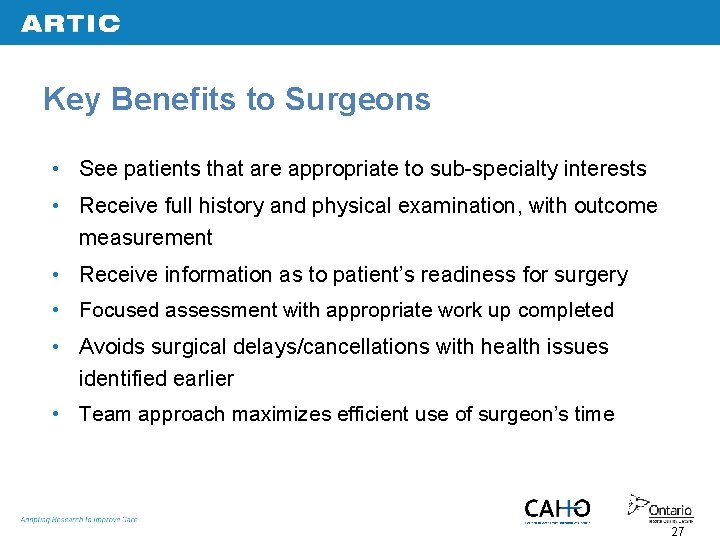
Key Benefits to Surgeons • See patients that are appropriate to sub-specialty interests • Receive full history and physical examination, with outcome measurement • Receive information as to patient’s readiness for surgery • Focused assessment with appropriate work up completed • Avoids surgical delays/cancellations with health issues identified earlier • Team approach maximizes efficient use of surgeon’s time 27
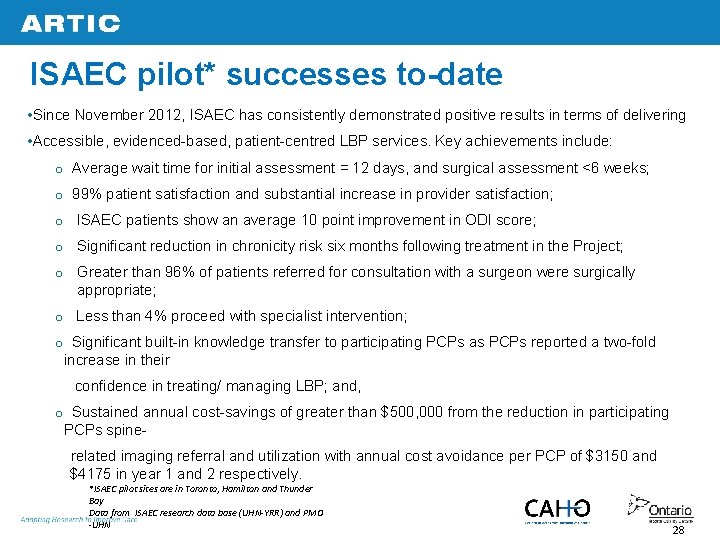
ISAEC pilot* successes to-date • Since November 2012, ISAEC has consistently demonstrated positive results in terms of delivering • Accessible, evidenced-based, patient-centred LBP services. Key achievements include: o Average wait time for initial assessment = 12 days, and surgical assessment <6 weeks; o 99% patient satisfaction and substantial increase in provider satisfaction; o ISAEC patients show an average 10 point improvement in ODI score; o Significant reduction in chronicity risk six months following treatment in the Project; o Greater than 96% of patients referred for consultation with a surgeon were surgically appropriate; o Less than 4% proceed with specialist intervention; o Significant built-in knowledge transfer to participating PCPs as PCPs reported a two-fold increase in their confidence in treating/ managing LBP; and, o Sustained annual cost-savings of greater than $500, 000 from the reduction in participating PCPs spinerelated imaging referral and utilization with annual cost avoidance per PCP of $3150 and $4175 in year 1 and 2 respectively. • • *ISAEC pilot sites are in Toronto, Hamilton and Thunder Bay Data from ISAEC research data base (UHN-YRR) and PMO -UHN 28
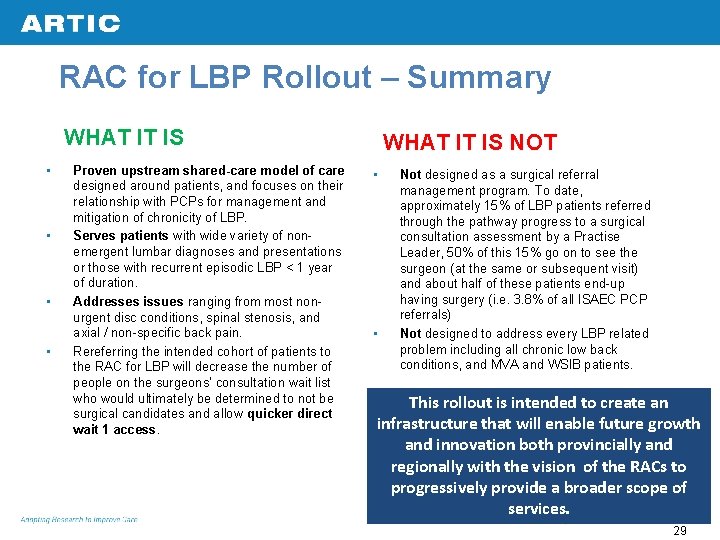
RAC for LBP Rollout – Summary WHAT IT IS • • Proven upstream shared-care model of care designed around patients, and focuses on their relationship with PCPs for management and mitigation of chronicity of LBP. Serves patients with wide variety of nonemergent lumbar diagnoses and presentations or those with recurrent episodic LBP < 1 year of duration. Addresses issues ranging from most nonurgent disc conditions, spinal stenosis, and axial / non-specific back pain. Rereferring the intended cohort of patients to the RAC for LBP will decrease the number of people on the surgeons’ consultation wait list who would ultimately be determined to not be surgical candidates and allow quicker direct wait 1 access. WHAT IT IS NOT • • Not designed as a surgical referral management program. To date, approximately 15% of LBP patients referred through the pathway progress to a surgical consultation assessment by a Practise Leader, 50% of this 15% go on to see the surgeon (at the same or subsequent visit) and about half of these patients end-up having surgery (i. e. 3. 8% of all ISAEC PCP referrals) Not designed to address every LBP related problem including all chronic low back conditions, and MVA and WSIB patients. This rollout is intended to create an infrastructure that will enable future growth and innovation both provincially and regionally with the vision of the RACs to progressively provide a broader scope of services. 29