
South Carolina Department of Natural Resources Flood Mitigation







- Slides: 66
South Carolina Department of Natural Resources Flood Mitigation Section South Carolina Map Modernization Initiative Update Pee Dee GIS Users Group Meeting February 24, 2010 Florence, SC Daryle L. Fontenot, PE, CFM Project Manager, AECOM 1
National Flood Insurance Program (NFIP) n Flood Insurance § Property owners in participating communities purchase flood insurance n Floodplain Management § Participating communities adopt and enforce flood damage prevention ordinance n Flood Hazard Mapping § Develop flooding limits 2
Map Modernization n n n Nationwide, 5 -year, $1 billion program Update FEMA’s Flood Insurance Rate Maps (FIRMs) for the nation’s Produce quality maps Reduce map production time Reduce cost/time for future updates Produce seamless, nationwide flood data 3
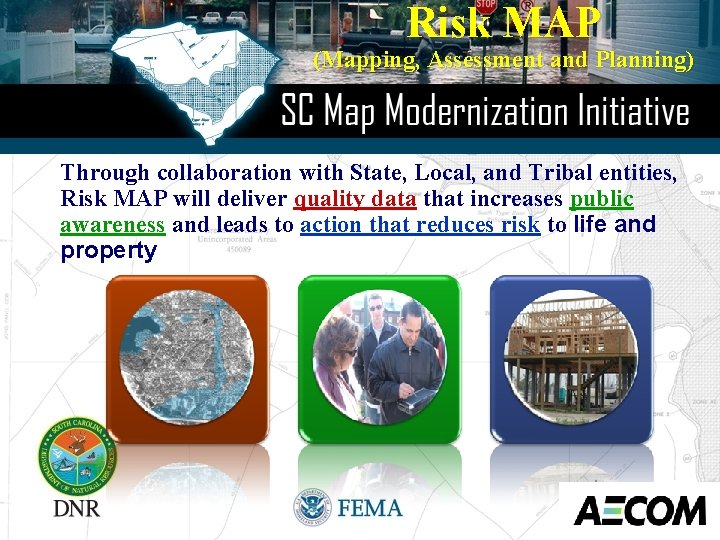
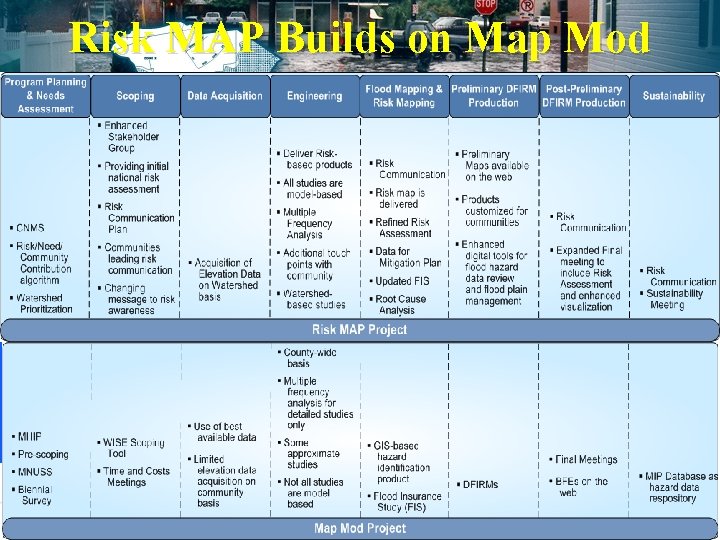
Risk MAP (Mapping, Assessment and Planning) Through collaboration with State, Local, and Tribal entities, Risk MAP will deliver quality data that increases public awareness and leads to action that reduces risk to life and property
Risk MAP Builds on Map Mod
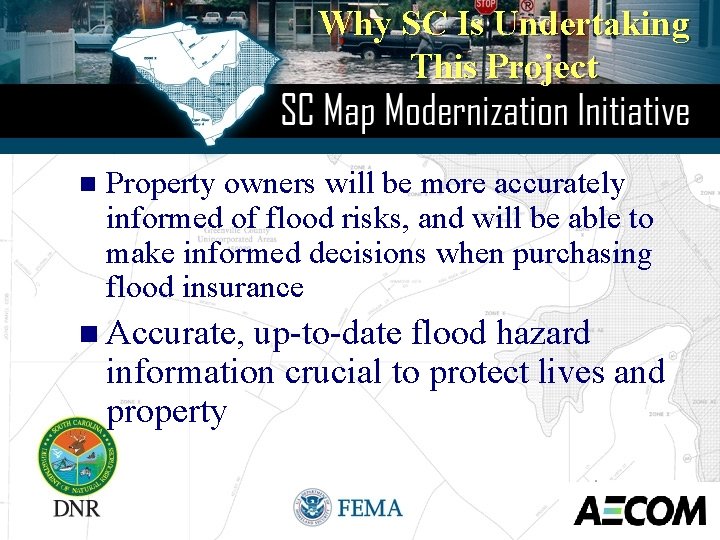
Why SC Is Undertaking This Project n Property owners will be more accurately informed of flood risks, and will be able to make informed decisions when purchasing flood insurance n Accurate, up-to-date flood hazard information crucial to protect lives and property 6
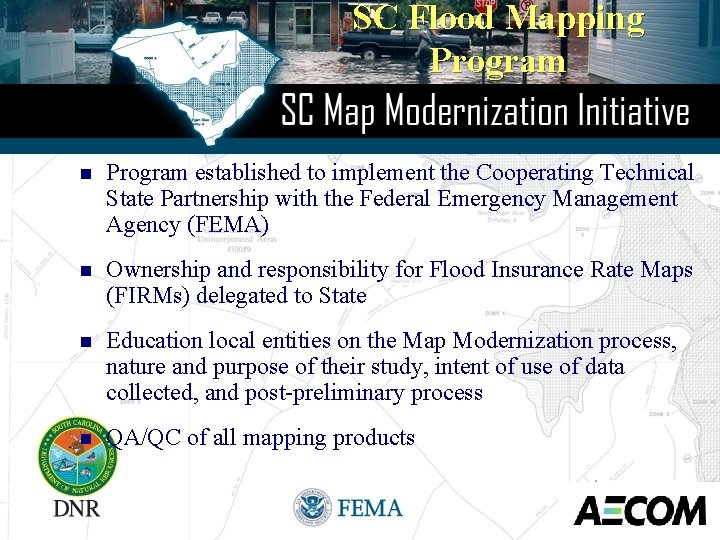
SC Flood Mapping Program n Program established to implement the Cooperating Technical State Partnership with the Federal Emergency Management Agency (FEMA) n Ownership and responsibility for Flood Insurance Rate Maps (FIRMs) delegated to State n Education local entities on the Map Modernization process, nature and purpose of their study, intent of use of data collected, and post-preliminary process n QA/QC of all mapping products 7
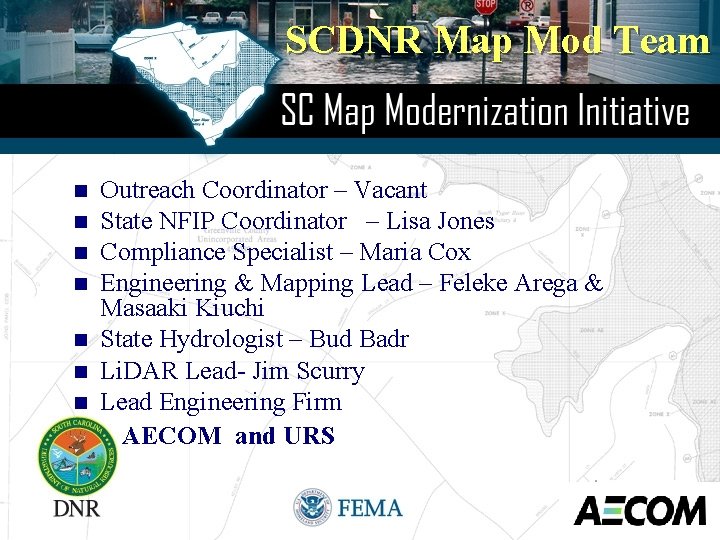
SCDNR Map Mod Team n n n n Outreach Coordinator – Vacant State NFIP Coordinator – Lisa Jones Compliance Specialist – Maria Cox Engineering & Mapping Lead – Feleke Arega & Masaaki Kiuchi State Hydrologist – Bud Badr Li. DAR Lead- Jim Scurry Lead Engineering Firm AECOM and URS 8
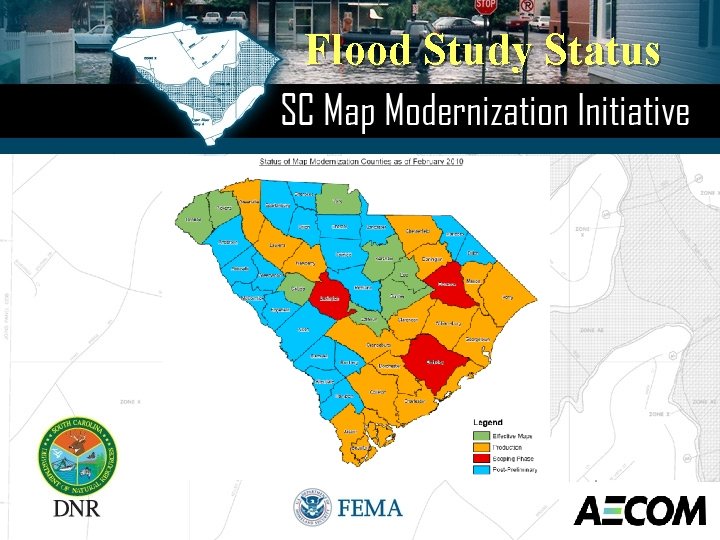
Flood Study Status
Flood Study Completion Schedule
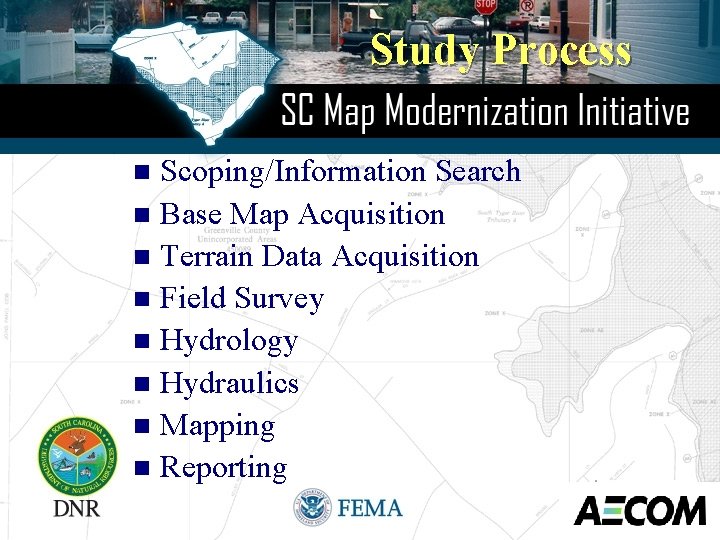
Study Process Scoping/Information Search n Base Map Acquisition n Terrain Data Acquisition n Field Survey n Hydrology n Hydraulics n Mapping n Reporting n 11
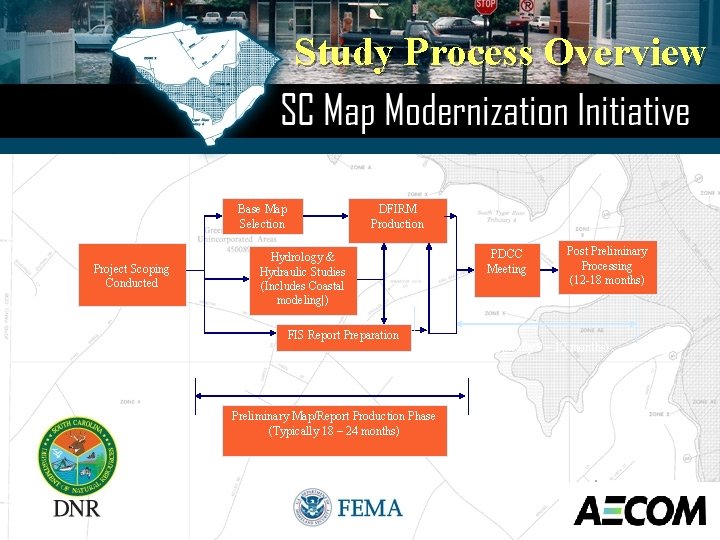
Study Process Overview Base Map Selection Project Scoping Conducted DFIRM Production Hydrology & Hydraulic Studies (Includes Coastal modeling|) FIS Report Preparation PDCC Meeting Post Preliminary Processing (12 -18 months) (Typically 9 – 12 months) Preliminary Map/Report Production Phase (Typically 18 – 24 months) 12
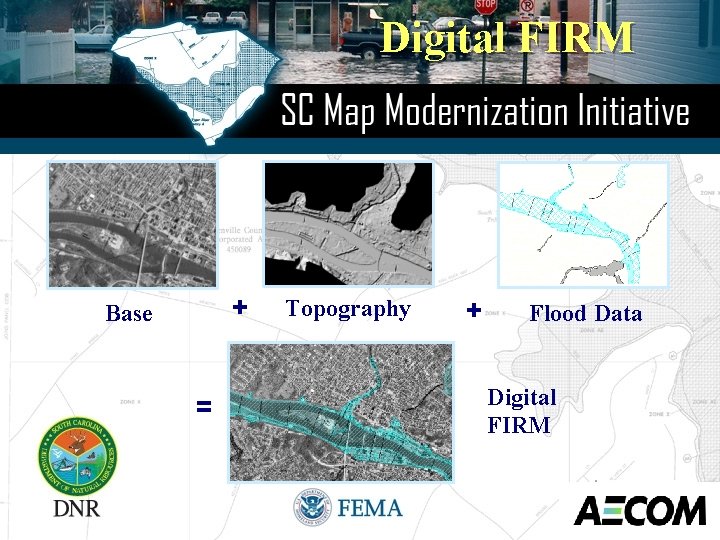
Digital FIRM + Base = Topography + Flood Data Digital FIRM 13
Information Search n Research on historical floods in each county n Coordination with other agencies for High Water Mark Information and recent projects 14
Factors for Study Priorities n n n Areas of existing or anticipated development Area where new road crossings have been built Areas affected by flood-control structures and/or channelization Areas where natural physical changes in the floodplain have been significant Areas that were studied by approximate methods and unmapped areas, especially those with development pressure 15
Factors for Study Priorities (cont. ) Areas where the community has experienced flooding outside mapped floodplains, with severe damage to buildings and/or infrastructure n Areas where mapped flood hazards do not match those shown on contiguous FIRMs n Areas where flood data (BFEs, floodplains, and regulatory floodways) are likely to be changed the most by a restudy n 16
Coordinated Needs Management Strategy (CNMS) CNMS § Initiative to update the way FEMA organizes, stores and analyzes flood hazard mapping needs information for communities § Provides an approach and structure for the identification and management of flood hazard mapping needs that will provide support to data driven planning and flood map update investment process in a geospatial environment. § Goal is to produce a national inventory database of flooding sources corresponding to our mapped inventory and to begin referencing mapped flooding sources as validated or as having an unmet need § Three phases to program to be completed and integrated into the Risk MAP program by FY 2011: § Phase I – National summary map § Phase II – Stream level inventory § Phase III - Stream level validation
CNMS A spatial Geodatabase that tracks the community’s needs and requests for FEMA-funded flood studies.
CNMS Validation The model validation process utilizes remotely sensed & aerial photos to analyze changes with land use & stream channels.
CNMS Database Validation criteria for detailed streams are populated & associated with need polygons in CNMS GDB. Streams with invalid models are tracked as “Unmet Needs” along with studies requested by the community that are not funded.
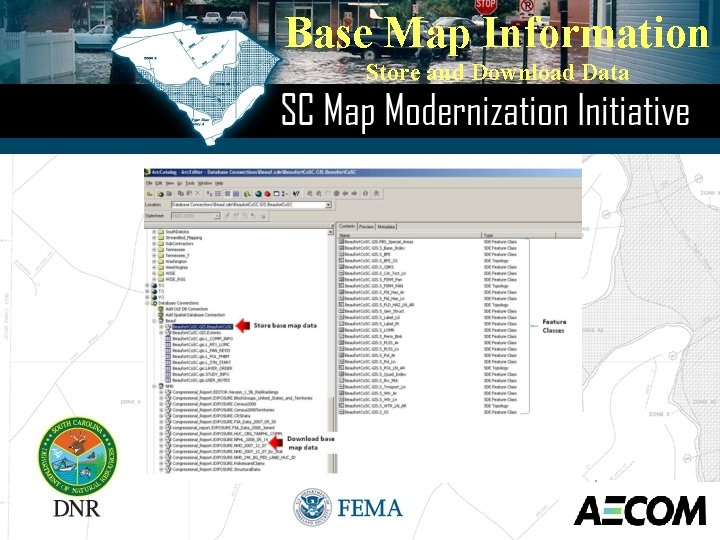
Base Map Information Base Map Sources § County or State Provided Imagery § USGS DOQQ 21
Base Map Information Store and Download Data
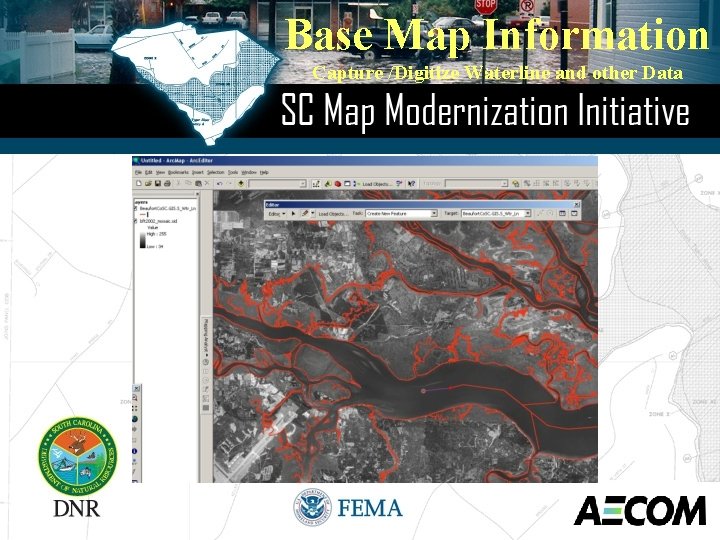
Base Map Information Capture /Digitize Waterline and other Data
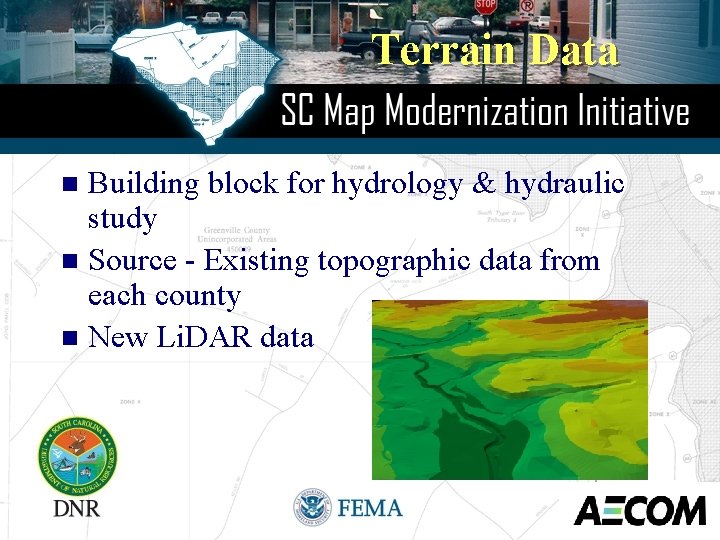
Terrain Data Building block for hydrology & hydraulic study n Source - Existing topographic data from each county n New Li. DAR data n 24
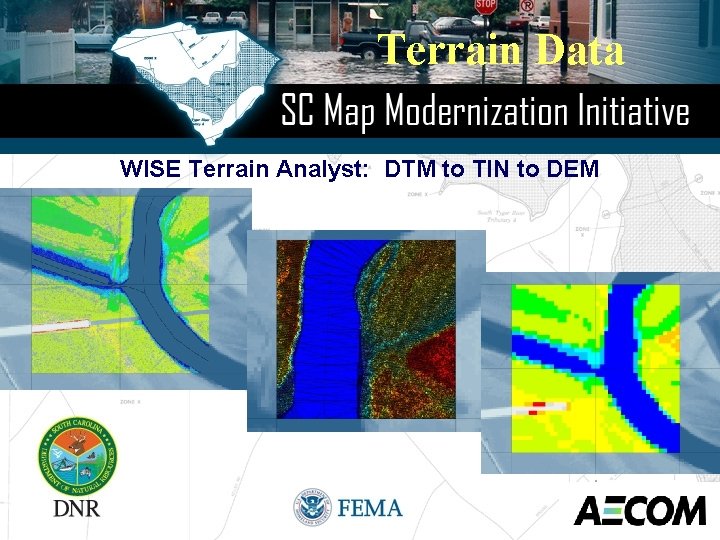
Terrain Data WISE Terrain Analyst: DTM to TIN to DEM 25
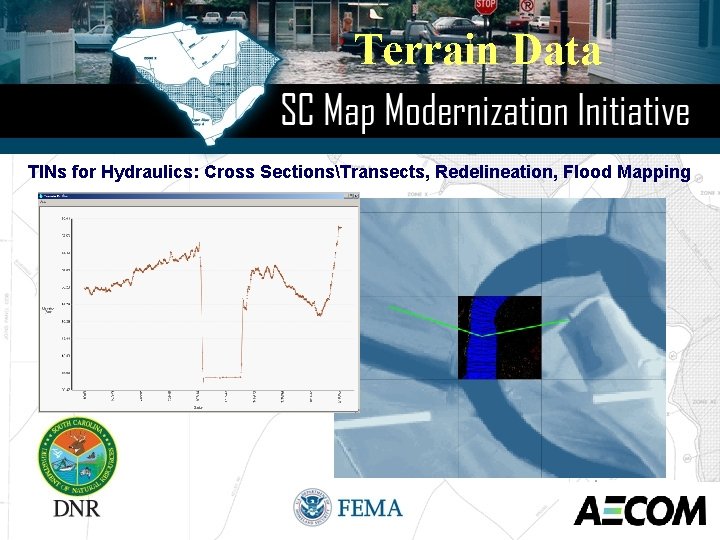
Terrain Data TINs for Hydraulics: Cross SectionsTransects, Redelineation, Flood Mapping
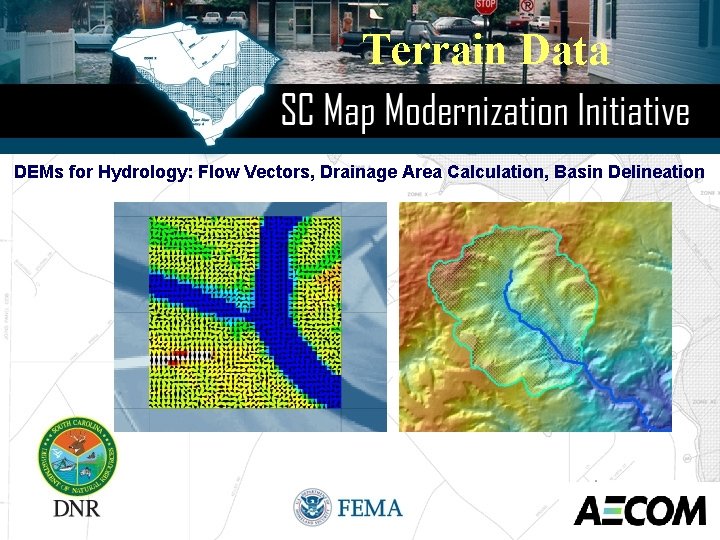
Terrain Data DEMs for Hydrology: Flow Vectors, Drainage Area Calculation, Basin Delineation
Study Methods for Updated Mapping § Riverine Detailed Study § Riverine Limited Detailed Study § Approximate Study § Coastal Study § Redelineation (FEMA Studies and Others) 28
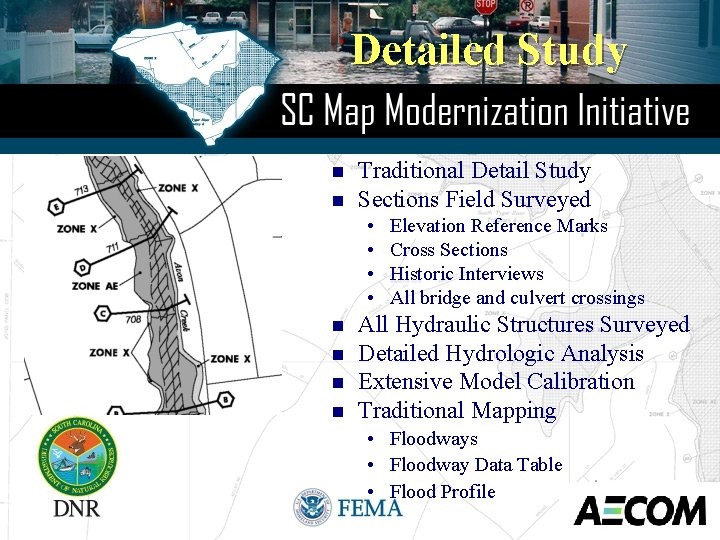
Detailed Study n n Traditional Detail Study Sections Field Surveyed • • n n Elevation Reference Marks Cross Sections Historic Interviews All bridge and culvert crossings All Hydraulic Structures Surveyed Detailed Hydrologic Analysis Extensive Model Calibration Traditional Mapping • Floodways • Floodway Data Table • Flood Profile 29
Riverine Modeling Approach Limited Detailed Field Survey Detailed Calibration Floodway Mapping • Supported by H&H modeling • • Hydrology from Regression Equations HEC-RAS models developed Calibrated to available data Floodplain mapped to Terrain data Detailed Study 30
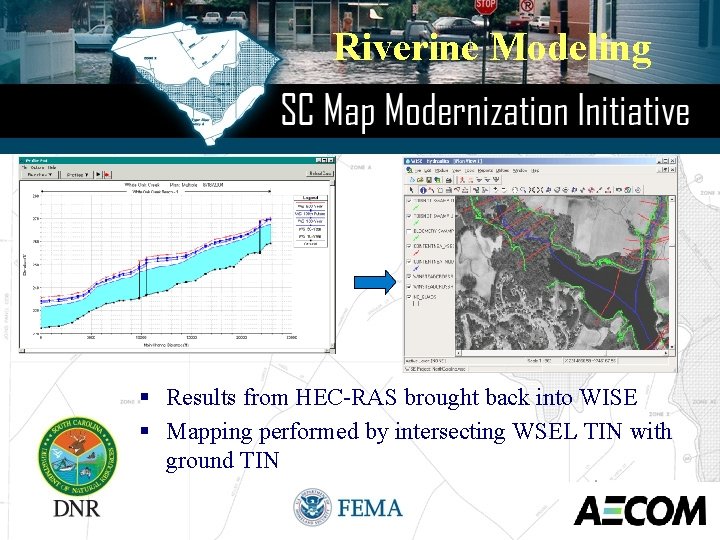
Riverine Modeling § Results from HEC-RAS brought back into WISE § Mapping performed by intersecting WSEL TIN with ground TIN
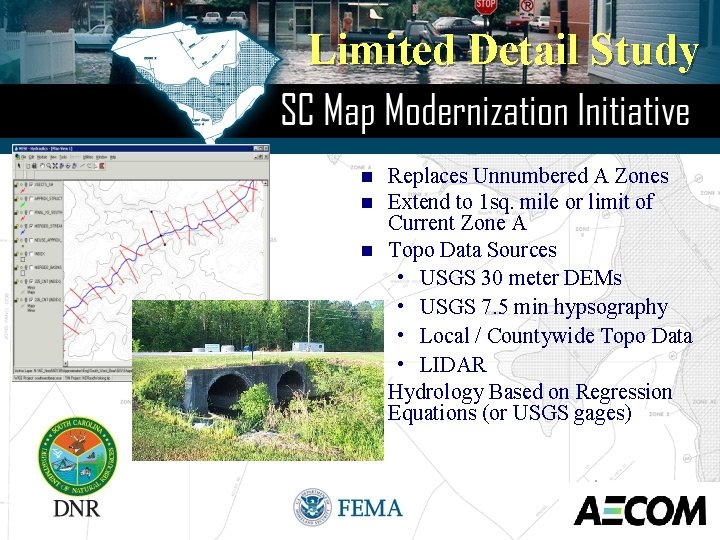
Limited Detail Study n n Replaces Unnumbered A Zones Extend to 1 sq. mile or limit of Current Zone A Topo Data Sources • USGS 30 meter DEMs • USGS 7. 5 min hypsography • Local / Countywide Topo Data • LIDAR Hydrology Based on Regression Equations (or USGS gages) 32
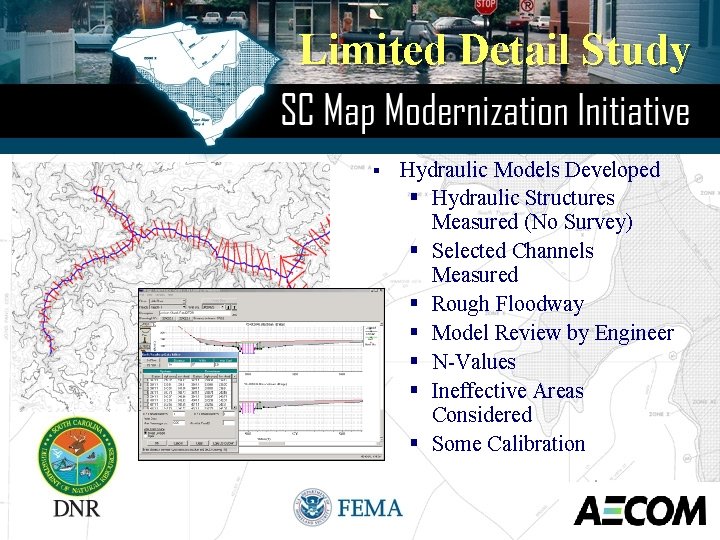
Limited Detail Study § Hydraulic Models Developed § Hydraulic Structures Measured (No Survey) § Selected Channels Measured § Rough Floodway § Model Review by Engineer § N-Values § Ineffective Areas Considered § Some Calibration 33
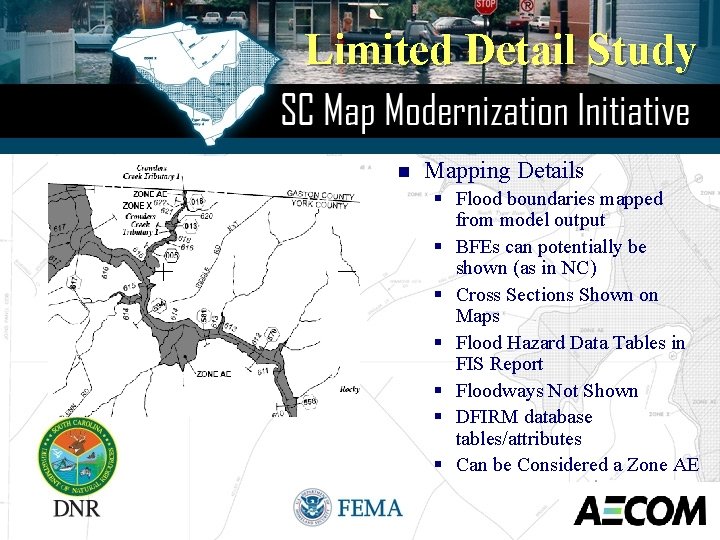
Limited Detail Study n Mapping Details § Flood boundaries mapped from model output § BFEs can potentially be shown (as in NC) § Cross Sections Shown on Maps § Flood Hazard Data Tables in FIS Report § Floodways Not Shown § DFIRM database tables/attributes § Can be Considered a Zone AE 34
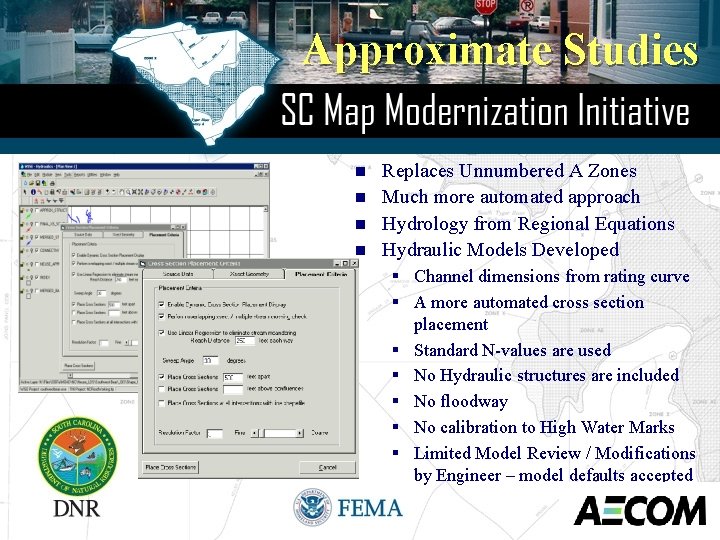
Approximate Studies n n Replaces Unnumbered A Zones Much more automated approach Hydrology from Regional Equations Hydraulic Models Developed § Channel dimensions from rating curve § A more automated cross section placement § Standard N-values are used § No Hydraulic structures are included § No floodway § No calibration to High Water Marks § Limited Model Review / Modifications by Engineer – model defaults accepted 35
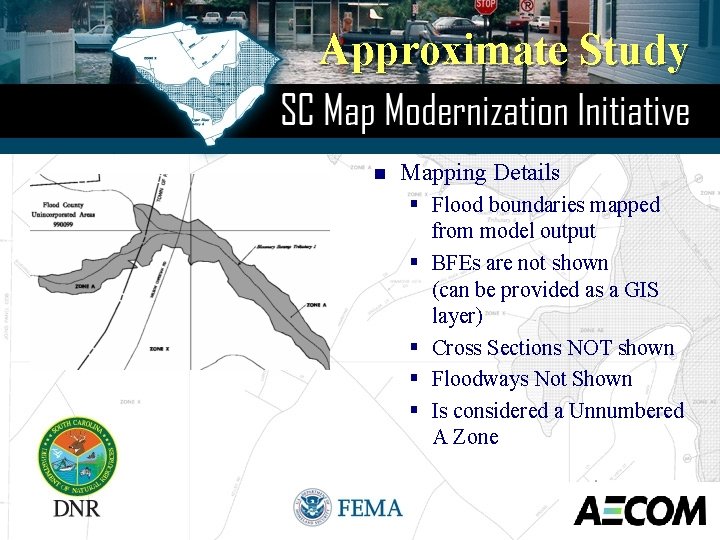
Approximate Study n Mapping Details § Flood boundaries mapped from model output § BFEs are not shown (can be provided as a GIS layer) § Cross Sections NOT shown § Floodways Not Shown § Is considered a Unnumbered A Zone 36
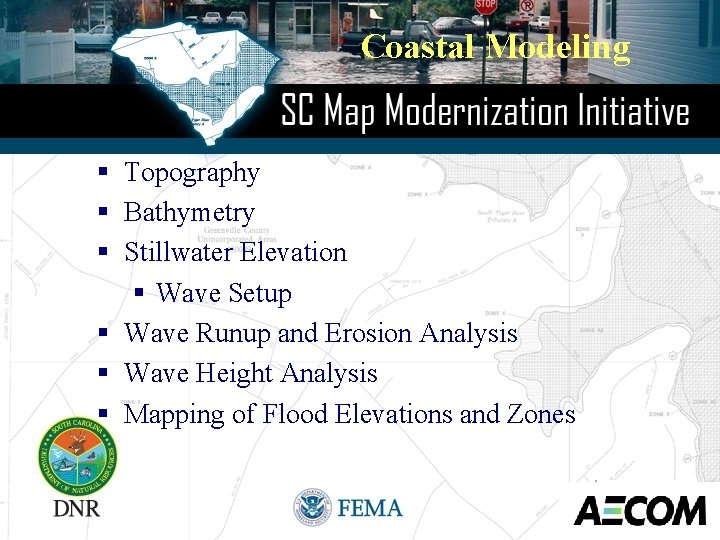
Coastal Modeling § Topography § Bathymetry § Stillwater Elevation § Wave Setup § Wave Runup and Erosion Analysis § Wave Height Analysis § Mapping of Flood Elevations and Zones
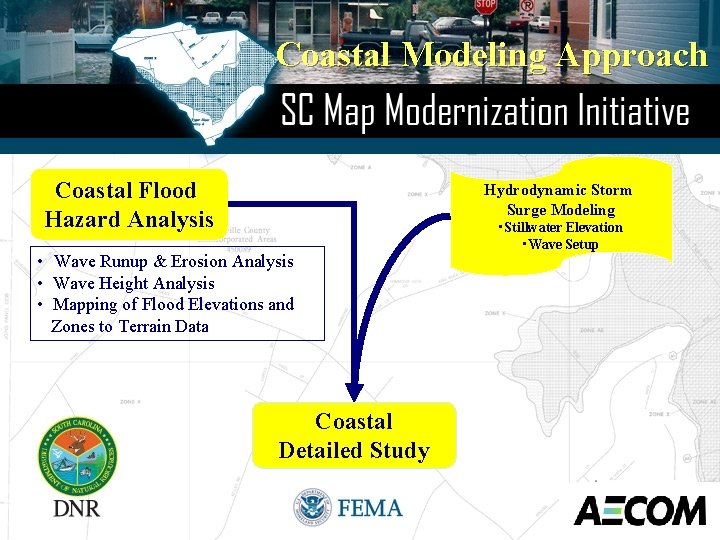
Coastal Modeling Approach Coastal Flood Hazard Analysis Hydrodynamic Storm Surge Modeling • Wave Runup & Erosion Analysis • Wave Height Analysis • Mapping of Flood Elevations and Zones to Terrain Data Coastal Detailed Study • Stillwater Elevation • Wave Setup
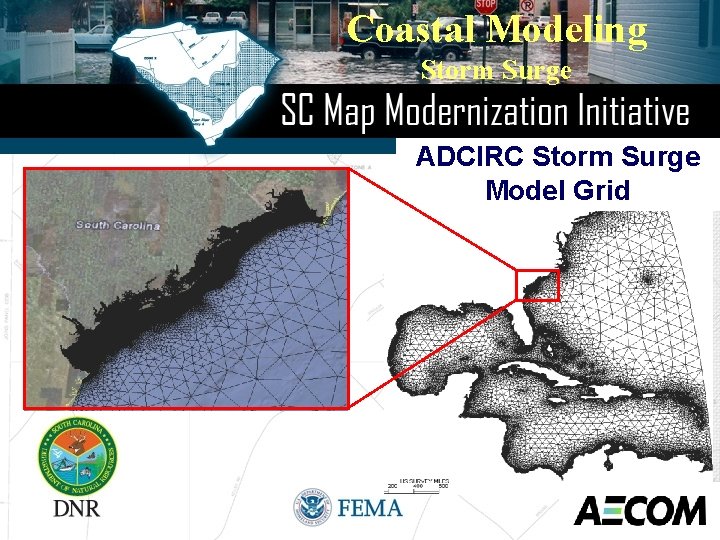
Coastal Modeling Storm Surge ADCIRC Storm Surge Model Grid 39
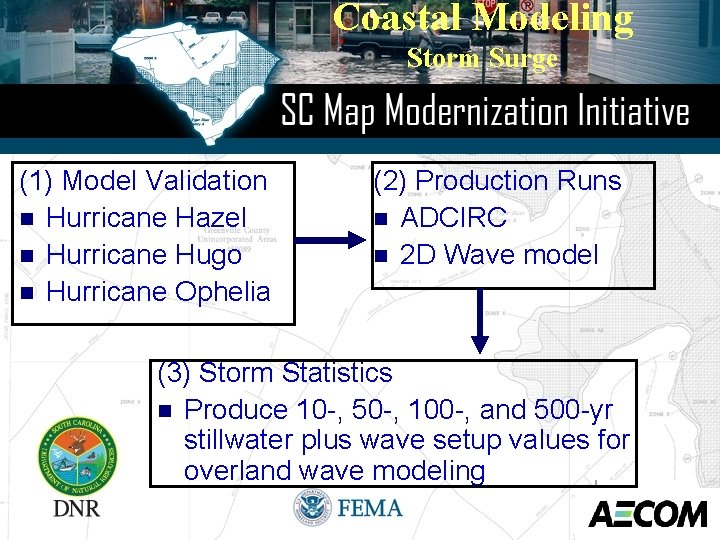
Coastal Modeling Storm Surge (1) Model Validation n Hurricane Hazel n Hurricane Hugo n Hurricane Ophelia (2) Production Runs n ADCIRC n 2 D Wave model (3) Storm Statistics n Produce 10 -, 50 -, 100 -, and 500 -yr stillwater plus wave setup values for overland wave modeling 40
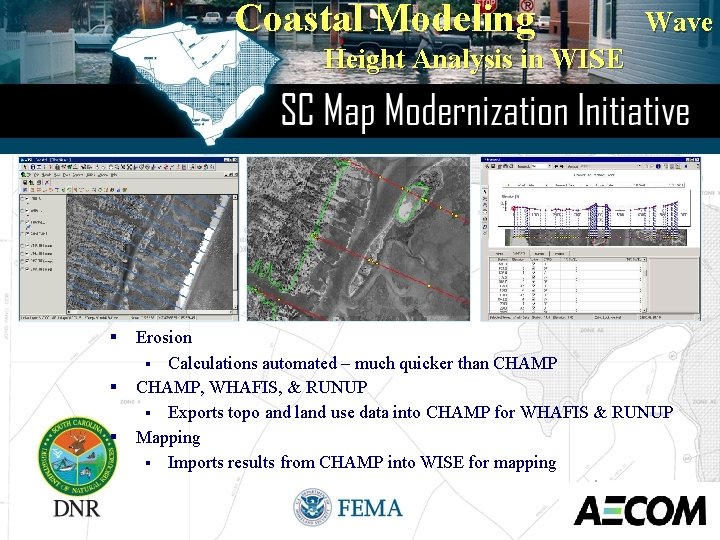
Coastal Modeling Wave Height Analysis in WISE § § § Erosion § Calculations automated – much quicker than CHAMP, WHAFIS, & RUNUP § Exports topo and land use data into CHAMP for WHAFIS & RUNUP Mapping § Imports results from CHAMP into WISE for mapping
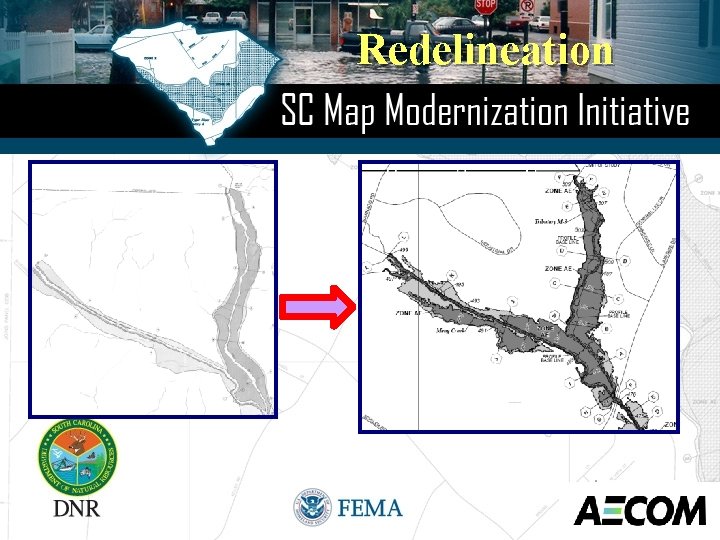
Redelineation 42
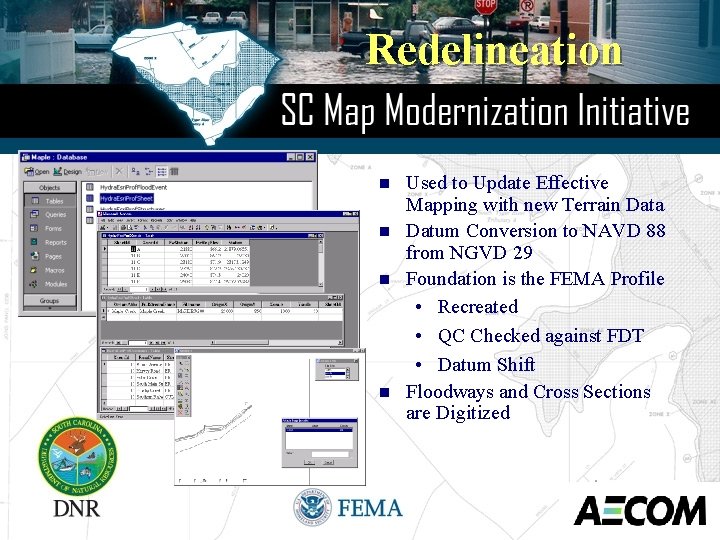
Redelineation n n Used to Update Effective Mapping with new Terrain Data Datum Conversion to NAVD 88 from NGVD 29 Foundation is the FEMA Profile • Recreated • QC Checked against FDT • Datum Shift Floodways and Cross Sections are Digitized 43
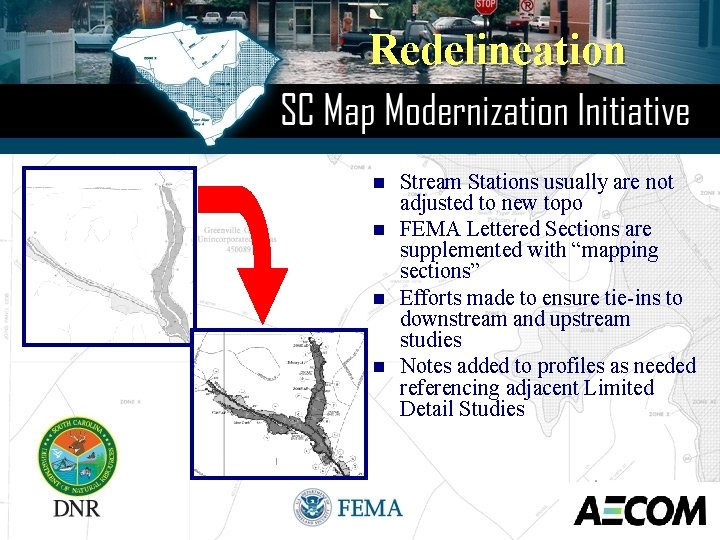
Redelineation n n Stream Stations usually are not adjusted to new topo FEMA Lettered Sections are supplemented with “mapping sections” Efforts made to ensure tie-ins to downstream and upstream studies Notes added to profiles as needed referencing adjacent Limited Detail Studies 44
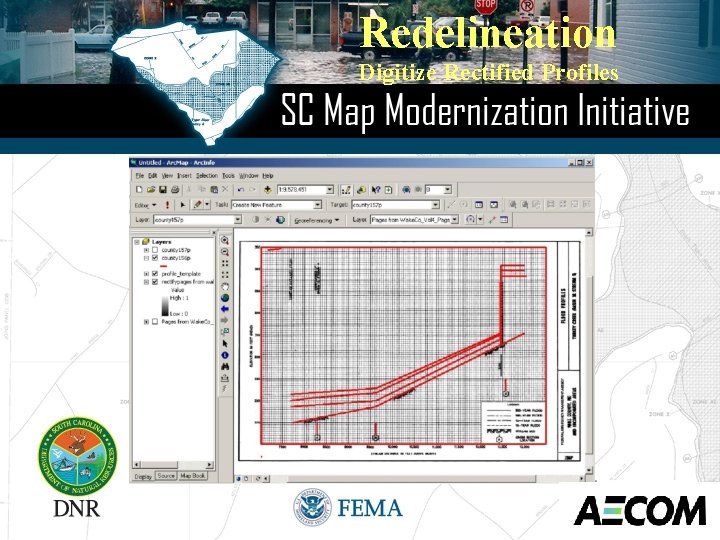
Redelineation Digitize Rectified Profiles
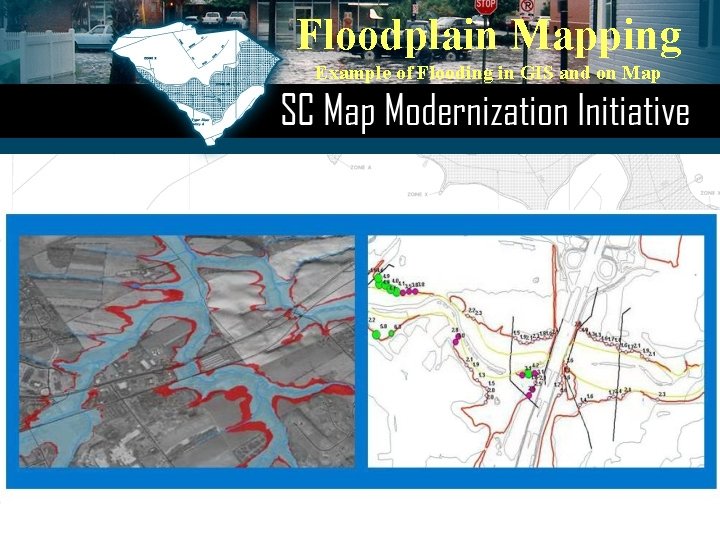
Floodplain Mapping Fully Automated: § § Mapping of flood boundaries Automated creation of profiles Placement of BFE’s to FEMA standards Generation of Floodway Data Tables DFIRM product 46
Floodplain Mapping Example of Flooding in GIS and on Map
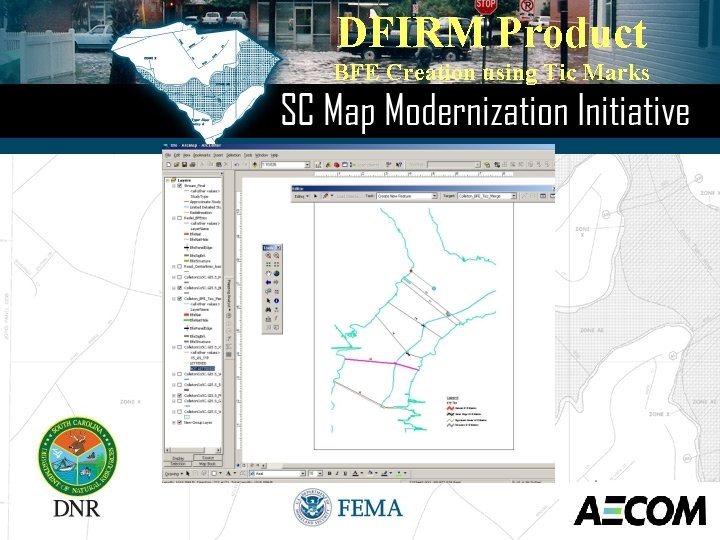
DFIRM Product BFE Creation using Tic Marks
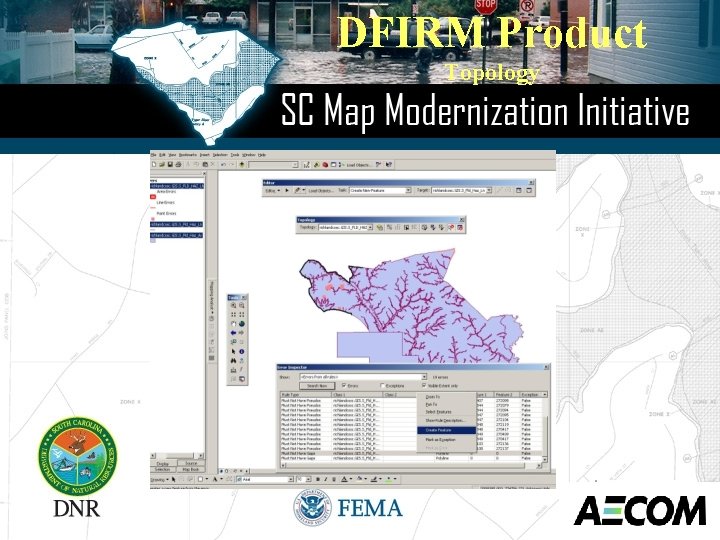
DFIRM Product Topology
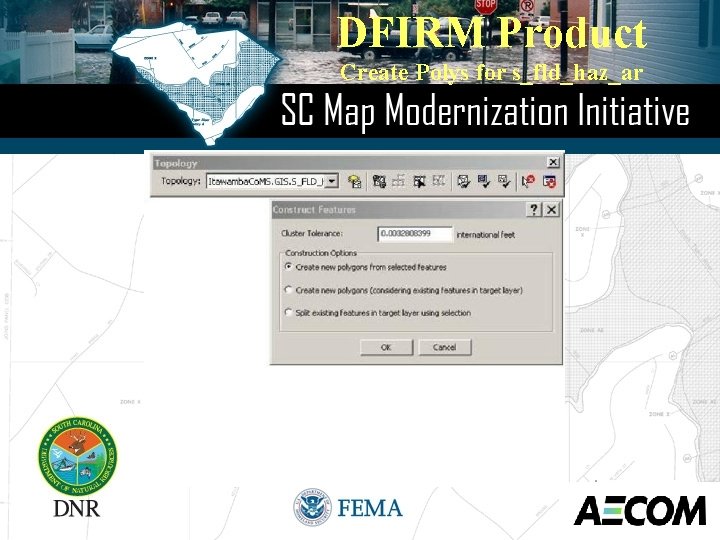
DFIRM Product Create Polys for s_fld_haz_ar
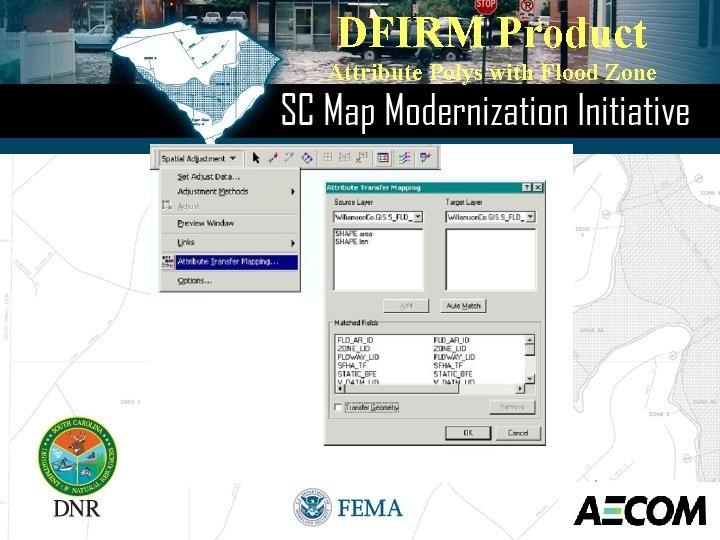
DFIRM Product Attribute Polys with Flood Zone
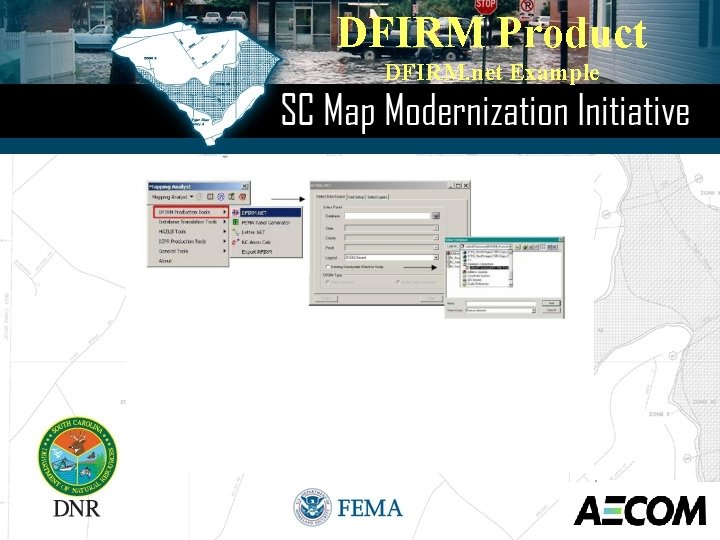
DFIRM Product DFIRM. net Example
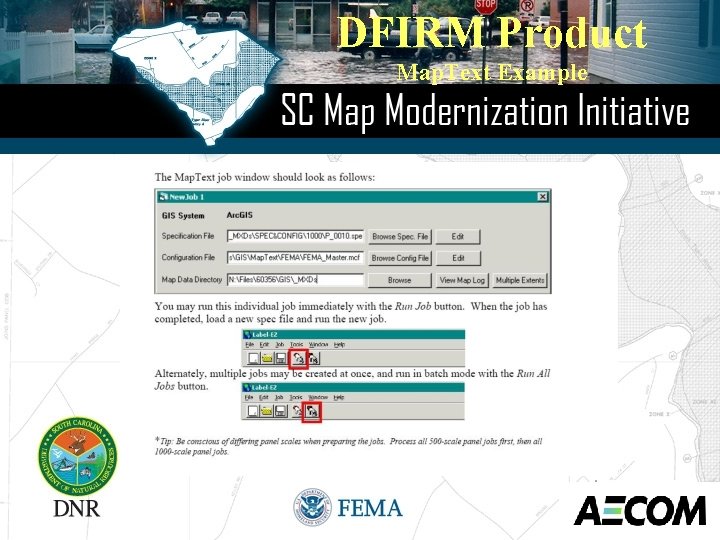
DFIRM Product Map. Text Example
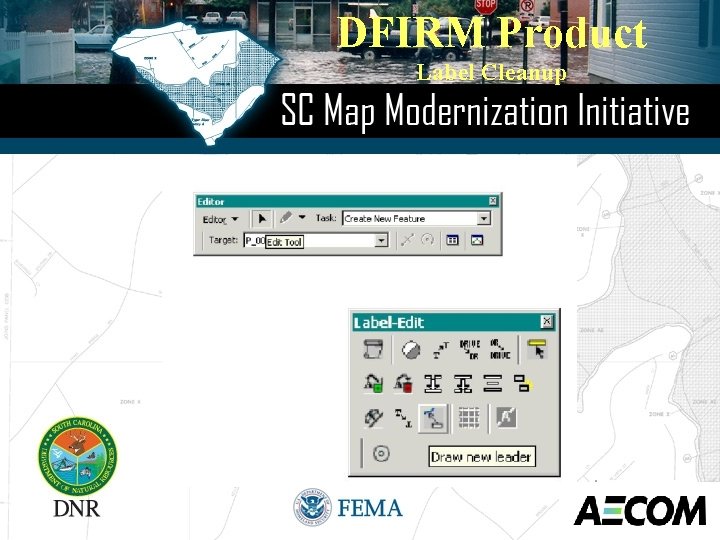
DFIRM Product Label Cleanup
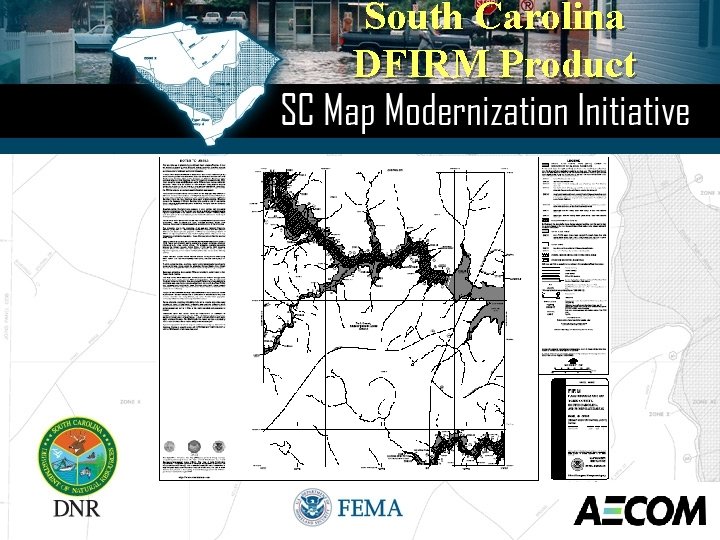
South Carolina DFIRM Product 55
100% Digital Submission n Project upload to FEMA’s Mapping Information Platform (MIP) n Project Elements Uploaded to MIP as each Element is completed n Data Availability to Communities 56
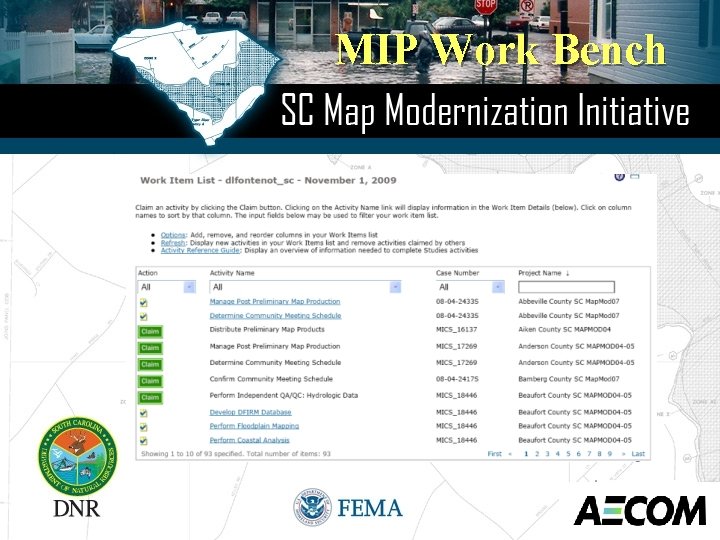
MIP Work Bench
MIP Manage Data Development
MIP Task
QA/QC Flood Insurance Study Independent QA/QC n QA/QC Checklist for Each Production Step § § § Topographic Data Hydrologic Data Hydraulic Data DFIRM Floodplain Mapping DFIRM Database
PM 42 – Quality Control Requirements for DFRIM Map Production
Flood Study Independent QAQC n Data needed for reviews include (continued): § GIS layers § Streamlines § Basins § Cross sections § Structure locations § Roads
Technical Support Data Notebook (TSDN) n Complete Documentation of Project n All Data Collected n All Analyses & Assumptions n Uploaded into the MIP 63
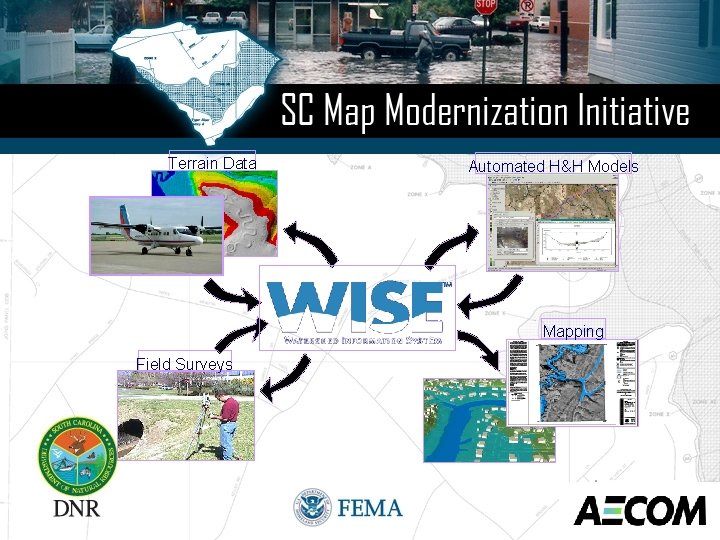
Terrain Data Automated H&H Models Mapping Field Surveys
Questions
F I NI Daryle L Fontenot, PE, CFM Project Manager D 704. 643. 0108 x 4315 C 704. 408. 4829 Daryle. Fontenot@aecom. com AECOM 6201 Fairview Road, Suite 400, Charlotte, NC 28210 F 704. 553. 6151 www. aecom. com 66