
South Asia Physical Environmental Processes Explain the impact


- Slides: 17
South Asia Physical Environmental Processes Explain the impact of physical processes on the environment and analyze how people in South Asia interacted with the physical environment.
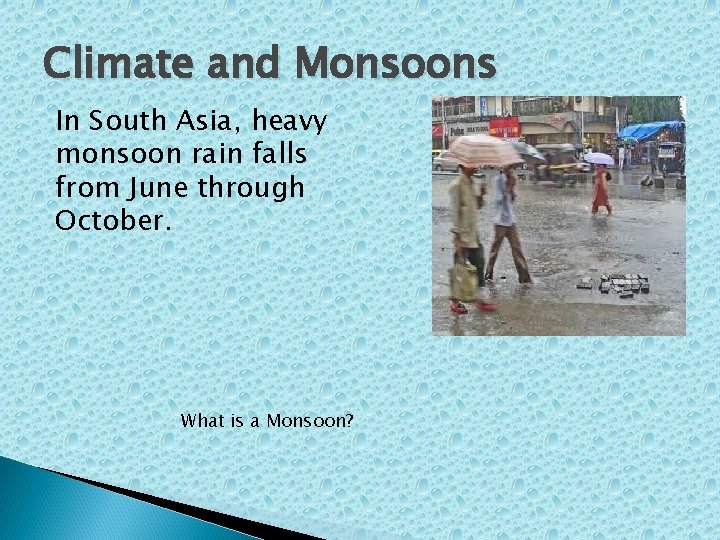
Climate and Monsoons In South Asia, heavy monsoon rain falls from June through October. What is a Monsoon?
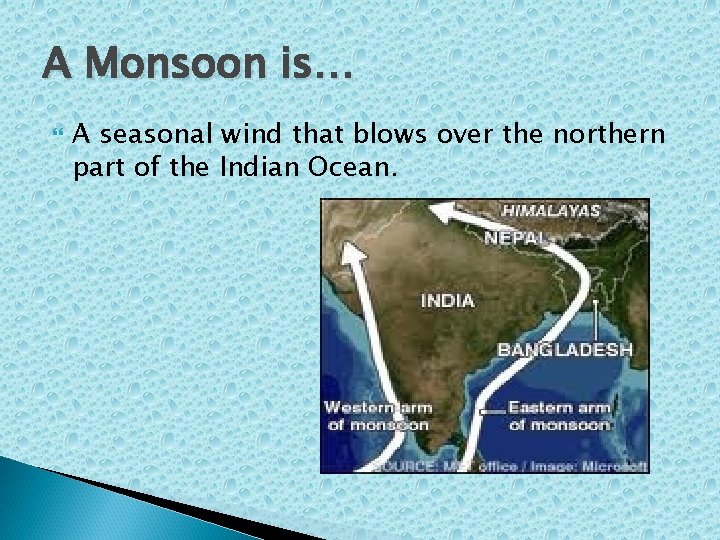
A Monsoon is… A seasonal wind that blows over the northern part of the Indian Ocean.
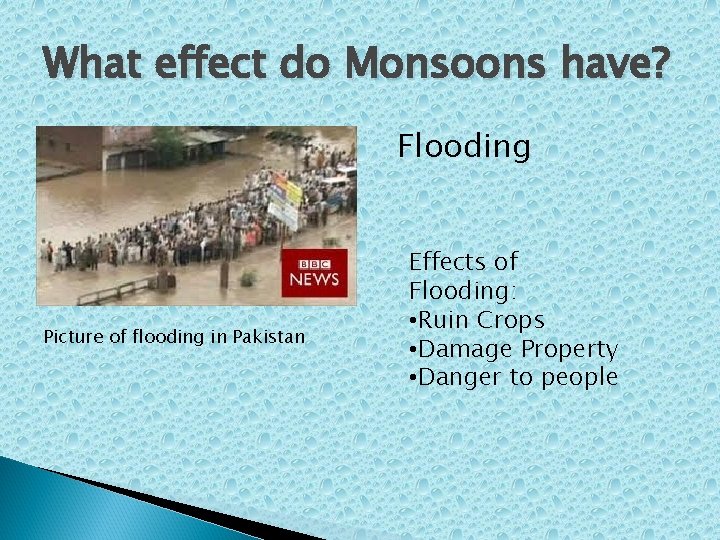
What effect do Monsoons have? Flooding Picture of flooding in Pakistan Effects of Flooding: • Ruin Crops • Damage Property • Danger to people
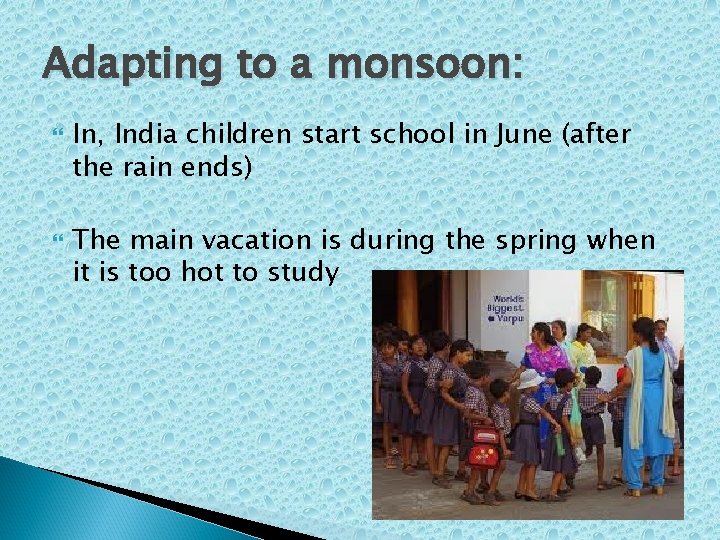
Adapting to a monsoon: In, India children start school in June (after the rain ends) The main vacation is during the spring when it is too hot to study
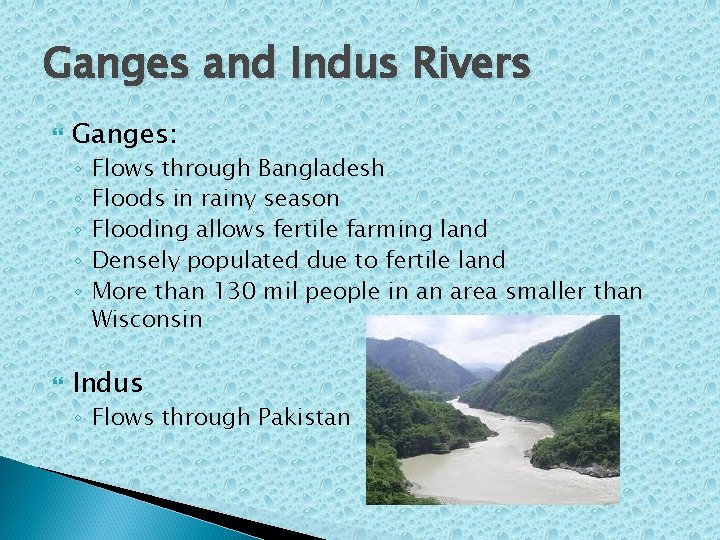
Ganges and Indus Rivers Ganges: ◦ ◦ ◦ Flows through Bangladesh Floods in rainy season Flooding allows fertile farming land Densely populated due to fertile land More than 130 mil people in an area smaller than Wisconsin Indus ◦ Flows through Pakistan
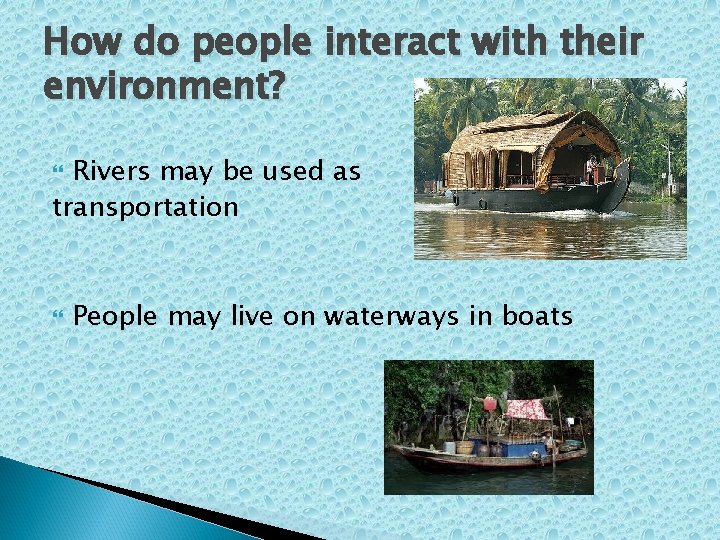
How do people interact with their environment? Rivers may be used as transportation People may live on waterways in boats
How do people interact with their environment? Planting: Rice is a staple crop that can live in wet conditions
Green Revolution: (helped India out of a mass famine -1960) Introduced to variety of grain that is more productive (variety of cereal grain) Widespread use of pesticides and fertilizers Different method of farming: Grew more than needed to set aside)
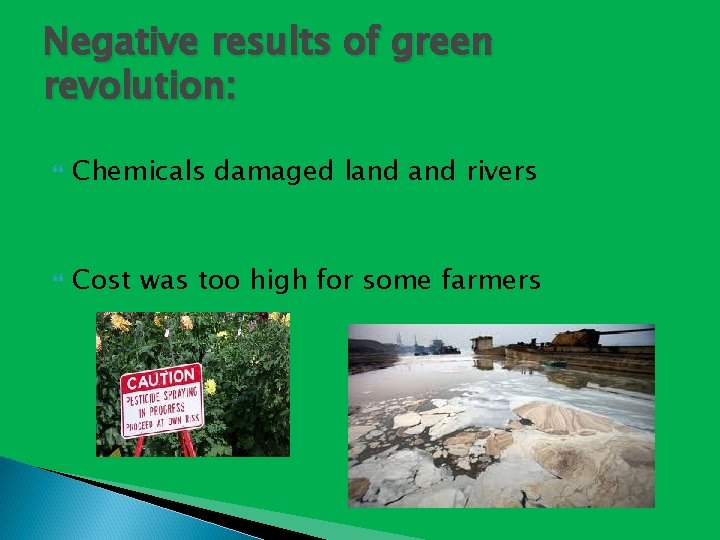
Negative results of green revolution: Chemicals damaged land rivers Cost was too high for some farmers
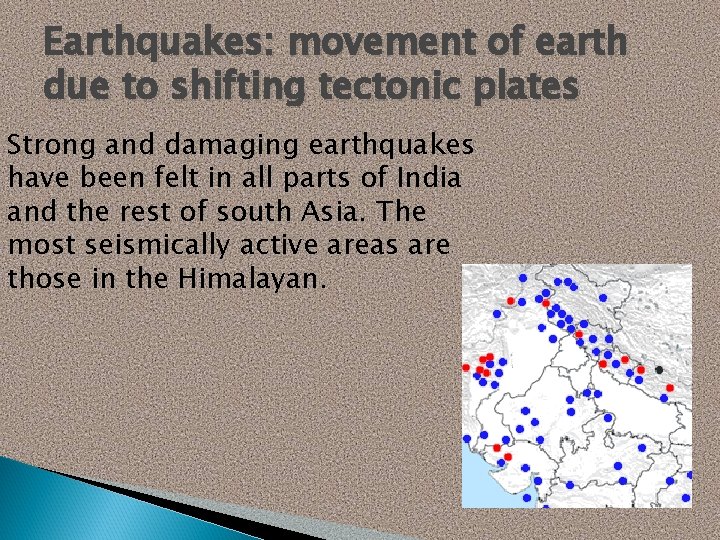
Earthquakes: movement of earth due to shifting tectonic plates Strong and damaging earthquakes have been felt in all parts of India and the rest of south Asia. The most seismically active areas are those in the Himalayan.
Himalayas The Himalayas stretch over 2400 km. They are a result of a collision between two continental tectonic plates. This immense mountain range was formed by tectonic forces and sculpted by weathering and erosion.
Himalayas The Himalayan mountain system is the world's highest The climate is colder which does not allow for farming
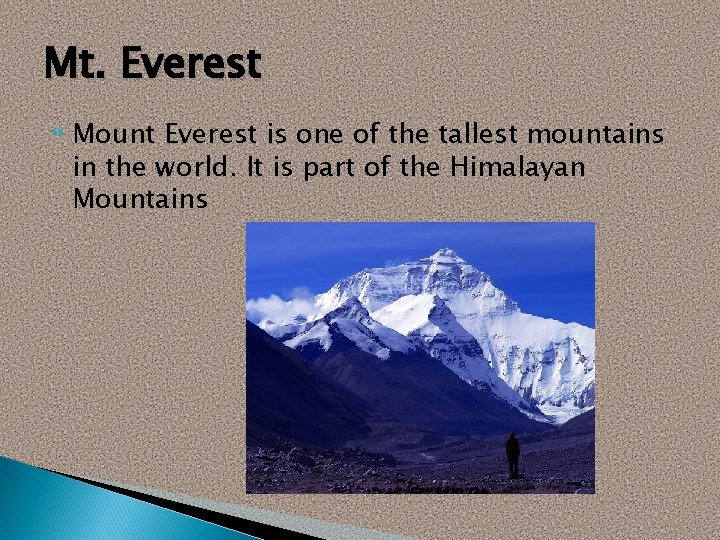
Mt. Everest Mount Everest is one of the tallest mountains in the world. It is part of the Himalayan Mountains
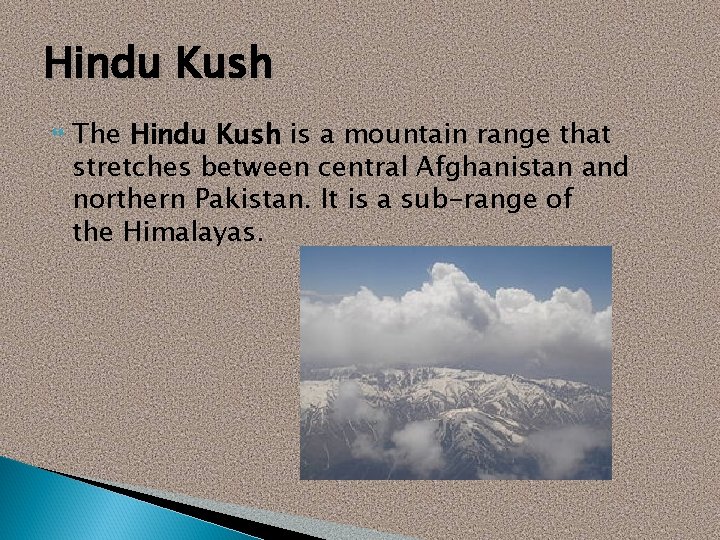
Hindu Kush The Hindu Kush is a mountain range that stretches between central Afghanistan and northern Pakistan. It is a sub-range of the Himalayas.
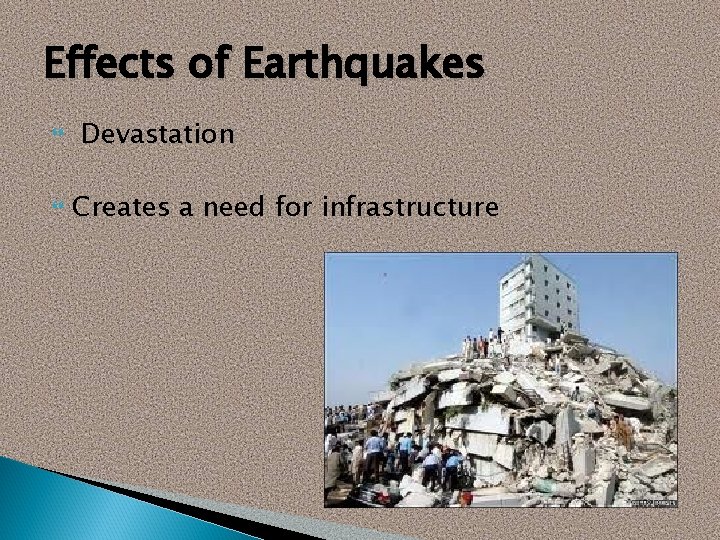
Effects of Earthquakes Devastation Creates a need for infrastructure
Fast Facts Most Rain in a month Meghalaya, India, 1861 July: 366 in World’s largest River Delta: Ganges Delta, Bangladesh World’s 2 nd largest population India: 1, 002, 142, 000 (2000)