
South African Passbooks n n n Pass laws
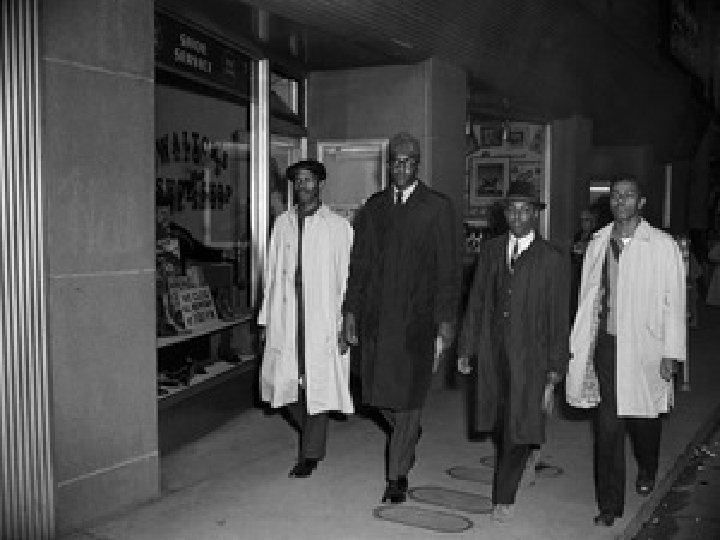
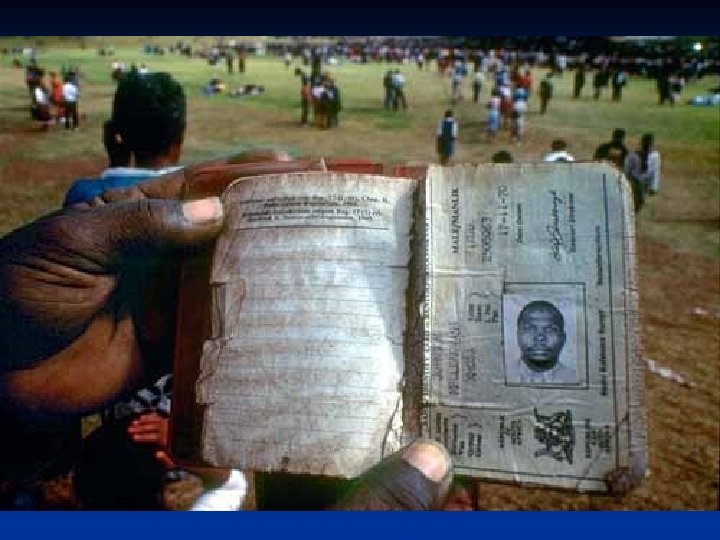
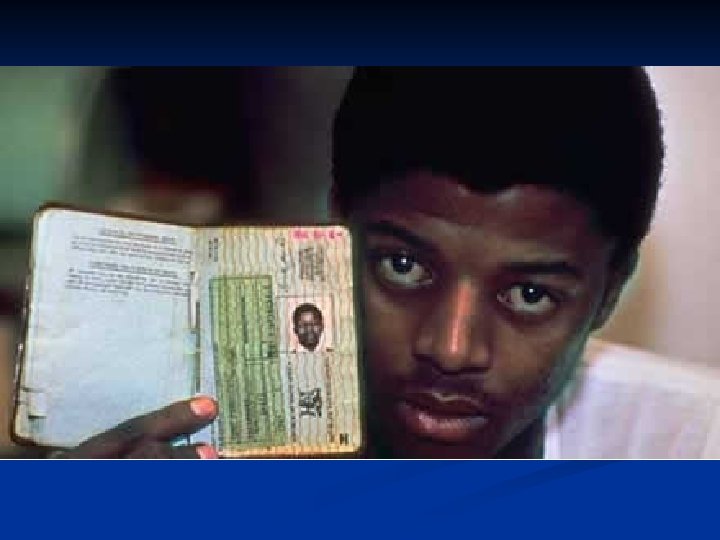
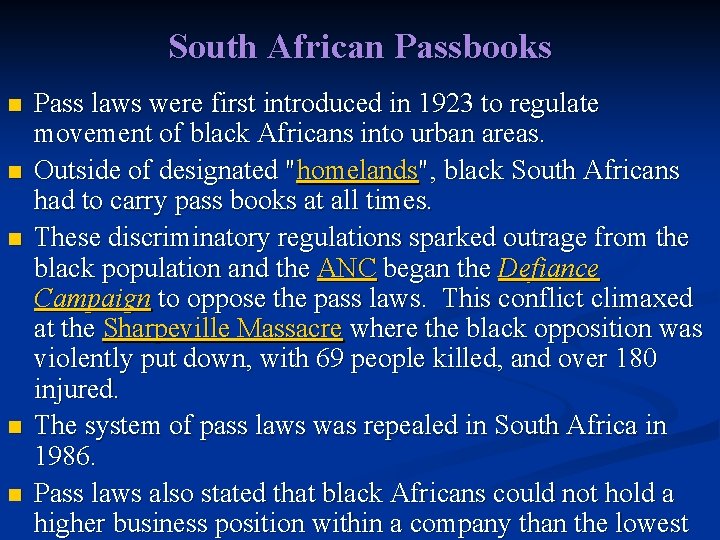
South African Passbooks n n n Pass laws were first introduced in 1923 to regulate movement of black Africans into urban areas. Outside of designated "homelands", black South Africans had to carry pass books at all times. These discriminatory regulations sparked outrage from the black population and the ANC began the Defiance Campaign to oppose the pass laws. This conflict climaxed at the Sharpeville Massacre where the black opposition was violently put down, with 69 people killed, and over 180 injured. The system of pass laws was repealed in South Africa in 1986. Pass laws also stated that black Africans could not hold a higher business position within a company than the lowest
South Africa and Apartheid Reading Notes 1. • • • What was apartheid? a policy of legal segregation and discrimination based on race in South Africa Means “separateness” in Afrikaans Implemented by the National Party in 1948
2. Describe how apartheid was structured: People were classified into four main groups: n Blacks: all Africans n Whites: people of European heritage n Coloreds: people of mixed race n Asians: most were from India
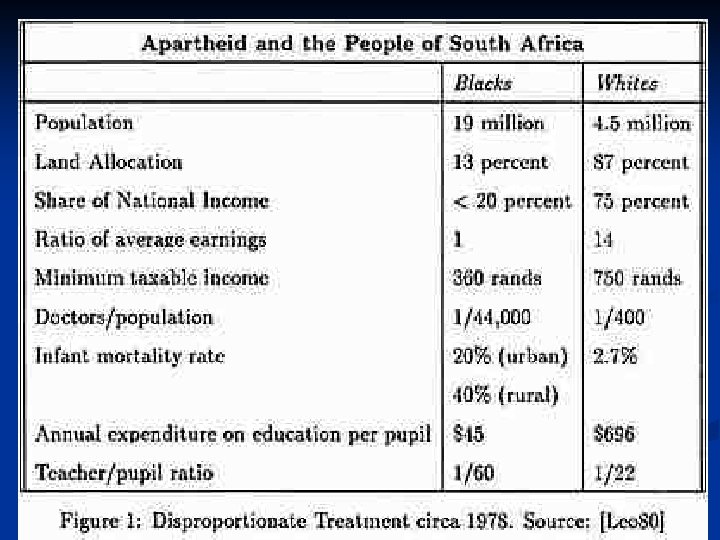
3. What are some ways the apartheid system treated blacks? Determined where they could live – thousands were forced to move to homelands n Not allowed to vote n Kept in lowest paying jobs n Put in poor schools n Banned from white hospitals, schools, and restaurants n Required them to carry passbooks wherever they went n
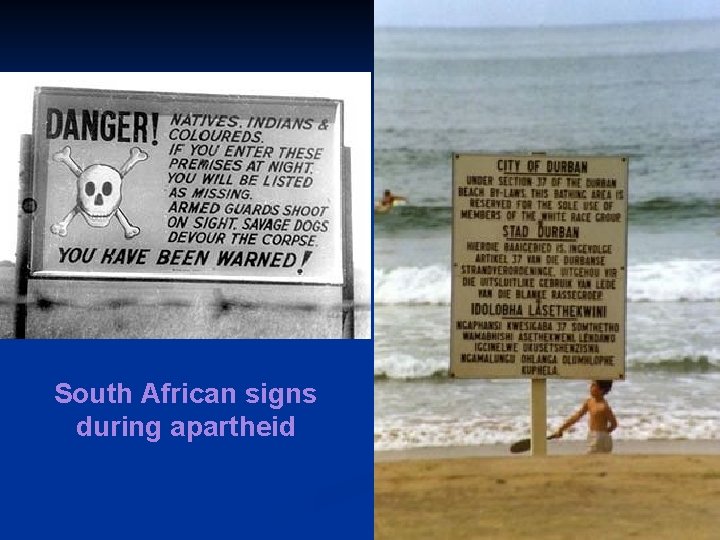
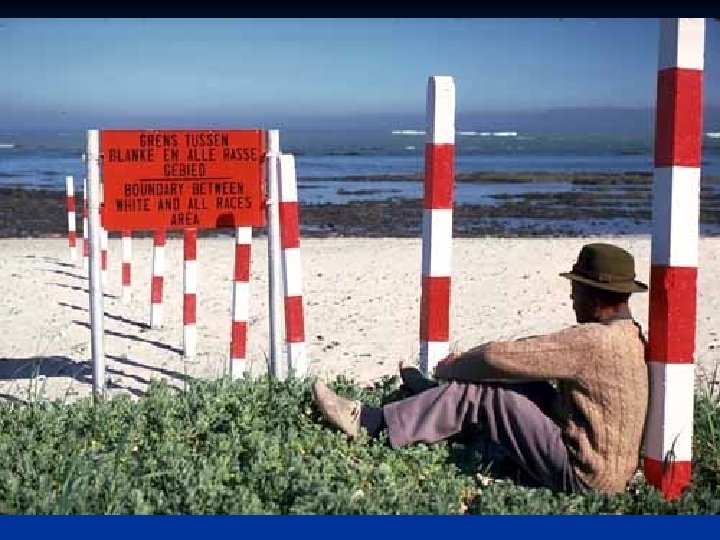
South African signs during apartheid

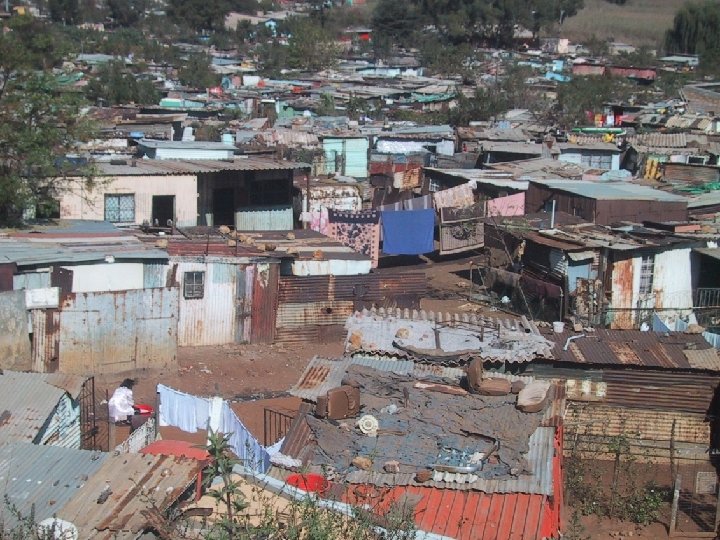
Houses in Soweto, a black township
4. What are some reasons why many white South Africans wanted to keep the apartheid system, even though it was tearing their country apart? They enjoyed the privileges they had under apartheid n Were worried they would be discriminated against by the black majority (for jobs, etc. ) n Feared their children’s education would suffer in mixed-race schools n
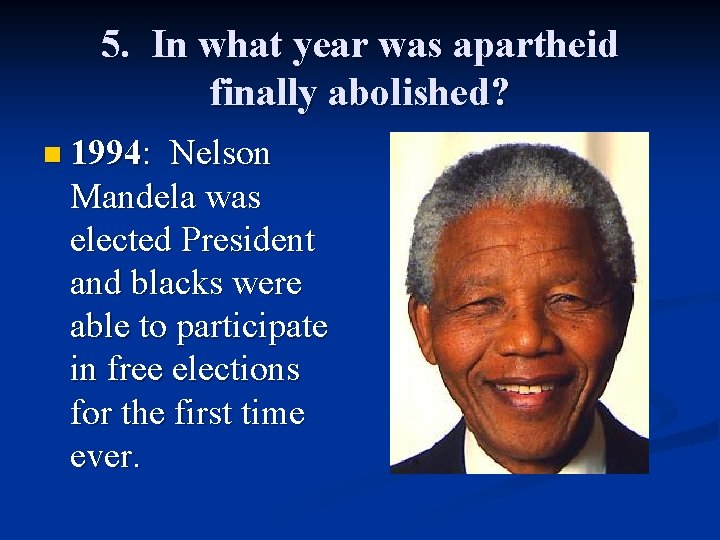
5. In what year was apartheid finally abolished? n 1994: Nelson Mandela was elected President and blacks were able to participate in free elections for the first time ever.
6. What are some reasons why the white-run government agreed to dismantle the apartheid system? Growing international sentiment against apartheid (nations stopped trading with S. A. , athletes were banned from the Olympics and other sporting events) n Weakening economy n Growing protests n
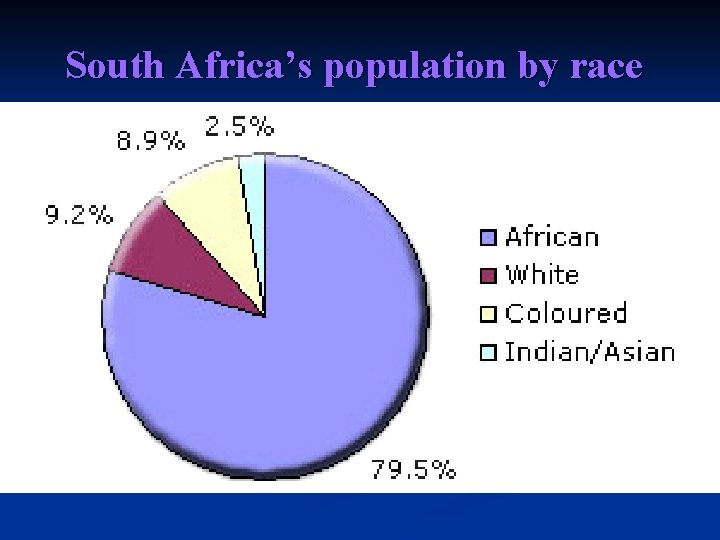
South Africa’s population by race
Vocabulary n Homeland: poor rural areas where blacks were forced to live – had the driest and least fertile land n Afrikaners: people born and/or raised in Africa who were of Dutch descent n Afrikaans: the language of Afrikaners (based on Dutch)
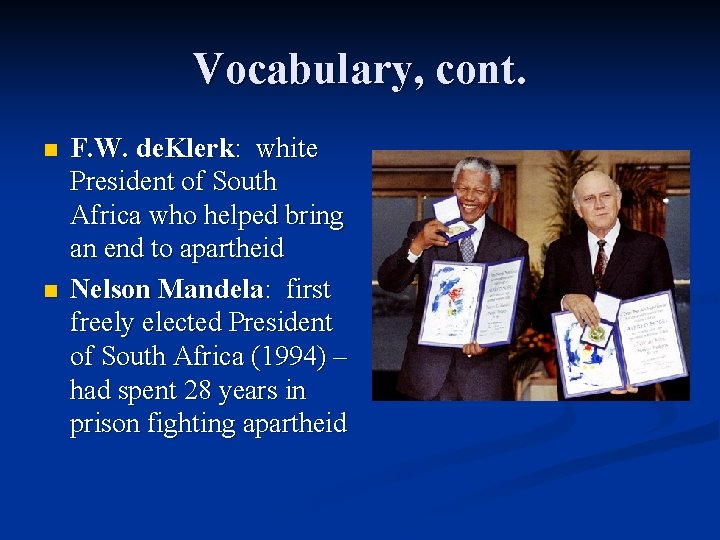
Vocabulary, cont. n n F. W. de. Klerk: white President of South Africa who helped bring an end to apartheid Nelson Mandela: first freely elected President of South Africa (1994) – had spent 28 years in prison fighting apartheid
- Slides: 18