
South Africa 1890 1960 HI 177 A History
- Slides: 12
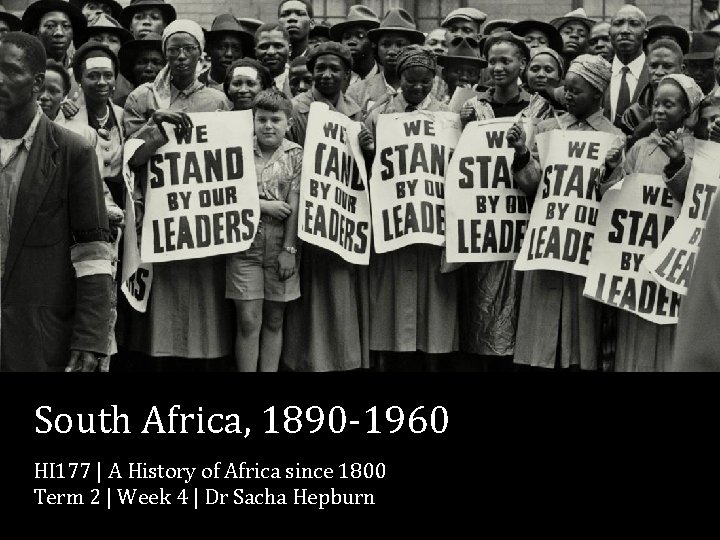
South Africa, 1890 -1960 HI 177 | A History of Africa since 1800 Term 2 | Week 4 | Dr Sacha Hepburn
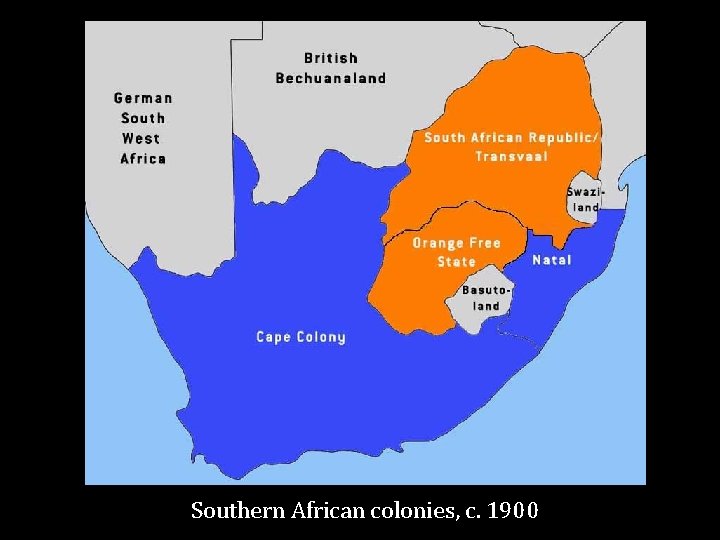
Southern African colonies, c. 1900
Diamonds and Gold • Kimberley diamond mining from 1867 • By 1890, £ 3 M per annum - 50% of Cape revenue • 18, 000 black workers • Cecil Rhodes & De Beers • Cape legislation entrenched white dominance to secure black labour for mines and farms • Witwatersrand gold mines, 1880 s • Prospectors, profiteers, technicians flooded in • Needed large capital (Randlords), and migrant labour • 1899: 27% world gold, 100, 000 workers 1913: 40% (£ 30 M), 200, 000 workers
The South African War • Jameson Raid (1895) – Rhodes’ “capitalist politics” • Transvaal Republic under Kruger • Imperial strategy – did Britain want to annex the Transvaal? • War: 28, 000 Boer civilians killed. 7000 Boers soldiers, 20, 000 British • 1910: Boer Republics and British colonies were joined in the Union of South Africa
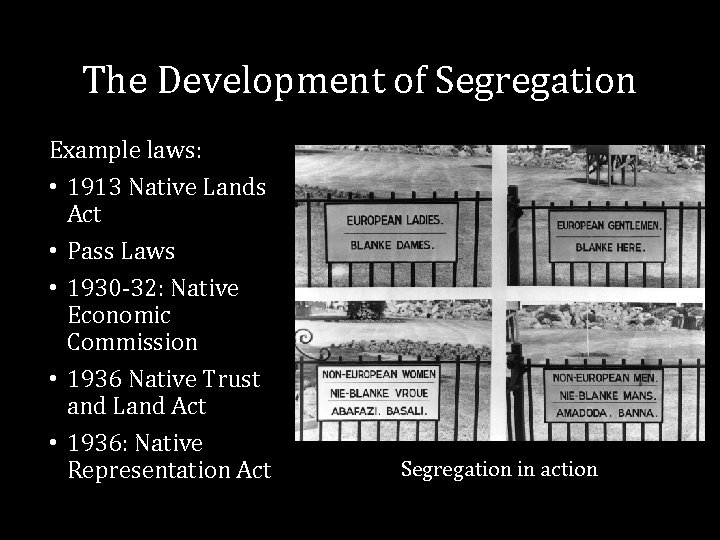
The Development of Segregation Example laws: • 1913 Native Lands Act • Pass Laws • 1930 -32: Native Economic Commission • 1936 Native Trust and Land Act • 1936: Native Representation Act Segregation in action
Nationalisms • Afrikaner nationalism • Afrikaner nationhood and identity: white Africans • Understood themselves as a pioneer people who had tamed the landscape and cultivated in ‘empty lands’ • Christian Nationalism • National Party, founded in 1914 • African nationalism • African National Congress, founded in 1912 • Alternative politics • South African Indian Congress, founded in 1923 • South African Communist Party, founded in 1921
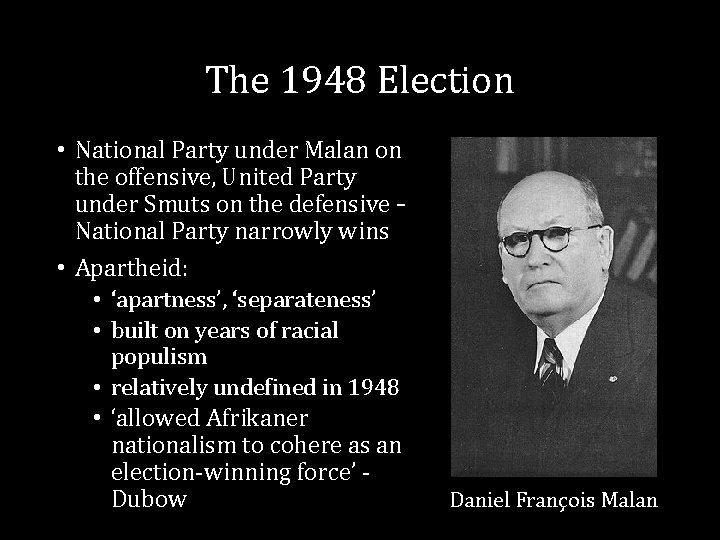
The 1948 Election • National Party under Malan on the offensive, United Party under Smuts on the defensive – National Party narrowly wins • Apartheid: • ‘apartness’, ‘separateness’ • built on years of racial populism • relatively undefined in 1948 • ‘allowed Afrikaner nationalism to cohere as an election-winning force’ Dubow Daniel François Malan
The Early Years of Apartheid • Apartheid vs earlier policies of racial segregation • ‘Positives’ of separate development for all races (but particular appealing to Afrikaners) • Social engineering rigidified • E. g. Mixed Marriages Act, 1949; Immorality Act, 1950; Population Registration Act, 1950 • Social and economic progress secured by race • Political separation • E. g. Suppression of Communism Act, 1950; Separate Representation of Voters Act, 1951 • Structural inequality • E. g. Group Areas Act, 1950; Black Laws Amendment Act, 1952
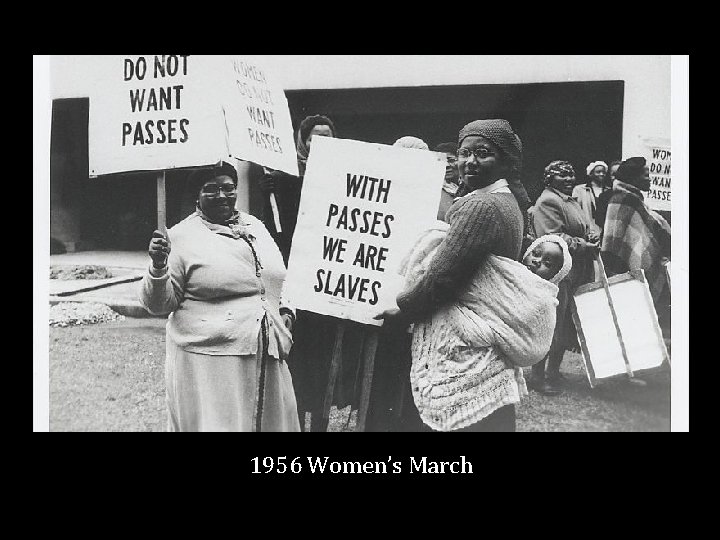
1956 Women’s March
Resistance to apartheid • ANC, SAIC, SACD = Congress Alliance under ANC leadership • Defiance campaign, 1952 • Freedom Charter, 1955 • The Treason Trial, 1956 -61 • Pan African Congress formed and joins Congress Alliance • But, a splintered opposition • Urban-rural divisions in ANC • ANC members leave over non-racial policy of Freedom Charter • PAC breaks from Congress over white and left influence
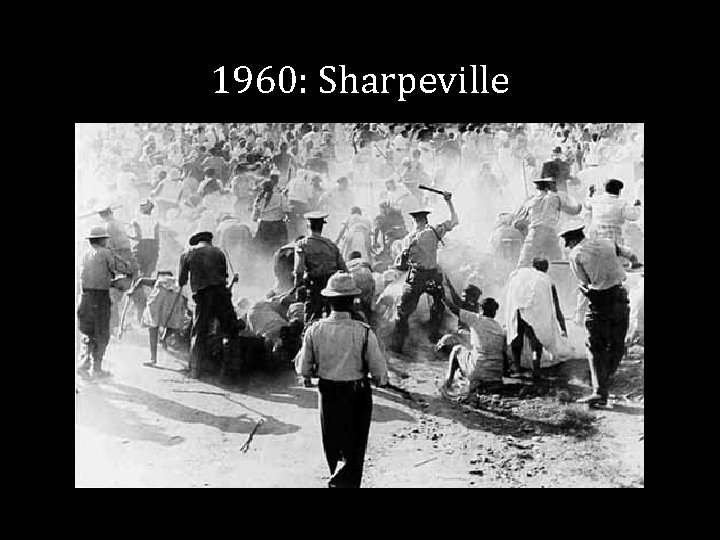
1960: Sharpeville
Sharpeville and beyond… • PAC wanted deliberate, determined action against the government and apartheid • March 1960: sponsors anti-pass campaign in Sharpeville • Police repression: 69 killed, many more injured • Protests across South Africa lead to police repression • ANC and PAC banned; activists driven underground or into exile; move towards armed struggle • ANC shifts from nationalist protest movement to a national liberation movement