
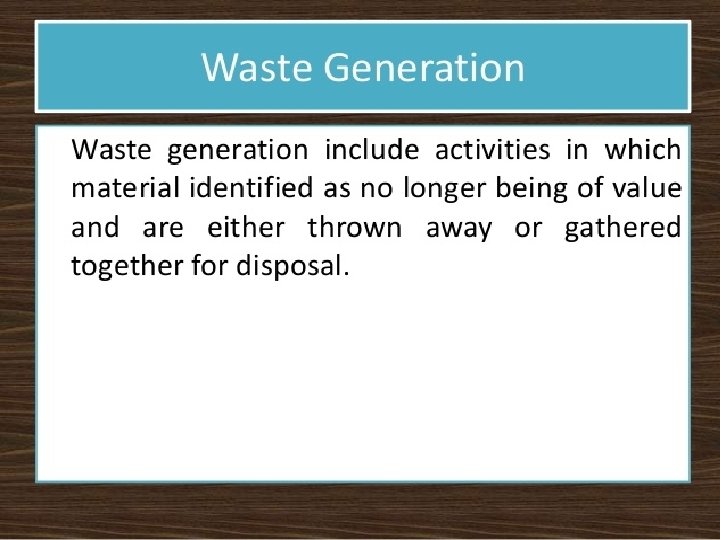
SOURCES OF WASTE GENERATION IN LAHORE Household Waste



- Slides: 51
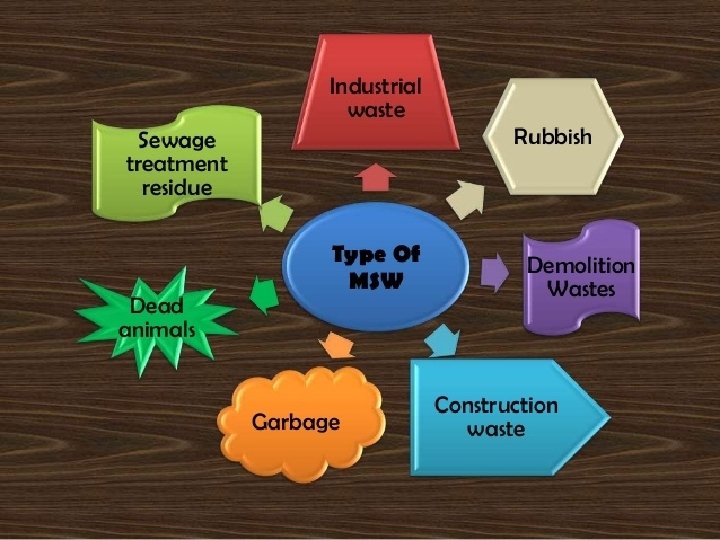
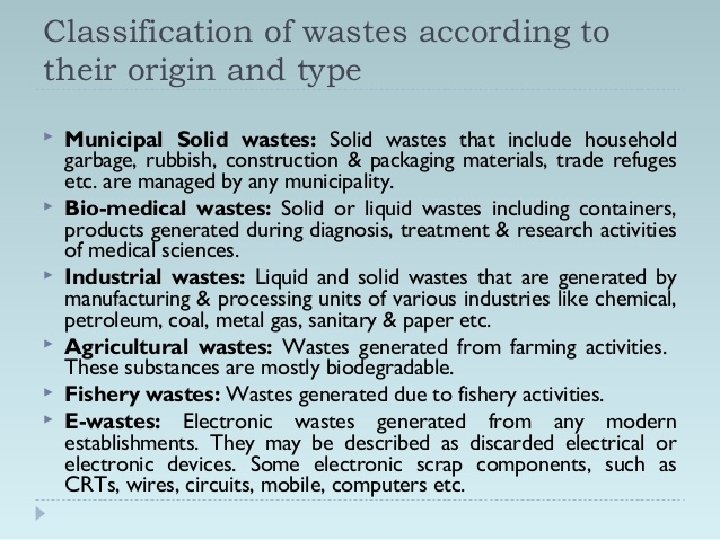
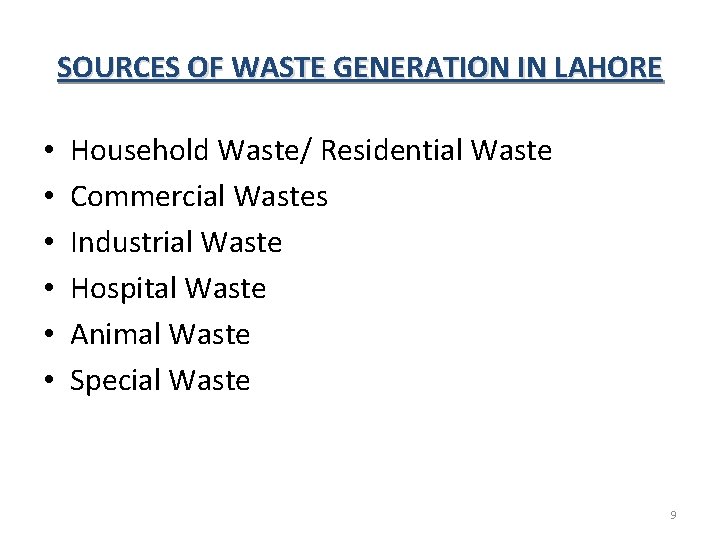
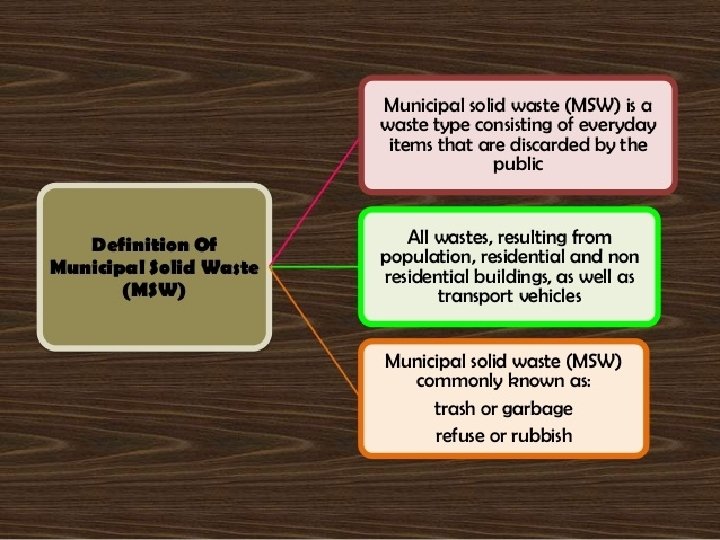
SOURCES OF WASTE GENERATION IN LAHORE • • • Household Waste/ Residential Waste Commercial Wastes Industrial Waste Hospital Waste Animal Waste Special Waste 9
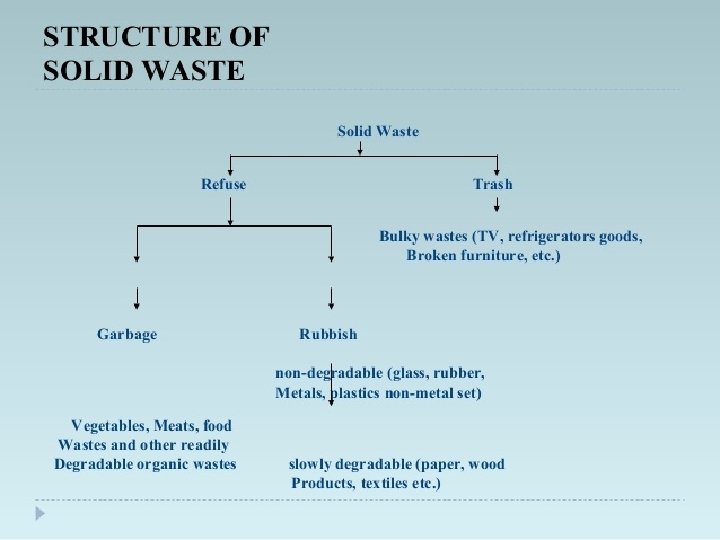
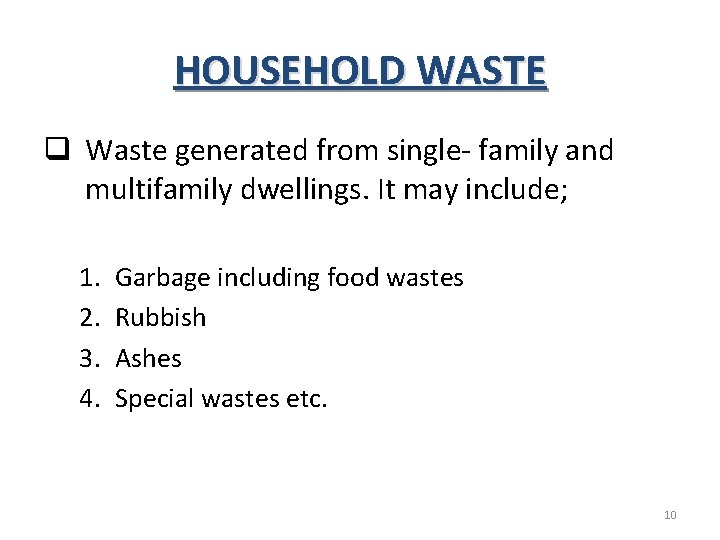
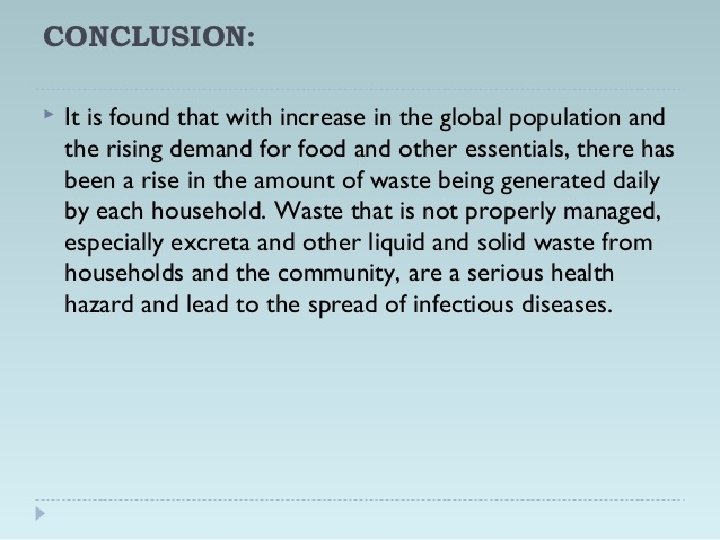
HOUSEHOLD WASTE q Waste generated from single- family and multifamily dwellings. It may include; 1. 2. 3. 4. Garbage including food wastes Rubbish Ashes Special wastes etc. 10
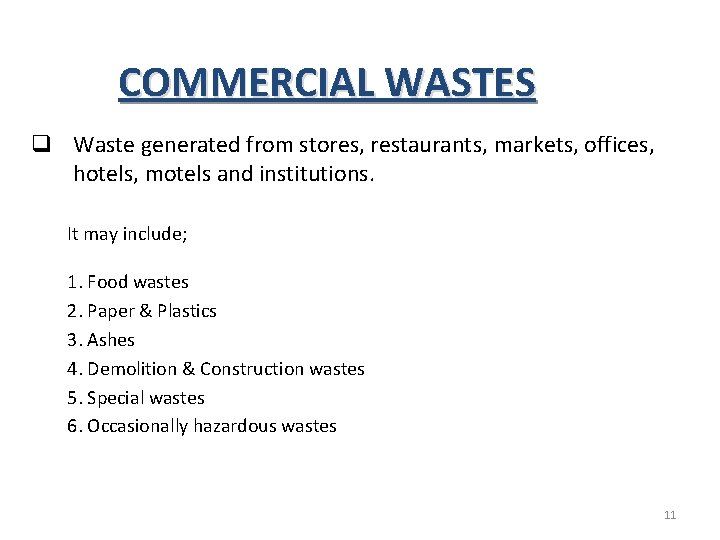
COMMERCIAL WASTES q Waste generated from stores, restaurants, markets, offices, hotels, motels and institutions. It may include; 1. Food wastes 2. Paper & Plastics 3. Ashes 4. Demolition & Construction wastes 5. Special wastes 6. Occasionally hazardous wastes 11
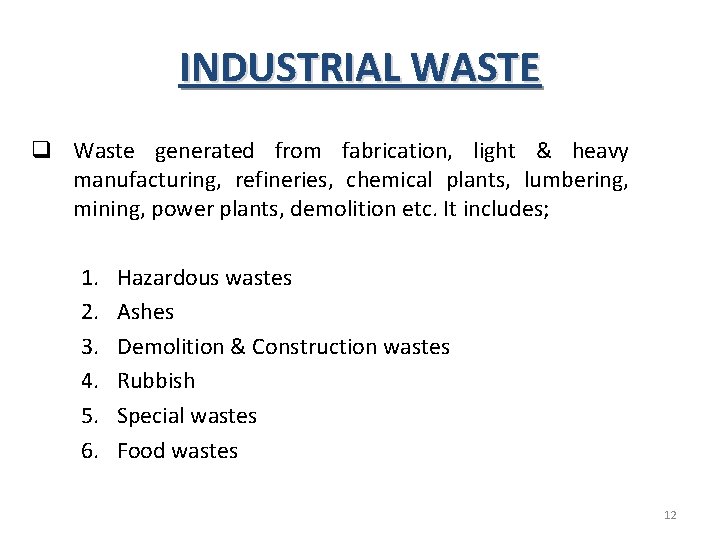
INDUSTRIAL WASTE q Waste generated from fabrication, light & heavy manufacturing, refineries, chemical plants, lumbering, mining, power plants, demolition etc. It includes; 1. 2. 3. 4. 5. 6. Hazardous wastes Ashes Demolition & Construction wastes Rubbish Special wastes Food wastes 12
HOSPITAL WASTE q Waste generated from Government & Private hospitals, dispensaries etc. It includes; Non infectious (85%) Infectious (15%) 1. Infectious agents 2. Sharp objects 3. Genotoxic material 4. Chemical toxins 5. Radioactive material 13
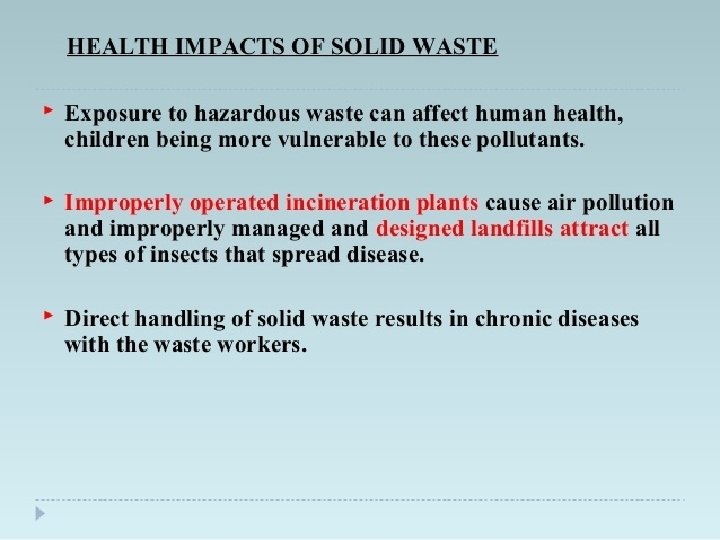
Health Impact And Types 14
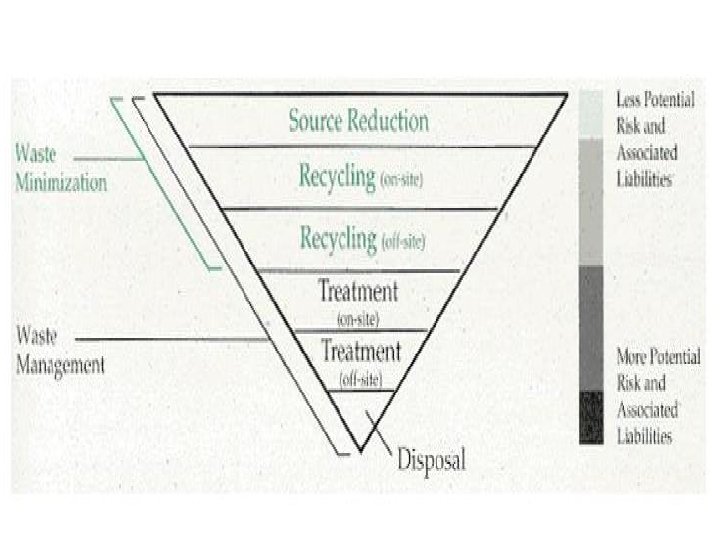
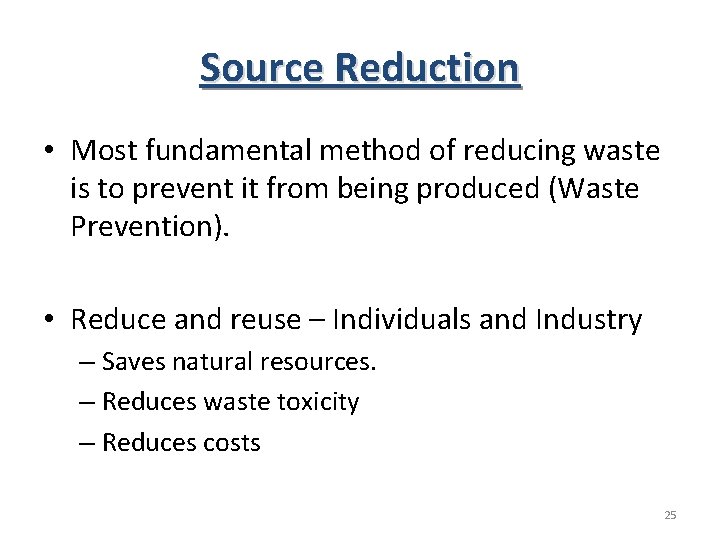
Source Reduction • Most fundamental method of reducing waste is to prevent it from being produced (Waste Prevention). • Reduce and reuse – Individuals and Industry – Saves natural resources. – Reduces waste toxicity – Reduces costs 25
Reduce , Reuse & Recycle 26
THE 3 R’S • Three great ways you can eliminate waste and protect your environment! • Manufacturers extracting natural resources, such as bauxite or aluminum ore, and refining them to make products use energy in the process. Often, burning fossil fuels generates this energy. When people throw those items away, they send them to landfills where they may take centuries or longer to break down completely. Reducing, reusing and recycling help reduce humanity's environmental footprint, carbon dioxide emissions and energy use and limits the amount of landfill space people create. These savings can be substantial; recycling aluminum uses only 5 percent of the energy required to refine aluminum. That's why the three Rs are the basic tenets of modern environmentalism.
REDUCE: REDUCE • Let's start with the first R, which is REDUCE. The three Rs are really a waste management hierarchy with reduce being the most important strategy. In order to reduce the amount of waste produced, it is essential to focus on the source of the waste, or where the waste is originally coming from. Source reduction is when products are designed, manufactured, packaged, and used in a way that limits the amount or toxicity of waste created. • The first goal of source reduction is simply to reduce the overall amount of waste that is produced. The second goal is to conserve resources by not using raw, virgin materials. In other words, by following source reduction, fewer raw materials will have to be used to produce products. • Some common industrial examples of source reduction include the creation of merchandise using fewer materials
REUSE: • The second most important strategy of the three Rs is to reuse, which is when an item is cleaned and the materials are used again. This concept can be difficult because we currently live in a world with many disposable items and it takes some imagination and creativity to see how items can be reused. • There are two main ways that the concept of reusing can be applied to reduce waste. First, when purchasing a new item, you can look for a product that can be used repeatedly instead of a version that is only used once and thrown away. The second way to reuse is to buy an item secondhand, borrow, or rent an item, instead of buying the product new.
RECYCLE: • Recycling is a process to convert wastes materials into reusable material to prevent waste of potentially useful materials, reduce the consumption of fresh raw materials, reduce energy usage, reduce air pollution and water pollution by reducing the need for "conventional" waste disposal and lower greenhouse gas emissions as compared to plastic production. Recycling is a key component of modern waste reduction and is the third component of the reduce and reuse • Recyclable materials include many kinds of glass, paper, metal, plastic, textiles and electronics. The composting or other reuse of biodegradable waste such as food or garden waste is also considered recycling. Materials to be recycled are either brought to a collection center or picked up from the curbside, then sorted, cleaned and reprocessed into new materials destined for manufacturing.
EXISTING SWM SYSTEM & PRACTICES IN LAHORE 32
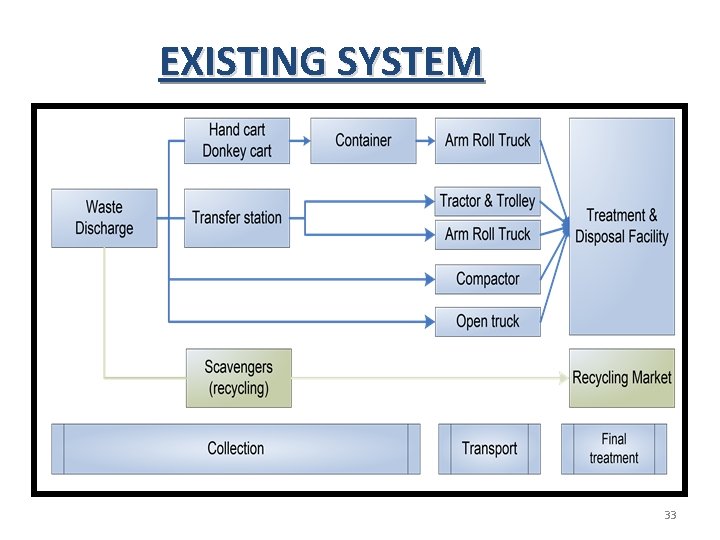
EXISTING SYSTEM 33
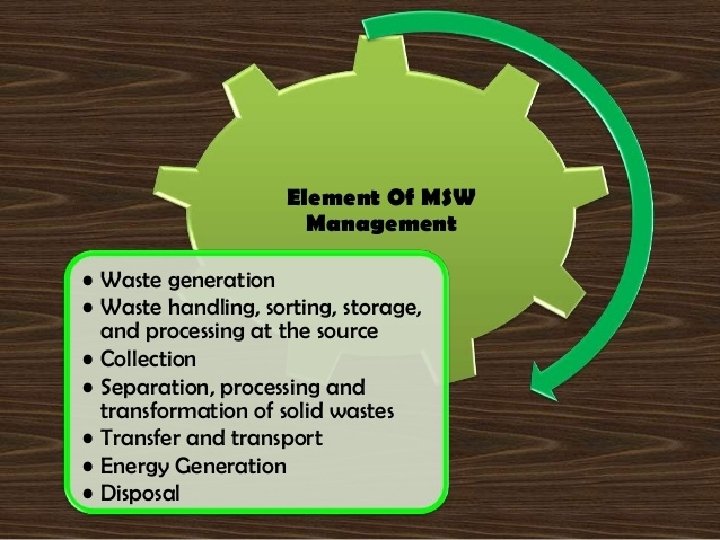
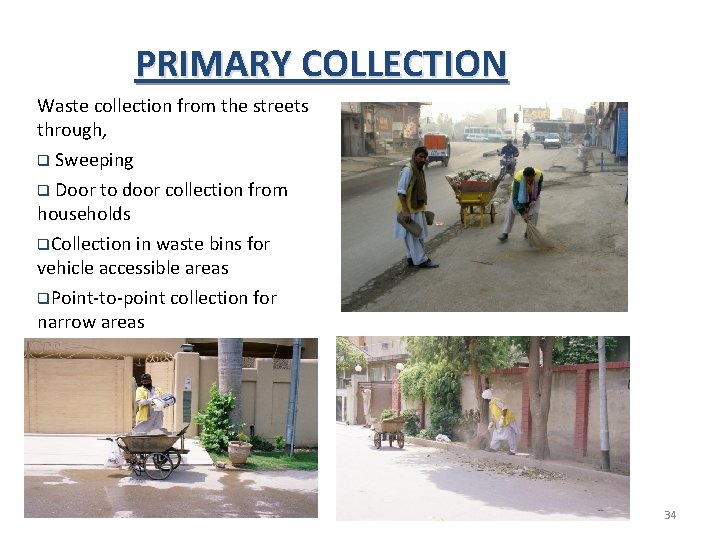
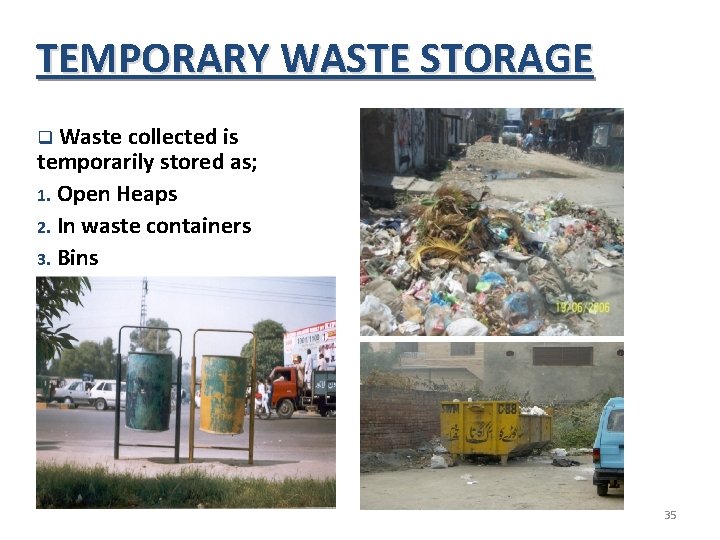
PRIMARY COLLECTION Waste collection from the streets through, q Sweeping q Door to door collection from households q. Collection in waste bins for vehicle accessible areas q. Point-to-point collection for narrow areas 34
TEMPORARY WASTE STORAGE Waste collected is temporarily stored as; 1. Open Heaps 2. In waste containers 3. Bins q 35
DISPOSAL THROUGH RDF q Refused Derived Fuel (RDF) consists of the organic components of municipal, commercial and non hazardous industrial solid waste but can also include plastics and other residues, depending on collection techniques. q RDF also contains inorganic residues that remain after removing the recyclable materials such as aluminum, glass, tin and iron based materials. q This processing of the solid waste stream is intended to raise the fuel value of the waste. q Internationally, RDF has complied with Kyoto Protocol measures and is considered a renewable fuel. q RDF averages 6000 BTUs per pound. Coal, in comparison can yield 8100 – 13000 BTUs per pound. 36
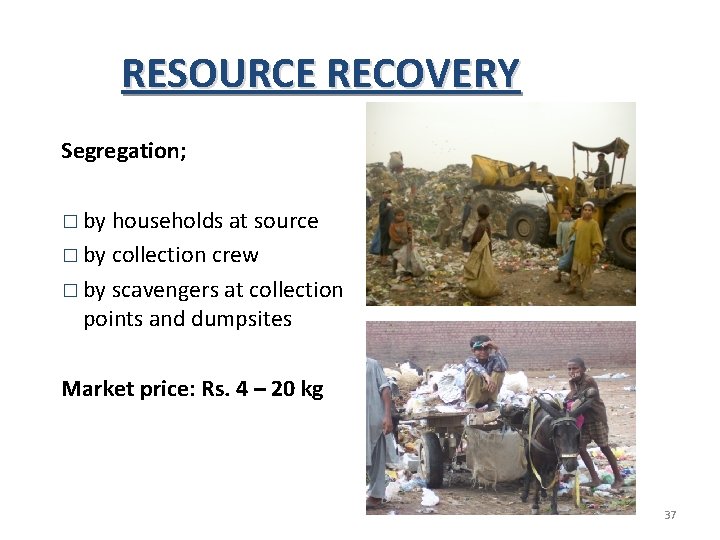
RESOURCE RECOVERY Segregation; � by households at source � by collection crew � by scavengers at collection points and dumpsites Market price: Rs. 4 – 20 kg 37
Waste Reduction 38
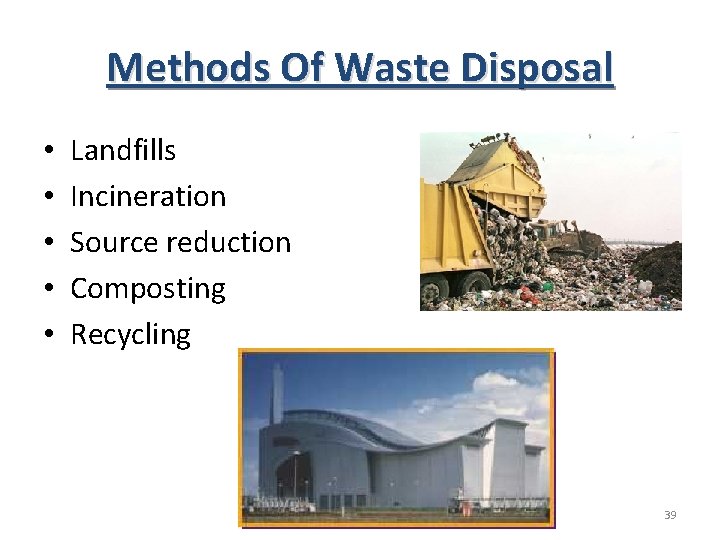
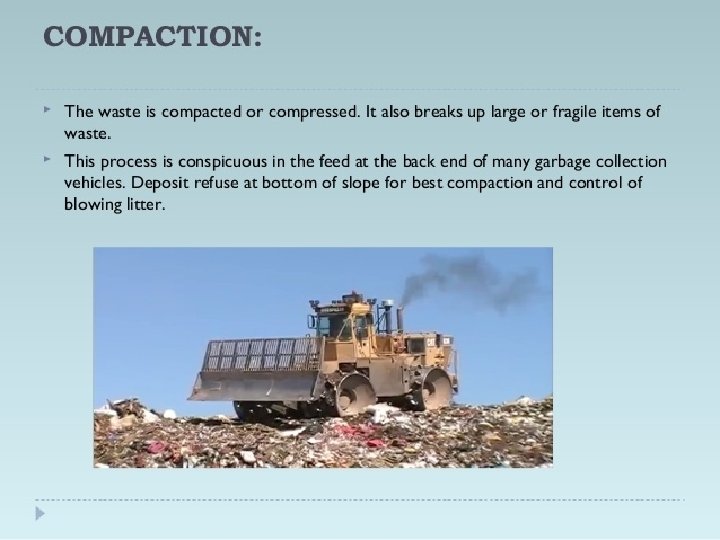
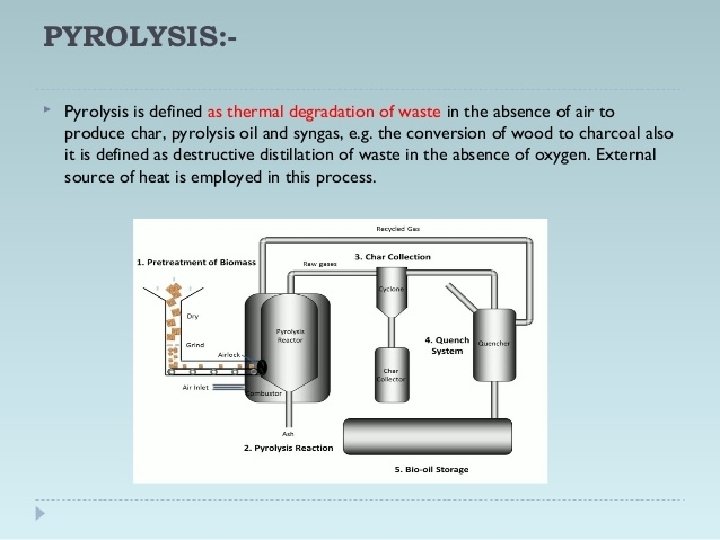
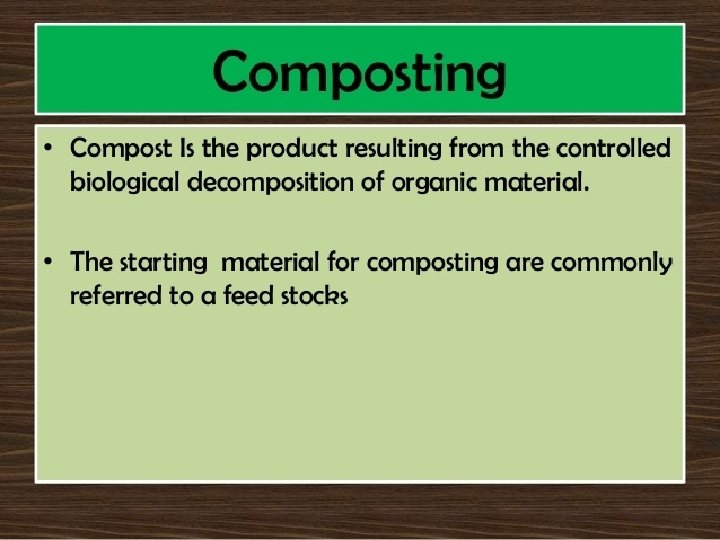
Methods Of Waste Disposal • • • Landfills Incineration Source reduction Composting Recycling 39
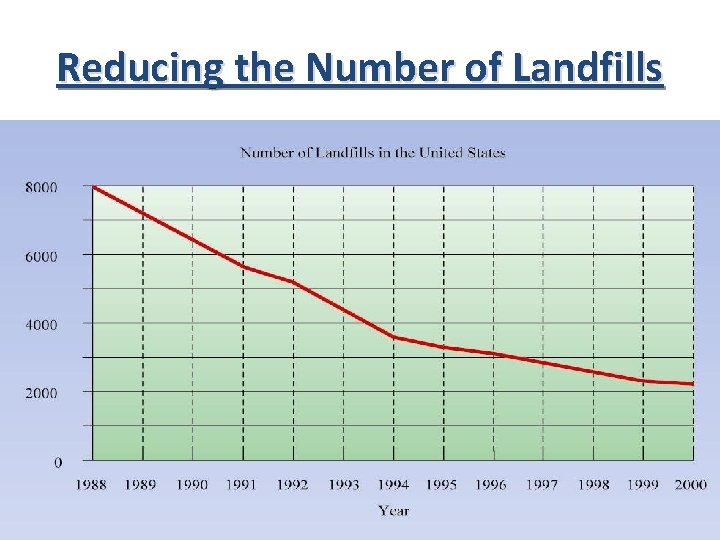
Reducing the Number of Landfills 42
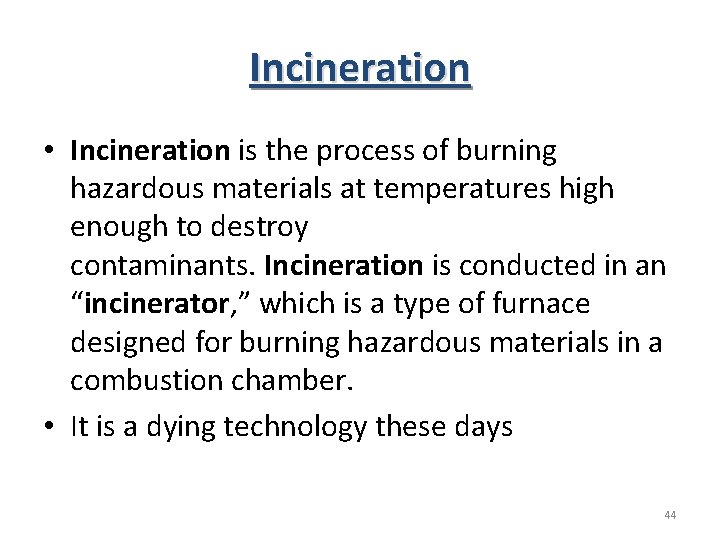
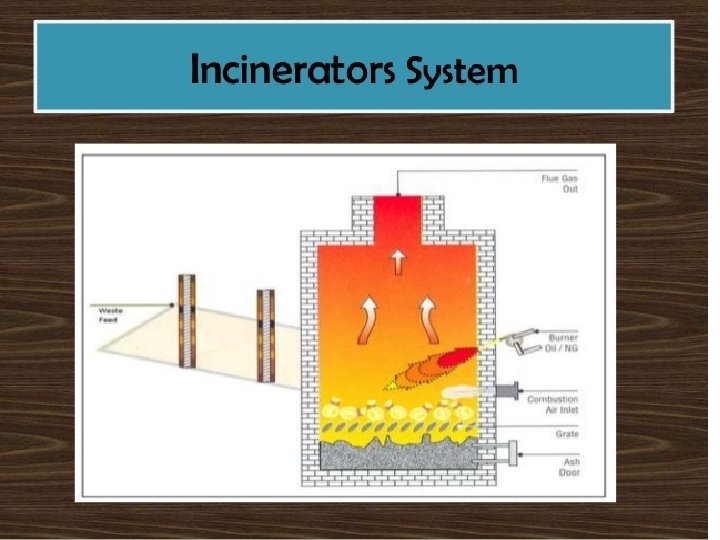
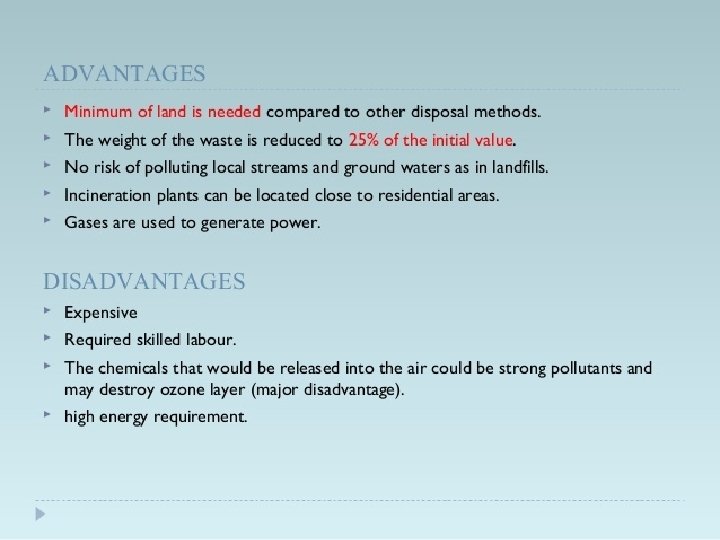
Incineration • Incineration is the process of burning hazardous materials at temperatures high enough to destroy contaminants. Incineration is conducted in an “incinerator, ” which is a type of furnace designed for burning hazardous materials in a combustion chamber. • It is a dying technology these days 44
48
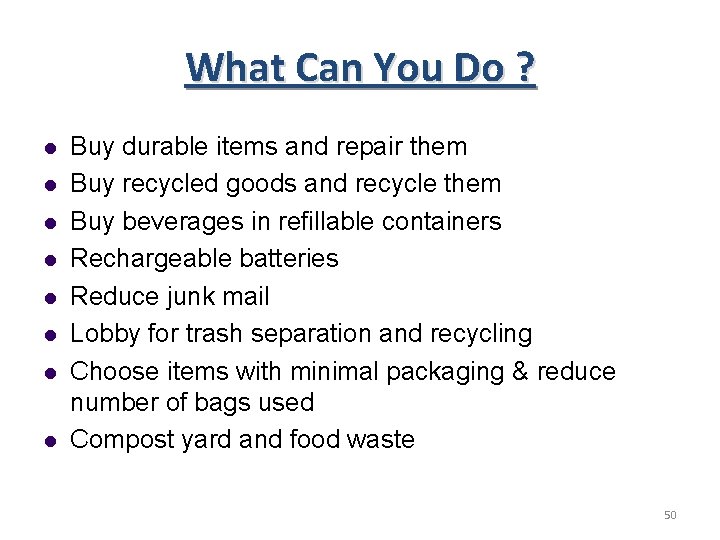
What Can You Do ? l l l l Buy durable items and repair them Buy recycled goods and recycle them Buy beverages in refillable containers Rechargeable batteries Reduce junk mail Lobby for trash separation and recycling Choose items with minimal packaging & reduce number of bags used Compost yard and food waste 50
51