
Sources of Variation 1 Introduction 1 a A
- Slides: 10
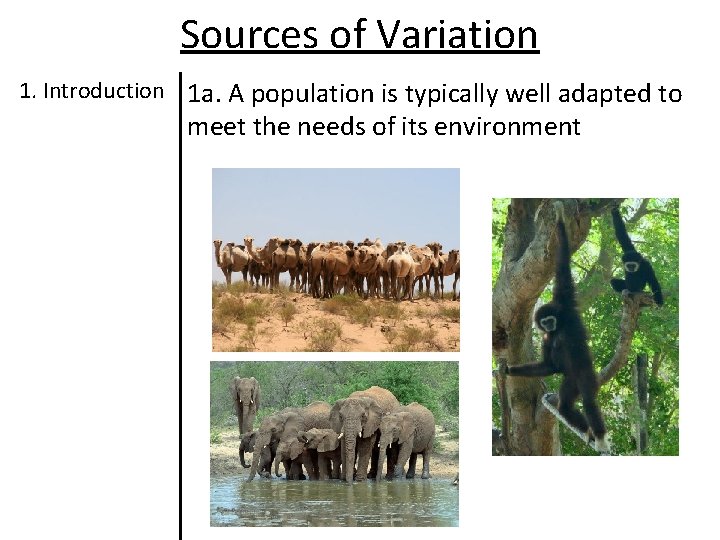
Sources of Variation 1. Introduction 1 a. A population is typically well adapted to meet the needs of its environment
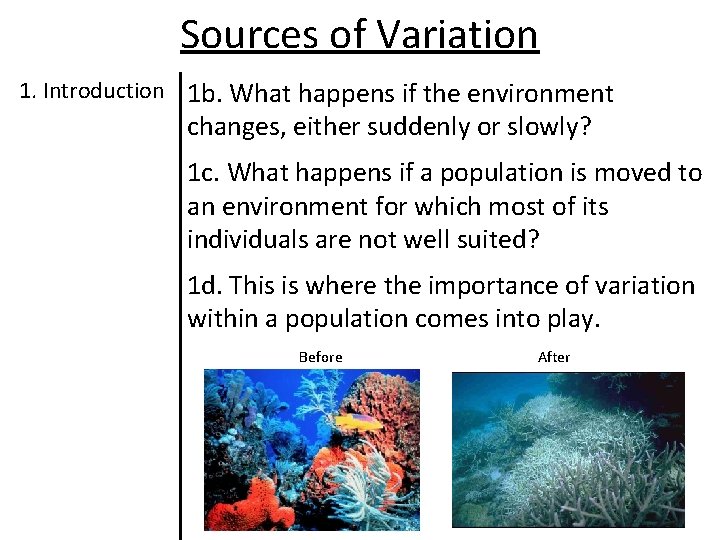
Sources of Variation 1. Introduction 1 b. What happens if the environment changes, either suddenly or slowly? 1 c. What happens if a population is moved to an environment for which most of its individuals are not well suited? 1 d. This is where the importance of variation within a population comes into play. Before After
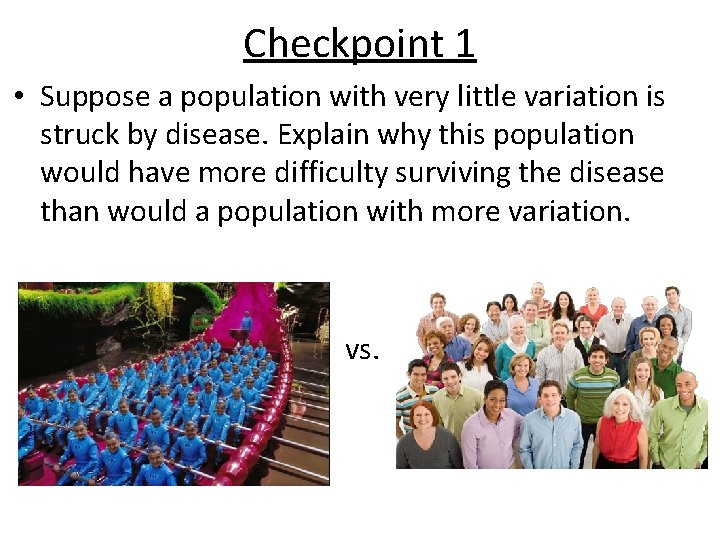
Checkpoint 1 • Suppose a population with very little variation is struck by disease. Explain why this population would have more difficulty surviving the disease than would a population with more variation. vs.
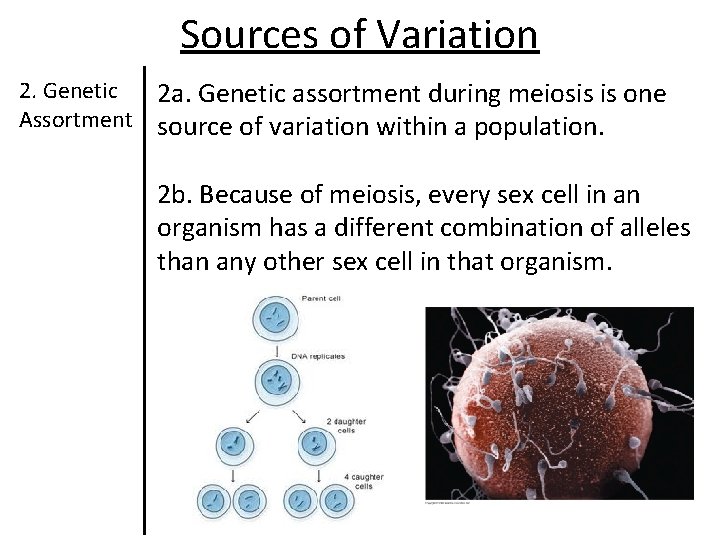
Sources of Variation 2. Genetic Assortment 2 a. Genetic assortment during meiosis is one source of variation within a population. 2 b. Because of meiosis, every sex cell in an organism has a different combination of alleles than any other sex cell in that organism.
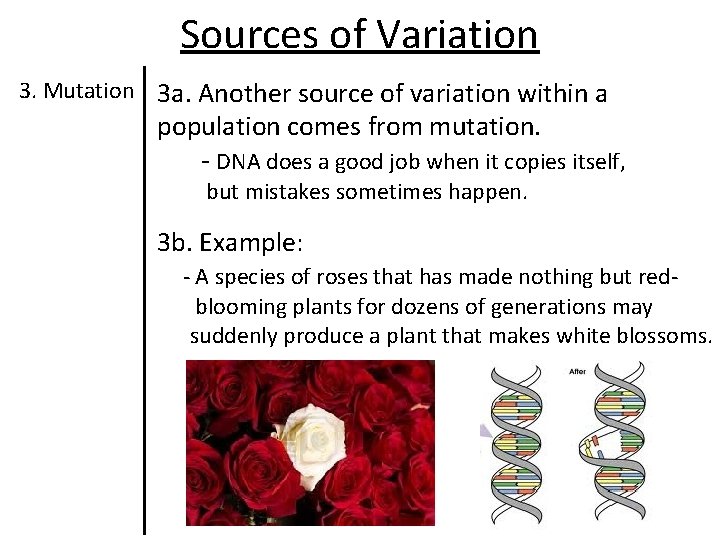
Sources of Variation 3. Mutation 3 a. Another source of variation within a population comes from mutation. - DNA does a good job when it copies itself, but mistakes sometimes happen. 3 b. Example: - A species of roses that has made nothing but redblooming plants for dozens of generations may suddenly produce a plant that makes white blossoms.
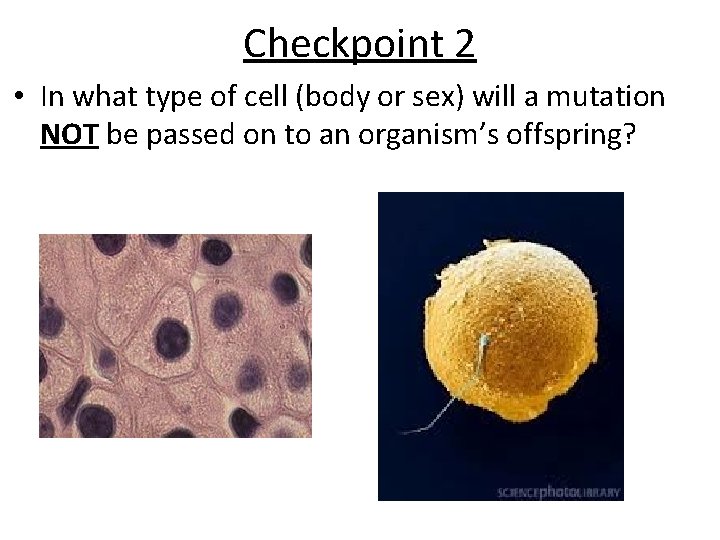
Checkpoint 2 • In what type of cell (body or sex) will a mutation NOT be passed on to an organism’s offspring?
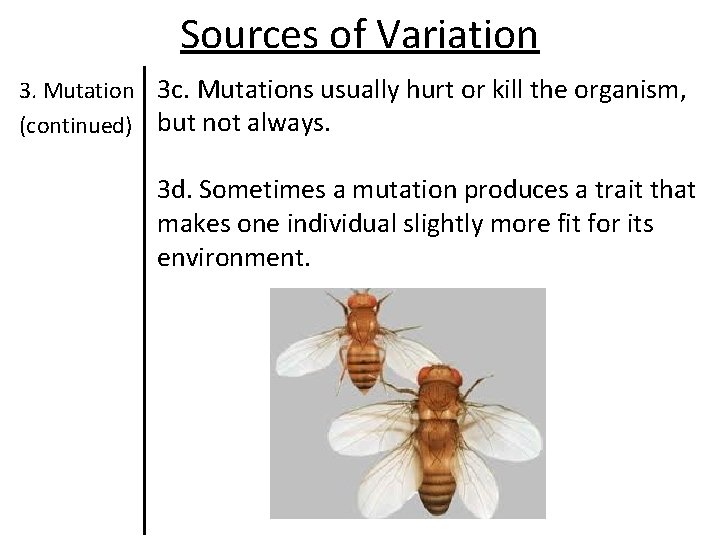
Sources of Variation 3. Mutation 3 c. Mutations usually hurt or kill the organism, (continued) but not always. 3 d. Sometimes a mutation produces a trait that makes one individual slightly more fit for its environment.
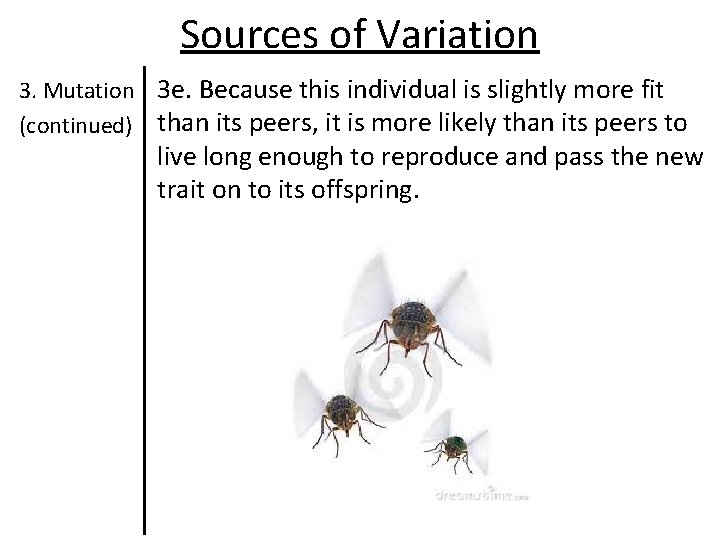
Sources of Variation 3. Mutation 3 e. Because this individual is slightly more fit (continued) than its peers, it is more likely than its peers to live long enough to reproduce and pass the new trait on to its offspring.
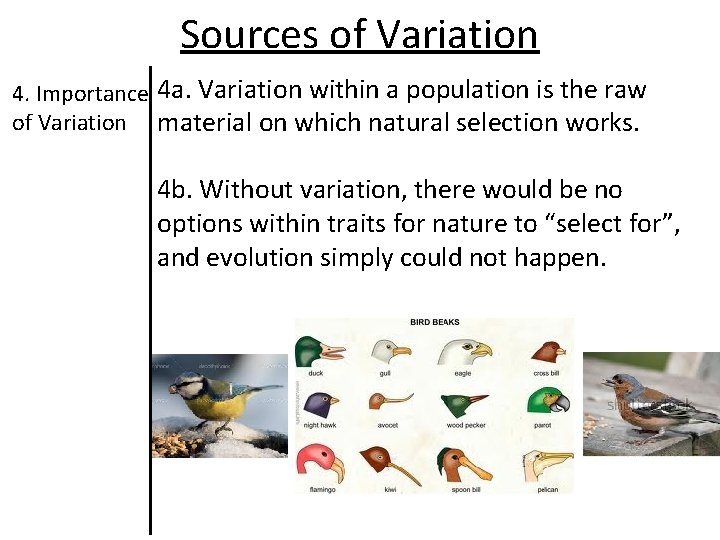
Sources of Variation 4. Importance 4 a. Variation within a population is the raw of Variation material on which natural selection works. 4 b. Without variation, there would be no options within traits for nature to “select for”, and evolution simply could not happen.
Agenda • Assignment: –Sources of Genetic Variation • Homework: –Variation, Adaptation, and Natural Selection Reading Questions.