
Sources of Iron Haem iron sources Nonhaem iron
- Slides: 6
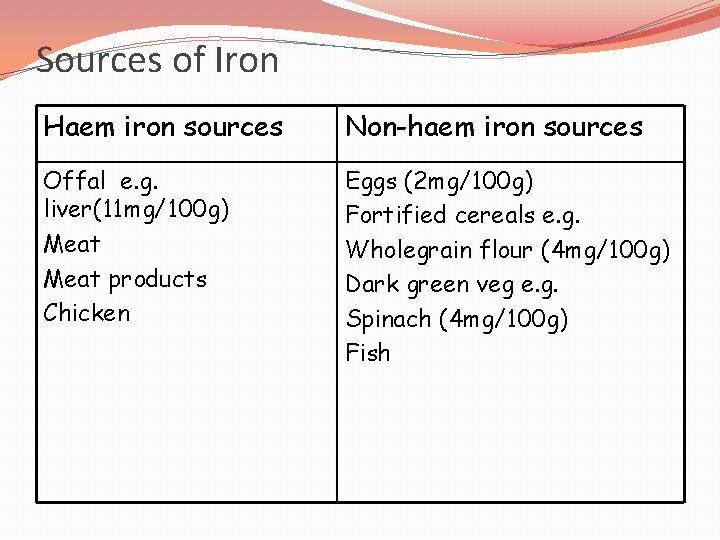
Sources of Iron Haem iron sources Non-haem iron sources Offal e. g. liver(11 mg/100 g) Meat products Chicken Eggs (2 mg/100 g) Fortified cereals e. g. Wholegrain flour (4 mg/100 g) Dark green veg e. g. Spinach (4 mg/100 g) Fish
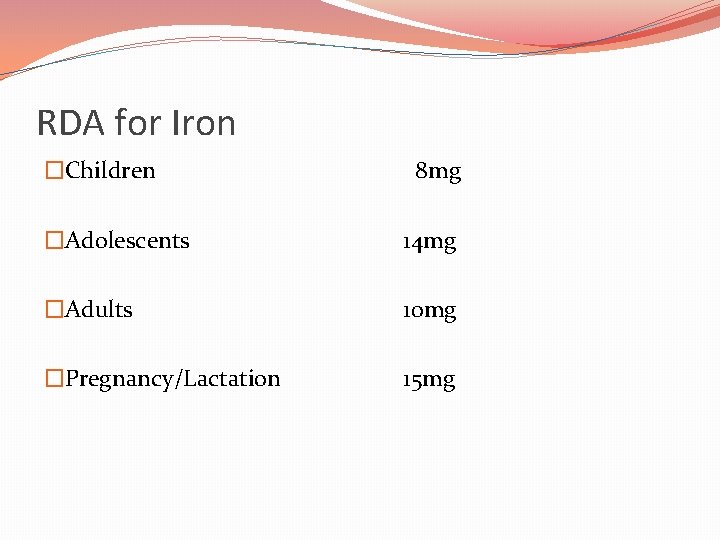
RDA for Iron �Children 8 mg �Adolescents 14 mg �Adults 10 mg �Pregnancy/Lactation 15 mg
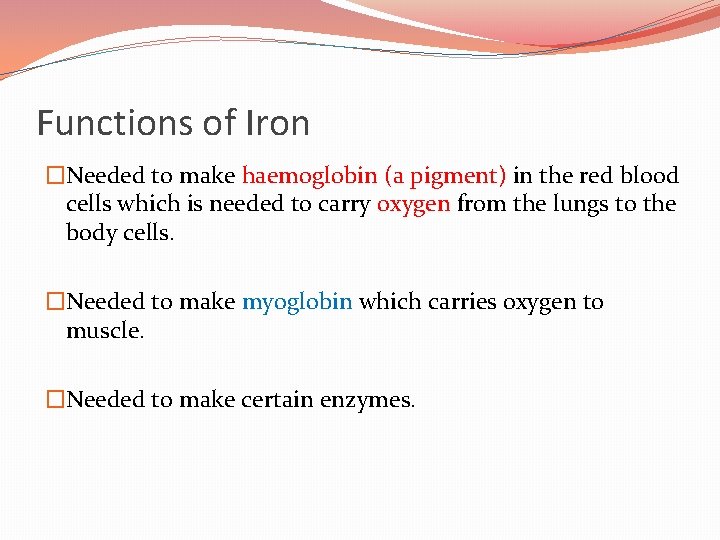
Functions of Iron �Needed to make haemoglobin (a pigment) in the red blood cells which is needed to carry oxygen from the lungs to the body cells. �Needed to make myoglobin which carries oxygen to muscle. �Needed to make certain enzymes.
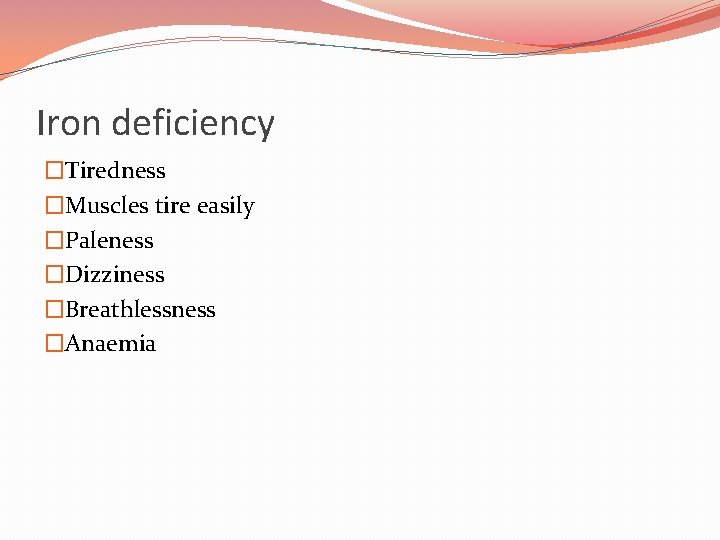
Iron deficiency �Tiredness �Muscles tire easily �Paleness �Dizziness �Breathlessness �Anaemia
Anaemia �Caused by shortage of haemoglobin due to lack of iron in diet or failure to absorb the iron (e. g. from lack of Vitamin C) �More common in females – menstruation �Symptoms: tiredness, dizziness, headaches, paleness, breathlessness, loss of appetite
Absorption of Iron �Only 15% of the iron you eat is absorbed. Things that help iron absorption: �Source: haem iron is easier to absorb �Vit C changes ferric iron to the ferrous state which is easier to absorb. �If haem and non-haem iron are eaten together Things that hinder absorption: �Excess Fibre �Tannins (tea, coffee, red wine) �Phytic acid(in wholegrains), Oxalic acid (rhubarb & strawberries)