
Sources of Hydrogen Ions Due to Metabolic Processes
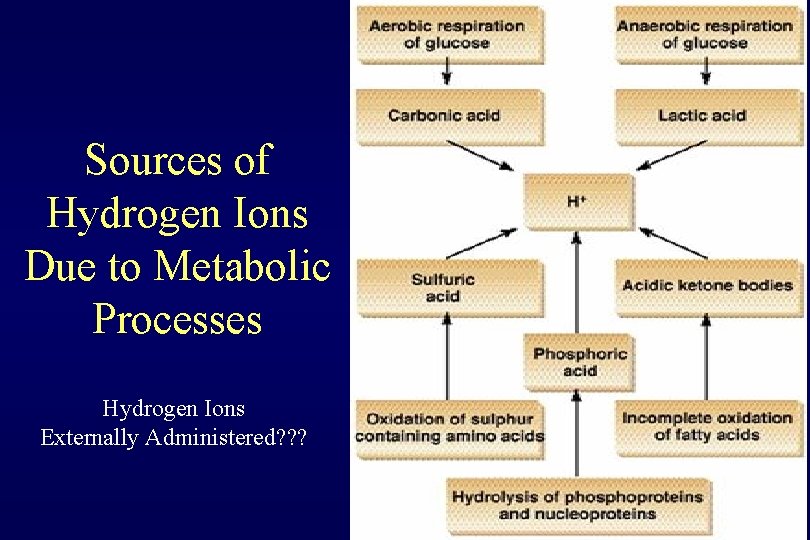
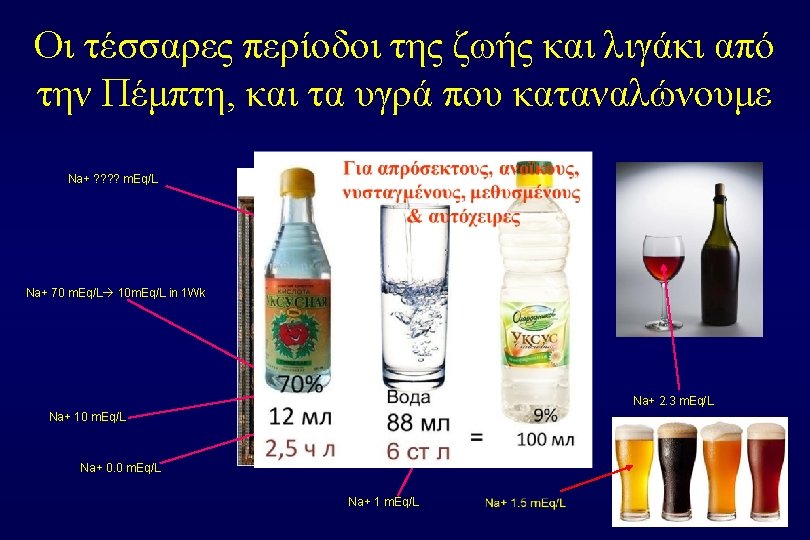
Sources of Hydrogen Ions Due to Metabolic Processes Hydrogen Ions Externally Administered? ? ?
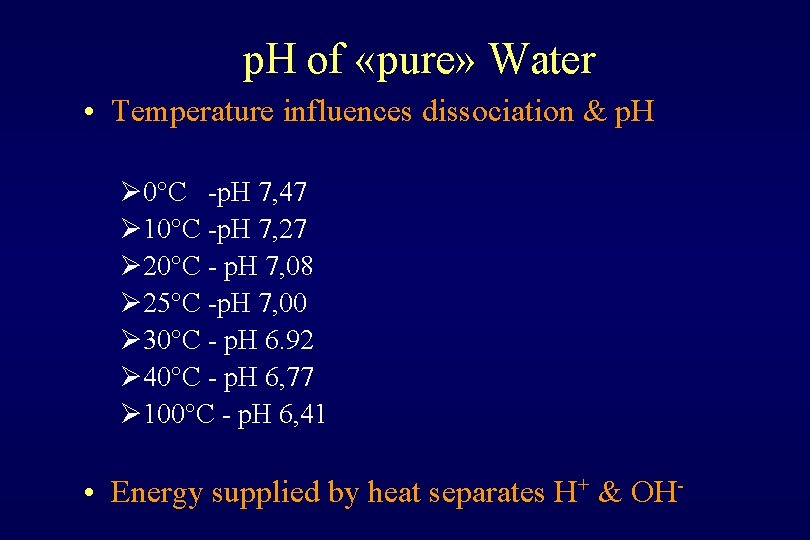
p. H of «pure» Water • Temperature influences dissociation & p. H Ø 0°C -p. H 7, 47 Ø 10°C -p. H 7, 27 Ø 20°C - p. H 7, 08 Ø 25°C -p. H 7, 00 Ø 30°C - p. H 6. 92 Ø 40°C - p. H 6, 77 Ø 100°C - p. H 6, 41 • Energy supplied by heat separates H+ & OH-
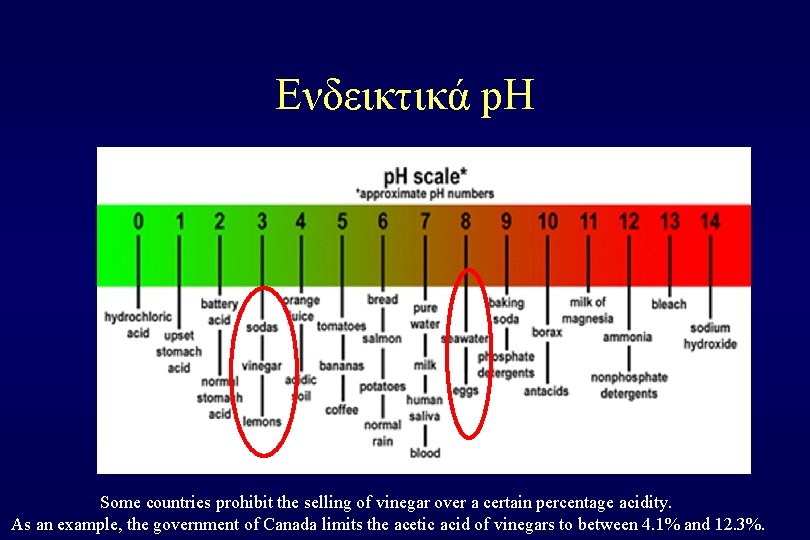
Ενδεικτικά p. H Some countries prohibit the selling of vinegar over a certain percentage acidity. As an example, the government of Canada limits the acetic acid of vinegars to between 4. 1% and 12. 3%.
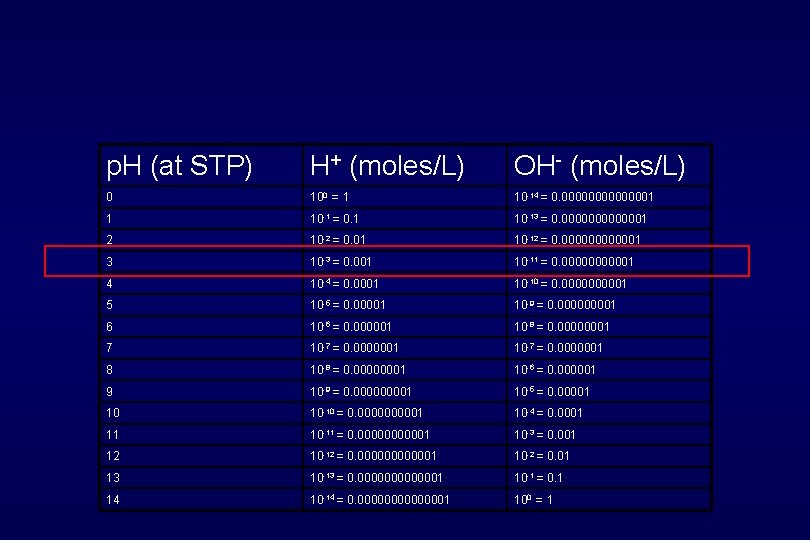
p. H (at STP) H+ (moles/L) OH- (moles/L) 0 100 = 1 10 -14 = 0. 00000001 1 10 -1 = 0. 1 10 -13 = 0. 0000001 2 10 -2 = 0. 01 10 -12 = 0. 0000001 3 10 -3 = 0. 001 10 -11 = 0. 000001 4 10 -4 = 0. 0001 10 -10 = 0. 000001 5 10 -5 = 0. 00001 10 -9 = 0. 00001 6 10 -6 = 0. 000001 10 -8 = 0. 00000001 7 10 -7 = 0. 0000001 8 10 -8 = 0. 00000001 10 -6 = 0. 000001 9 10 -9 = 0. 00001 10 -5 = 0. 00001 10 10 -10 = 0. 000001 10 -4 = 0. 0001 11 10 -11 = 0. 000001 10 -3 = 0. 001 12 10 -12 = 0. 0000001 10 -2 = 0. 01 13 10 -13 = 0. 0000001 10 -1 = 0. 1 14 10 -14 = 0. 00000001 100 = 1
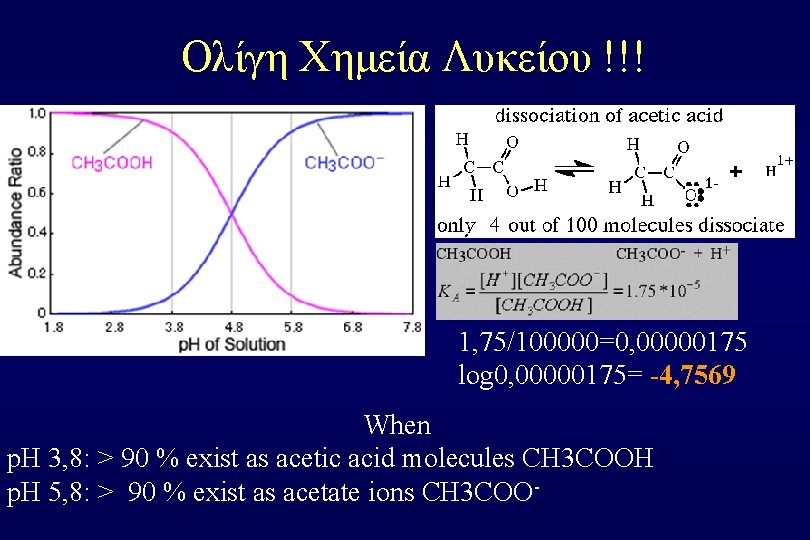
Ολίγη Χημεία Λυκείου !!! 1, 75/100000=0, 00000175 log 0, 00000175= -4, 7569 When p. H 3, 8: > 90 % exist as acetic acid molecules CH 3 COOH p. H 5, 8: > 90 % exist as acetate ions CH 3 COO-
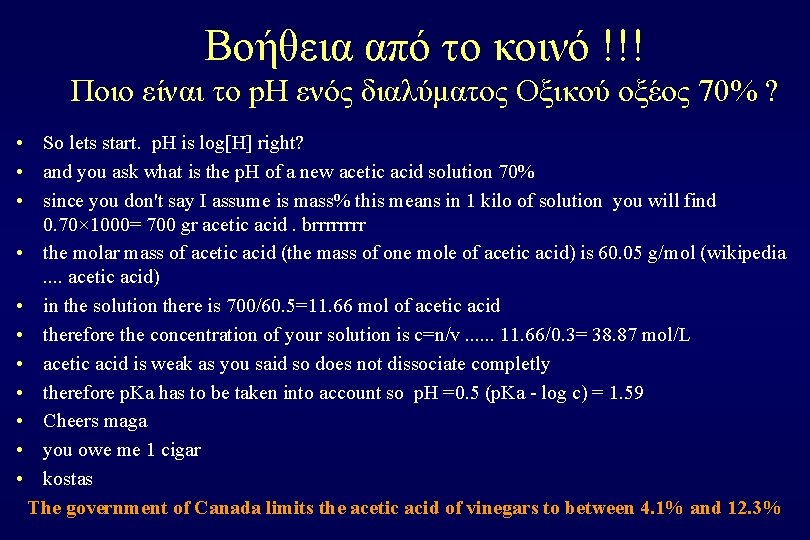
Βοήθεια από το κοινό !!! Ποιο είναι το p. H ενός διαλύματος Οξικού οξέος 70% ? • So lets start. p. H is log[H] right? • and you ask what is the p. H of a new acetic acid solution 70% • since you don't say I assume is mass% this means in 1 kilo of solution you will find 0. 70× 1000= 700 gr acetic acid. brrrr • the molar mass of acetic acid (the mass of one mole of acetic acid) is 60. 05 g/mol (wikipedia. . acetic acid) • in the solution there is 700/60. 5=11. 66 mol of acetic acid • therefore the concentration of your solution is c=n/v. . . 11. 66/0. 3= 38. 87 mol/L • acetic acid is weak as you said so does not dissociate completly • therefore p. Ka has to be taken into account so p. H =0. 5 (p. Ka - log c) = 1. 59 • Cheers maga • you owe me 1 cigar • kostas Τhe government of Canada limits the acetic acid of vinegars to between 4. 1% and 12. 3%
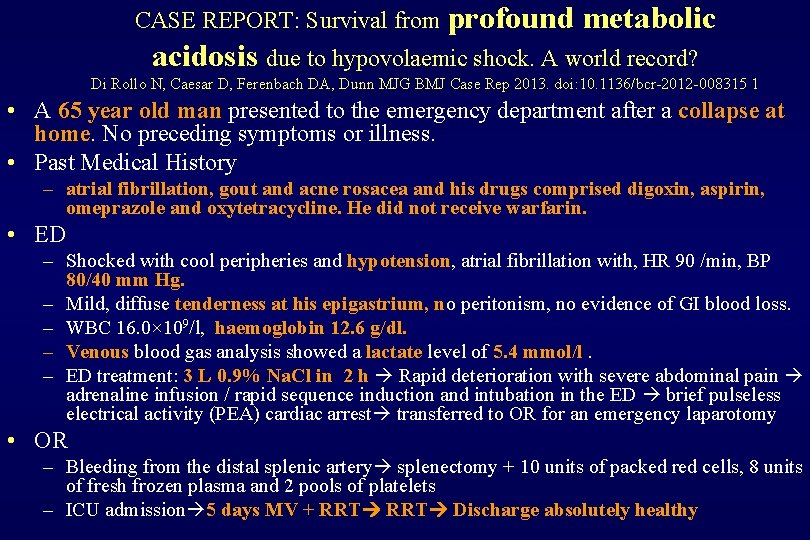
CASE REPORT: Survival from profound metabolic acidosis due to hypovolaemic shock. A world record? Di Rollo N, Caesar D, Ferenbach DA, Dunn MJG BMJ Case Rep 2013. doi: 10. 1136/bcr-2012 -008315 1 • A 65 year old man presented to the emergency department after a collapse at home. No preceding symptoms or illness. • Past Medical History – atrial fibrillation, gout and acne rosacea and his drugs comprised digoxin, aspirin, omeprazole and oxytetracycline. He did not receive warfarin. • ED – Shocked with cool peripheries and hypotension, atrial fibrillation with, HR 90 /min, BP 80/40 mm Hg. – Mild, diffuse tenderness at his epigastrium, no peritonism, no evidence of GI blood loss. – WBC 16. 0× 109/l, haemoglobin 12. 6 g/dl. – Venous blood gas analysis showed a lactate level of 5. 4 mmol/l. – ED treatment: 3 L 0. 9% Na. Cl in 2 h Rapid deterioration with severe abdominal pain adrenaline infusion / rapid sequence induction and intubation in the ED brief pulseless electrical activity (PEA) cardiac arrest transferred to OR for an emergency laparotomy • OR – Bleeding from the distal splenic artery splenectomy + 10 units of packed red cells, 8 units of fresh frozen plasma and 2 pools of platelets – ICU admission 5 days MV + RRT Discharge absolutely healthy
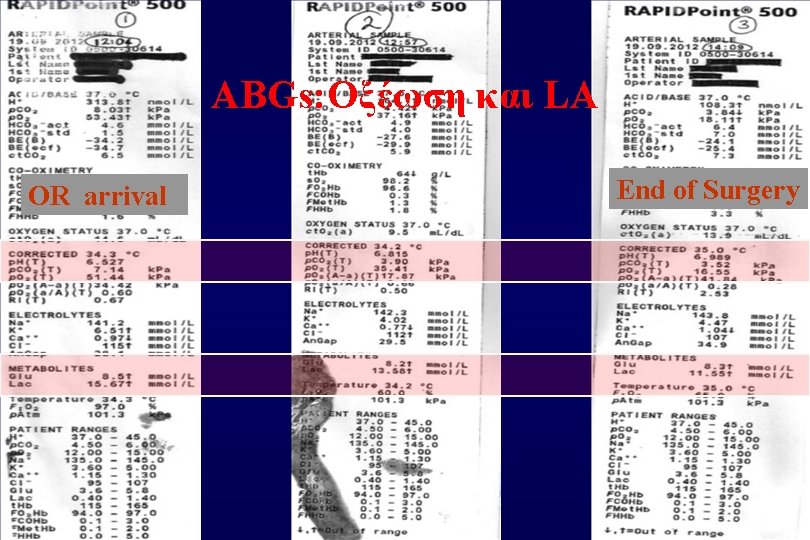
ABGs: Οξέωση και LA OR arrival End of Surgery
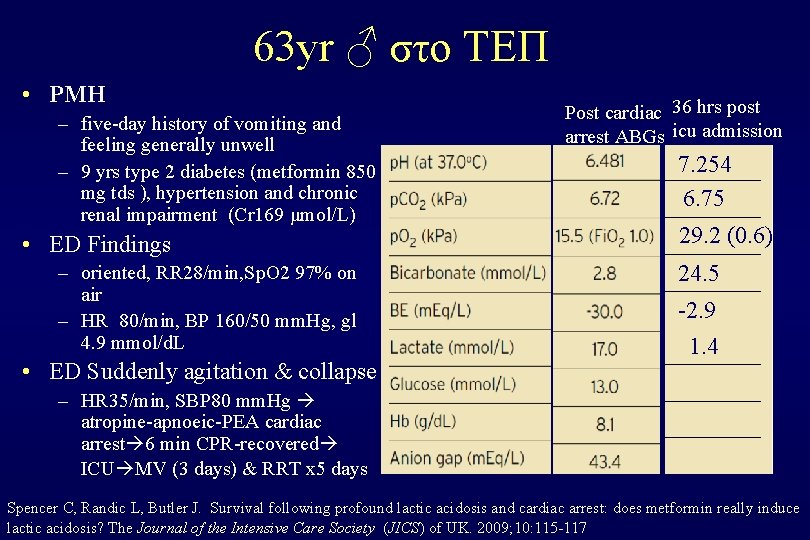
63 yr ♂ στο ΤΕΠ • PMH – five-day history of vomiting and feeling generally unwell – 9 yrs type 2 diabetes (metformin 850 mg tds ), hypertension and chronic renal impairment (Cr 169 μmol/L) • ED Findings – oriented, RR 28/min, Sp. O 2 97% on air – HR 80/min, BP 160/50 mm. Hg, gl 4. 9 mmol/d. L • ED Suddenly agitation & collapse Post cardiac 36 hrs post arrest ABGs icu admission 7. 254 6. 75 29. 16(0. 6) 29. 2 (0. 6) 24. 5 -2. 9 1. 4 – HR 35/min, SBP 80 mm. Hg atropine-apnoeic-PEA cardiac arrest 6 min CPR-recovered ICU MV (3 days) & RRT x 5 days Spencer C, Randic L, Butler J. Survival following profound lactic acidosis and cardiac arrest: does metformin really induce lactic acidosis? The Journal of the Intensive Care Society (JICS) of UK. 2009; 10: 115 -117
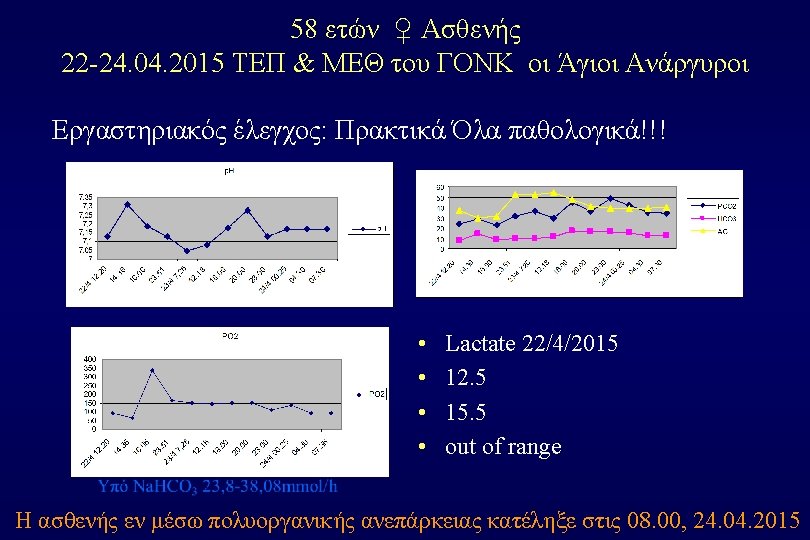
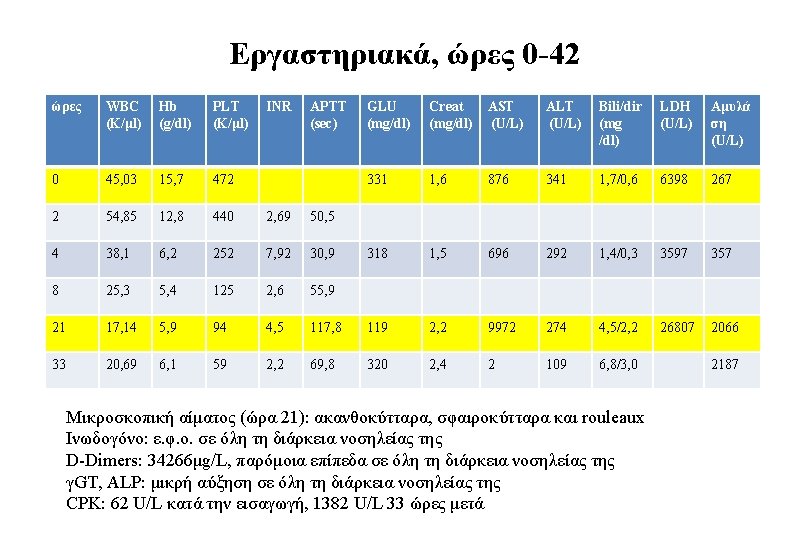
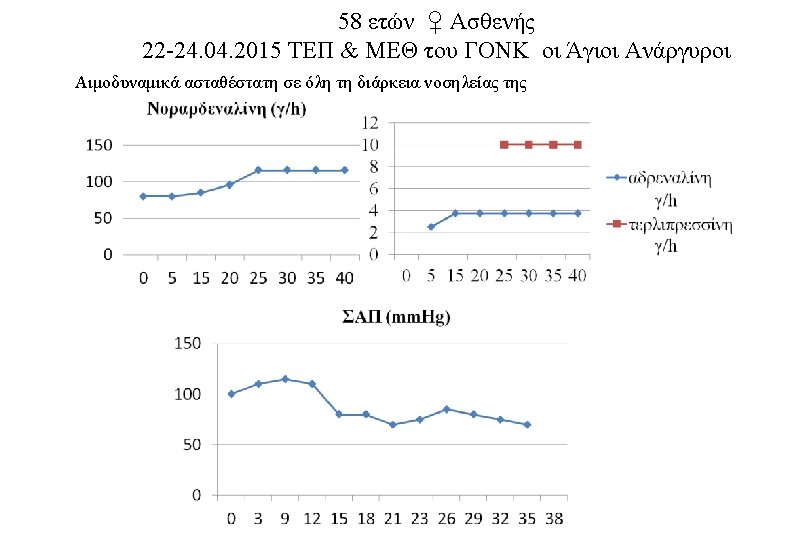
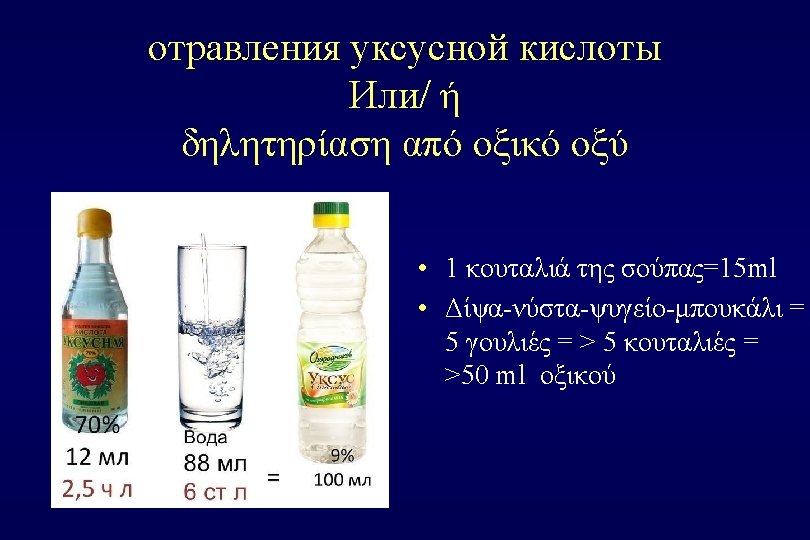
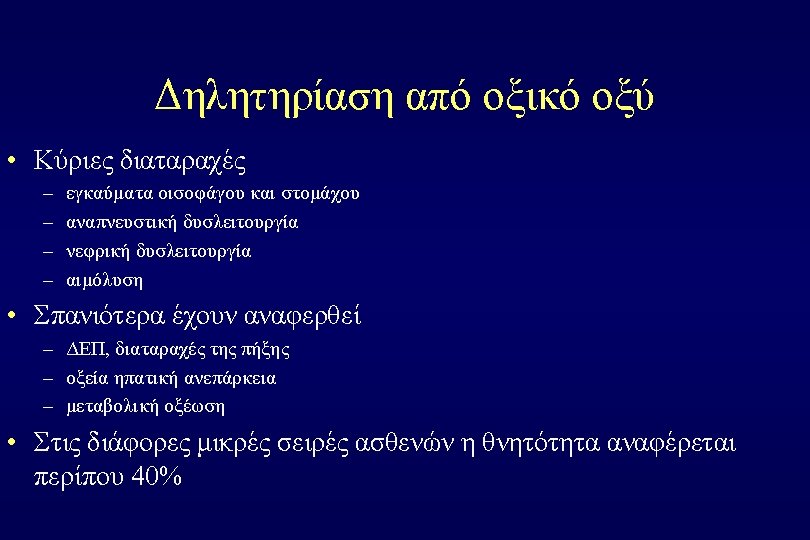
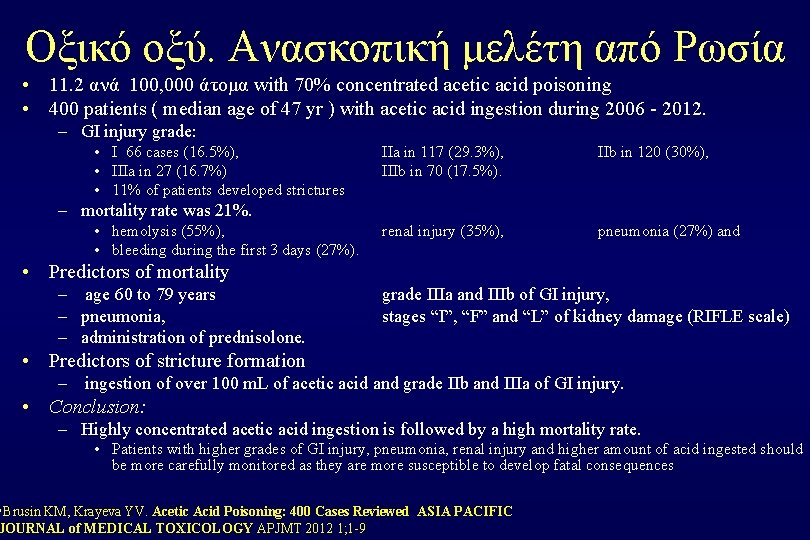
Οξικό οξύ. Ανασκοπική μελέτη από Ρωσία • 11. 2 ανά 100, 000 άτομα with 70% concentrated acetic acid poisoning • 400 patients ( median age of 47 yr ) with acetic acid ingestion during 2006 - 2012. – GI injury grade: • I 66 cases (16. 5%), • IIIa in 27 (16. 7%) • 11% of patients developed strictures ΙIa in 117 (29. 3%), IIIb in 70 (17. 5%). IIb in 120 (30%), renal injury (35%), pneumonia (27%) and – mortality rate was 21%. • hemolysis (55%), • bleeding during the first 3 days (27%). • Predictors of mortality – age 60 to 79 years – pneumonia, – administration of prednisolone. grade IIIa and IIIb of GI injury, stages “I”, “F” and “L” of kidney damage (RIFLE scale) • Predictors of stricture formation – ingestion of over 100 m. L of acetic acid and grade IIb and IIIa of GI injury. • Conclusion: – Highly concentrated acetic acid ingestion is followed by a high mortality rate. • Patients with higher grades of GI injury, pneumonia, renal injury and higher amount of acid ingested should be more carefully monitored as they are more susceptible to develop fatal consequences • Brusin KM, Krayeva YV. Acetic Acid Poisoning: 400 Cases Reviewed ASIA PACIFIC JOURNAL of MEDICAL TOXICOLOGY APJMT 2012 1; 1 -9
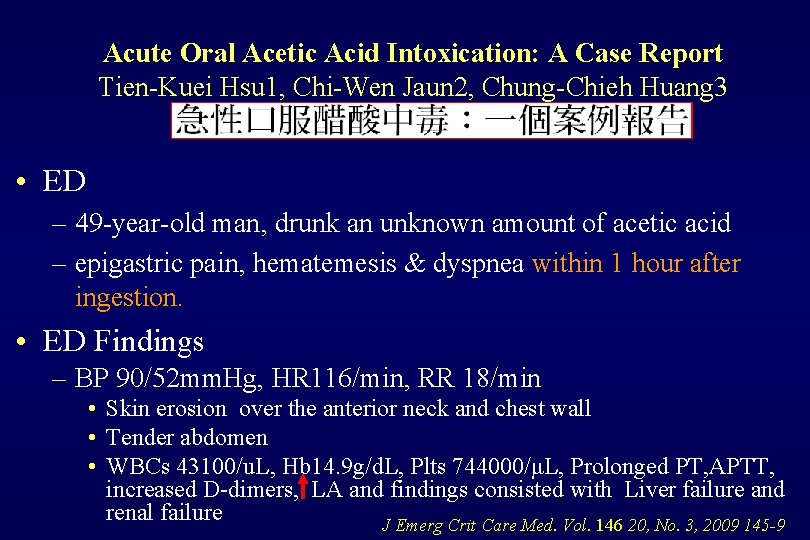
Acute Oral Acetic Acid Intoxication: A Case Report Tien-Kuei Hsu 1, Chi-Wen Jaun 2, Chung-Chieh Huang 3 • ED – 49 -year-old man, drunk an unknown amount of acetic acid – epigastric pain, hematemesis & dyspnea within 1 hour after ingestion. • ED Findings – BP 90/52 mm. Hg, HR 116/min, RR 18/min • Skin erosion over the anterior neck and chest wall • Tender abdomen • WBCs 43100/u. L, Hb 14. 9 g/d. L, Plts 744000/μL, Prolonged PT, APTT, increased D-dimers, LA and findings consisted with Liver failure and renal failure J Emerg Crit Care Med. Vol. 146 20, No. 3, 2009 145 -9
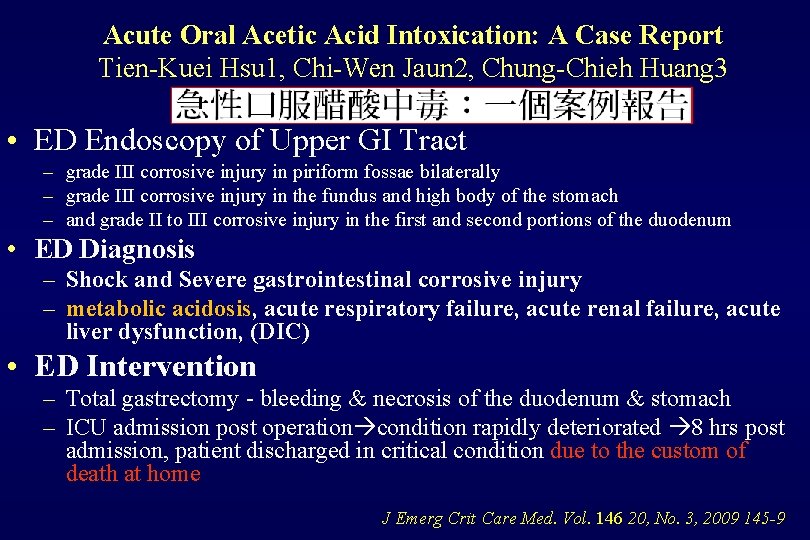
Acute Oral Acetic Acid Intoxication: A Case Report Tien-Kuei Hsu 1, Chi-Wen Jaun 2, Chung-Chieh Huang 3 • ED Endoscopy of Upper GI Tract – grade III corrosive injury in piriform fossae bilaterally – grade III corrosive injury in the fundus and high body of the stomach – and grade II to III corrosive injury in the first and second portions of the duodenum • ED Diagnosis – Shock and Severe gastrointestinal corrosive injury – metabolic acidosis, acute respiratory failure, acute renal failure, acute liver dysfunction, (DIC) • ED Intervention – Total gastrectomy - bleeding & necrosis of the duodenum & stomach – ICU admission post operation condition rapidly deteriorated 8 hrs post admission, patient discharged in critical condition due to the custom of death at home J Emerg Crit Care Med. Vol. 146 20, No. 3, 2009 145 -9
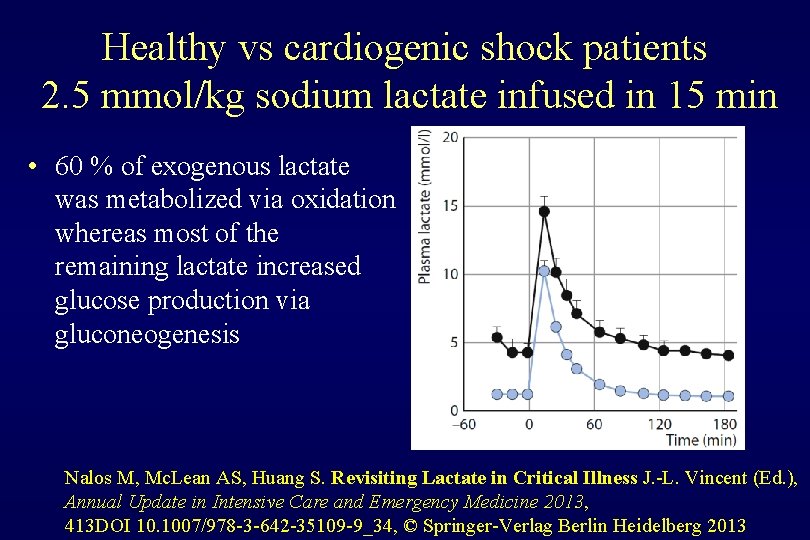
Healthy vs cardiogenic shock patients 2. 5 mmol/kg sodium lactate infused in 15 min • 60 % of exogenous lactate was metabolized via oxidation whereas most of the remaining lactate increased glucose production via gluconeogenesis Nalos M, Mc. Lean AS, Huang S. Revisiting Lactate in Critical Illness J. -L. Vincent (Ed. ), Annual Update in Intensive Care and Emergency Medicine 2013, 413 DOI 10. 1007/978 -3 -642 -35109 -9_34, © Springer-Verlag Berlin Heidelberg 2013
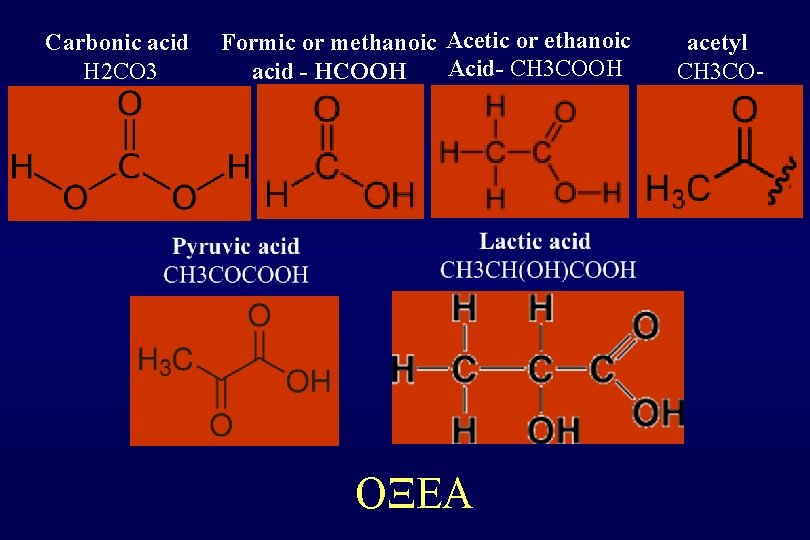
Carbonic acid H 2 CO 3 Formic or methanoic Acetic or ethanoic Acid- CH 3 COOH acid - HCOOH ΟΞΕΑ acetyl CH 3 CO-
- Slides: 27