
Sources of Healthcare Associated Infections Infectious Disease Epidemiology





- Slides: 29
Sources of Healthcare Associated Infections Infectious Disease Epidemiology Section Office of Public Health Louisiana Dept of Health & Hospitals 800 -256 -2748 www. infectiousdisease. dhh. louisiana. gov Your taxes at work
Where do Nosocomial Infections come from ? • • • Colonization Food & Water Hands: HCW, visitors • Others: • Fomites • Environment
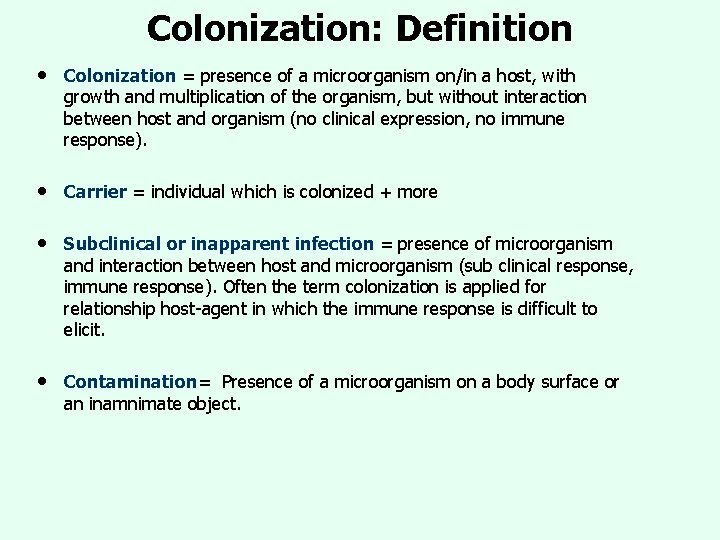
Colonization: Definition • Colonization = presence of a microorganism on/in a host, with growth and multiplication of the organism, but without interaction between host and organism (no clinical expression, no immune response). • Carrier = individual which is colonized + more • Subclinical or inapparent infection = presence of microorganism and interaction between host and microorganism (sub clinical response, immune response). Often the term colonization is applied for relationship host-agent in which the immune response is difficult to elicit. • Contamination= Presence of a microorganism on a body surface or an inamnimate object.
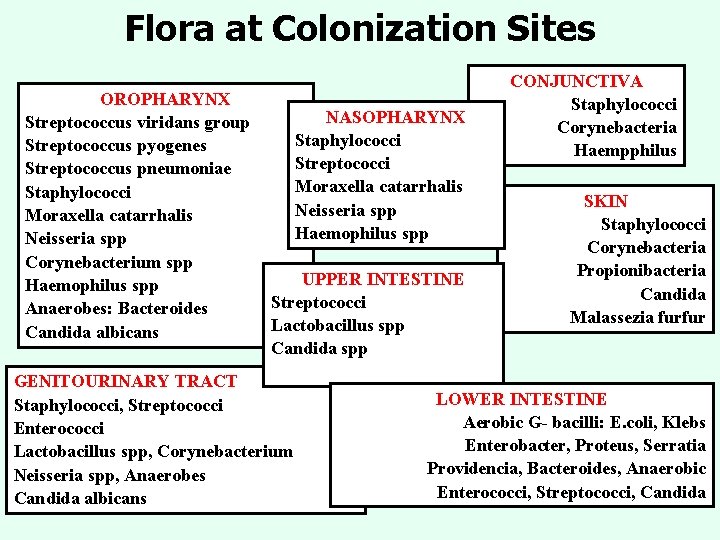
Flora at Colonization Sites OROPHARYNX Streptococcus viridans group Streptococcus pyogenes Streptococcus pneumoniae Staphylococci Moraxella catarrhalis Neisseria spp Corynebacterium spp Haemophilus spp Anaerobes: Bacteroides Candida albicans NASOPHARYNX Staphylococci Streptococci Moraxella catarrhalis Neisseria spp Haemophilus spp UPPER INTESTINE Streptococci Lactobacillus spp Candida spp GENITOURINARY TRACT Staphylococci, Streptococci Enterococci Lactobacillus spp, Corynebacterium Neisseria spp, Anaerobes Candida albicans CONJUNCTIVA Staphylococci Corynebacteria Haempphilus SKIN Staphylococci Corynebacteria Propionibacteria Candida Malassezia furfur LOWER INTESTINE Aerobic G- bacilli: E. coli, Klebs Enterobacter, Proteus, Serratia Providencia, Bacteroides, Anaerobic Enterococci, Streptococci, Candida
Skin Hand Flora • • 00 0 , 0 0 ble 00, 0 a 3 ) # mm eds h 5 s 2 s an 4 to ( m y u a H /d s e ia m r a e t u c q s y ba r r a to c RESIDENT FLORA Survives on the skin more than 24 hours Not easily removed, hours of scrubbing Complete stelirization impossible • TRANSIENT FLORA Low virulence • Survive on skin less than 24 hours Staphylococci, diphteroides, • Easily removed with soap and water mostly Gram + , • Acquired during contacts with very few Gram contaminated areas mouth, nose, perineal area, genitals, anal area • catheter, bedpan, urinal, patient care casual contact • May have high virulenceð Enterobacteria, Gram - bacilli, Pseudomonas. . .
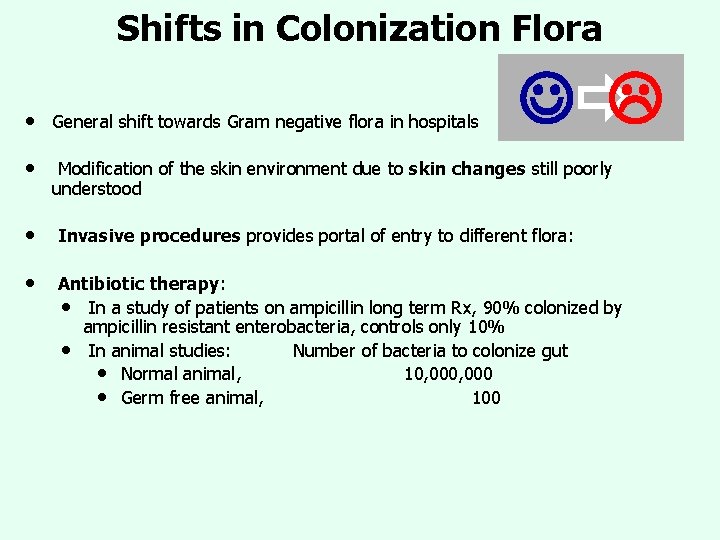
Shifts in Colonization Flora J L • General shift towards Gram negative flora in hospitals • Modification of the skin environment due to skin changes still poorly understood • Invasive procedures provides portal of entry to different flora: • Antibiotic therapy: • In a study of patients on ampicillin long term Rx, 90% colonized by ampicillin resistant enterobacteria, controls only 10% • In animal studies: Number of bacteria to colonize gut • Normal animal, 10, 000 • Germ free animal, 100
Origin of Nosocomial Infection Microorganisms: Colonization I T A Z I ? N O % L 50 CO : N O • Study of 48 leukemic patients with neutropenia (Schmipf 72, Ann • • Weekly cultures at nose, gingiva, axilla, rectum Identification of nosocomial infections The patients developed 87 infections (particularly during phases with severe neutropenia) including • 40 Bacteremias. . . 42% due to colonizers • 37 Other infections. . . 62% due to colonizers Int Med 77: 707).
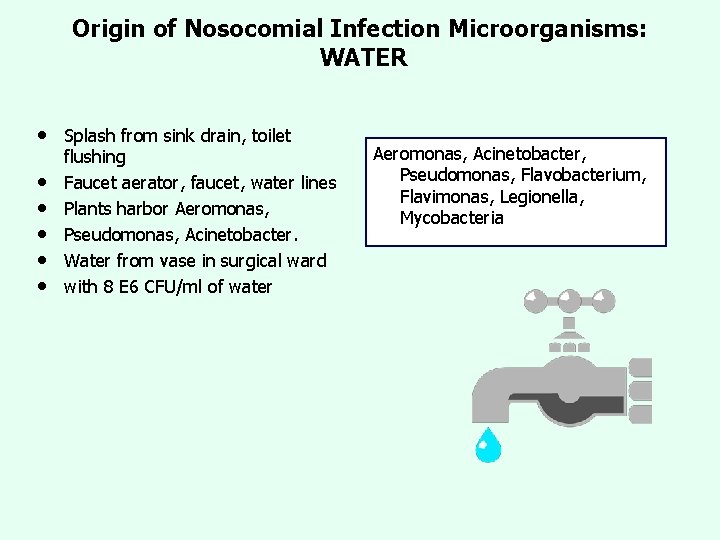
Origin of Nosocomial Infection Microorganisms: WATER • • • Splash from sink drain, toilet flushing Faucet aerator, faucet, water lines Plants harbor Aeromonas, Pseudomonas, Acinetobacter. Water from vase in surgical ward with 8 E 6 CFU/ml of water Aeromonas, Acinetobacter, Pseudomonas, Flavobacterium, Flavimonas, Legionella, Mycobacteria
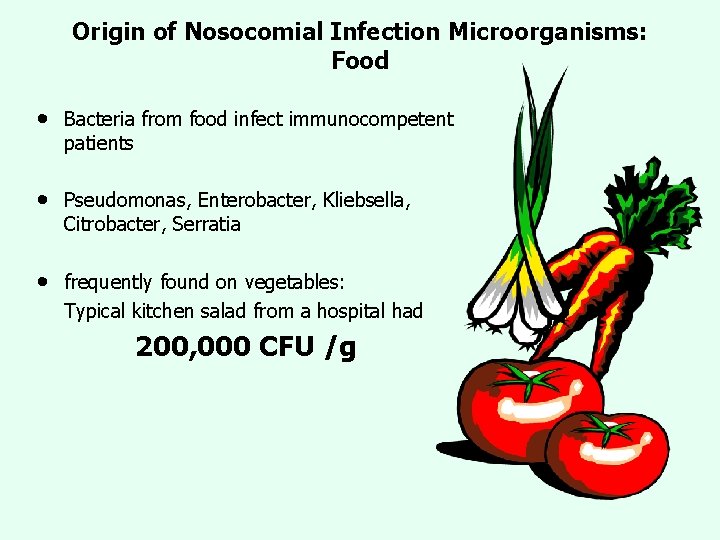
Origin of Nosocomial Infection Microorganisms: Food • Bacteria from food infect immunocompetent patients • Pseudomonas, Enterobacter, Kliebsella, Citrobacter, Serratia • frequently found on vegetables: Typical kitchen salad from a hospital had 200, 000 CFU /g
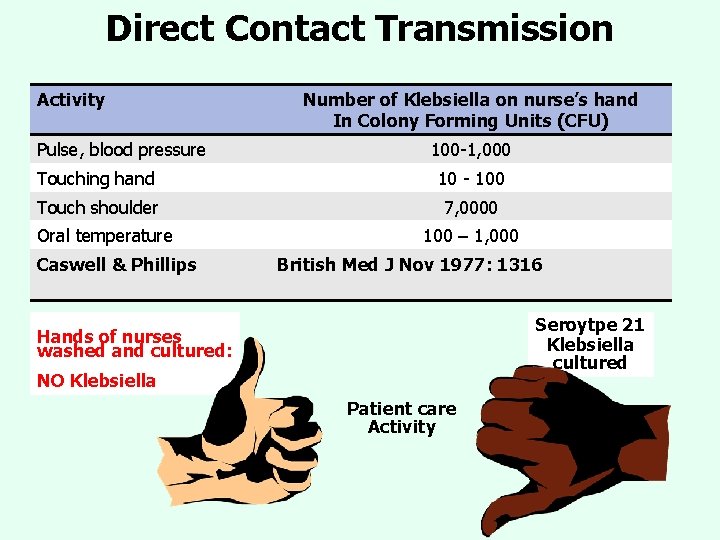
Direct Contact Transmission Activity Pulse, blood pressure Number of Klebsiella on nurse’s hand In Colony Forming Units (CFU) 100 -1, 000 Touching hand 10 - 100 Touch shoulder 7, 0000 Oral temperature Caswell & Phillips 100 – 1, 000 British Med J Nov 1977: 1316 Seroytpe 21 Klebsiella cultured Hands of nurses washed and cultured: NO Klebsiella Patient care Activity
Central Line Associated Blood Stream Infections (CLABSI)
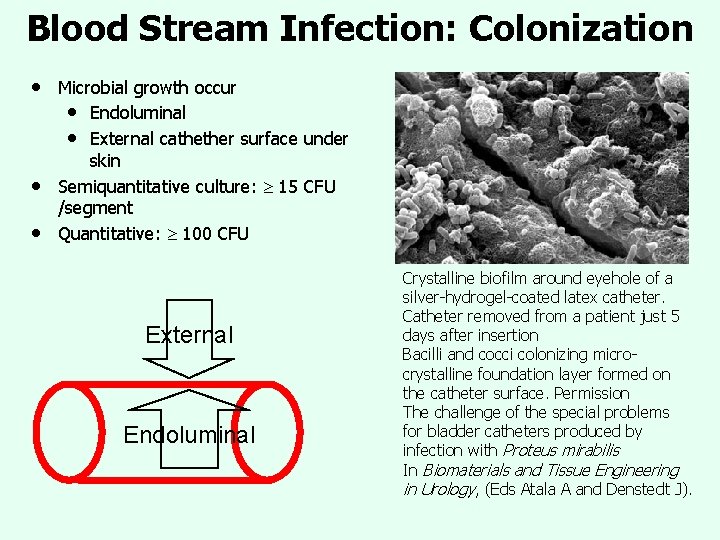
Blood Stream Infection: Colonization • • • Microbial growth occur • Endoluminal • External cathether surface under skin Semiquantitative culture: 15 CFU /segment Quantitative: 100 CFU External Endoluminal Crystalline biofilm around eyehole of a silver-hydrogel-coated latex catheter. Catheter removed from a patient just 5 days after insertion Bacilli and cocci colonizing microcrystalline foundation layer formed on the catheter surface. Permission The challenge of the special problems for bladder catheters produced by infection with Proteus mirabilis In Biomaterials and Tissue Engineering in Urology, (Eds Atala A and Denstedt J).
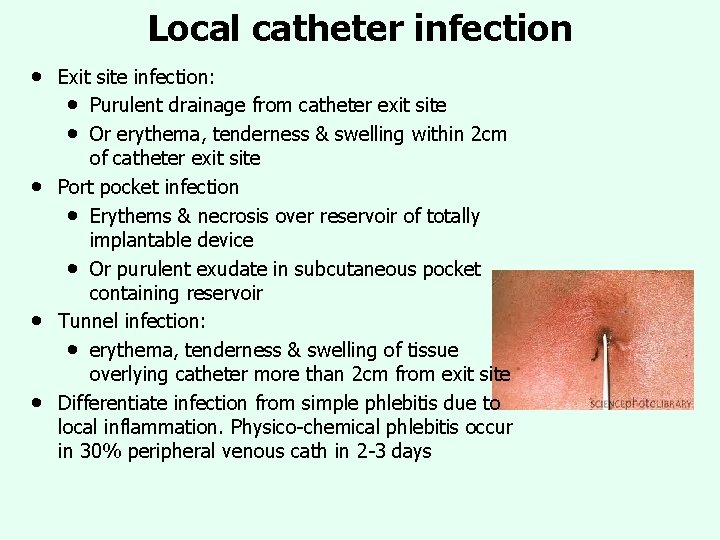
Local catheter infection • • Exit site infection: • Purulent drainage from catheter exit site • Or erythema, tenderness & swelling within 2 cm of catheter exit site Port pocket infection • Erythems & necrosis over reservoir of totally implantable device • Or purulent exudate in subcutaneous pocket containing reservoir Tunnel infection: • erythema, tenderness & swelling of tissue overlying catheter more than 2 cm from exit site Differentiate infection from simple phlebitis due to local inflammation. Physico-chemical phlebitis occur in 30% peripheral venous cath in 2 -3 days
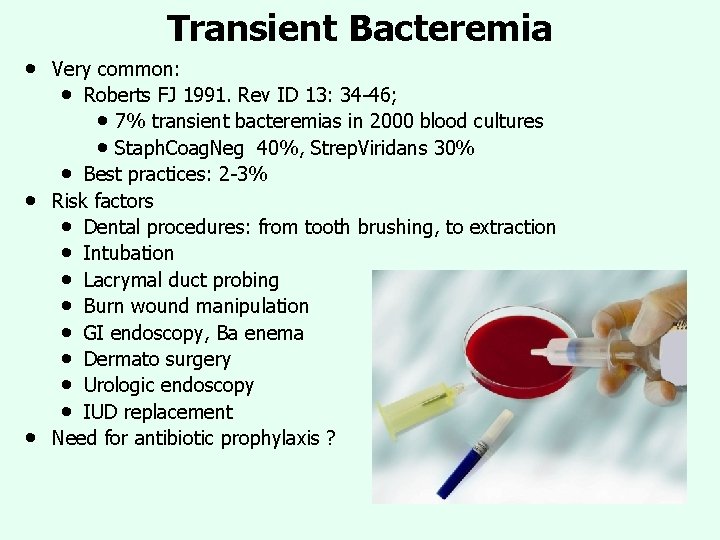
Transient Bacteremia • • • Very common: • Roberts FJ 1991. Rev ID 13: 34 -46; • 7% transient bacteremias in 2000 blood cultures • Staph. Coag. Neg 40%, Strep. Viridans 30% • Best practices: 2 -3% Risk factors • Dental procedures: from tooth brushing, to extraction • Intubation • Lacrymal duct probing • Burn wound manipulation • GI endoscopy, Ba enema • Dermato surgery • Urologic endoscopy • IUD replacement Need for antibiotic prophylaxis ?
Surgical Site Infections (SSI)
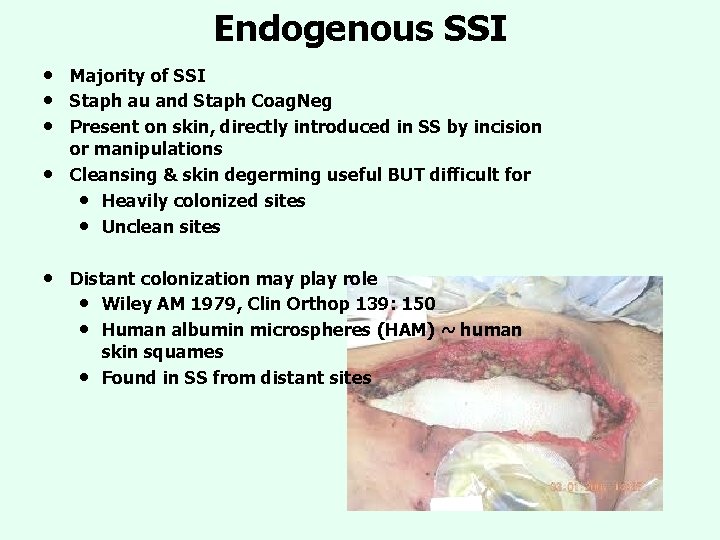
Endogenous SSI • • • Majority of SSI Staph au and Staph Coag. Neg Present on skin, directly introduced in SS by incision or manipulations Cleansing & skin degerming useful BUT difficult for • Heavily colonized sites • Unclean sites Distant colonization may play role • Wiley AM 1979, Clin Orthop 139: 150 • Human albumin microspheres (HAM) ~ human skin squames • Found in SS from distant sites
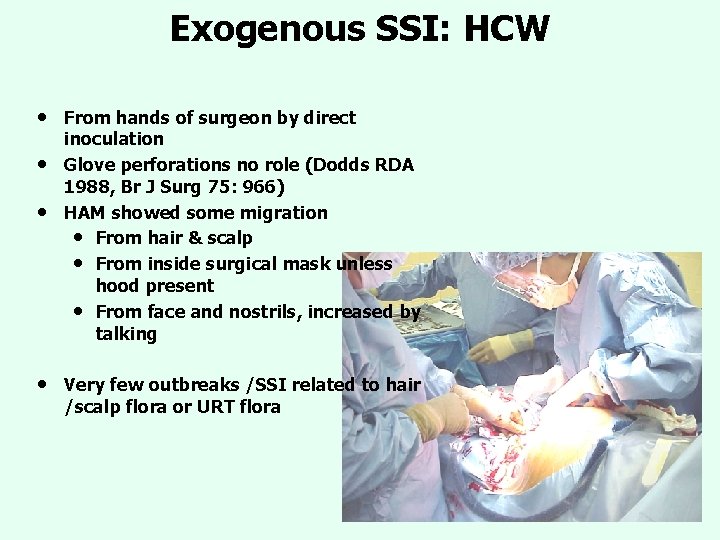
Exogenous SSI: HCW • • From hands of surgeon by direct inoculation Glove perforations no role (Dodds RDA 1988, Br J Surg 75: 966) HAM showed some migration • From hair & scalp • From inside surgical mask unless hood present • From face and nostrils, increased by talking Very few outbreaks /SSI related to hair /scalp flora or URT flora
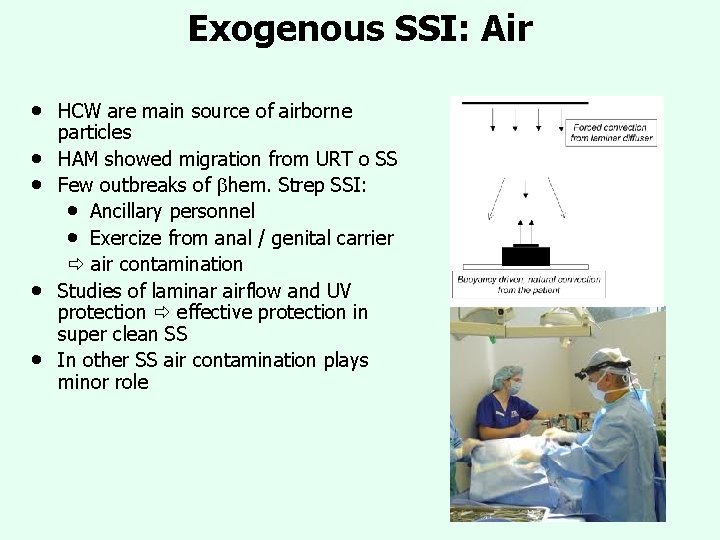
Exogenous SSI: Air • • • HCW are main source of airborne particles HAM showed migration from URT o SS Few outbreaks of hem. Strep SSI: • Ancillary personnel • Exercize from anal / genital carrier air contamination Studies of laminar airflow and UV protection effective protection in super clean SS In other SS air contamination plays minor role
Ventilator Associated Pneumonias VAP
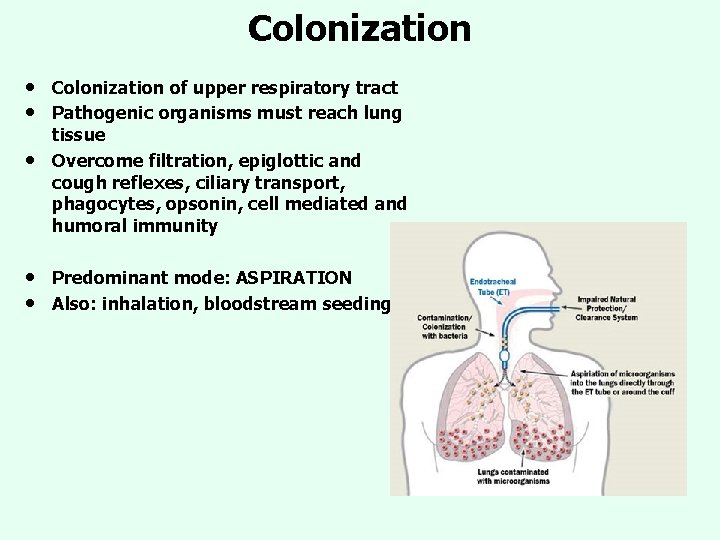
Colonization • • • Colonization of upper respiratory tract Pathogenic organisms must reach lung tissue Overcome filtration, epiglottic and cough reflexes, ciliary transport, phagocytes, opsonin, cell mediated and humoral immunity • • Predominant mode: ASPIRATION Also: inhalation, bloodstream seeding
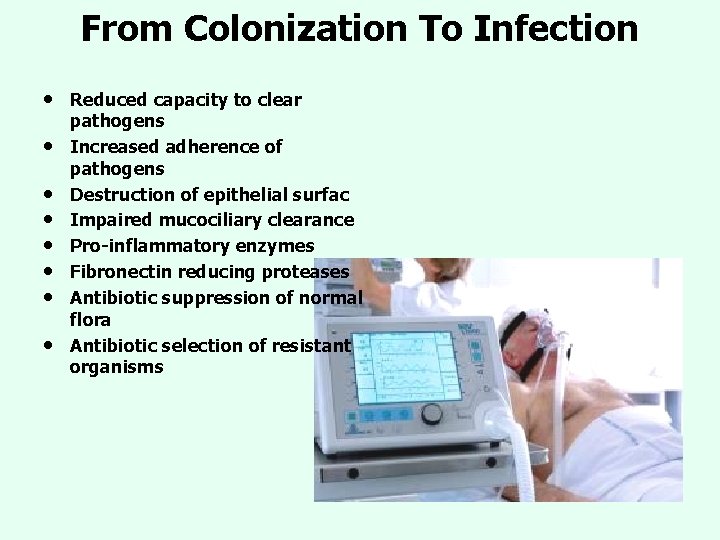
From Colonization To Infection • • Reduced capacity to clear pathogens Increased adherence of pathogens Destruction of epithelial surfac Impaired mucociliary clearance Pro-inflammatory enzymes Fibronectin reducing proteases Antibiotic suppression of normal flora Antibiotic selection of resistant organisms
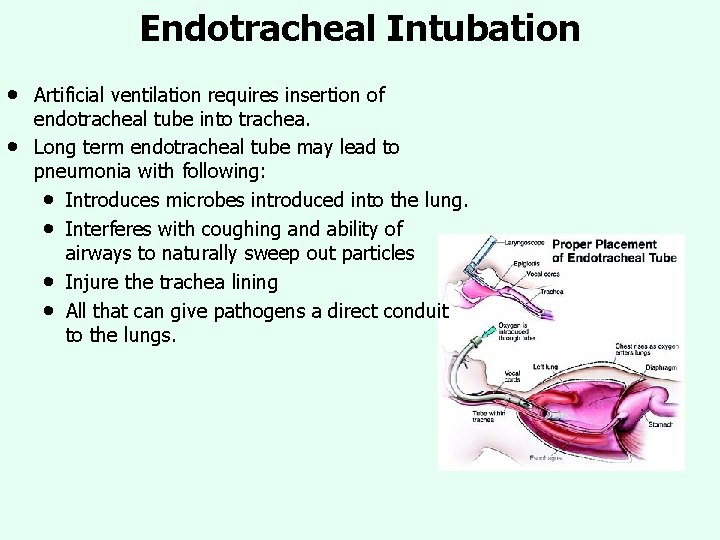
Endotracheal Intubation • • Artificial ventilation requires insertion of endotracheal tube into trachea. Long term endotracheal tube may lead to pneumonia with following: • Introduces microbes introduced into the lung. • Interferes with coughing and ability of airways to naturally sweep out particles • Injure the trachea lining • All that can give pathogens a direct conduit to the lungs.
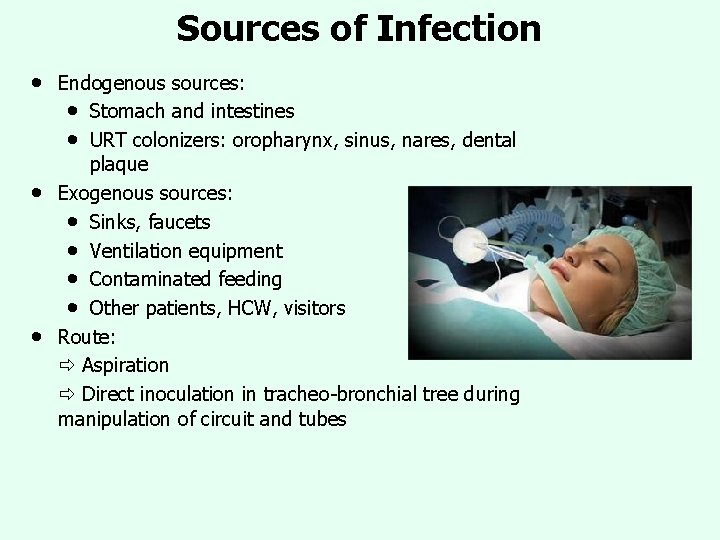
Sources of Infection • • • Endogenous sources: • Stomach and intestines • URT colonizers: oropharynx, sinus, nares, dental plaque Exogenous sources: • Sinks, faucets • Ventilation equipment • Contaminated feeding • Other patients, HCW, visitors Route: Aspiration Direct inoculation in tracheo-bronchial tree during manipulation of circuit and tubes
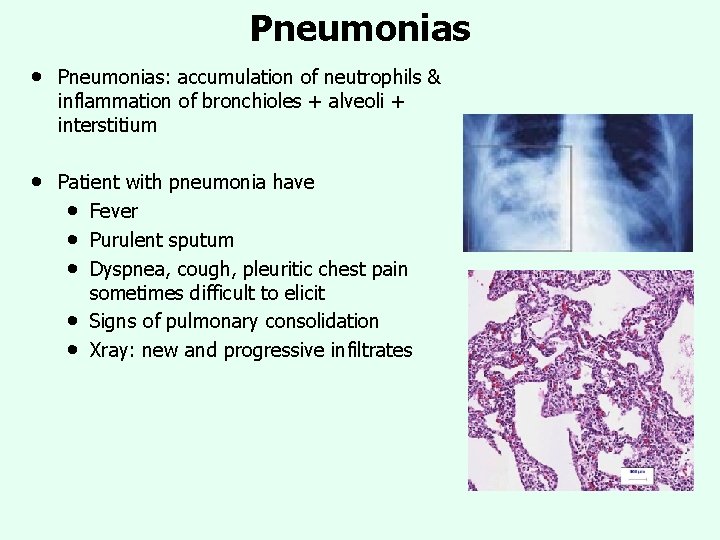
Pneumonias • Pneumonias: accumulation of neutrophils & inflammation of bronchioles + alveoli + interstitium • Patient with pneumonia have • Fever • Purulent sputum • Dyspnea, cough, pleuritic chest pain sometimes difficult to elicit • Signs of pulmonary consolidation • Xray: new and progressive infiltrates
Catheter Associated Urinary Tract Infections (CAUTI)
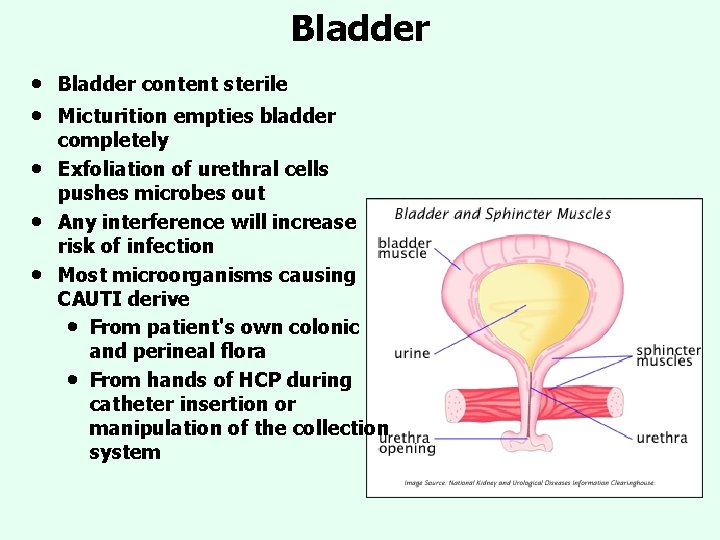
Bladder • • • Bladder content sterile Micturition empties bladder completely Exfoliation of urethral cells pushes microbes out Any interference will increase risk of infection Most microorganisms causing CAUTI derive • From patient's own colonic and perineal flora • From hands of HCP during catheter insertion or manipulation of the collection system
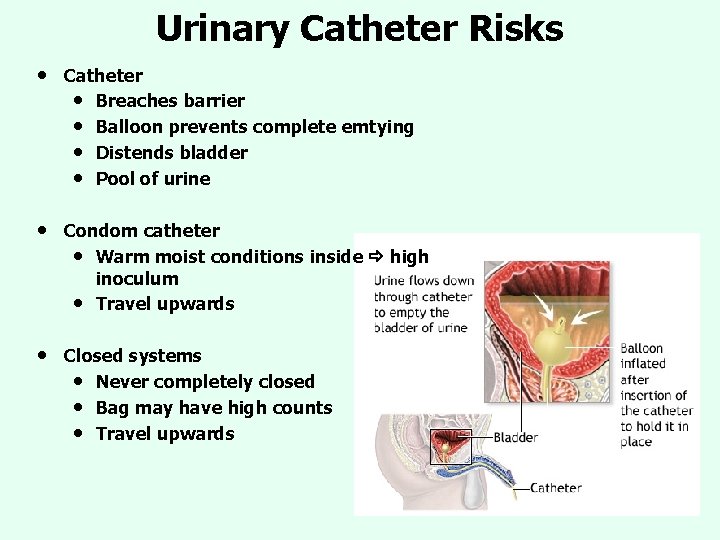
Urinary Catheter Risks • Catheter • Breaches barrier • Balloon prevents complete emtying • Distends bladder • Pool of urine • Condom catheter • Warm moist conditions inside high inoculum • Travel upwards • Closed systems • Never completely closed • Bag may have high counts • Travel upwards
Microbe Migration • Microbes migrate • Up lumen: even non-motile bacteria • Up external surface of catheter • Biofilm = matrix of polysacharides • with encased bacteria, up to 4 species (usually 1 in urine) • Microcolonies • Water channels Bacteria in biofilms express different genes • Increase production of extracell polymeric substance (EPS) • 50 -90% of biofilm mass Biofilms • Poor antibiotic diffusion • Slow bacterial multiplication • Less effectiveness of antibiotics • • Electron micrograph depicting round Staphylococcus aureus bacteria, with biofilm, the sticky-looking substance woven between the bacteria. (Content source: Donlan R, Carr J, Public Health Image Library, Centers for Disease Control and Prevention ; 2005. )
Asymptomatic Bacteriuria • • • Very common among hospitalized patients Endogenous organisms: • Fecal flora colonizes perineum Exogenous organisms: • From HCW hands /collection containers • Colonize perineum Colonization progresses to meatal/urethral surface • Kass EH 1957, NEJM 256: 55: Serratia marcescens applied to perineum, in 3 days Sm appeared in urine • Meatal colonization more important than length of urethra Female at higher risk of meatal colonization Pyuria • Often absent • Suppression of immune response by catheter