
Sources of Energy Can you identify 7 different

- Slides: 37
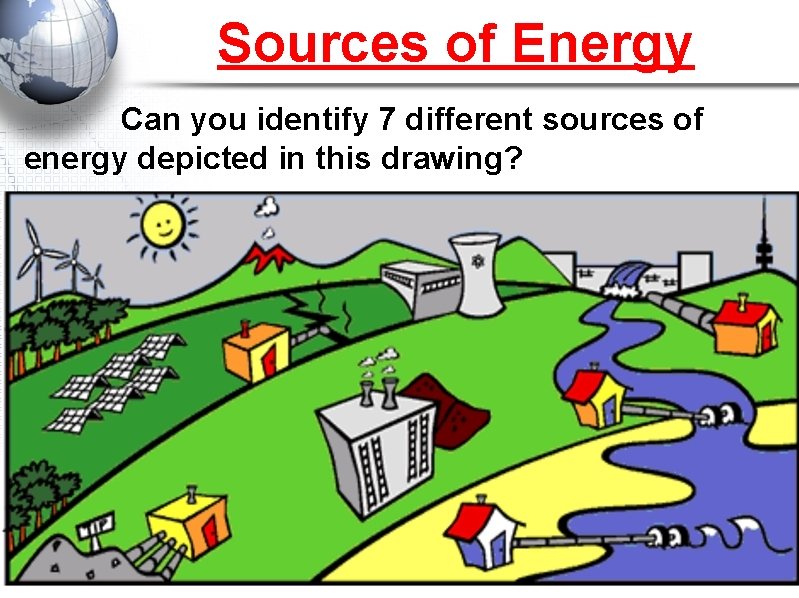
Sources of Energy Can you identify 7 different sources of energy depicted in this drawing?
Saved by the Bell: Oil Episode • http: //www. youtube. com/watch? v=8 GKKhacdzf. Q • 5 mins
Sources of Energy
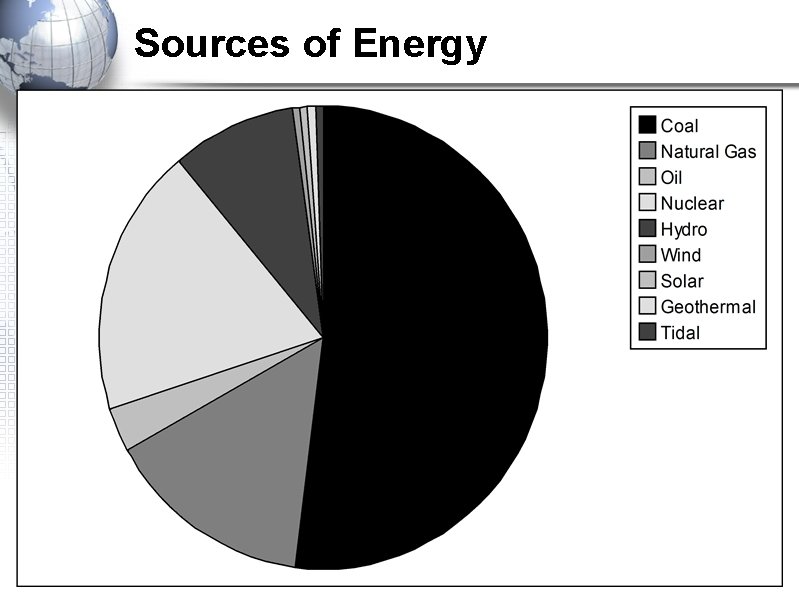
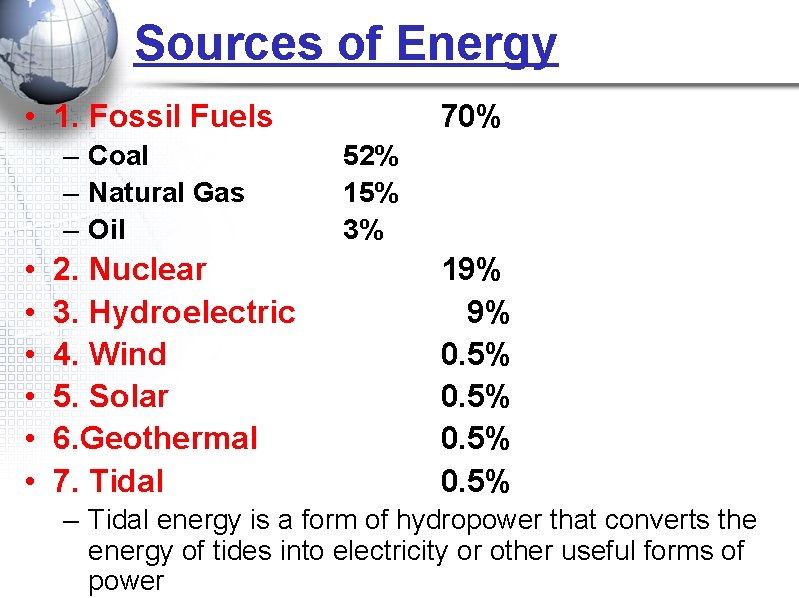
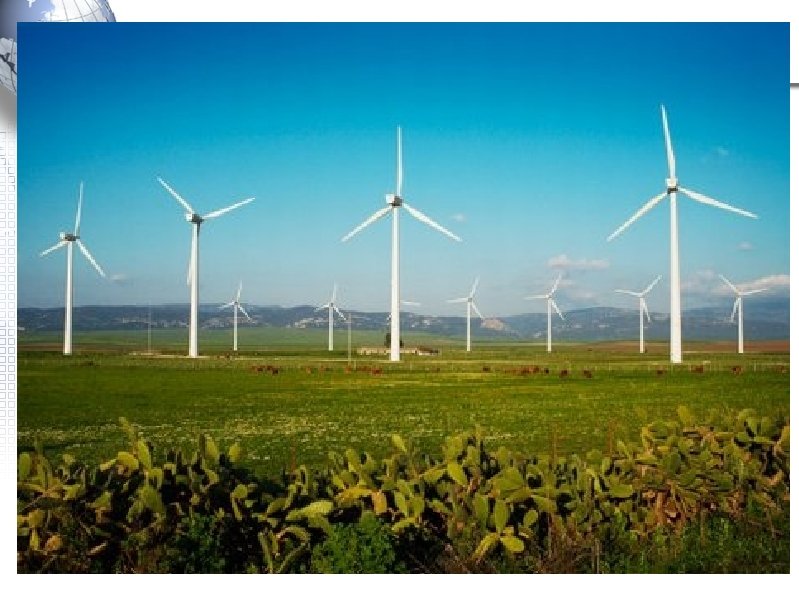
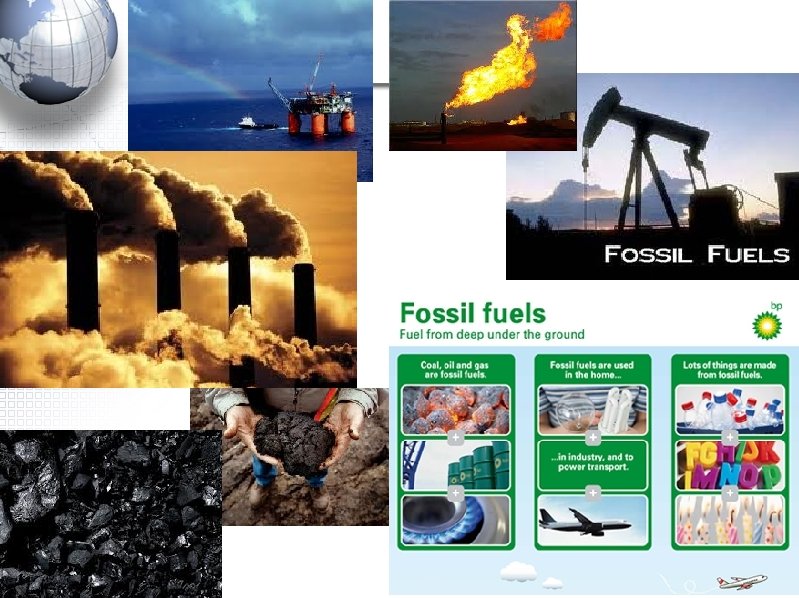
Sources of Energy • 1. Fossil Fuels – Coal – Natural Gas – Oil • • • 2. Nuclear 3. Hydroelectric 4. Wind 5. Solar 6. Geothermal 7. Tidal 70% 52% 15% 3% 19% 9% 0. 5% – Tidal energy is a form of hydropower that converts the energy of tides into electricity or other useful forms of power
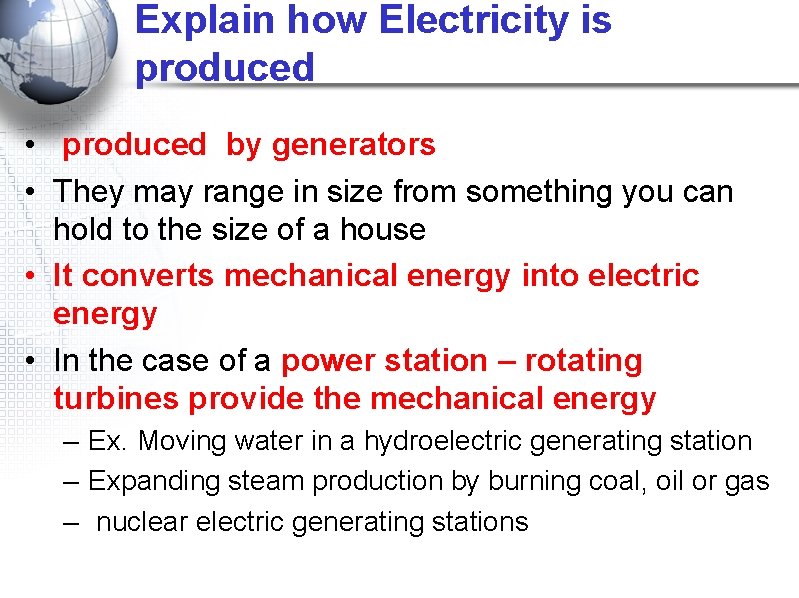
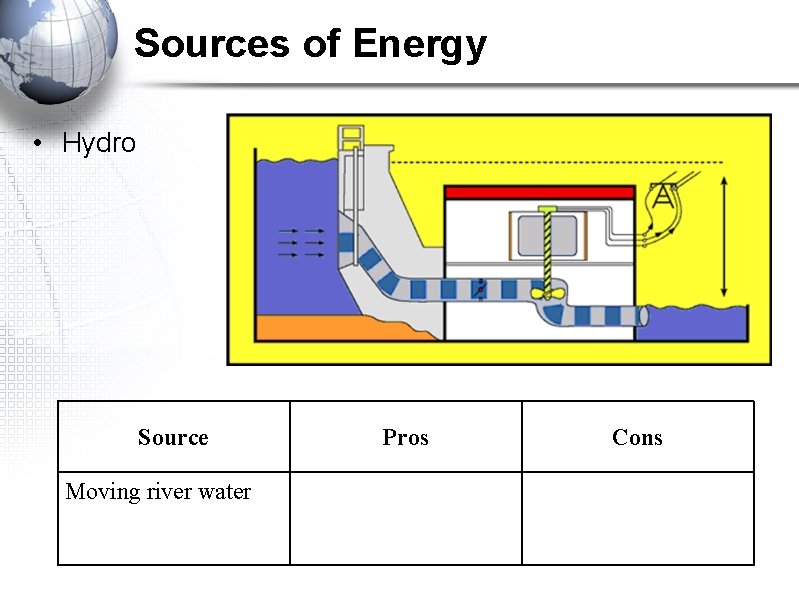
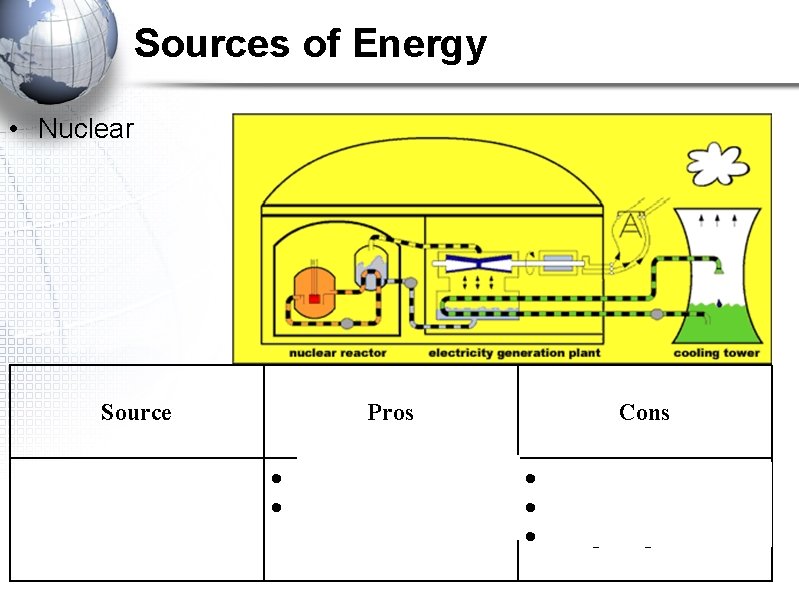
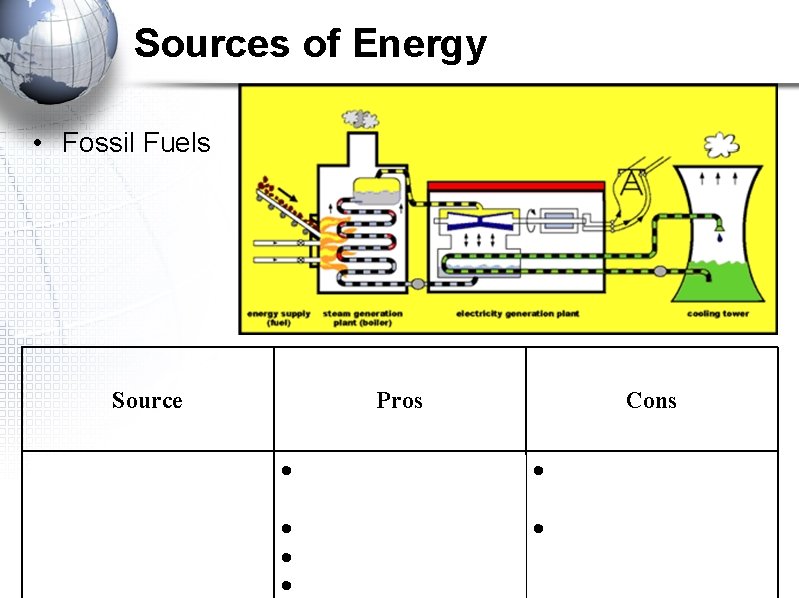
Explain how Electricity is produced • produced by generators • They may range in size from something you can hold to the size of a house • It converts mechanical energy into electric energy • In the case of a power station – rotating turbines provide the mechanical energy – Ex. Moving water in a hydroelectric generating station – Expanding steam production by burning coal, oil or gas – nuclear electric generating stations
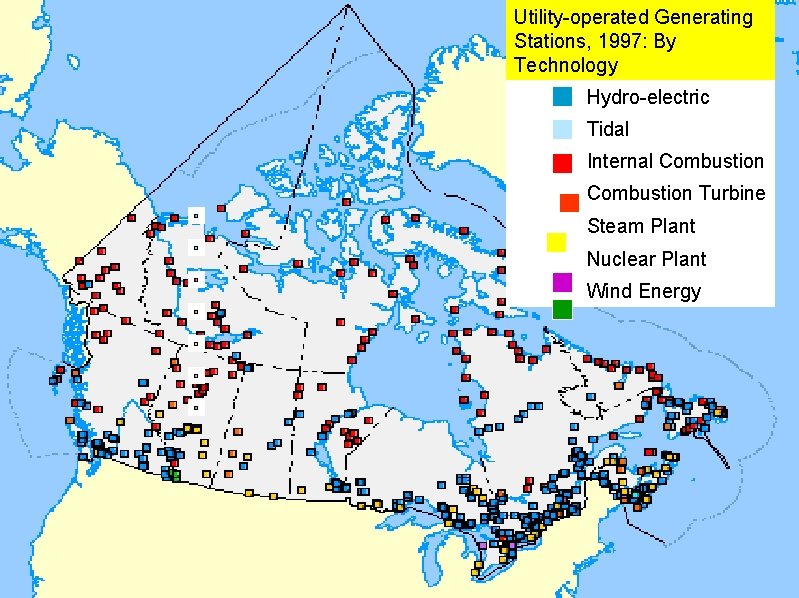
Utility-operated Generating Stations, 1997: By Technology Hydro-electric Tidal Internal Combustion Turbine Steam Plant Nuclear Plant Wind Energy
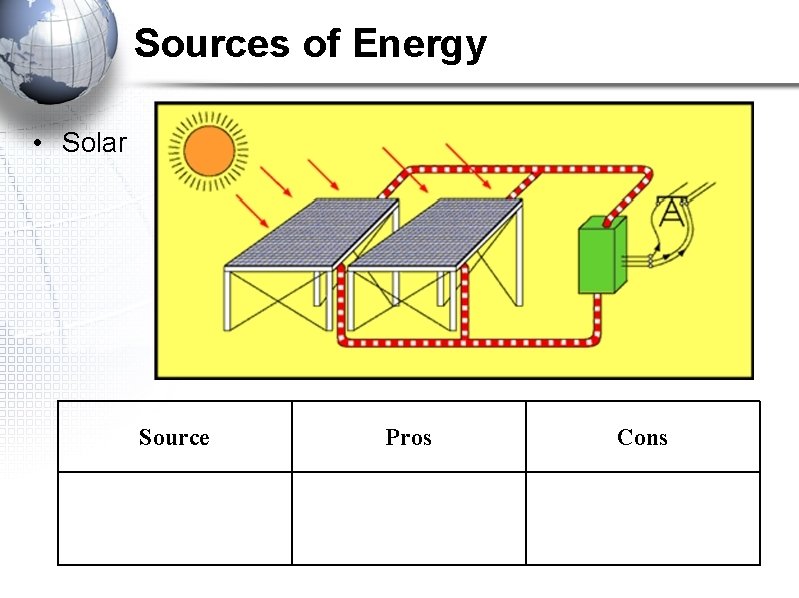
Sources of Energy • Solar Source Sun Pros free source unlimited env. friendly Cons not efficient expensive set-up
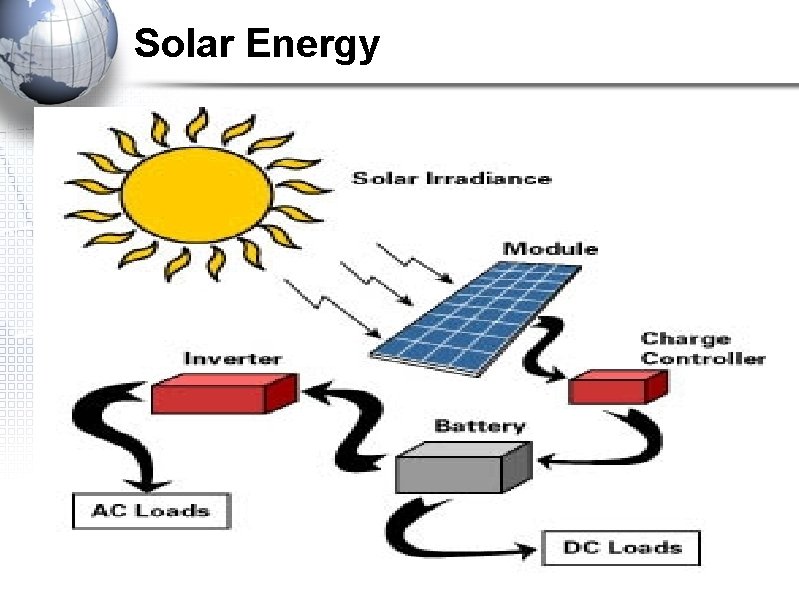
Solar Energy
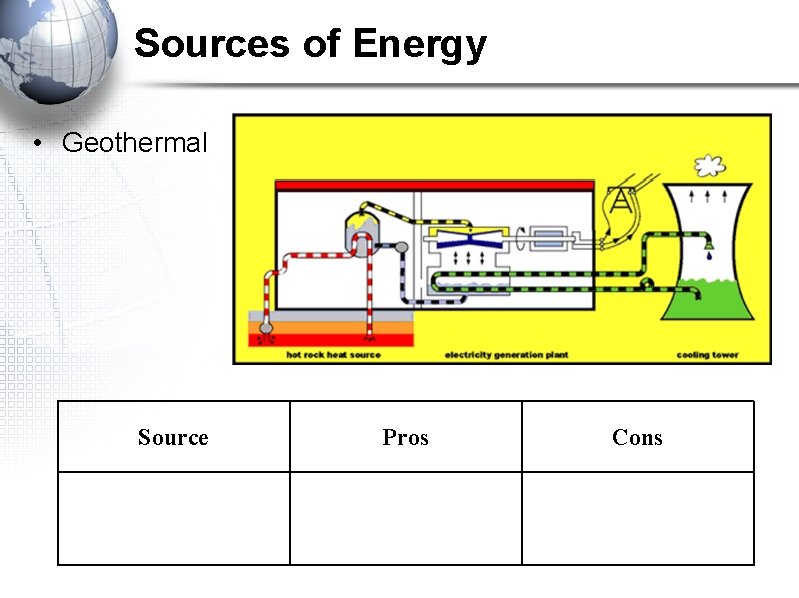
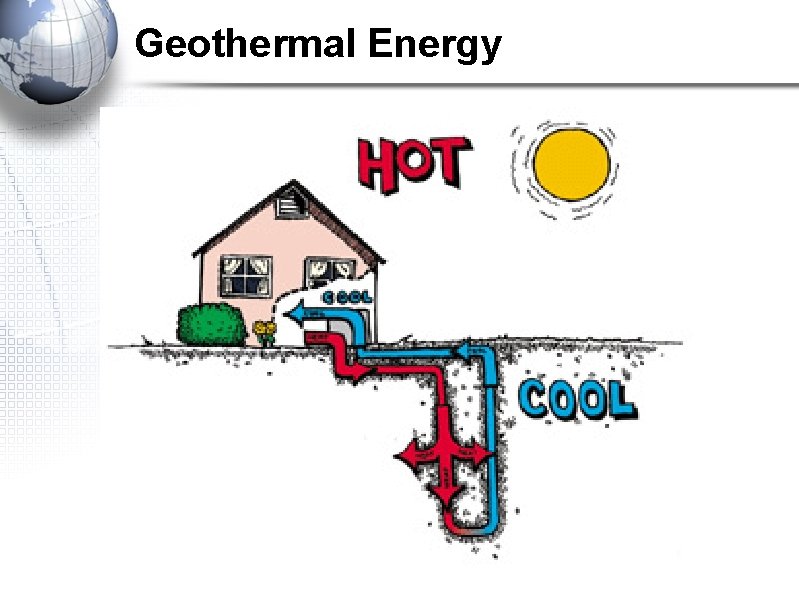
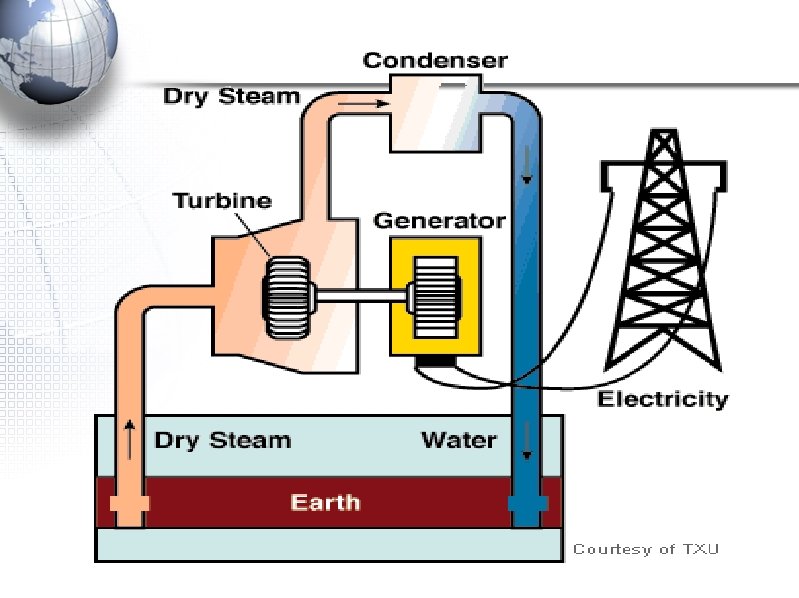
Sources of Energy • Geothermal Source Natural heat coming from the Earth Pros free source unlimited env. friendly Cons expensive set-up few locations
Geothermal Energy
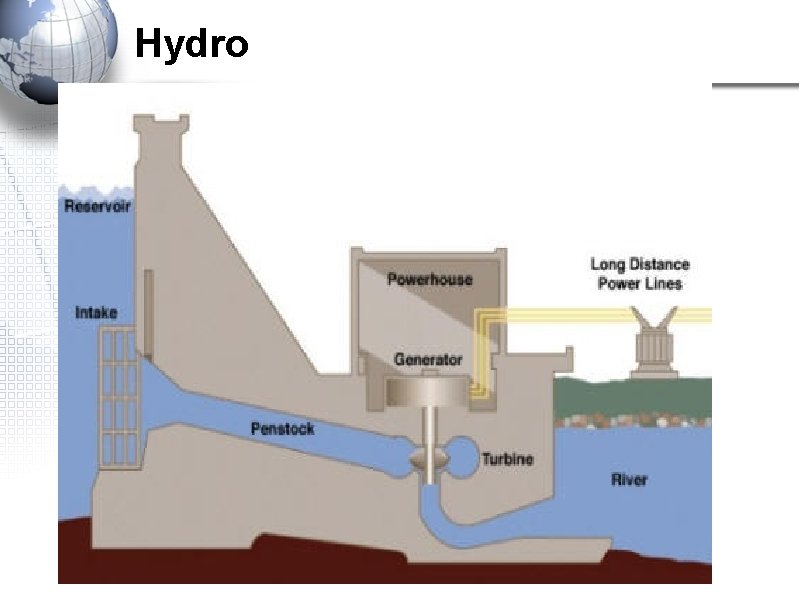
Sources of Energy • Hydro Source Moving river water Pros cheap source env. friendly recreation Cons flooding impacts expensive set-up
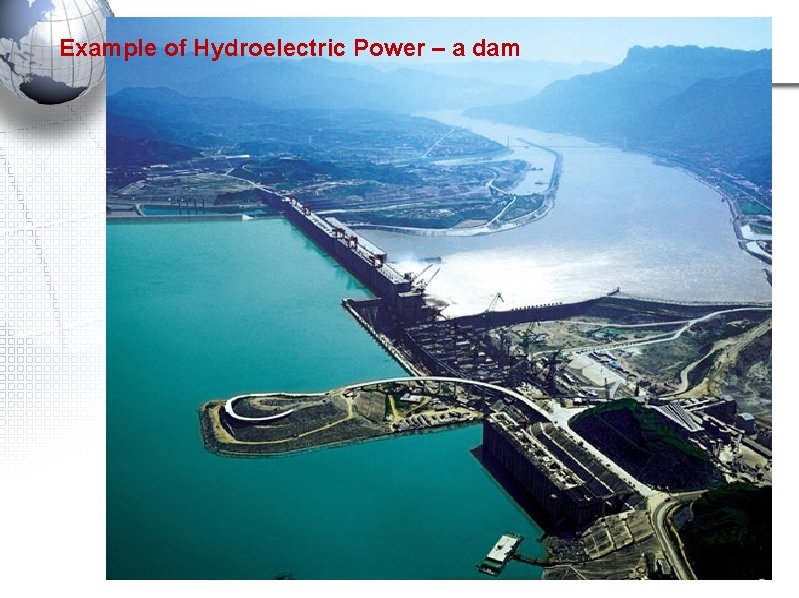
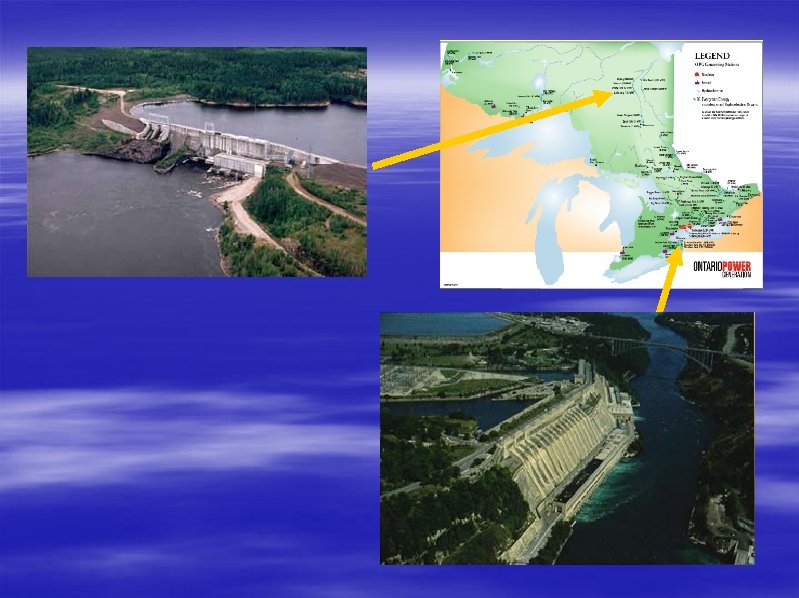
Example of Hydroelectric Power – a dam
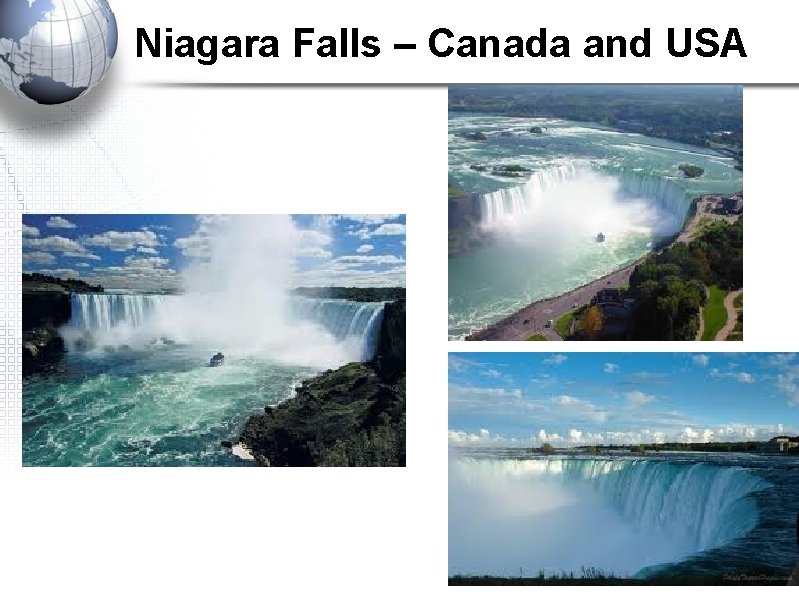
Niagara Falls – Canada and USA
Hydro
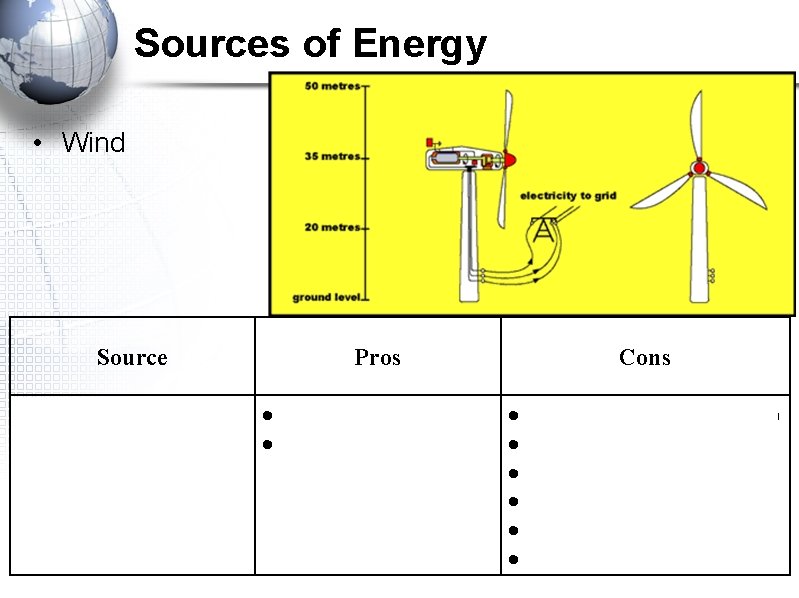
Sources of Energy • Wind Source Moving air Pros free source env. Friendly Cons expensive set-up ($$$$$) eyesore, birds inconsistent source Safety concern)people) Wasted energy Potential health effects
Sources of Energy • Nuclear Source Atom splitting - a uranium atom is split which causes enough Heat to evaporate water into steam that steam travels through a tunnel And spins a turbine Pros Cons not expensive source safety concerns lots of source expensive set-up weapons possible
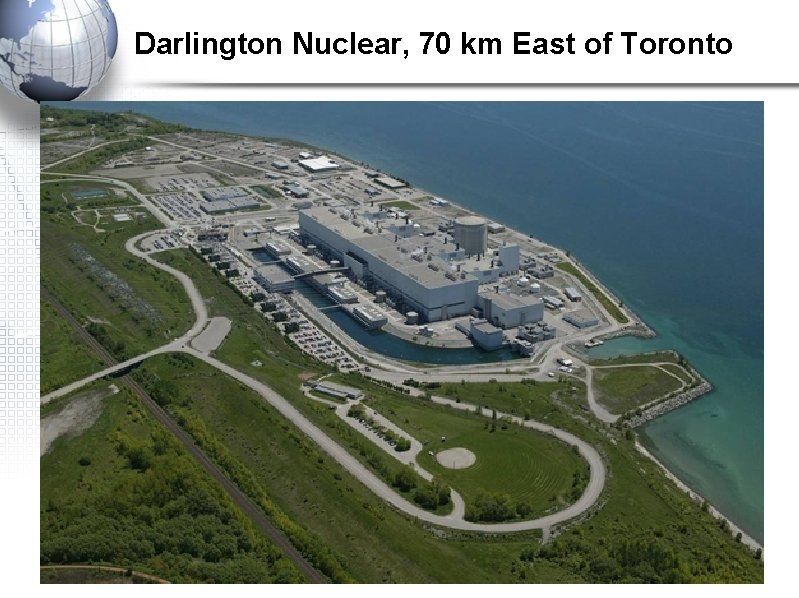
Darlington Nuclear, 70 km East of Toronto
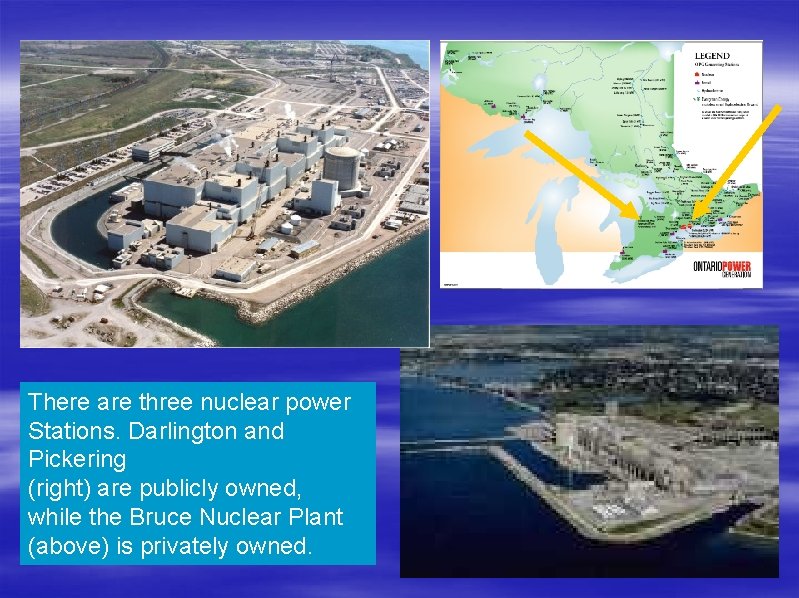
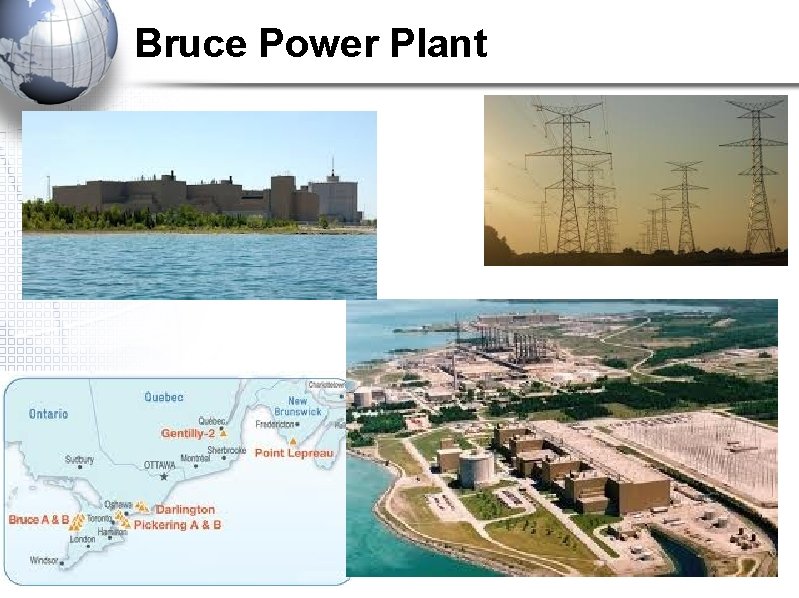
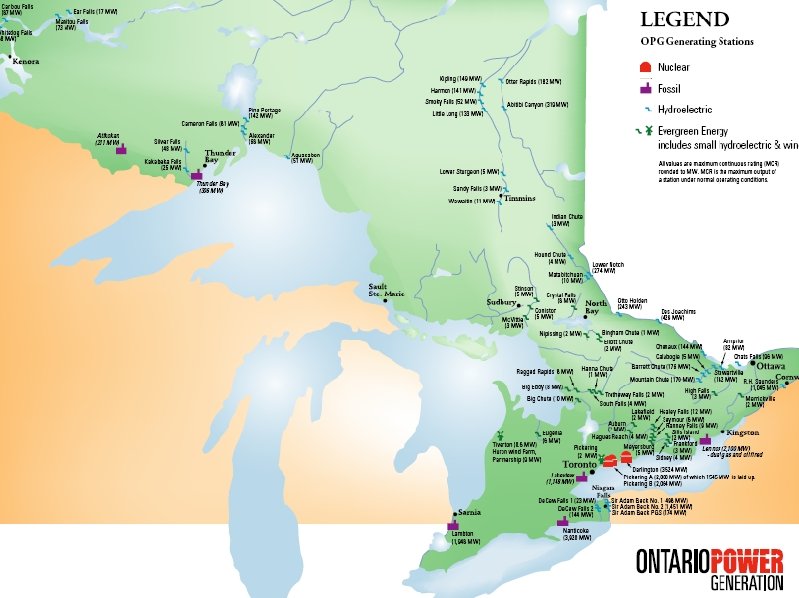
There are three nuclear power Stations. Darlington and Pickering (right) are publicly owned, while the Bruce Nuclear Plant (above) is privately owned.
Bruce Power Plant
Sources of Energy • Fossil Fuels Source Burning of coal, oil, or natural gas Pros Cons not expensive source Harmful to or set-up environment readily available Sources not Creates jobs renewable Makes $ for gov’t
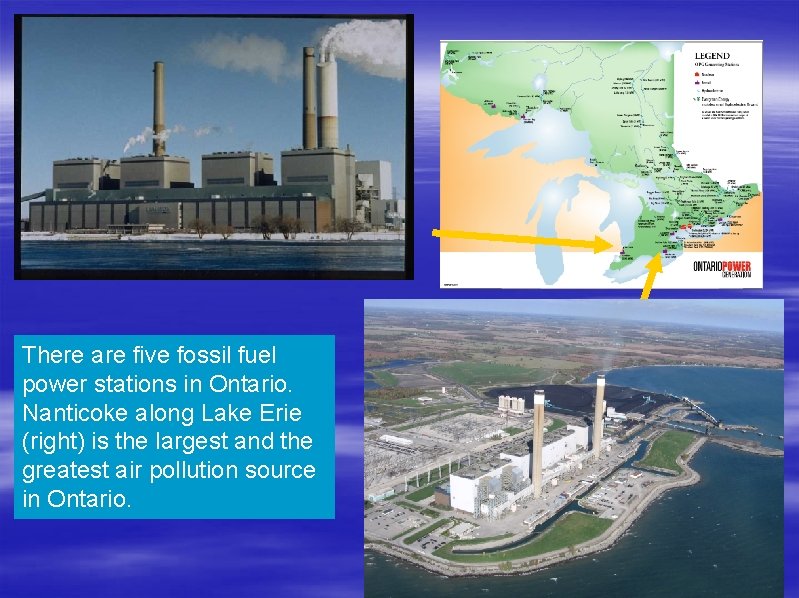
There are five fossil fuel power stations in Ontario. Nanticoke along Lake Erie (right) is the largest and the greatest air pollution source in Ontario.
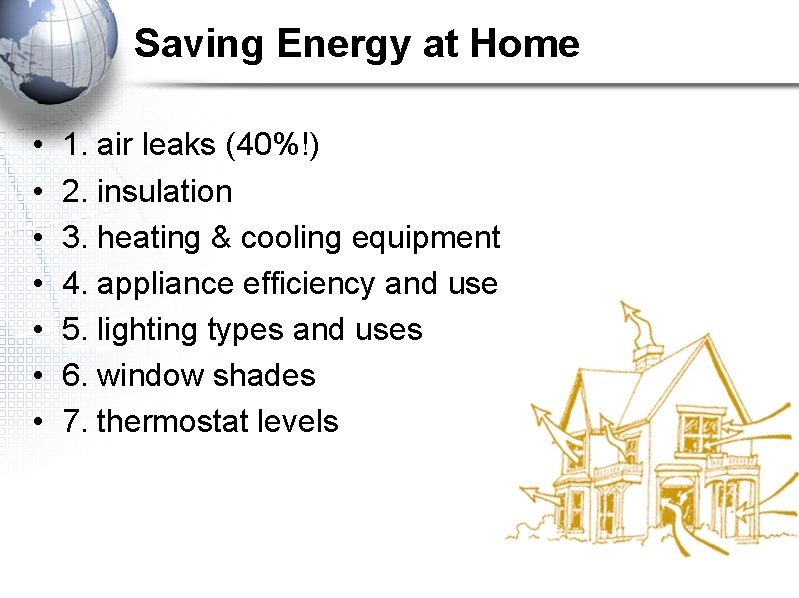
Saving Energy at Home • • 1. air leaks (40%!) 2. insulation 3. heating & cooling equipment 4. appliance efficiency and use 5. lighting types and uses 6. window shades 7. thermostat levels
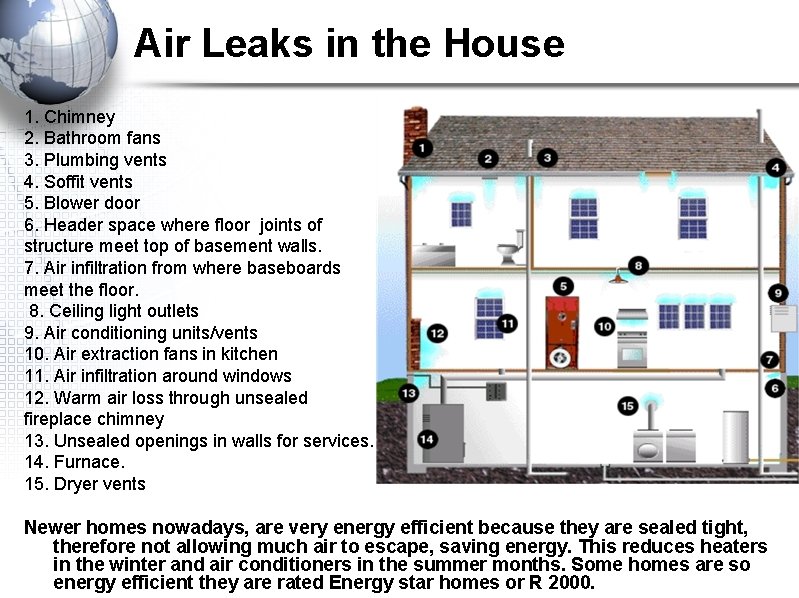
Air Leaks in the House 1. Chimney 2. Bathroom fans 3. Plumbing vents 4. Soffit vents 5. Blower door 6. Header space where floor joints of structure meet top of basement walls. 7. Air infiltration from where baseboards meet the floor. 8. Ceiling light outlets 9. Air conditioning units/vents 10. Air extraction fans in kitchen 11. Air infiltration around windows 12. Warm air loss through unsealed fireplace chimney 13. Unsealed openings in walls for services. 14. Furnace. 15. Dryer vents Newer homes nowadays, are very energy efficient because they are sealed tight, therefore not allowing much air to escape, saving energy. This reduces heaters in the winter and air conditioners in the summer months. Some homes are so energy efficient they are rated Energy star homes or R 2000.
Energy Textbook Questions Answers • Definitions: • Biomass Energy: energy produced by combusting biomass materials such as wood, peat and manure • Joule: metric unit used to measure energy • Anticlinal traps: dome shaped structure of rock layers created by folding. Oil and gas are often found in these traps • Oil Sand: mixture of heavy crude oil, sand water • Bitumen: in oil sand deposits each grain of sand is covered by a layer of water and a heavy oil or black tar called bitumen. Processed into synthetic crude oil.
Energy Textbook Questions Answers • Depleted: used up • Hydroelectric Generating Station: facility that generates electricity by the movement of falling water • Nuclear electric Generating Station: place where energy, in the form of heat, is generated by splitting atoms of radioactive materials, then is used to generate electricity • Thermoelectric Generating Station: electrical power plant where electricity is generated from energy produced by burning fossil fuels such as coal, oil and natural gas • Power Grid: system of electrical power lines that connects large generating station to buildings where people use electricity
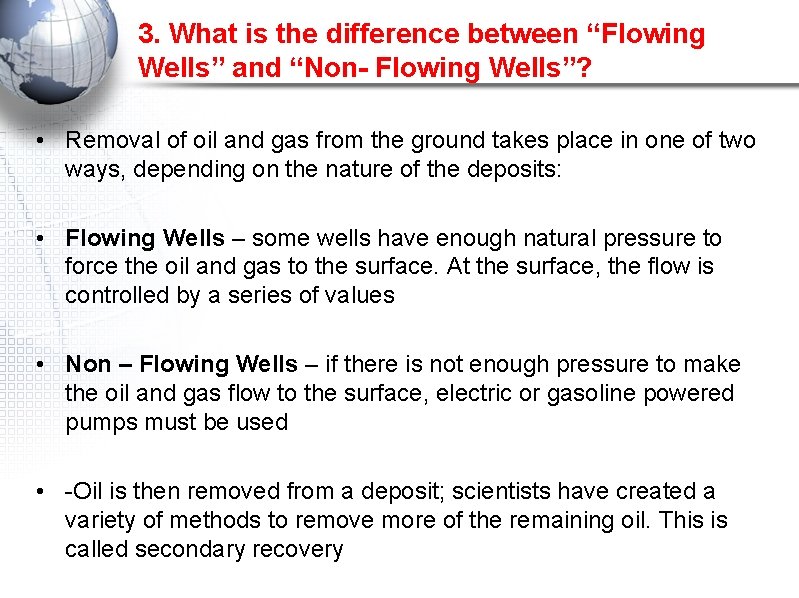
3. What is the difference between “Flowing Wells” and “Non- Flowing Wells”? • Removal of oil and gas from the ground takes place in one of two ways, depending on the nature of the deposits: • Flowing Wells – some wells have enough natural pressure to force the oil and gas to the surface. At the surface, the flow is controlled by a series of values • Non – Flowing Wells – if there is not enough pressure to make the oil and gas flow to the surface, electric or gasoline powered pumps must be used • -Oil is then removed from a deposit; scientists have created a variety of methods to remove more of the remaining oil. This is called secondary recovery
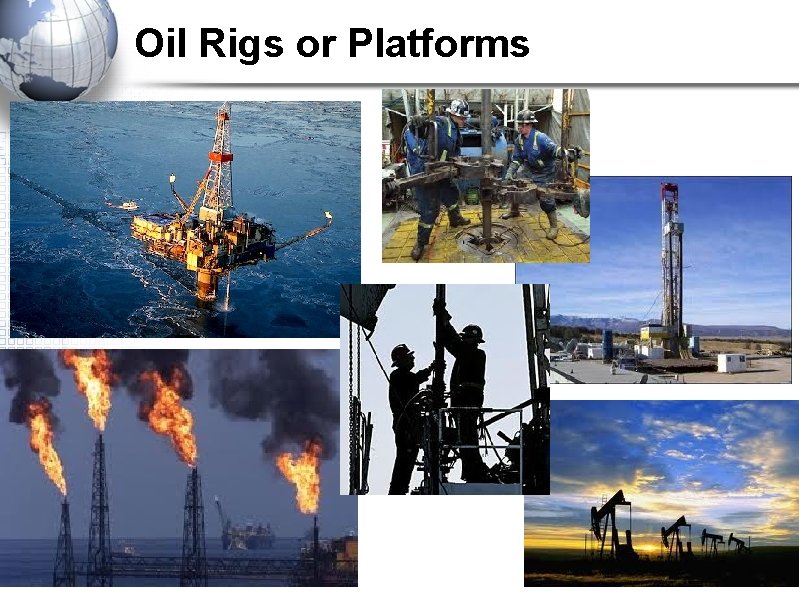
Oil Rigs or Platforms
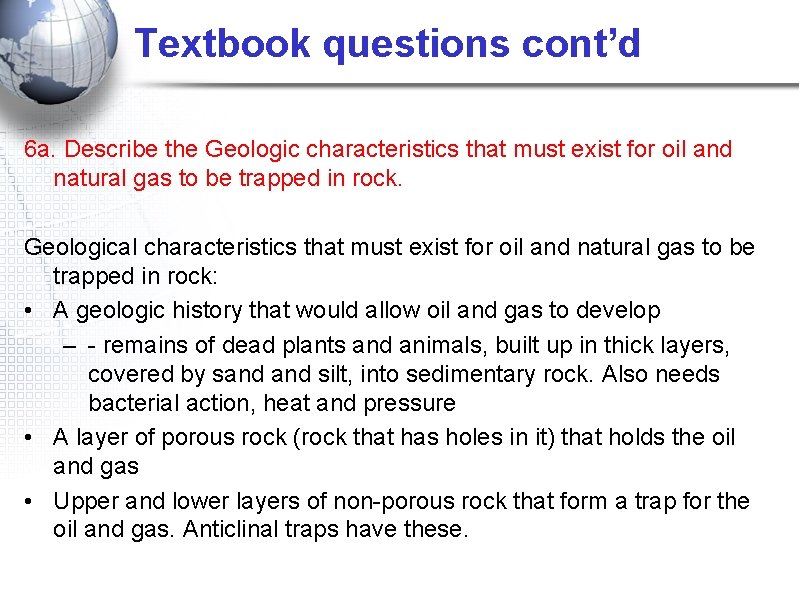
Textbook questions cont’d 6 a. Describe the Geologic characteristics that must exist for oil and natural gas to be trapped in rock. Geological characteristics that must exist for oil and natural gas to be trapped in rock: • A geologic history that would allow oil and gas to develop – - remains of dead plants and animals, built up in thick layers, covered by sand silt, into sedimentary rock. Also needs bacterial action, heat and pressure • A layer of porous rock (rock that has holes in it) that holds the oil and gas • Upper and lower layers of non-porous rock that form a trap for the oil and gas. Anticlinal traps have these.
# 7. What are oil sands and how to do they contribute to Canada’s energy supply? • Oil production includes both conventional crude oil that is pumped from the ground and synthetic crude oil created from a special substance called oil sand, which is mined. • An oil like substance called bitumen is found around individual sand particles. It is the bitumen that is further processed to make synthetic crude oil. We use this crude oil for daily energy use.
#9 the Oil industry takes to find and develop oil and gas • Finding oil and gas in amounts that will make their recovery worthwhile is a challenging task. Geologists must look for special geological structures that have trapped oil and gas. What makes the search difficult is that these structures may be many hundreds of meters underground. There is no guarantee that oil and gas will be found within it. • Geologists use many tricks to search for oil and gas: – Looking for rocks on the surface that contains traces of oil – Searching for clues, like fossils, in the sedimentary rock that indicate the right conditions for the formation of oil and gas – Using geological information obtained from the drill cores of oil wells in the same general area – Conducting seismic surveys, which use shock waves to locate oil and gas bearing rock structure • Presence of oil and gas can be determined only by drilling
Textbook questions cont’d 13. Identify the regions that depend mainly on thermoelectric power and those that depend primarily on hydroelectric power? • Regions that depend mainly on thermoelectric power – Alberta, Saskatchewan, Southern Ontario, Nova Scotia, New Brunswick and PEI • Regions that depend mainly on hydroelectric power – B. C. , Quebec, Newfoundland Labrador, Manitoba
14. Why does Canada import and export energy products? Consider oil and electricity. • Oil – Supertankers carry crude oil from such exporting areas as the Middle East, South America, Africa to Newfoundland, Nova Scotia and Maine, USA. As a result, the market east of Ontario and Quebec border is supplied mainly with imported oil. On the other hand, pipelines from western Canada enable the export of huge amounts of Canadian oil to the US as well as supplying Canadian needs west of Ontario. • Electricity – Electricity is moved between provinces and Canada and the USA by high voltage transmission lines. The US buys electricity from Canada in the summer when its air conditioning needs are high. Canada buys power from the US in the winter when our heating demands are high.