
Sources of Energy A Power Point Presentation for


- Slides: 23
Sources of Energy (A Power Point Presentation for application of ICT in Educational Aids) Shadangish Gupta B. Ed Ist Year Roll no. – 91 E-mail – guptashadangish 45@gmail. com
Sources of Energy
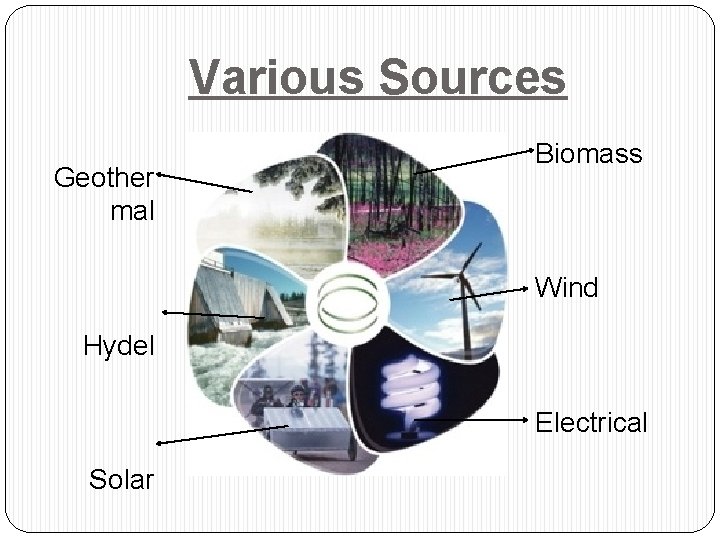
Various Sources Geother mal Biomass Wind Hydel Electrical Solar
Other Sources – �Fossil Fuels �Nuclear Energy �Tidal Energy �Wave Energy
Classification Energy Sources may be �Renewable �Non-Renewable
• Renewable Sources �Hydel �Solar �Wind �Biomass �Geothermal �Tidal �Wave
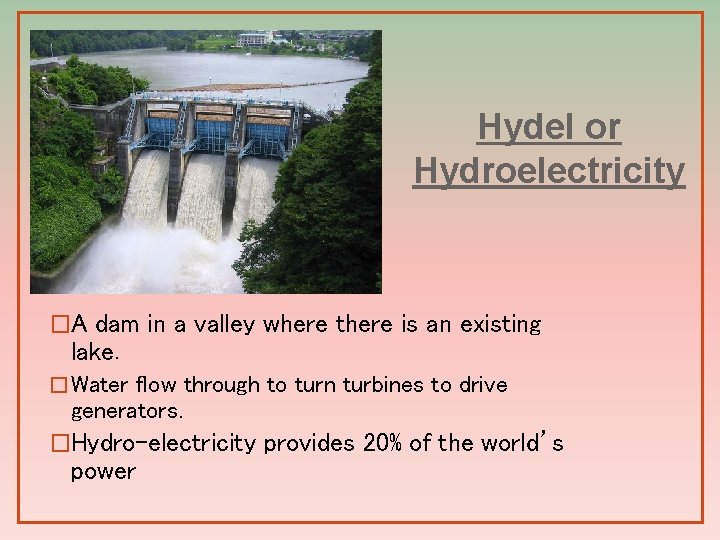
Hydel or Hydroelectricity �A dam in a valley where there is an existing lake. � Water flow through to turn turbines to drive generators. �Hydro-electricity provides 20% of the world’s power
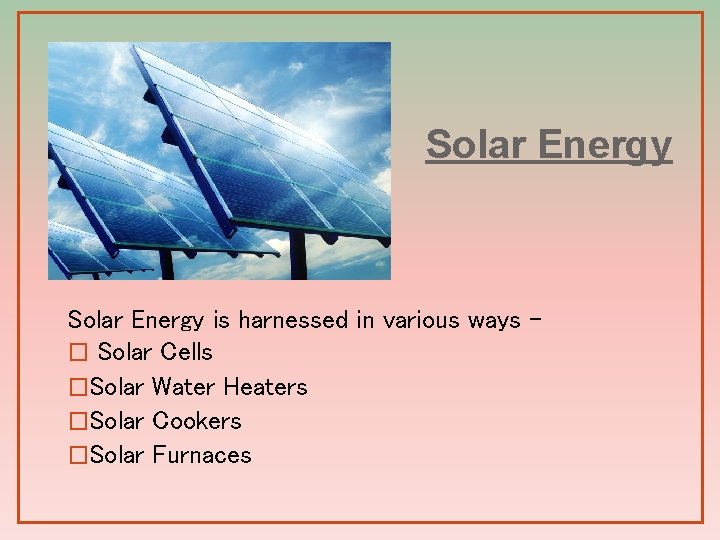
Solar Energy is harnessed in various ways – � Solar Cells �Solar Water Heaters �Solar Cookers �Solar Furnaces
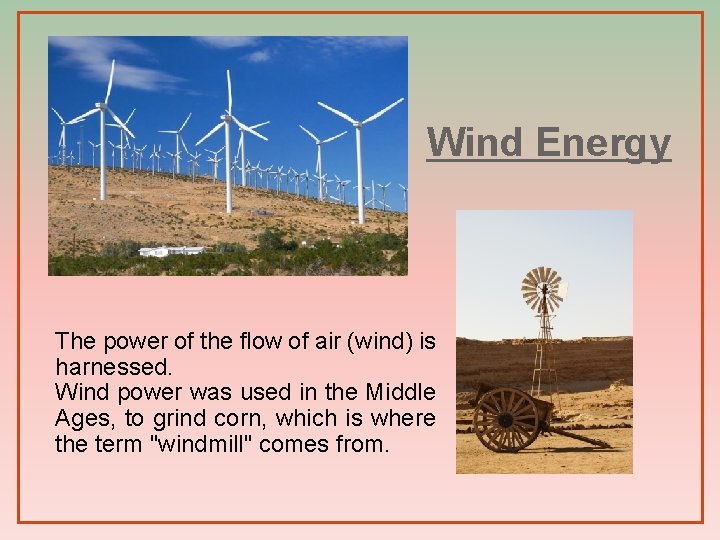
Wind Energy The power of the flow of air (wind) is harnessed. Wind power was used in the Middle Ages, to grind corn, which is where the term "windmill" comes from.
Biomass Energy �The energy derived from organic sources such as any living things or recently living thing by burning. � Woods, Aquatic vegetation etc. plants, dried
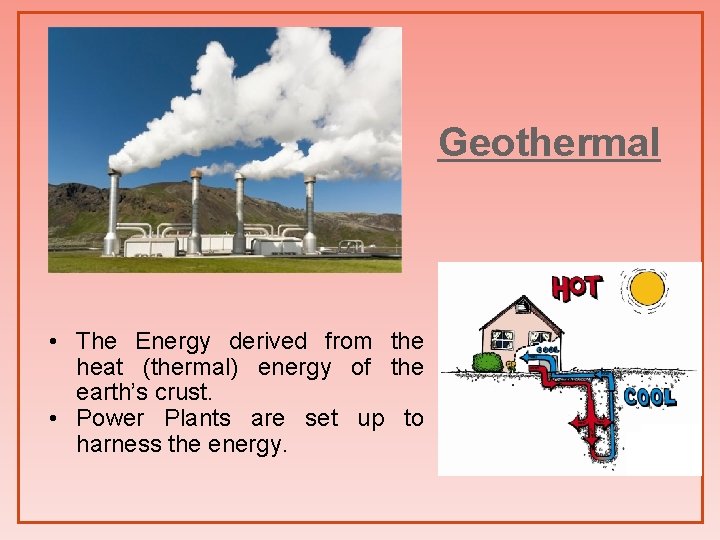
Geothermal • The Energy derived from the heat (thermal) energy of the earth’s crust. • Power Plants are set up to harness the energy.
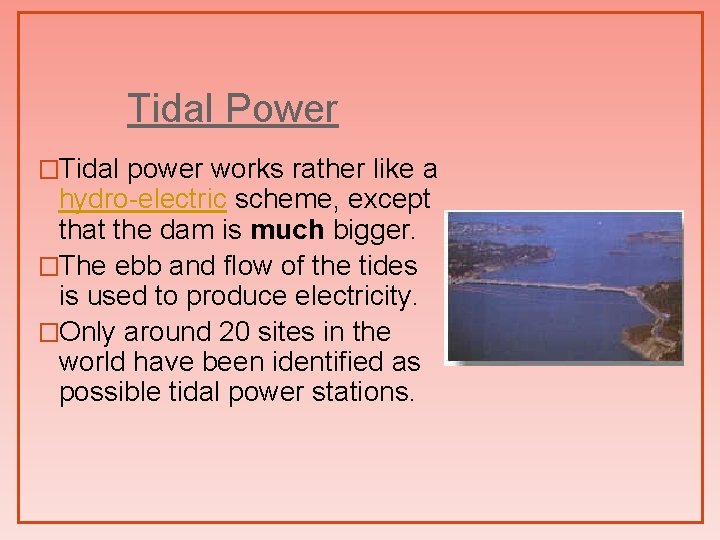
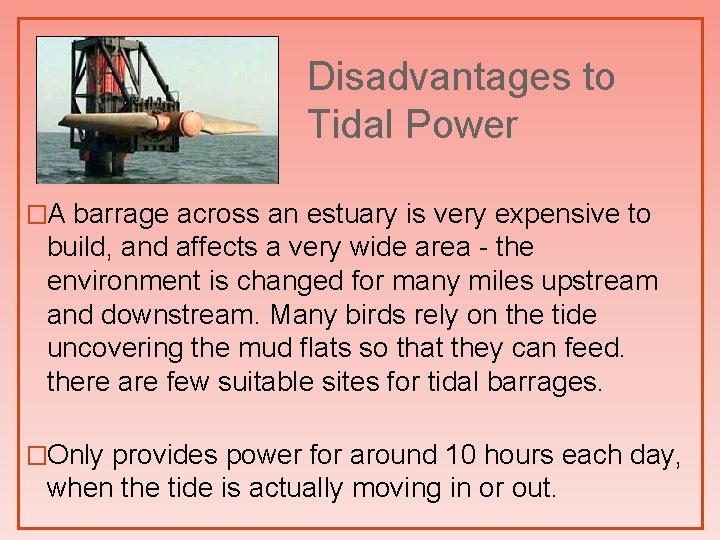
Tidal Power �Tidal power works rather like a hydro-electric scheme, except that the dam is much bigger. �The ebb and flow of the tides is used to produce electricity. �Only around 20 sites in the world have been identified as possible tidal power stations.
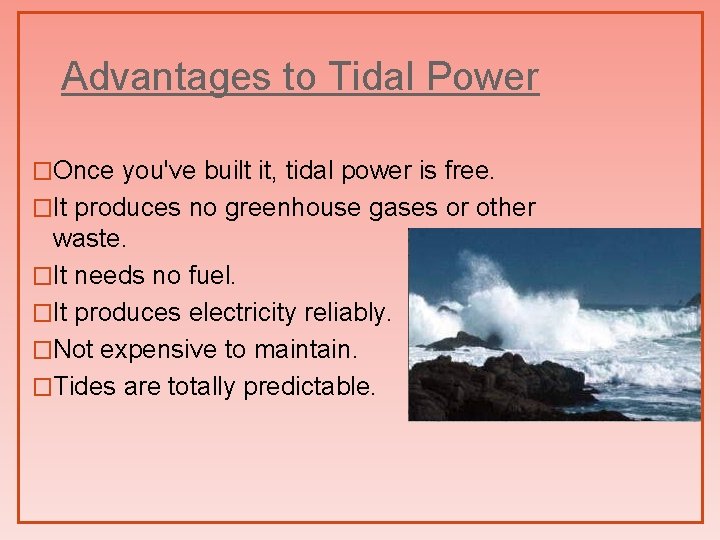
Advantages to Tidal Power �Once you've built it, tidal power is free. �It produces no greenhouse gases or other waste. �It needs no fuel. �It produces electricity reliably. �Not expensive to maintain. �Tides are totally predictable.
Disadvantages to Tidal Power �A barrage across an estuary is very expensive to build, and affects a very wide area - the environment is changed for many miles upstream and downstream. Many birds rely on the tide uncovering the mud flats so that they can feed. there are few suitable sites for tidal barrages. �Only provides power for around 10 hours each day, when the tide is actually moving in or out.
• Non - Renewable Sources �Fossil Fuels Ø Coal Ø Petroleum Ø Natural Gas �Nuclear Energy
Fossil Fuels �Coal, Oil and Gas are called "fossil fuels" because they have been formed from the fossilized remains of prehistoric plants and animals. �They provide around 66% of the world's electrical power, and 95% of the world's total energy demands
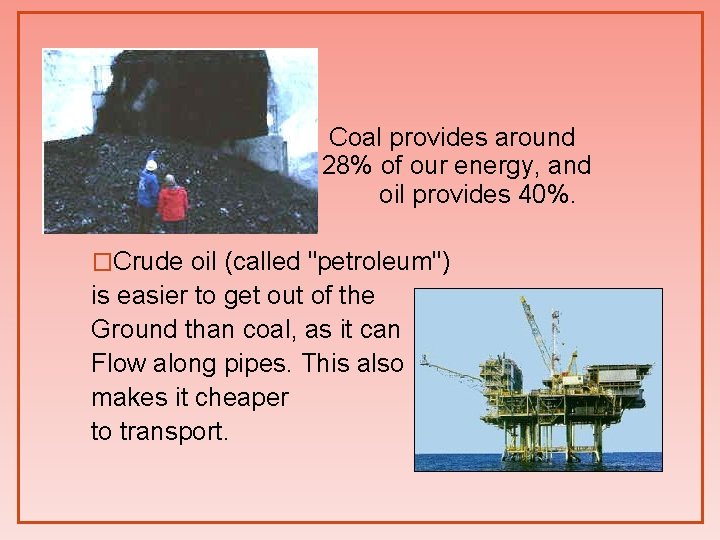
� Coal provides around 28% of our energy, and oil provides 40%. �Crude oil (called "petroleum") is easier to get out of the Ground than coal, as it can Flow along pipes. This also makes it cheaper to transport.
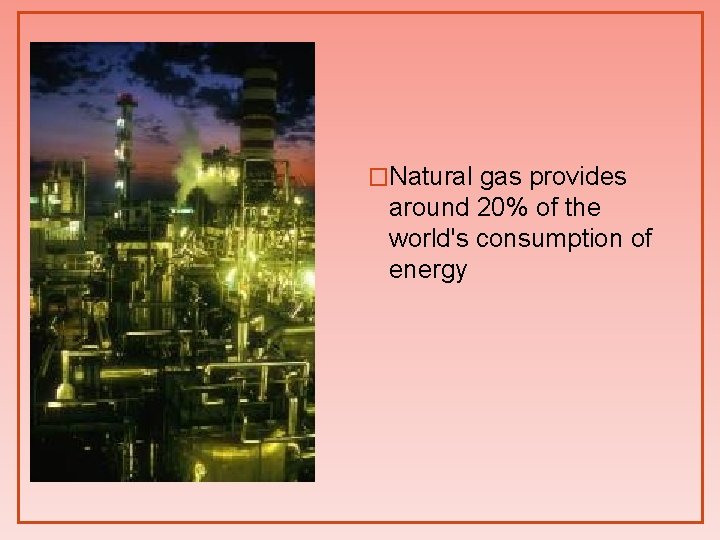
�Natural gas provides around 20% of the world's consumption of energy
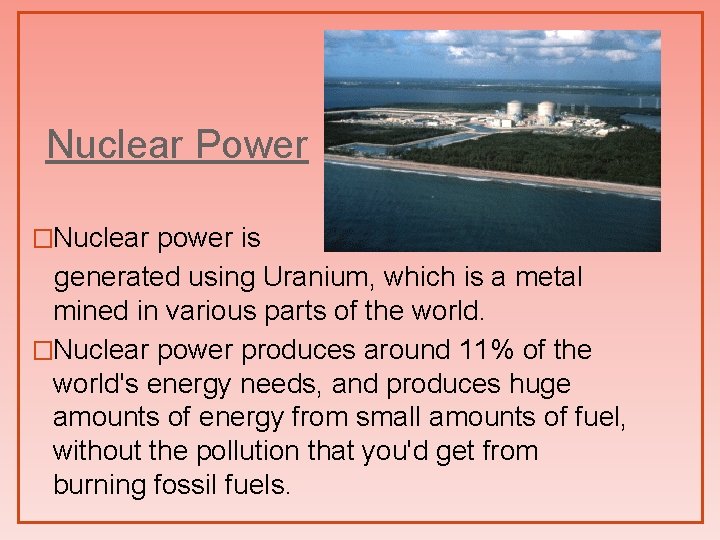
Nuclear Power �Nuclear power is generated using Uranium, which is a metal mined in various parts of the world. �Nuclear power produces around 11% of the world's energy needs, and produces huge amounts of energy from small amounts of fuel, without the pollution that you'd get from burning fossil fuels.
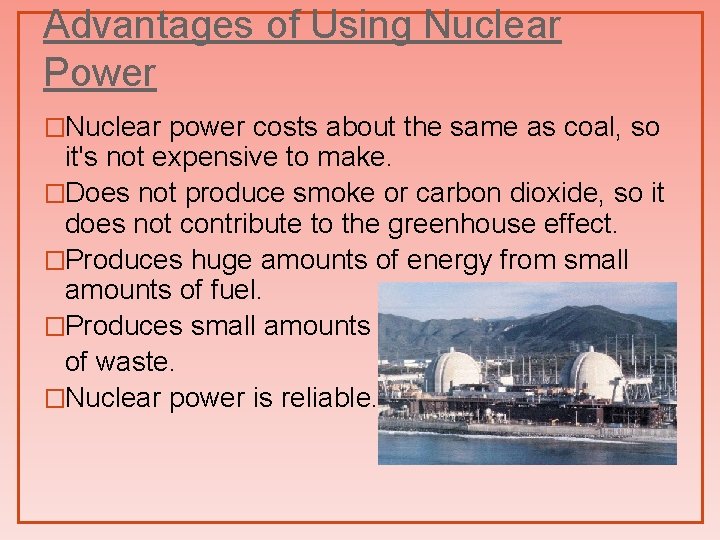
Advantages of Using Nuclear Power �Nuclear power costs about the same as coal, so it's not expensive to make. �Does not produce smoke or carbon dioxide, so it does not contribute to the greenhouse effect. �Produces huge amounts of energy from small amounts of fuel. �Produces small amounts of waste. �Nuclear power is reliable.
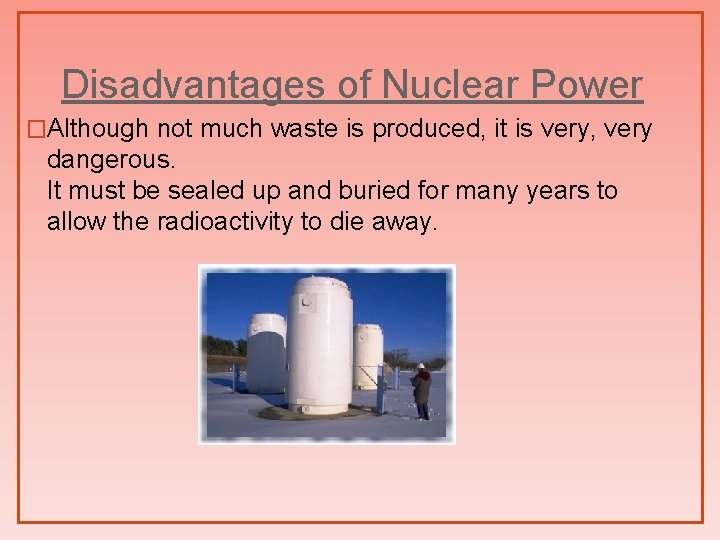
Disadvantages of Nuclear Power �Although not much waste is produced, it is very, very dangerous. It must be sealed up and buried for many years to allow the radioactivity to die away.
Conclusion �The use of energy sources should be done in a sustainable way. We should harness the renewable sources as much as possible �Use of non-renewable sources must be prohibited �Wise use of energy sources is a must