
Source James Preston Flickr The Affect and the

- Slides: 25
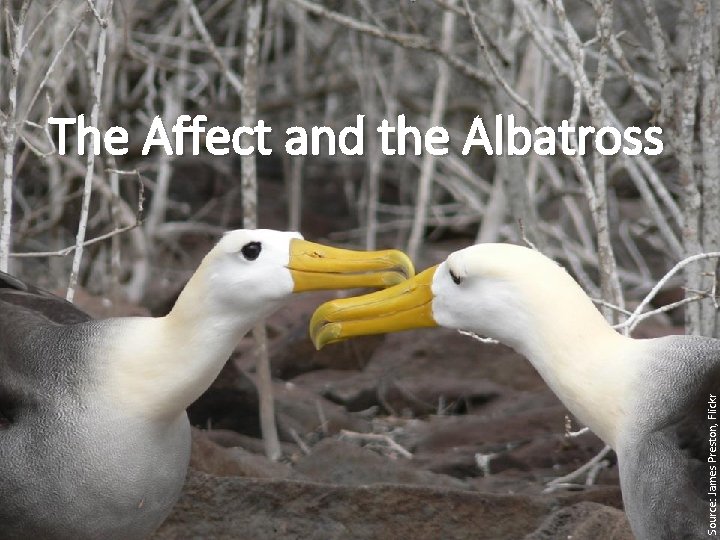
Source: James Preston, Flickr The Affect and the Albatross
What is the One World Centre? The One World Centre implements the Global Education Project, a professional learning initiative, for educators in WA. We offer professional development workshops on a range of global and development issues at the centre, in schools and at universities for teachers and pre-service teachers. Education Officers work with teachers and schools on programmes and resources, and to take a whole school approach to global education. The OWC library provides a wide range of global education teaching and learning resources suitable for teachers and students. Check out the OWC at: www. oneworldcentre. org. au
What’s Global Education? “Enabling young people to participate in a better shared future for all is at the heart of global education. Global education promotes open-mindedness leading to new thinking about the world and a predisposition to take action for change. Students learn to take responsibility for their actions, respect and value diversity, and see themselves as global citizens who can contribute to a more peaceful, just and sustainable world” Global Perspectives: A framework for global education in Australian Schools Commonwealth of Australia, 2008
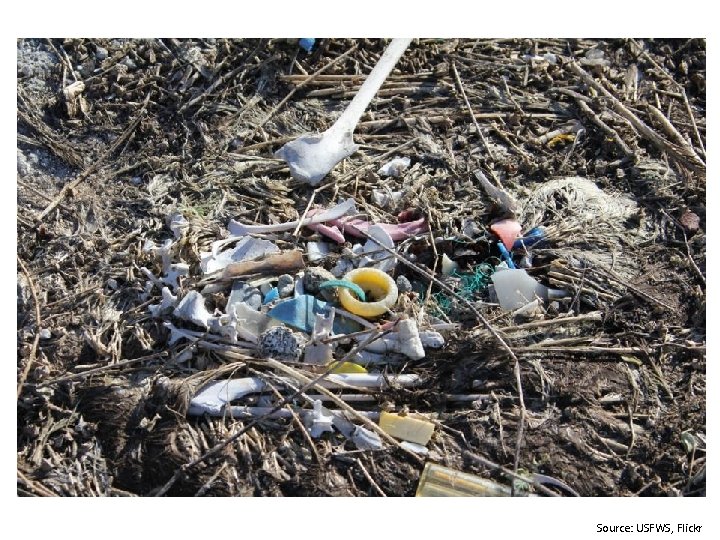
Source: USFWS, Flickr
“Most global education materials seem to presume that appropriate enquiry followed by action for change will naturally lead to students feeling more empowered. But this is not necessarily the case. What is often missing is the affective dimension. Whilst this is true for much of the curriculum, it matters most when we want students to explore major issues that actually threaten the human condition. ” Source: David Hicks ‘The Challenge of Teaching Controversial Issues’, 2007
How do we recognise affective learning? • Krathwohl’s Taxonomy – Receiving: listens and pays attention – Responding: shows interest and active participation – Valuing: joins in and takes responsibility – Organisation: brings together different values to build an internally consistent value system – Characterisation: consistently behaves according to a value system
HOPES AND FEARS
‘unveil opportunities for hope, no matter what the obstacles might be’ Paûlo Freire
Williams Taxonomy A taxonomy of creative thinking skills that combines cognitive and affective domains
Image Source: marttj, Flickr Cognitive Thinking Skills
Write a list of things that can be found in the ocean, including as many as you can think of in 2 minutes. Fluency…a way to think of a large quantity of responses to a stimulus
Make a case for which things ‘belong’ and which ‘don’t belong’ in the ocean. Flexibility…a way to take different approaches to stimulus or seek variety and shift in categories.
Describe the most unique method you can think of for keeping land rubbish out of oceans? Originality…way to think of novel or unique ways or to produce clever, unobvious responses.
Rachel Carson suggests that a child can learn about the night sky with an adult “even if you don’t know the name of a single star”. What do you think can be learnt by simply experiencing and sharing nature? Elaboration…a way to add on to responses or expand on simple ideas Source: NPCA Photos, Flickr
Image Source: CHRISTOPHER MACSURAK, Flickr Affective Thinking Skills
The person next to you has just dropped their bottle cap on the foot path in front of you and kept walking. What do you say to them? Risk taking…a way to think with courage by exposing oneself to failure or criticism
Plastic is a convenience, a lifesaver and a death-trap. Discuss. Complexity…thinking in a way that brings order to chaos and delves into complex ideas
How could plastic end up being consumed by people? Curiosity…the willingness to follow a hunch, ponder a mystery or toy with an idea.
You have a laser that will transform all examples of any object it is fired at, rendering them biodegradable. What 3 objects do you aim it at, and how does life on Earth change? Imagination… having the power to build on mental images or wonder about things that have never happened.
Ms. Wallace's 4 th grade students are learning about ecology and the environment. They are reading about the damage that pollution cause to fragile ecosystems. During the week that they are studying this topic, nothing in her class is thrown away. Each student has a bag by his or her desk in which they place things they would normally toss into the trash can. By the end of the week, the room is becoming a cluttered and somewhat smelly place. Ms. Wallace wants her students to be able to explain how plants, animals, and the environment interrelate. She also wants them to understand their own role in changing the environment and to become more thoughtful citizens of the planet. In Ms. Wallace's ecology class, students are gradually forced to confront the accumulating consequences of their trash production. They research alternatives to disposable packaging and create a display of environmentally conscious choices. The overflowing trash bags create cognitive dissonance, and their research helps them develop attractive dissonance-reducing choices. By creating the display, they have publicly advocated and modelled positive attitudes and behaviours, thus becoming more likely to internalize them.
Emotional Engagement Techniques • • • Self disclosure Modelling emotions Empowerment Suspense – curiosity, uncertainty or anticipation Surprise Telling stories Humour Fostering wonder and imagination Provoking short term negative emotions eg disgust, fear
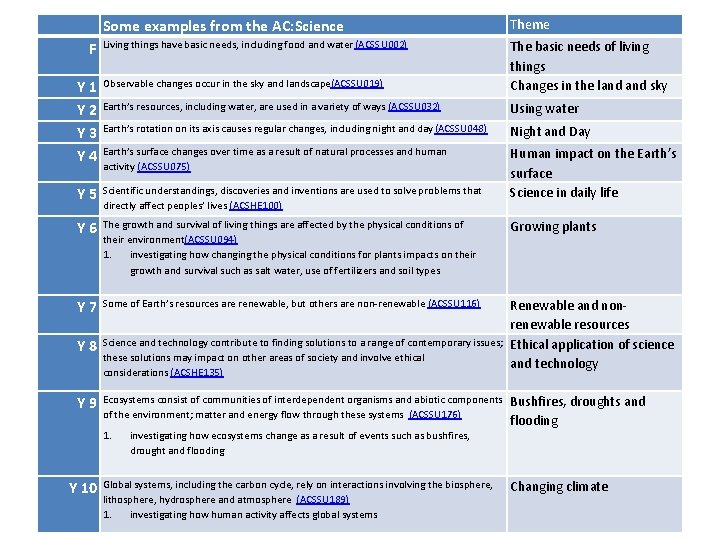
Some examples from the AC: Science F Living things have basic needs, including food and water (ACSSU 002) Theme Y 1 Y 2 Y 3 Y 4 Observable changes occur in the sky and landscape(ACSSU 019) The basic needs of living things Changes in the land sky Earth’s resources, including water, are used in a variety of ways (ACSSU 032) Using water Earth’s rotation on its axis causes regular changes, including night and day (ACSSU 048) Night and Day Earth’s surface changes over time as a result of natural processes and human activity (ACSSU 075) Y 5 Scientific understandings, discoveries and inventions are used to solve problems that directly affect peoples’ lives (ACSHE 100) Human impact on the Earth’s surface Science in daily life Y 6 The growth and survival of living things are affected by the physical conditions of their environment(ACSSU 094) 1. investigating how changing the physical conditions for plants impacts on their growth and survival such as salt water, use of fertilizers and soil types Growing plants Y 7 Some of Earth’s resources are renewable, but others are non-renewable (ACSSU 116) Y 8 Science and technology contribute to finding solutions to a range of contemporary issues; these solutions may impact on other areas of society and involve ethical considerations (ACSHE 135) Renewable and nonrenewable resources Ethical application of science and technology Y 9 Ecosystems consist of communities of interdependent organisms and abiotic components of the environment; matter and energy flow through these systems (ACSSU 176) 1. Y 10 investigating how ecosystems change as a result of events such as bushfires, drought and flooding Global systems, including the carbon cycle, rely on interactions involving the biosphere, lithosphere, hydrosphere and atmosphere (ACSSU 189) 1. investigating how human activity affects global systems Bushfires, droughts and flooding Changing climate
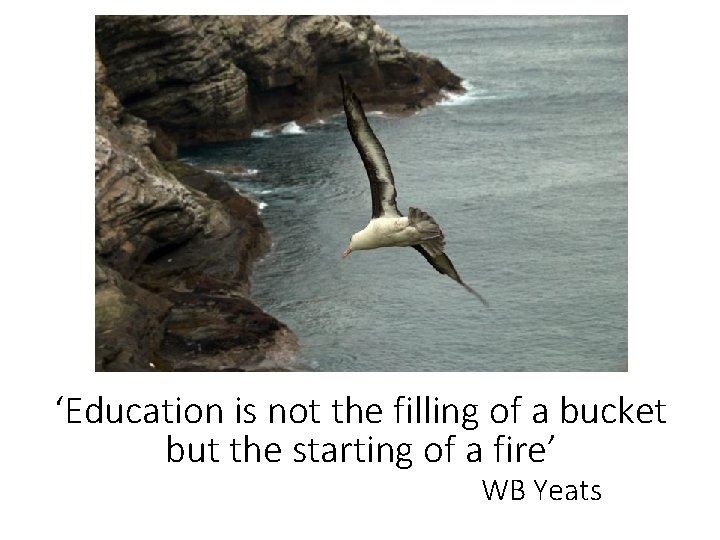
‘Education is not the filling of a bucket but the starting of a fire’ WB Yeats