
Source Analysis How to think and write about
Source Analysis How to think and write about sources on the test Content borrowed from 3 for 3 NCGE Bellringers
Skill 4: Source Analysis Skill 4: Analyze & interpret qualitative geographic information in maps, images, and landscapes. ★ A. Identify the different types of information presented in visual sources. ★ B. Describe the spatial patterns presented in visual sources. ★ C. Explain patterns and trends in visual sources to draw conclusions. ★ D. Compare patterns and trends in visual sources to draw conclusions. ★ E. Explain how maps, images, and landscapes illustrate or relate to geographic principles, processes, and outcomes. ★ F. Explain possible limitations of visual sources provided.
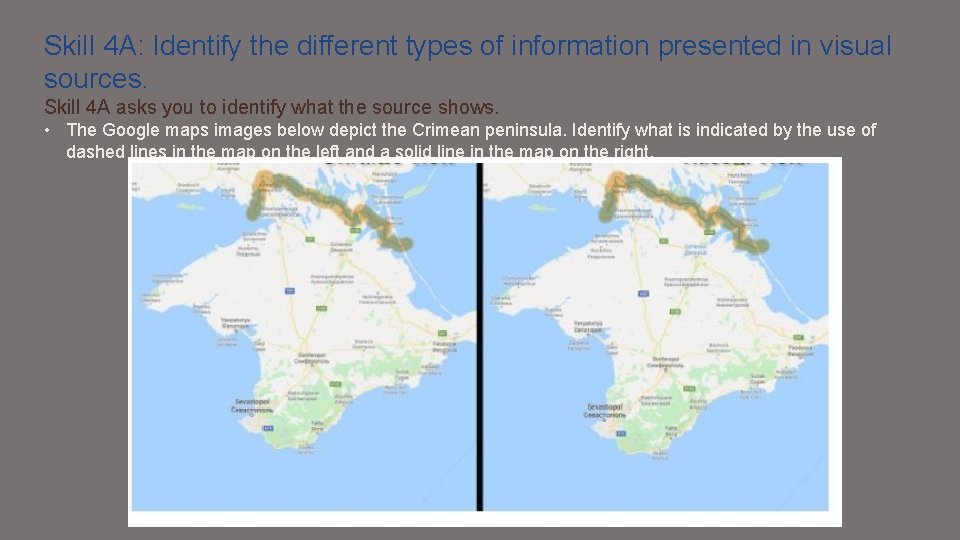
Skill 4 A: Identify the different types of information presented in visual sources. Skill 4 A asks you to identify what the source shows. • The Google maps images below depict the Crimean peninsula. Identify what is indicated by the use of dashed lines in the map on the left and a solid line in the map on the right.
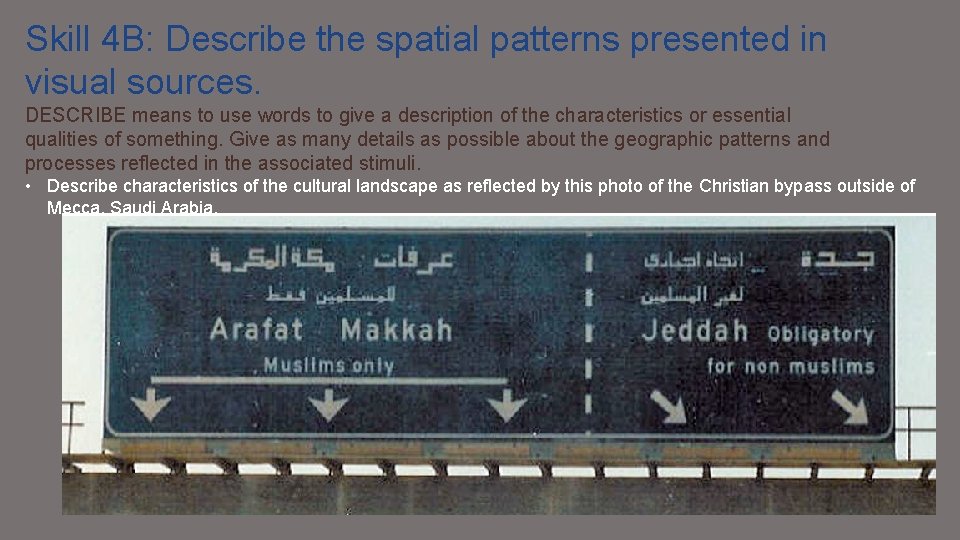
Skill 4 B: Describe the spatial patterns presented in visual sources. DESCRIBE means to use words to give a description of the characteristics or essential qualities of something. Give as many details as possible about the geographic patterns and processes reflected in the associated stimuli. • Describe characteristics of the cultural landscape as reflected by this photo of the Christian bypass outside of Mecca, Saudi Arabia.
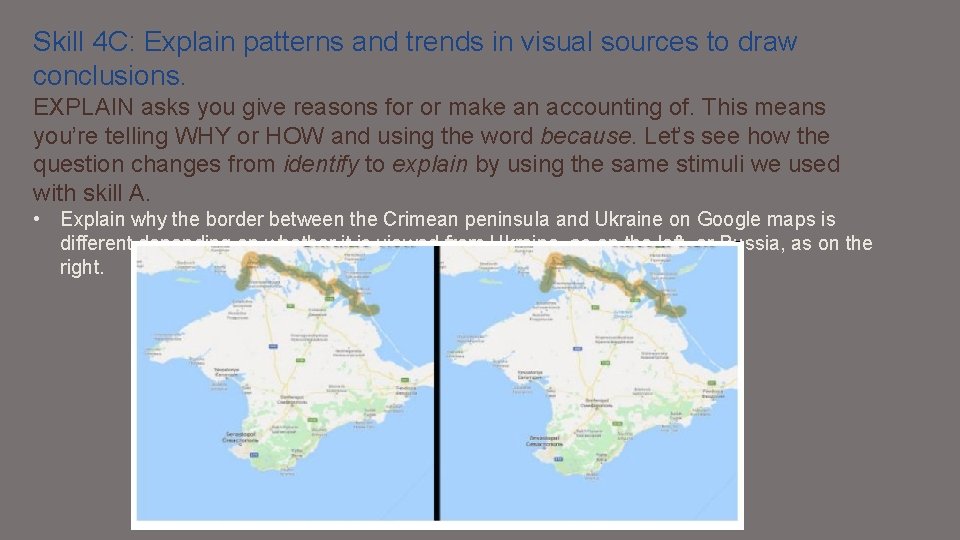
Skill 4 C: Explain patterns and trends in visual sources to draw conclusions. EXPLAIN asks you give reasons for or make an accounting of. This means you’re telling WHY or HOW and using the word because. Let’s see how the question changes from identify to explain by using the same stimuli we used with skill A. • Explain why the border between the Crimean peninsula and Ukraine on Google maps is different depending on whether it is viewed from Ukraine, as on the left, or Russia, as on the right.
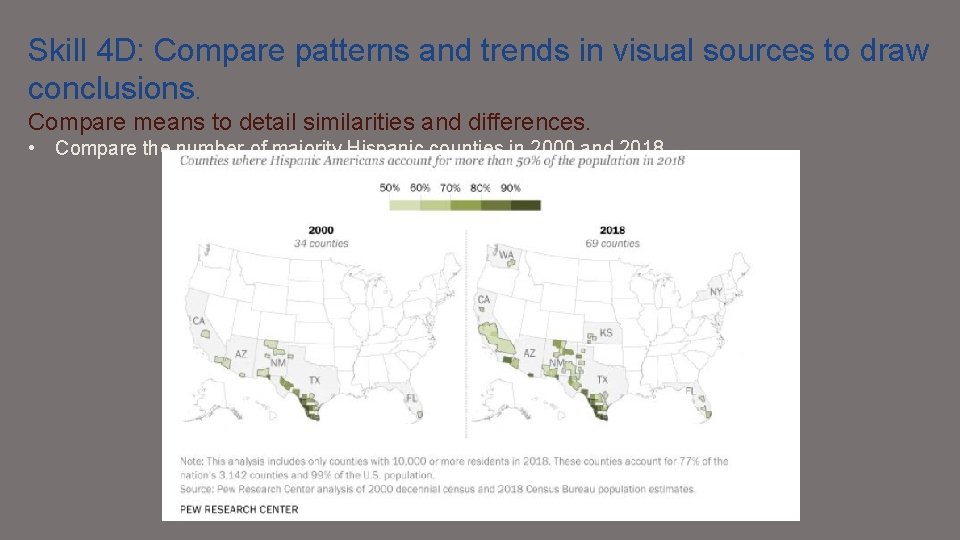
Skill 4 D: Compare patterns and trends in visual sources to draw conclusions. Compare means to detail similarities and differences. • Compare the number of majority Hispanic counties in 2000 and 2018.
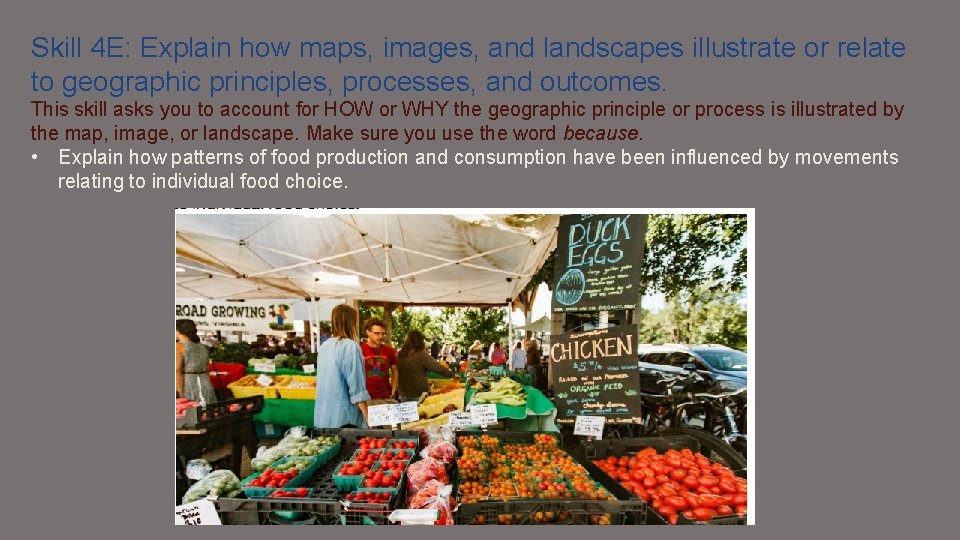
Skill 4 E: Explain how maps, images, and landscapes illustrate or relate to geographic principles, processes, and outcomes. This skill asks you to account for HOW or WHY the geographic principle or process is illustrated by the map, image, or landscape. Make sure you use the word because. • Explain how patterns of food production and consumption have been influenced by movements relating to individual food choice.
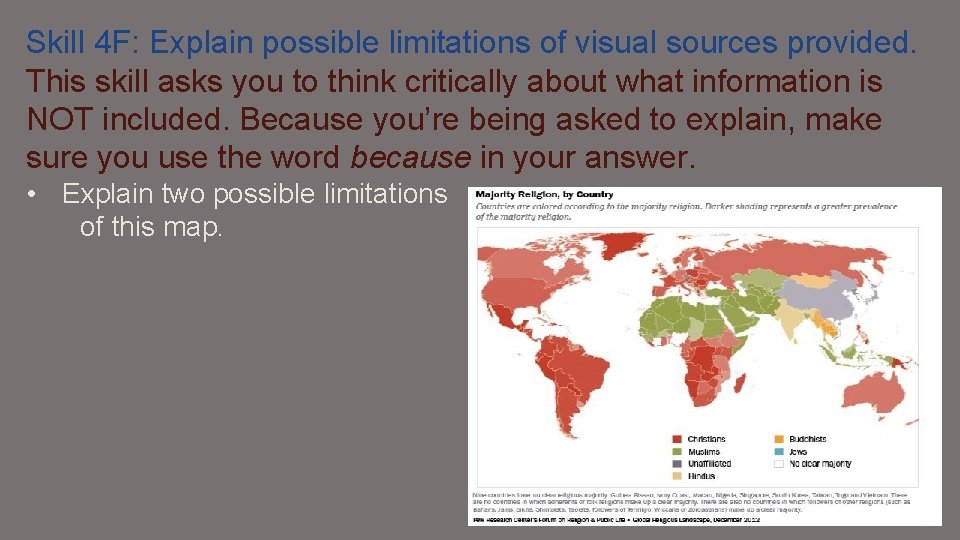
Skill 4 F: Explain possible limitations of visual sources provided. This skill asks you to think critically about what information is NOT included. Because you’re being asked to explain, make sure you use the word because in your answer. • Explain two possible limitations of this map.
- Slides: 8