
SoundEvent Partitioning and Feature Normalization for Robust SoundEvent
Sound-Event Partitioning and Feature Normalization for Robust Sound-Event Detection Baiying LEI 1, 2 Man-Wai MAK 2 1 Department of Biomedical Engineering, Shenzhen University, Shenzhen, China 2 Department of Electronic and Information Engineering The Hong Kong Polytechnic University, Hong Kong SAR, China Funding Sources: • Motorola Solutions Foundation • The Hong Kong Polytechnic University
Contents 1. Motivations of Sound-Event Detection 2. Objectives 3. Methodology – System Architecture – Acoustic Features and Fusion – Sound Event Partitioning 4. Experiments and Results 5. Conclusions 2
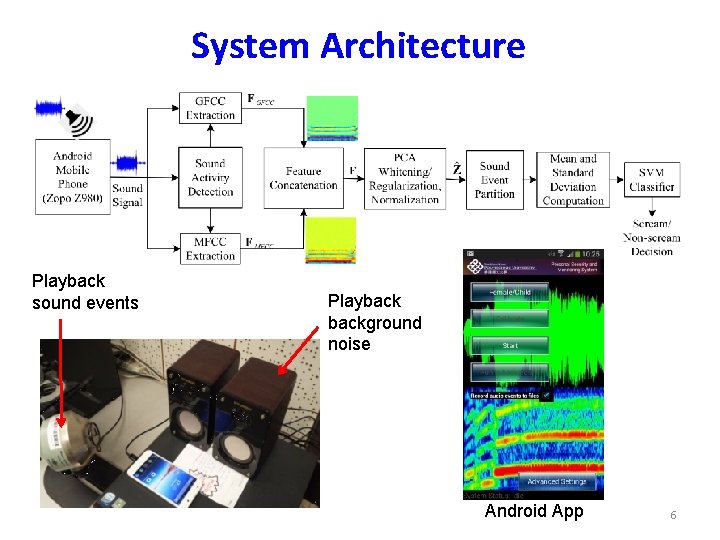
Motivation • Under some situations (e. g. , in a washroom), surveillance via video cameras is inappropriate. Audio is a viable alternative under such situations. • With the high processing power of today’s smartphones, it becomes possible to turn a smartphone into a personal audio surveillance and monitoring system. • Audio-based surveillance can make effective use of mobile devices, allowing the surveillance system to be moved from one place to another easily. • Abnormal sound events such as screaming can be detected and emergency phone calls can be automatically made. 3
Objectives of This Work 1. Determining suitable acoustic features for scream sound detection 2. Addressing the data-imbalance problem (scream vs. non-scream) in training SVM classifiers 3. Implement the detection algorithm on mobile phones 4

Methodology 5
System Architecture Playback sound events Playbackground noise Android App 6
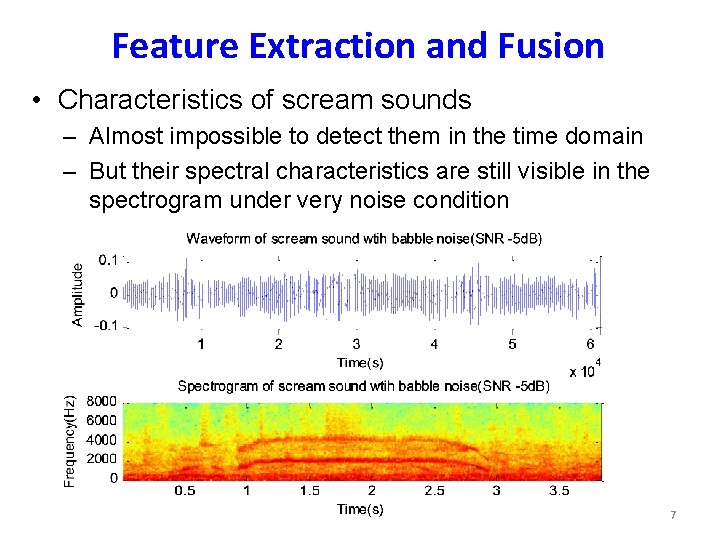
Feature Extraction and Fusion • Characteristics of scream sounds – Almost impossible to detect them in the time domain – But their spectral characteristics are still visible in the spectrogram under very noise condition 7
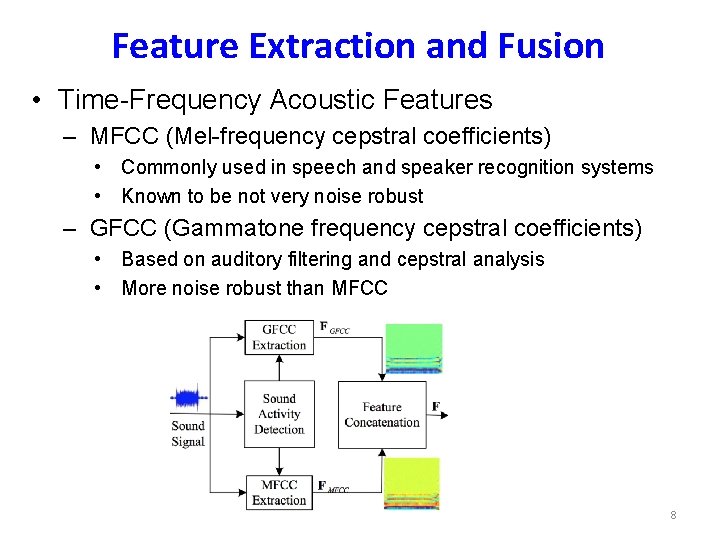
Feature Extraction and Fusion • Time-Frequency Acoustic Features – MFCC (Mel-frequency cepstral coefficients) • Commonly used in speech and speaker recognition systems • Known to be not very noise robust – GFCC (Gammatone frequency cepstral coefficients) • Based on auditory filtering and cepstral analysis • More noise robust than MFCC 8
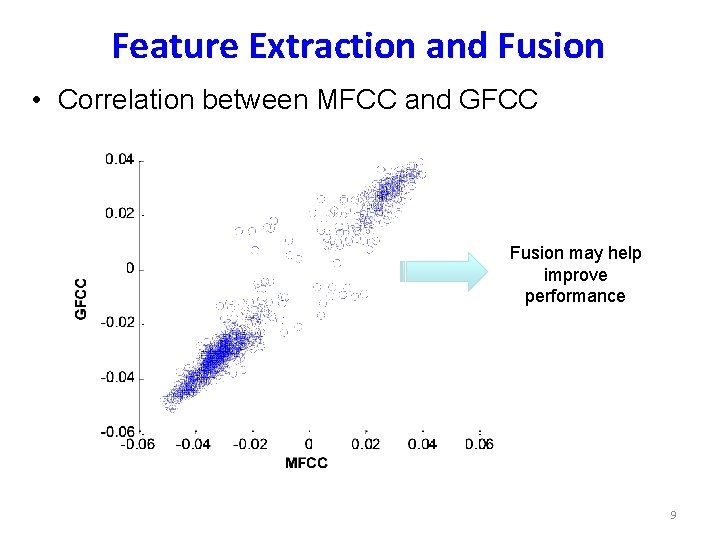
Feature Extraction and Fusion • Correlation between MFCC and GFCC Fusion may help improve performance 9
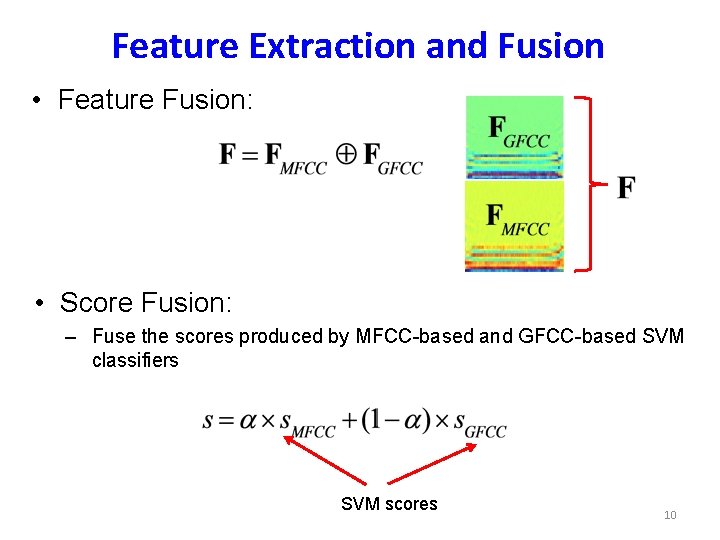
Feature Extraction and Fusion • Feature Fusion: • Score Fusion: – Fuse the scores produced by MFCC-based and GFCC-based SVM classifiers SVM scores 10
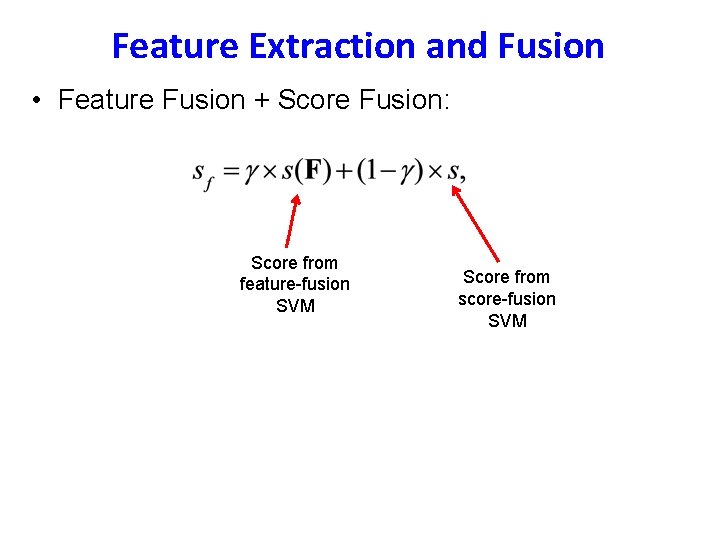
Feature Extraction and Fusion • Feature Fusion + Score Fusion: Score from feature-fusion SVM Score from score-fusion SVM
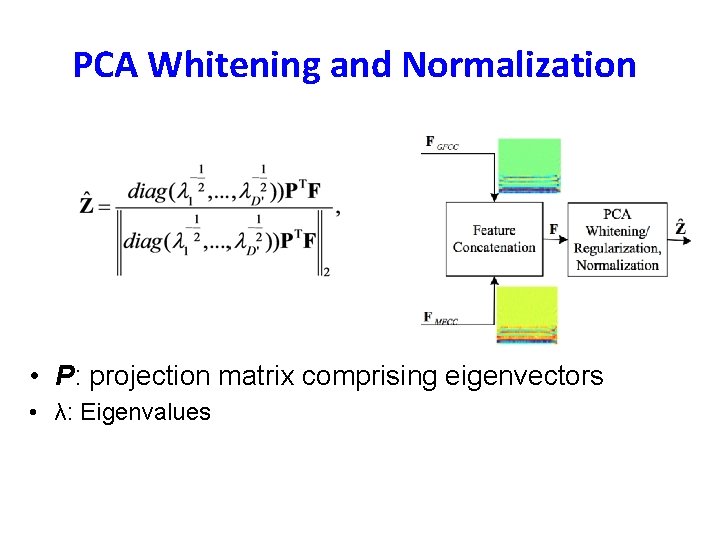
PCA Whitening and Normalization • P: projection matrix comprising eigenvectors • λ: Eigenvalues
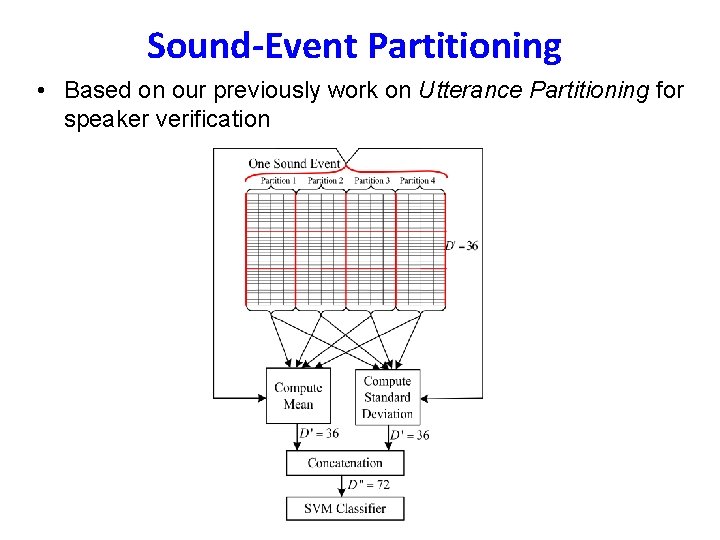
Sound-Event Partitioning • Based on our previously work on Utterance Partitioning for speaker verification
Experiments and Results 14
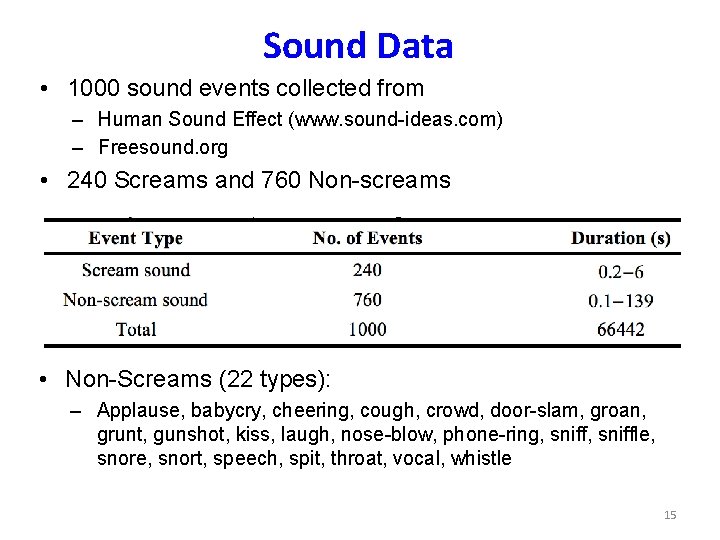
Sound Data • 1000 sound events collected from – Human Sound Effect (www. sound-ideas. com) – Freesound. org • 240 Screams and 760 Non-screams • Non-Screams (22 types): – Applause, babycry, cheering, cough, crowd, door-slam, groan, grunt, gunshot, kiss, laugh, nose-blow, phone-ring, sniffle, snort, speech, spit, throat, vocal, whistle 15
Sound Data 16
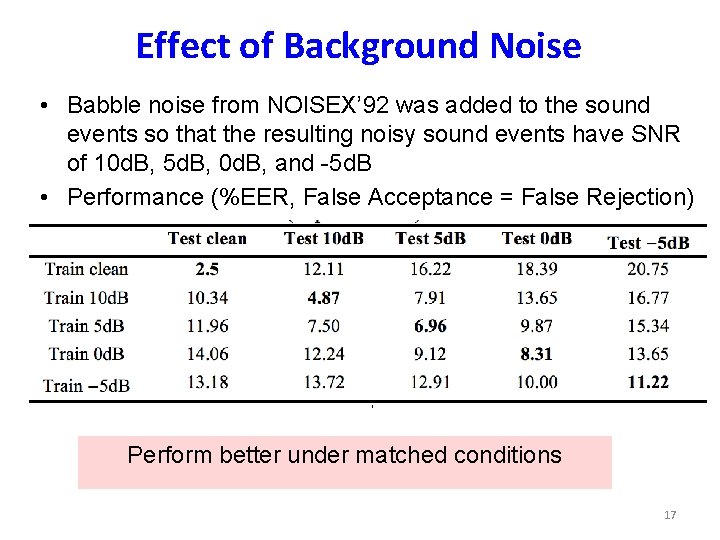
Effect of Background Noise • Babble noise from NOISEX’ 92 was added to the sound events so that the resulting noisy sound events have SNR of 10 d. B, 5 d. B, 0 d. B, and -5 d. B • Performance (%EER, False Acceptance = False Rejection) Perform better under matched conditions 17
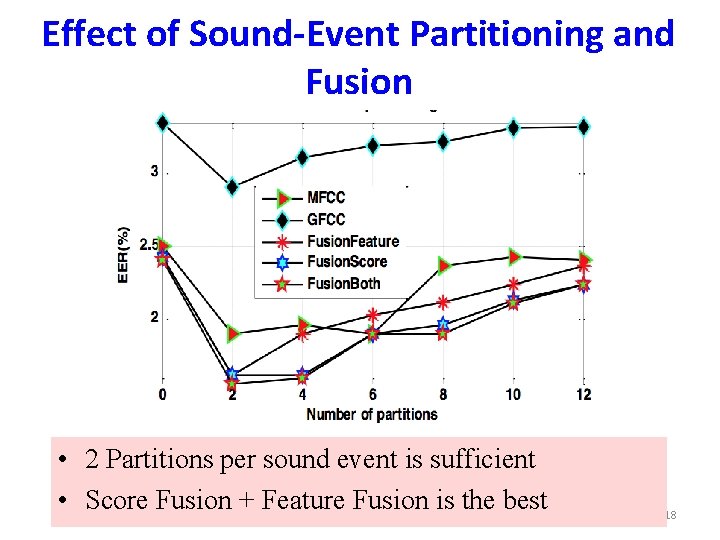
Effect of Sound-Event Partitioning and Fusion • 2 Partitions per sound event is sufficient • Score Fusion + Feature Fusion is the best 18
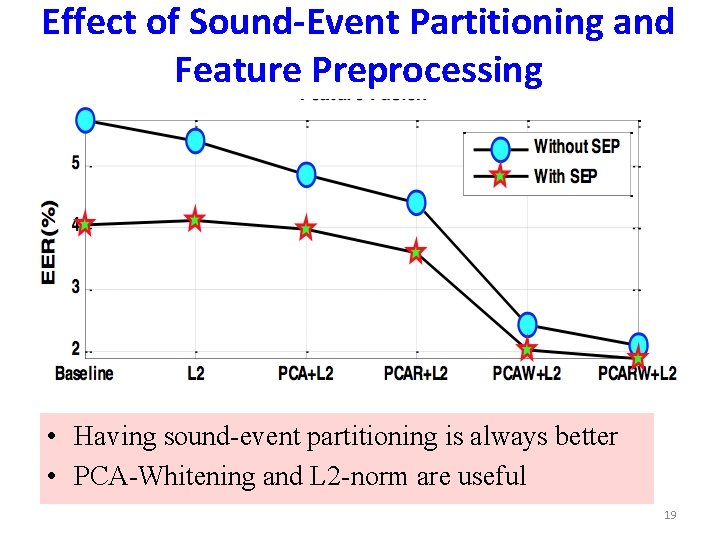
Effect of Sound-Event Partitioning and Feature Preprocessing • Having sound-event partitioning is always better • PCA-Whitening and L 2 -norm are useful 19
Conclusion • Sound-event partitioning and feature prepreprocessing methods are proposed for scream sound detection. • It was found that – Having sound-event partitioning is always better – PCA-Whitening and L 2 -norm are useful – Score fusion + feature fusion is effective • Demo 20

Thank You 21
- Slides: 21