
Sound Waves Physics Chapter 13 Section 1 I

- Slides: 19
Sound Waves Physics Chapter 13 Section 1
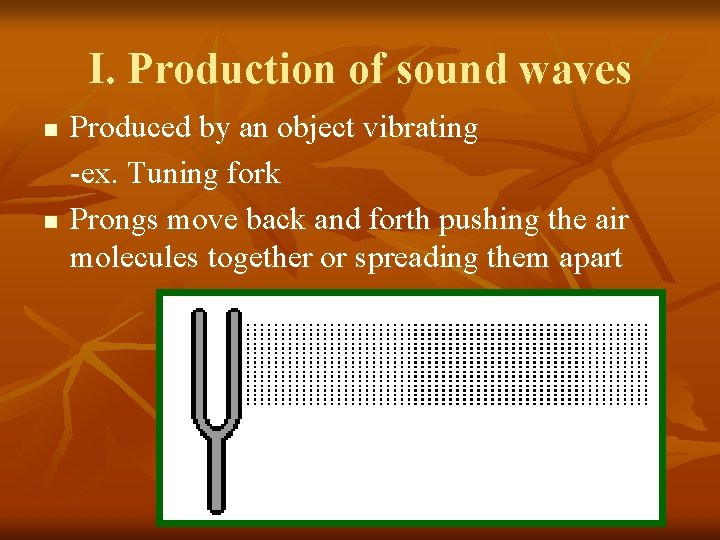
I. Production of sound waves n n Produced by an object vibrating -ex. Tuning fork Prongs move back and forth pushing the air molecules together or spreading them apart
n n Compression medium molecules move together higher density and pressure Rarefaction medium molecules spread apart lower density and pressure Online Tuning Forks
n n As the tuning fork vibrates it sends a series of compressions and rarefactions that expand out in all directions. *like pond ripples *air molecules vibrate Sound waves are longitudinal waves (particles move parallel to wave direction) Compresional waves video
II. Characteristics of sound waves n n Frequency – number of cycles per unit of time audible sound waves (humans can hear) frequency range 20 Hz to 20, 000 Hz frequencies < 20 Hz infrasonic (very long wavelength) sound waves. frequencies > 20, 000 Hz ultrasonic (short wavelength) sound waves.
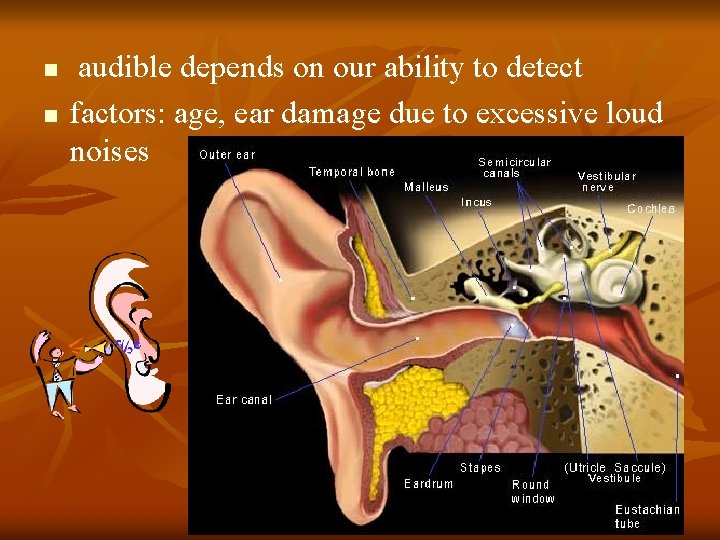
n n audible depends on our ability to detect factors: age, ear damage due to excessive loud noises
as frequency increases, wavelength decreases n frequency determines pitch n pitch: how high or low we perceive a sound to be depending on the frequency of a sound wave. n low pitch = low frequency n high pitch = high frequency * a perceived measurement* n
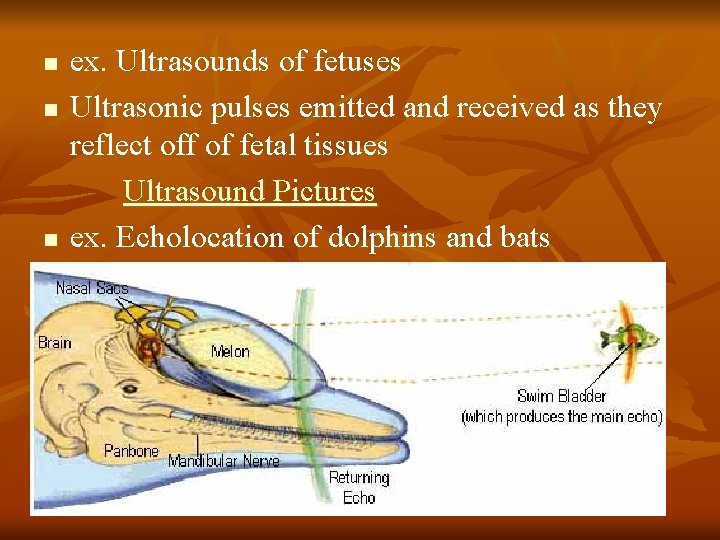
n ultrasonic waves produce images of objects short wavelength provides medical uses - images of internal body structures - waves reflect off small objects of varying densities
n n n ex. Ultrasounds of fetuses Ultrasonic pulses emitted and received as they reflect off of fetal tissues Ultrasound Pictures ex. Echolocation of dolphins and bats
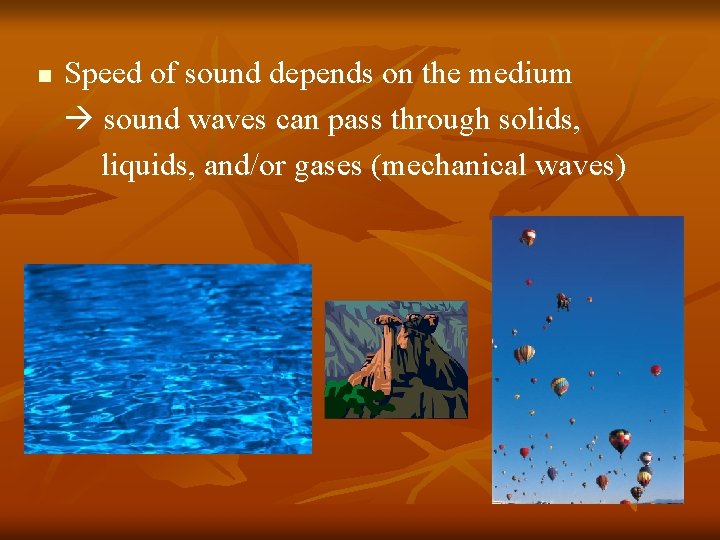
n Speed of sound depends on the medium sound waves can pass through solids, liquids, and/or gases (mechanical waves)
Depends on how quickly particles of the medium can transfer the vibration n More dense (particles are closer together) = faster transfer of energy solids generally conduct sound the fastest gases generally conduct sound the slowest n
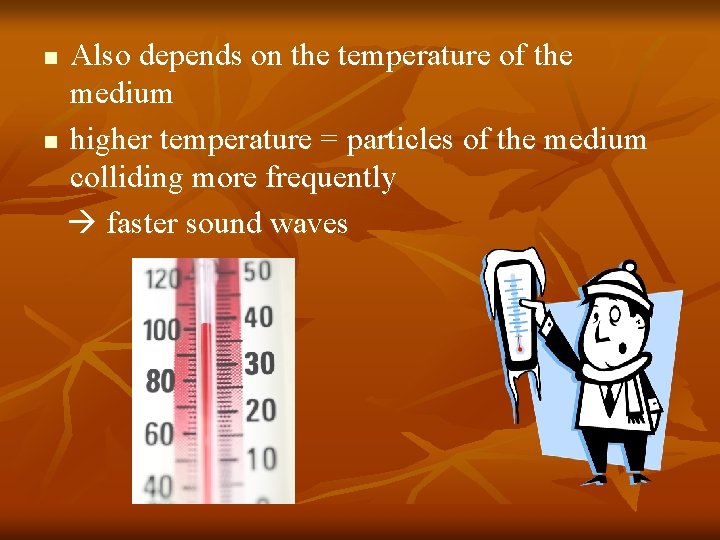
Also depends on the temperature of the medium n higher temperature = particles of the medium colliding more frequently faster sound waves n
Each medium has its own set of values for speed of sound (table 13 -1 page 482) In normal air (25 o. C) the speed of sound equals 346 m/s n
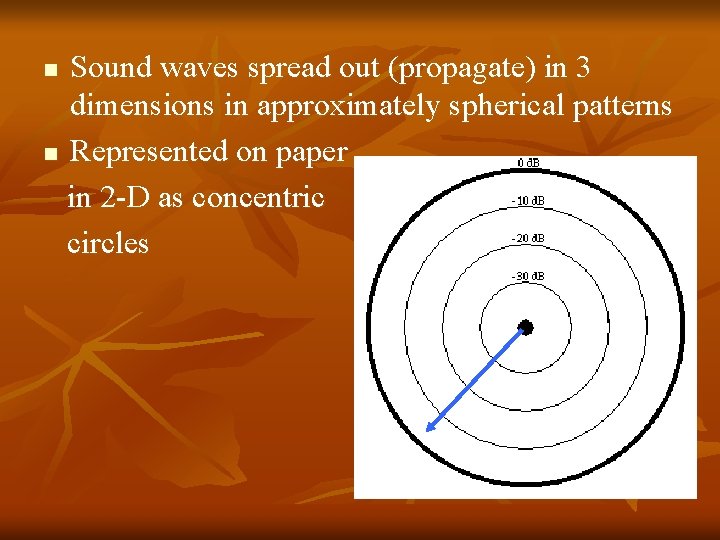
Sound waves spread out (propagate) in 3 dimensions in approximately spherical patterns n Represented on paper in 2 -D as concentric circles n
Distance between each adjacent wave front = 1 wavelength ( ) n Rays indicate direction of travel of the wave fronts n Plane wave – a segment of a wave front very far from the source that appears to be a straight line and parallel to the adjacent wave fronts n
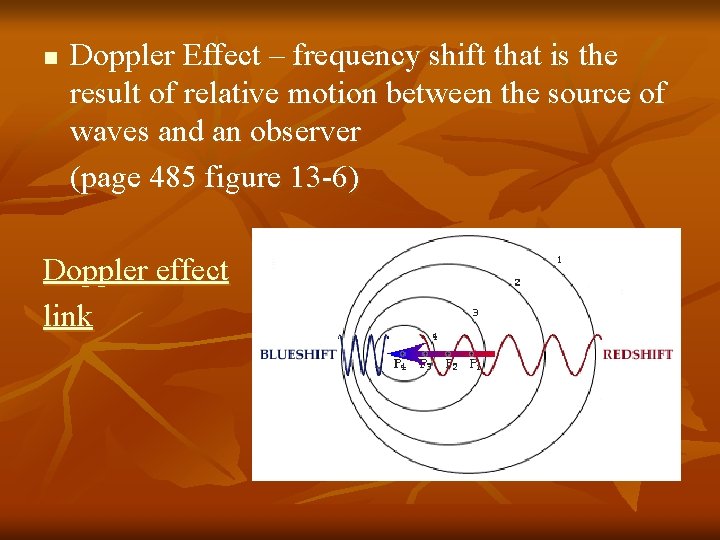
n Doppler Effect – frequency shift that is the result of relative motion between the source of waves and an observer (page 485 figure 13 -6) Doppler effect link
n Example: #1 A car (train, ambulance) moving toward or away from an observer while blowing the horn or siren Pitch appears to change, but the frequency is not changing Frequency of the source remains constant Wave fronts will reach the observer in front of the moving source more often (with higher frequency) due to source moving toward the observer Wave fronts “pile up” on each other Pitch of sound gets higher
n Example #2 Source moving away from observer Wave fronts will reach observer behind a moving source less often (lower frequency) due to source moving away from observer Wave fronts “spread out” Pitch sounds lower
** Speed of the sound waves does not change n Same will happen with a stationary source and a moving observer n Doppler effect occurs whenever there is relative motion between an observer and a source of wave fronts ** Most common to sound waves, but happens with all waves - Moving faster than the speed of sound