
Sound Waves in air caused by vibrations Quality
Sound Waves in air caused by vibrations
Quality of Sound Loudness ◦ Amplitude (strength of the sound or energy) Pitch ◦ Dependent on frequency of vibration ◦ Human hearing ranges from 20 – 20, 000 hertz
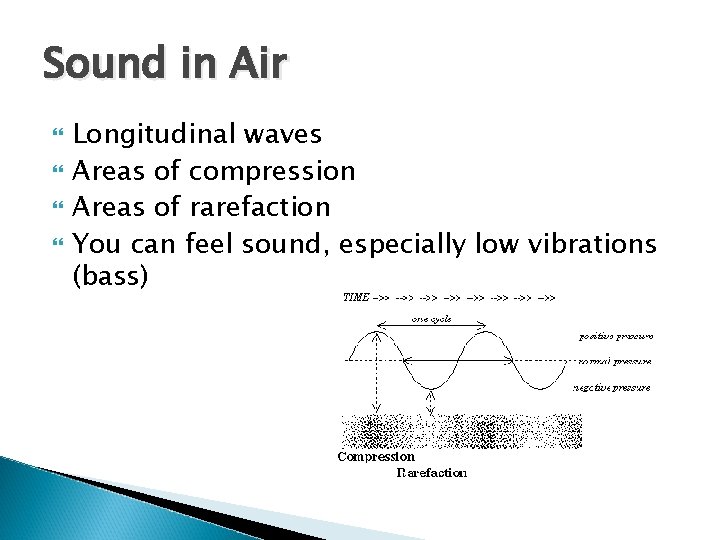
Sound in Air Longitudinal waves Areas of compression Areas of rarefaction You can feel sound, especially low vibrations (bass)
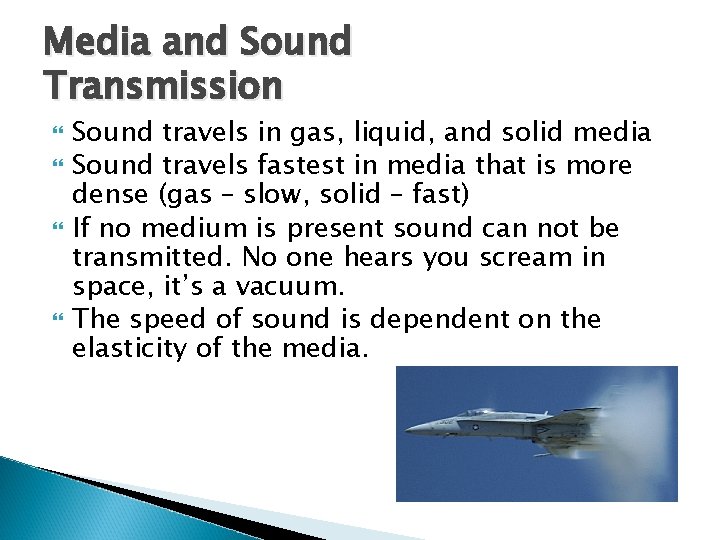
Media and Sound Transmission Sound travels in gas, liquid, and solid media Sound travels fastest in media that is more dense (gas – slow, solid – fast) If no medium is present sound can not be transmitted. No one hears you scream in space, it’s a vacuum. The speed of sound is dependent on the elasticity of the media.
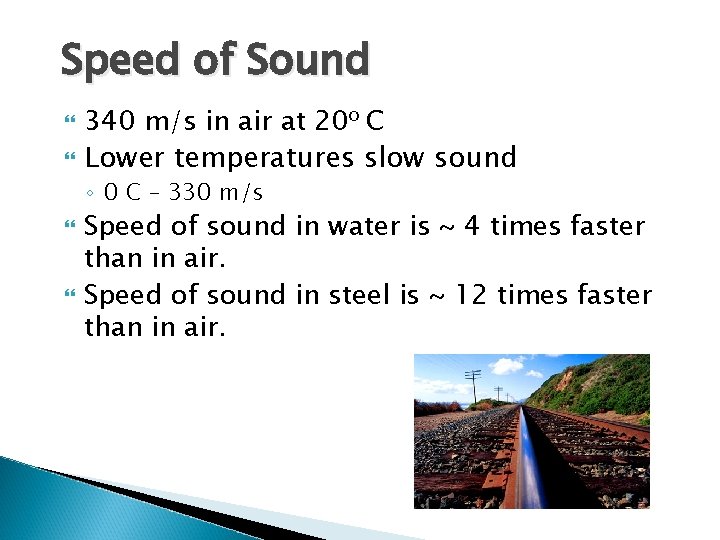
Speed of Sound 340 m/s in air at 20 o C Lower temperatures slow sound ◦ 0 C – 330 m/s Speed of sound in water is ~ 4 times faster than in air. Speed of sound in steel is ~ 12 times faster than in air.
Loudness Intensity is proportional to the square of the amplitude Loudness is a physiological event sensed by the brain Loudness is sensed in a logarithmic scale (based on a factor of 10) 0 d. B (decibel) threshold of hearing
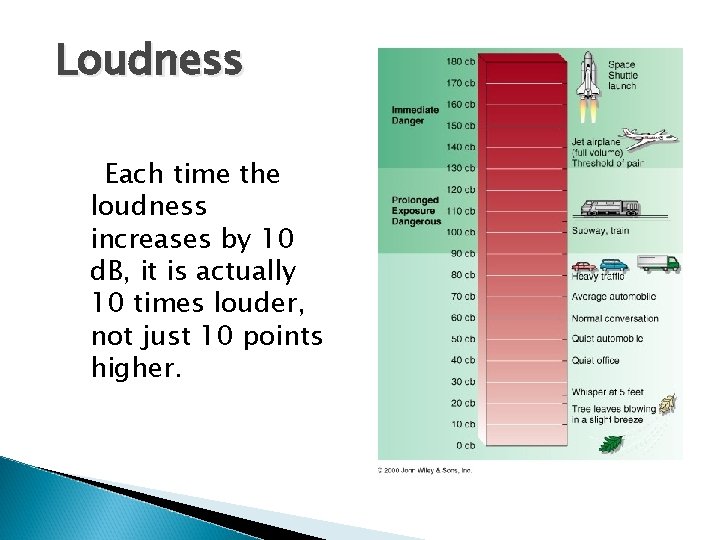
Loudness Each time the loudness increases by 10 d. B, it is actually 10 times louder, not just 10 points higher.
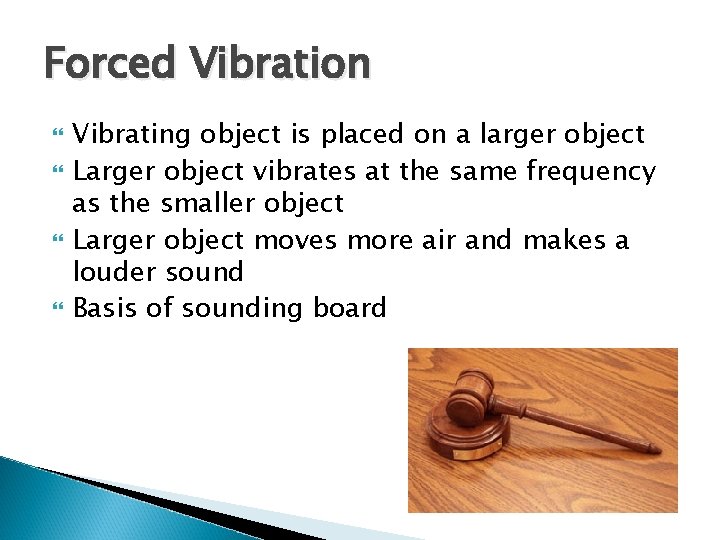
Forced Vibration Vibrating object is placed on a larger object Larger object vibrates at the same frequency as the smaller object Larger object moves more air and makes a louder sound Basis of sounding board
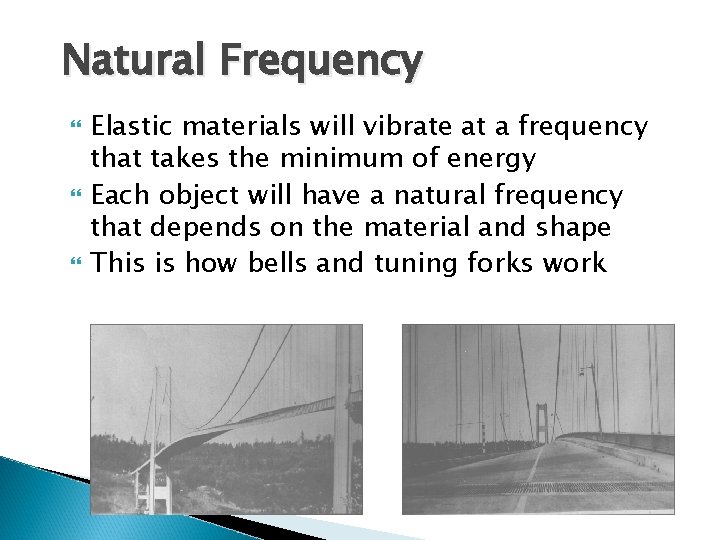
Natural Frequency Elastic materials will vibrate at a frequency that takes the minimum of energy Each object will have a natural frequency that depends on the material and shape This is how bells and tuning forks work
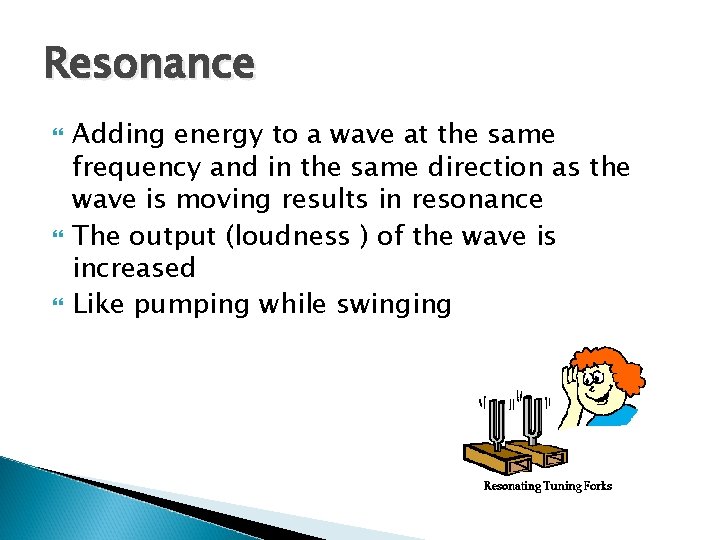
Resonance Adding energy to a wave at the same frequency and in the same direction as the wave is moving results in resonance The output (loudness ) of the wave is increased Like pumping while swinging
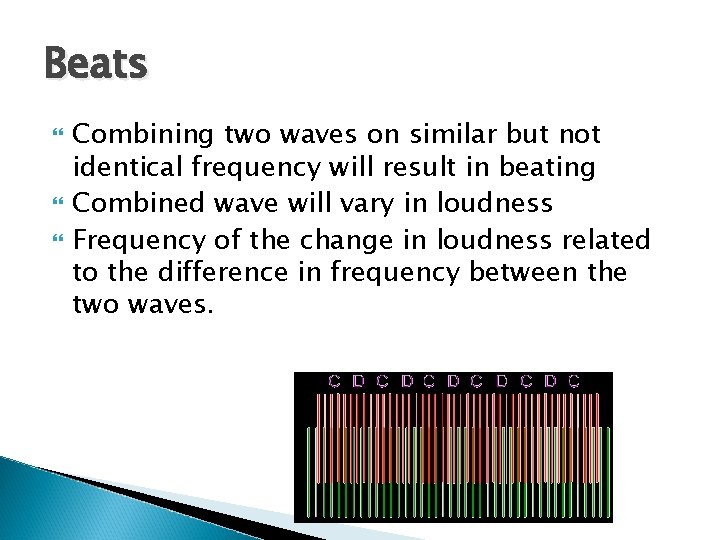
Beats Combining two waves on similar but not identical frequency will result in beating Combined wave will vary in loudness Frequency of the change in loudness related to the difference in frequency between the two waves.
- Slides: 11