
Sound Transmission Signal degradation in frequency and time
- Slides: 23
Sound Transmission • Signal degradation in frequency and time domains • Boundary effects and density gradients • Noise • Ranging • Signal optimization
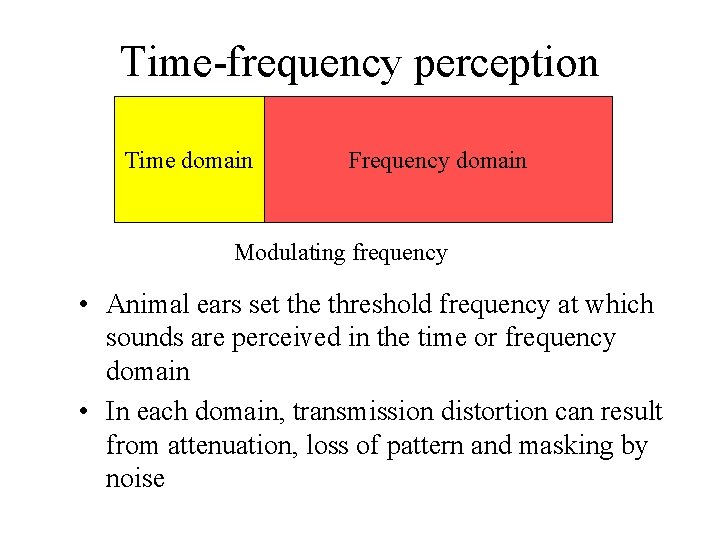
Time-frequency perception Time domain Frequency domain Modulating frequency • Animal ears set the threshold frequency at which sounds are perceived in the time or frequency domain • In each domain, transmission distortion can result from attenuation, loss of pattern and masking by noise
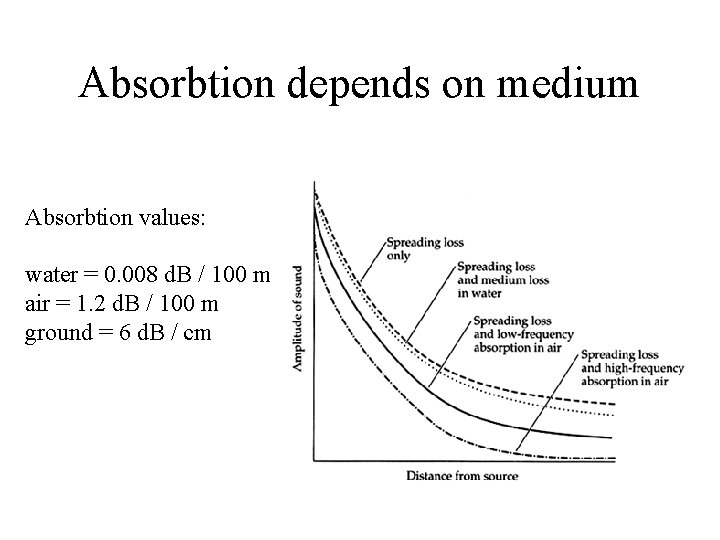
Absorbtion depends on medium Absorbtion values: water = 0. 008 d. B / 100 m air = 1. 2 d. B / 100 m ground = 6 d. B / cm
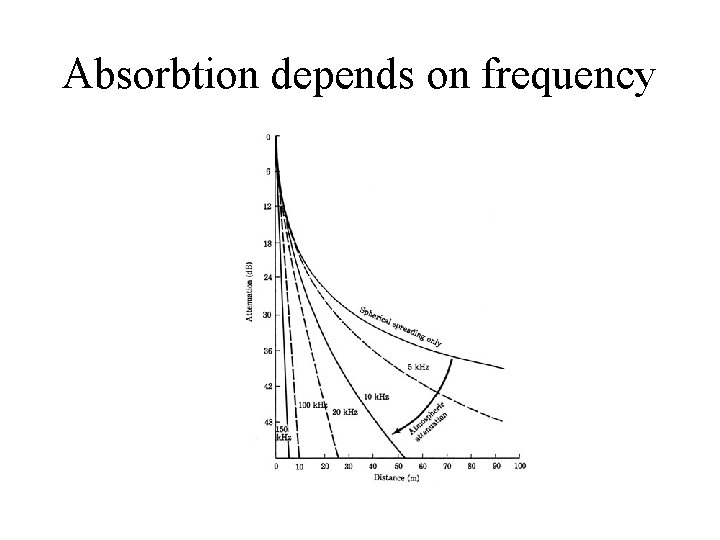
Absorbtion depends on frequency
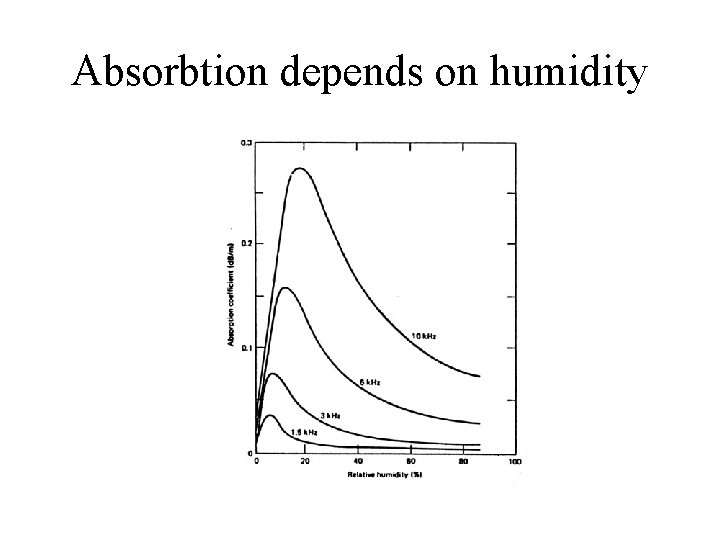
Absorbtion depends on humidity
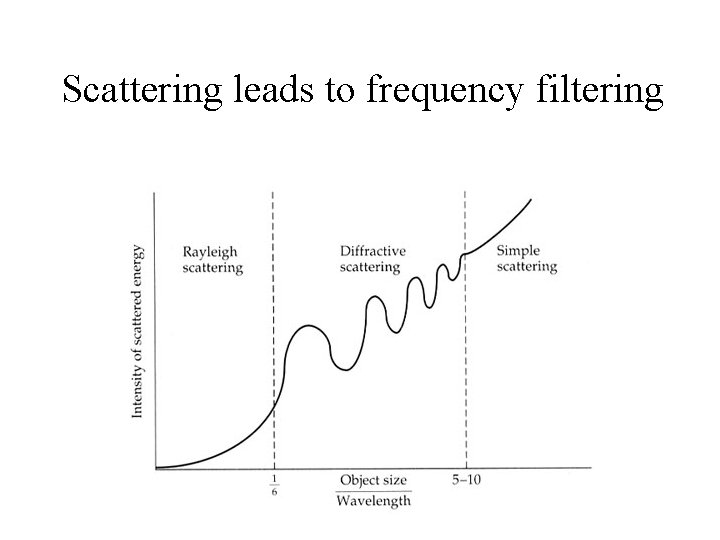
Scattering leads to frequency filtering
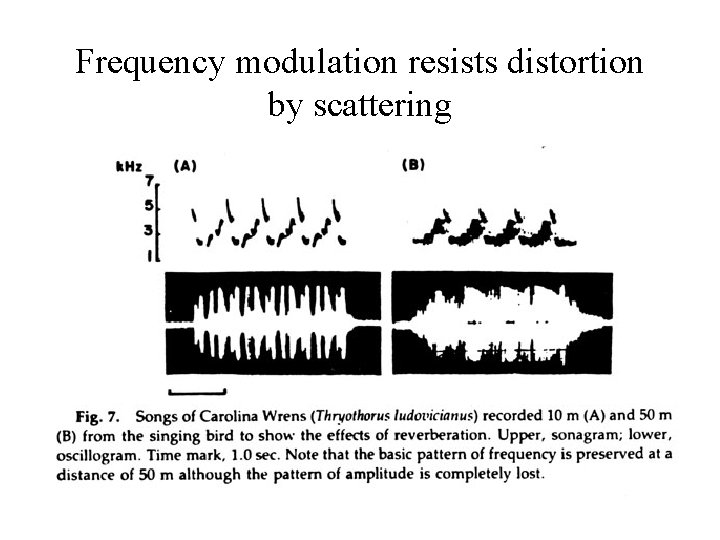
Frequency modulation resists distortion by scattering
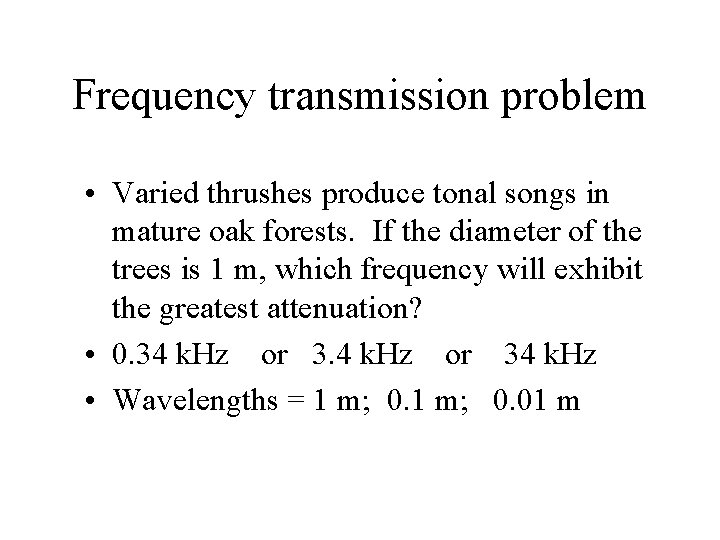
Frequency transmission problem • Varied thrushes produce tonal songs in mature oak forests. If the diameter of the trees is 1 m, which frequency will exhibit the greatest attenuation? • 0. 34 k. Hz or 34 k. Hz • Wavelengths = 1 m; 0. 01 m
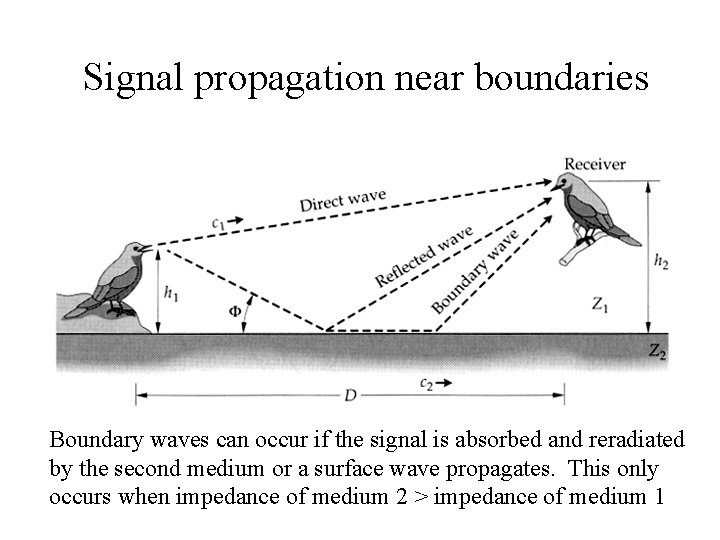
Signal propagation near boundaries Boundary waves can occur if the signal is absorbed and reradiated by the second medium or a surface wave propagates. This only occurs when impedance of medium 2 > impedance of medium 1
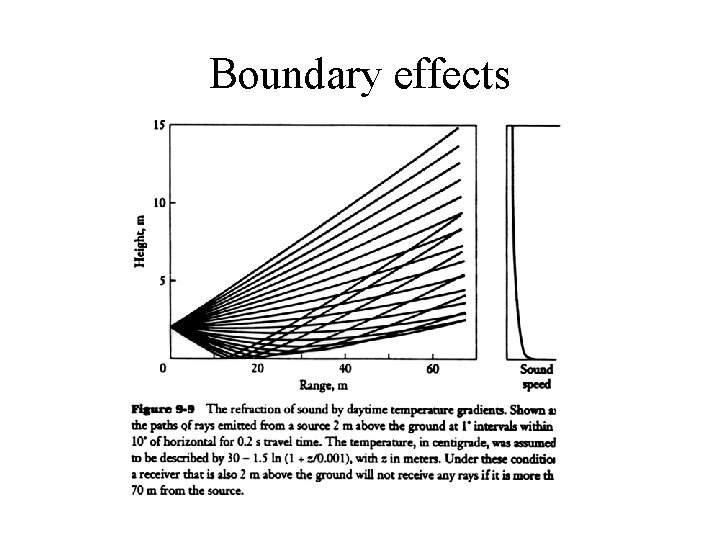
Boundary effects
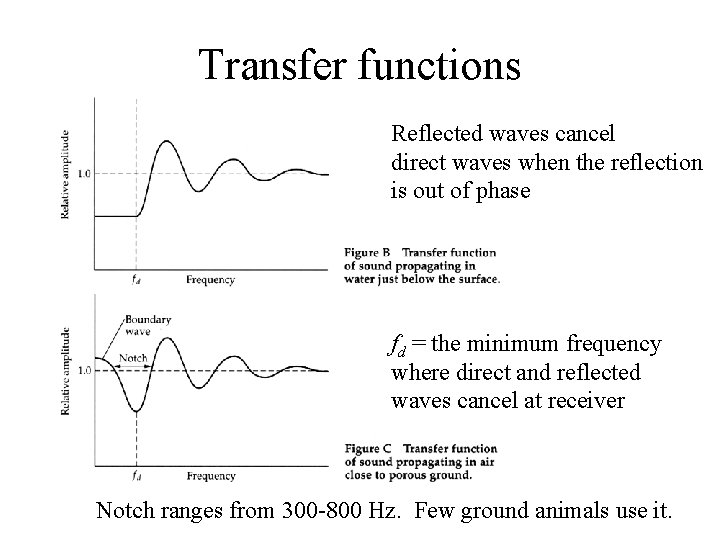
Transfer functions Reflected waves cancel direct waves when the reflection is out of phase fd = the minimum frequency where direct and reflected waves cancel at receiver Notch ranges from 300 -800 Hz. Few ground animals use it.
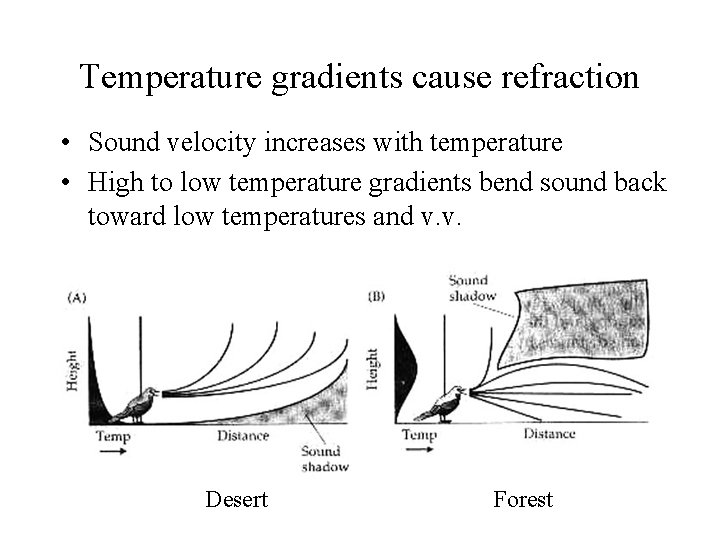
Temperature gradients cause refraction • Sound velocity increases with temperature • High to low temperature gradients bend sound back toward low temperatures and v. v. Desert Forest
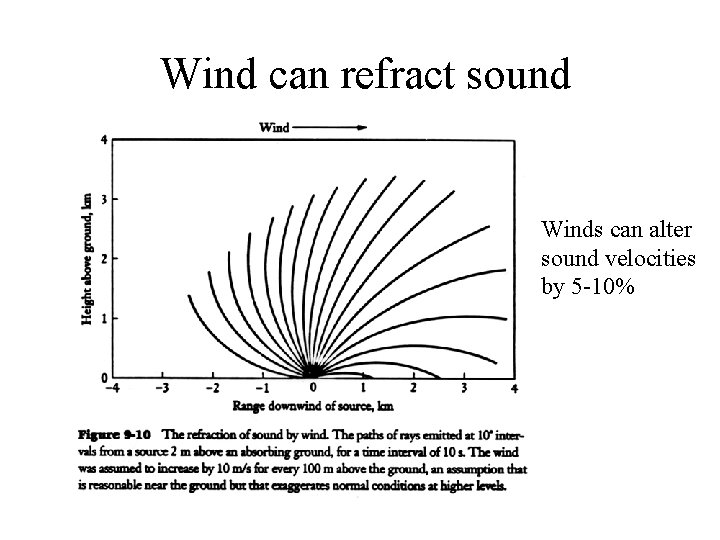
Wind can refract sound Winds can alter sound velocities by 5 -10%
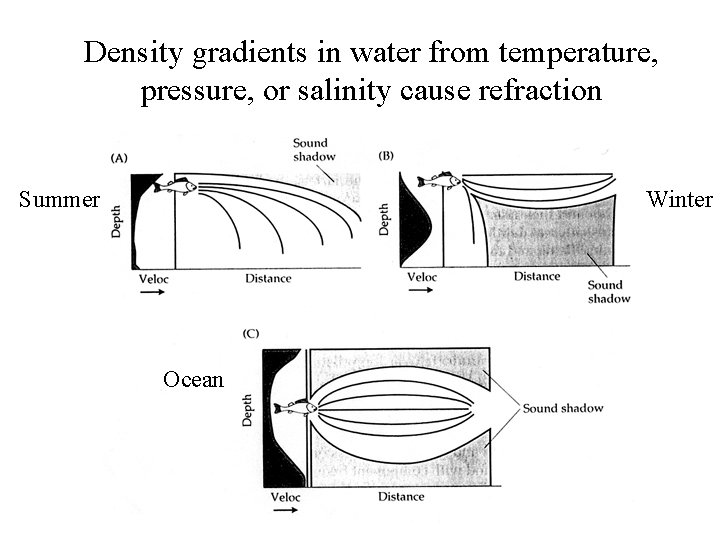
Density gradients in water from temperature, pressure, or salinity cause refraction Summer Winter Ocean
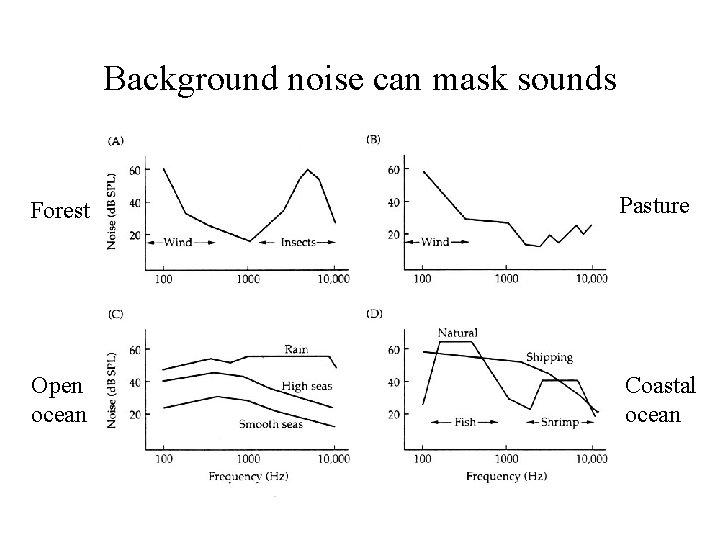
Background noise can mask sounds Forest Pasture Open ocean Coastal ocean
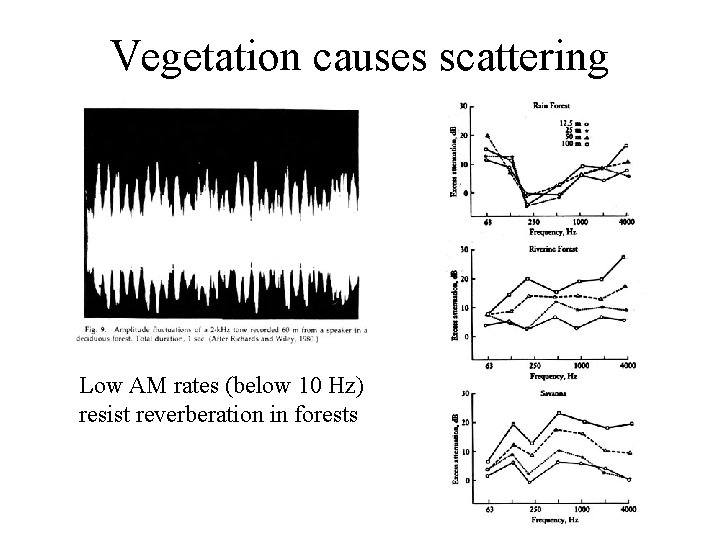
Vegetation causes scattering Low AM rates (below 10 Hz) resist reverberation in forests
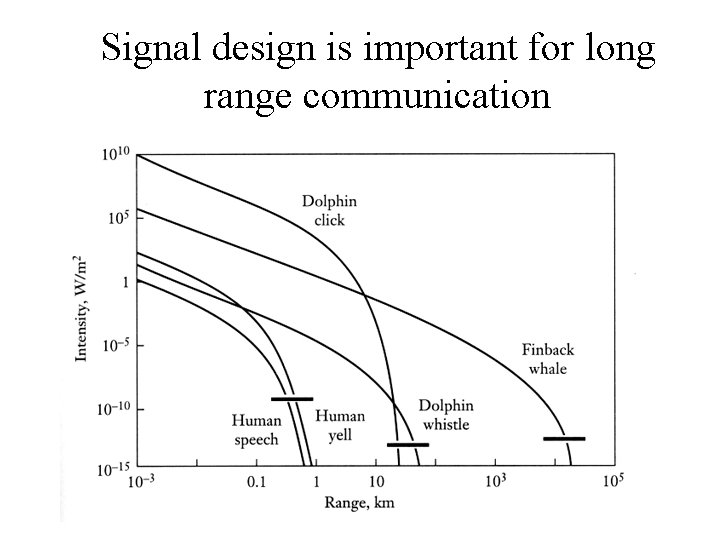
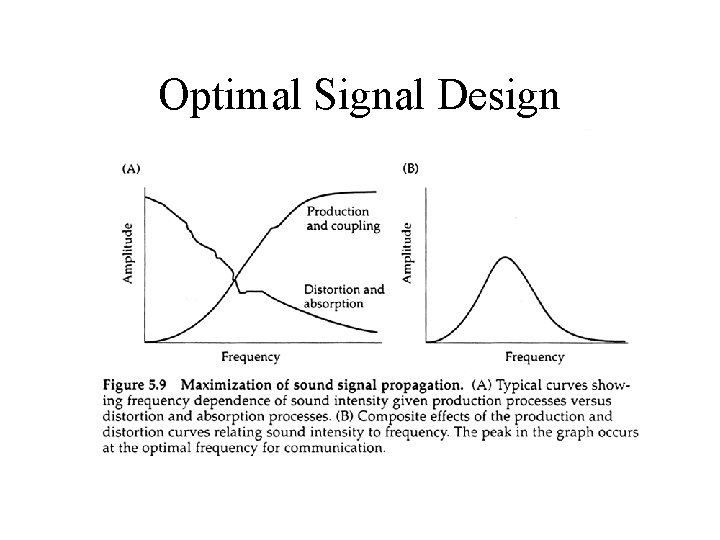
Signal design is important for long range communication
Range of detection • Detection range depends on amplitude at source and frequency • If range information is needed, signals should incorporate features that degrade predictably with distance, i. e. wide bandwidth
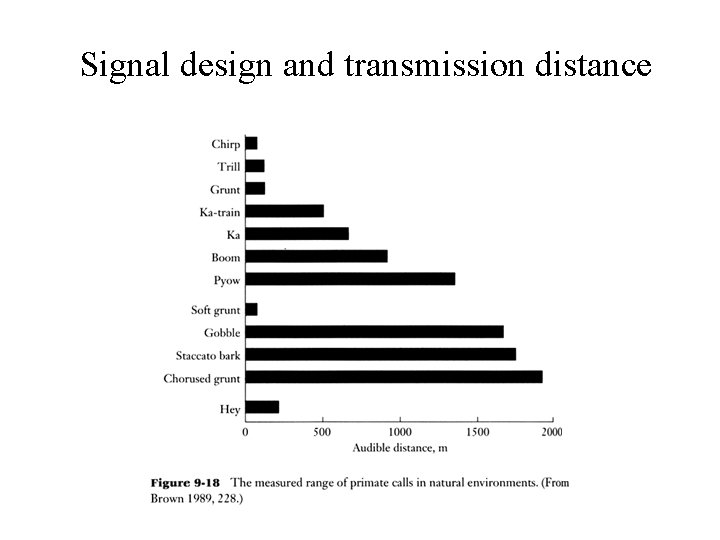
Signal design and transmission distance
Signal design parameters • • • Bandwidth Frequency Duration Modulation type and rate Location of sender and receiver Transmission medium
Optimal Signal Design
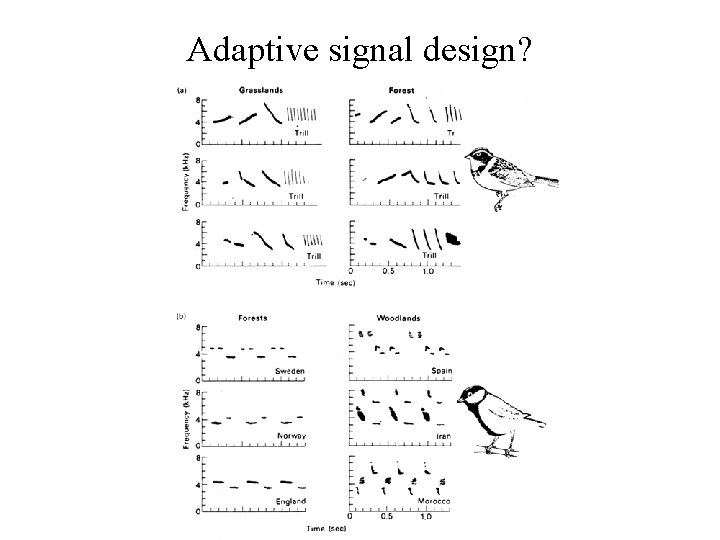
Adaptive signal design?
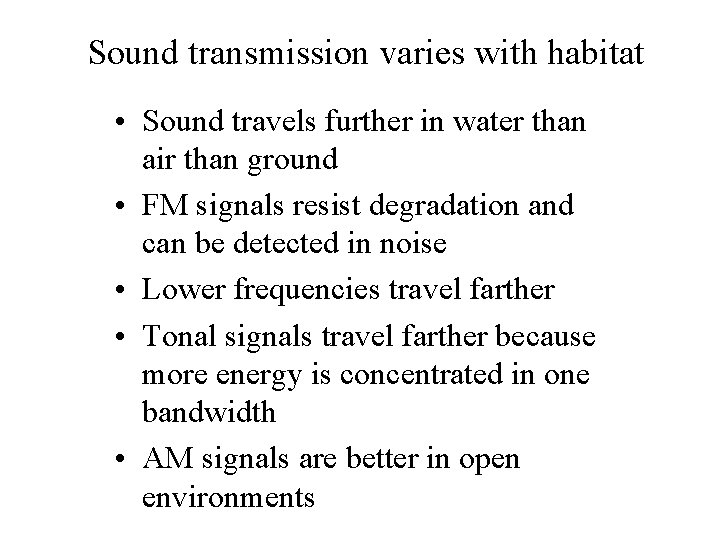
Sound transmission varies with habitat • Sound travels further in water than air than ground • FM signals resist degradation and can be detected in noise • Lower frequencies travel farther • Tonal signals travel farther because more energy is concentrated in one bandwidth • AM signals are better in open environments