
Sound Producing a Sound Wave Sound waves are
- Slides: 10
Sound
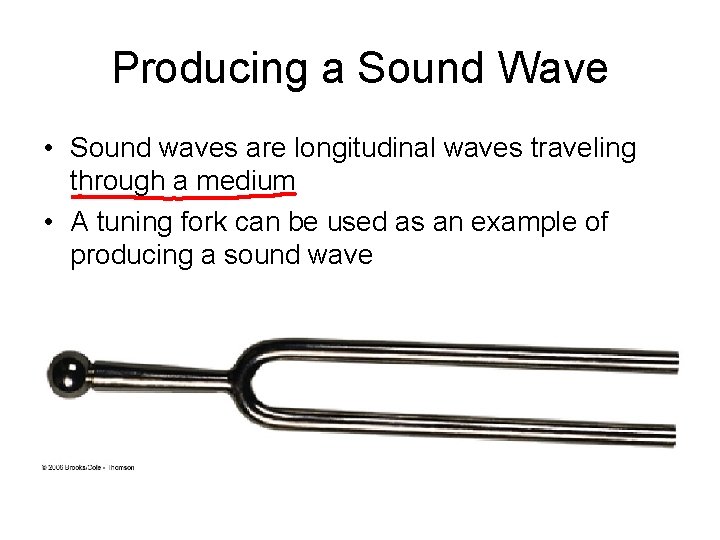
Producing a Sound Wave • Sound waves are longitudinal waves traveling through a medium • A tuning fork can be used as an example of producing a sound wave
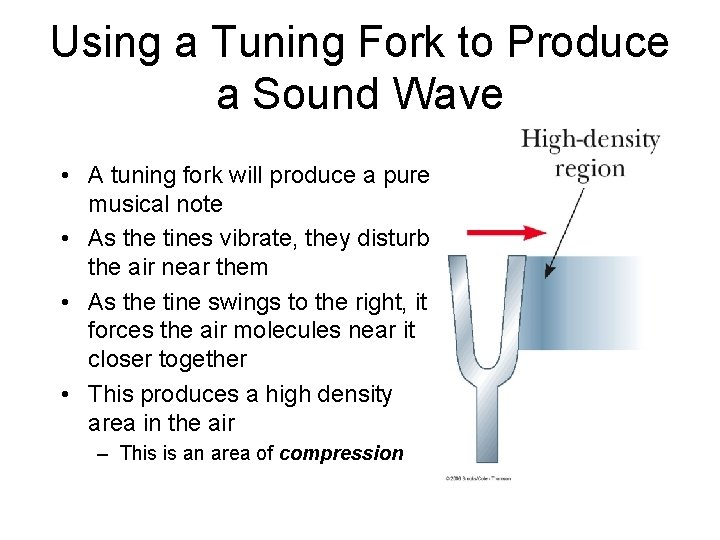
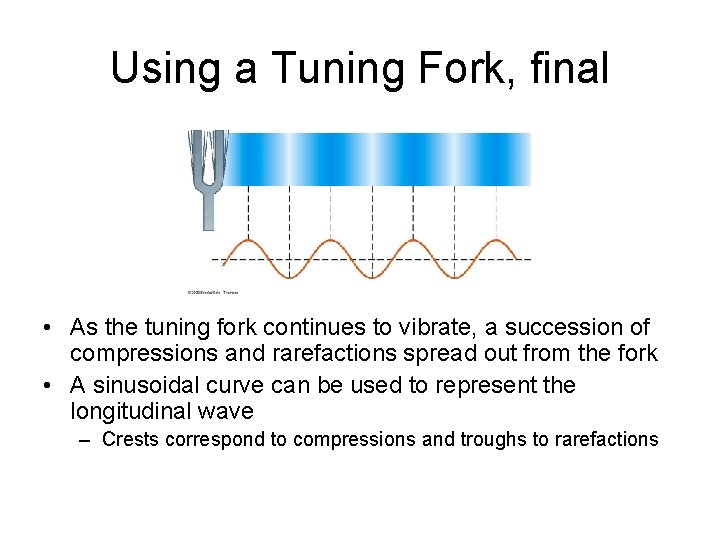
Using a Tuning Fork to Produce a Sound Wave • A tuning fork will produce a pure musical note • As the tines vibrate, they disturb the air near them • As the tine swings to the right, it forces the air molecules near it closer together • This produces a high density area in the air – This is an area of compression
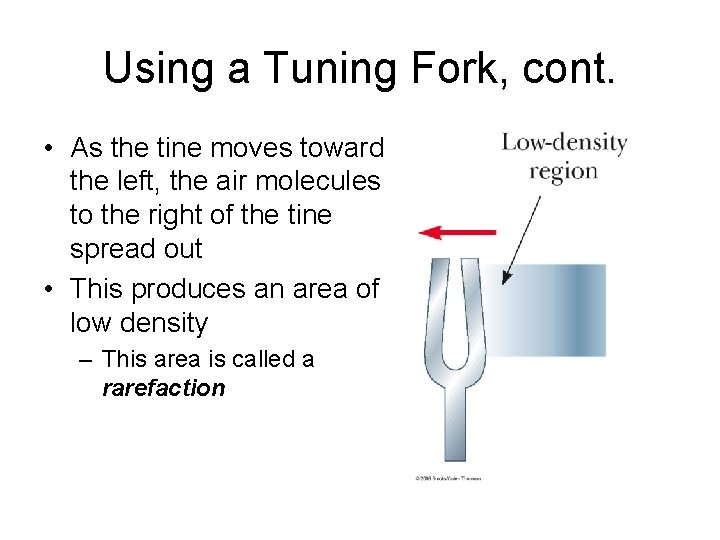
Using a Tuning Fork, cont. • As the tine moves toward the left, the air molecules to the right of the tine spread out • This produces an area of low density – This area is called a rarefaction
Using a Tuning Fork, final • As the tuning fork continues to vibrate, a succession of compressions and rarefactions spread out from the fork • A sinusoidal curve can be used to represent the longitudinal wave – Crests correspond to compressions and troughs to rarefactions
Categories of Sound Waves • Differences depend on the frequencies of waves: • Audible waves – Lay within the normal range of hearing of the human ear – Normally between 20 Hz to 20, 000 Hz • Infrasonic waves – Frequencies are below the audible range – Earthquakes are an example • Ultrasonic waves – Frequencies are above the audible range – Dog whistles are an example
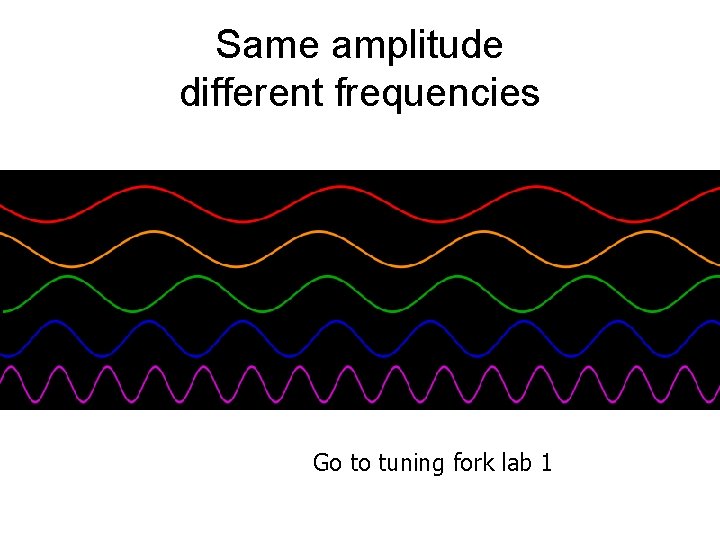
Same amplitude different frequencies Go to tuning fork lab 1
Applications of Ultrasound • Can be used to produce images of small objects • Widely used as a diagnostic and treatment tool in medicine – Ultrasonic flow meter to measure blood flow – May use piezoelectric devices that transform electrical energy into mechanical energy • Reversible: mechanical to electrical – Ultrasounds to observe babies in the womb – Cavitron Ultrasonic Surgical Aspirator (CUSA) used to surgically remove brain tumors • Ultrasonic ranging unit for cameras
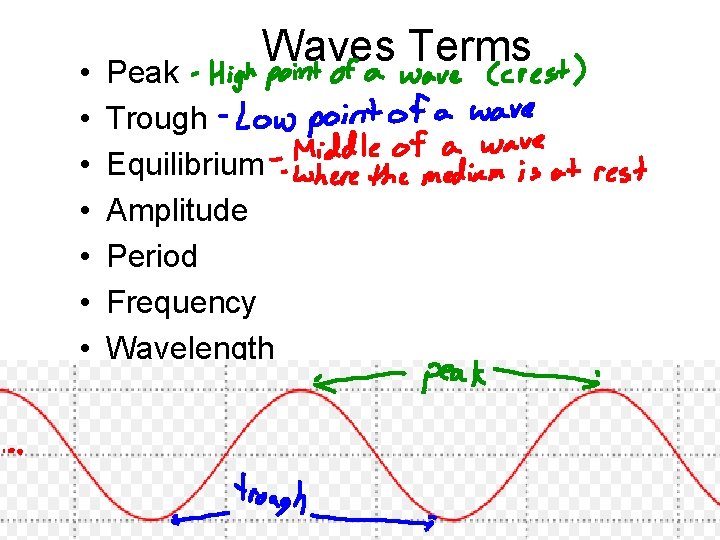
• • Waves Terms Peak Trough Equilibrium Amplitude Period Frequency Wavelength
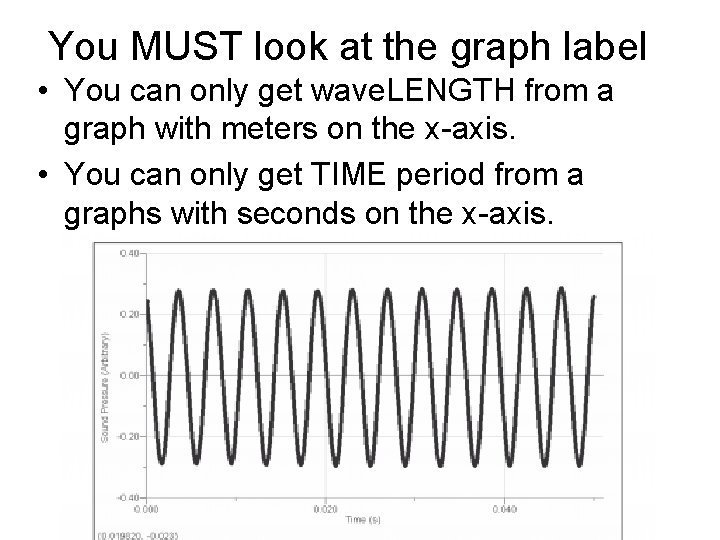
You MUST look at the graph label • You can only get wave. LENGTH from a graph with meters on the x-axis. • You can only get TIME period from a graphs with seconds on the x-axis.