
Sound Part II How do instruments make sound



- Slides: 64
Sound Part II How do instruments make sound?
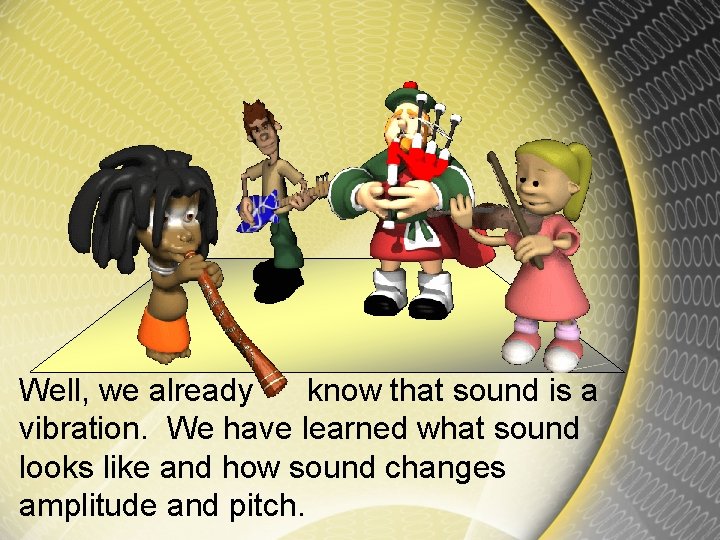
Well, we already know that sound is a vibration. We have learned what sound looks like and how sound changes amplitude and pitch.
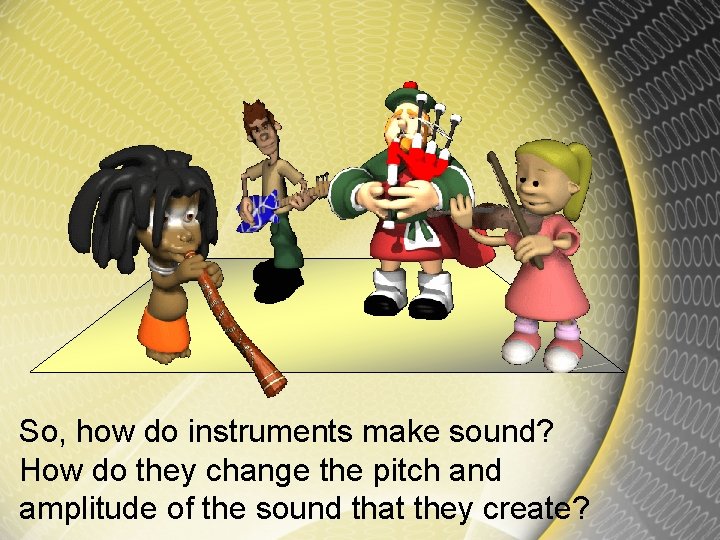
So, how do instruments make sound? How do they change the pitch and amplitude of the sound that they create?
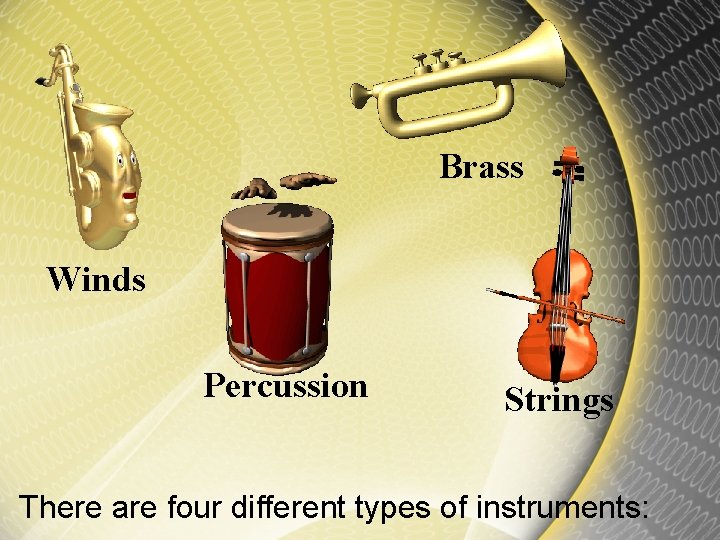
Brass Winds Percussion Strings There are four different types of instruments:
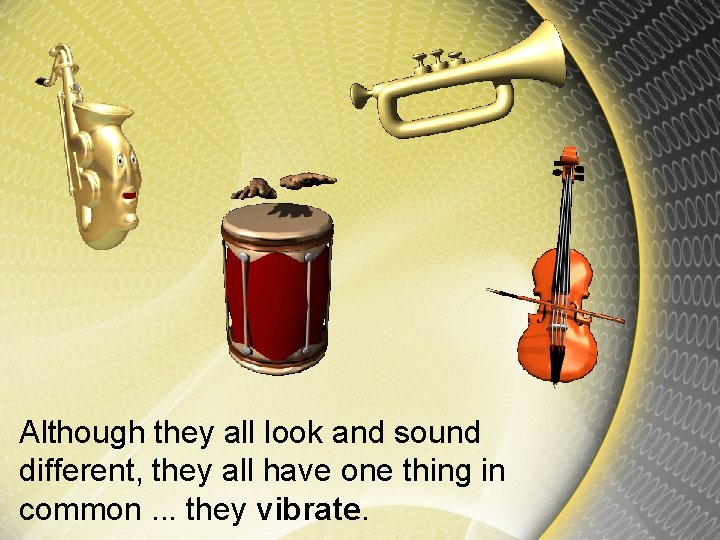
Although they all look and sound different, they all have one thing in common. . . they vibrate.
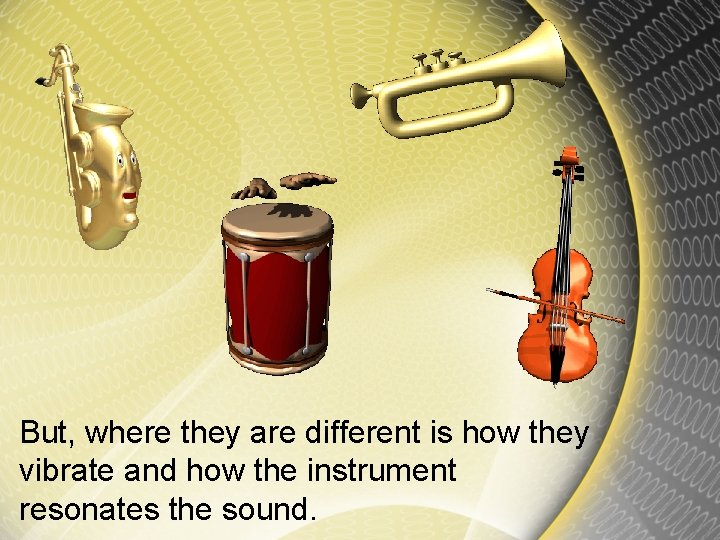
But, where they are different is how they vibrate and how the instrument resonates the sound.
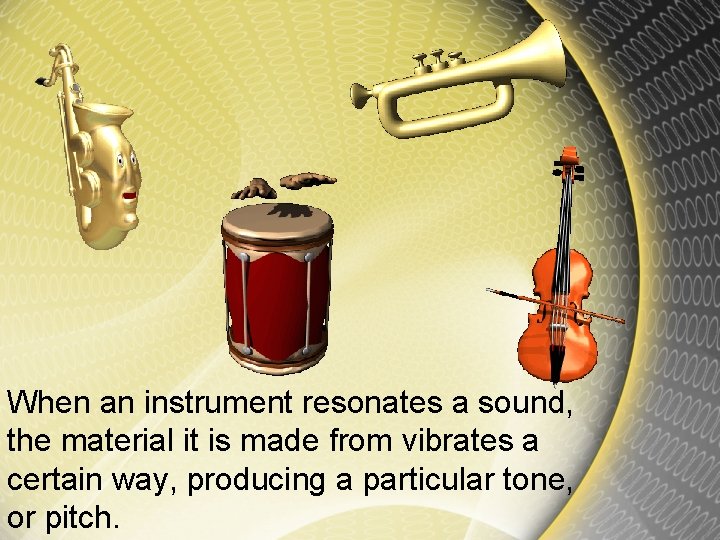
When an instrument resonates a sound, the material it is made from vibrates a certain way, producing a particular tone, or pitch.
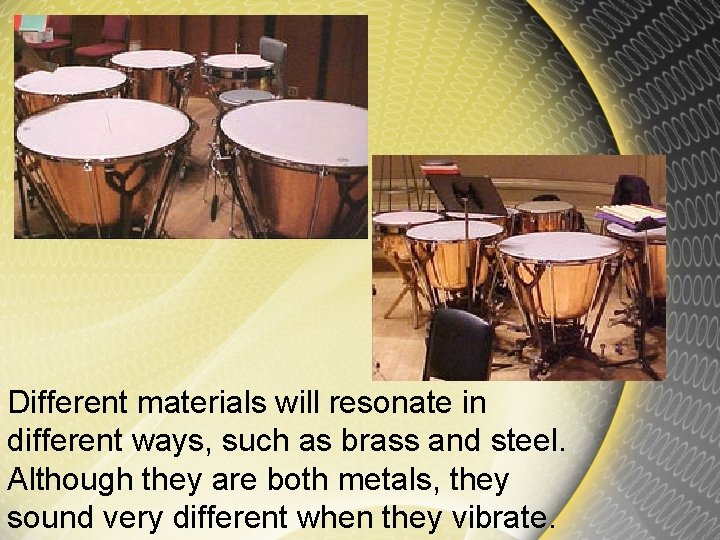
Different materials will resonate in different ways, such as brass and steel. Although they are both metals, they sound very different when they vibrate.
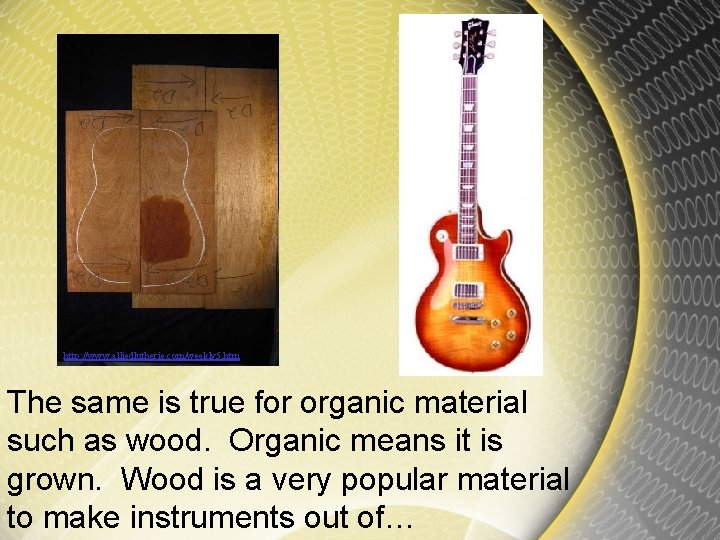
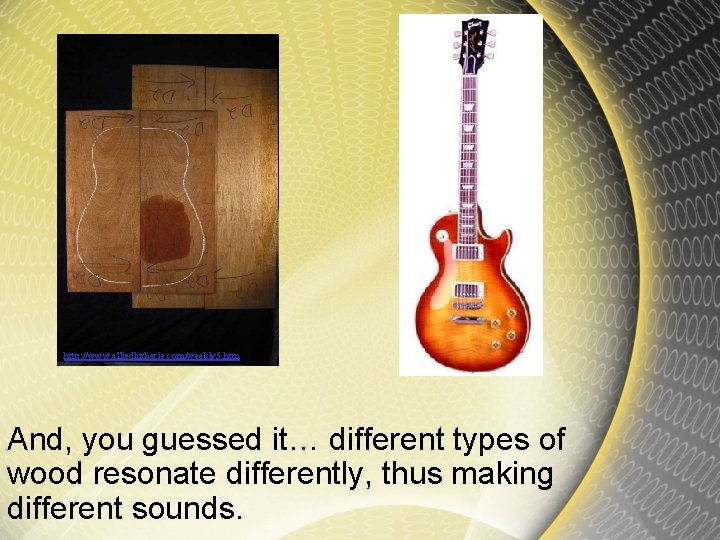
http: //www. alliedlutherie. com/weekly 5. htm The same is true for organic material such as wood. Organic means it is grown. Wood is a very popular material to make instruments out of…
http: //www. alliedlutherie. com/weekly 5. htm And, you guessed it… different types of wood resonate differently, thus making different sounds.
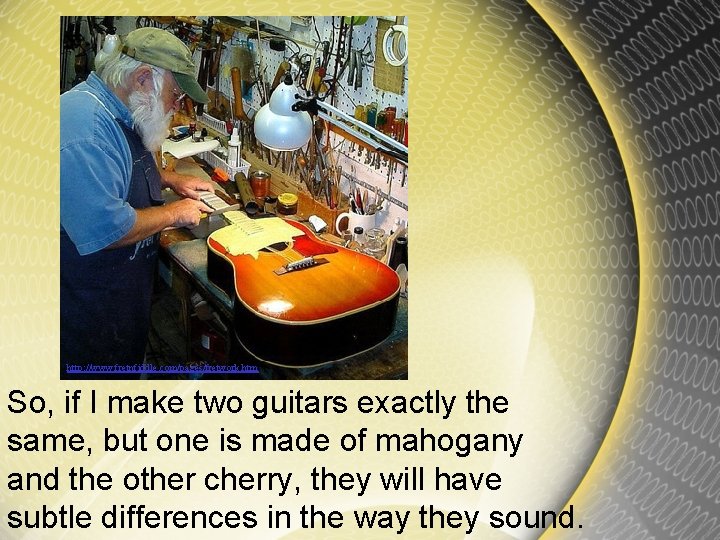
http: //www. fretnfiddle. com/pages/fretwork. htm So, if I make two guitars exactly the same, but one is made of mahogany and the other cherry, they will have subtle differences in the way they sound.
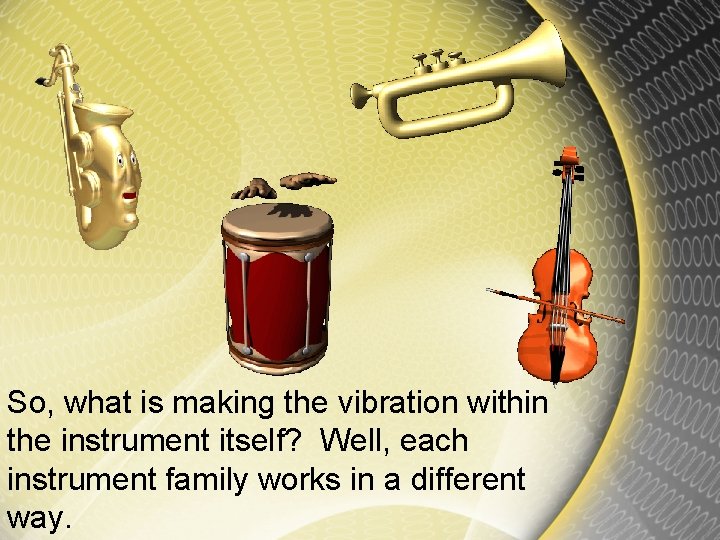
So, what is making the vibration within the instrument itself? Well, each instrument family works in a different way.
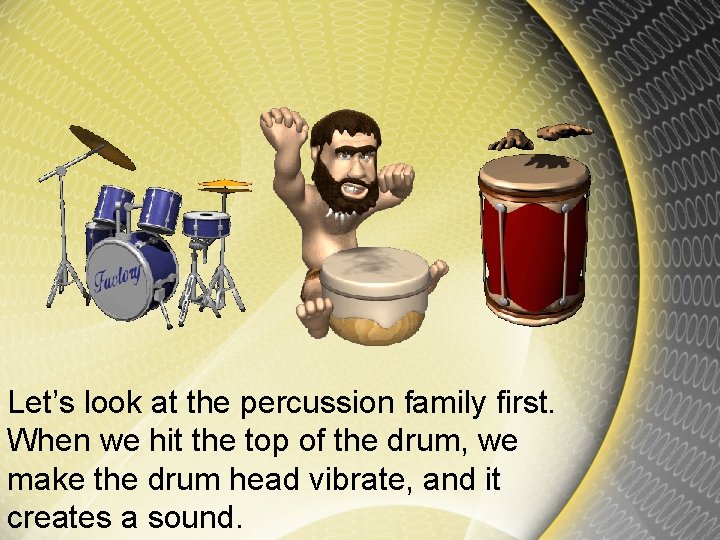
Let’s look at the percussion family first. When we hit the top of the drum, we make the drum head vibrate, and it creates a sound.
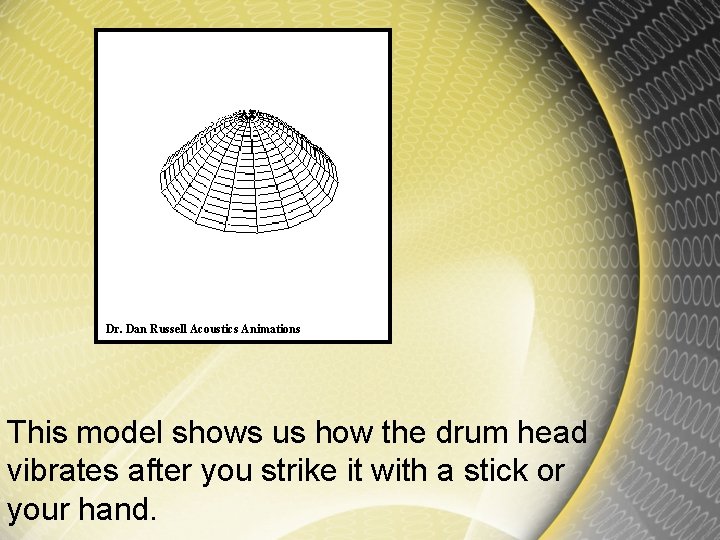
Dr. Dan Russell Acoustics Animations This model shows us how the drum head vibrates after you strike it with a stick or your hand.
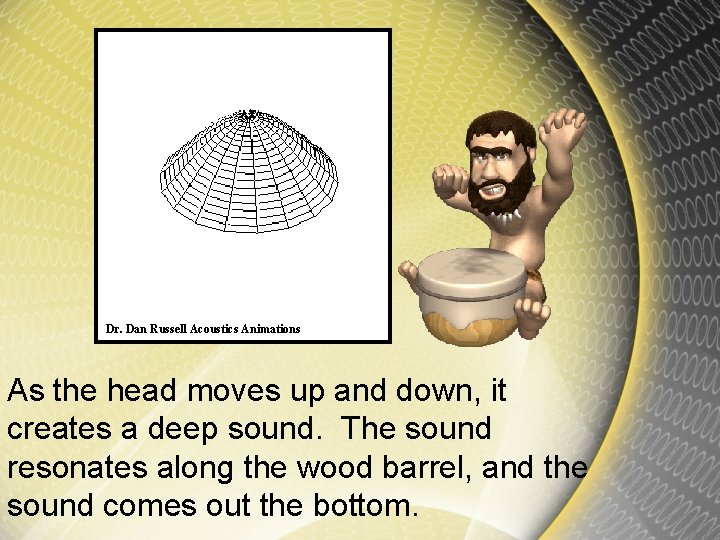
Dr. Dan Russell Acoustics Animations As the head moves up and down, it creates a deep sound. The sound resonates along the wood barrel, and the sound comes out the bottom.
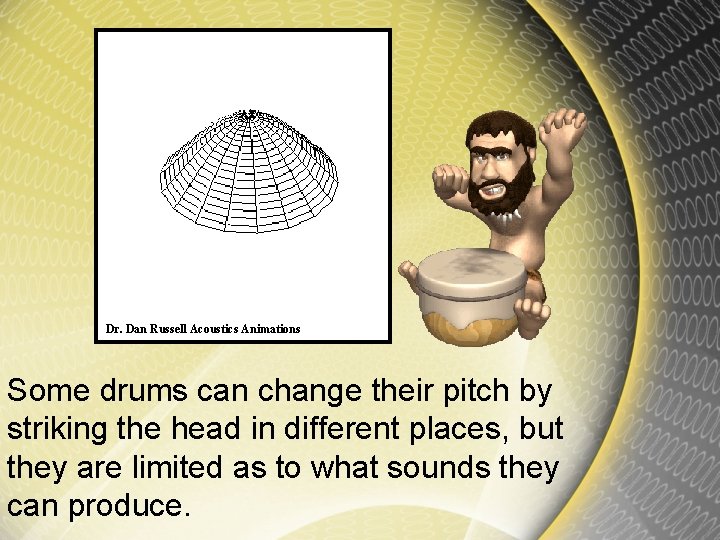
Dr. Dan Russell Acoustics Animations Some drums can change their pitch by striking the head in different places, but they are limited as to what sounds they can produce.
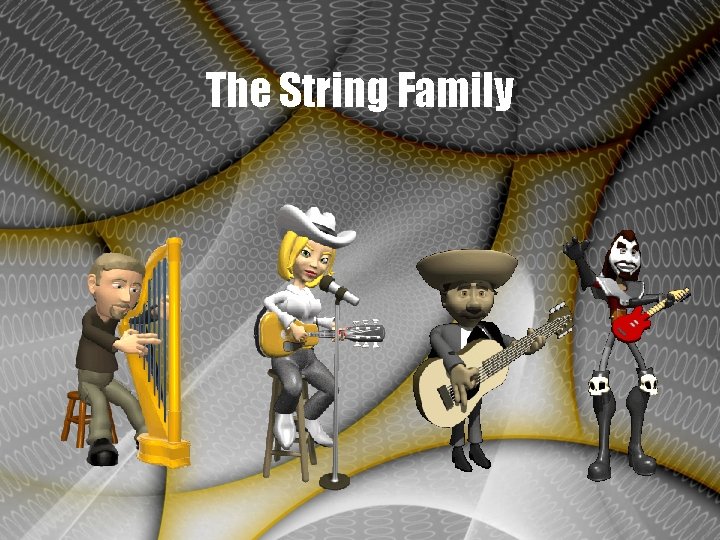
The String Family
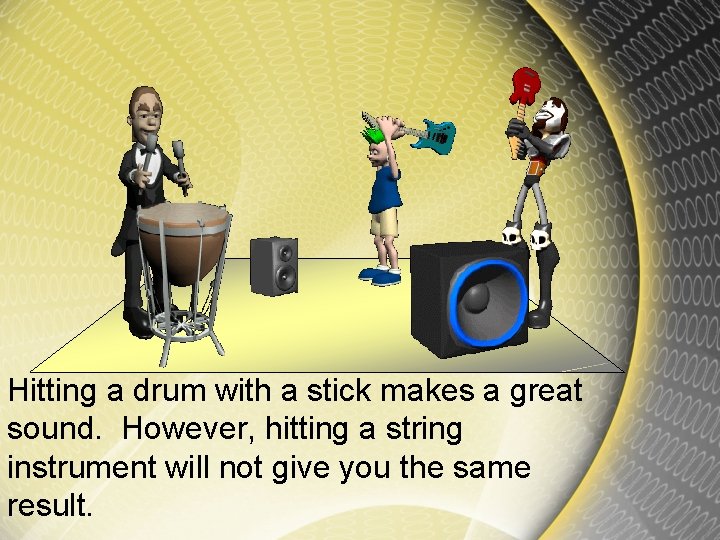
Hitting a drum with a stick makes a great sound. However, hitting a string instrument will not give you the same result.
Striking or hitting is only one way to create a sound.
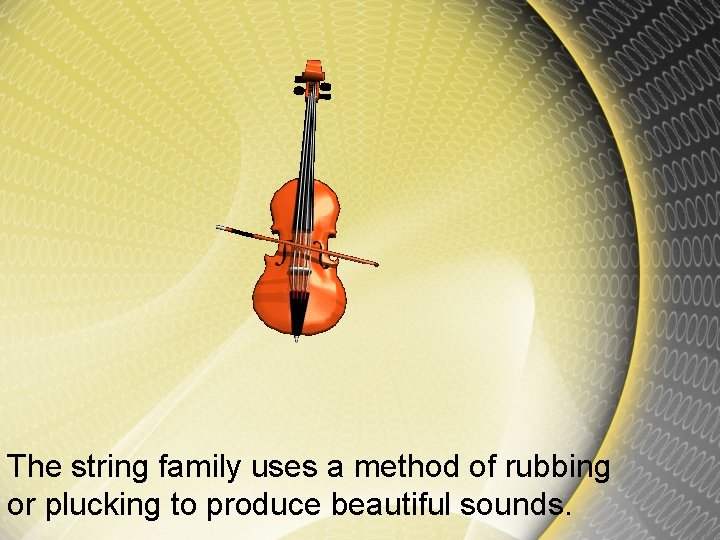
The string family uses a method of rubbing or plucking to produce beautiful sounds.
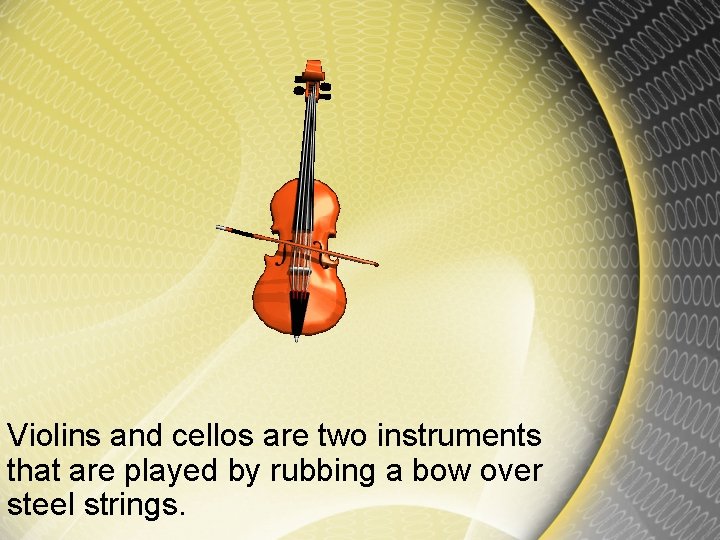
Violins and cellos are two instruments that are played by rubbing a bow over steel strings.
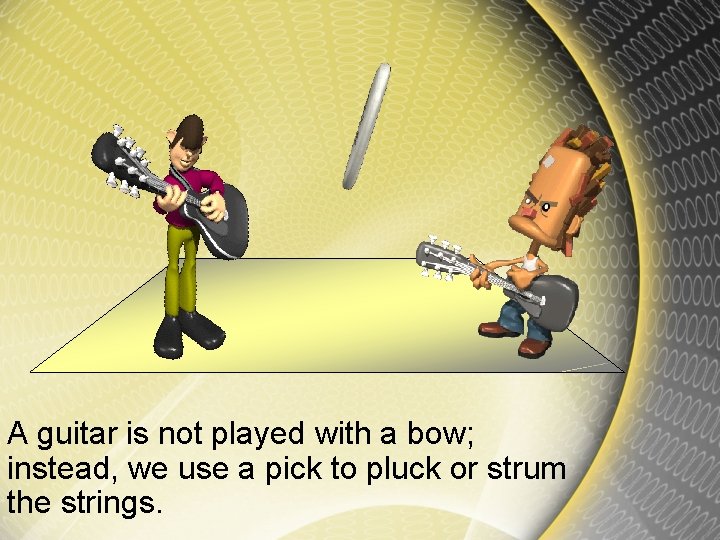
A guitar is not played with a bow; instead, we use a pick to pluck or strum the strings.
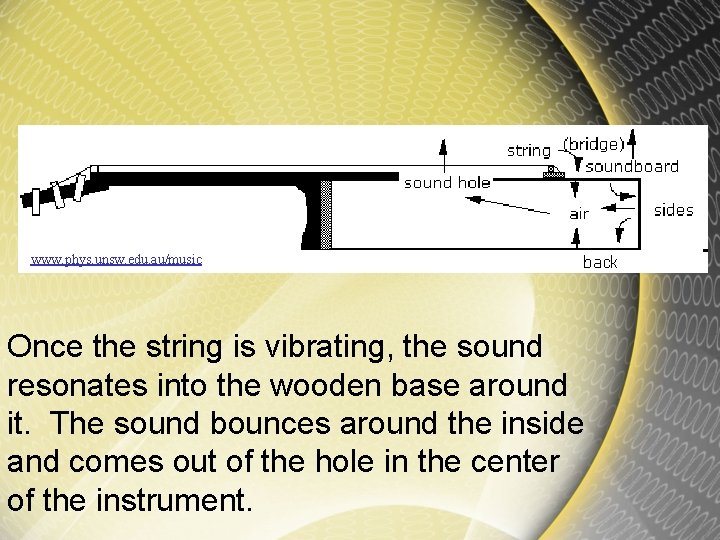
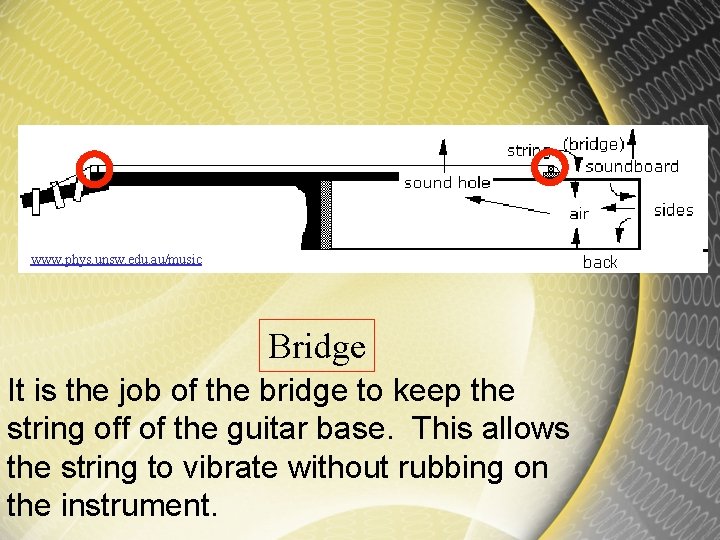
www. phys. unsw. edu. au/music Once the string is vibrating, the sound resonates into the wooden base around it. The sound bounces around the inside and comes out of the hole in the center of the instrument.
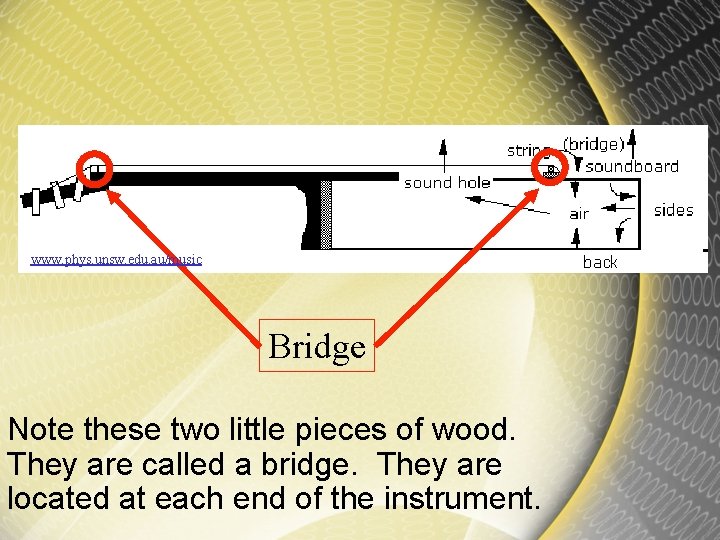
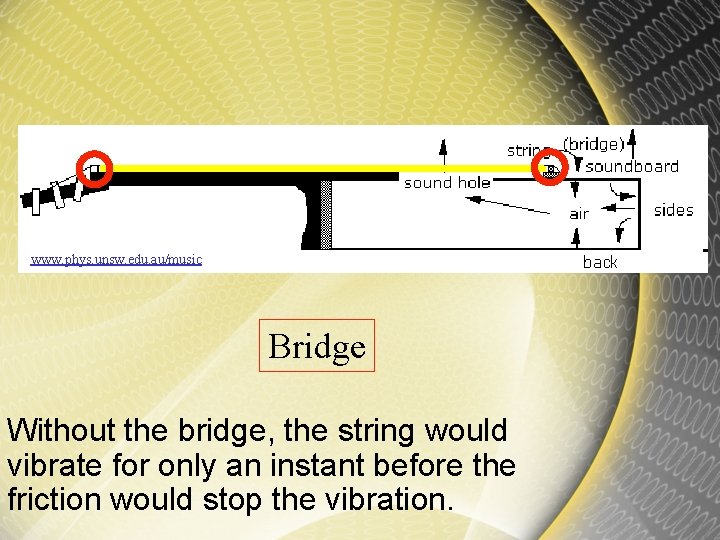
www. phys. unsw. edu. au/music Bridge Note these two little pieces of wood. They are called a bridge. They are located at each end of the instrument.
www. phys. unsw. edu. au/music Bridge It is the job of the bridge to keep the string off of the guitar base. This allows the string to vibrate without rubbing on the instrument.
www. phys. unsw. edu. au/music Bridge Without the bridge, the string would vibrate for only an instant before the friction would stop the vibration.
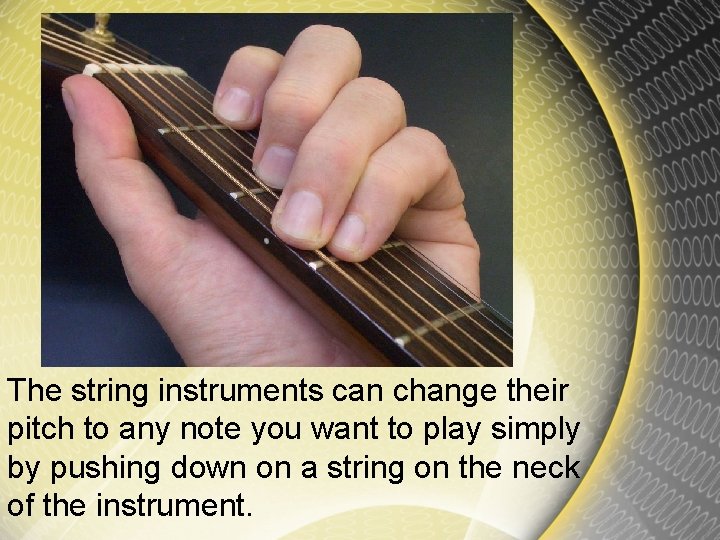
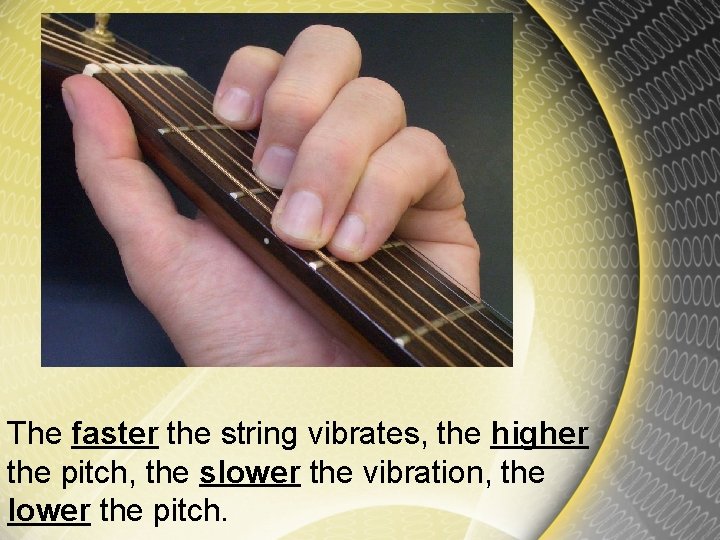
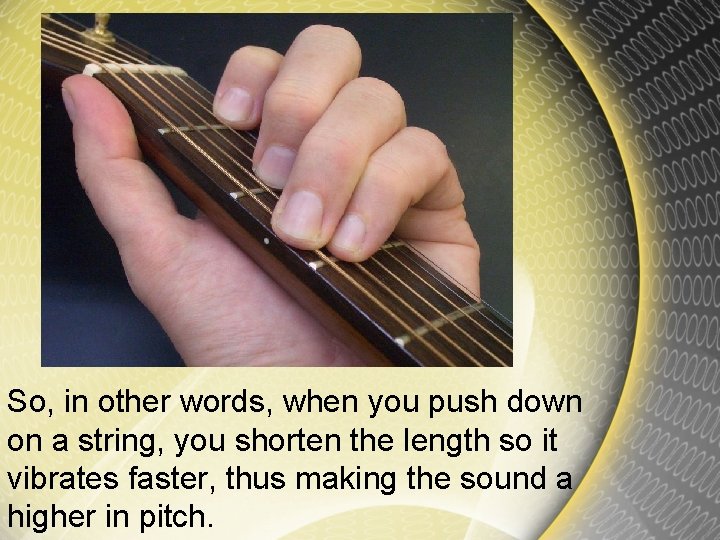
The string instruments can change their pitch to any note you want to play simply by pushing down on a string on the neck of the instrument.
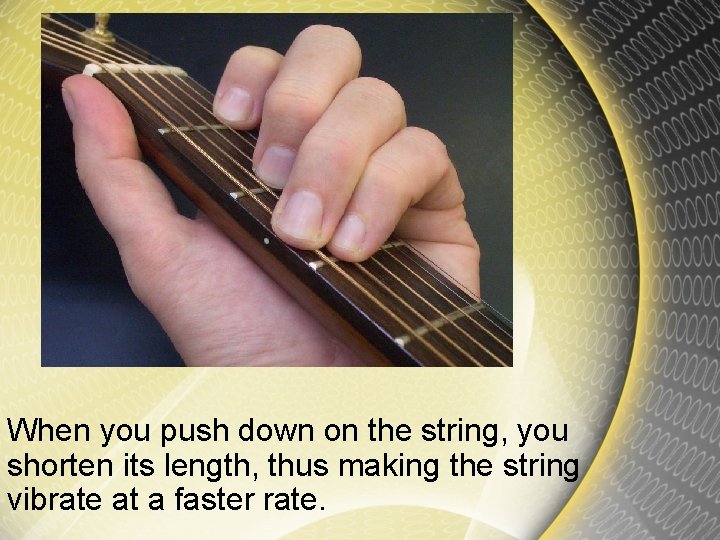
When you push down on the string, you shorten its length, thus making the string vibrate at a faster rate.
The faster the string vibrates, the higher the pitch, the slower the vibration, the lower the pitch.
So, in other words, when you push down on a string, you shorten the length so it vibrates faster, thus making the sound a higher in pitch.
Winds and Brass
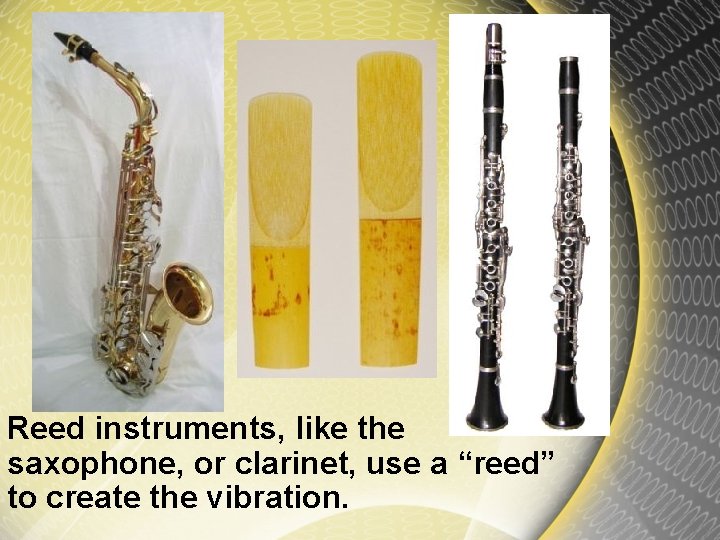
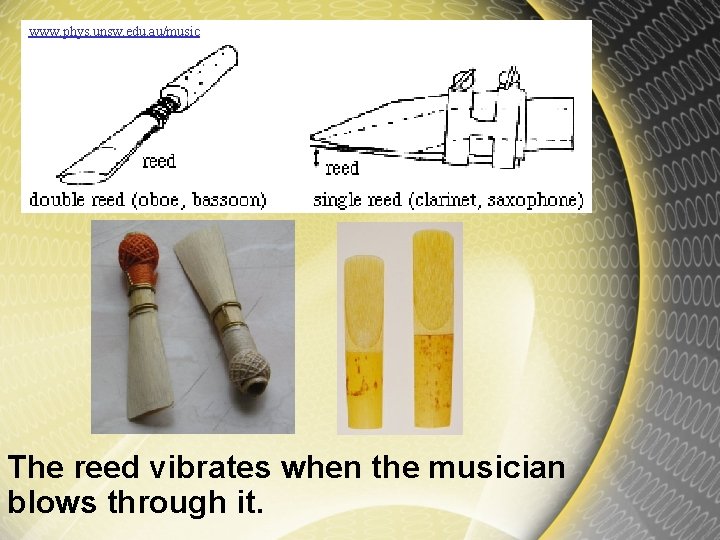
Reed instruments, like the saxophone, or clarinet, use a “reed” to create the vibration.
www. phys. unsw. edu. au/music The reed vibrates when the musician blows through it.
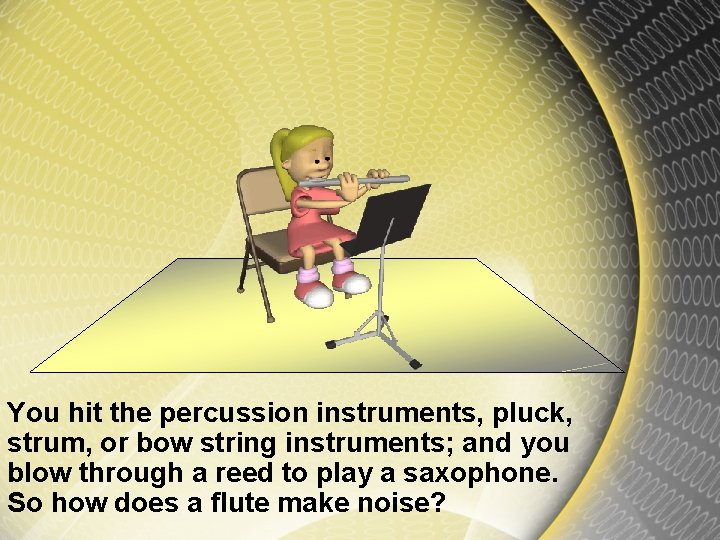
You hit the percussion instruments, pluck, strum, or bow string instruments; and you blow through a reed to play a saxophone. So how does a flute make noise?
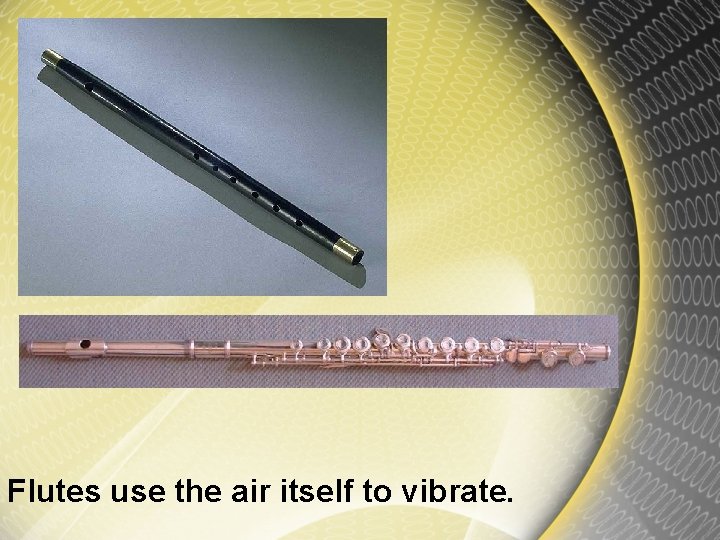
Flutes use the air itself to vibrate.
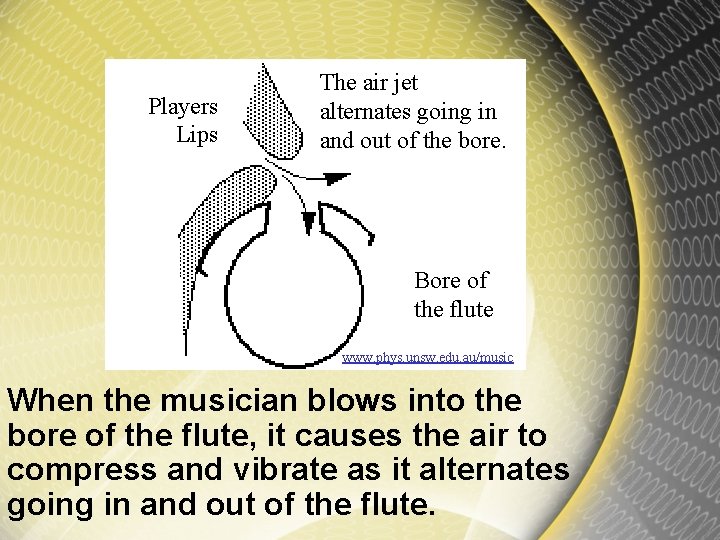
Players Lips The air jet alternates going in and out of the bore. Bore of the flute www. phys. unsw. edu. au/music When the musician blows into the bore of the flute, it causes the air to compress and vibrate as it alternates going in and out of the flute.
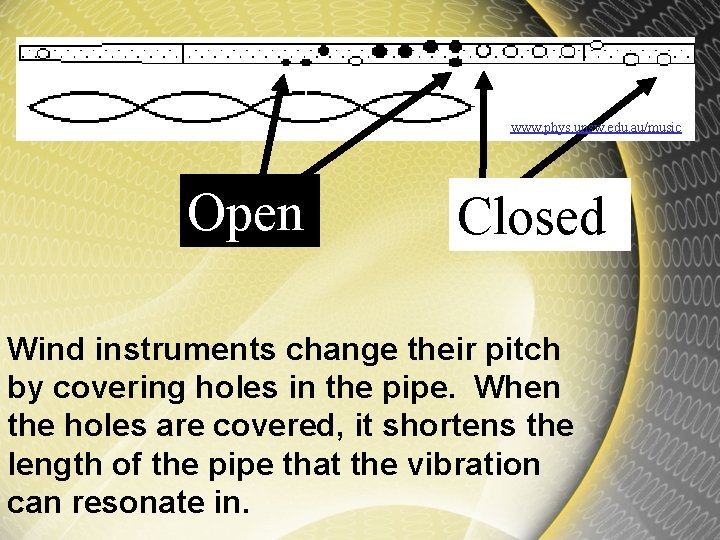
www. phys. unsw. edu. au/music Open Closed Wind instruments change their pitch by covering holes in the pipe. When the holes are covered, it shortens the length of the pipe that the vibration can resonate in.
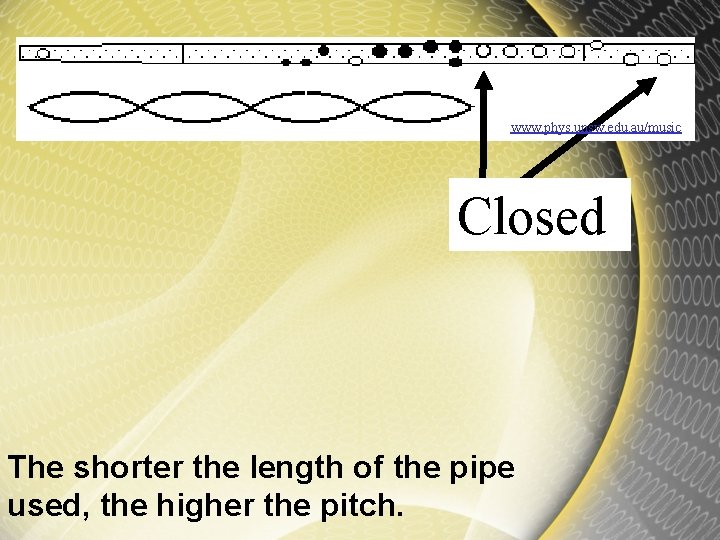
www. phys. unsw. edu. au/music Closed The shorter the length of the pipe used, the higher the pitch.
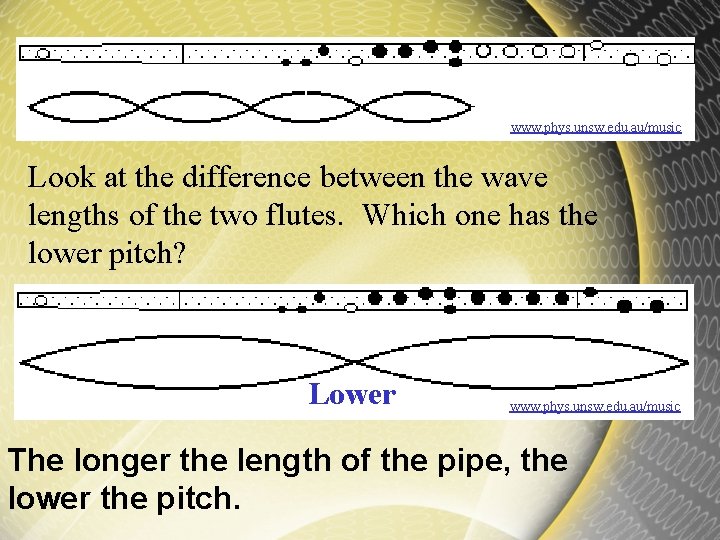
www. phys. unsw. edu. au/music Look at the difference between the wave lengths of the two flutes. Which one has the lower pitch? Lower www. phys. unsw. edu. au/music The longer the length of the pipe, the lower the pitch.
Brass
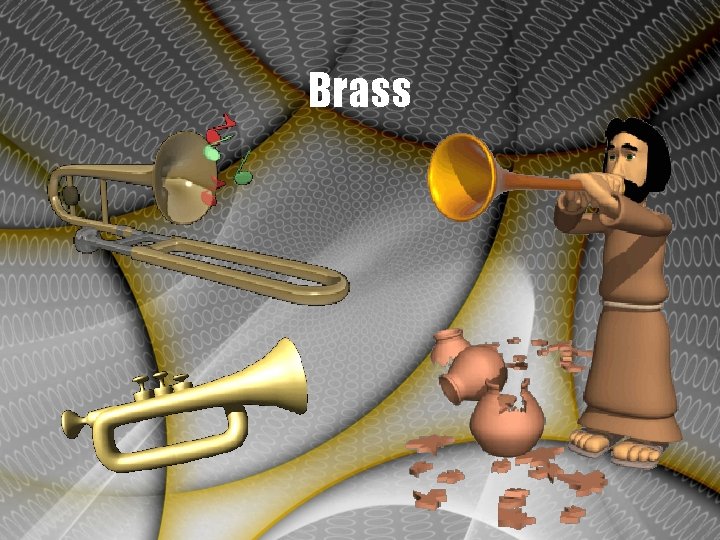
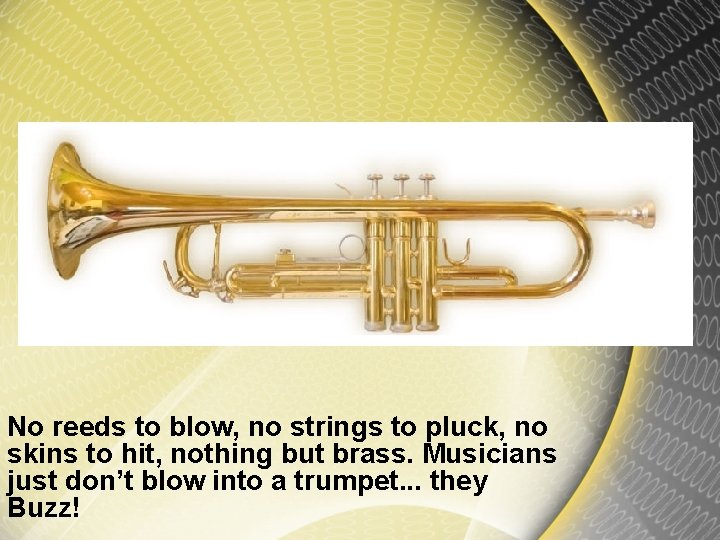
No reeds to blow, no strings to pluck, no skins to hit, nothing but brass. Musicians just don’t blow into a trumpet. . . they Buzz!
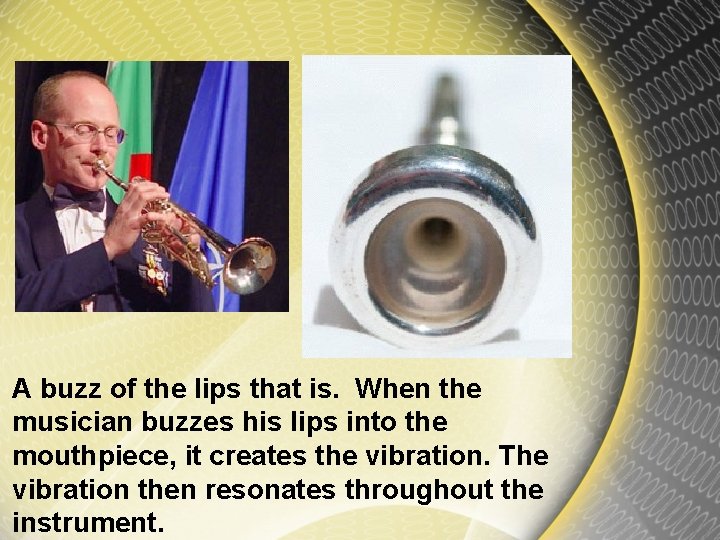
A buzz of the lips that is. When the musician buzzes his lips into the mouthpiece, it creates the vibration. The vibration then resonates throughout the instrument.
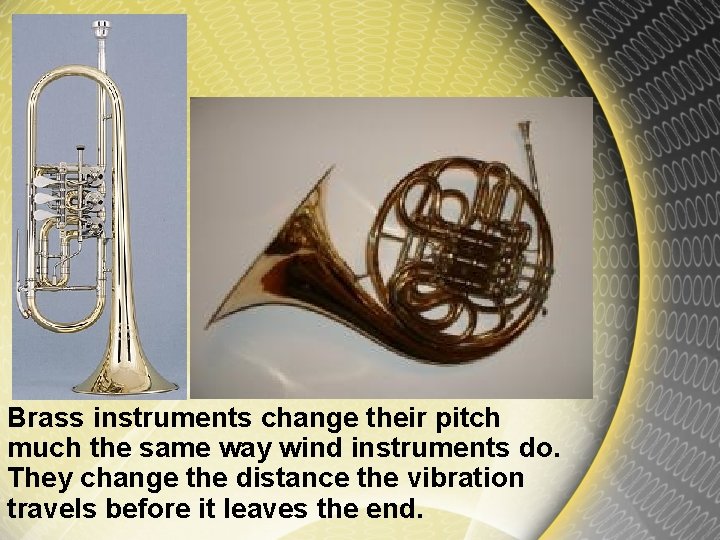
Brass instruments change their pitch much the same way wind instruments do. They change the distance the vibration travels before it leaves the end.
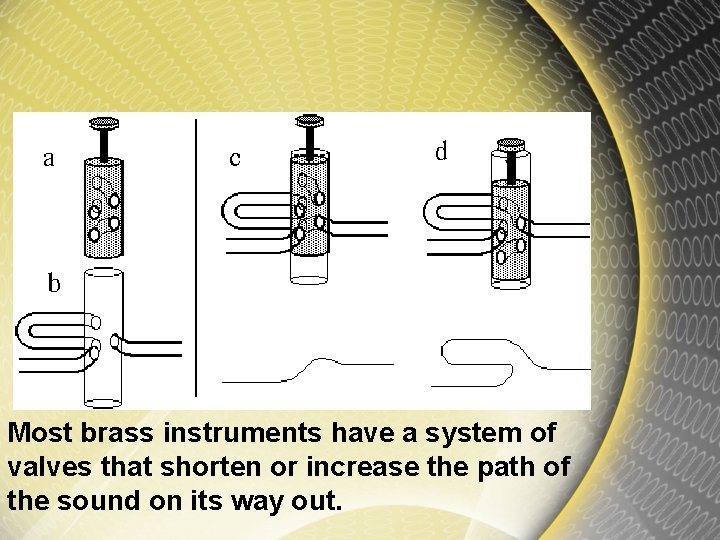
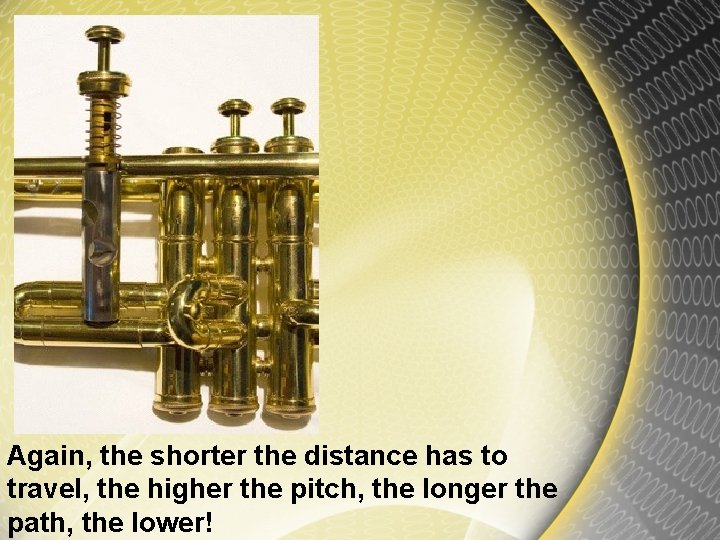
Most brass instruments have a system of valves that shorten or increase the path of the sound on its way out.
Again, the shorter the distance has to travel, the higher the pitch, the longer the path, the lower!
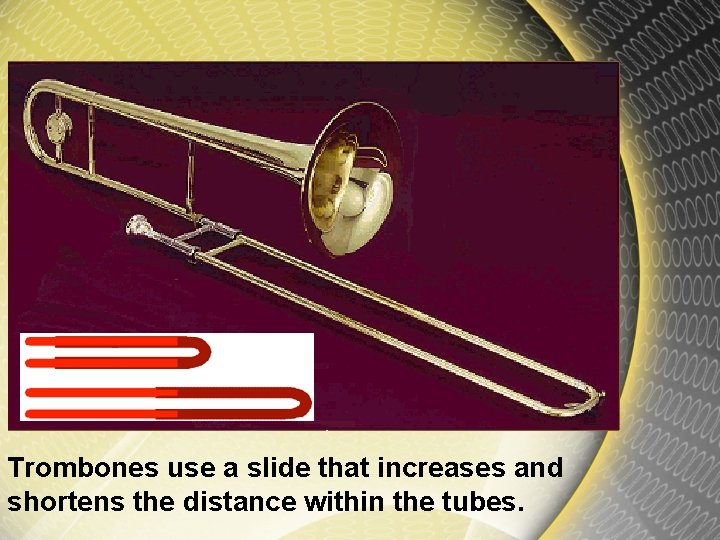
Trombones use a slide that increases and shortens the distance within the tubes.
When you put all the instruments together it sounds something like this. . .
Its time to play. . . Using these words, tell how each of the following instruments produces its vibration.
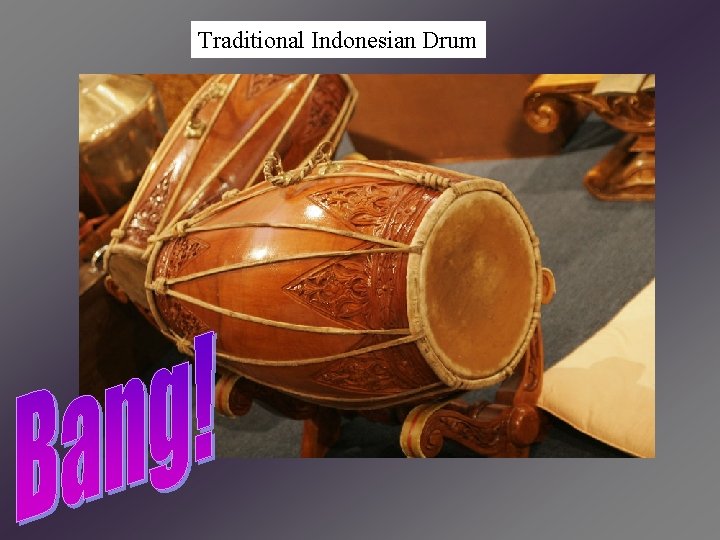
Traditional Indonesian Drum
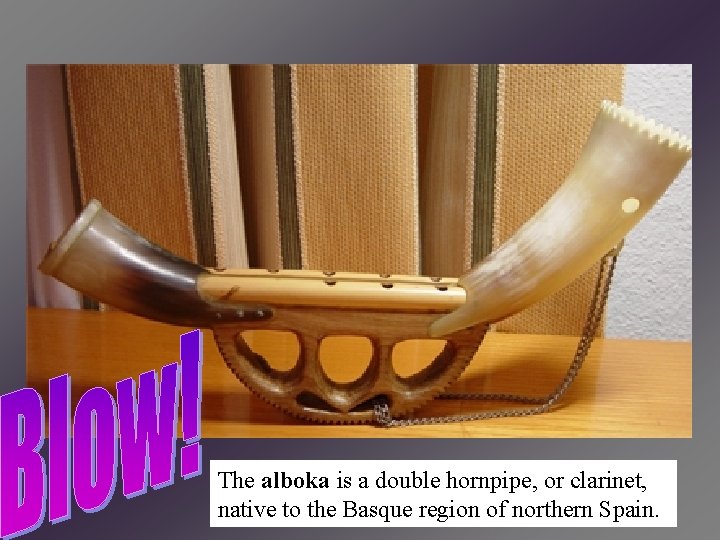
The alboka is a double hornpipe, or clarinet, native to the Basque region of northern Spain.
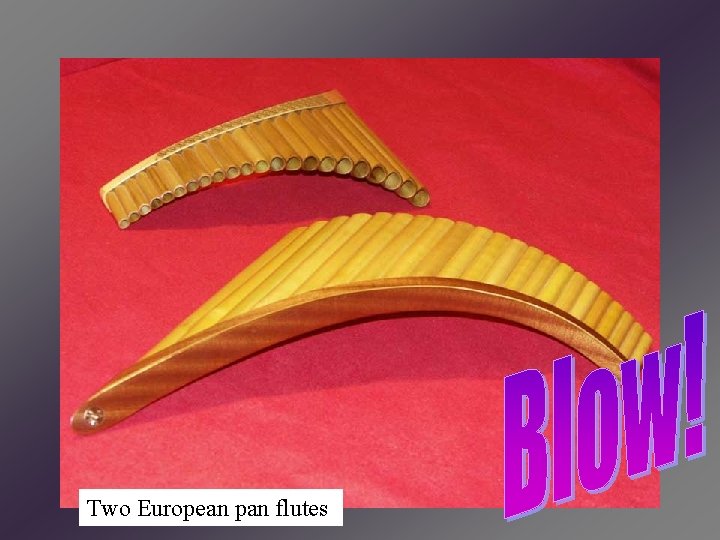
Two European pan flutes
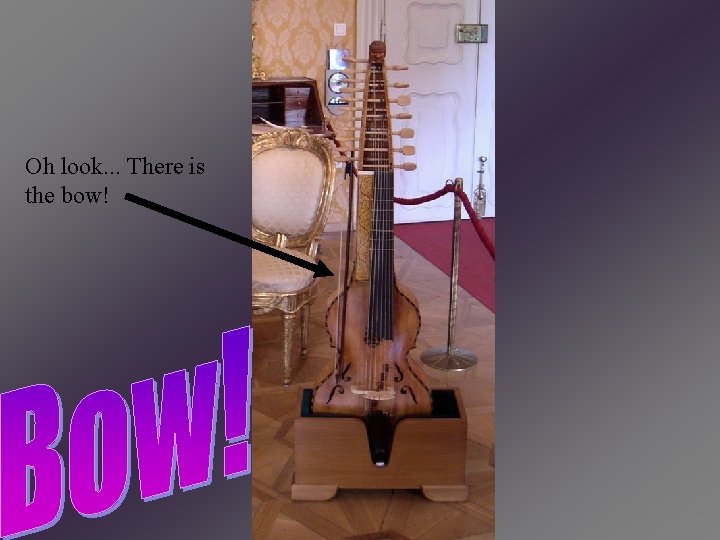
Oh look. . . There is the bow!
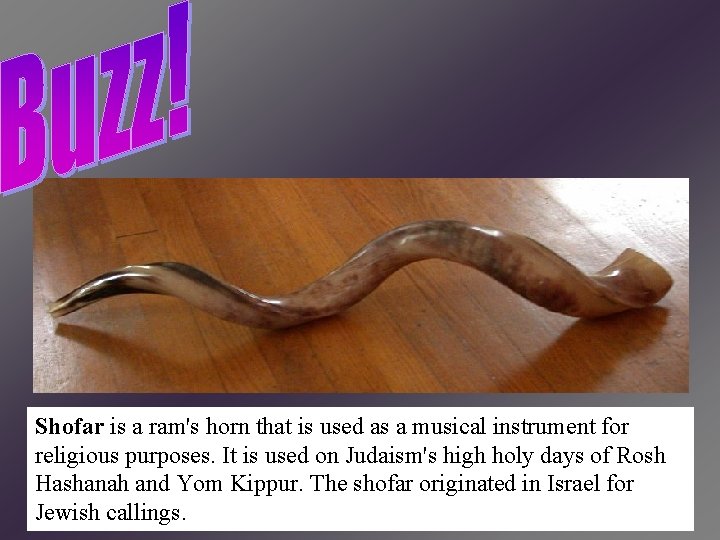
Shofar is a ram's horn that is used as a musical instrument for religious purposes. It is used on Judaism's high holy days of Rosh Hashanah and Yom Kippur. The shofar originated in Israel for Jewish callings.
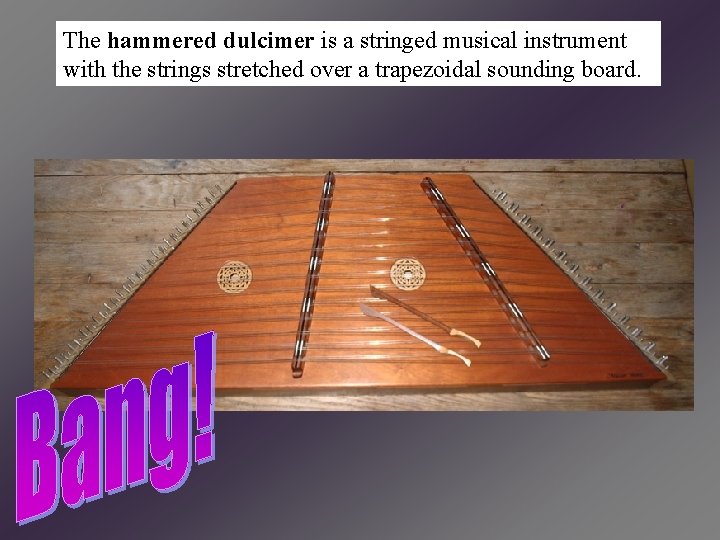
The hammered dulcimer is a stringed musical instrument with the strings stretched over a trapezoidal sounding board.
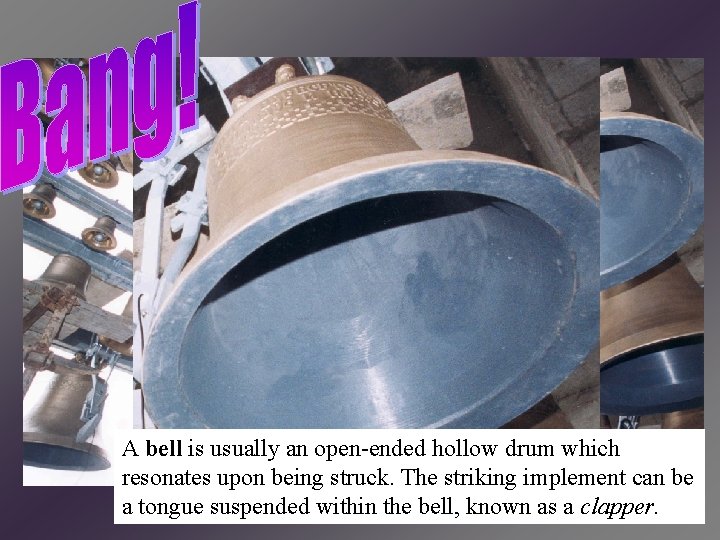
A bell is usually an open-ended hollow drum which resonates upon being struck. The striking implement can be a tongue suspended within the bell, known as a clapper.
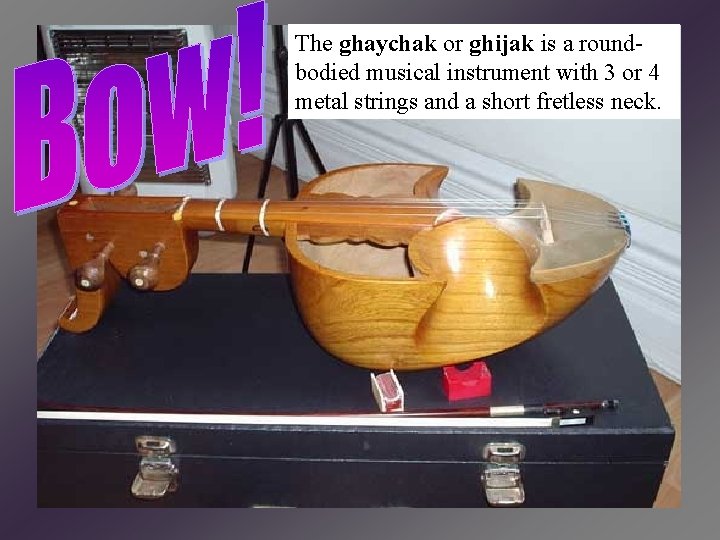
The ghaychak or ghijak is a roundbodied musical instrument with 3 or 4 metal strings and a short fretless neck.
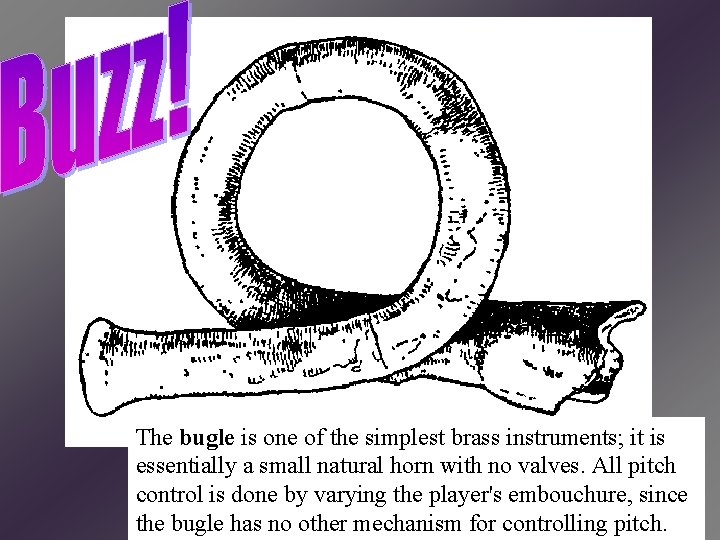
The bugle is one of the simplest brass instruments; it is essentially a small natural horn with no valves. All pitch control is done by varying the player's embouchure, since the bugle has no other mechanism for controlling pitch.
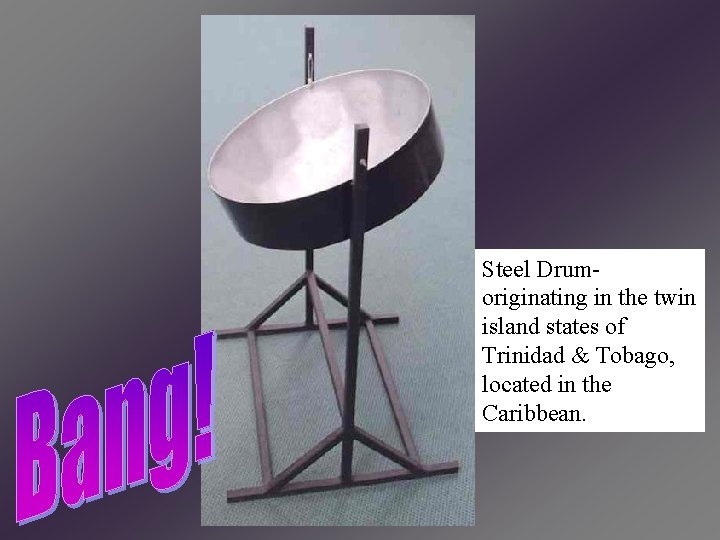
Steel Drumoriginating in the twin island states of Trinidad & Tobago, located in the Caribbean.
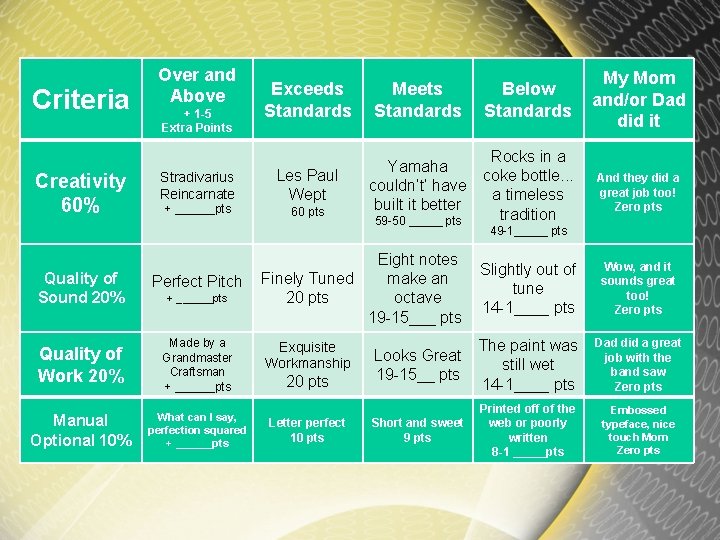
Criteria Creativity 60% Quality of Sound 20% Over and Above + 1 -5 Extra Points Stradivarius Reincarnate + ______pts Perfect Pitch + ______pts Exceeds Standards Meets Standards Below Standards Les Paul Wept Yamaha couldn’t’ have built it better Rocks in a coke bottle. . . a timeless tradition 60 pts 59 -50 _____ pts Eight notes make an Finely Tuned 20 pts octave 19 -15___ pts Quality of Work 20% Made by a Grandmaster Craftsman + ______pts Exquisite Workmanship Manual Optional 10% What can I say, perfection squared + ______pts Letter perfect 10 pts 20 pts My Mom and/or Dad did it And they did a great job too! Zero pts 49 -1_____ pts Slightly out of tune 14 -1____ pts Wow, and it sounds great too! Zero pts Looks Great 19 -15__ pts The paint was still wet 14 -1____ pts Dad did a great job with the band saw Zero pts Short and sweet 9 pts Printed off of the web or poorly written 8 -1 _____pts Embossed typeface, nice touch Mom Zero pts
Home Work: Go home and look at your instrument, does it have what it needs to have? Does it have a resonance chamber? What vibrates? What amplifies the sound? Can you change the pitch? Can you change the tone? If you can’t. . . SOUND PROJECT IS DUE TUESDAY DECEMBER TH 20
Additional Images from ? ? ? Used with permission And www. animationfactory. com Bought and Paid for I am not a salesman and do not get commission, I do how ever endorse this site and their graphics. I would not be able to make a good Power Point with out them. It is worth every penny.
Teacher Lecture Notes This is a straight forward introduction to sound. Follow up this lesson with tuning forks. Allow students to explore with them after they have been instructed how to use them. Ask the question: How can you hear it best? (pointing the tines at your ear) How can you hear it the longest? (Placing the base of the fork on your skull) Can you hear through your elbow? (Place the base of the fork on the big bone in your elbow, while with the connected arm, place a finger in your ear. ) Have fun!!!
Usage Information This Power Point has been designed to correlate with the Fourth Grade Georgia Professional Standards or GPS for the 2006 – 2007 School year and beyond. Any Teacher using this Power Point for educational purposes may do so with out worry of monetary reimbursement, and with my full blessing. (We have to buy enough stuff already ) I would appreciate that the credit be given to any and all participants in the making of this power point. I hope you use them well and enjoy them with your students. If you have any suggestions or comments regarding this or any of my Power Point Presentations please email me at David. Eichler@Cobbk 12. org. Anyone using this Power Point outside of the classroom, for personal gain, or profit will need to get my personal approval, in writing. I have put 100’s of hours into the production of these presentations over the years. I have created them for the students in our classrooms, not fortune, or fame. I hope that you do not take advantage of this work for personal gain. Please do not make changes to this Power Point other then the correction of a grammatical, or punctuation error.