
Sound Longitudinal Wave Motion of material is parallel
- Slides: 18
Sound
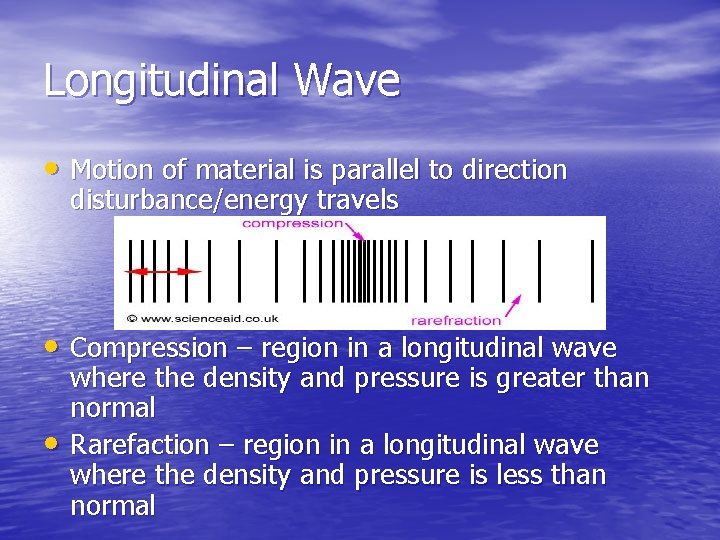
Longitudinal Wave • Motion of material is parallel to direction disturbance/energy travels • Compression – region in a longitudinal wave • where the density and pressure is greater than normal Rarefaction – region in a longitudinal wave where the density and pressure is less than normal
How is sound produced? • Sound is produced by a vibrating object • The frequency of the source is the same as the frequency of the sound produced • Once a sound wave is created its frequency can NEVER change
Sound Waves • Audible – sound waves with frequencies in the range of human hearing (20 – 20000 Hz) • Infrasonic – sound waves with frequencies below the range of human hearing • Ultrasonic – sound waves with frequencies above the range of human hearing • By age 70 most people can’t hear above 8000 Hz
Pitch • perceived highness or lowness of a sound - determined by frequency
Loudness • Volume - determined by energy wave carries Volume is measured in Decibels
Notes about Decibels • Threshold of hearing is 0 d. B • Threshold of pain is 120 d. B • 0 d. B doesn’t mean no sound – • Doubling the intensity doesn’t double the • • loudness (takes 10 d. B increase to do that) Going up 10 db produces sound that is 10 x as intense but only 2 x as loud. 1 d. B change is the smallest change in loudness detectable
Decibels http: //www. nidcd. nih. gov/staticresources/he alth/education/decibel/decible 4. swf • Sound levels of 90 d. B and above will damage receptor nerves in the ear resulting in a loss of hearing
Speed of Sound • Depends on medium and temperature • Medium – in solids particles are closer together so easier and quicker to pass on disturbance • Temperature – as material warms up the particles collide more frequently so disturbance is passed on more quickly
Doppler Effect • Change in pitch or frequency detected by an observer due to the motion of the source and/or the receiver • http: //www. ecocardiografia. info/Doppler_ effect. swf
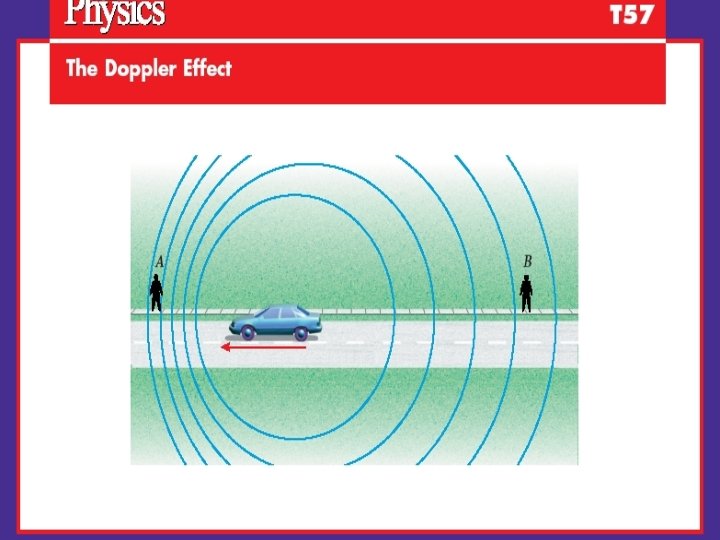
Doppler Effect
Source Toward Stationary Observer • Observer will receive a higher frequency and higher pitch if car is approaching • Observer will receive a lower frequency and lower pitch if car is leaving
Doppler Effect • How does the speed of the source effect your results? • The faster the source moves, the greater the change in frequency
Shock Wave • http: //www. upscale. utoronto. ca/General. In terest/Harrison/Flash/Class. Mechanics/Dop pler. Wave. Fronts/Doppler. Wave. Fronts. swf • Along the edges of the cone a large pressure ridge is formed • When the edge of the cone reaches the ear of a listener a loud “boom” is heard -called a sonic boom
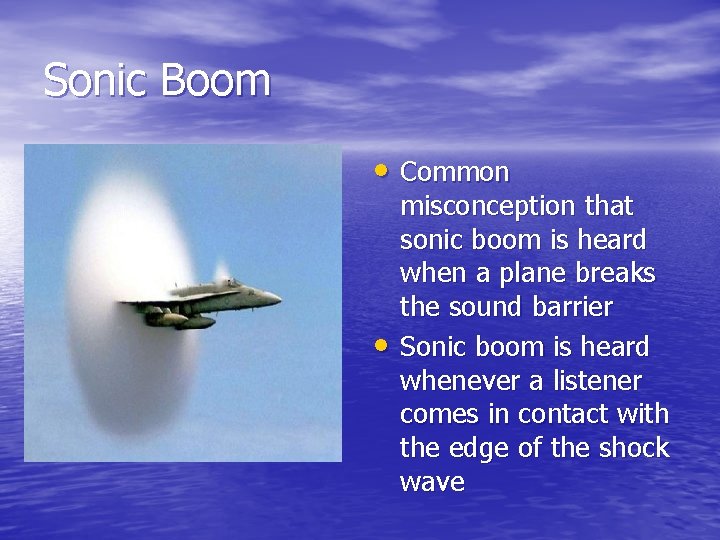
Sonic Boom • Common • misconception that sonic boom is heard when a plane breaks the sound barrier Sonic boom is heard whenever a listener comes in contact with the edge of the shock wave
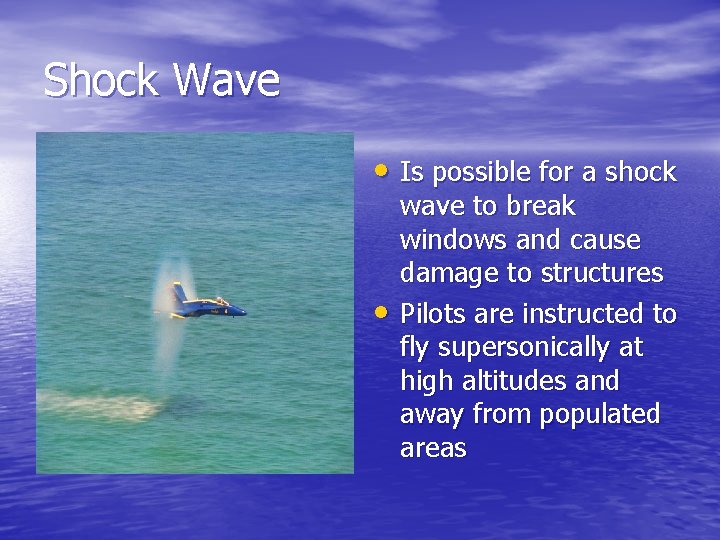
Shock Wave • Is possible for a shock • wave to break windows and cause damage to structures Pilots are instructed to fly supersonically at high altitudes and away from populated areas
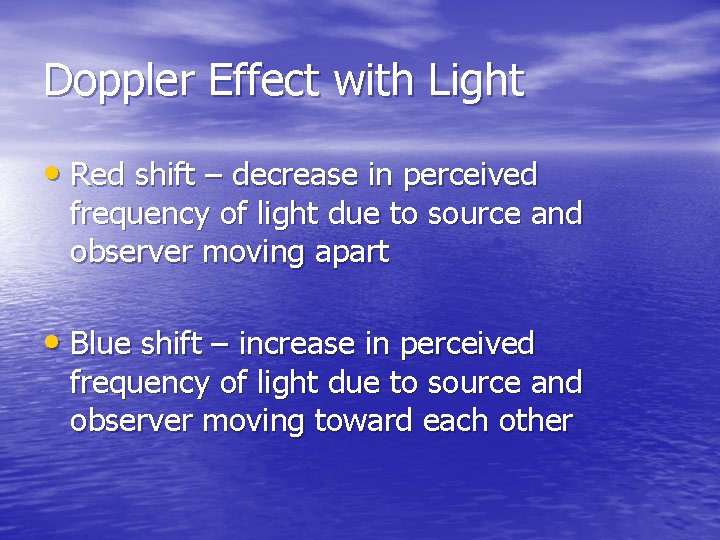
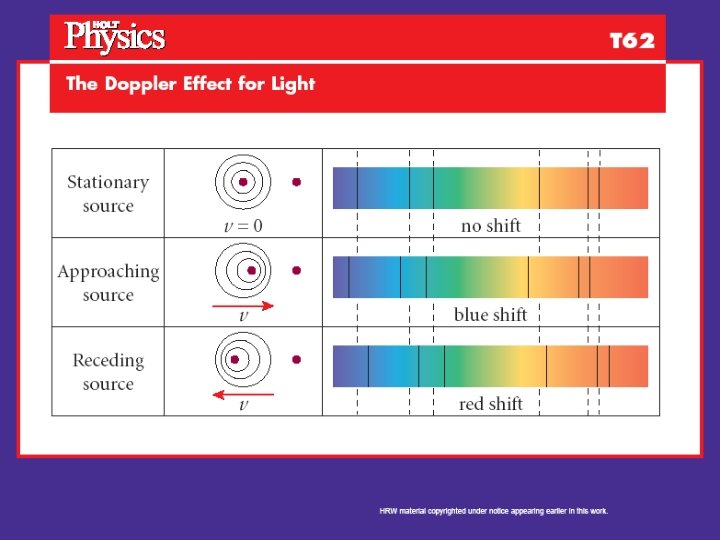
Doppler Effect with Light • Red shift – decrease in perceived frequency of light due to source and observer moving apart • Blue shift – increase in perceived frequency of light due to source and observer moving toward each other