
Sound Collect a sheet from the front and



- Slides: 25
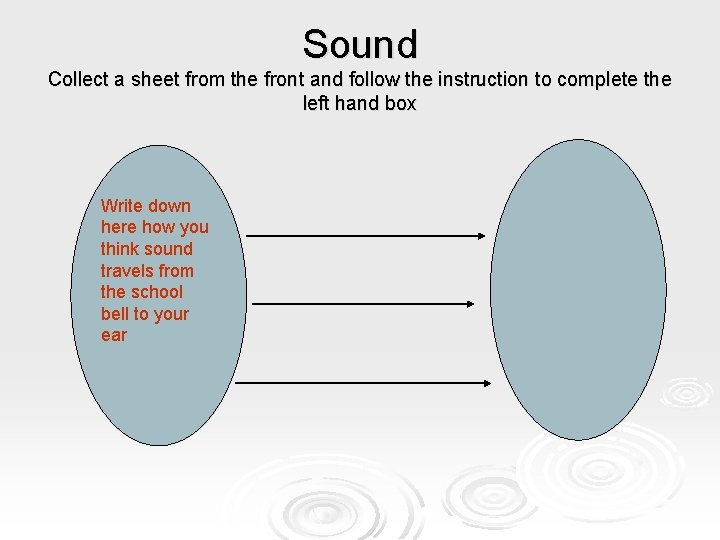
Sound Collect a sheet from the front and follow the instruction to complete the left hand box Write down here how you think sound travels from the school bell to your ear
Objectives Ø To know how sound waves are produced. Ø To understand how echoes are formed. Ø To be able to collect reliable and valid data to measure the spped of sound
The Facts Sound … 1. Is a form of energy produced & transmitted by vibrating matter 2. Travels in waves 3. Travels more quickly through solids than liquids or gases
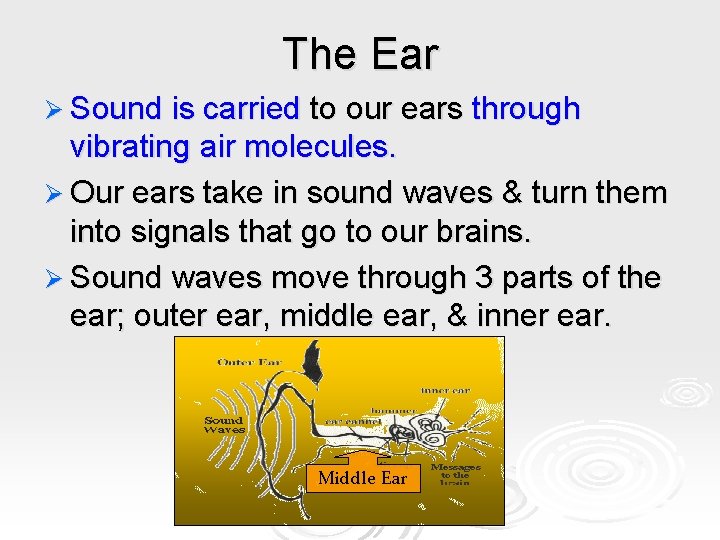
The Ear Ø Sound is carried to our ears through vibrating air molecules. Ø Our ears take in sound waves & turn them into signals that go to our brains. Ø Sound waves move through 3 parts of the ear; outer ear, middle ear, & inner ear. Middle Ear
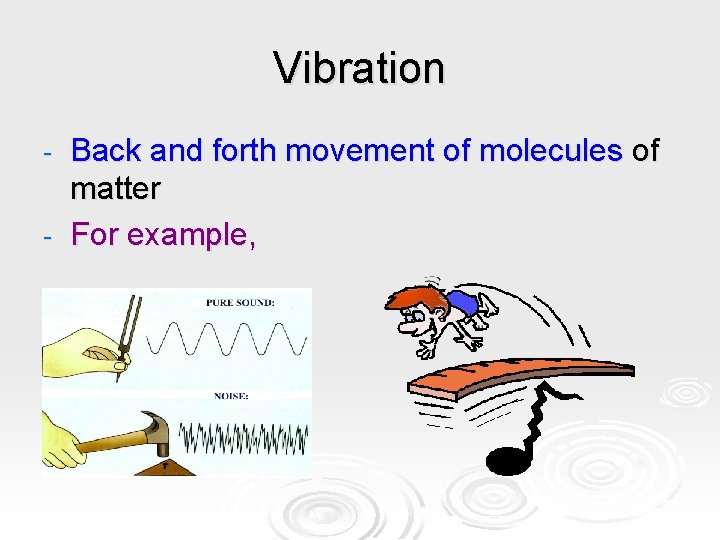
Vibration Back and forth movement of molecules of matter - For example, -
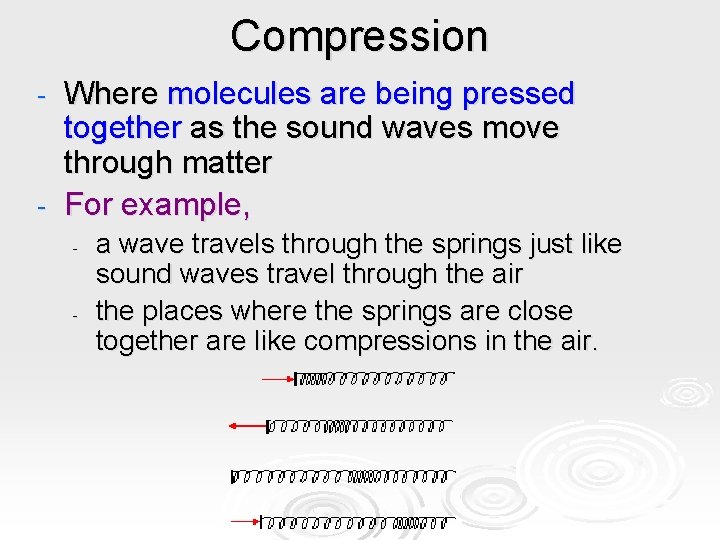
Compression Where molecules are being pressed together as the sound waves move through matter - For example, - - - a wave travels through the springs just like sound waves travel through the air the places where the springs are close together are like compressions in the air.
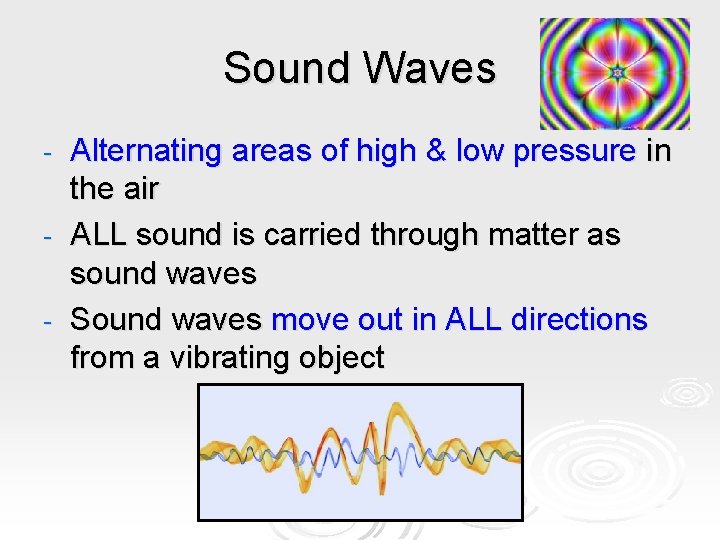
Sound Waves Alternating areas of high & low pressure in the air - ALL sound is carried through matter as sound waves - Sound waves move out in ALL directions from a vibrating object -
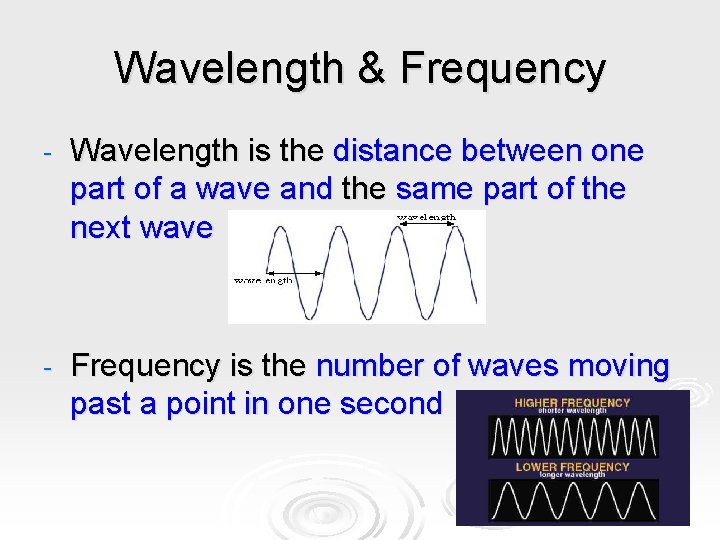
Wavelength & Frequency - Wavelength is the distance between one part of a wave and the same part of the next wave - Frequency is the number of waves moving past a point in one second
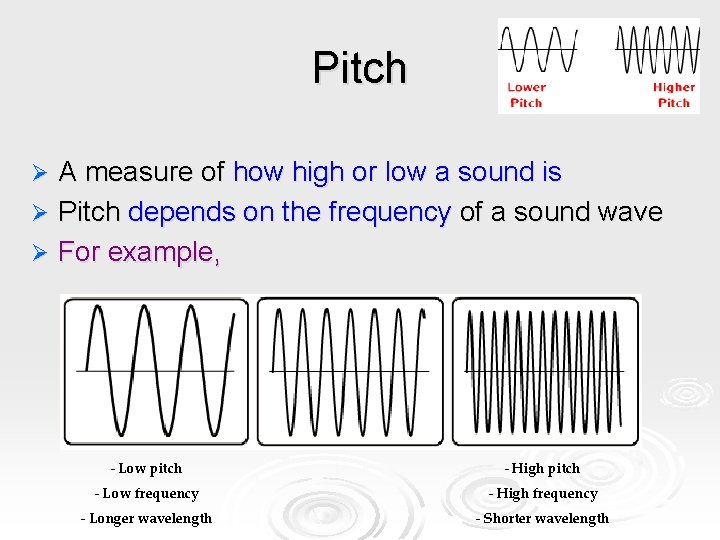
Pitch A measure of how high or low a sound is Ø Pitch depends on the frequency of a sound wave Ø For example, Ø - Low pitch - High pitch - Low frequency - High frequency - Longer wavelength - Shorter wavelength
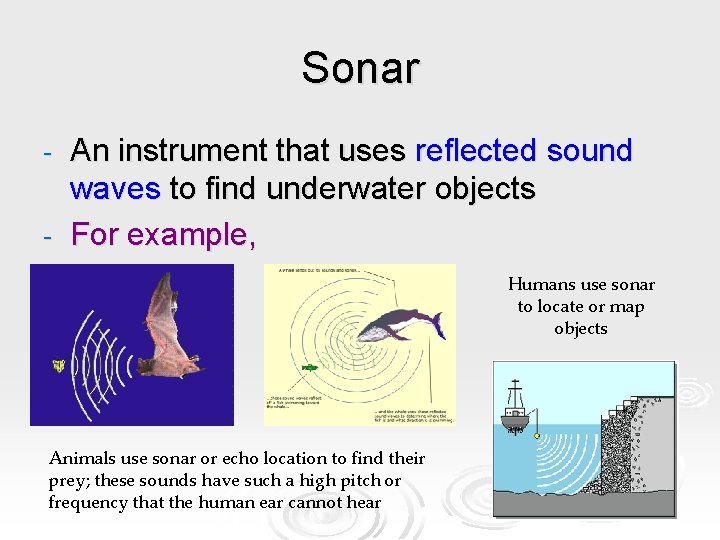
Sonar An instrument that uses reflected sound waves to find underwater objects - For example, - Humans use sonar to locate or map objects Animals use sonar or echo location to find their prey; these sounds have such a high pitch or frequency that the human ear cannot hear
Sound and Instruments - - - Instruments can be played at different pitches by changing lengths of different parts. For example, Another way to make different pitches is to change thickness of the material that vibrates. For example, A trombone’s mute absorbs some of the sound waves produced, thus producing a softer note when played.
Setting targets….
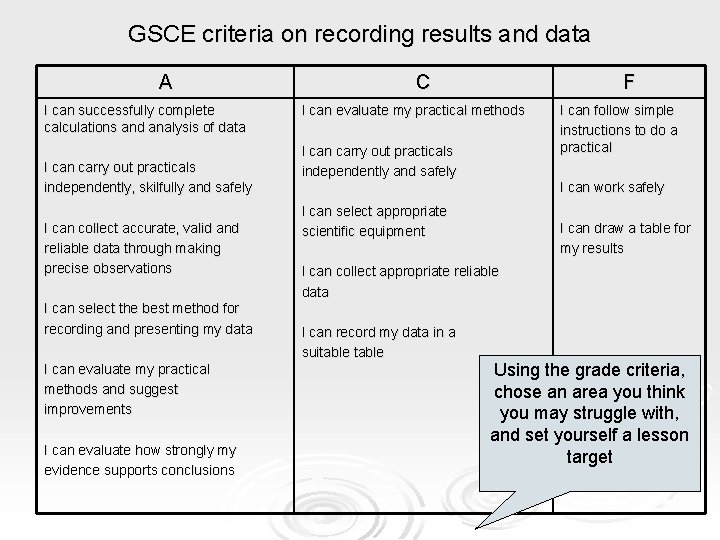
GSCE criteria on recording results and data A I can successfully complete calculations and analysis of data I can carry out practicals independently, skilfully and safely I can collect accurate, valid and reliable data through making precise observations I can select the best method for recording and presenting my data I can evaluate my practical methods and suggest improvements I can evaluate how strongly my evidence supports conclusions C F I can evaluate my practical methods I can carry out practicals independently and safely I can follow simple instructions to do a practical I can work safely I can select appropriate scientific equipment I can draw a table for my results I can collect appropriate reliable data I can record my data in a suitable Using the grade criteria, chose an area you think you may struggle with, and set yourself a lesson target
Construct A practical to me
Diagram
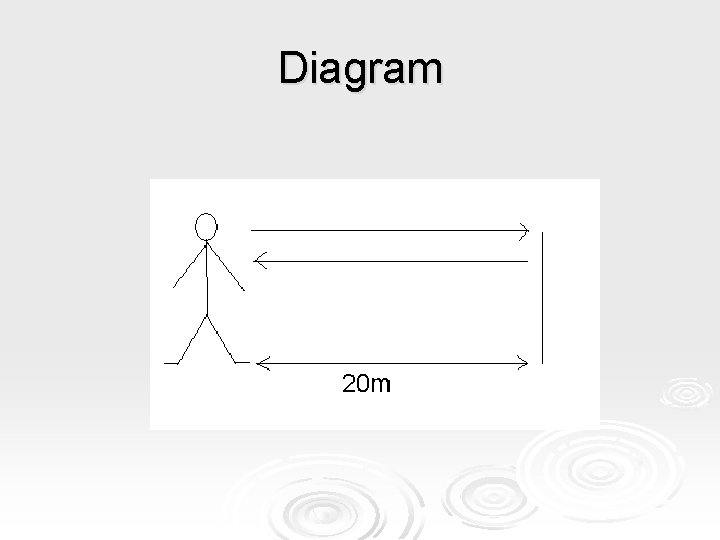
Method Ø Ø Ø Ø Standing 20 m way from the wall, the first person claps the blocks together. Person 2 starts the stop clock. Person 1 claps the blocks again on the echo and repeats for 10 claps On the tenth echo person 2 stops the clock Record the time by ten to get the time for one clap to travel to the wall and back (40 m) Use the equation speed = distance/time to find the speed f sound for each result. If any of the results are anomalous (odd) retest them. Average the results Repeat experiment for a range of results if required.
The experiment Ø Groups of 2 Ø Clap the blocks 10 x, time from the first clap to when you hear the last clap Ø Distance = 20 m Ø Repeat results and find an average to improve validity! Ø Speed = distance / time (remember to divide by 2 as it is an echo!)
Key terms Accurate - Accurate equipment used (digital stop clock) Reliable – 3 repeats and an average Valid – Keep everything the same
Recording Ø You will need to think carefully about the table you record your results in. Ø It will need repeat readings, time for multiple claps and average time for single claps. Ø With the people next to you, design your table.
Who’s going to share their table layout?
Apply to demonstrate Ø You’re now going to apply your method and results table, and collect your data
Conclusions Ø What is the speed of sound? Ø What went well with your experiment? Ø What would you improve if you were to repeat it?
Conclusions What is the speed of sound? What went well with your experiment? What would you improve if you were to repeat it? Ø Think! – 30 s Ø Pair! – 30 s Ø Share!
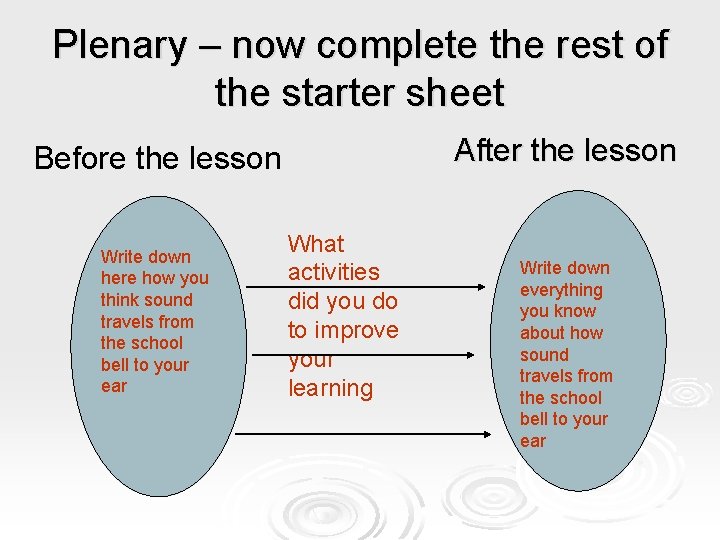
Plenary – now complete the rest of the starter sheet After the lesson Before the lesson Write down here how you think sound travels from the school bell to your ear What activities did you do to improve your learning Write down everything you know about how sound travels from the school bell to your ear
What was your target? Did you meet it?