
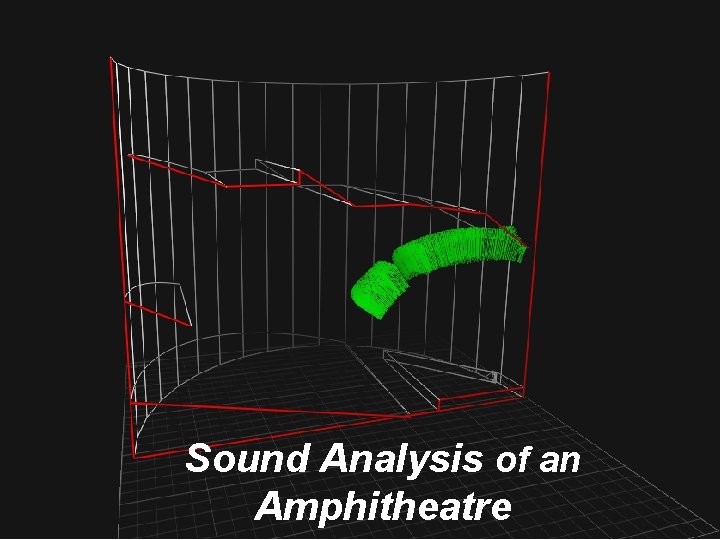
Sound Analysis of an Amphitheatre Importing Model to


- Slides: 42
Sound Analysis of an Amphitheatre
Importing Model to Ecotect Anaysis.
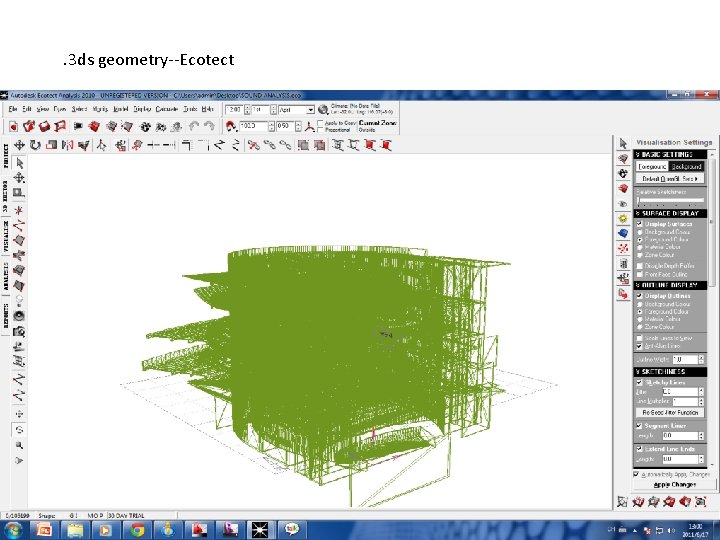
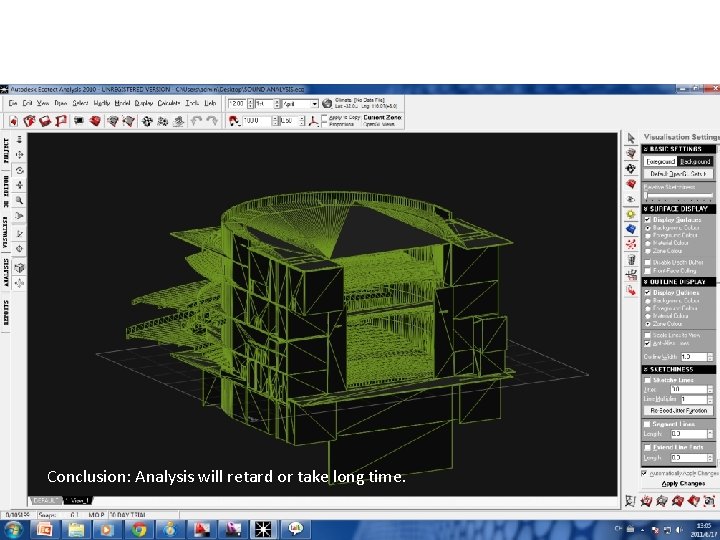
. 3 ds geometry--Ecotect
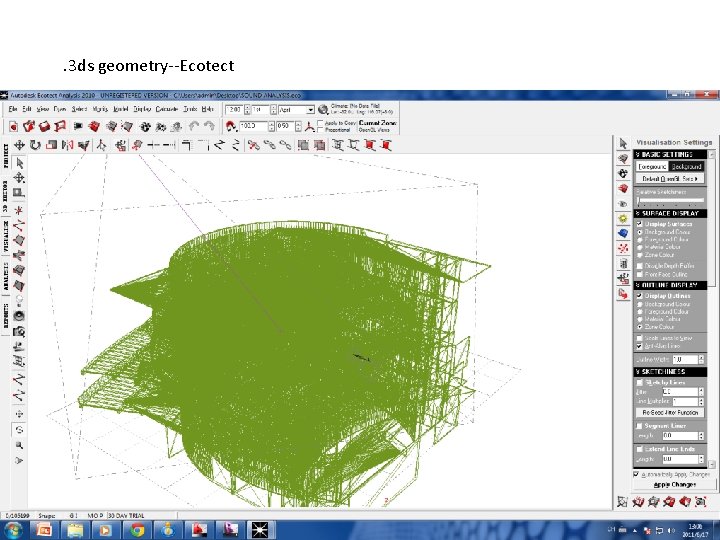
. 3 ds geometry--Ecotect
Conclusion: Analysis will retard or take long time.
Revit and Ecotect Tag the object carefully in Revit for gbxml filetype!
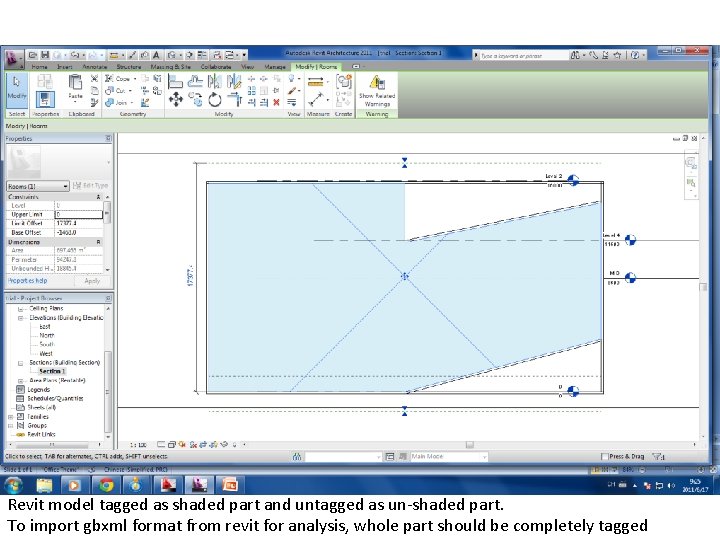
Revit model tagged as shaded part and untagged as un-shaded part. To import gbxml format from revit for analysis, whole part should be completely tagged
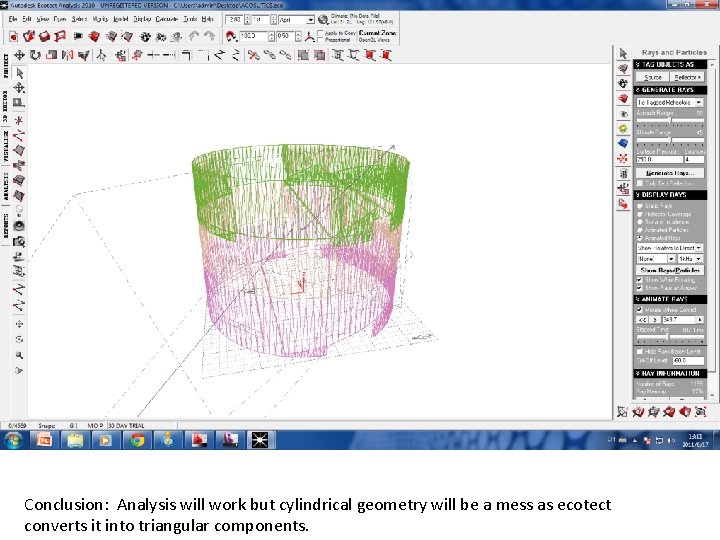
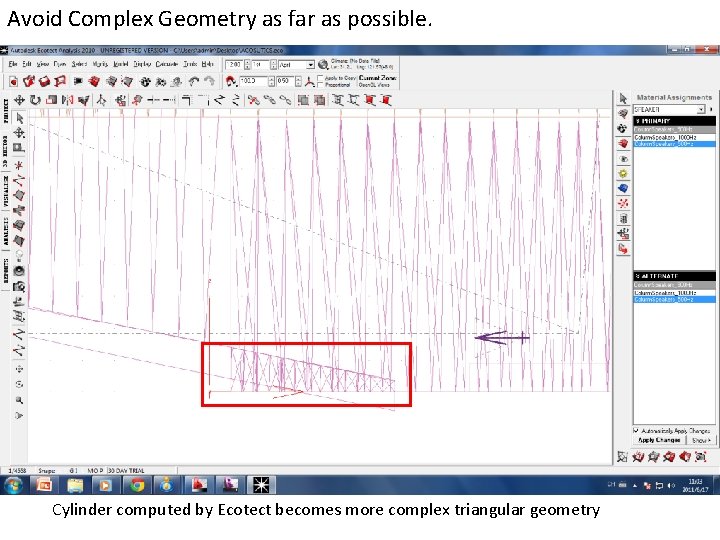
Conclusion: Analysis will work but cylindrical geometry will be a mess as ecotect converts it into triangular components.
Avoid Complex Geometry as far as possible. Cylinder computed by Ecotect becomes more complex triangular geometry
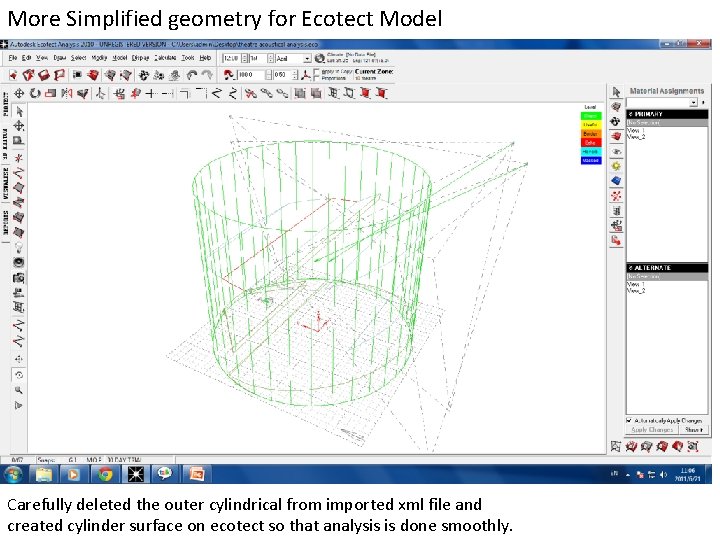
More Simplified geometry for Ecotect Model Carefully deleted the outer cylindrical from imported xml file and created cylinder surface on ecotect so that analysis is done smoothly.
Acoustical Analysis
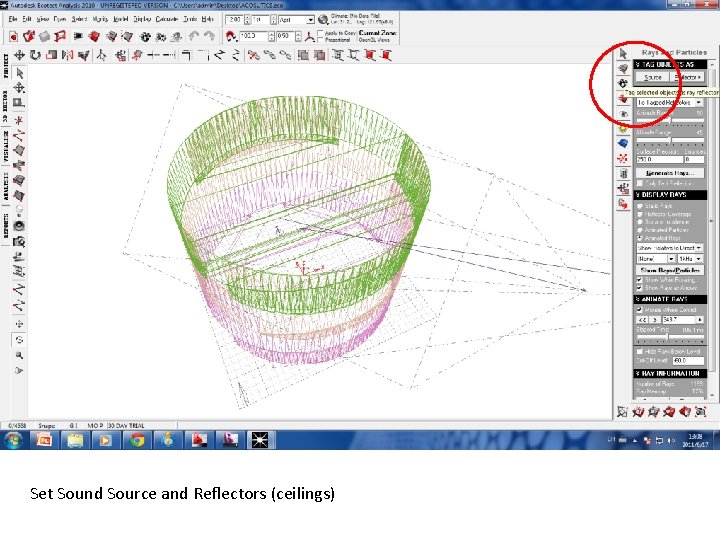
Set Sound Source and Reflectors (ceilings)
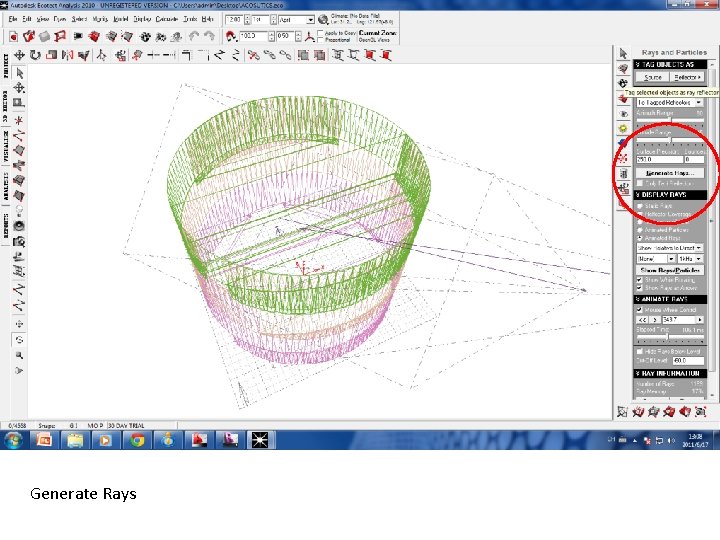
Generate Rays
Acoustical Analysis Reflector position and orientation calculation
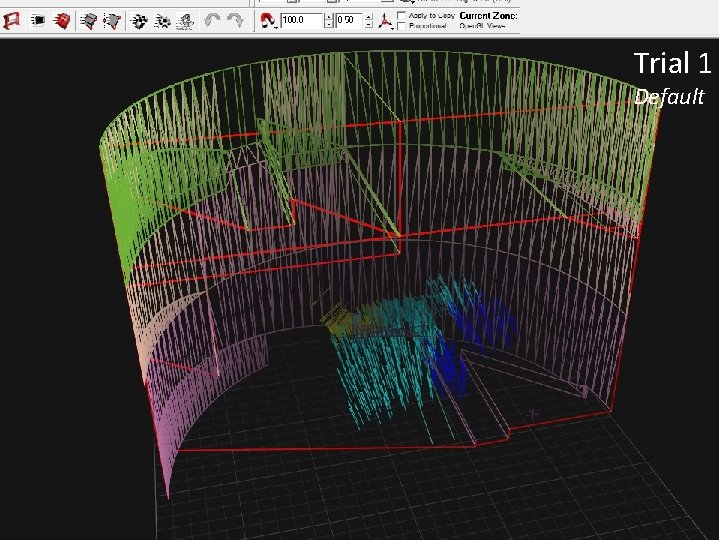
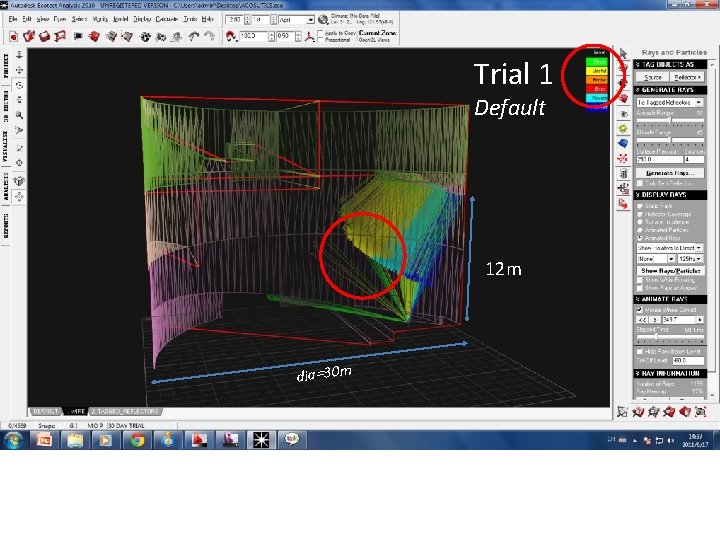
Trial 1 Default
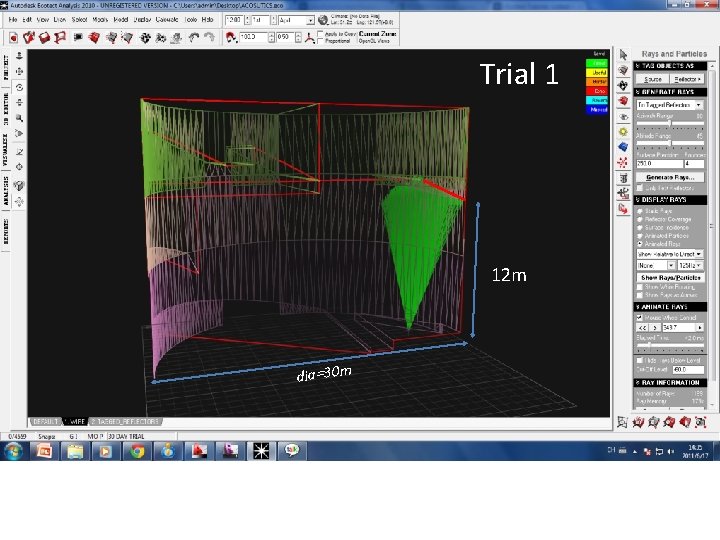
Trial 1 12 m dia=30 m
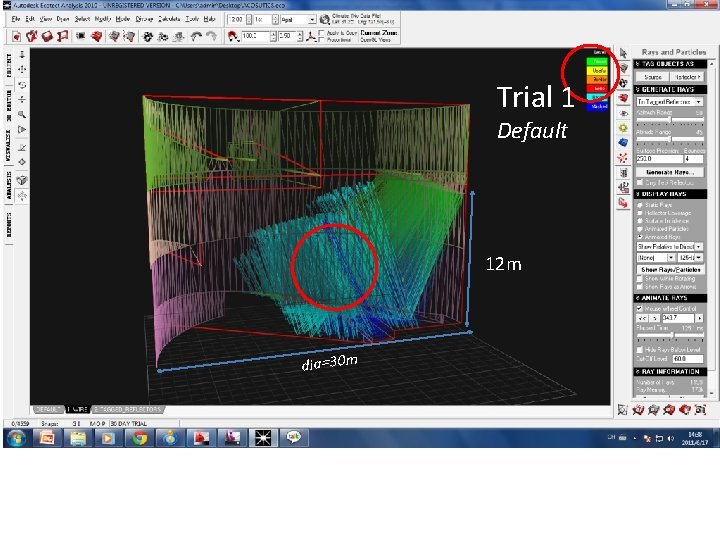
Trial 1 Default 12 m dia=30 m
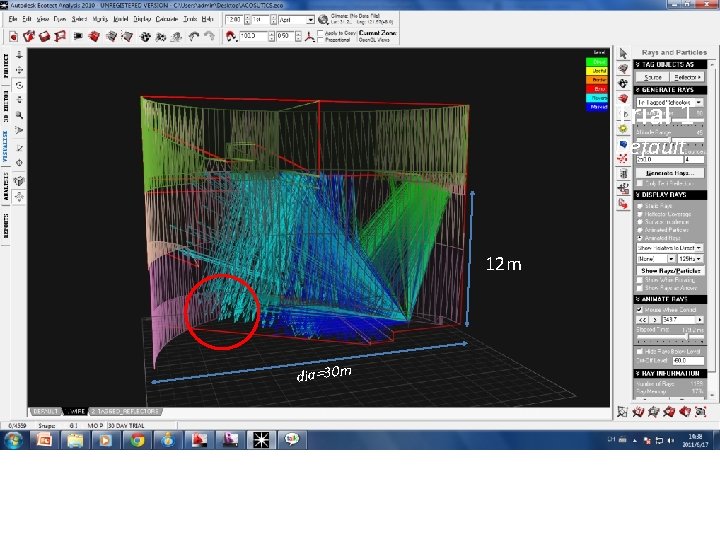
Trial 1 Default 12 m dia=30 m
Trial 1 Default 12 m dia=30 m
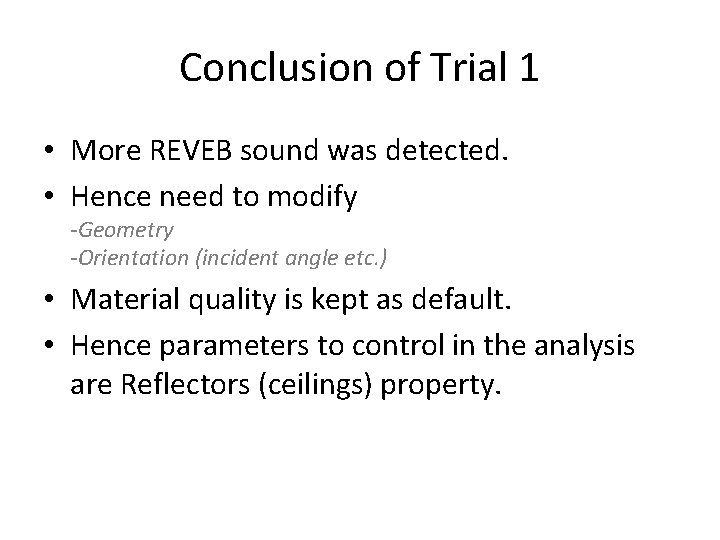
Conclusion of Trial 1 • More REVEB sound was detected. • Hence need to modify -Geometry -Orientation (incident angle etc. ) • Material quality is kept as default. • Hence parameters to control in the analysis are Reflectors (ceilings) property.
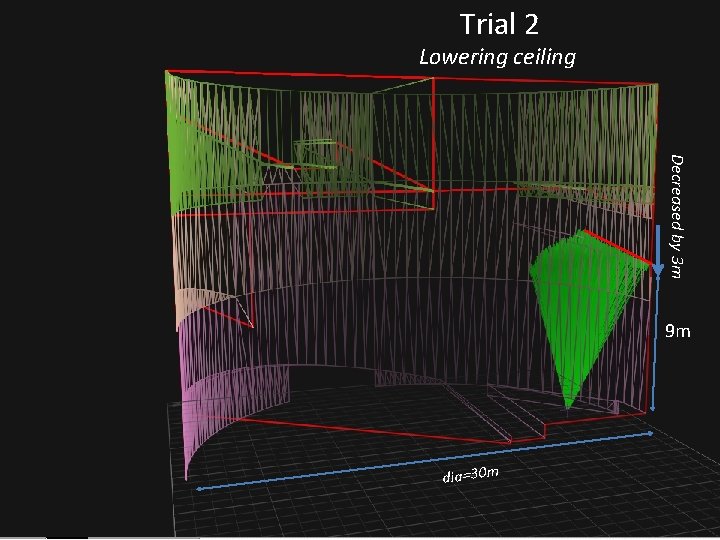
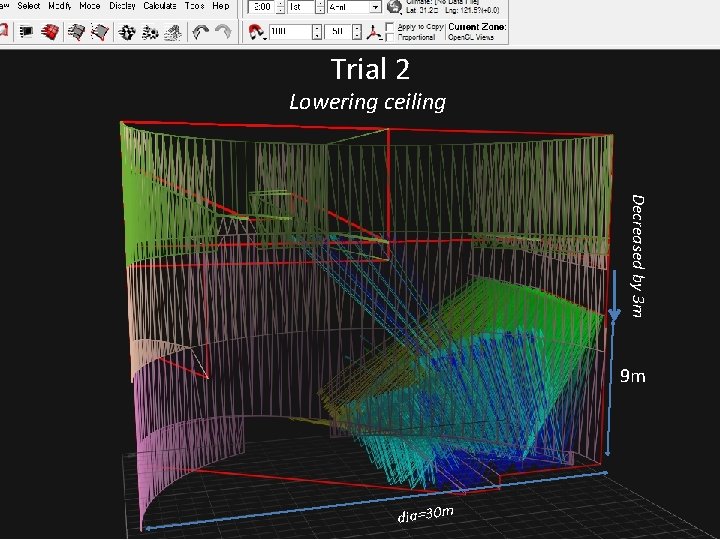
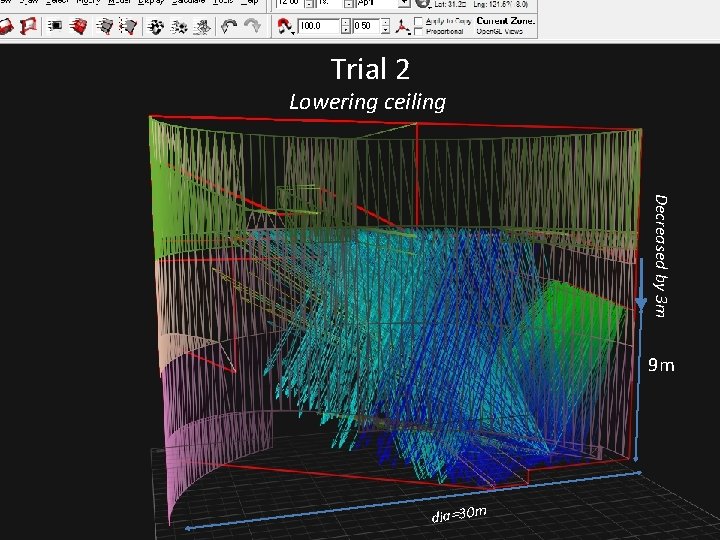
Trial 2 Lowering ceiling Decreased by 3 m 9 m dia=30 m
Trial 2 Lowering ceiling Decreased by 3 m 9 m dia=30 m
Trial 2 Lowering ceiling Decreased by 3 m 9 m dia=30 m
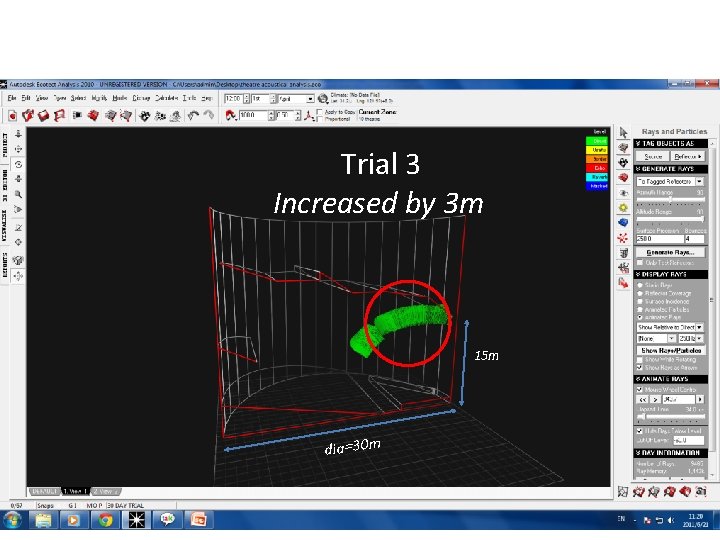
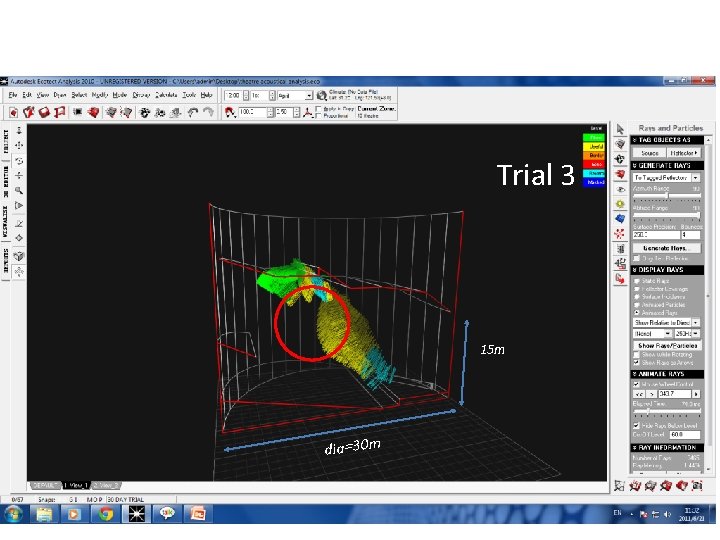
Trial 3 Increased by 3 m 15 m dia=30 m
Trial 3 15 m dia=30 m
Conclusion of Trials 2 and 3 • As we change the heights of the ceiling, just above the stage, quality changes drastically • As we lower more noise is observed • As we higher the ceiling good quality is observed for same directed ray generated.
Acoustical Analysis Material assignment to the Reflectors at height of 12 m
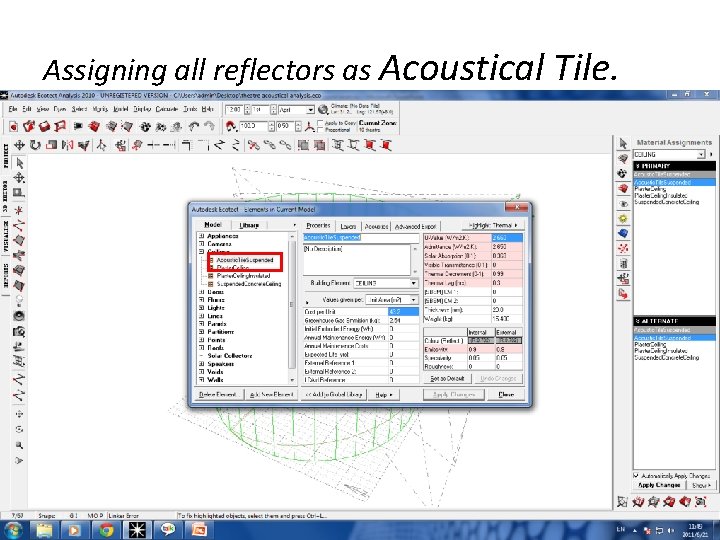
Assigning all reflectors as Acoustical Tile.
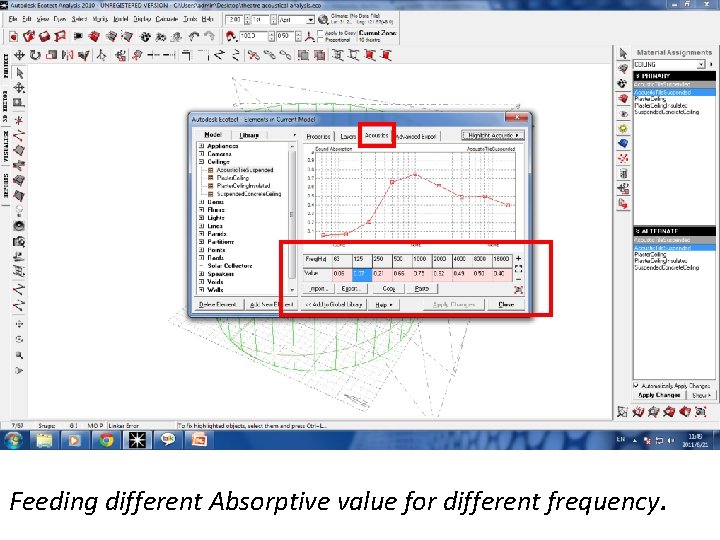
Table to feed different NRC Values
Feeding different Absorptive value for different frequency.
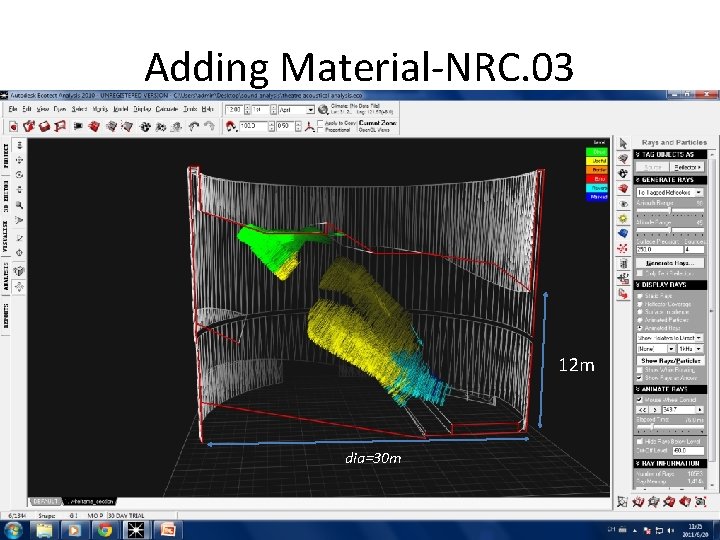
Adding Material-NRC. 03 12 m dia=30 m
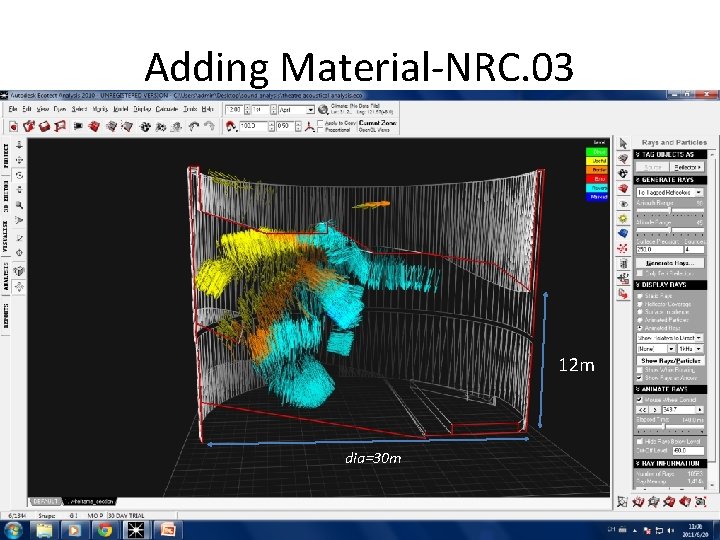
Adding Material-NRC. 03 12 m dia=30 m
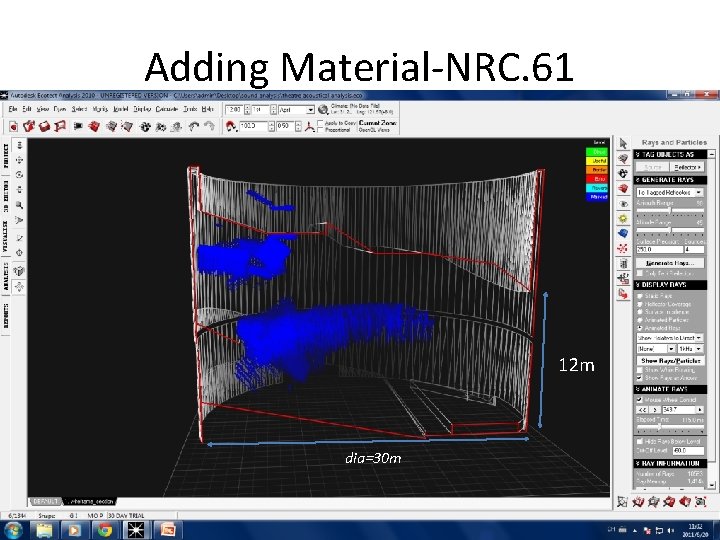
Adding Material-NRC. 61 12 m dia=30 m
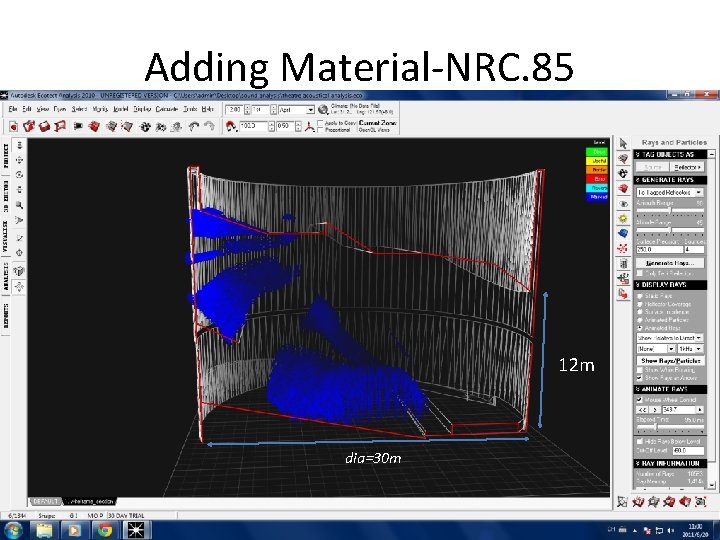
Adding Material-NRC. 85 12 m dia=30 m
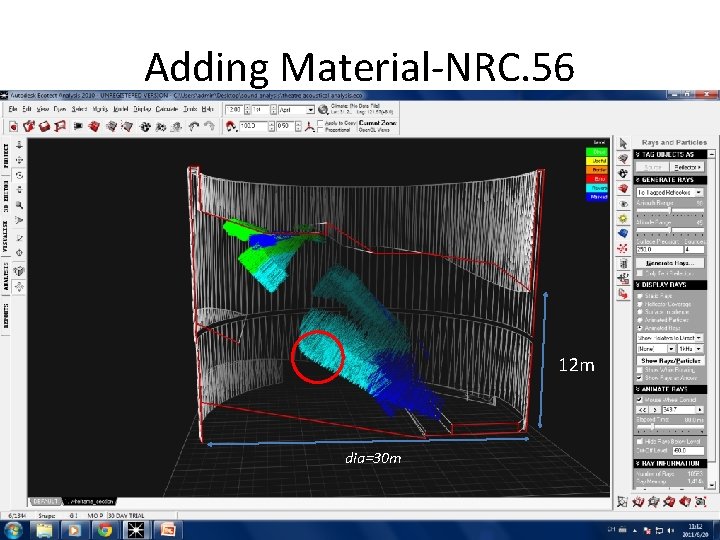
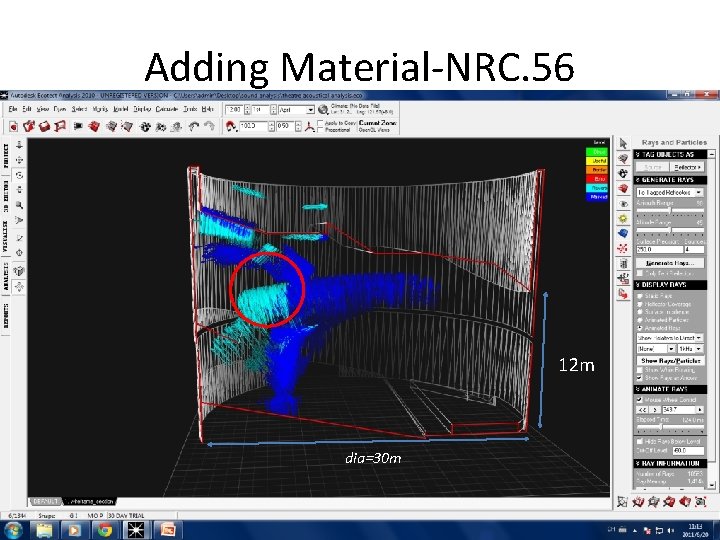
Conclusion of different NRC Values • For Higher Noise Reduction Coefficients (NRC 0. 6 and above) most of the sound waves are observed that leads to Dryness of Sound which seems to be bad of an amphitheatre. • For lower NRC(0. 3) we have variety of sound variation which is not desired • Hence selected NRC 0. 56 which is 12 mm Mineral Fiber Material which is also fire resistant.
Adding Material-NRC. 56 12 m dia=30 m
Adding Material-NRC. 56 12 m dia=30 m
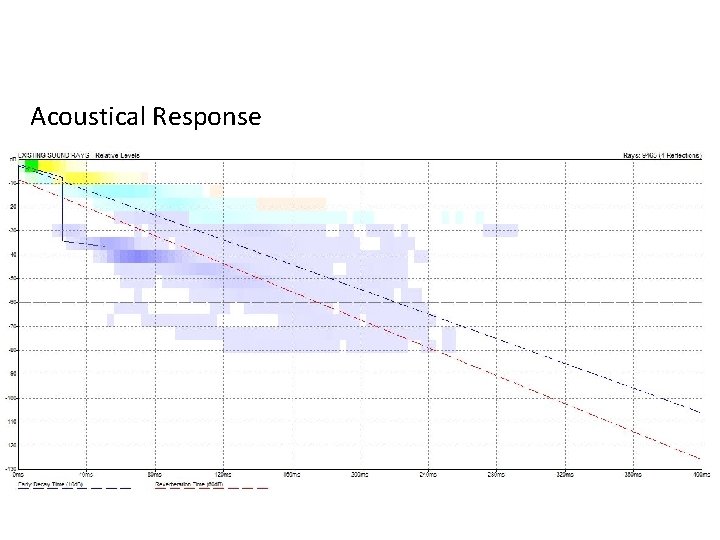
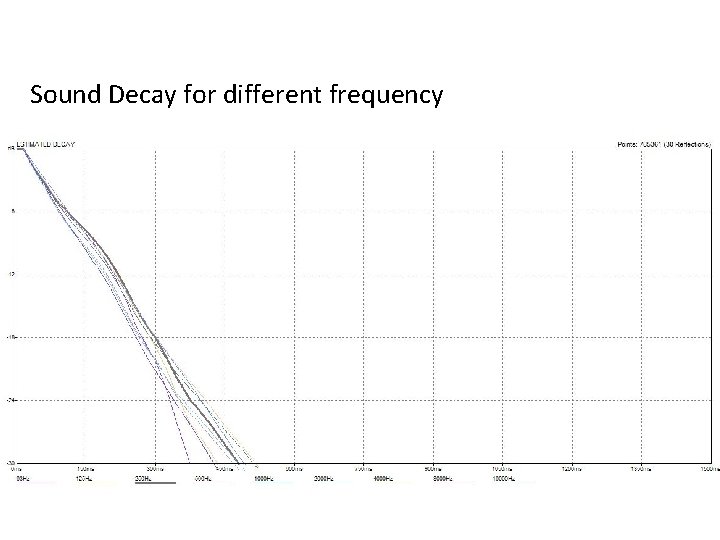
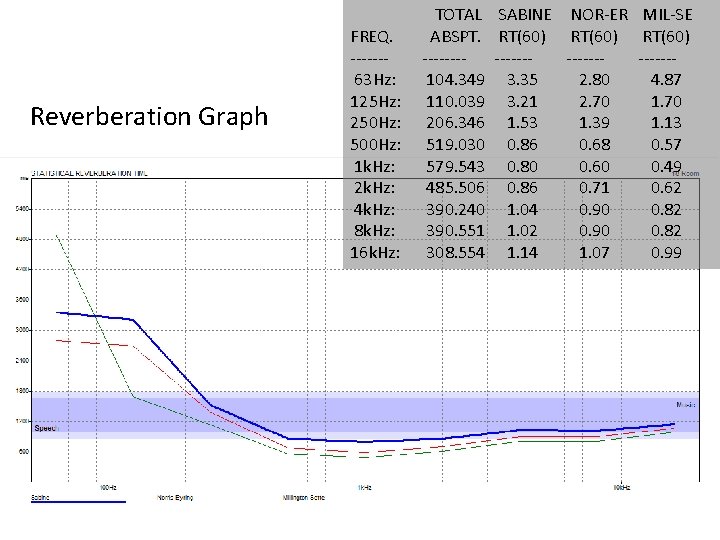
Acoustical Analysis Results or Output from Ecotect Analysis.
Acoustical Response
Sound Decay for different frequency
Reverberation Graph FREQ. ------63 Hz: 125 Hz: 250 Hz: 500 Hz: 1 k. Hz: 2 k. Hz: 4 k. Hz: 8 k. Hz: 16 k. Hz: TOTAL SABINE NOR-ER MIL-SE ABSPT. RT(60) -------------104. 349 3. 35 2. 80 4. 87 110. 039 3. 21 2. 70 1. 70 206. 346 1. 53 1. 39 1. 13 519. 030 0. 86 0. 68 0. 57 579. 543 0. 80 0. 60 0. 49 485. 506 0. 86 0. 71 0. 62 390. 240 1. 04 0. 90 0. 82 390. 551 1. 02 0. 90 0. 82 308. 554 1. 14 1. 07 0. 99
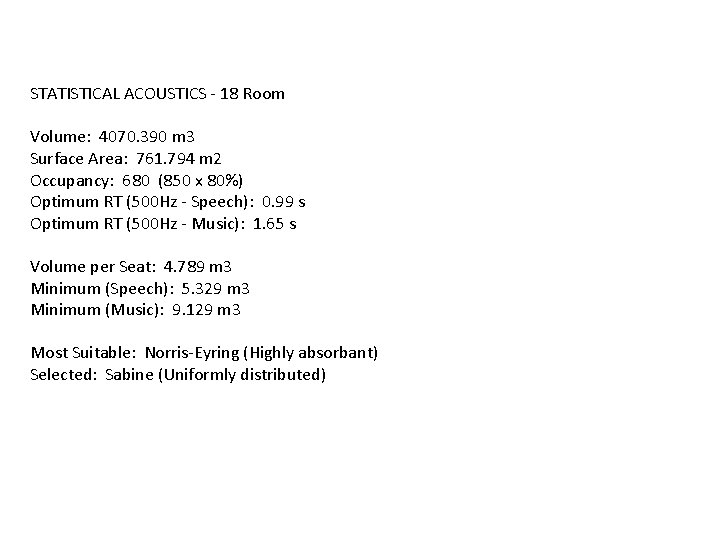
STATISTICAL ACOUSTICS - 18 Room Volume: 4070. 390 m 3 Surface Area: 761. 794 m 2 Occupancy: 680 (850 x 80%) Optimum RT (500 Hz - Speech): 0. 99 s Optimum RT (500 Hz - Music): 1. 65 s Volume per Seat: 4. 789 m 3 Minimum (Speech): 5. 329 m 3 Minimum (Music): 9. 129 m 3 Most Suitable: Norris-Eyring (Highly absorbant) Selected: Sabine (Uniformly distributed)