
Sorting Networks 1 Sorting 4 9 3 1
- Slides: 102
Sorting Networks 1
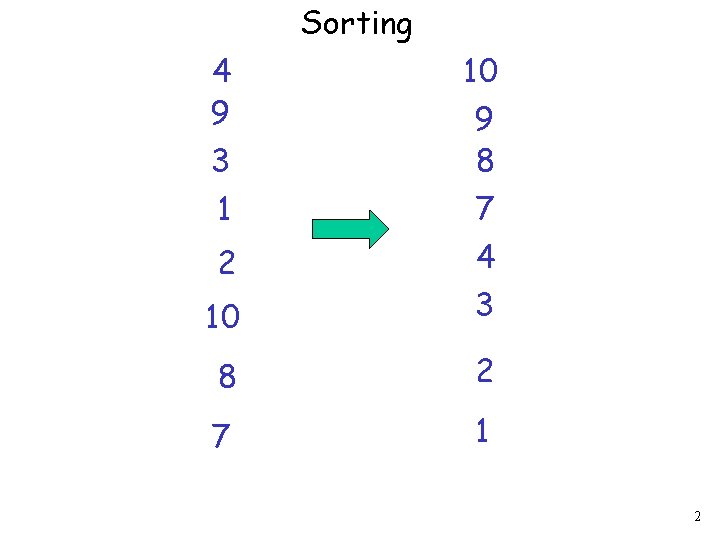
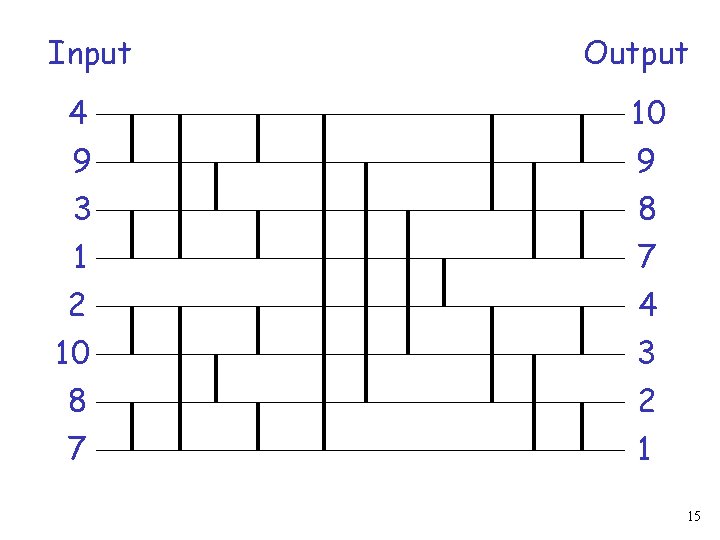
Sorting 4 9 3 1 2 10 9 8 7 4 10 3 8 2 7 1 2
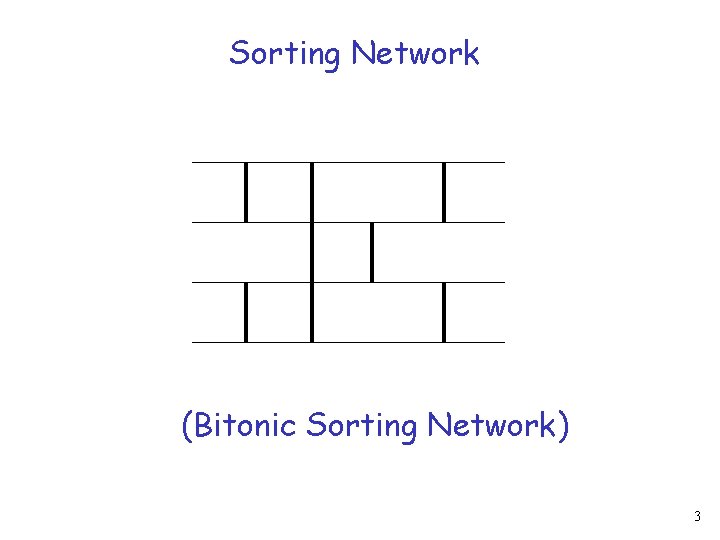
Sorting Network (Bitonic Sorting Network) 3
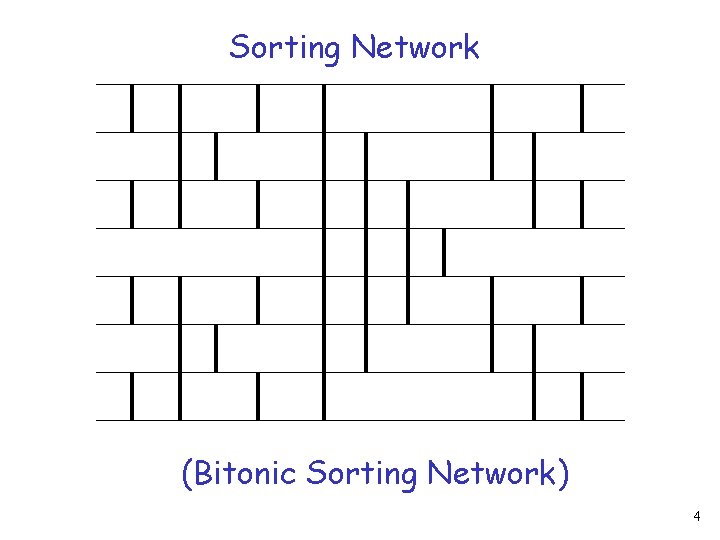
Sorting Network (Bitonic Sorting Network) 4
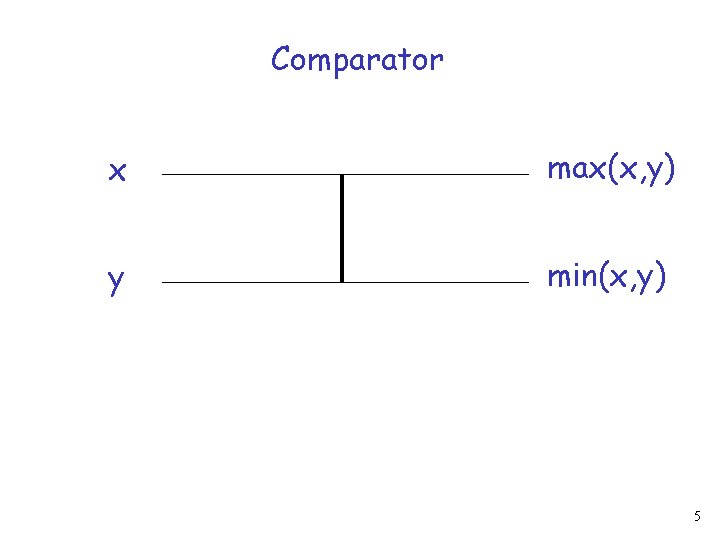
Comparator x max(x, y) y min(x, y) 5
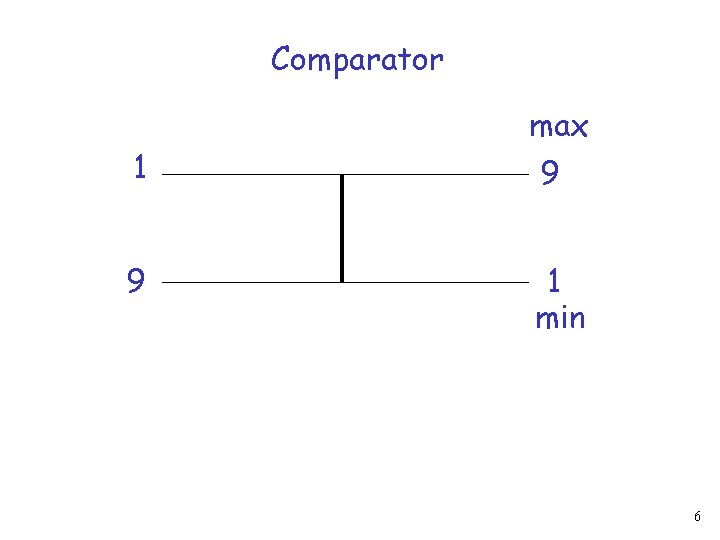
Comparator 1 9 max 9 1 min 6
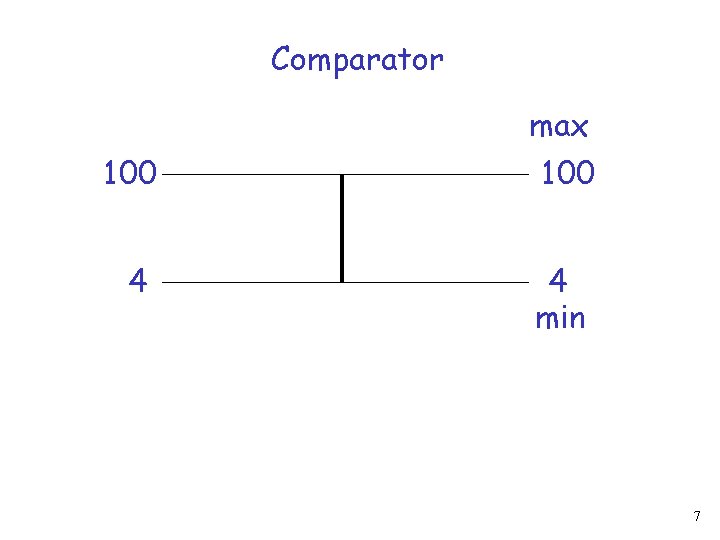
Comparator max 100 4 4 min 7
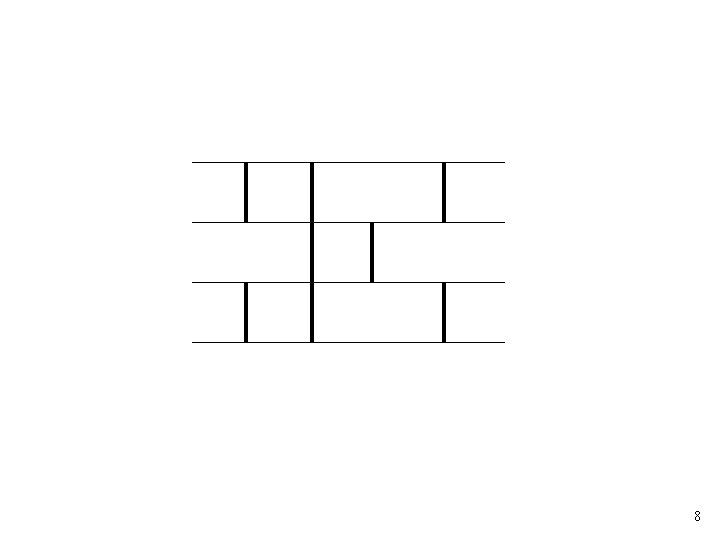
8
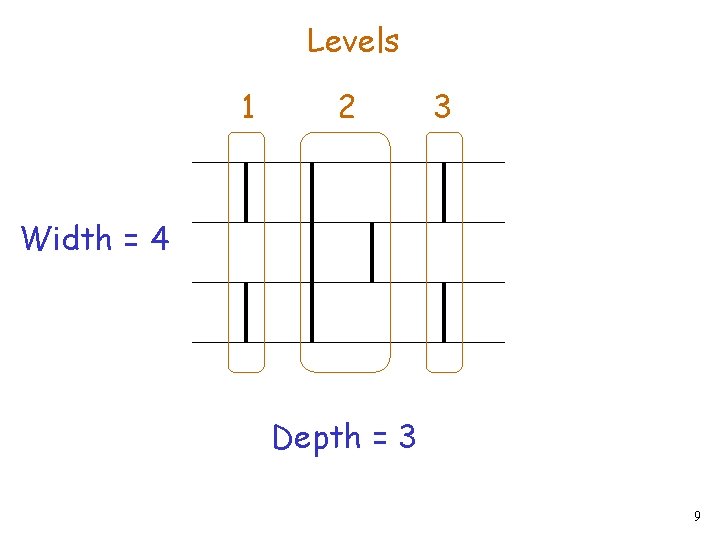
Levels 1 2 3 Width = 4 Depth = 3 9
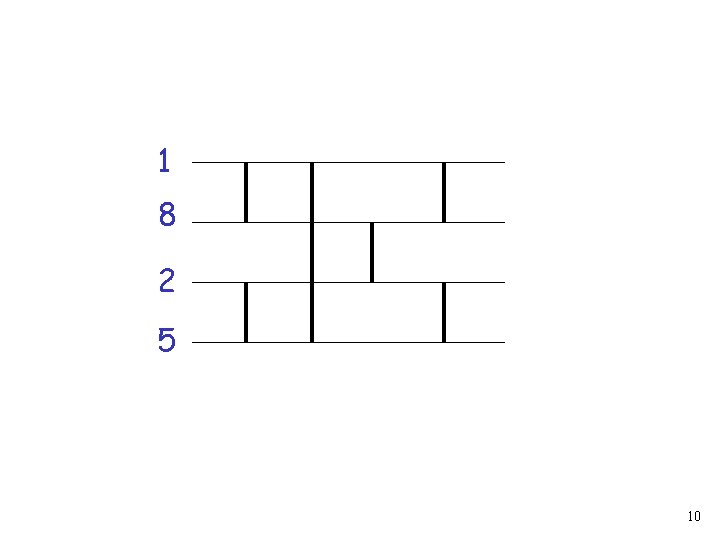
1 8 2 5 10
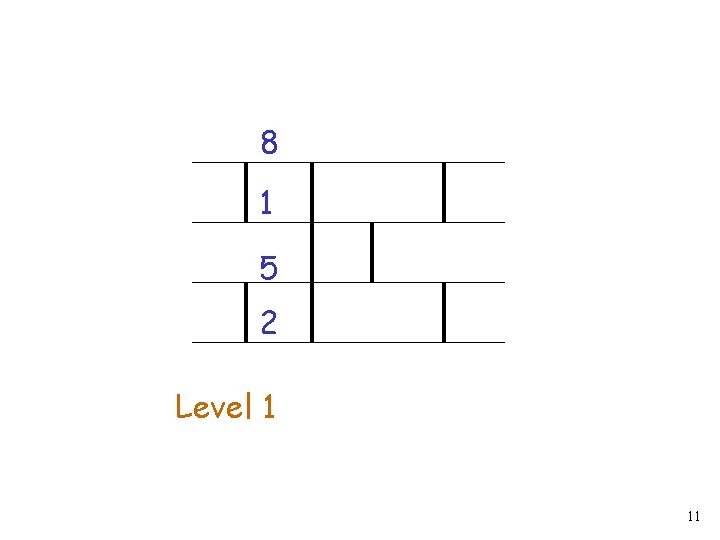
8 1 5 2 Level 1 11
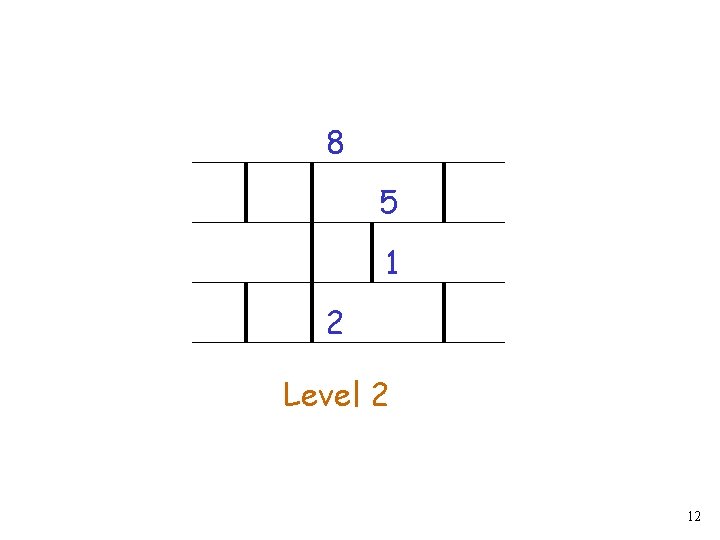
8 5 1 2 Level 2 12
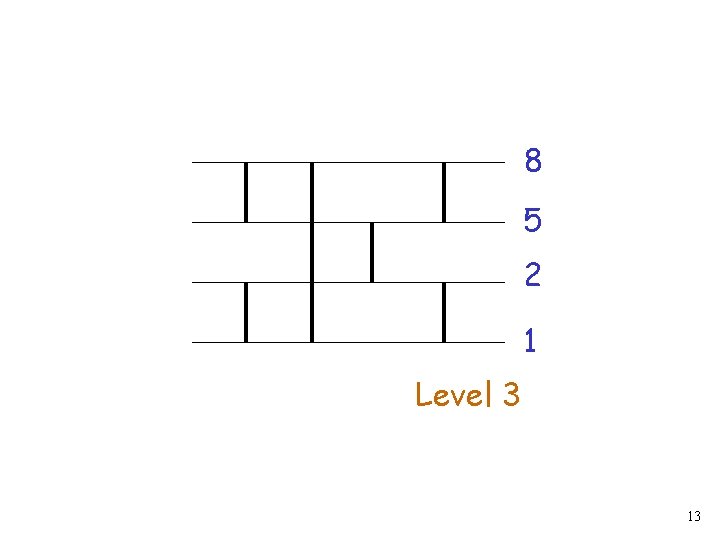
8 5 2 1 Level 3 13
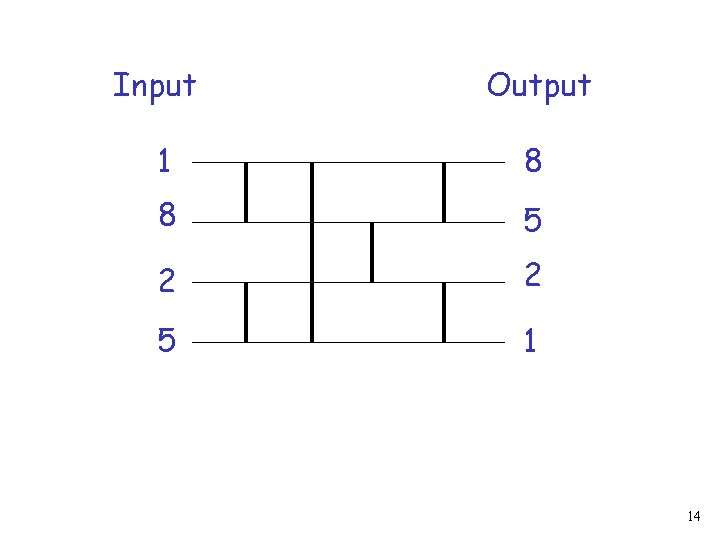
Input Output 1 8 8 5 2 2 5 1 14
Input Output 4 10 9 3 1 9 8 7 2 10 8 7 4 3 2 1 15
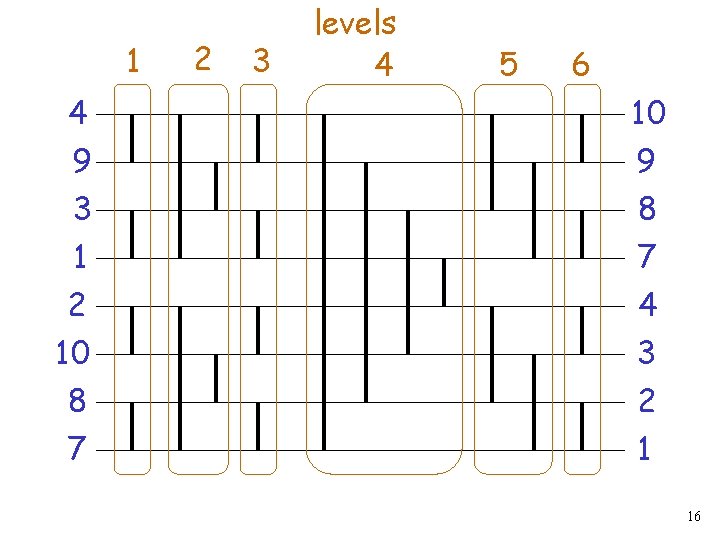
1 2 3 levels 4 5 6 4 10 9 3 1 9 8 7 2 10 8 7 4 3 2 1 16
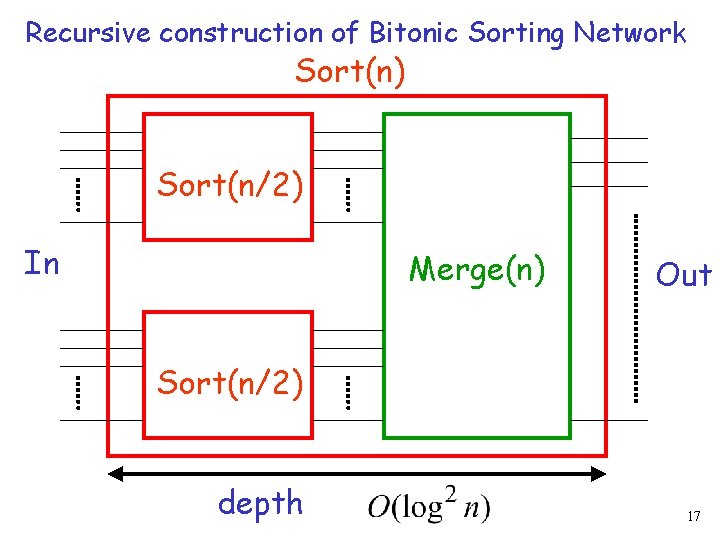
Recursive construction of Bitonic Sorting Network Sort(n) Sort(n/2) In Merge(n) Out Sort(n/2) depth 17
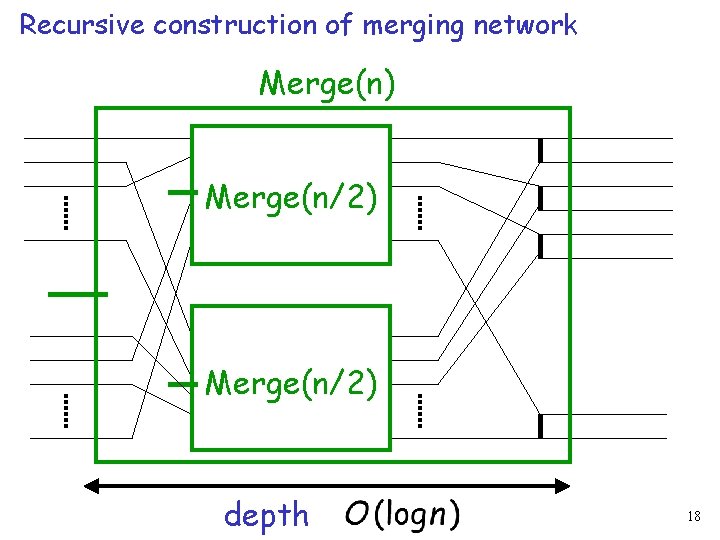
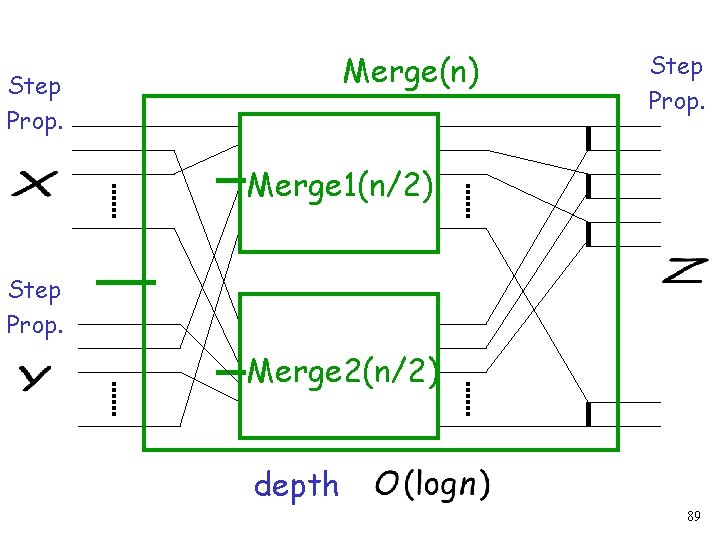
Recursive construction of merging network Merge(n) Merge(n/2) depth 18
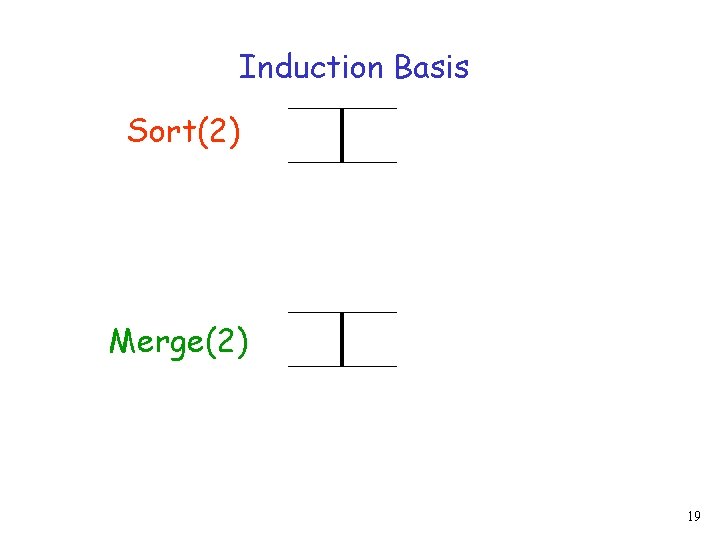
Induction Basis Sort(2) Merge(2) 19
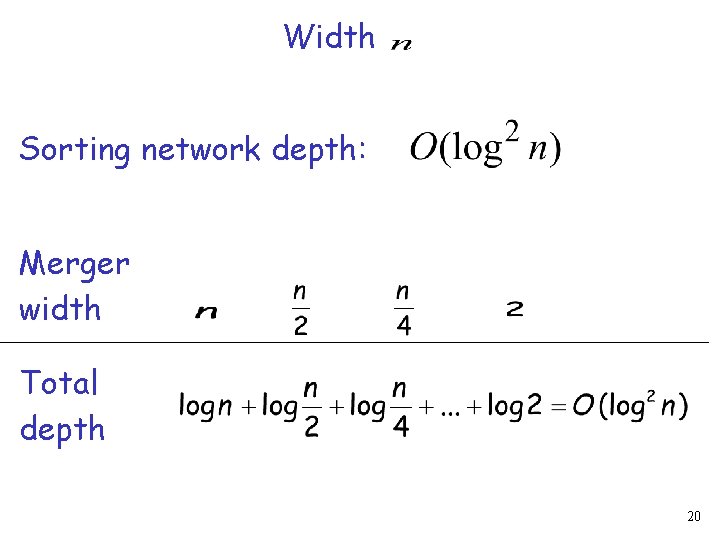
Width Sorting network depth: Merger width Total depth 20
Counting Networks 21
The Counting Problem 0 Shared variable 22
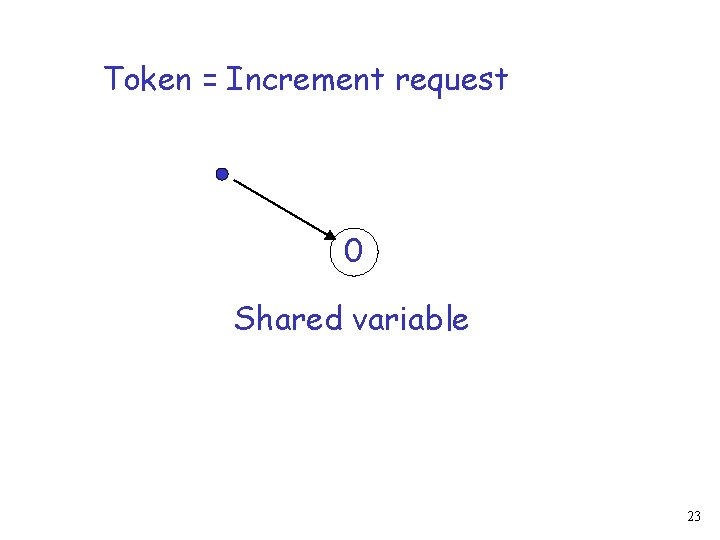
Token = Increment request 0 Shared variable 23
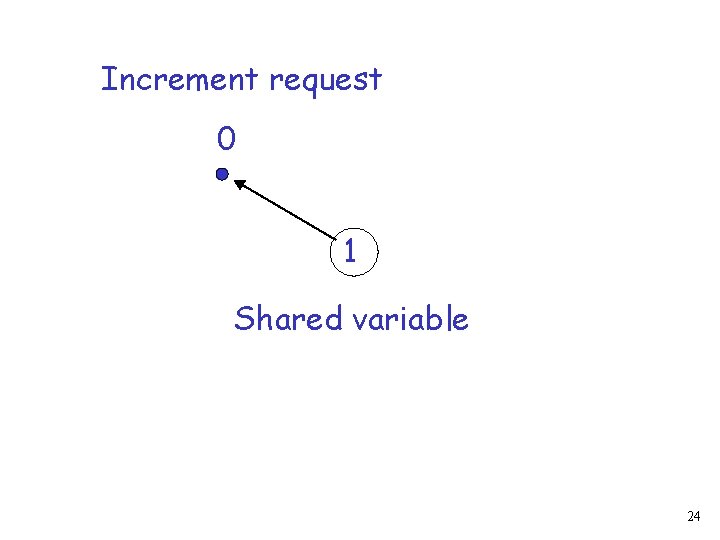
Increment request 0 1 Shared variable 24
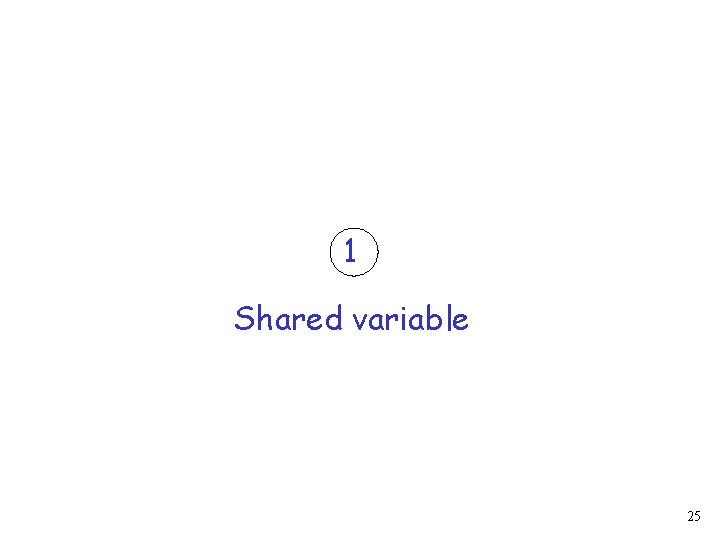
1 Shared variable 25
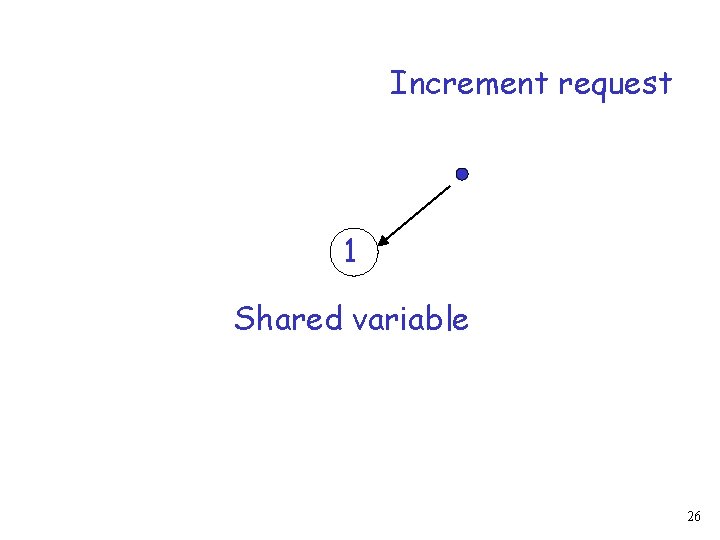
Increment request 1 Shared variable 26
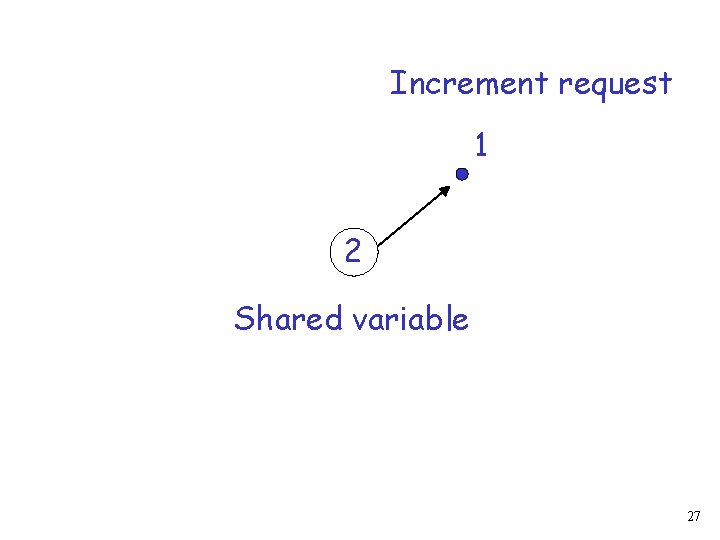
Increment request 1 2 Shared variable 27
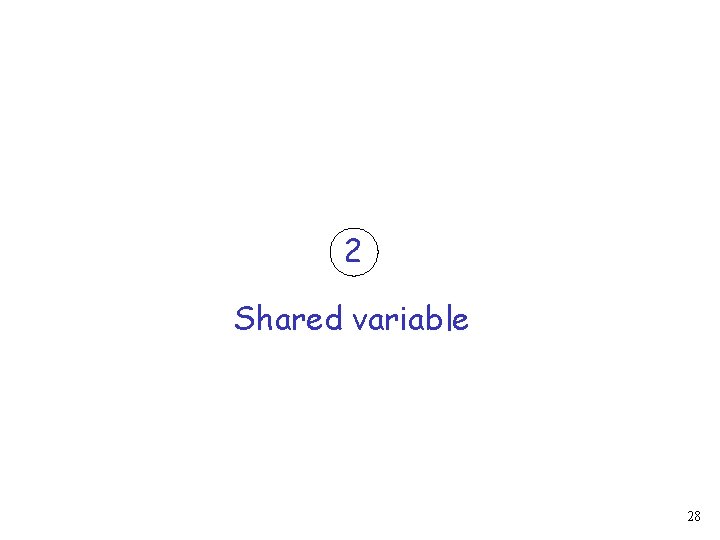
2 Shared variable 28
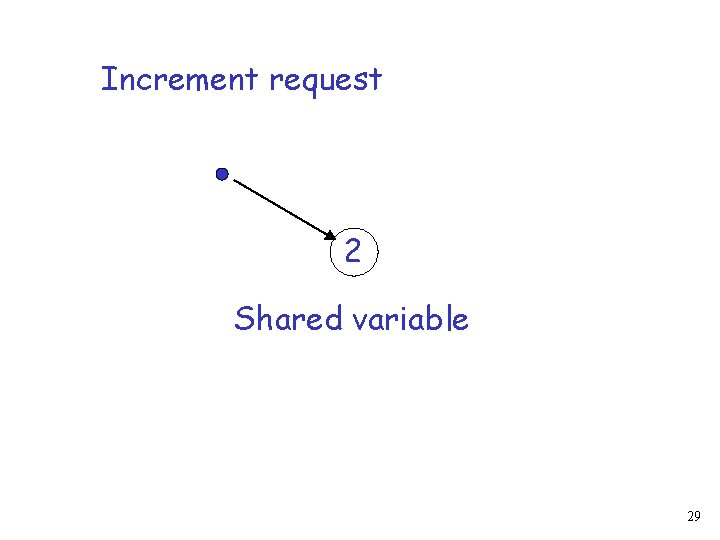
Increment request 2 Shared variable 29
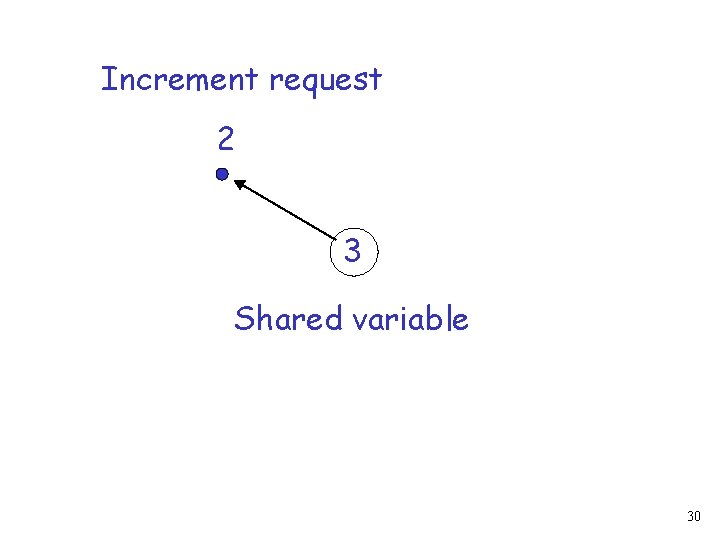
Increment request 2 3 Shared variable 30
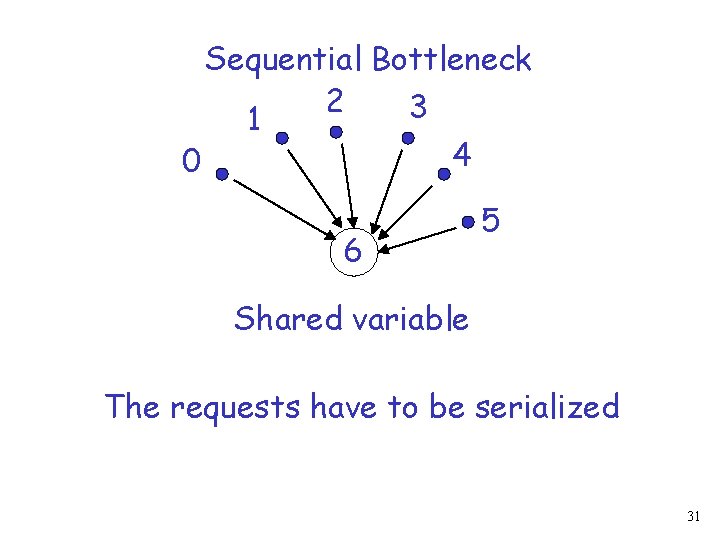
Sequential Bottleneck 2 3 1 4 0 6 5 Shared variable The requests have to be serialized 31
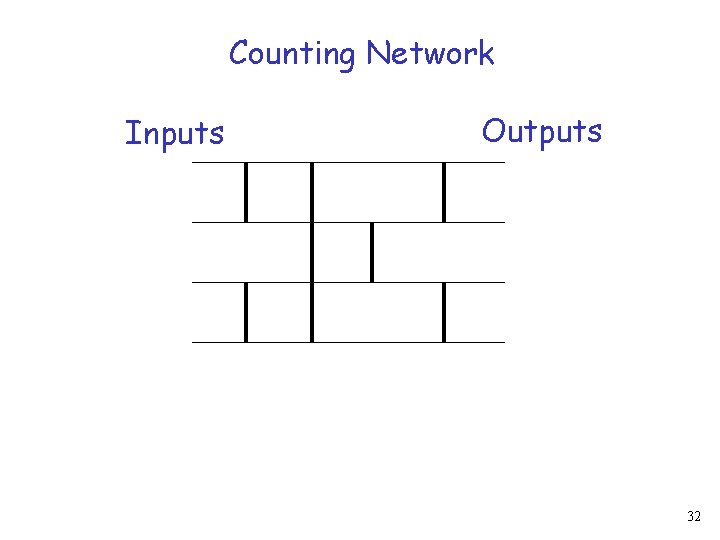
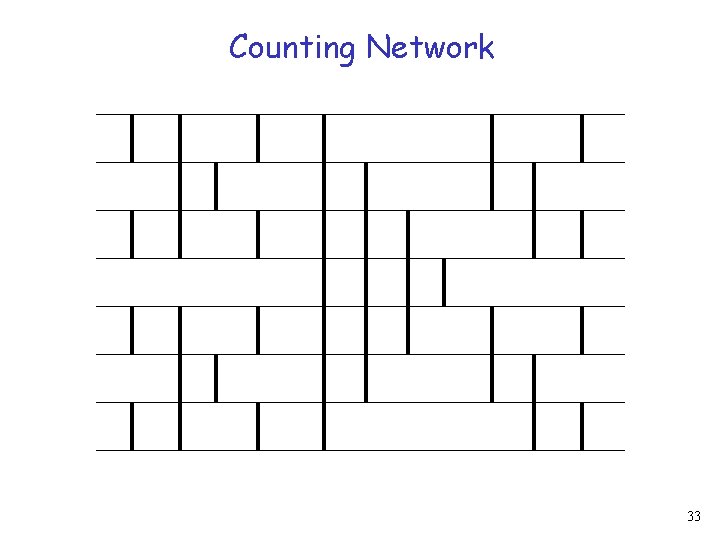
Counting Network Inputs Outputs 32
Counting Network 33
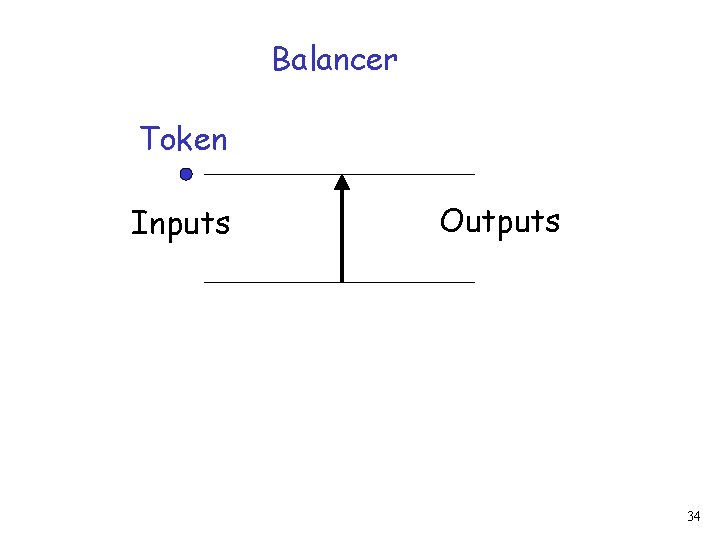
Balancer Token Inputs Outputs 34
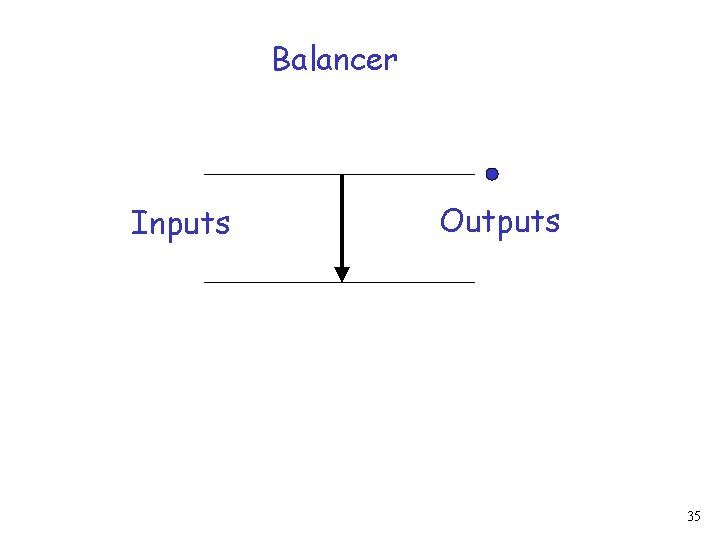
Balancer Inputs Outputs 35
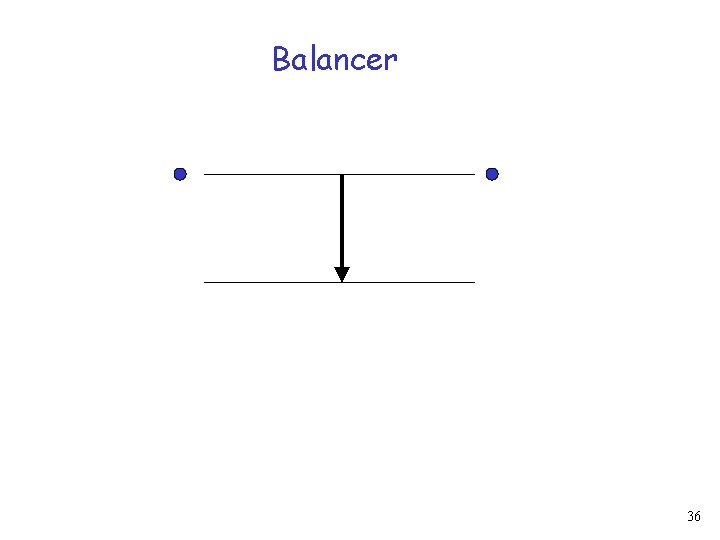
Balancer 36
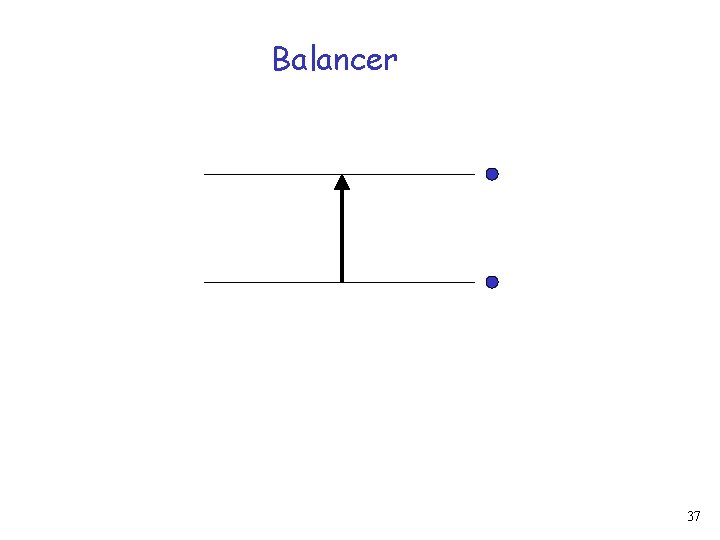
Balancer 37
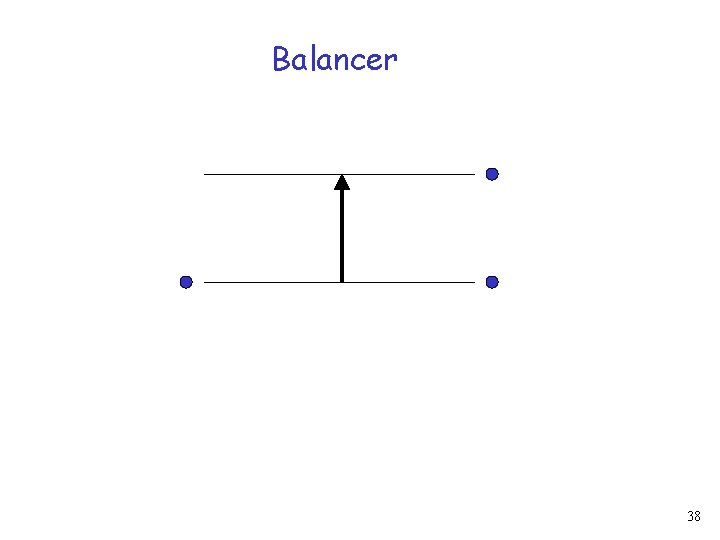
Balancer 38
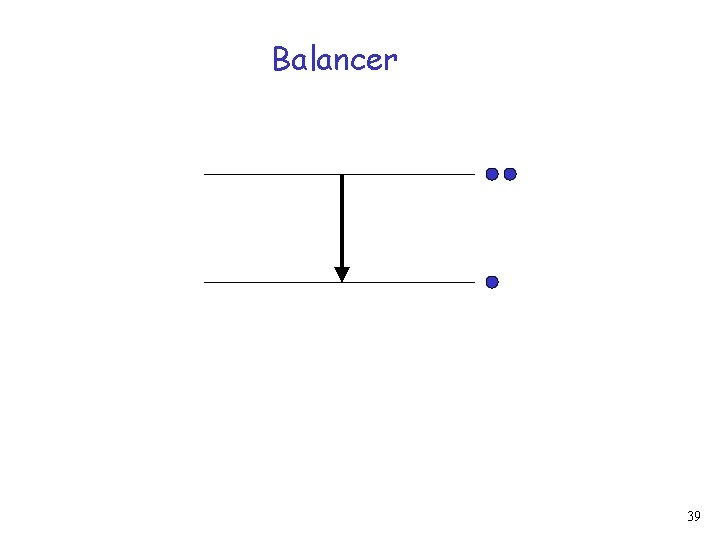
Balancer 39
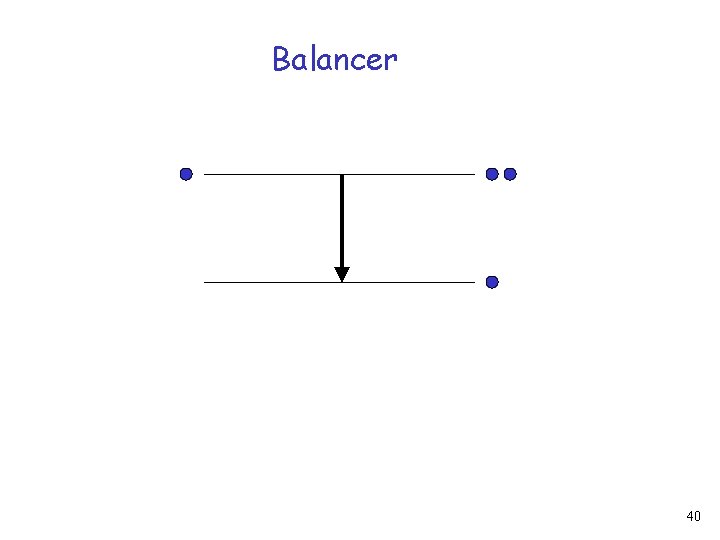
Balancer 40
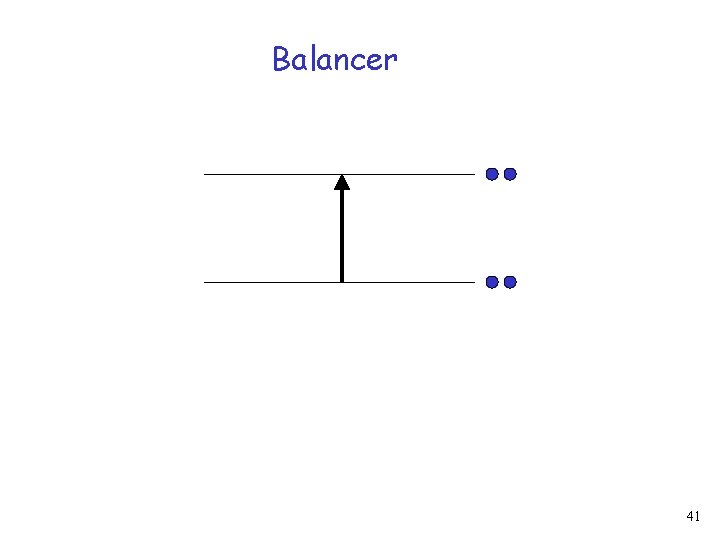
Balancer 41
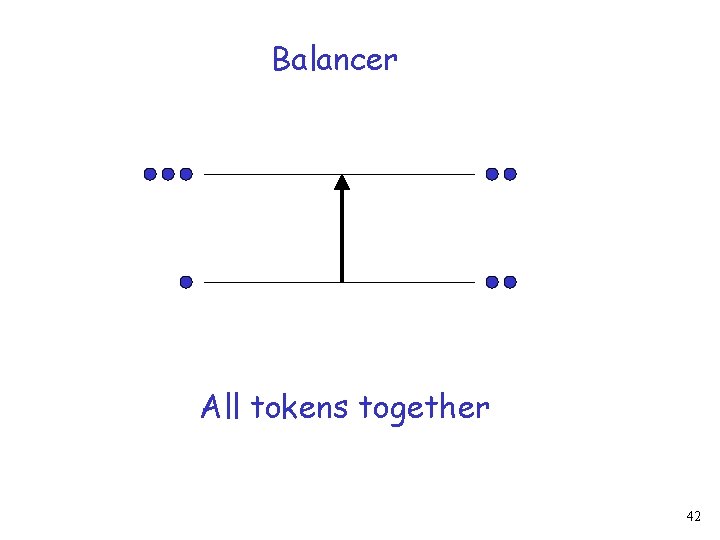
Balancer All tokens together 42
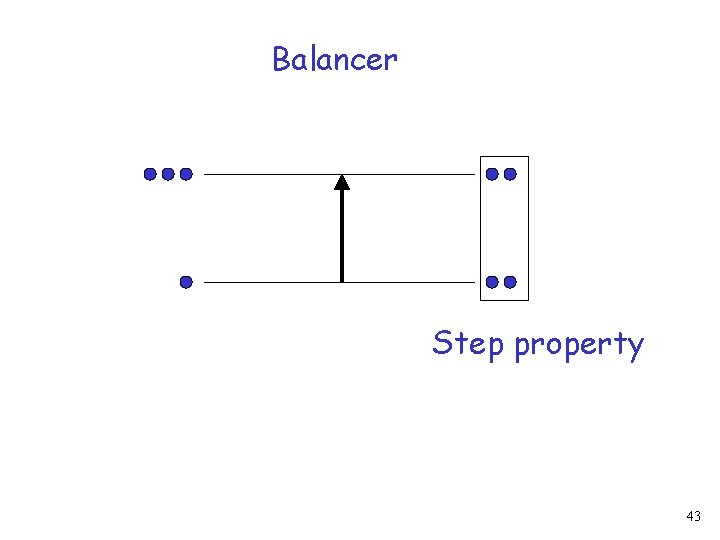
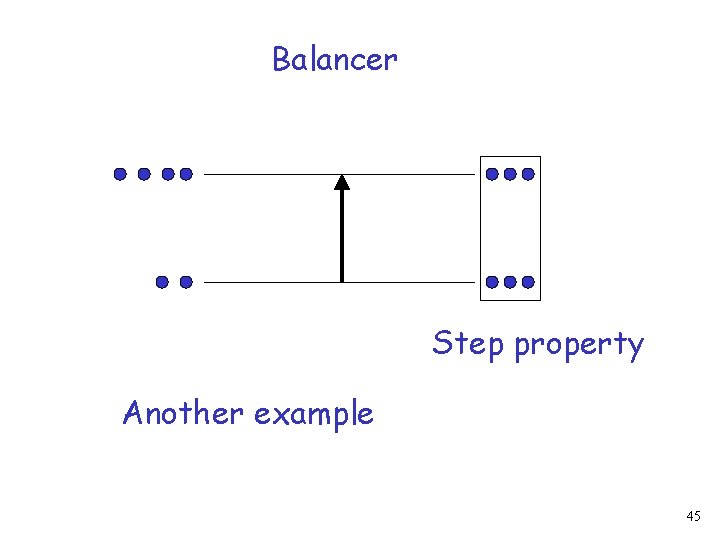
Balancer Step property 43
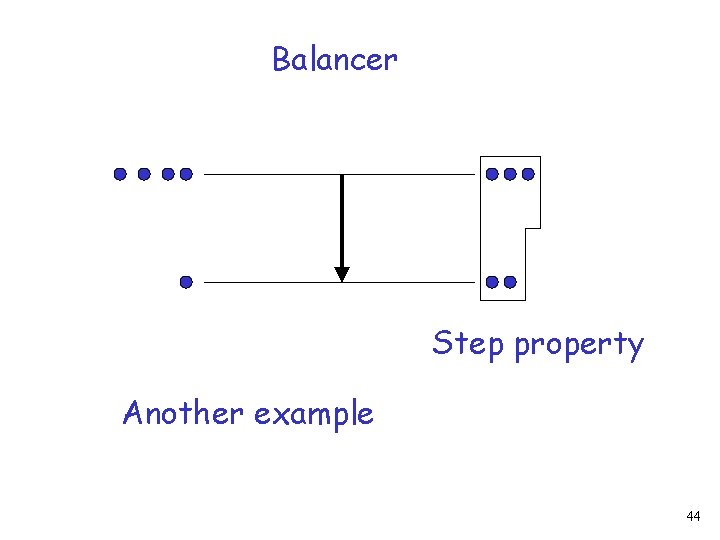
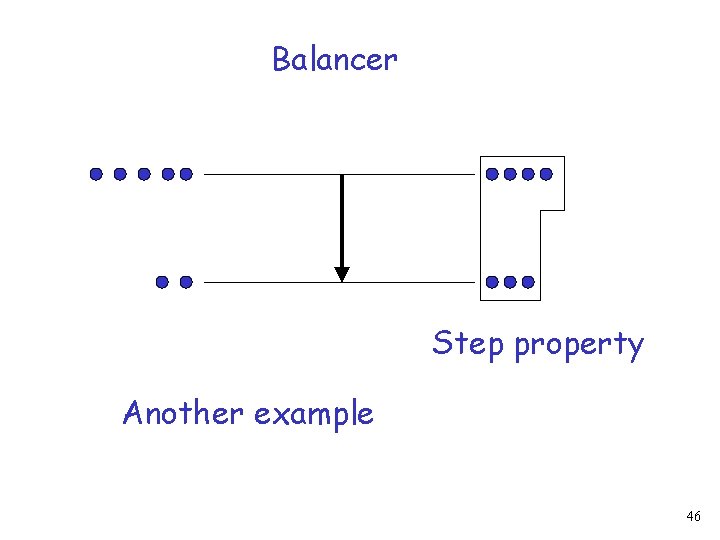
Balancer Step property Another example 44
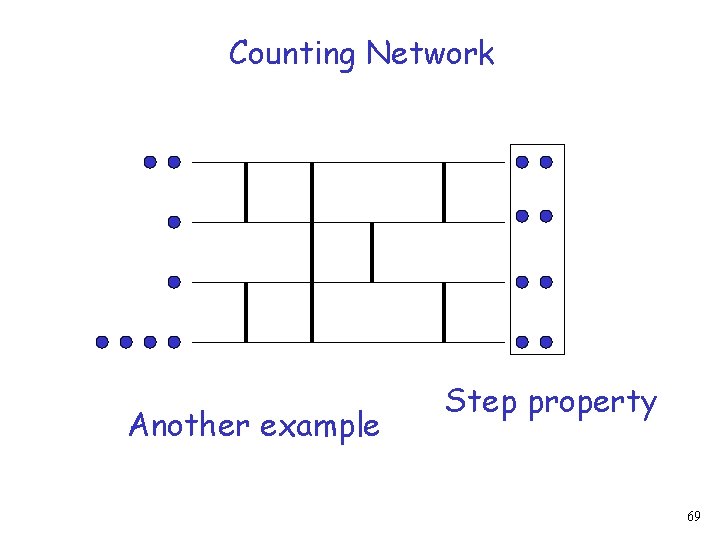
Balancer Step property Another example 45
Balancer Step property Another example 46
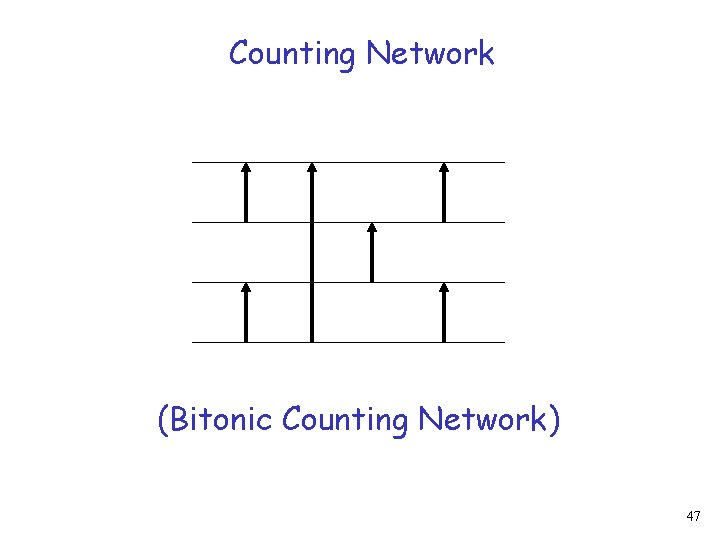
Counting Network (Bitonic Counting Network) 47
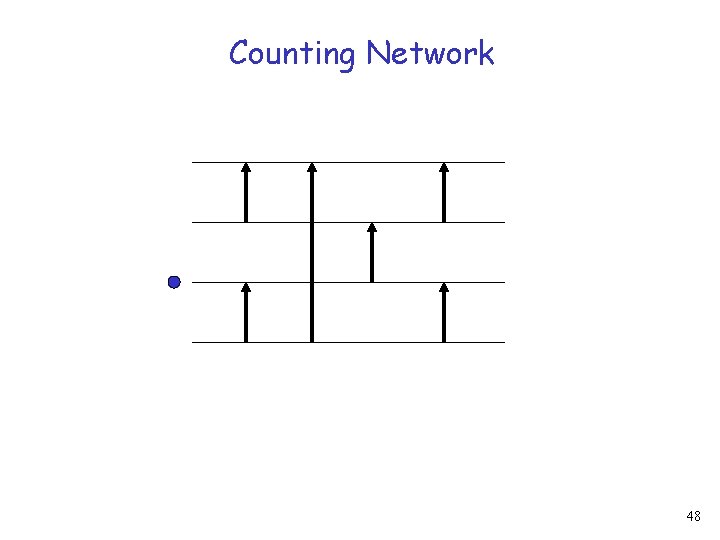
Counting Network 48
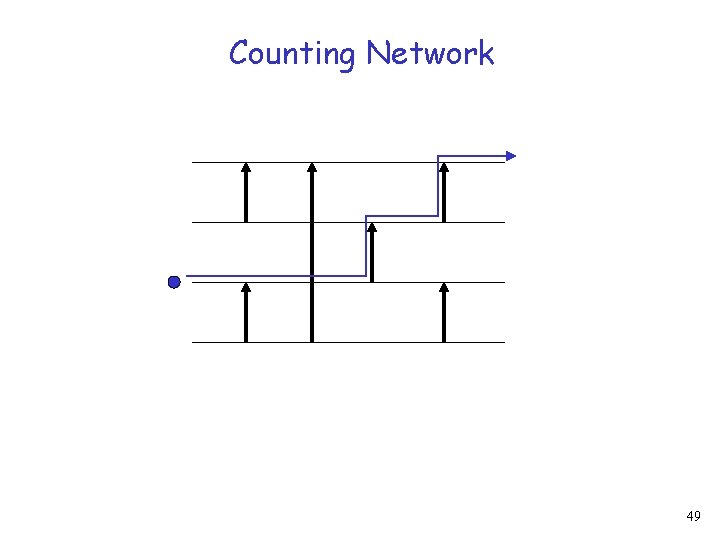
Counting Network 49
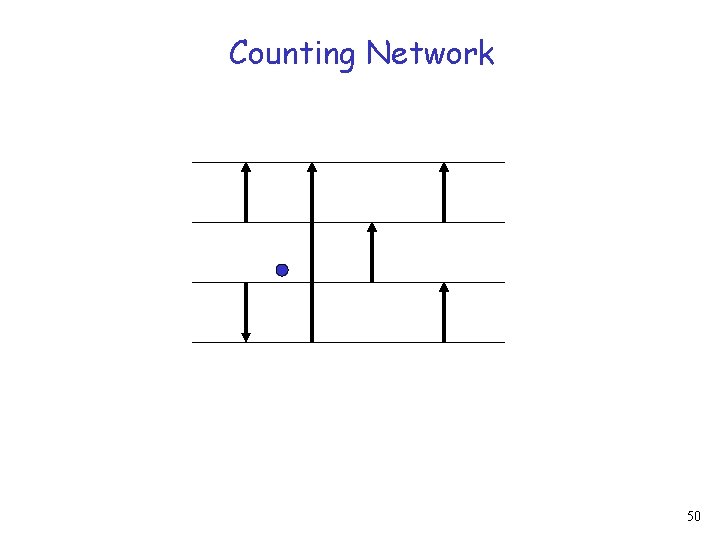
Counting Network 50
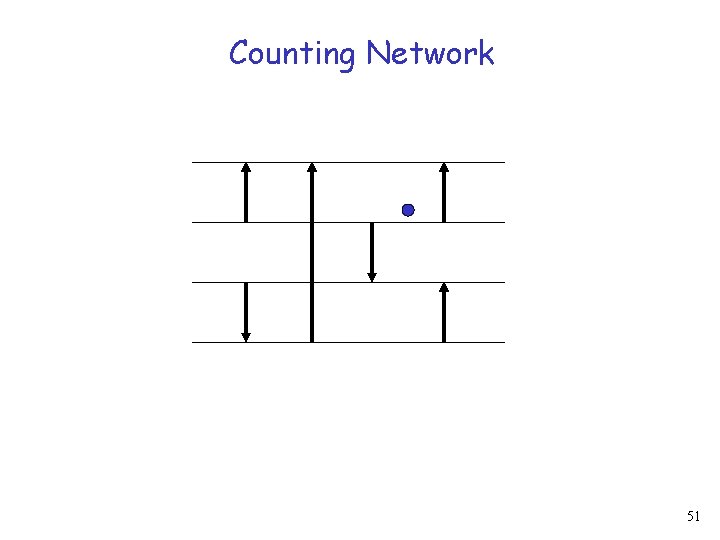
Counting Network 51
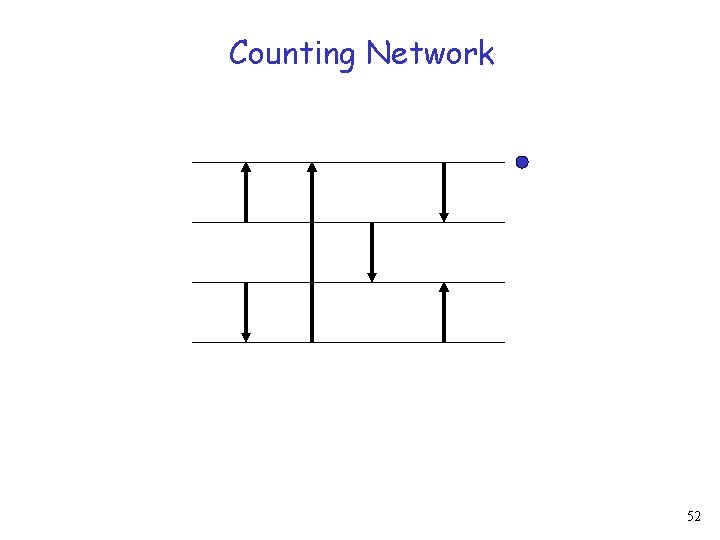
Counting Network 52
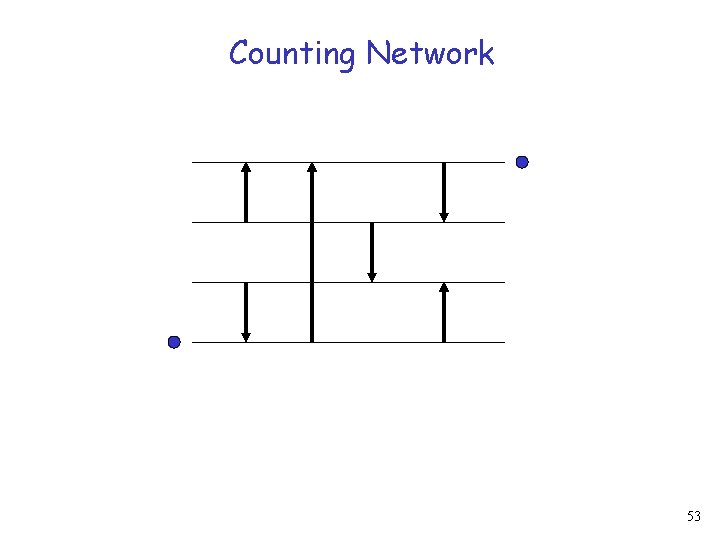
Counting Network 53
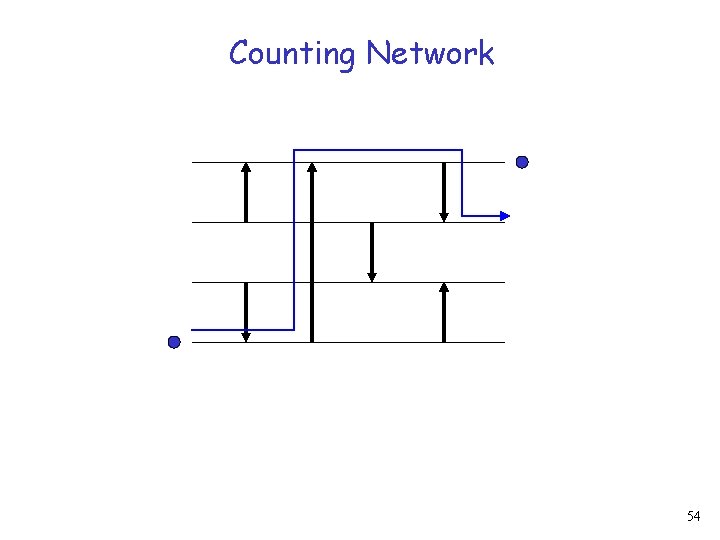
Counting Network 54
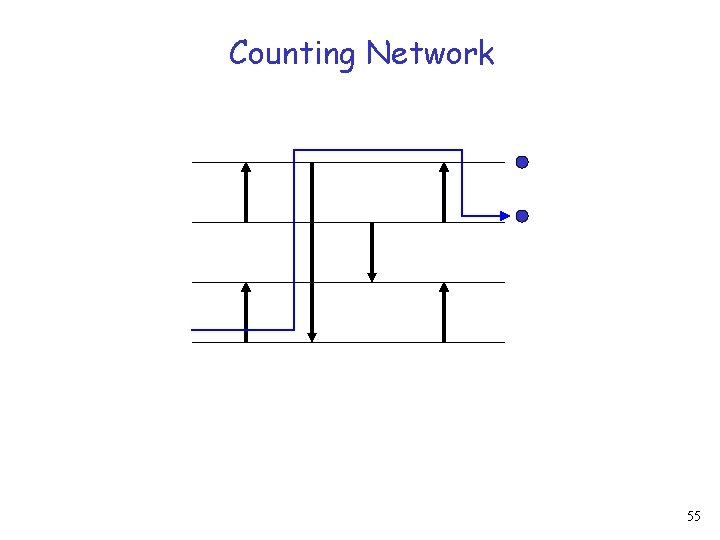
Counting Network 55
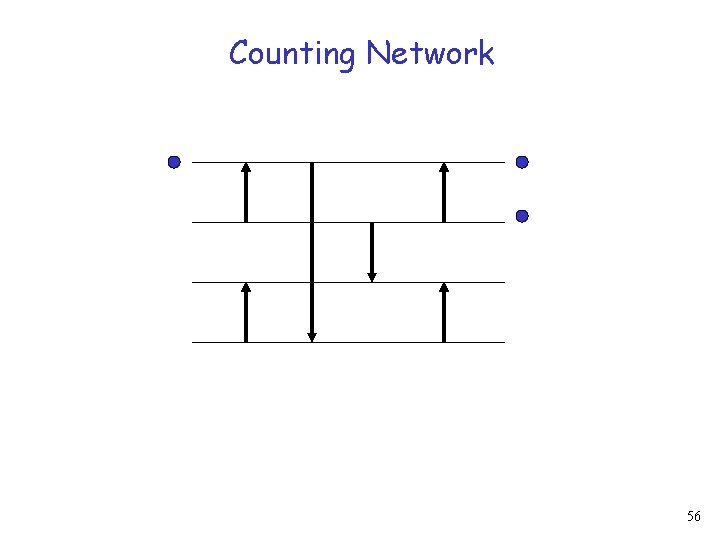
Counting Network 56
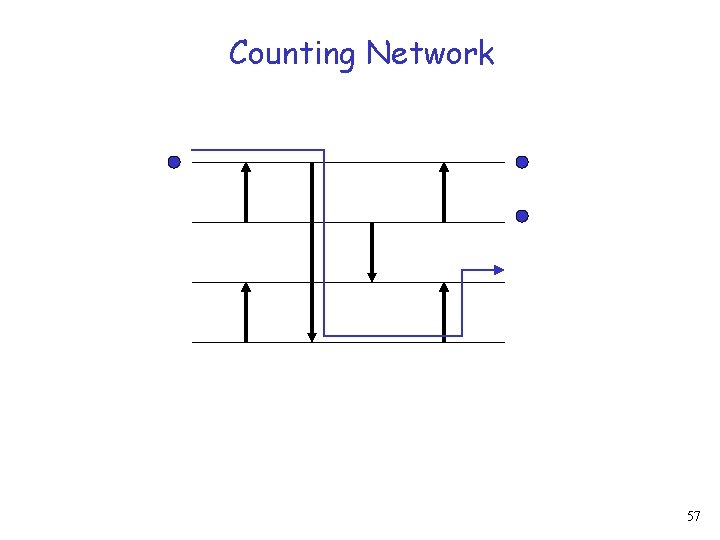
Counting Network 57
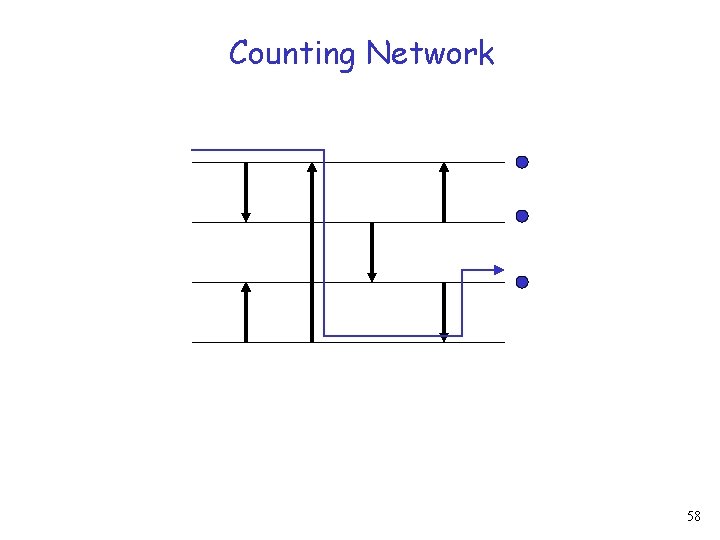
Counting Network 58
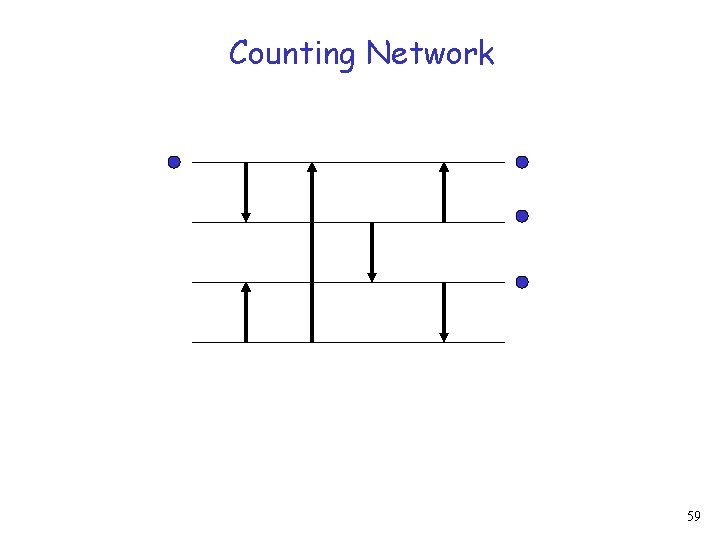
Counting Network 59
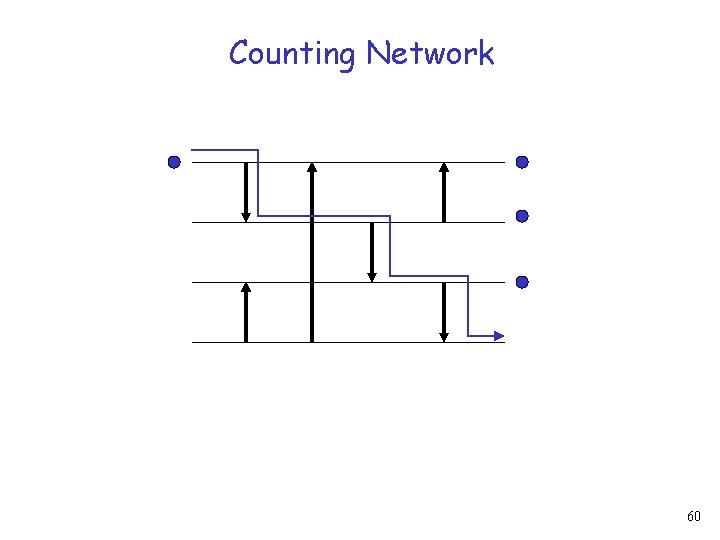
Counting Network 60
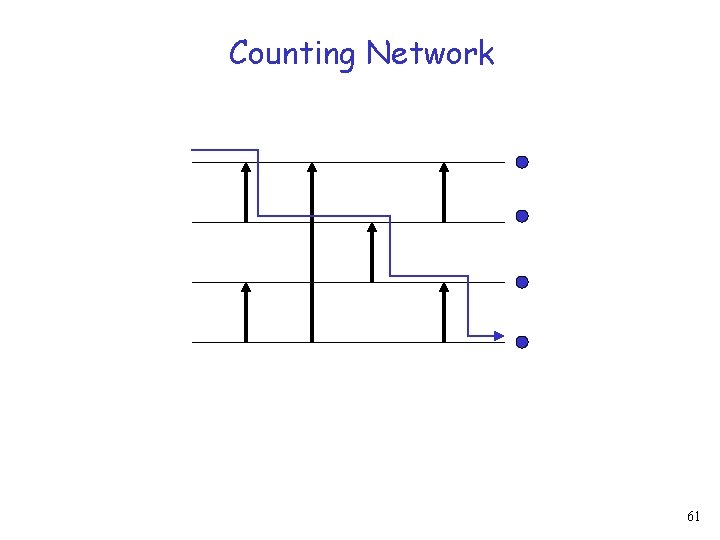
Counting Network 61
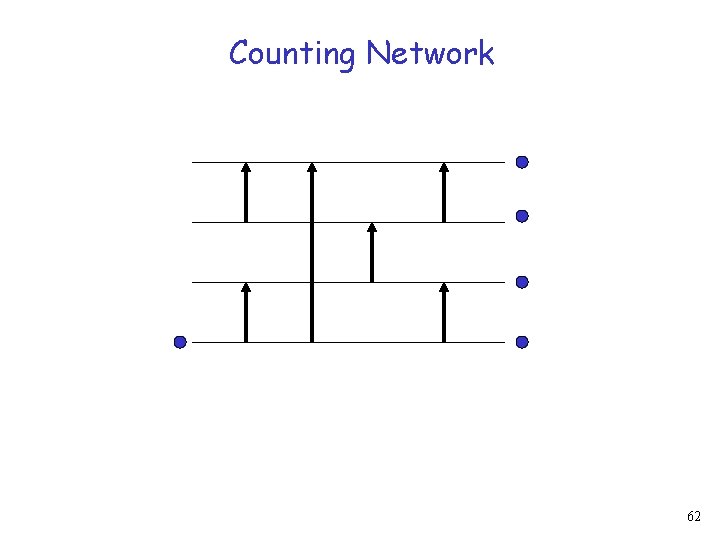
Counting Network 62
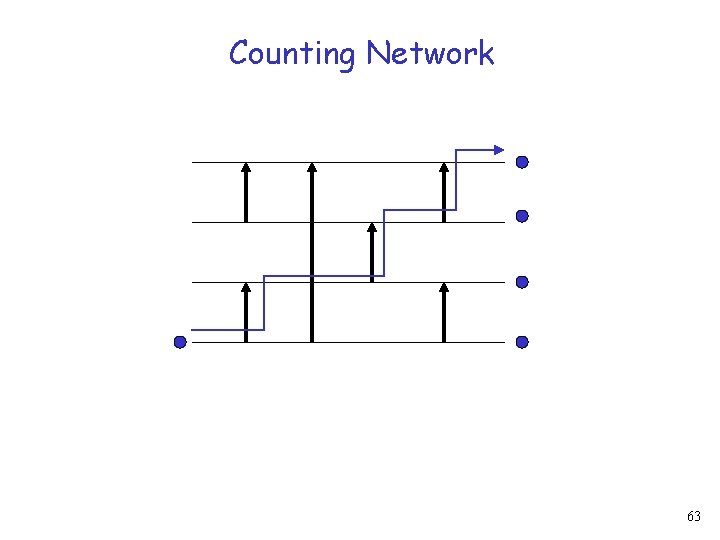
Counting Network 63
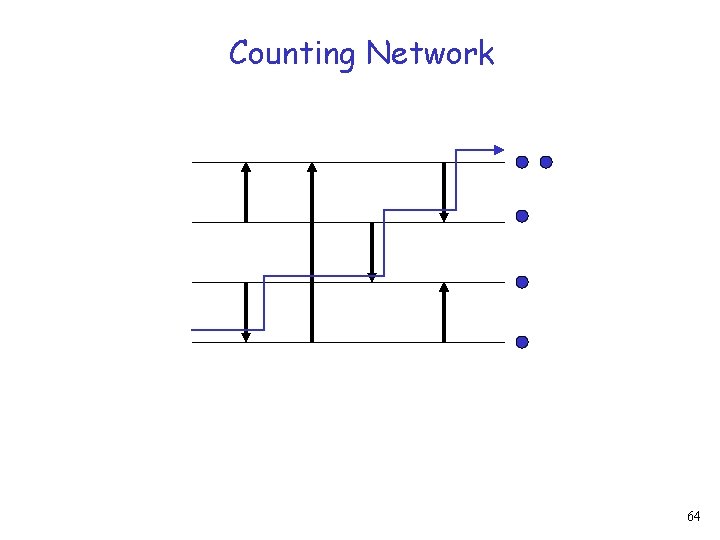
Counting Network 64
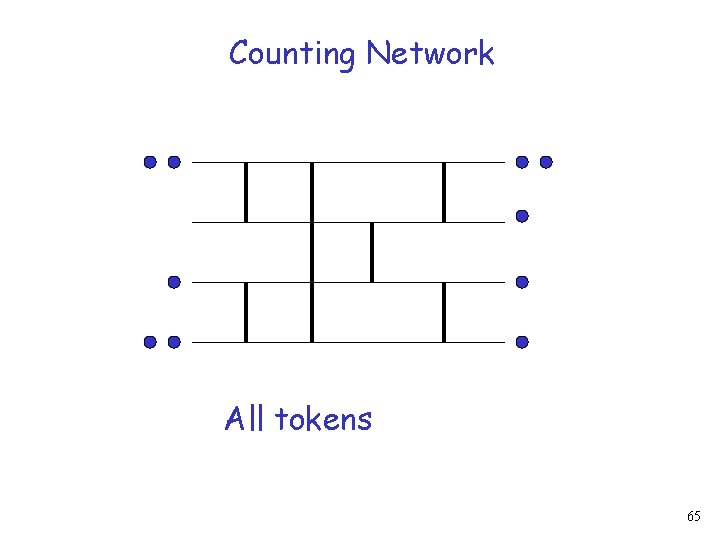
Counting Network All tokens 65
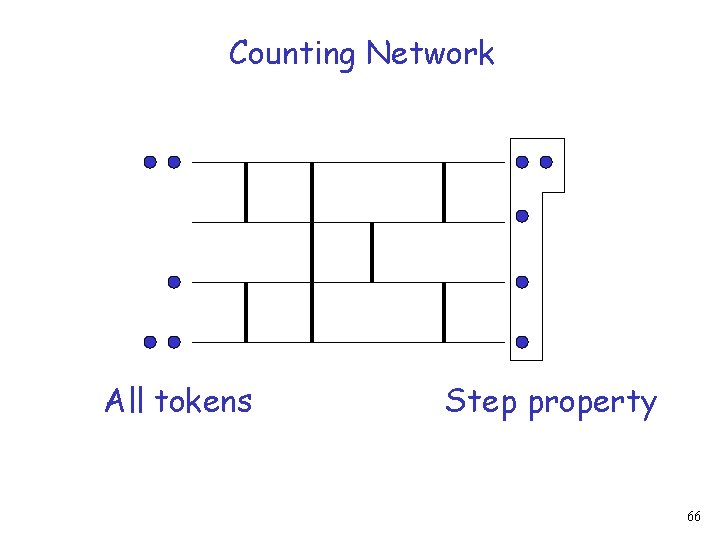
Counting Network All tokens Step property 66
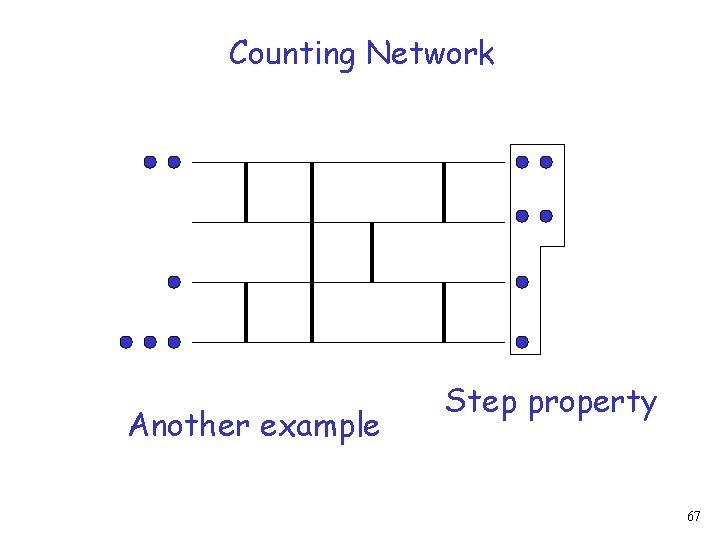
Counting Network Another example Step property 67
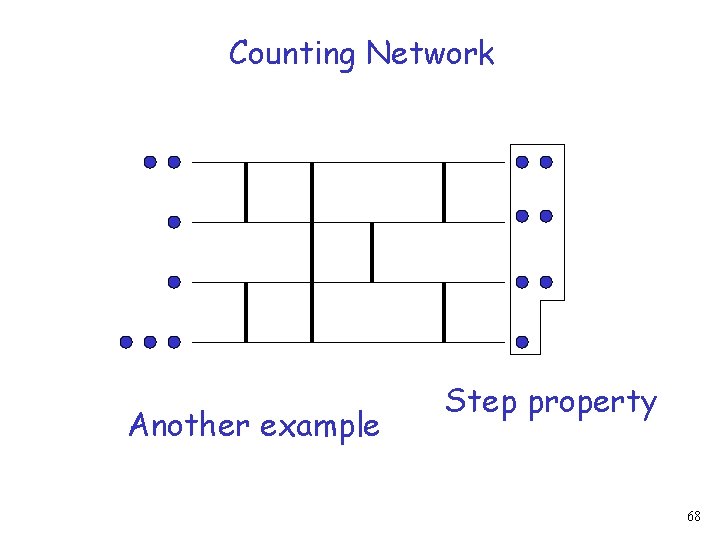
Counting Network Another example Step property 68
Counting Network Another example Step property 69
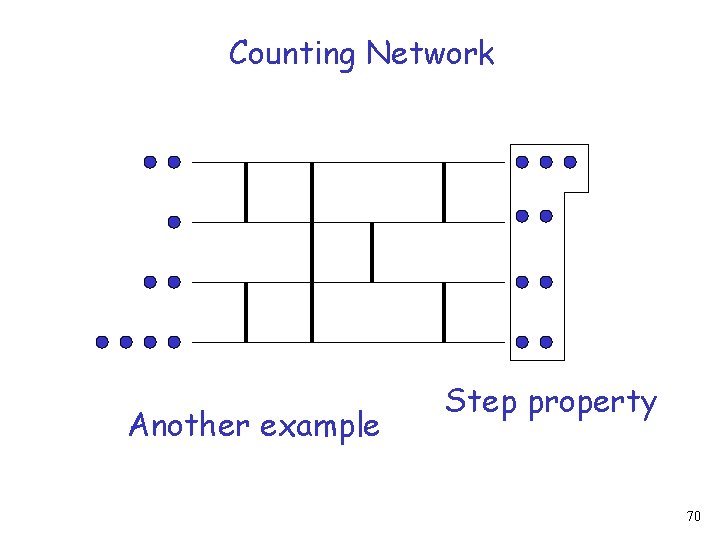
Counting Network Another example Step property 70
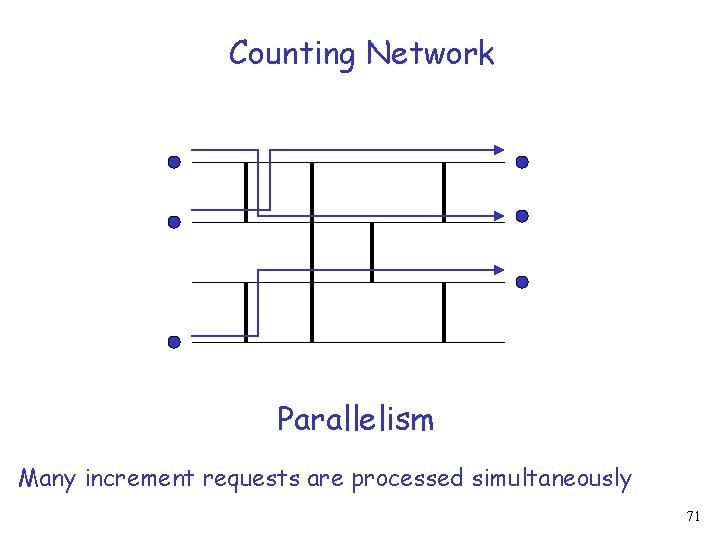
Counting Network Parallelism Many increment requests are processed simultaneously 71
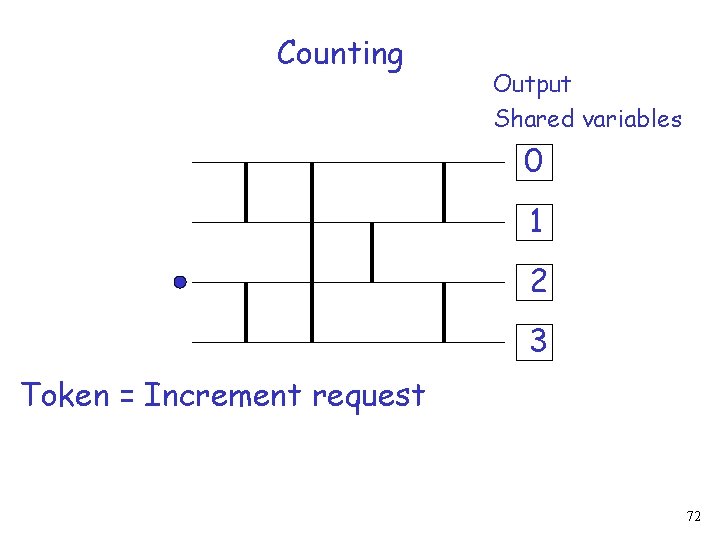
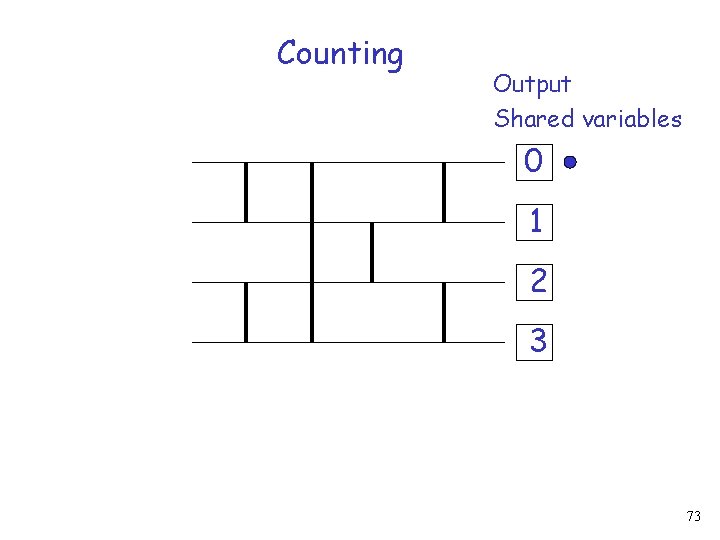
Counting Output Shared variables 0 1 2 3 Token = Increment request 72
Counting Output Shared variables 0 1 2 3 73
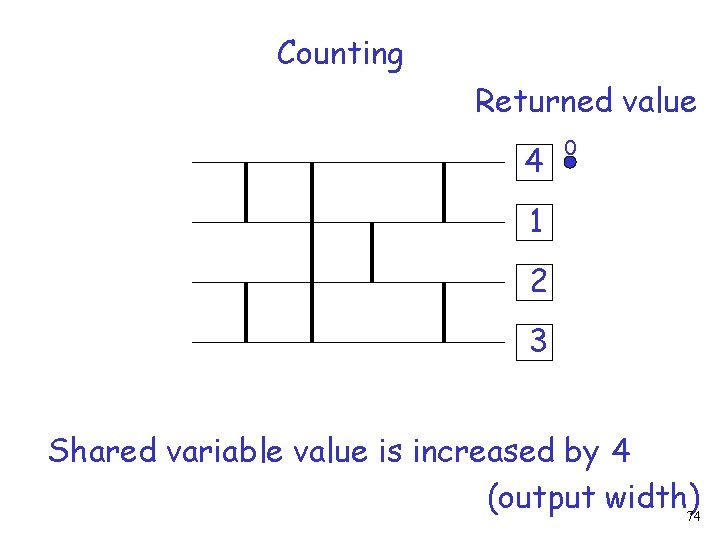
Counting Returned value 4 0 1 2 3 Shared variable value is increased by 4 (output width)74
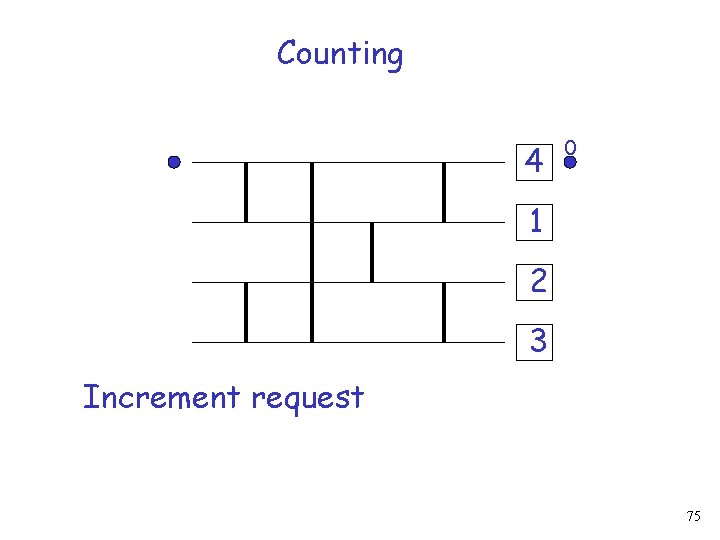
Counting 4 0 1 2 3 Increment request 75
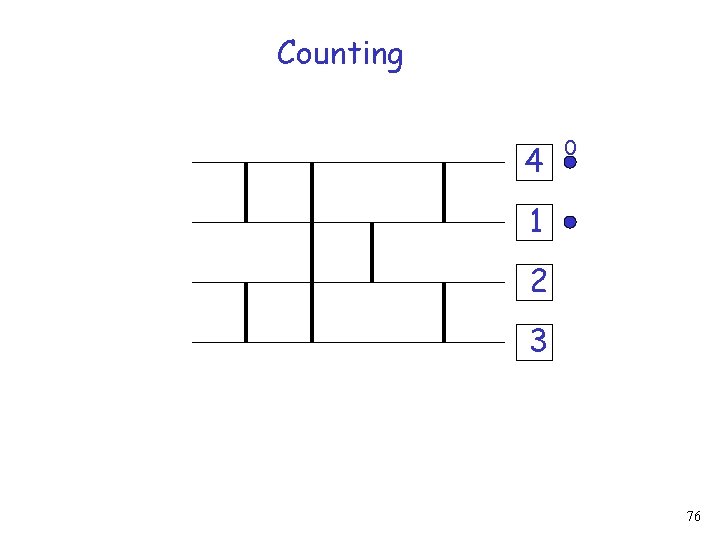
Counting 4 0 1 2 3 76
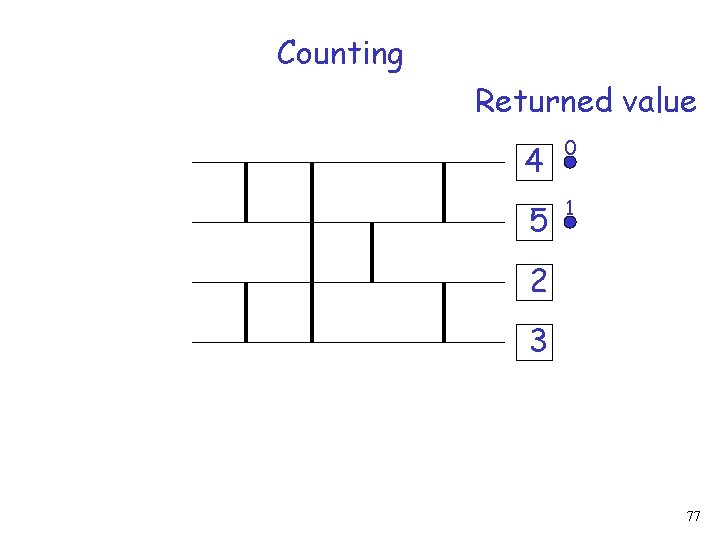
Counting Returned value 4 0 5 1 2 3 77
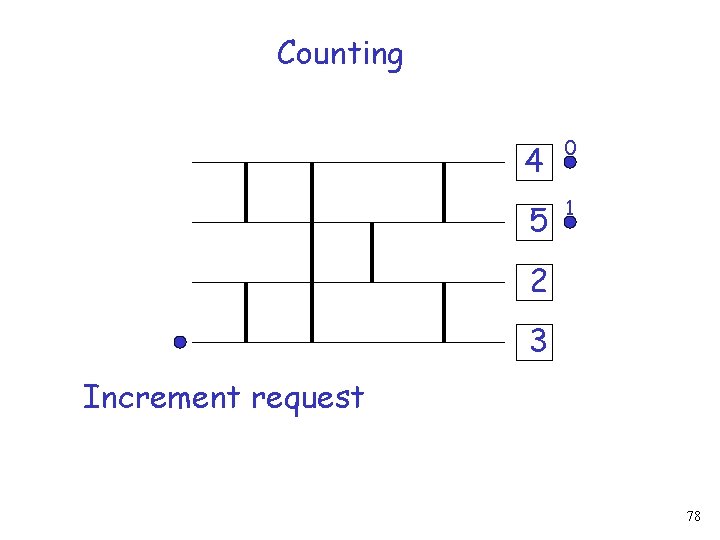
Counting 4 0 5 1 2 3 Increment request 78
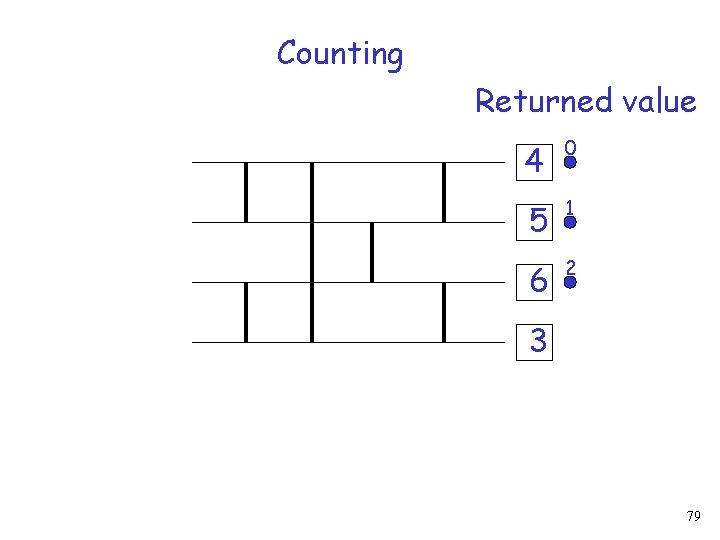
Counting Returned value 4 0 5 1 6 2 3 79
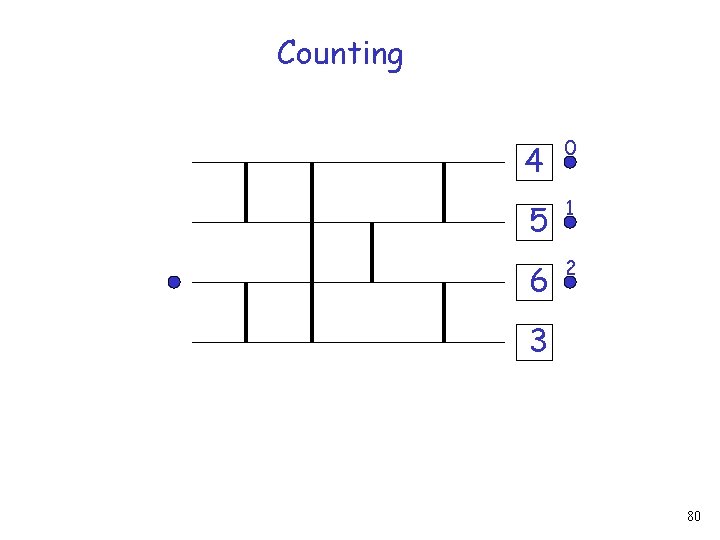
Counting 4 0 5 1 6 2 3 80
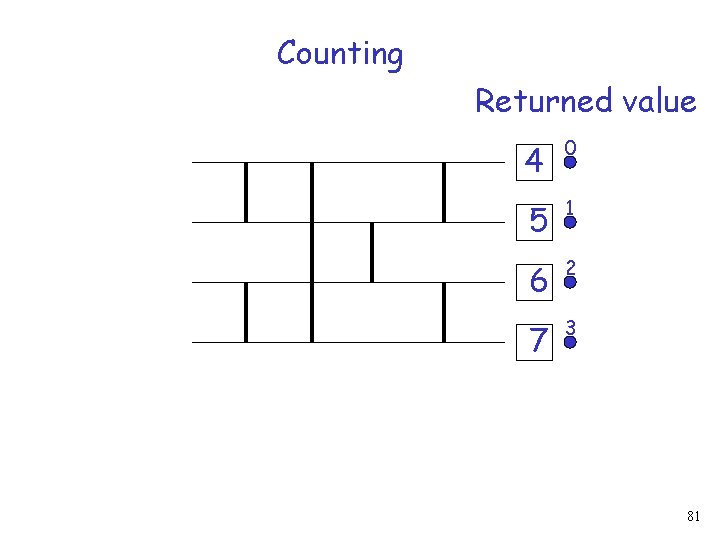
Counting Returned value 4 0 5 1 6 2 7 3 81
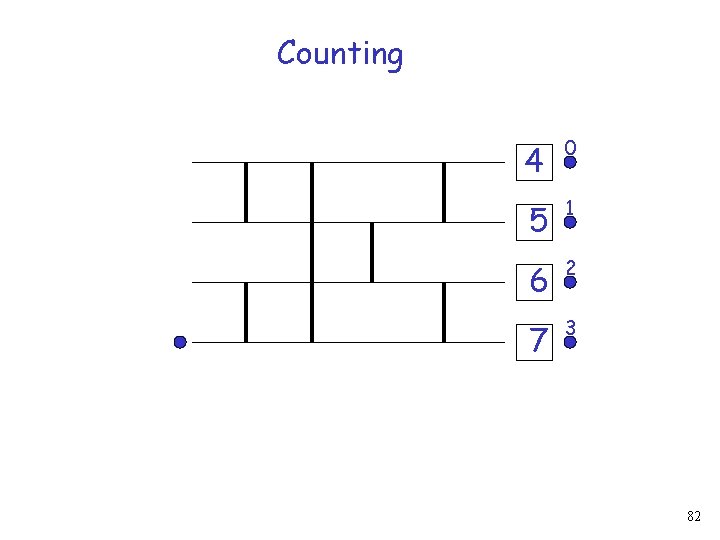
Counting 4 0 5 1 6 2 7 3 82
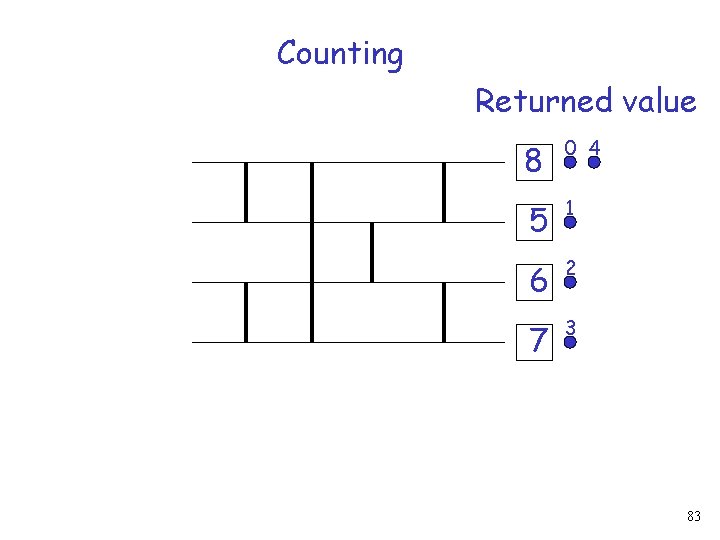
Counting Returned value 8 0 4 5 1 6 2 7 3 83
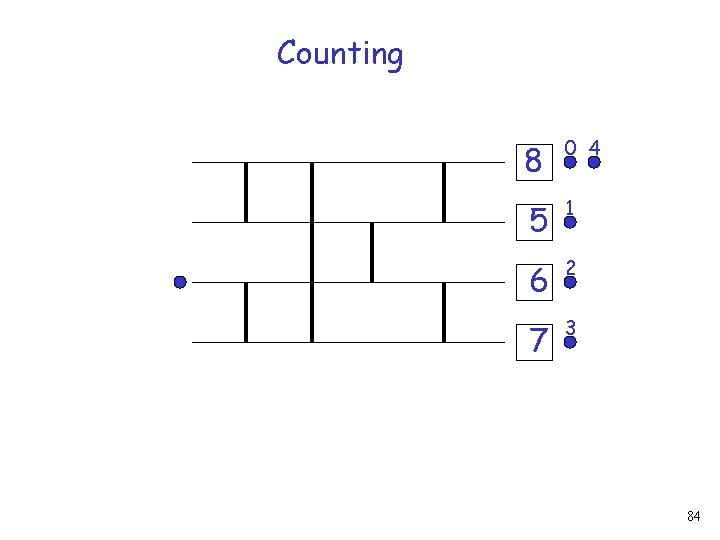
Counting 8 0 4 5 1 6 2 7 3 84
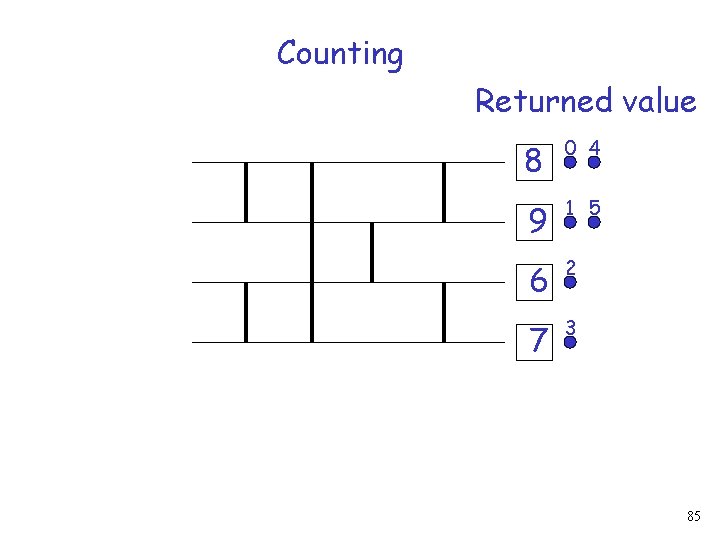
Counting Returned value 8 0 4 9 1 5 6 2 7 3 85
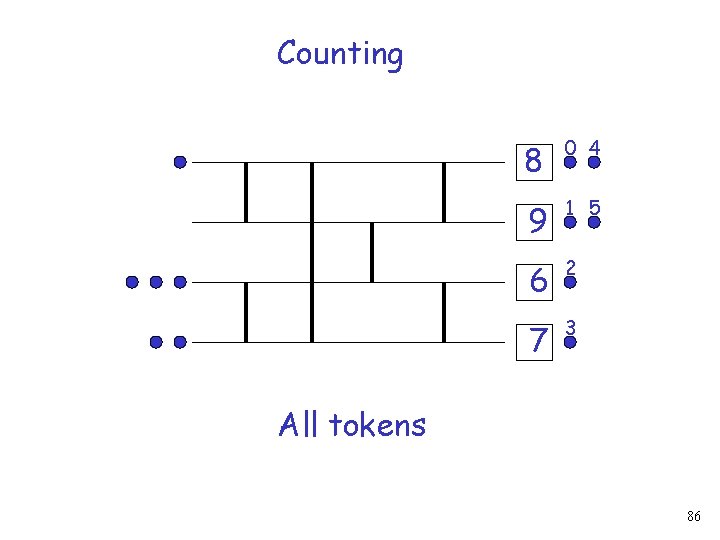
Counting 8 0 4 9 1 5 6 2 7 3 All tokens 86
Bitonic Counting Network Isomorphic to Bitonic Sorting Network 87
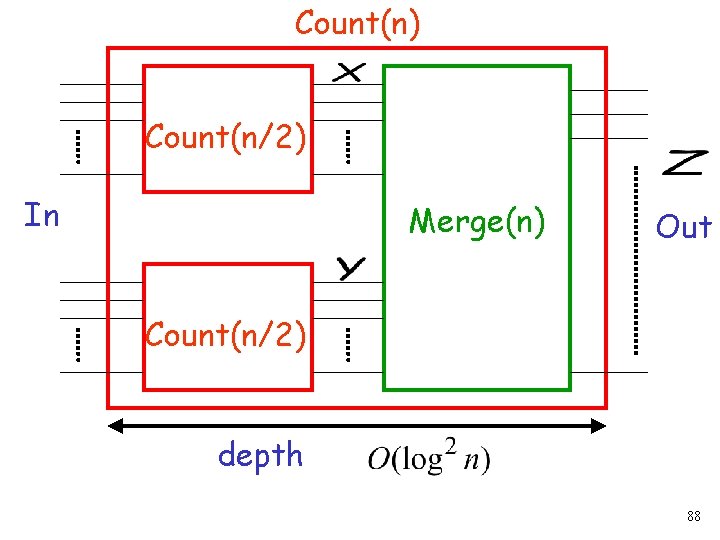
Count(n) Count(n/2) In Merge(n) Out Count(n/2) depth 88
Merge(n) Step Prop. Merge 1(n/2) Step Prop. Merge 2(n/2) depth 89
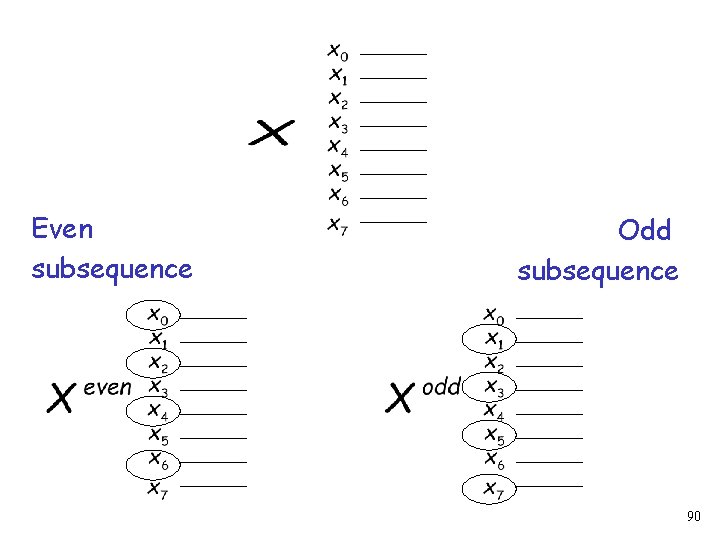
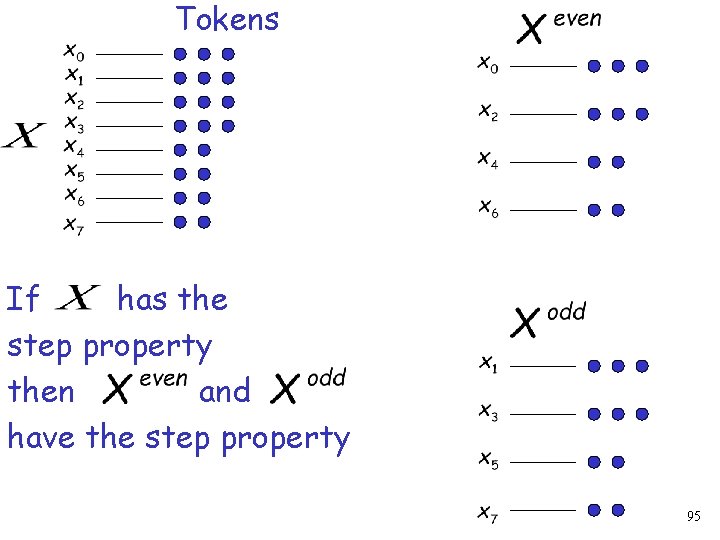
Even subsequence Odd subsequence 90
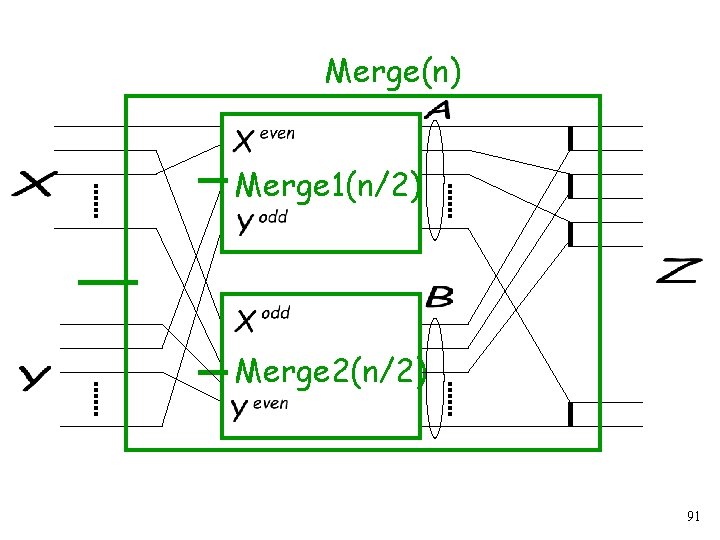
Merge(n) Merge 1(n/2) Merge 2(n/2) 91
Theorem: The merger(n) produces output Z with step property if both inputs X and Y have step property Proof: The proof is by induction on Induction Basis: For the merger is a balancer and the claim holds trivially. 92
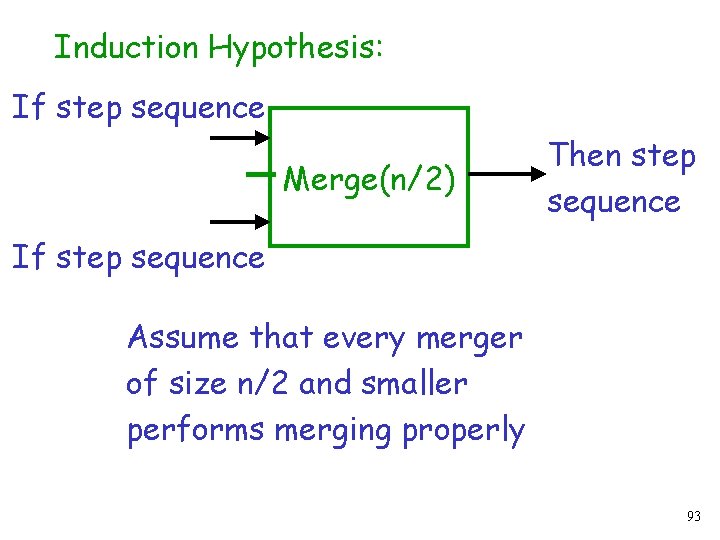
Induction Hypothesis: If step sequence Merge(n/2) Then step sequence If step sequence Assume that every merger of size n/2 and smaller performs merging properly 93
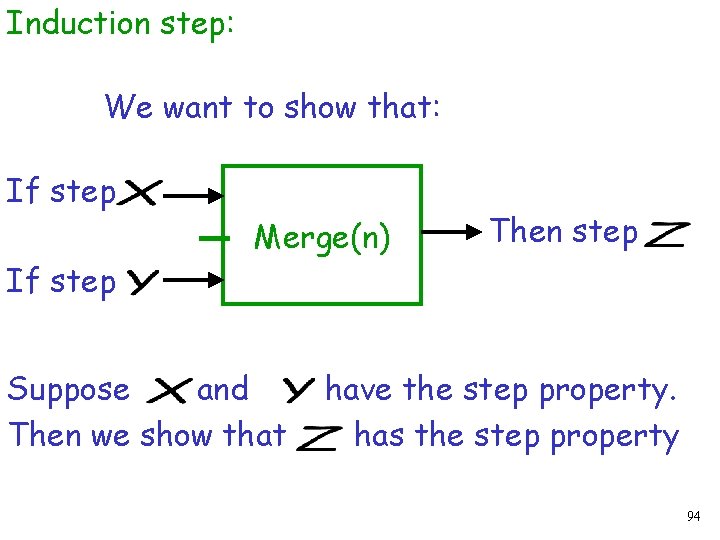
Induction step: We want to show that: If step Merge(n) Suppose and Then we show that Then step have the step property. has the step property 94
Tokens If has the step property then and have the step property 95
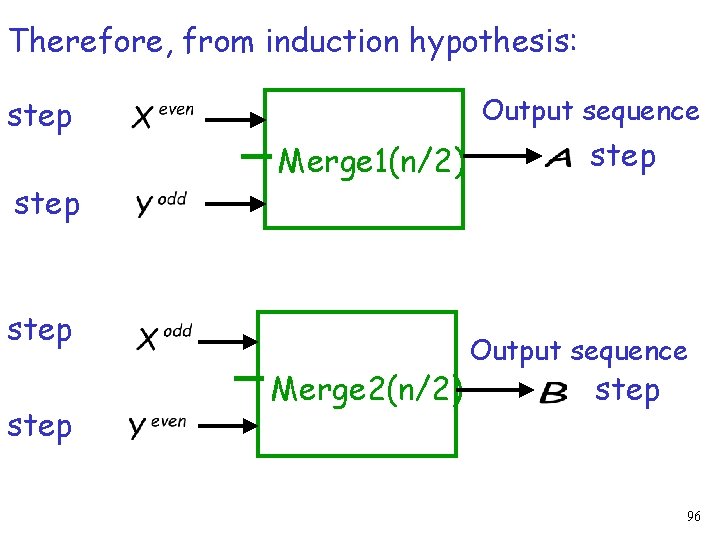
Therefore, from induction hypothesis: Output sequence step Merge 1(n/2) step Merge 2(n/2) step Output sequence step 96
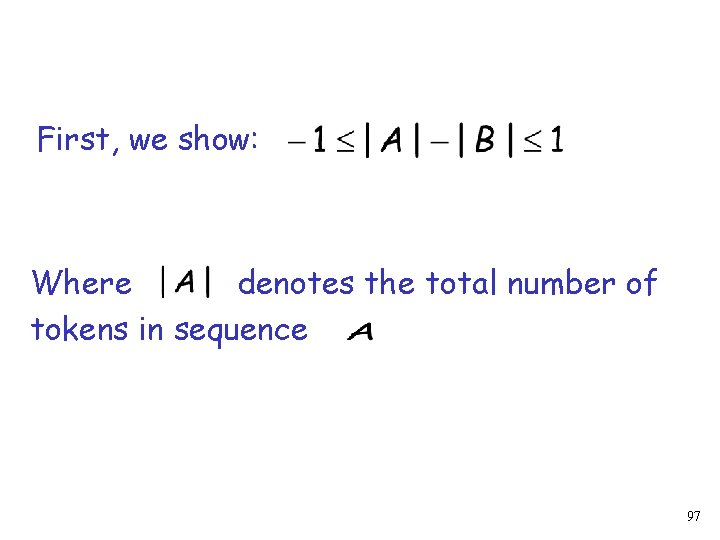
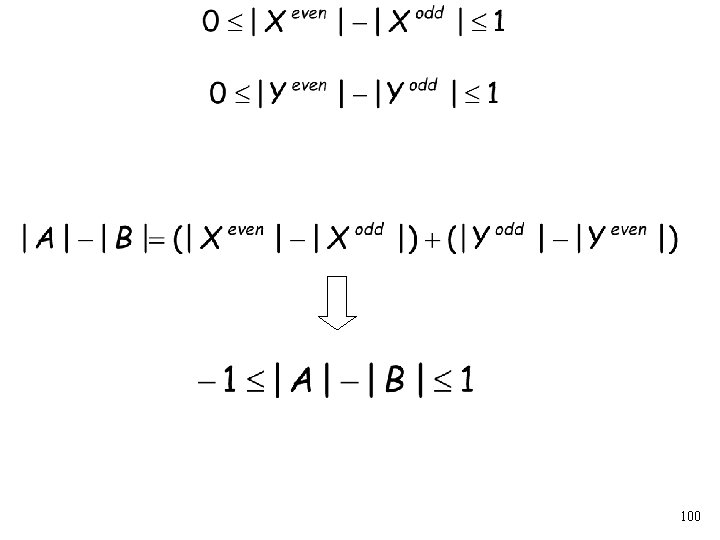
First, we show: Where denotes the total number of tokens in sequence 97
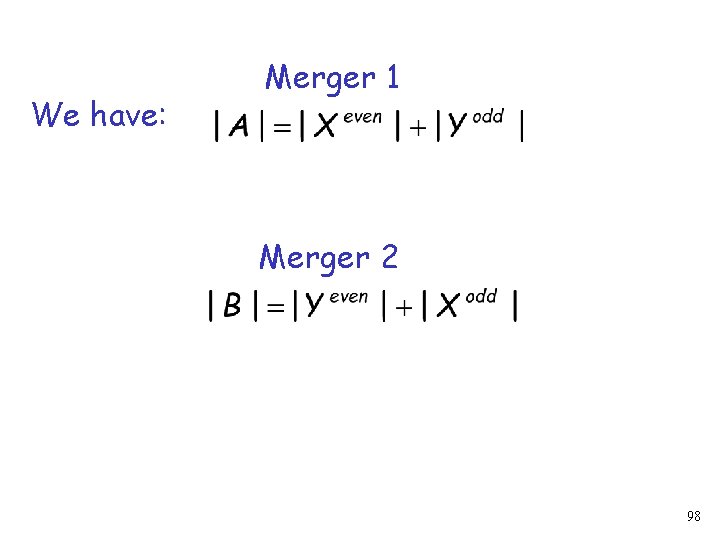
We have: Merger 1 Merger 2 98
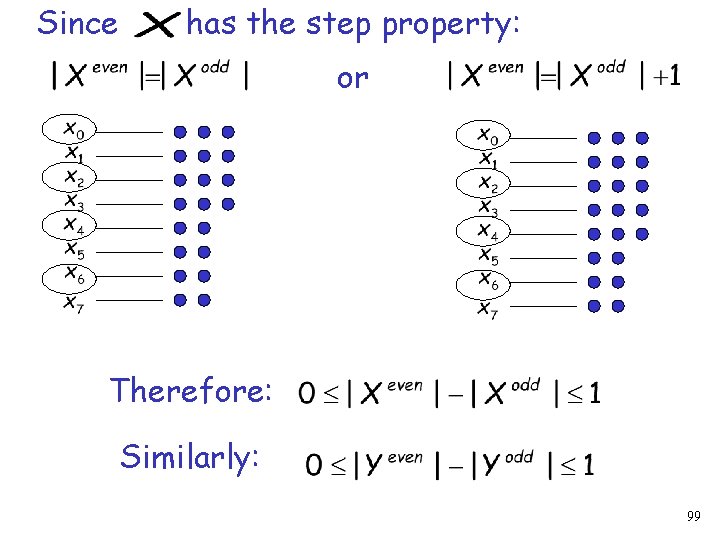
Since has the step property: or Therefore: Similarly: 99
100
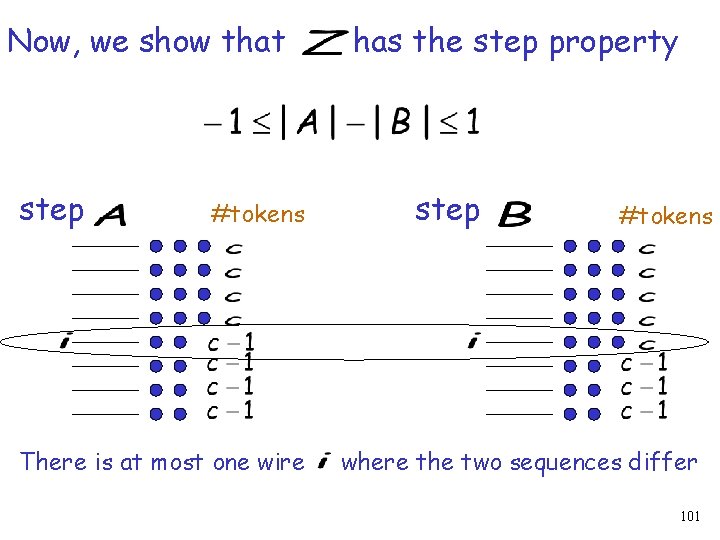
Now, we show that step #tokens There is at most one wire has the step property step #tokens where the two sequences differ 101
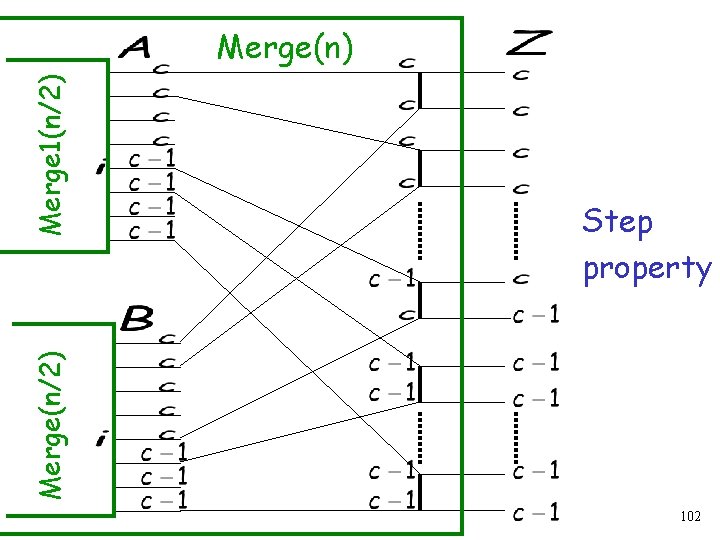
Step property Merge(n/2) Merge 1(n/2) Merge(n) 102