
Sophocles Greek Tragedy and Oedipus the King An
- Slides: 13
Sophocles, Greek Tragedy and Oedipus the King An Introduction
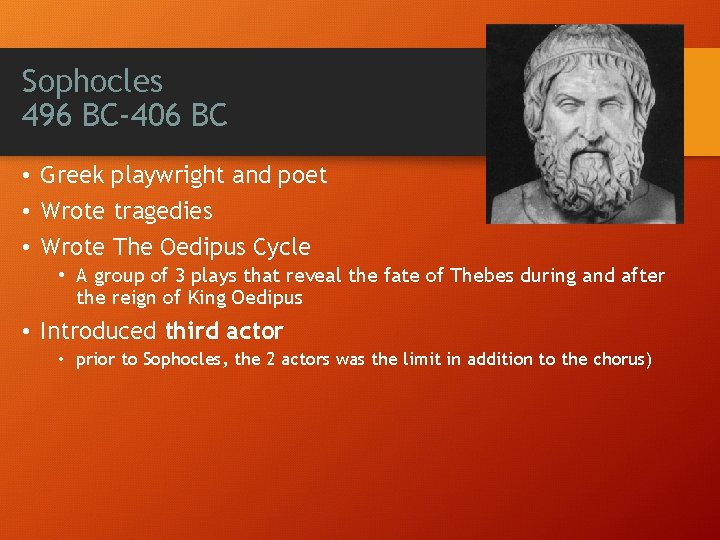
Sophocles 496 BC-406 BC • Greek playwright and poet • Wrote tragedies • Wrote The Oedipus Cycle • A group of 3 plays that reveal the fate of Thebes during and after the reign of King Oedipus • Introduced third actor • prior to Sophocles, the 2 actors was the limit in addition to the chorus)
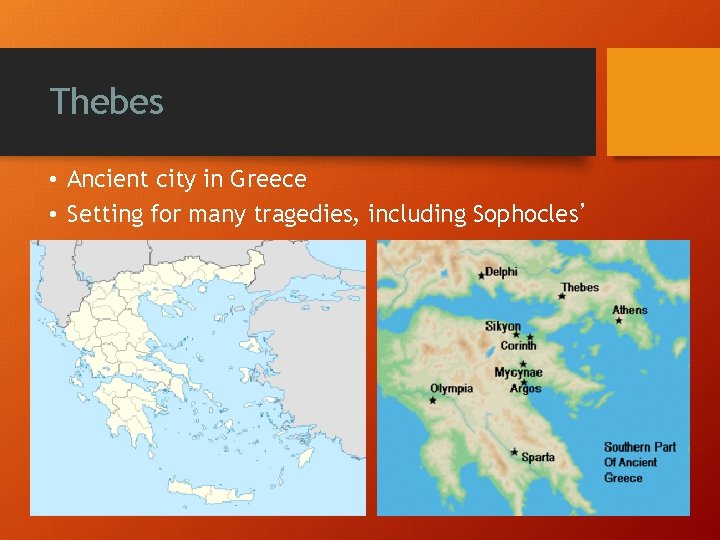
Thebes • Ancient city in Greece • Setting for many tragedies, including Sophocles’
Elements of Tragedy • Unities • Terms: Aspects of Tragedy • Tragic hero • Themes
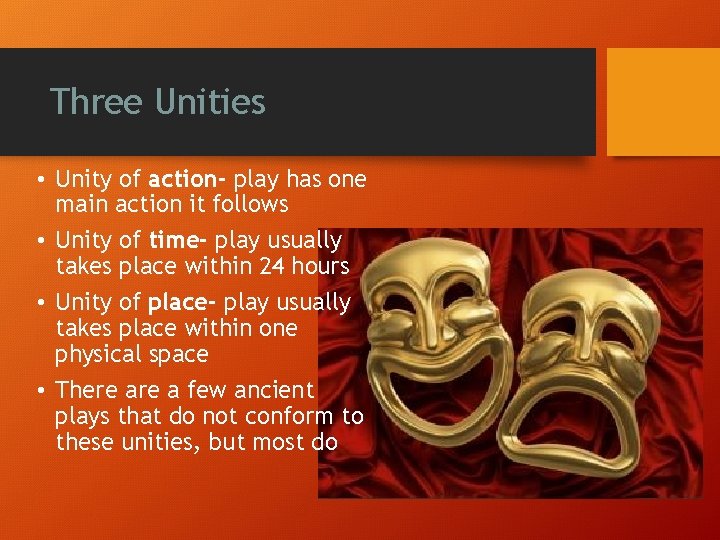
Three Unities • Unity of action- play has one main action it follows • Unity of time- play usually takes place within 24 hours • Unity of place- play usually takes place within one physical space • There a few ancient plays that do not conform to these unities, but most do
Terms: Aspects of Tragedy in Greek Drama • Tragedy: • A play that recounts an important series of events in the life of a significant person (main character) which results in that person meeting an unhappy and disastrous end. • Dramatic Irony: • When the audience knows information that the characters do not. • Epiphany: • When something unknown becomes suddenly clear.
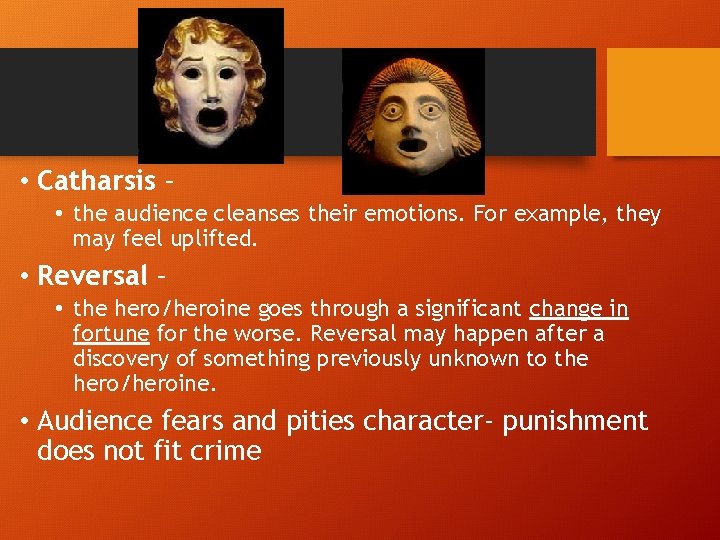
• Catharsis – • the audience cleanses their emotions. For example, they may feel uplifted. • Reversal – • the hero/heroine goes through a significant change in fortune for the worse. Reversal may happen after a discovery of something previously unknown to the hero/heroine. • Audience fears and pities character- punishment does not fit crime
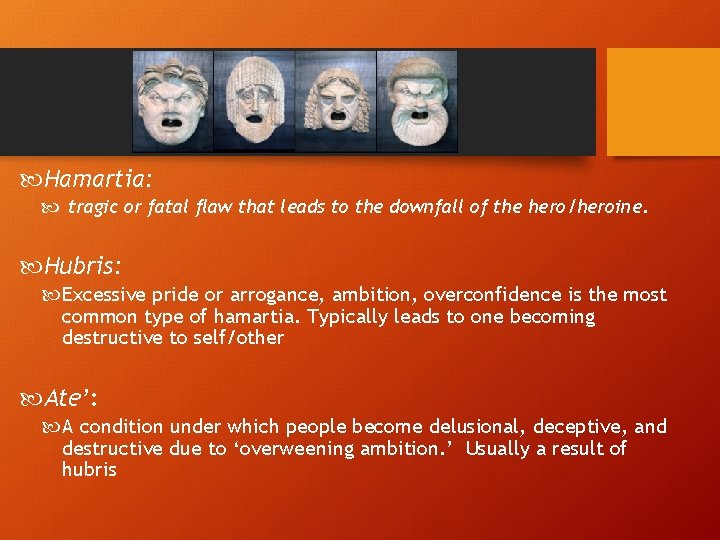
Hamartia: tragic or fatal flaw that leads to the downfall of the hero/heroine. Hubris: Excessive pride or arrogance, ambition, overconfidence is the most common type of hamartia. Typically leads to one becoming destructive to self/other Ate’: A condition under which people become delusional, deceptive, and destructive due to ‘overweening ambition. ’ Usually a result of hubris
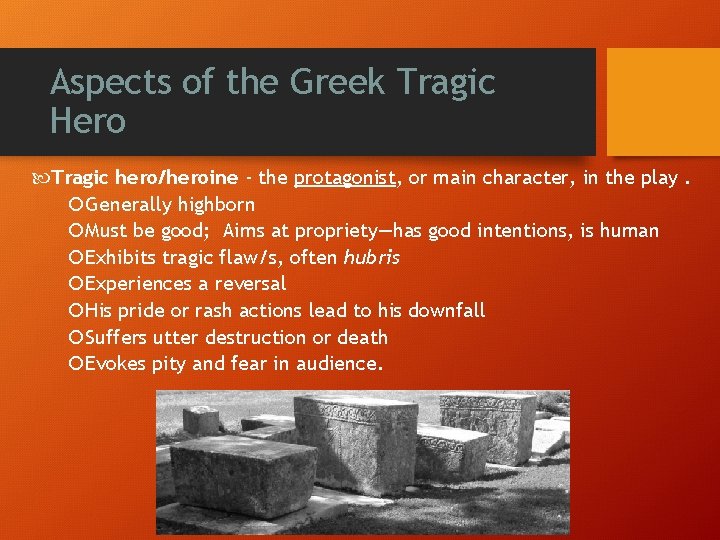
Aspects of the Greek Tragic Hero Tragic hero/heroine - the protagonist, or main character, in the play. Generally highborn Must be good; Aims at propriety—has good intentions, is human Exhibits tragic flaw/s, often hubris Experiences a reversal His pride or rash actions lead to his downfall Suffers utter destruction or death Evokes pity and fear in audience.
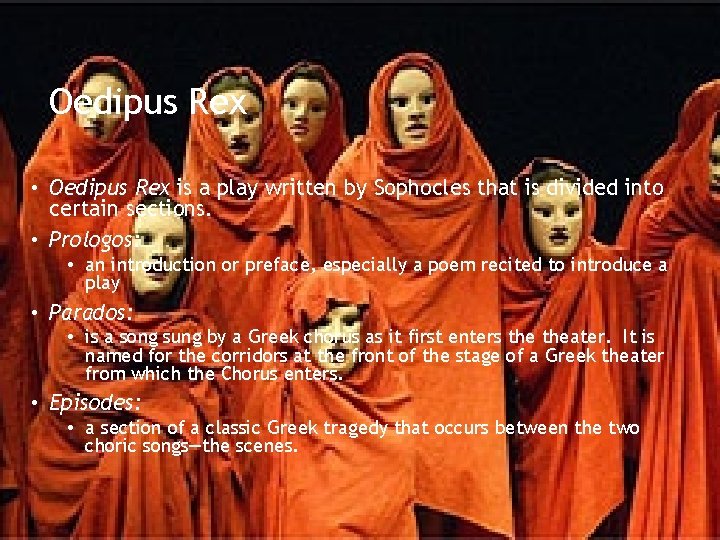
Oedipus Rex • Oedipus Rex is a play written by Sophocles that is divided into certain sections. • Prologos: • an introduction or preface, especially a poem recited to introduce a play • Parados: • is a song sung by a Greek chorus as it first enters theater. It is named for the corridors at the front of the stage of a Greek theater from which the Chorus enters. • Episodes: • a section of a classic Greek tragedy that occurs between the two choric songs—the scenes.
Oedipus Rex continued • Choric Ode: • A classical Greek poem that has a three part structure consisting of a strophe, antistrophe and an epode • Exodus: • In Greek Drama, this is the final scene; in tragedy, it is the action following the final stasimon (choral ode); in comedy it is the final rejoicing following the last episode • Use the link below and watch the Prezi presentation. Remember to use full screen and use the arrows at the bottom of the screen to advance the slides. • https: //prezi. com/965 s 4 t 0 bbcvx/copy-of-oedipus/
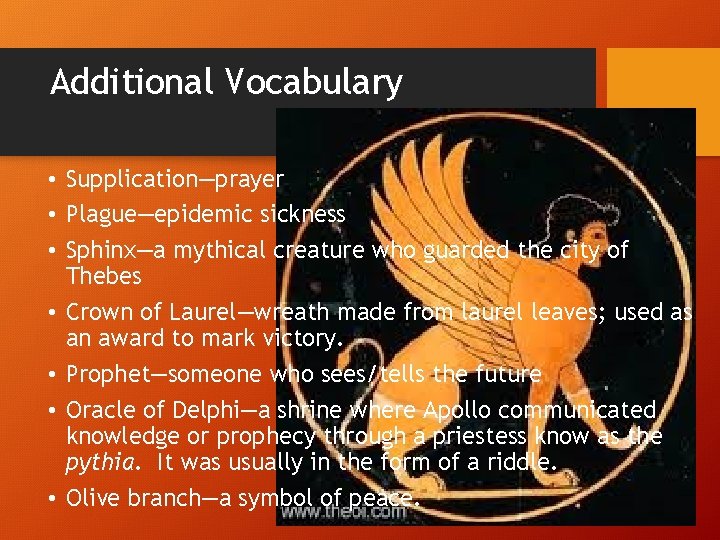
Additional Vocabulary • Supplication—prayer • Plague—epidemic sickness • Sphinx—a mythical creature who guarded the city of Thebes • Crown of Laurel—wreath made from laurel leaves; used as an award to mark victory. • Prophet—someone who sees/tells the future • Oracle of Delphi—a shrine where Apollo communicated knowledge or prophecy through a priestess know as the pythia. It was usually in the form of a riddle. • Olive branch—a symbol of peace.
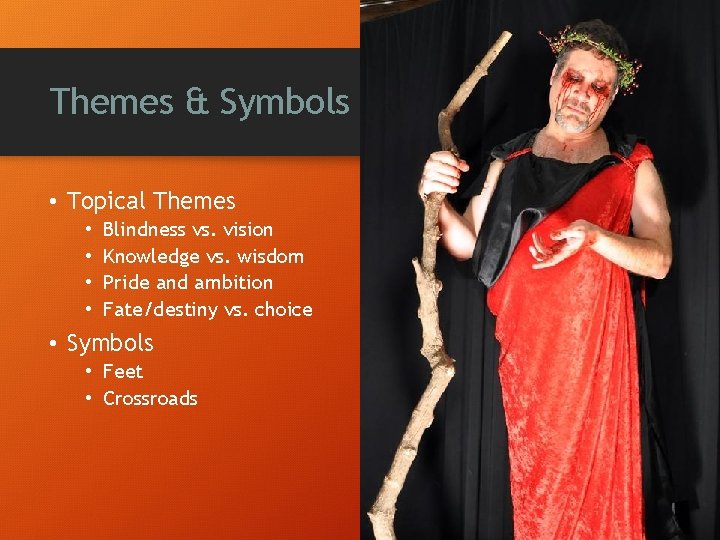
Themes & Symbols • Topical Themes • • Blindness vs. vision Knowledge vs. wisdom Pride and ambition Fate/destiny vs. choice • Symbols • Feet • Crossroads