
Sonnet 130 William Shakespeare Surprise nonsimile My mistress
- Slides: 8
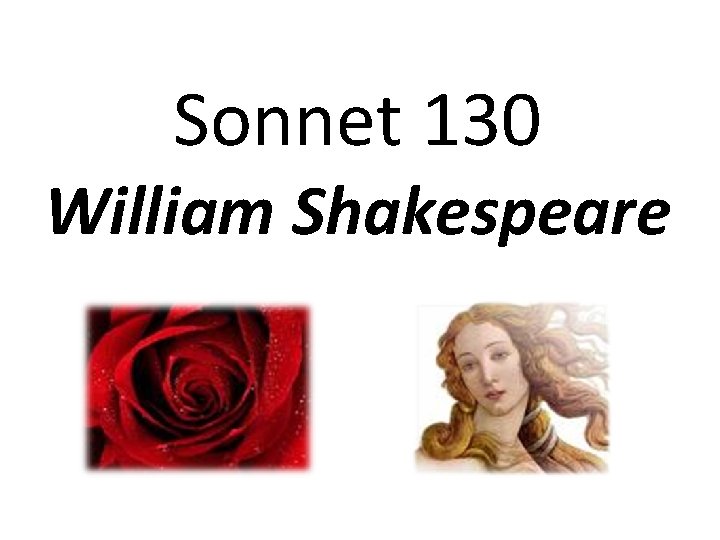
Sonnet 130 William Shakespeare
Surprise: non-simile My mistress’ eyes are nothing like the sun; Coral is far more red than her lips’ red Natural comparison – something exotic and red in colour Why then – of course! Continuation of negative comparison
Again, a natural, simple image for negative comparison dun = brown, with the implication of weathered, sunbrowned skin of a woman who works outside, perhaps. If snow be white, why then her breasts are dun; If hairs be wires, black wires grow on her head. Coarseness of wire, no soft comparison
Roses are a traditional symbol of love damasked = flowered, but also connotations of the red colour of the damask rose and of damask – a woven material, often of silk I have seen roses damasked, red and white, But no such roses see I in her cheeks; No pretty blushing, another sign of gentility and love
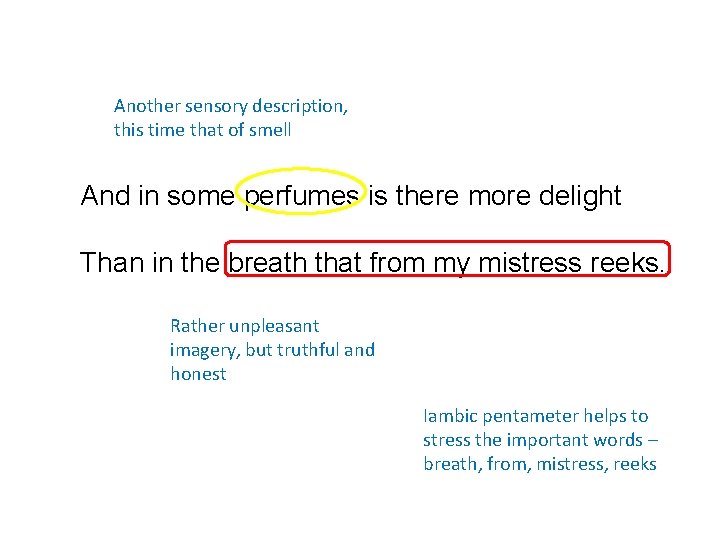
Another sensory description, this time that of smell And in some perfumes is there more delight Than in the breath that from my mistress reeks. Rather unpleasant imagery, but truthful and honest Iambic pentameter helps to stress the important words – breath, from, mistress, reeks
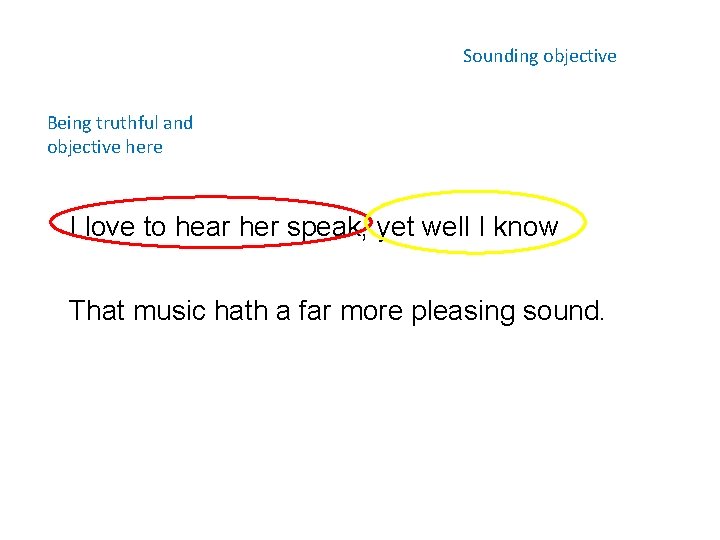
Sounding objective Being truthful and objective here I love to hear her speak, yet well I know That music hath a far more pleasing sound.
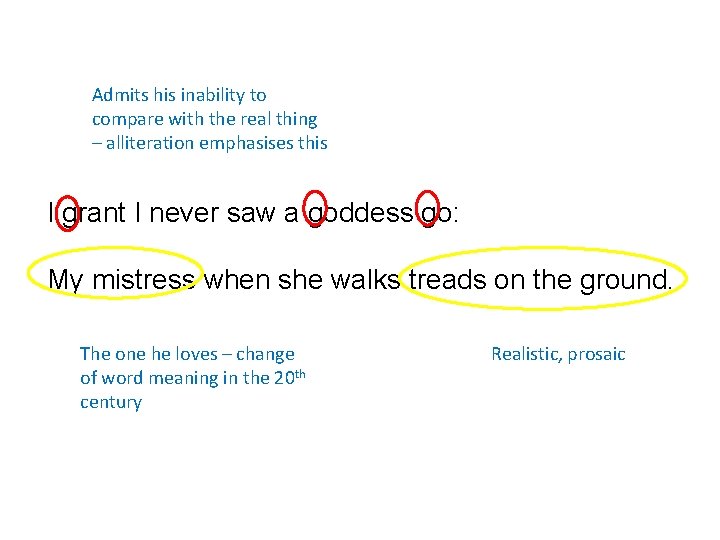
Admits his inability to compare with the real thing – alliteration emphasises this I grant I never saw a goddess go: My mistress when she walks treads on the ground. The one he loves – change of word meaning in the 20 th century Realistic, prosaic
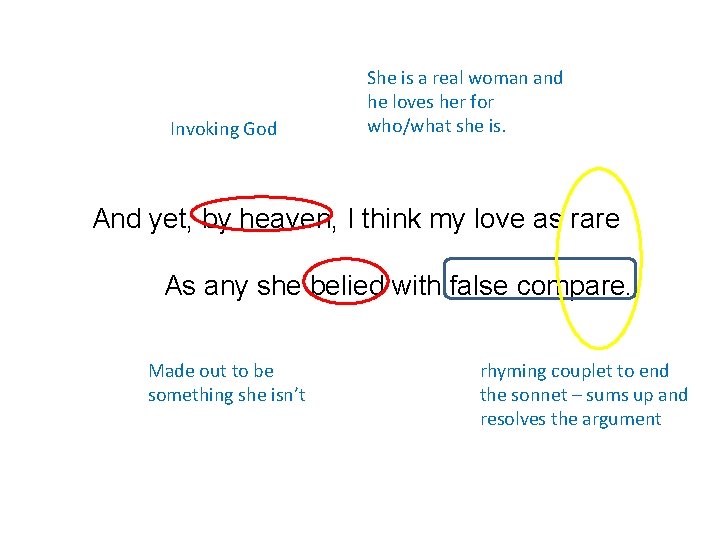
Invoking God She is a real woman and he loves her for who/what she is. And yet, by heaven, I think my love as rare As any she belied with false compare. Made out to be something she isn’t rhyming couplet to end the sonnet – sums up and resolves the argument