
SOME SLIDES MODIFIED FROM KIM FOGLIA http www


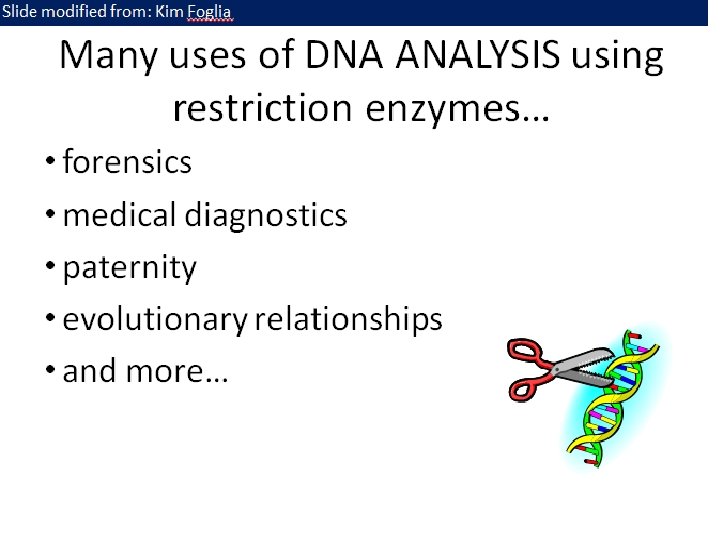

- Slides: 30
SOME SLIDES MODIFIED FROM KIM FOGLIA http: //www. explorebiology. com/ppt. AP/2008/BIOTECHNOLOGY/ DESKTOP RFLP ANALYSIS Brookings Biology Kelly Riedell
ENDURING UNDERSTANDING 3. A: Heritable information provides for continuity of life. LEARNING OBJECTIVE IST-1. P Explain the use of genetic engineering techniques in analyzing or manipulating DNA. ESSENTIAL KNOWLEDGE IST-1. P. 1 Genetic engineering techniques can be used to analyze and manipulate DNA and RNA — a. Electrophoresis separates molecules according to size and charge. SP 1. C Explain biological concepts, processes, and/or models in applied contexts. SP 6. D Explain the relationship between experimental results and larger biological concepts, processes, or theories.
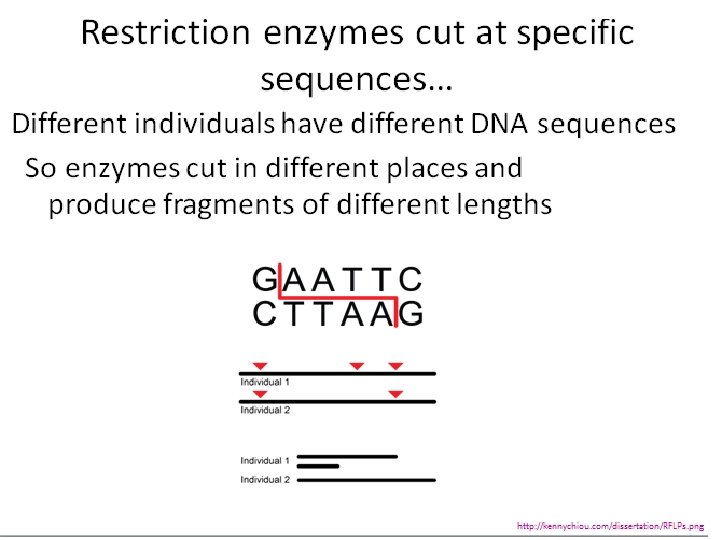
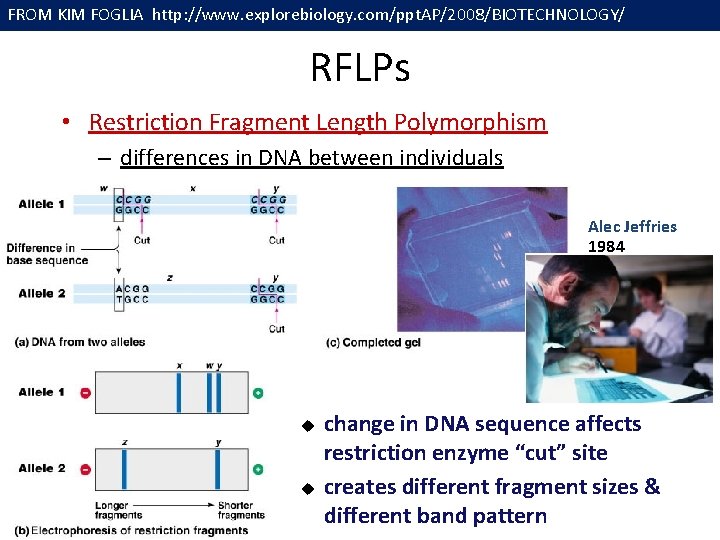
FROM KIM FOGLIA http: //www. explorebiology. com/ppt. AP/2008/BIOTECHNOLOGY/ RFLPs • Restriction Fragment Length Polymorphism – differences in DNA between individuals Alec Jeffries 1984 u u change in DNA sequence affects restriction enzyme “cut” site creates different fragment sizes & different band pattern
FROM KIM FOGLIA http: //www. explorebiology. com/ppt. AP/2008/BIOTECHNOLOGY/ Differences at the DNA level Why is each person’s DNA pattern different? – sections of “junk” DNA • doesn’t code for proteins • made up of repeated patterns – CAT, GCC, and others – each person may have different number of repeats • many sites on our 23 chromosomes with different repeat patterns GCTTGTAACGGCCTCATCATCATTCGCCGGCCTACGCTT CGAACATTGCCGGAGTAGTAGTAAGCGGCCGGATGCGAA GCTTGTAACGGCATCATCATCCGGCCTACGCTT CGAACATTGCCGTAGTAGTAGGCCGGATGCGAA
FROM KIM FOGLIA http: //www. explorebiology. com/ppt. AP/2008/BIOTECHNOLOGY/ Comparing cut up DNA • How do we compare DNA fragments? – separate fragments by size • How do we separate DNA fragments? – run it through a gelatin • agarose • made from algae – gel electrophoresis
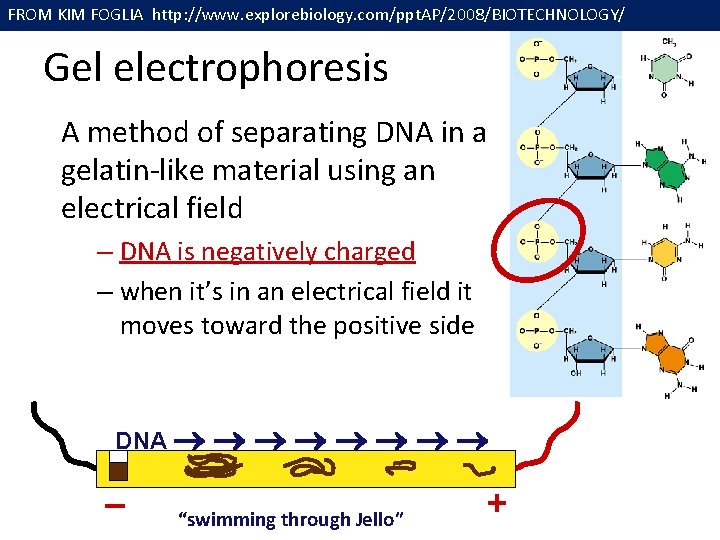
FROM KIM FOGLIA http: //www. explorebiology. com/ppt. AP/2008/BIOTECHNOLOGY/ Gel electrophoresis A method of separating DNA in a gelatin-like material using an electrical field – DNA is negatively charged – when it’s in an electrical field it moves toward the positive side DNA – “swimming through Jello” +
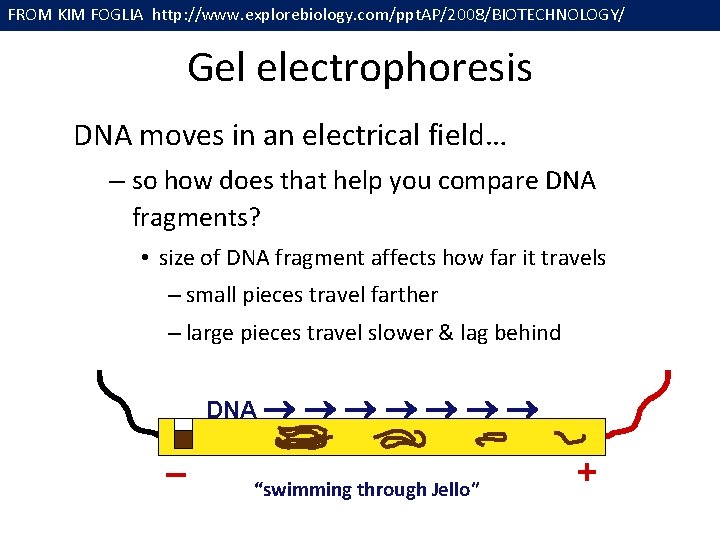
FROM KIM FOGLIA http: //www. explorebiology. com/ppt. AP/2008/BIOTECHNOLOGY/ Gel electrophoresis DNA moves in an electrical field… – so how does that help you compare DNA fragments? • size of DNA fragment affects how far it travels – small pieces travel farther – large pieces travel slower & lag behind DNA – “swimming through Jello” +
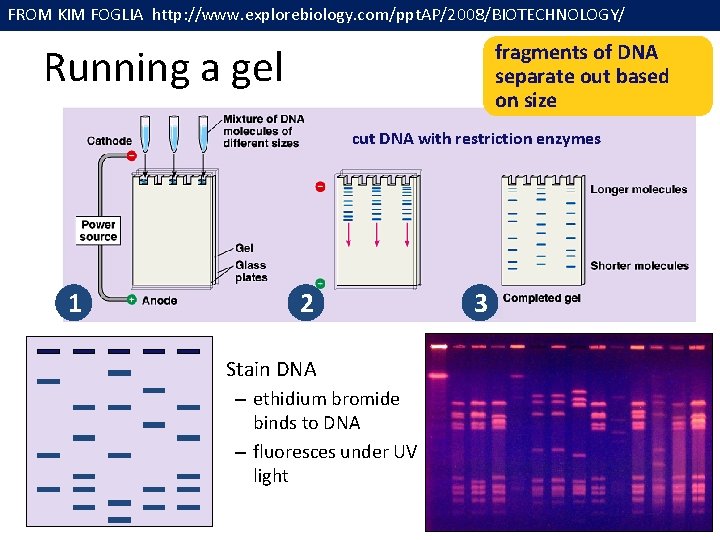
FROM KIM FOGLIA http: //www. explorebiology. com/ppt. AP/2008/BIOTECHNOLOGY/ fragments of DNA separate out based on size Running a gel cut DNA with restriction enzymes 1 2 Stain DNA – ethidium bromide binds to DNA – fluoresces under UV light 3
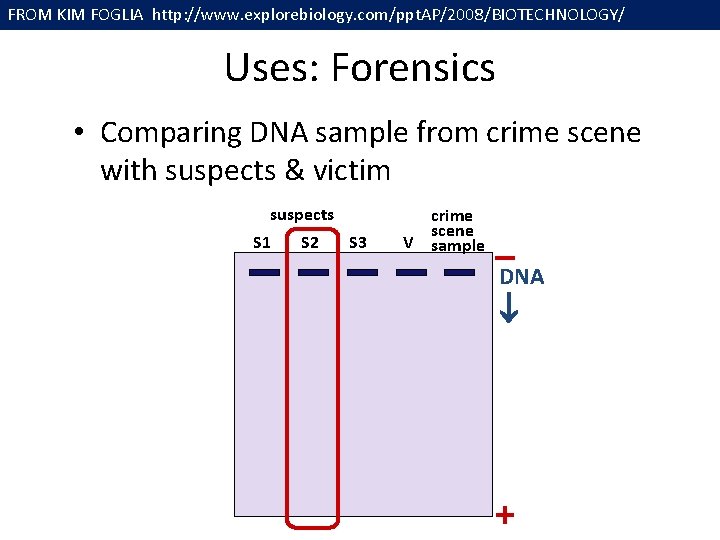
FROM KIM FOGLIA http: //www. explorebiology. com/ppt. AP/2008/BIOTECHNOLOGY/ Uses: Forensics • Comparing DNA sample from crime scene with suspects & victim suspects S 1 S 2 S 3 crime scene V sample –DNA +
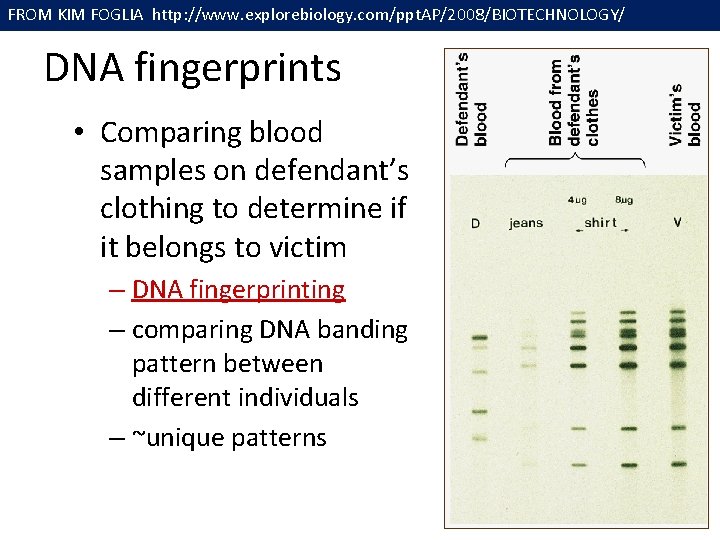
FROM KIM FOGLIA http: //www. explorebiology. com/ppt. AP/2008/BIOTECHNOLOGY/ DNA fingerprints • Comparing blood samples on defendant’s clothing to determine if it belongs to victim – DNA fingerprinting – comparing DNA banding pattern between different individuals – ~unique patterns
FROM KIM FOGLIA http: //www. explorebiology. com/ppt. AP/2008/BIOTECHNOLOGY/ RFLP / electrophoresis use in forensics • 1 st case successfully using DNA evidence – 1987 rape case convicting Tommie Lee Andrews “standard” semen sample from rapist blood sample from suspect “standard” How can you compare DNA from blood & from semen? RBC? “standard” semen sample from rapist blood sample from suspect “standard”
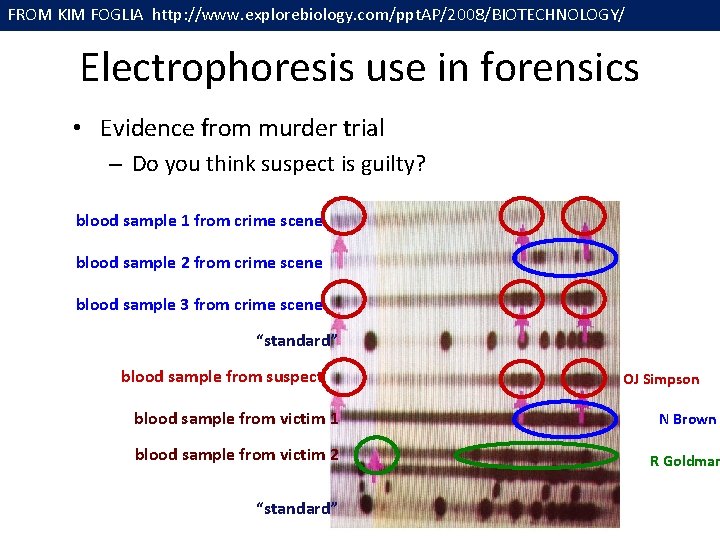
FROM KIM FOGLIA http: //www. explorebiology. com/ppt. AP/2008/BIOTECHNOLOGY/ Electrophoresis use in forensics • Evidence from murder trial – Do you think suspect is guilty? blood sample 1 from crime scene blood sample 2 from crime scene blood sample 3 from crime scene “standard” blood sample from suspect OJ Simpson blood sample from victim 1 N Brown blood sample from victim 2 R Goldman “standard”
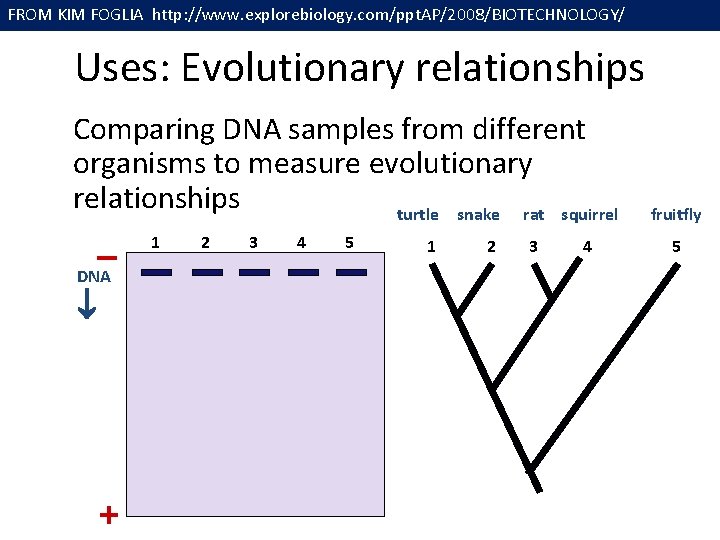
FROM KIM FOGLIA http: //www. explorebiology. com/ppt. AP/2008/BIOTECHNOLOGY/ Uses: Evolutionary relationships Comparing DNA samples from different organisms to measure evolutionary relationships turtle snake rat squirrel – DNA + 1 2 3 4 5 1 2 3 4 fruitfly 5
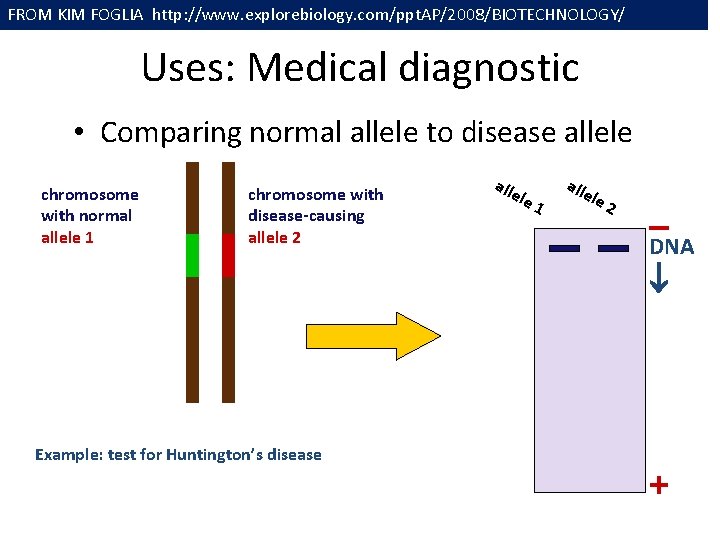
FROM KIM FOGLIA http: //www. explorebiology. com/ppt. AP/2008/BIOTECHNOLOGY/ Uses: Medical diagnostic • Comparing normal allele to disease allele chromosome with normal allele 1 chromosome with disease-causing allele 2 alle l e 1 alle le 2 – DNA Example: test for Huntington’s disease +
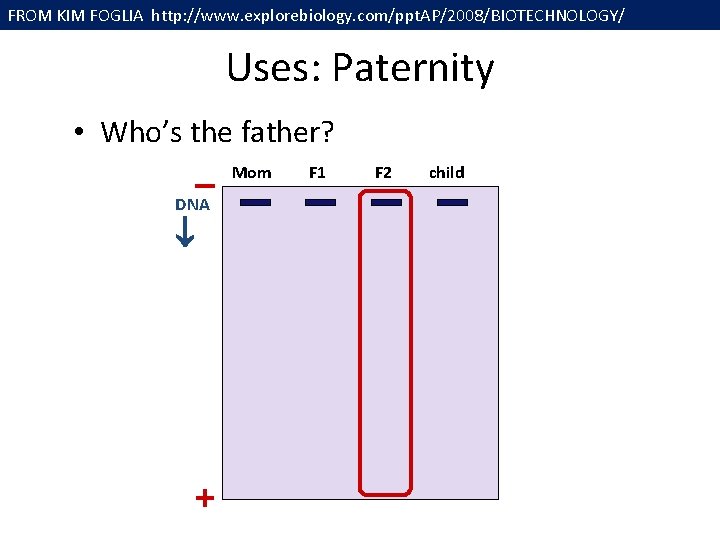
FROM KIM FOGLIA http: //www. explorebiology. com/ppt. AP/2008/BIOTECHNOLOGY/ Uses: Paternity • Who’s the father? – DNA + Mom F 1 F 2 child
LAY OUT 2 YARN PIECES ON YOUR DESK DON’T STRETCH ! TRIM YOUR PURPLE & GEEN YARN PIECES SO THEY ARE THE SAME LENGTH 50 cm Image from : http: //thecreativeimperative. blogspot. com/2011/06/american-flag-wreath-sort-of. html
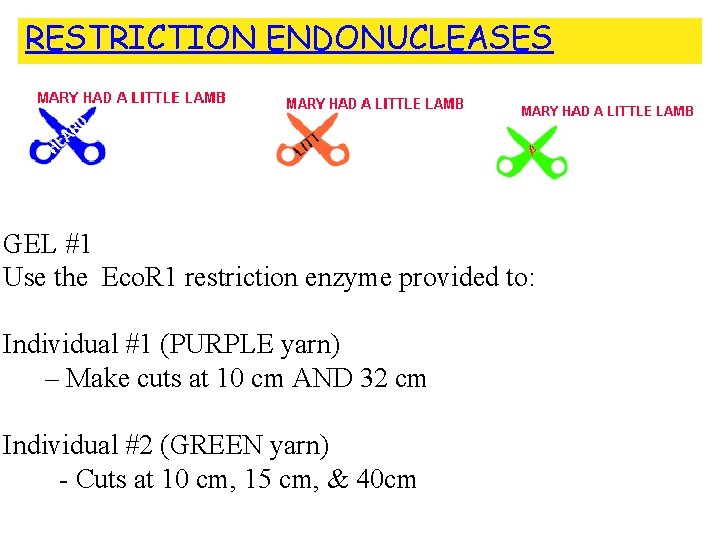
RESTRICTION ENDONUCLEASES GEL #1 Use the Eco. R 1 restriction enzyme provided to: Individual #1 (PURPLE yarn) – Make cuts at 10 cm AND 32 cm Individual #2 (GREEN yarn) - Cuts at 10 cm, 15 cm, & 40 cm
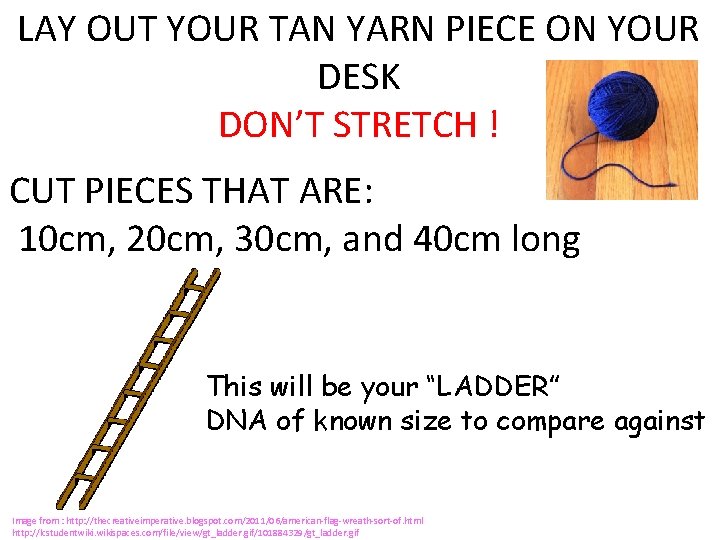
LAY OUT YOUR TAN YARN PIECE ON YOUR DESK DON’T STRETCH ! CUT PIECES THAT ARE: 10 cm, 20 cm, 30 cm, and 40 cm long This will be your “LADDER” DNA of known size to compare against Image from : http: //thecreativeimperative. blogspot. com/2011/06/american-flag-wreath-sort-of. html http: //lcstudentwikispaces. com/file/view/gt_ladder. gif/101884329/gt_ladder. gif
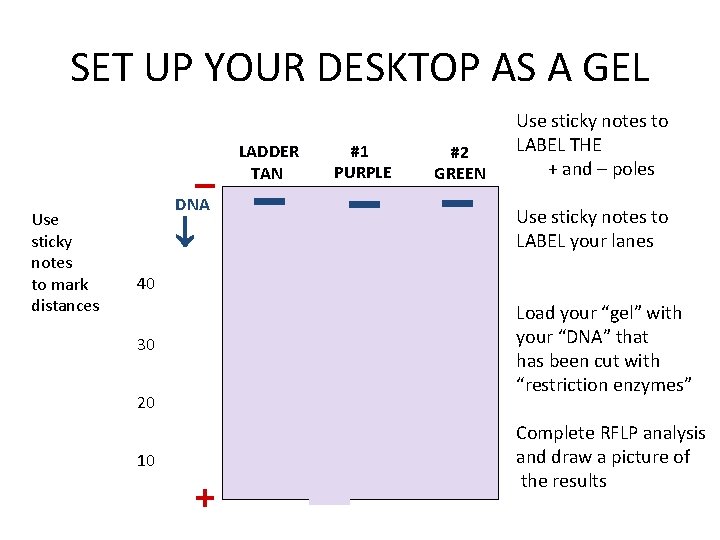
SET UP YOUR DESKTOP AS A GEL Use sticky notes to mark distances – DNA LADDER TAN #1 PURPLE #2 GREEN Use sticky notes to LABEL THE + and – poles Use sticky notes to LABEL your lanes 40 Load your “gel” with your “DNA” that has been cut with “restriction enzymes” 30 20 10 + Complete RFLP analysis and draw a picture of the results
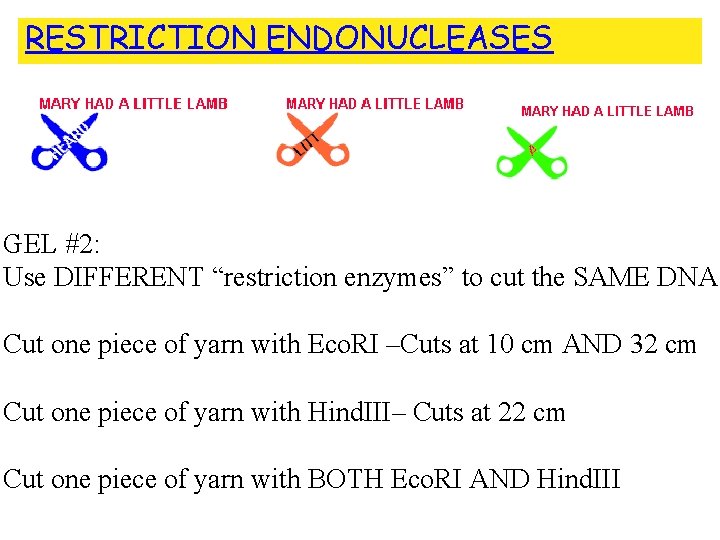
RESTRICTION ENDONUCLEASES GEL #2: Use DIFFERENT “restriction enzymes” to cut the SAME DNA Cut one piece of yarn with Eco. RI –Cuts at 10 cm AND 32 cm Cut one piece of yarn with Hind. III– Cuts at 22 cm Cut one piece of yarn with BOTH Eco. RI AND Hind. III
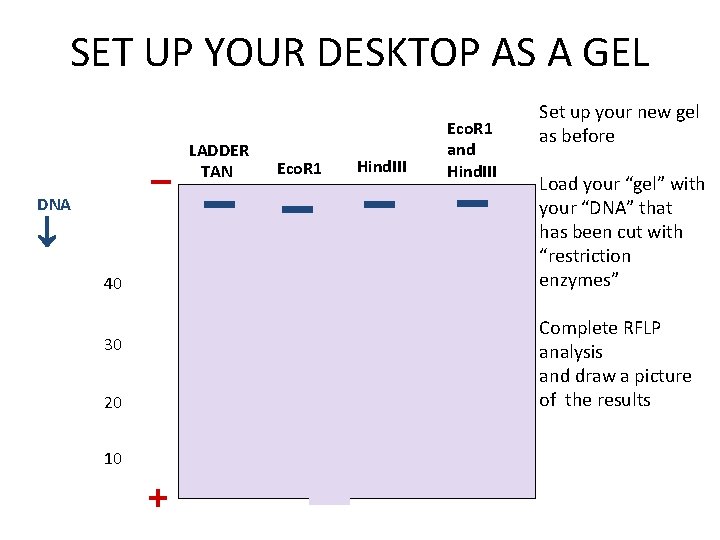
SET UP YOUR DESKTOP AS A GEL – DNA 40 LADDER TAN Eco. R 1 Hind. III Eco. R 1 and Hind. III Set up your new gel as before Load your “gel” with your “DNA” that has been cut with “restriction enzymes” Complete RFLP analysis and draw a picture of the results 30 20 10 +
EXPLAIN WHY DNA moves in an electric field toward the POSITIVE pole. EXPLAIN the relationship between FRAGMENT SIZE and DISTANCE MOVED on a gel.
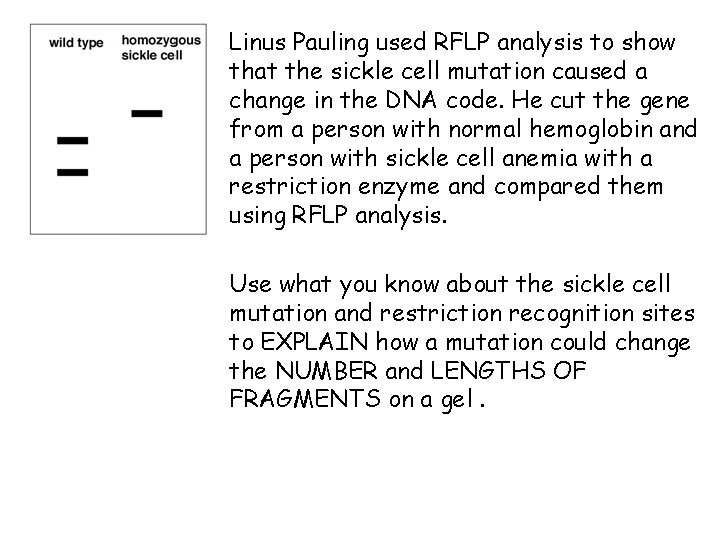
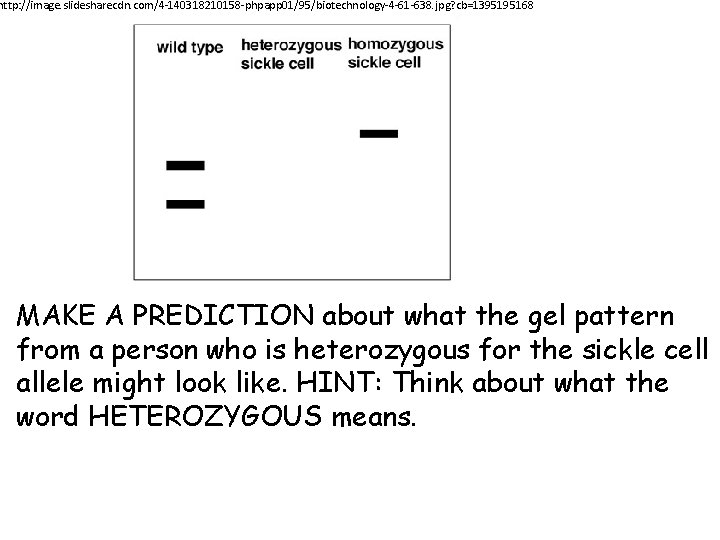
Linus Pauling used RFLP analysis to show that the sickle cell mutation caused a change in the DNA code. He cut the gene from a person with normal hemoglobin and a person with sickle cell anemia with a restriction enzyme and compared them using RFLP analysis. Use what you know about the sickle cell mutation and restriction recognition sites to EXPLAIN how a mutation could change the NUMBER and LENGTHS OF FRAGMENTS on a gel.
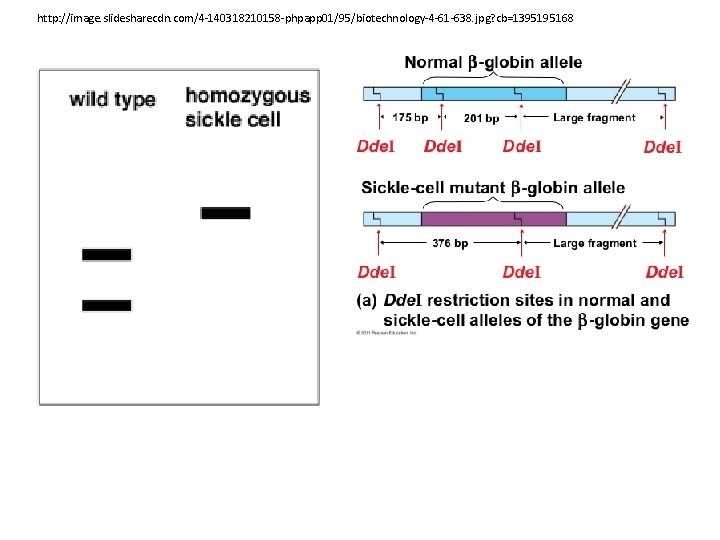
http: //image. slidesharecdn. com/4 -140318210158 -phpapp 01/95/biotechnology-4 -61 -638. jpg? cb=1395195168
http: //image. slidesharecdn. com/4 -140318210158 -phpapp 01/95/biotechnology-4 -61 -638. jpg? cb=1395195168 MAKE A PREDICTION about what the gel pattern from a person who is heterozygous for the sickle cell allele might look like. HINT: Think about what the word HETEROZYGOUS means.
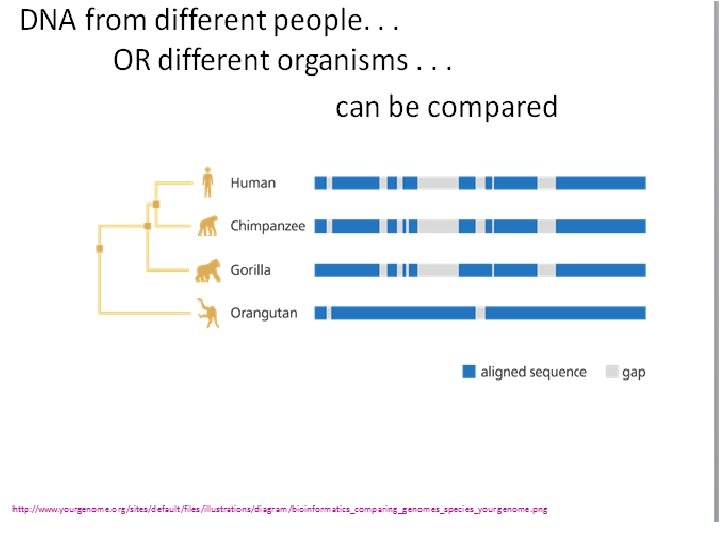
Give at least FOUR (4) EXAMPLES of how DNA ANALYSIS can be used to compare DNA.