
SOME RESULTS IN GRAPH THEORY 1 A graph
- Slides: 34
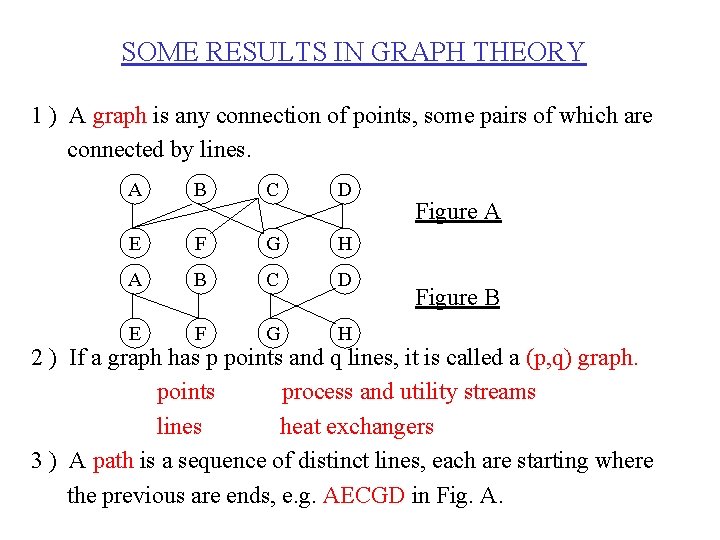
SOME RESULTS IN GRAPH THEORY 1 ) A graph is any connection of points, some pairs of which are connected by lines. A B C D E F G H Figure A Figure B 2 ) If a graph has p points and q lines, it is called a (p, q) graph. points process and utility streams lines heat exchangers 3 ) A path is a sequence of distinct lines, each are starting where the previous are ends, e. g. AECGD in Fig. A.
SOME RESULTS IN GRAPH THEORY 4 ) A graph is connected if any two points can be joined by a path, e. g. Fig. A 5 ) Points which are connected to some fired point by paths are said to form a component, e. g. Fig A has one component. Fig B has two components. 6 ) A cycle is a path which begins and ends at the same point, e. g. CGDHC in Fig. A. 7 ) The maximum number of independent cycles is called the cycle rank of the graph. 8 ) The cycle rank of a (p, q) graph with k components is q-p+k
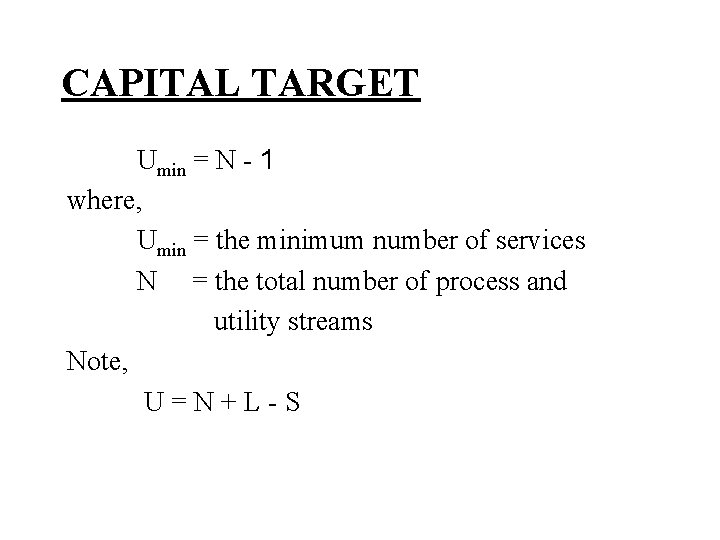
A Result Based on Graph Theory U = N+L-S Where, N = the total number of process and utility streams L = the number of independent loops S = the number of separate component in a network U = the number of heat exchanger services
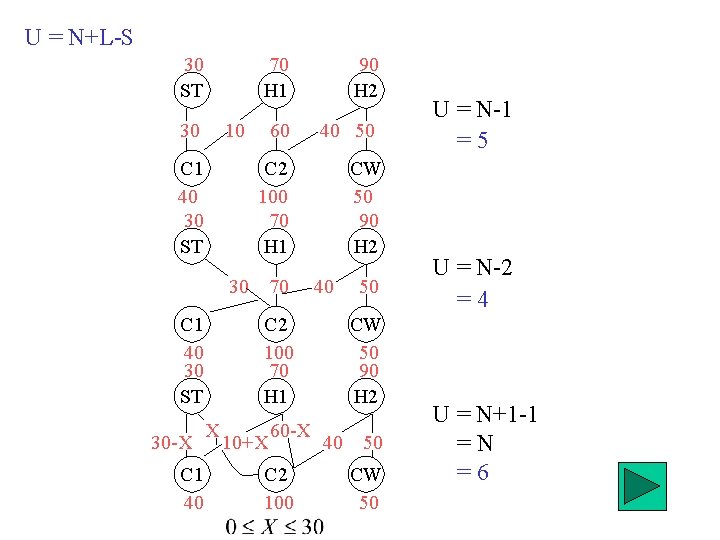
U = N+L-S 30 ST 30 70 H 1 90 H 2 60 40 50 10 C 1 40 30 ST C 2 100 70 H 1 30 C 1 40 30 ST 30 -X C 1 40 70 CW 50 90 H 2 40 C 2 100 70 H 1 X 10+X 60 -X C 2 100 50 CW 50 90 H 2 40 50 CW 50 U = N-1 =5 U = N-2 =4 U = N+1 -1 =N =6
CAPITAL TARGET Umin = N - 1 where, Umin = the minimum number of services N = the total number of process and utility streams Note, U=N+L-S
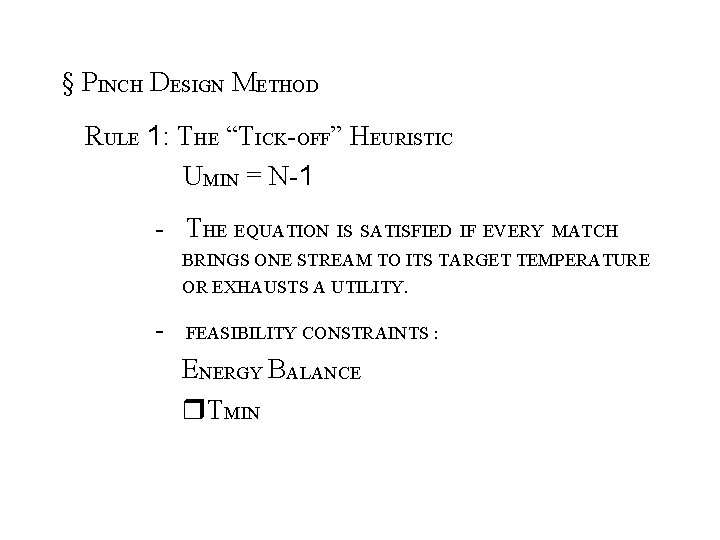
§ PINCH DESIGN METHOD RULE 1: THE “TICK-OFF” HEURISTIC UMIN = N-1 - THE EQUATION IS SATISFIED IF EVERY MATCH BRINGS ONE STREAM TO ITS TARGET TEMPERATURE OR EXHAUSTS A UTILITY. - FEASIBILITY CONSTRAINTS : ENERGY BALANCE TMIN
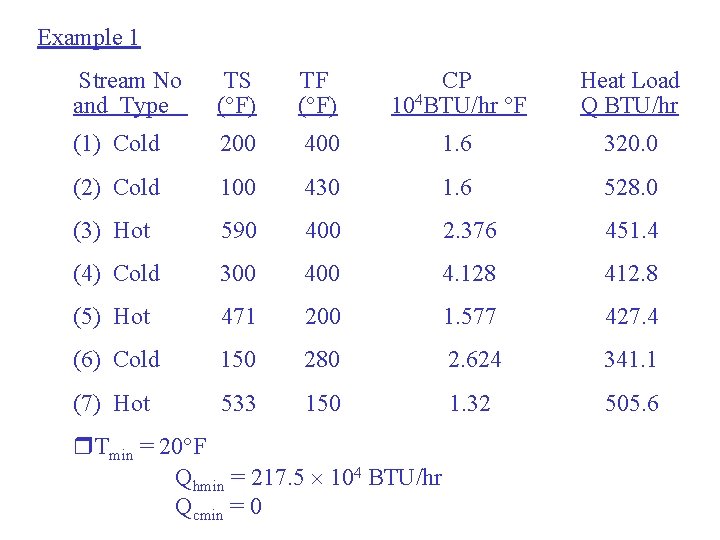
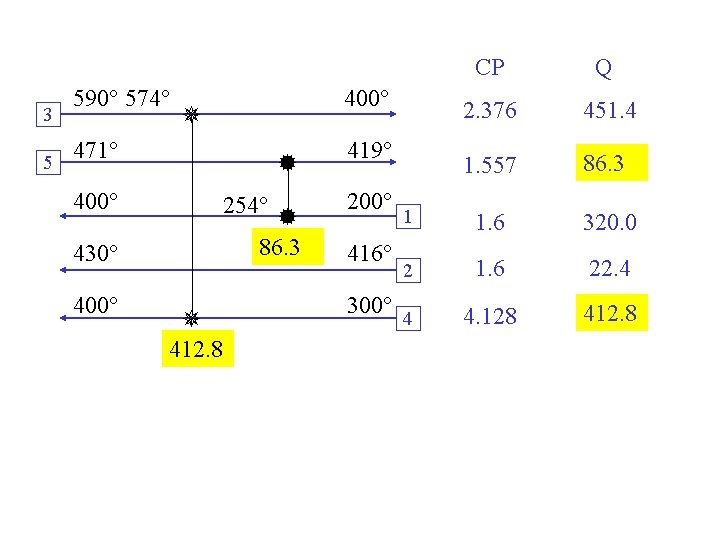
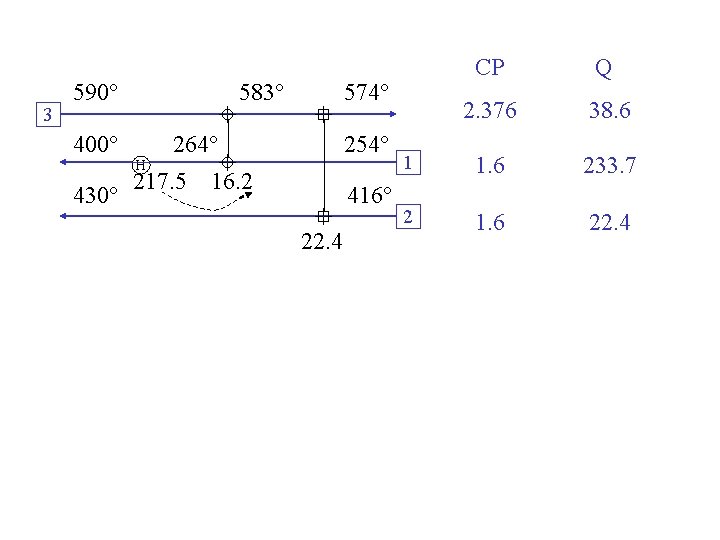
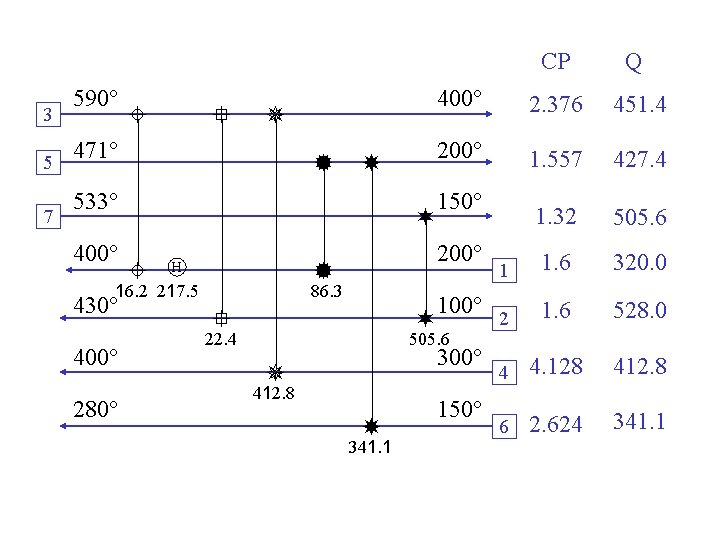
Example 1 Stream No and Type TS ( F) TF ( F) CP 104 BTU/hr F Heat Load Q BTU/hr (1) Cold 200 400 1. 6 320. 0 (2) Cold 100 430 1. 6 528. 0 (3) Hot 590 400 2. 376 451. 4 (4) Cold 300 4. 128 412. 8 (5) Hot 471 200 1. 577 427. 4 (6) Cold 150 280 2. 624 341. 1 (7) Hot 533 150 1. 32 505. 6 Tmin = 20 F Qhmin = 217. 5 104 BTU/hr Qcmin = 0
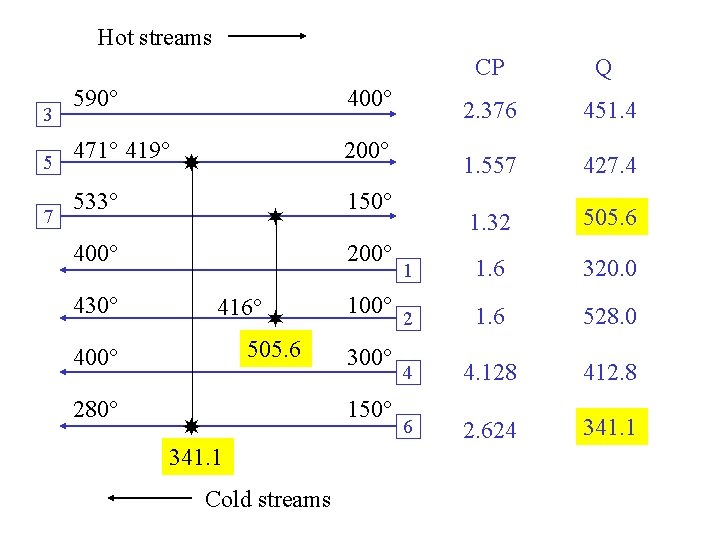
Hot streams 3 5 7 590 2. 376 451. 4 1. 557 427. 4 1. 32 505. 6 1 1. 6 320. 0 2 1. 6 528. 0 4 4. 128 412. 8 6 2. 624 341. 1 200 533 400 150 200 416 505. 6 400 280 Q 400 471 419 430 CP 341. 1 Cold streams 100 300 150
3 5 590 574 Q 2. 376 451. 4 1. 557 86. 3 1 1. 6 320. 0 2 1. 6 22. 4 4 4. 128 412. 8 400 471 400 254 86. 3 430 400 CP 412. 8 419 200 416 300
3 590 583 400 264 H 217. 5 16. 2 430 Q 2. 376 38. 6 1 1. 6 233. 7 2 1. 6 22. 4 574 254 22. 4 CP 416
3 5 7 590 471 533 400 16. 2 217. 5 430 400 280 Q 400 2. 376 451. 4 200 1. 557 427. 4 1. 32 505. 6 1 1. 6 320. 0 2 1. 6 528. 0 4 4. 128 412. 8 6 2. 624 341. 1 150 200 H CP 86. 3 22. 4 100 505. 6 300 412. 8 341. 1 150
§ PINCH DESIGN METHOD RULE 2: DECOMPOSITION - THE HEN PROBLEM IS DIVIDED AT THE PINCH INTO SEPARATE DESIGN TASKS. - TH E DESIGN IS STARTED AT THE PINCH AND DEVELOPED MOVING AWAY FROM THE PINCH.
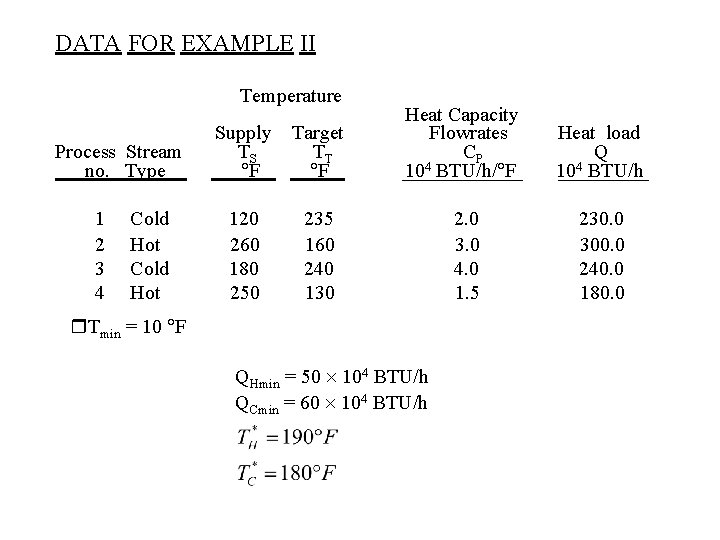
DATA FOR EXAMPLE II Temperature Process Stream no. Type 1 2 3 4 Cold Hot Supply TS F Target TT F Heat Capacity Flowrates CP 4 10 BTU/h/ F 120 260 180 250 235 160 240 130 2. 0 3. 0 4. 0 1. 5 Tmin = 10 F QHmin = 50 104 BTU/h QCmin = 60 104 BTU/h Heat load Q 4 10 BTU/h 230. 0 300. 0 240. 0 180. 0
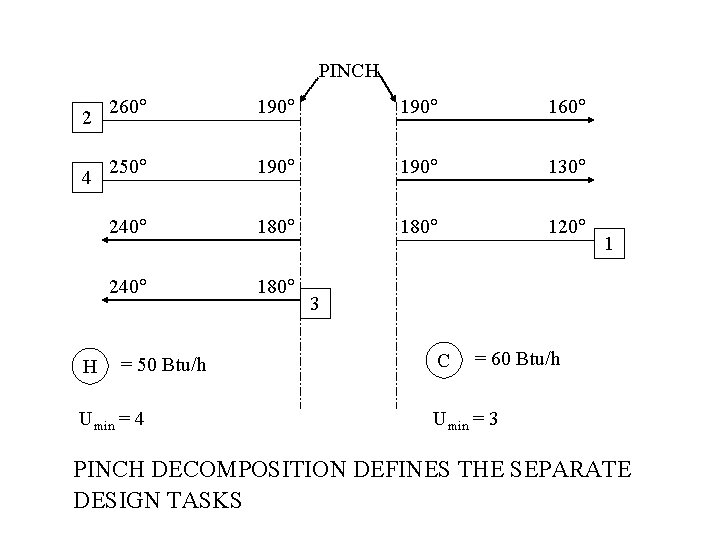
PINCH 2 4 H 260 190 160 250 190 130 240 180 120 240 180 = 50 Btu/h Umin = 4 1 3 C = 60 Btu/h Umin = 3 PINCH DECOMPOSITION DEFINES THE SEPARATE DESIGN TASKS
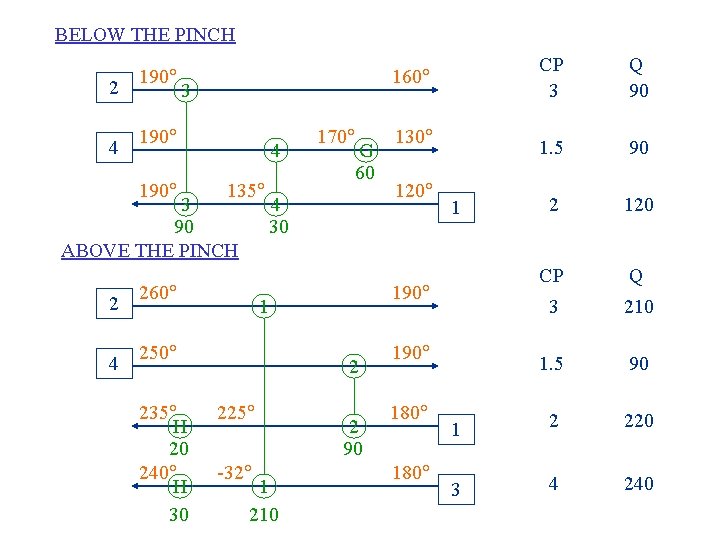
BELOW THE PINCH 2 4 190 3 190 4 190 135 3 4 90 30 ABOVE THE PINCH 2 4 260 170 G 60 Q 90 1. 5 90 2 120 CP Q 3 210 1. 5 90 2 225 1 2 220 -32 1 210 3 4 240 130 120 1 190 1 250 235 H 20 240 H 30 CP 3 160 2 90 180 180
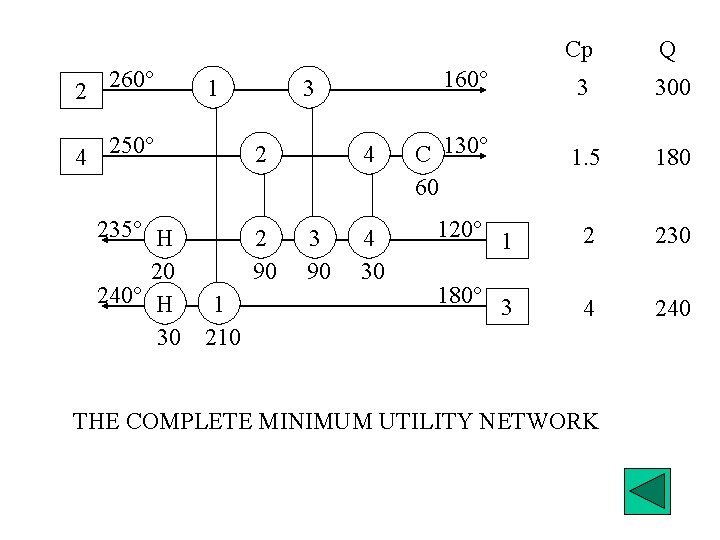
2 260 1 4 250 235 H 20 240 H 30 2 90 1 210 4 3 90 Q 3 300 1. 5 180 120 1 2 230 180 3 4 240 160 3 2 Cp 4 30 C 130 60 THE COMPLETE MINIMUM UTILITY NETWORK
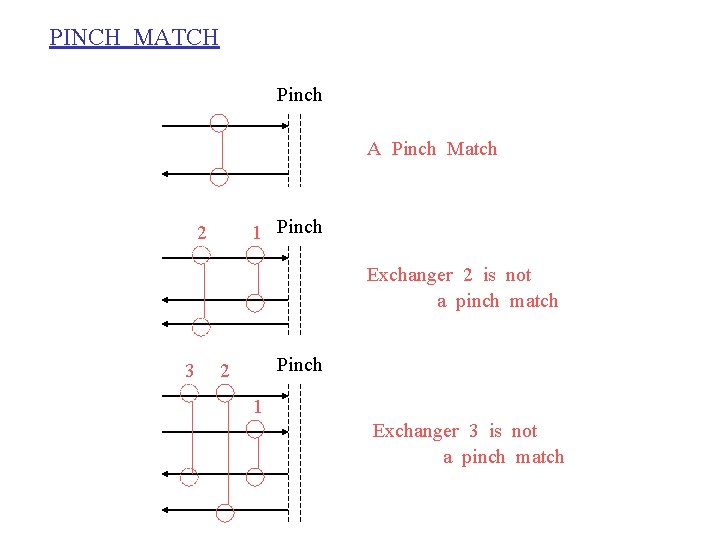
PINCH MATCH Pinch A Pinch Match 1 Pinch 2 Exchanger 2 is not a pinch match 3 Pinch 2 1 Exchanger 3 is not a pinch match
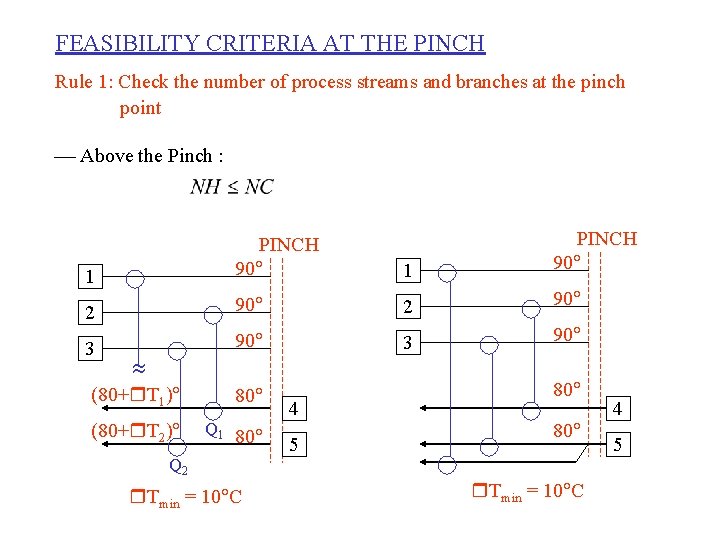
FEASIBILITY CRITERIA AT THE PINCH Rule 1: Check the number of process streams and branches at the pinch point Above the Pinch : 1 PINCH 90 2 90 3 90 (80+ T 1) 80 (80+ T 2) Q 1 80 Q 2 Tmin = 10 C 4 5 80 80 Tmin = 10 C 4 5
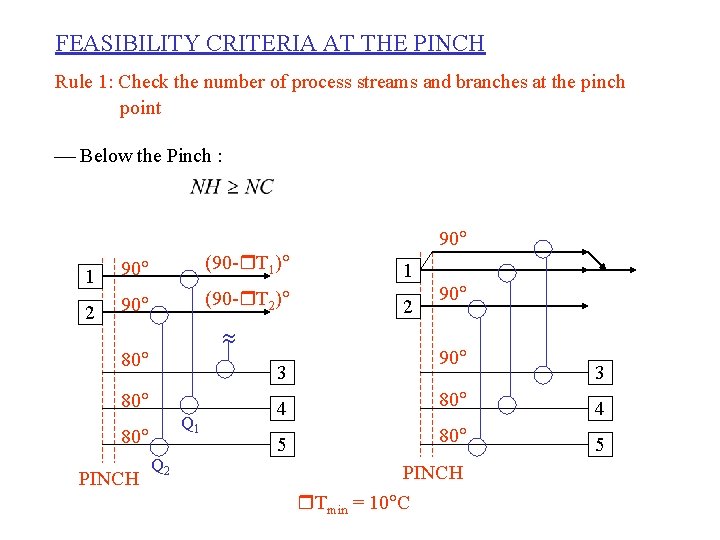
FEASIBILITY CRITERIA AT THE PINCH Rule 1: Check the number of process streams and branches at the pinch point Below the Pinch : 90 1 90 (90 - T 1) 1 2 90 (90 - T 2) 2 80 3 80 Q 1 80 PINCH Q 2 90 90 3 4 80 4 5 80 5 PINCH Tmin = 10 C
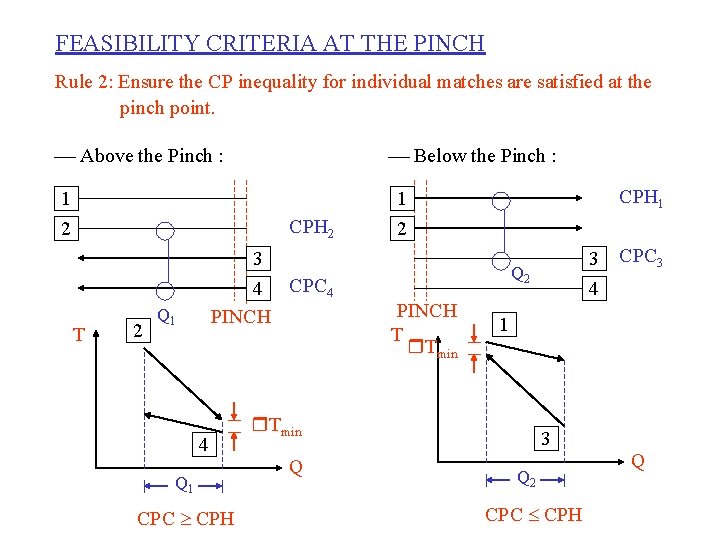
FEASIBILITY CRITERIA AT THE PINCH Rule 2: Ensure the CP inequality for individual matches are satisfied at the pinch point. Above the Pinch : 1 2 Below the Pinch : CPH 2 T 2 3 4 CPC 4 PINCH Q 1 4 Q 1 CPC CPH 1 1 2 Q 2 PINCH T Tmin CPC 3 1 Tmin Q 3 4 3 Q 2 CPC CPH Q
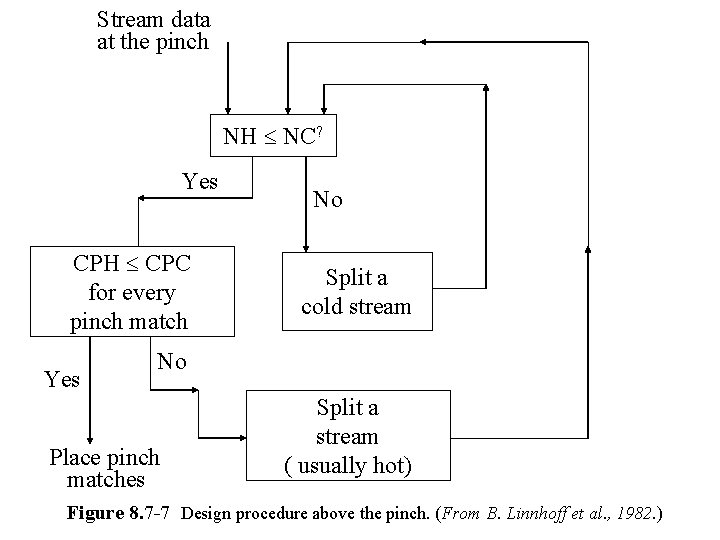
Stream data at the pinch NH NC? Yes CPH CPC for every pinch match Yes No Split a cold stream No Place pinch matches Split a stream ( usually hot) Figure 8. 7 -7 Design procedure above the pinch. (From B. Linnhoff et al. , 1982. )
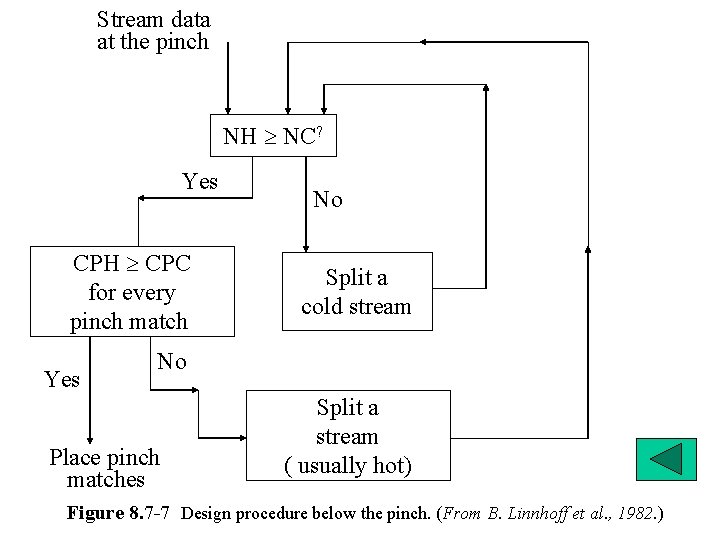
Stream data at the pinch NH NC? Yes CPH CPC for every pinch match Yes No Split a cold stream No Place pinch matches Split a stream ( usually hot) Figure 8. 7 -7 Design procedure below the pinch. (From B. Linnhoff et al. , 1982. )
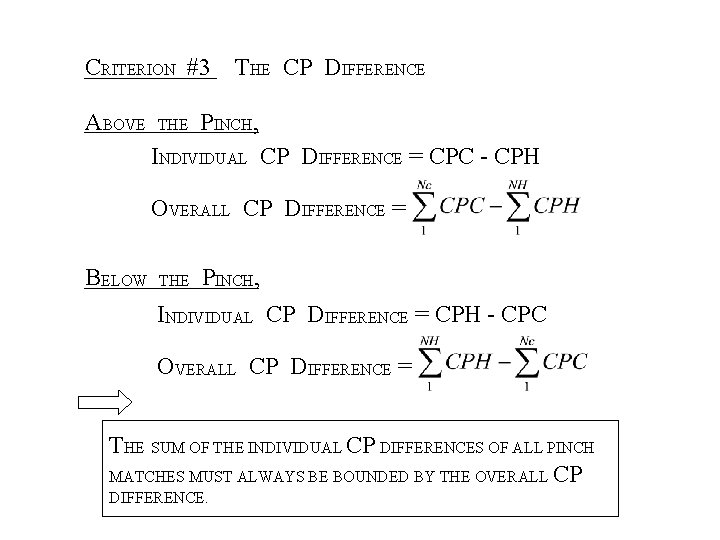
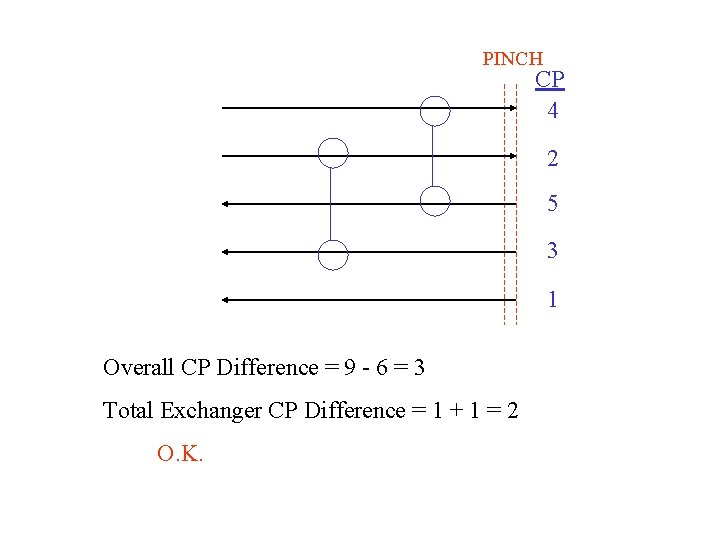
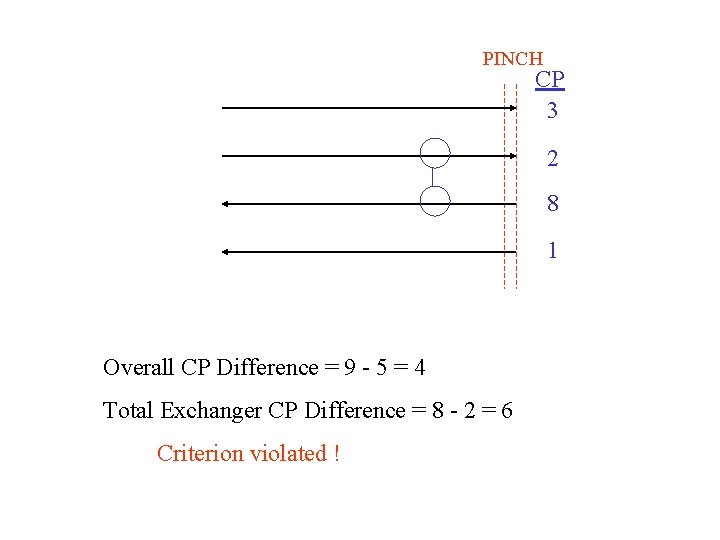
CRITERION #3 ABOVE THE CP DIFFERENCE PINCH, INDIVIDUAL CP DIFFERENCE = CPC - CPH OVERALL CP DIFFERENCE = BELOW THE PINCH, INDIVIDUAL CP DIFFERENCE = CPH - CPC OVERALL CP DIFFERENCE = THE SUM OF THE INDIVIDUAL CP DIFFERENCES OF ALL PINCH MATCHES MUST ALWAYS BE BOUNDED BY THE OVERALL CP DIFFERENCE.
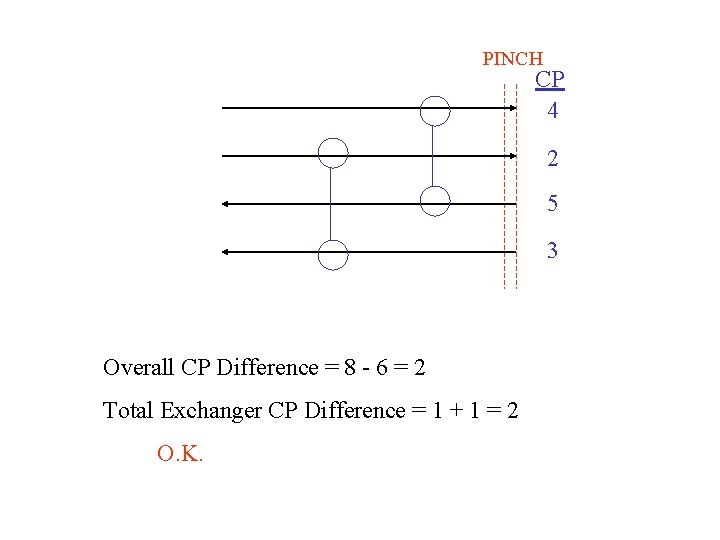
PINCH CP 4 2 5 3 Overall CP Difference = 8 - 6 = 2 Total Exchanger CP Difference = 1 + 1 = 2 O. K.
PINCH CP 4 2 5 3 1 Overall CP Difference = 9 - 6 = 3 Total Exchanger CP Difference = 1 + 1 = 2 O. K.
PINCH CP 3 2 8 1 Overall CP Difference = 9 - 5 = 4 Total Exchanger CP Difference = 8 - 2 = 6 Criterion violated !
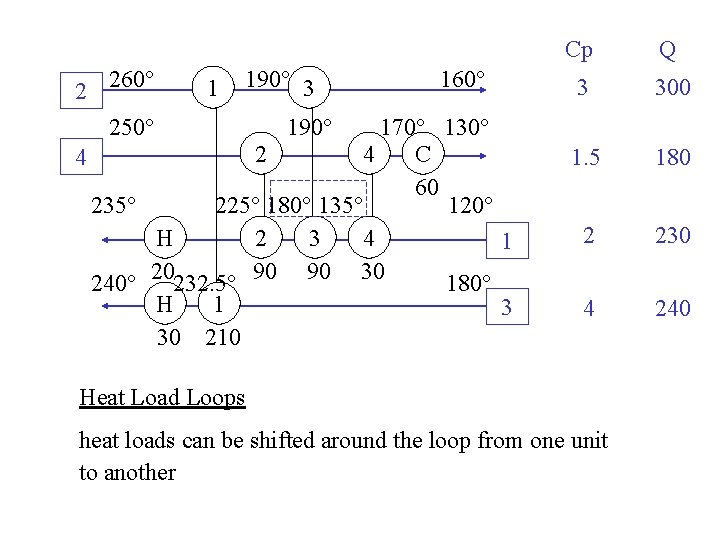
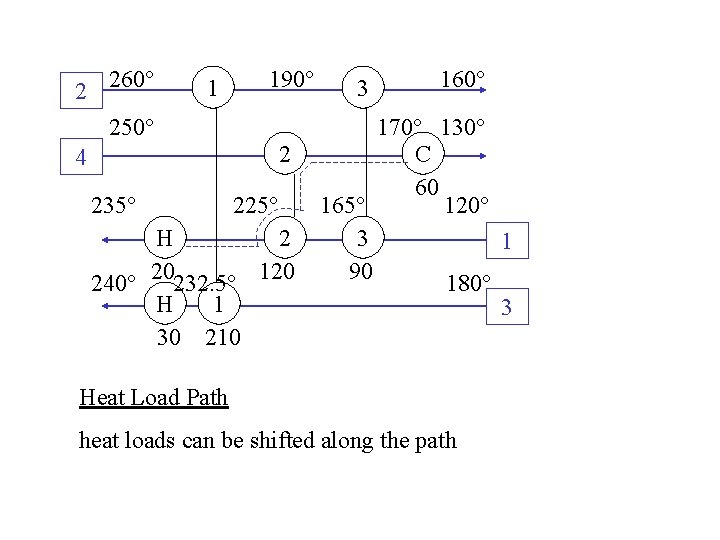
2 260 1 190 3 250 160 170 130 2 4 C 4 60 235 225 180 135 120 H 2 3 4 1 240 20232. 5 90 90 30 180 H 1 3 30 210 Cp Q 3 300 1. 5 180 2 230 4 240 190 Heat Load Loops heat loads can be shifted around the loop from one unit to another
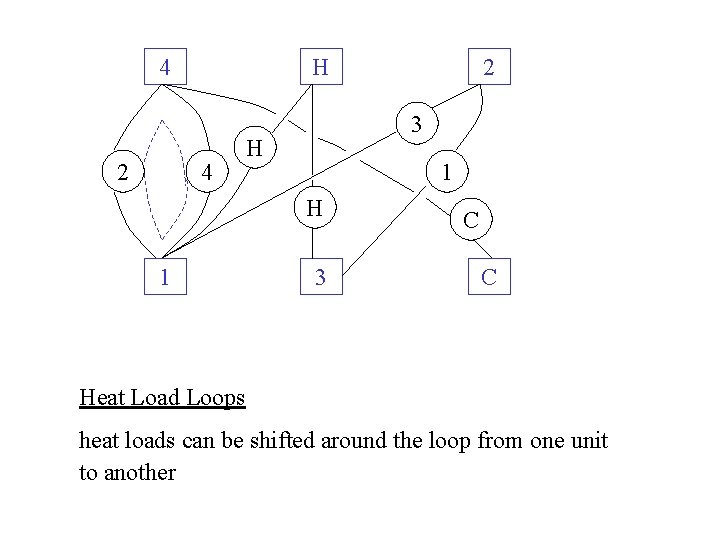
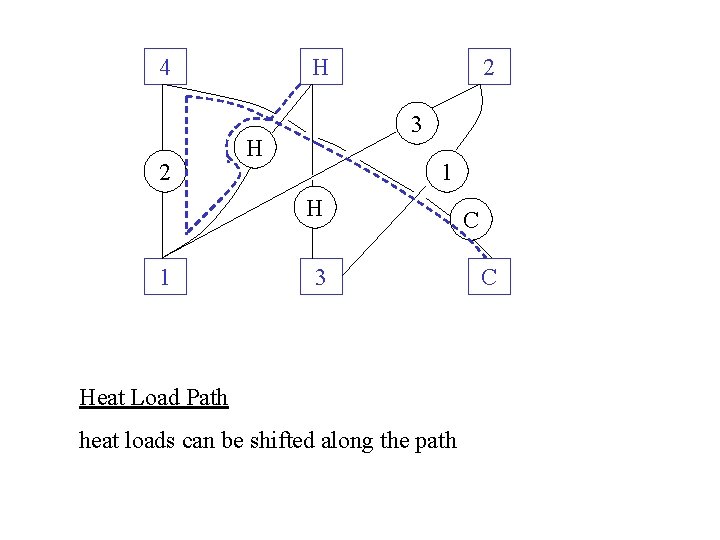
4 2 H 4 3 H 1 2 3 C C Heat Load Loops heat loads can be shifted around the loop from one unit to another
2 260 1 190 250 2 4 235 225 H 2 240 20232. 5 120 H 1 30 210 3 160 170 130 C 60 165 120 3 1 90 180 3 Heat Load Path heat loads can be shifted along the path
4 2 H 2 3 H 1 3 Heat Load Path heat loads can be shifted along the path C C
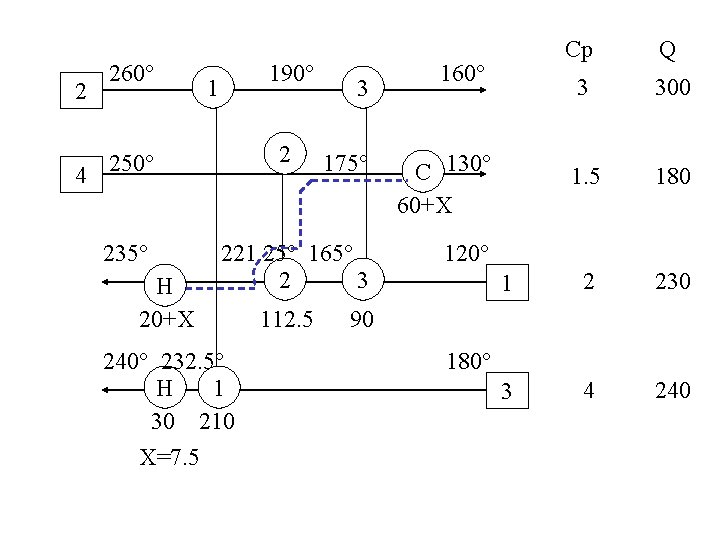
2 260 190 1 2 4 250 235 H 20+X 3 C 130 60+X 221. 25 165 2 3 120 240 232. 5 H 1 30 210 X=7. 5 Q 3 300 1. 5 180 1 2 230 3 4 240 160 175 112. 5 Cp 90 180
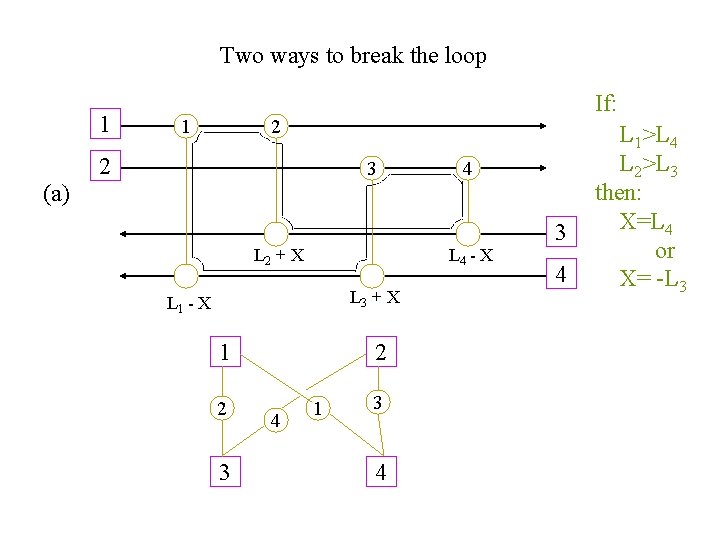
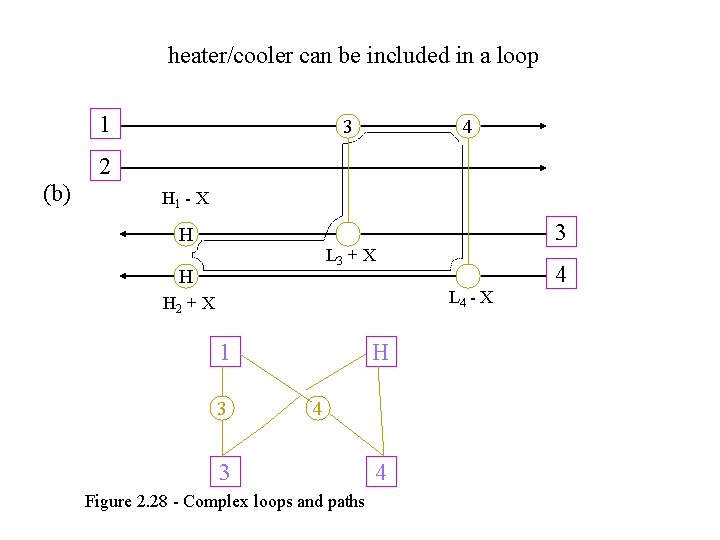
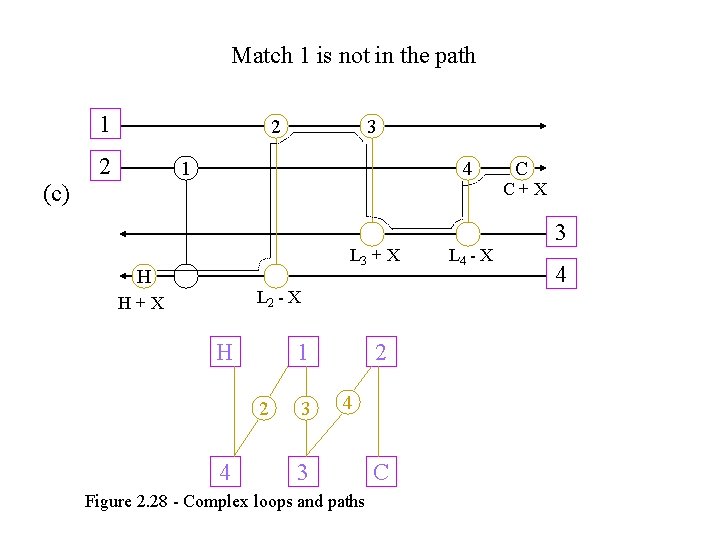
Two ways to break the loop 1 1 If: 2 2 3 (a) L 2 + X L 4 - X L 3 + X L 1 - X 1 2 3 2 4 4 1 3 4 L 1>L 4 L 2>L 3 then: X=L 4 or X= -L 3
heater/cooler can be included in a loop 1 3 4 2 (b) H 1 - X H 3 L 3 + X H L 4 - X H 2 + X 1 3 H 4 3 Figure 2. 28 - Complex loops and paths 4 4
Match 1 is not in the path 1 2 2 3 1 (c) 4 L 3 + X H L 2 - X H+X H 1 2 4 3 Figure 2. 28 - Complex loops and paths C L 4 - X C C+X 3 4