
Some points recommendations for diagnosis growth hormone deficiency



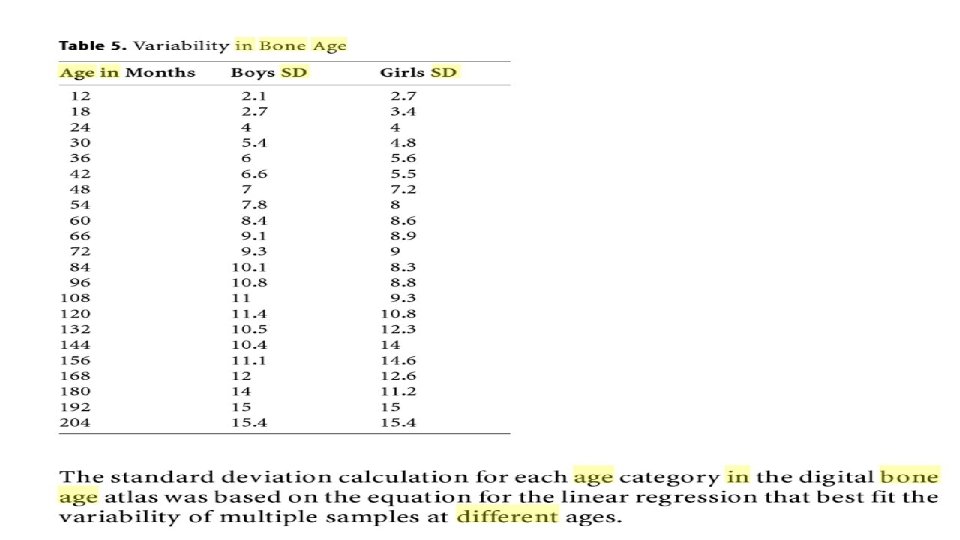













- Slides: 158
Some points & recommendations for diagnosis growth hormone deficiency in Children and Adolescents
Outline § Criteria to Initiate Evaluation for GHD § How to suspect growth hormone deficiency in a child & neonates ? § Utility of serum IGFBP 3& IGF 1 in the diagnosis of growth hormone deficiency § Interpretation of results of IGFBP 3& IGF 1 § Utility of random GH estimation in the diagnosis of GHD § Neonatal GH deficiency § Different GH dynamic tests
Outline § Children & neonates do not need to do GH provocative test § Limitations of GH dynamic tests in childhood GHD § How to define GH deficiency after GH dynamic tests ? § Cut-offs for GHD diagnosis during Transitional period § How to diagnose GH insensitivity syndrome § GH neurosecretory dysfunction § Diagnosis of GH deficiency in an adult
Almost always § Mothers are worry about the height's children § In spite of , they are not short
Growth Hormone Deficiency • The incidence of GHD is about 1: 4000 to 1: 10000 • A false positive diagnosis will lead to many years of daily subcutaneous injections, significant wasted expenditure (∼£ 7500 per year) and unnecessary exposure to potential adverse effects • Arch Dis Child 2016 • Up to date 2017
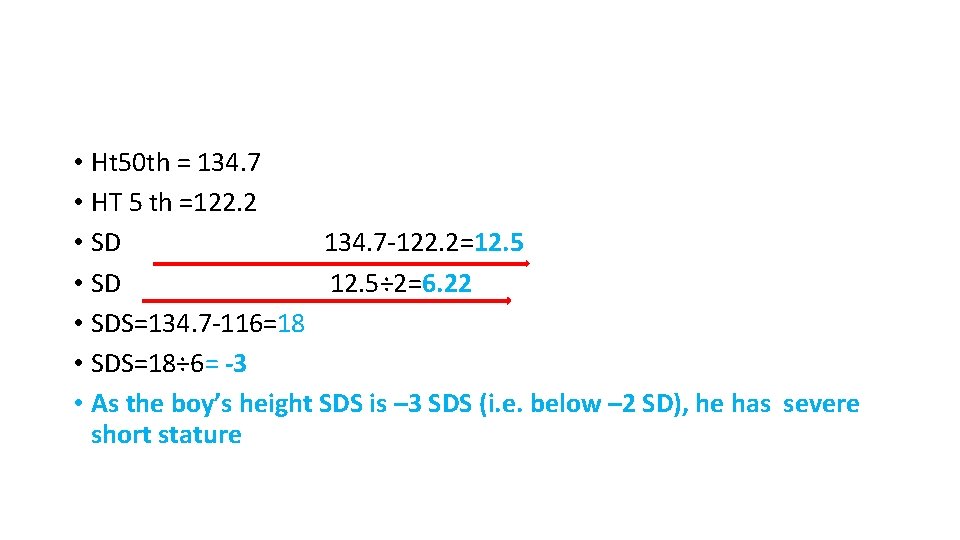
Calculation of height standard deviation score Example calculation: A 9 -year-old boy is 116 cm Boy’s age Mean Standard deviation (years) Kuczmarski et al. CDC growth charts. Vital Health Stat 2002; 11(246). 8. 0– 8. 49 128. 62 5. 76 8. 5– 8. 99 131. 58 5. 93 9. 0– 9. 49 134. 71 6. 22 9. 5– 9. 99 136. 91 6. 51 10. 0– 10. 49 139. 59 7. 67
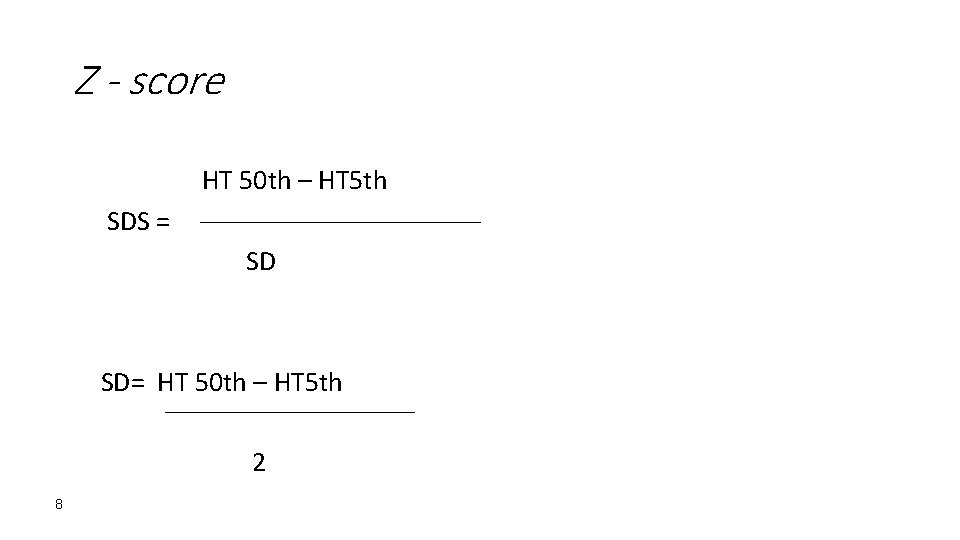
Z - score HT 50 th – HT 5 th SDS = SD= HT 50 th – HT 5 th 2 8
• Ht 50 th = 134. 7 • HT 5 th =122. 2 • SD 134. 7 -122. 2=12. 5 • SD 12. 5÷ 2=6. 22 • SDS=134. 7 -116=18 • SDS=18÷ 6= -3 • As the boy’s height SDS is – 3 SDS (i. e. below – 2 SD), he has severe short stature
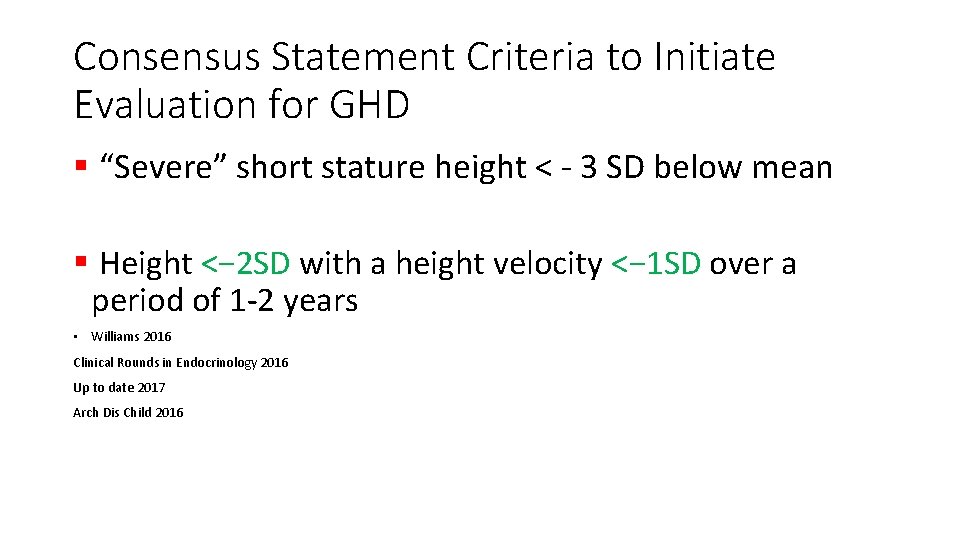
Consensus Statement Criteria to Initiate Evaluation for GHD § “Severe” short stature height < - 3 SD below mean § Height <− 2 SD with a height velocity <− 1 SD over a period of 1 -2 years • Williams 2016 Clinical Rounds in Endocrinology 2016 Up to date 2017 Arch Dis Child 2016
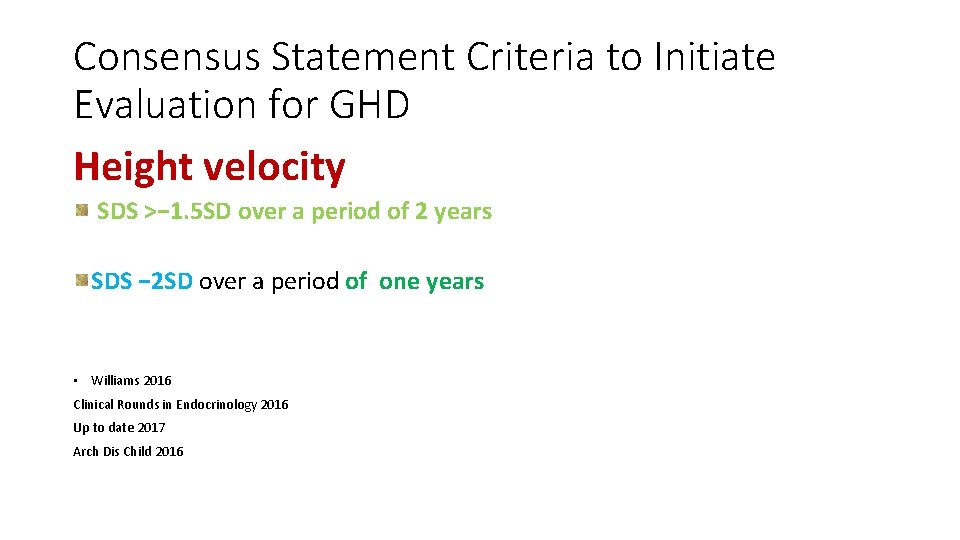
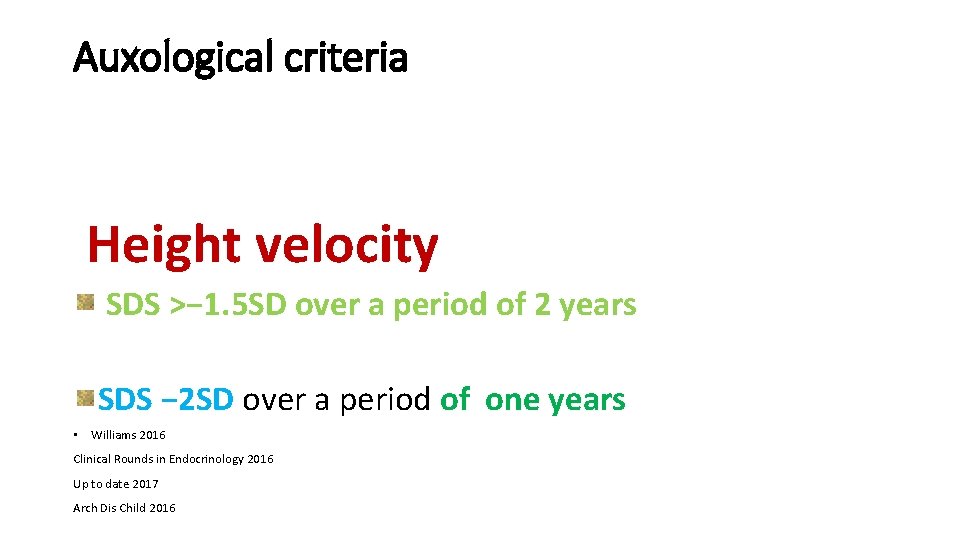
Consensus Statement Criteria to Initiate Evaluation for GHD Height velocity SDS >− 1. 5 SD over a period of 2 years SDS − 2 SD over a period of one years • Williams 2016 Clinical Rounds in Endocrinology 2016 Up to date 2017 Arch Dis Child 2016
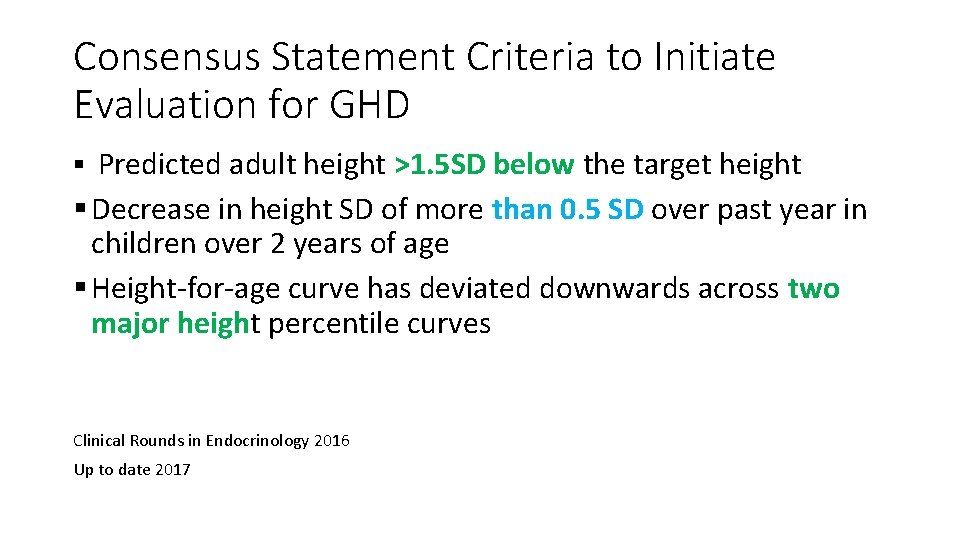
Consensus Statement Criteria to Initiate Evaluation for GHD § Predicted adult height >1. 5 SD below the target height § Decrease in height SD of more than 0. 5 SD over past year in children over 2 years of age § Height-for-age curve has deviated downwards across two major height percentile curves Clinical Rounds in Endocrinology 2016 Up to date 2017
Consensus Statement Criteria to Initiate Evaluation for GHD • Signs of an intracranial lesion • Signs of multiple pituitary hormone deficiency • Neonatal signs and symptoms of GHD • Curr Opin Endocrinol Diabetes Obes. 2013
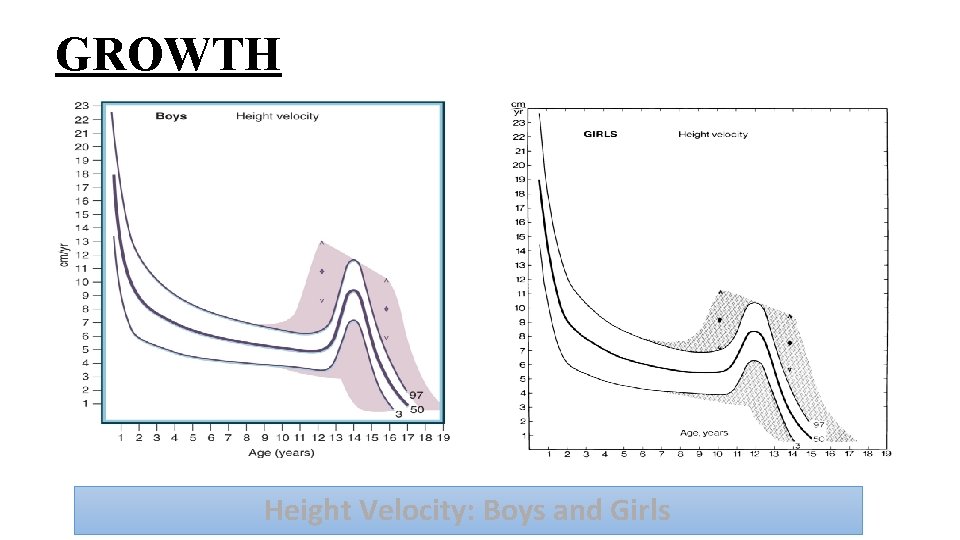
GROWTH Height Velocity: Boys and Girls
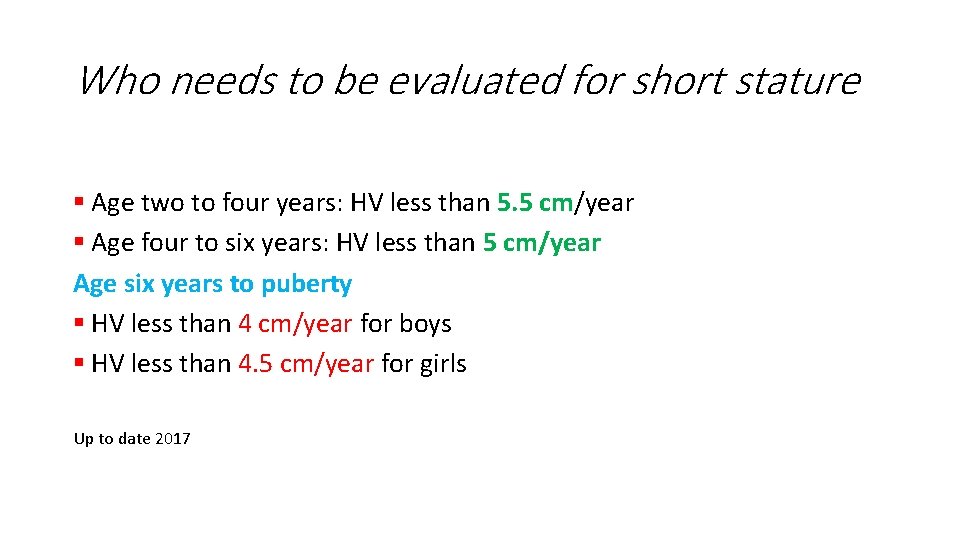
Who needs to be evaluated for short stature § Age two to four years: HV less than 5. 5 cm/year § Age four to six years: HV less than 5 cm/year Age six years to puberty § HV less than 4 cm/year for boys § HV less than 4. 5 cm/year for girls Up to date 2017
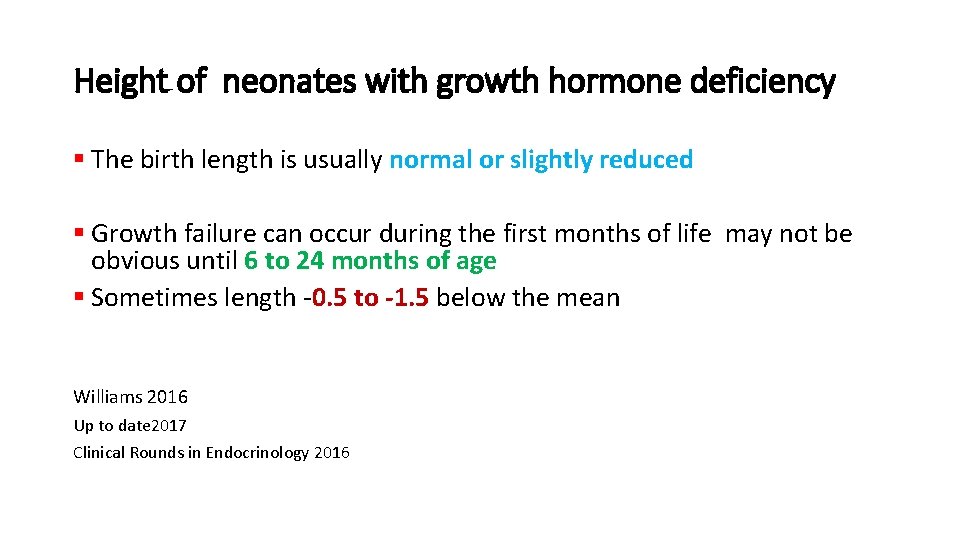
Height of neonates with growth hormone deficiency § The birth length is usually normal or slightly reduced § Growth failure can occur during the first months of life may not be obvious until 6 to 24 months of age § Sometimes length -0. 5 to -1. 5 below the mean Williams 2016 Up to date 2017 Clinical Rounds in Endocrinology 2016
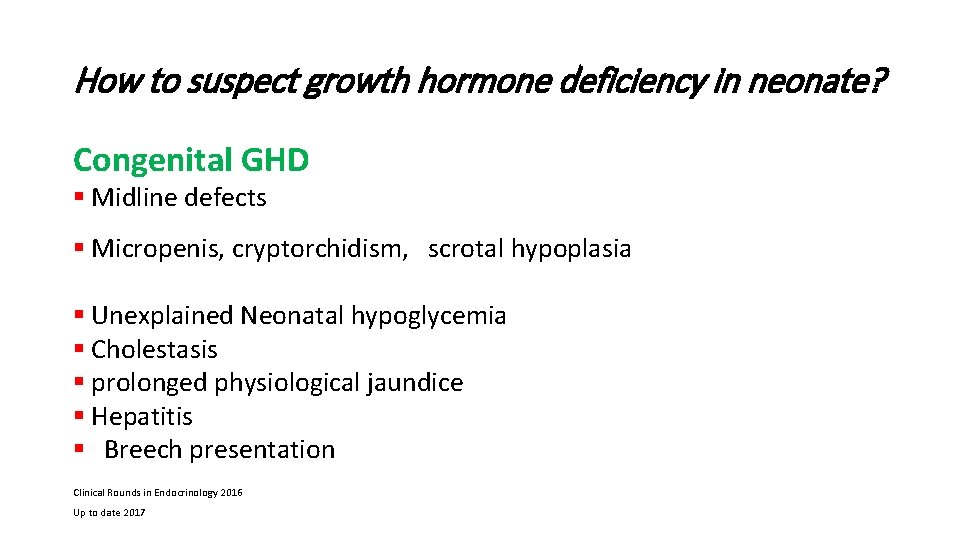
How to suspect growth hormone deficiency in neonate? Congenital GHD § Midline defects § Micropenis, cryptorchidism, scrotal hypoplasia § Unexplained Neonatal hypoglycemia § Cholestasis § prolonged physiological jaundice § Hepatitis § Breech presentation Clinical Rounds in Endocrinology 2016 Up to date 2017
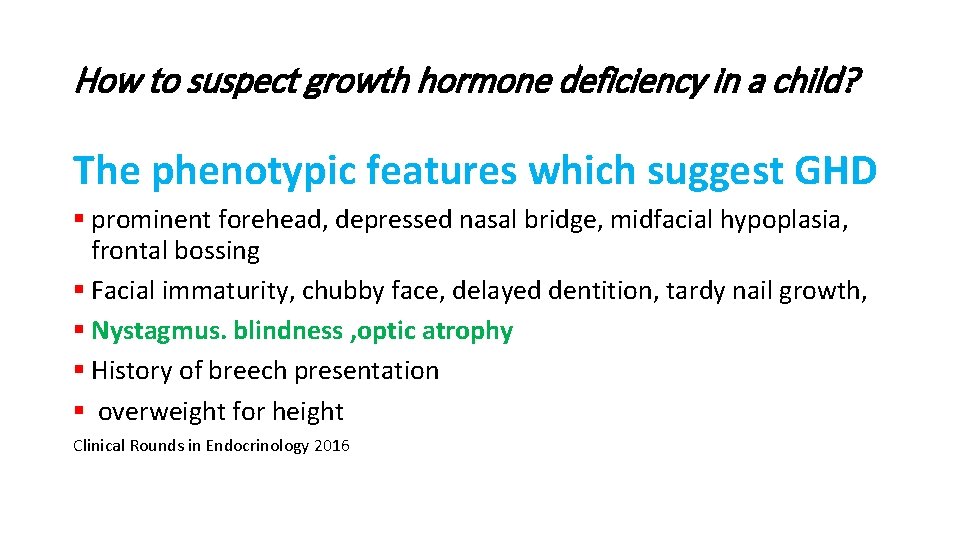
How to suspect growth hormone deficiency in a child? The phenotypic features which suggest GHD § prominent forehead, depressed nasal bridge, midfacial hypoplasia, frontal bossing § Facial immaturity, chubby face, delayed dentition, tardy nail growth, § Nystagmus. blindness , optic atrophy § History of breech presentation § overweight for height Clinical Rounds in Endocrinology 2016
How to suspect growth hormone deficiency in a child? § History of Cleft lip, cleft palate, or single central incisor, Bifid uvula § Doll-like, " or "angel-like § Infantile voice § Sparse and thin hair growth § Delay puberty Up to date 2017
How to suspect growth hormone deficiency in a child? • sellar–suprasellar pathology irrespective of auxological criteria • Other anterior pituitary hormone deficienciey • History of irradiation • Consanguinity Clinical Rounds in Endocrinology 2016
Diagnostic approach
What are the investigations required for evaluation of a short child § History and physical examination § Complete blood count § Creatinine § urine analysis § Bicarbonate § Calcium, phosphorous, alkaline phosphatase Clinical Rounds in Endocrinology 2016
What are the investigations required for evaluation of a short child § SGOT, SGPT, albumin § TSH, T 4 § Celiac serology § Karyotype § Hand X ray (Bone age for PAH), rickets, dysplasia Clinical Rounds in Endocrinology 2016
Diagnostic approach § Insulin-like growth factor I (IGF-I) § Insulin-like growth factor binding protein 3 (IGFBP-3) § Abnormal results of IGF-I and/or IGFBP-3 levels should be confirmed by provocative GH testing
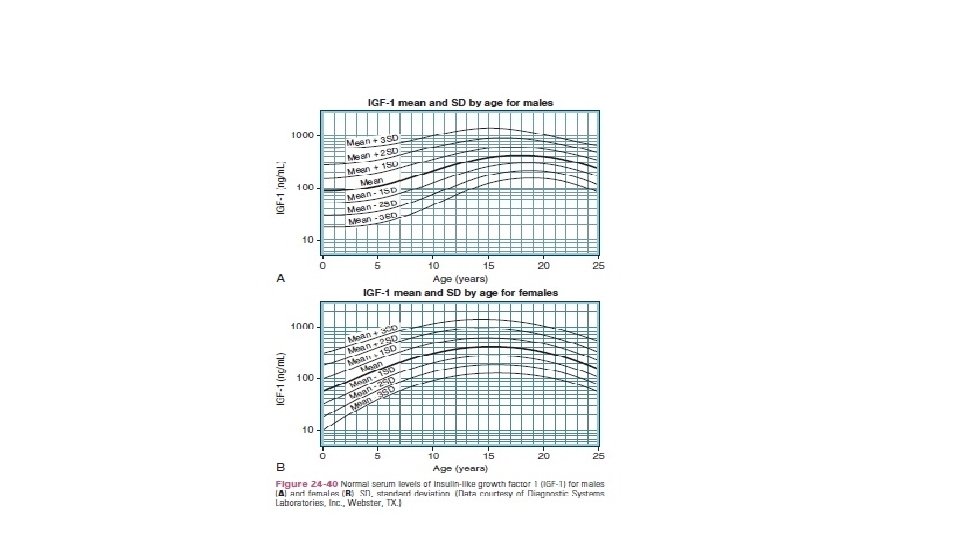
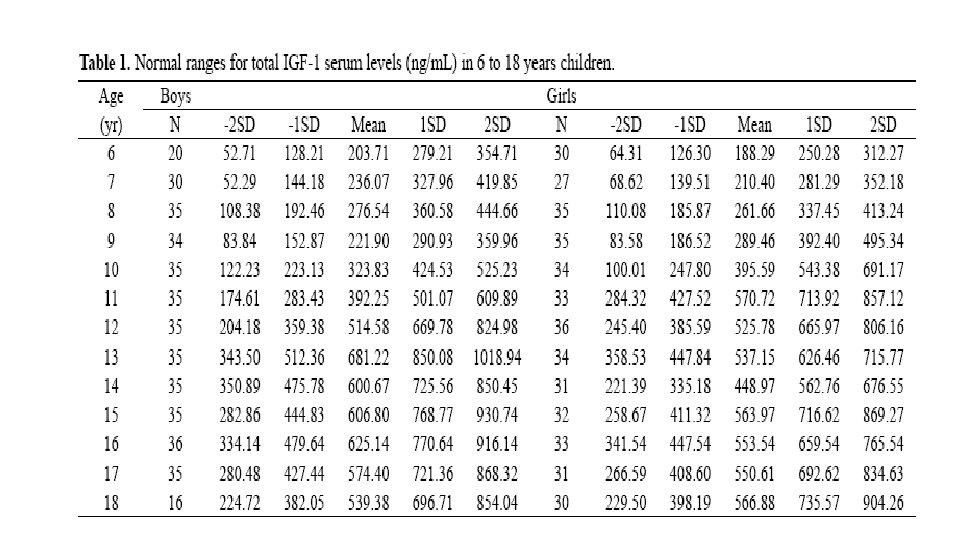
What are the merits and demerits of serum IGF 1 in the diagnosis of growth hormone deficiency ? § is a measure of integrated GH secretion § Half-lives of 12 to 16 hours § Minimal diurnal variation § is a useful tool for the assessment of GH–IGF 1 axis Clinical Rounds in Endocrinology 2016 Up to date 2017
What are the merits and demerits of serum IGF 1 in the diagnosis of growth hormone deficiency ? § sensitivity and specify of 70 % in older children § sensitivity is lesser (50 %) in younger children <6 years § A good screening test for the diagnosis of GHD in older children. § influenced by age , nutritional status, insulin, thyroid hormones, and gonadal steroids. renal failure, vitamin D. • Good reproducibility Clinical Rounds in Endocrinology 2016
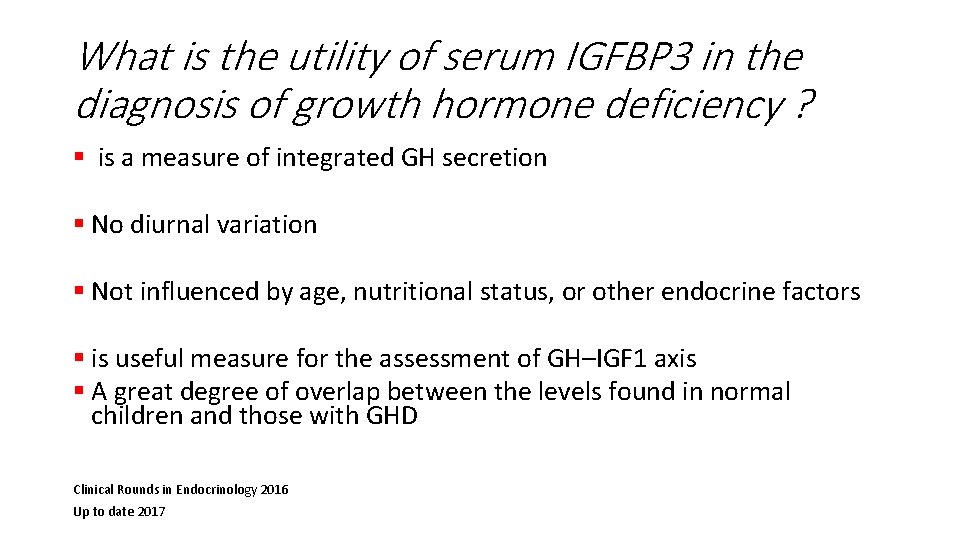
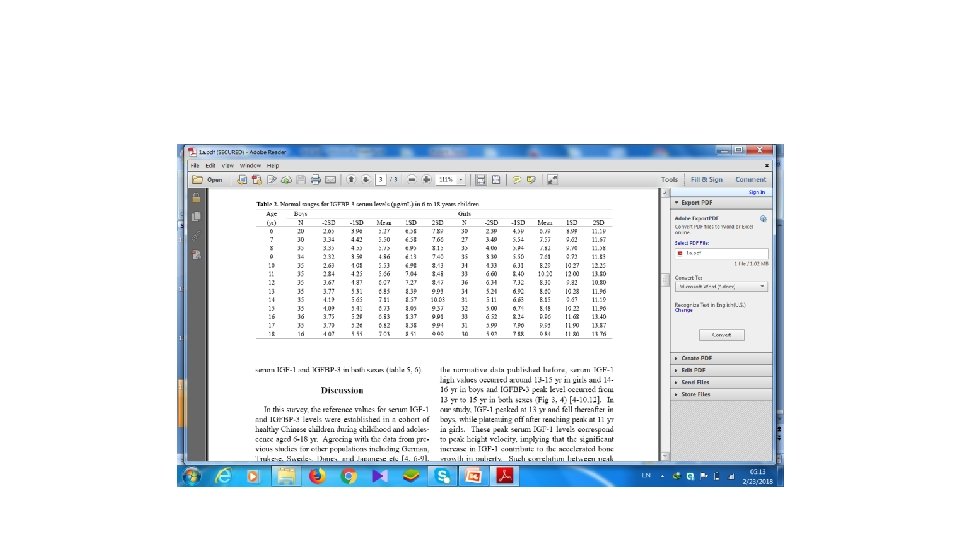
What is the utility of serum IGFBP 3 in the diagnosis of growth hormone deficiency ? § is a measure of integrated GH secretion § No diurnal variation § Not influenced by age, nutritional status, or other endocrine factors § is useful measure for the assessment of GH–IGF 1 axis § A great degree of overlap between the levels found in normal children and those with GHD Clinical Rounds in Endocrinology 2016 Up to date 2017
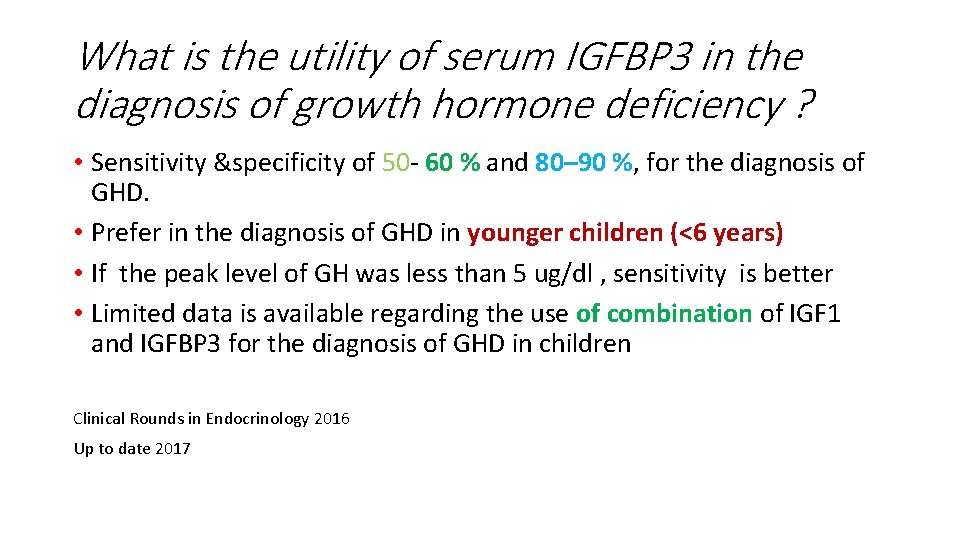
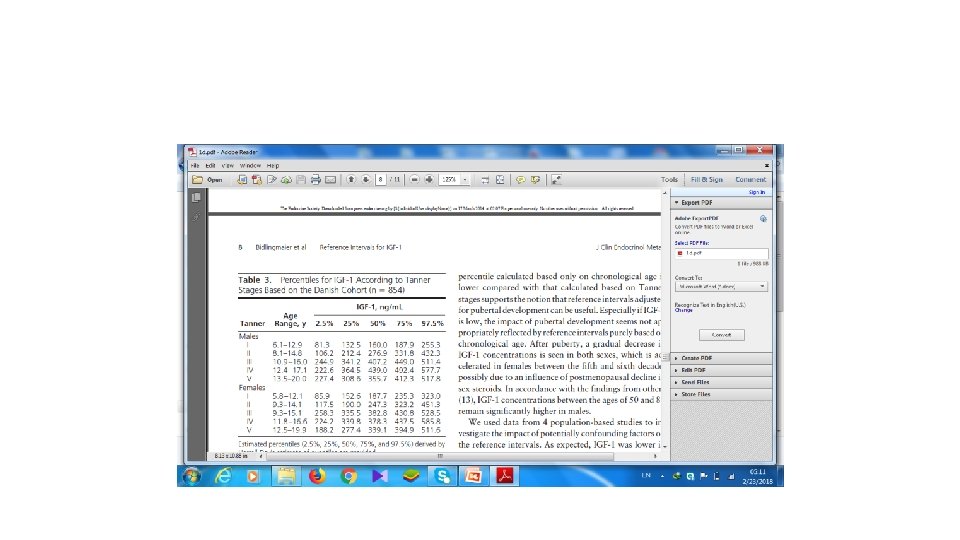
What is the utility of serum IGFBP 3 in the diagnosis of growth hormone deficiency ? • Sensitivity &specificity of 50 - 60 % and 80– 90 %, for the diagnosis of GHD. • Prefer in the diagnosis of GHD in younger children (<6 years) • If the peak level of GH was less than 5 ug/dl , sensitivity is better • Limited data is available regarding the use of combination of IGF 1 and IGFBP 3 for the diagnosis of GHD in children Clinical Rounds in Endocrinology 2016 Up to date 2017
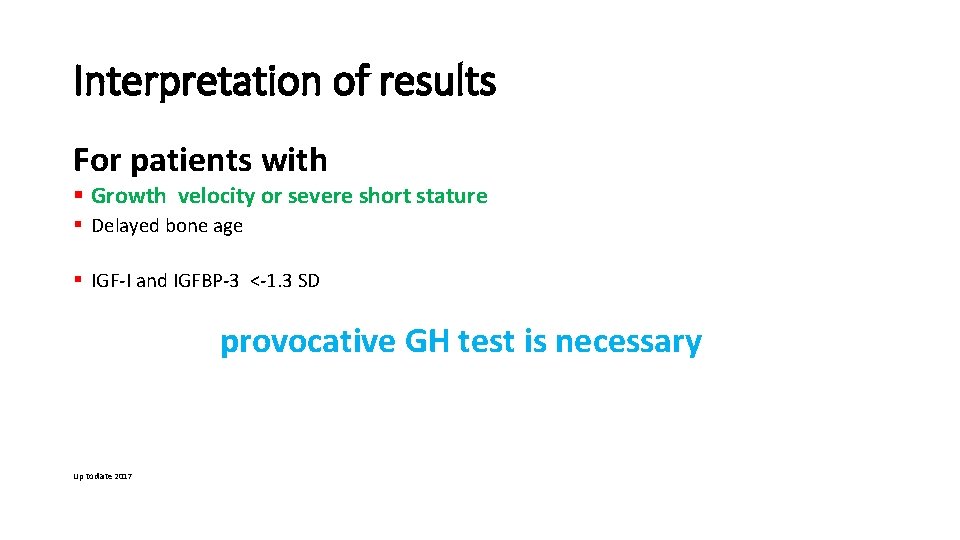
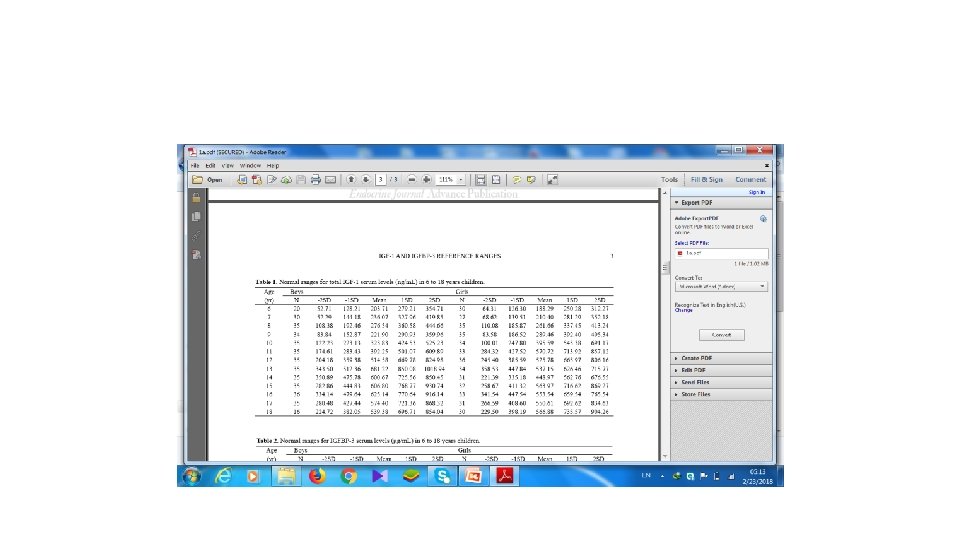
Interpretation of results For patients with § Growth velocity or severe short stature § Delayed bone age § IGF-I and IGFBP-3 <-1. 3 SD provocative GH test is necessary Up to date 2017
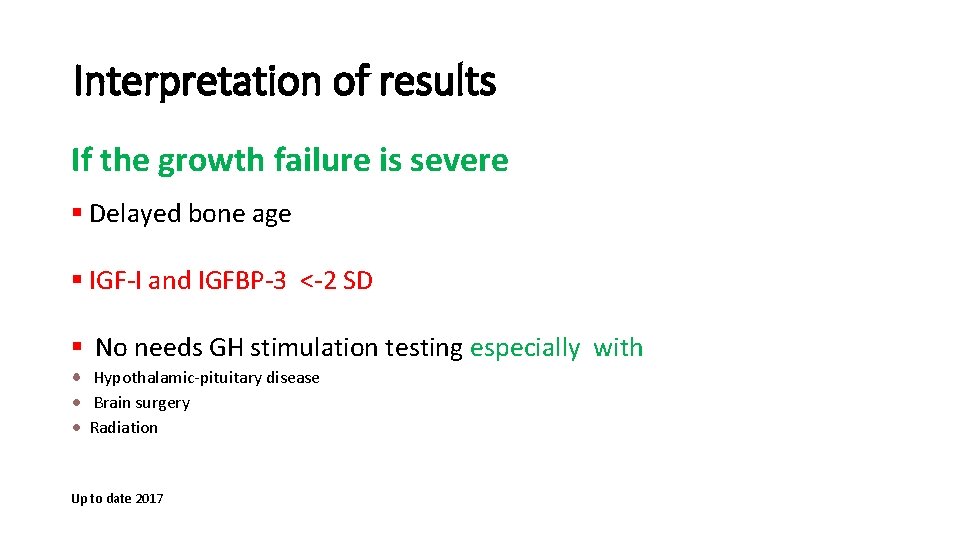
Interpretation of results If the growth failure is severe § Delayed bone age § IGF-I and IGFBP-3 <-2 SD § No needs GH stimulation testing especially with Hypothalamic-pituitary disease Brain surgery Radiation Up to date 2017
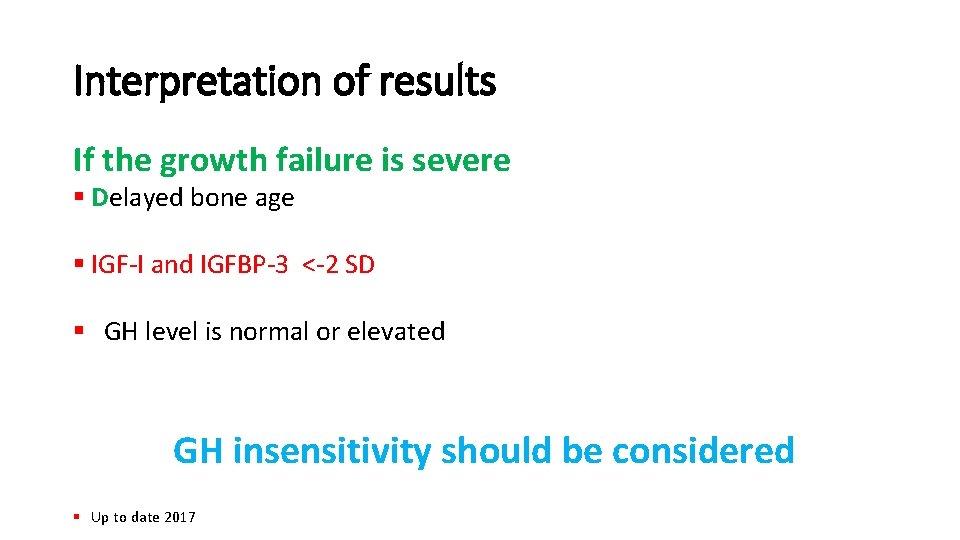
Interpretation of results If the growth failure is severe § Delayed bone age § IGF-I and IGFBP-3 <-2 SD § GH level is normal or elevated GH insensitivity should be considered § Up to date 2017
Interpretation of results If IGF-1 and IGFBP-3 0 to -1. 3 SD The decision about provocative GH testing depends on • Severity of growth failure • Degree of bone age delay • Unexplained low IGF 1 Up to date 2017
Interpretation of results • If IGF-1 and IGFBP-3 SD ≥ 0 upper half of the normal range • GHD is extremely unlikely • No further testing is required Up to date 2017
Interpretation of results If the results of IGF-1 and IGFBP-3 are discordant • IGF-1 takes precedence , except for infants and young children, in whom IGFBP-3 is better • Recommended to interpreted by stage of sexual development& BA Up to date 2017
What is the utility of random GH estimation in the diagnosis of GHD ? § Neonatal GHD § GH insensitivity. Horm Res Paediatr 2016 Clinical Rounds in Endocrinology 2016 •
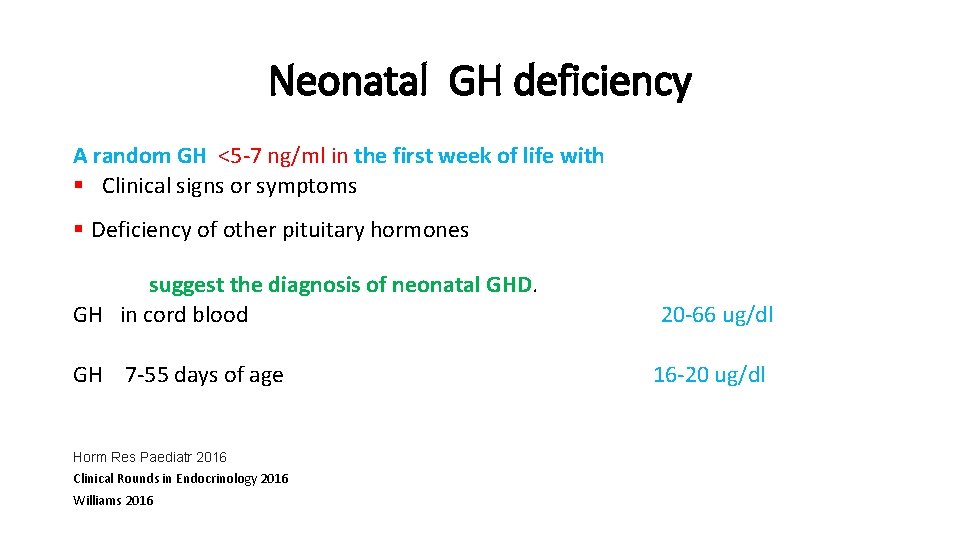
Neonatal GH deficiency A random GH <5 -7 ng/ml in the first week of life with § Clinical signs or symptoms § Deficiency of other pituitary hormones suggest the diagnosis of neonatal GHD. GH in cord blood 20 -66 ug/dl GH 7 -55 days of age 16 -20 ug/dl Horm Res Paediatr 2016 Clinical Rounds in Endocrinology 2016 Williams 2016
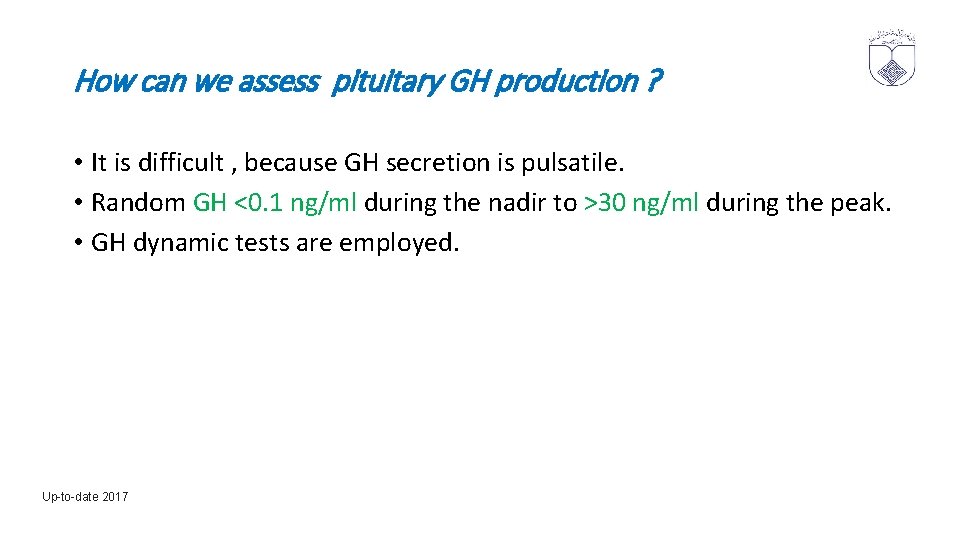
How can we assess pituitary GH production ? • It is difficult , because GH secretion is pulsatile. • Random GH <0. 1 ng/ml during the nadir to >30 ng/ml during the peak. • GH dynamic tests are employed. Up-to-date 2017
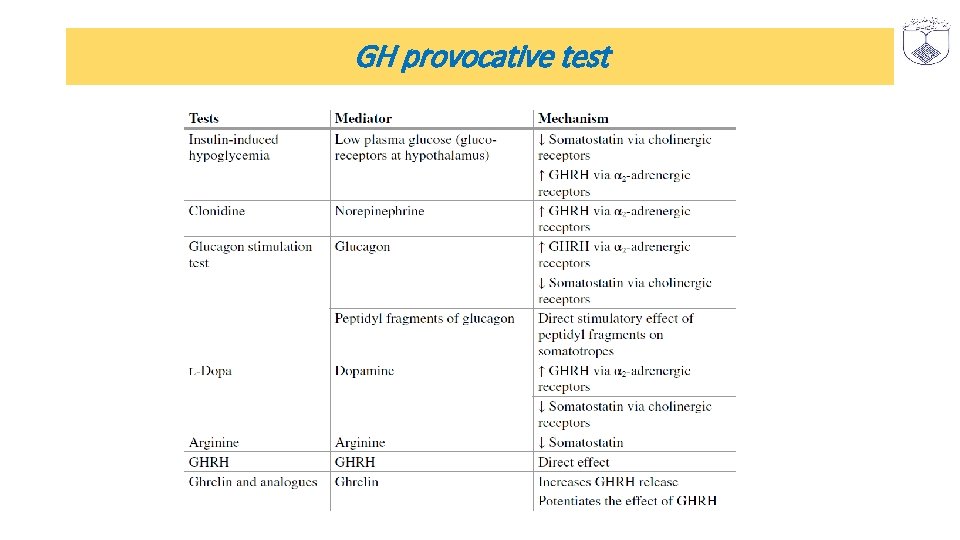
GH provocative test
What are the merits and demerits of different GH dynamic tests
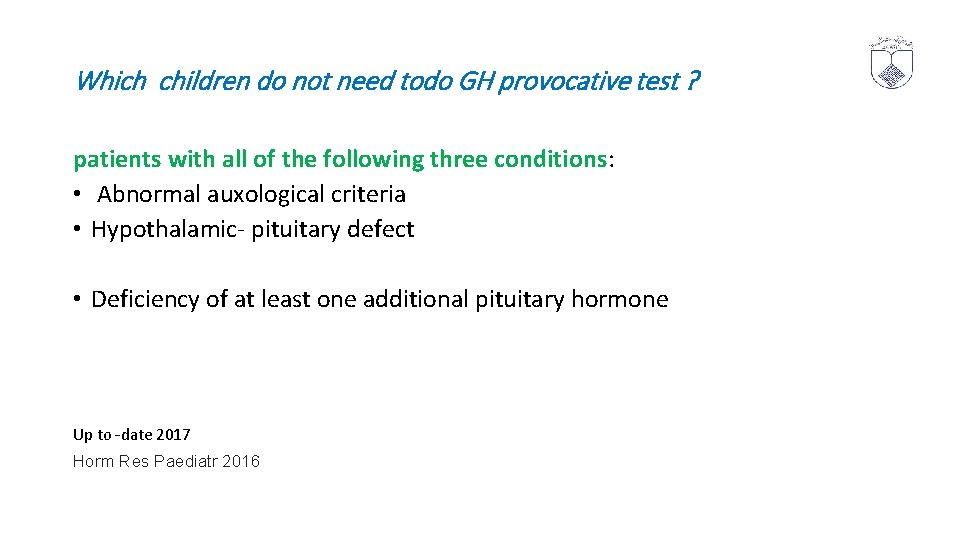
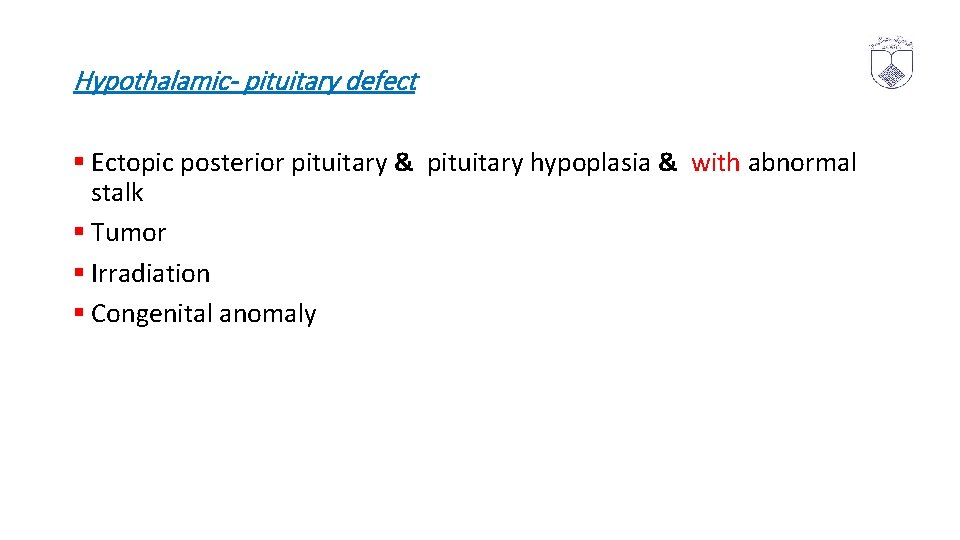
Which children do not need todo GH provocative test ? patients with all of the following three conditions: • Abnormal auxological criteria • Hypothalamic- pituitary defect • Deficiency of at least one additional pituitary hormone Up to -date 2017 Horm Res Paediatr 2016
Auxological criteria § “Severe” short stature (height < − 3 SD below mean § Height <− 2 SD with a height velocity <− 1 SD over a period of 1 -2 years Height velocity SDS >− 1. 5 SD over a period of 2 years SDS − 2 SD over a period of one years • Williams 2016 Clinical Rounds in Endocrinology 2016 Up to date 2017 Arch Dis Child 2016
Auxological criteria Height velocity SDS >− 1. 5 SD over a period of 2 years SDS − 2 SD over a period of one years • Williams 2016 Clinical Rounds in Endocrinology 2016 Up to date 2017 Arch Dis Child 2016
Hypothalamic- pituitary defect § Ectopic posterior pituitary & pituitary hypoplasia & with abnormal stalk § Tumor § Irradiation § Congenital anomaly
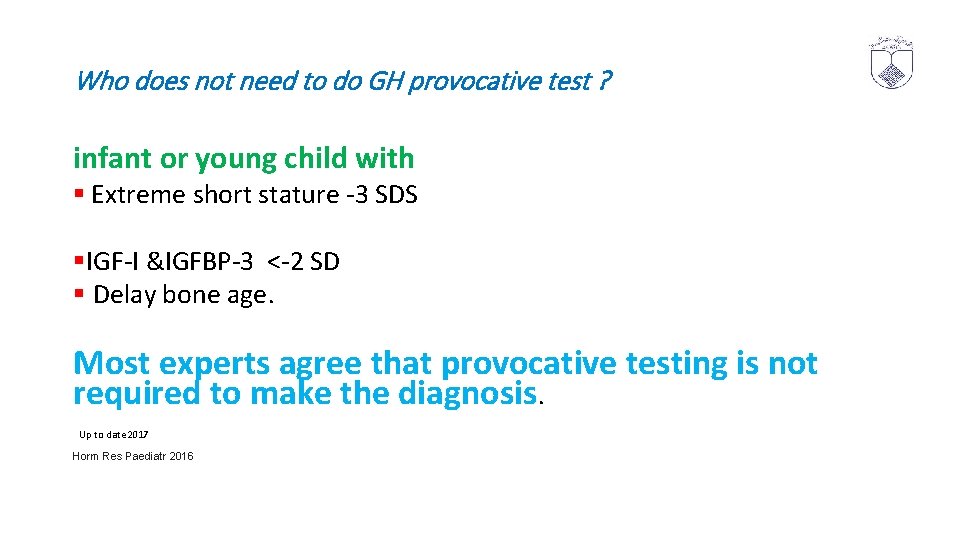
Who does not need to do GH provocative test ? infant or young child with § Extreme short stature -3 SDS §IGF-I &IGFBP-3 <-2 SD § Delay bone age. Most experts agree that provocative testing is not required to make the diagnosis. Up to date 2017 Horm Res Paediatr 2016
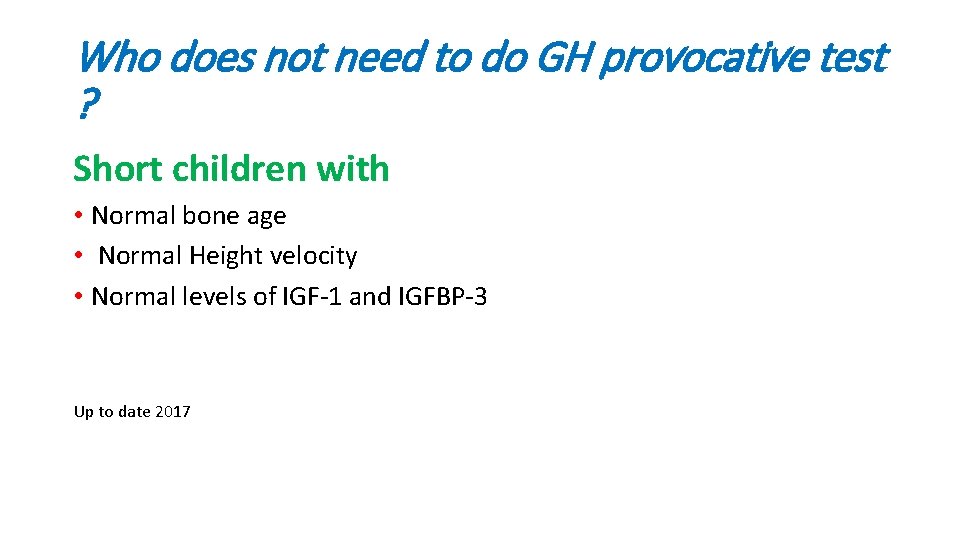
Who does not need to do GH provocative test ? Short children with • Normal bone age • Normal Height velocity • Normal levels of IGF-1 and IGFBP-3 Up to date 2017
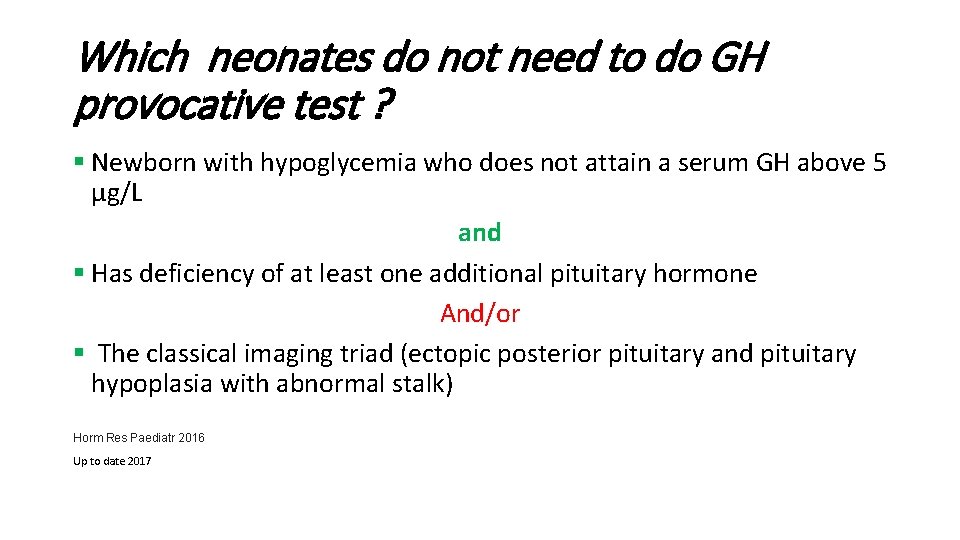
Which neonates do not need to do GH provocative test ? § Newborn with hypoglycemia who does not attain a serum GH above 5 μg/L and § Has deficiency of at least one additional pituitary hormone And/or § The classical imaging triad (ectopic posterior pituitary and pituitary hypoplasia with abnormal stalk) Horm Res Paediatr 2016 Up to date 2017
GH deficiency during hypoglycemia • Beyond the neonatal period, a low GH concentration at the time of hypoglycemia is alone insufficient to diagnose GHD due to low specificity Horm Res Paediatr 2016
What are the limitations of GH dynamic tests in childhood GHD ?
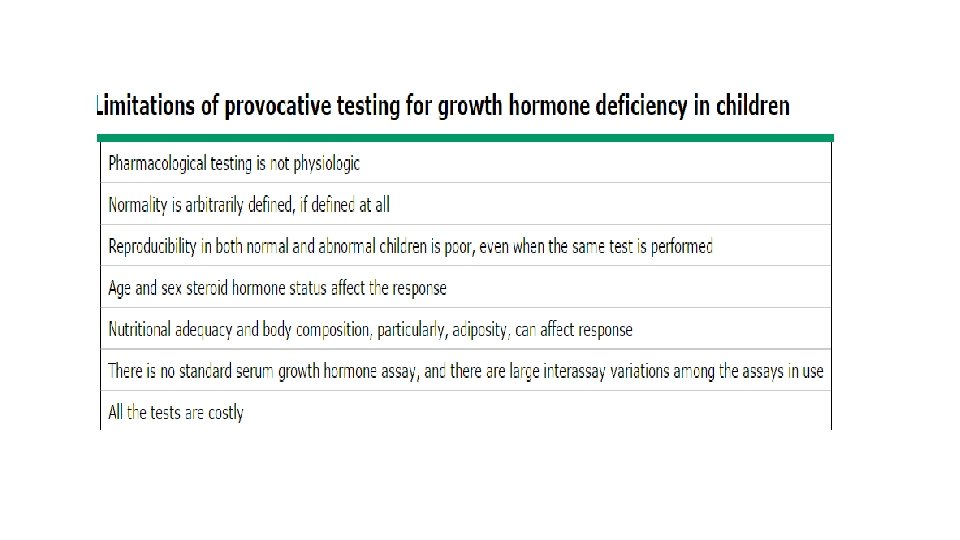
What are the limitations of GH dynamic tests in childhood GHD ? § Assess pituitary GH reserve § Not provide information regarding pulsatility of GH secretion and bioactivity. § Hence, a normal peak GH response to a dynamic test may not necessarily translate into optimal linear growth. § The cutoffs for the diagnosis of GHD are arbitrary Clinical Rounds in Endocrinology 2016
What are the limitations of GH dynamic tests in childhood GHD ? § Have poor specificity ( 2 tests ) § Controversy regarding priming with sex steroids § Risks associated like hypoglycemia, seizure, and hypotension § Can not diagnosis GH neurosecretory dysfunction Up to date 2017 Horm Res Paediatr 2016 Clinical Rounds in Endocrinology 2016
What are the limitations of GH dynamic tests in childhood GHD ? § Not take into account the effect of age and BMI on GH dynamics § peak values decrease with increasing BMI § GH responses are blunted in obese or overweight individuals § Obesity-dependent modifications to diagnostic criteria in children are undetermined Horm Res Paediatr 2016 Clinical Rounds in Endocrinology 2016 Up to date 2017
What are the limitations of GH dynamic tests in childhood GHD ? § Molecular heterogeneity § GH circulates in several isoforms, a 22 k. D molecule and 20 k. D molecule, as well as hetero- and homodimers and multimers, and assay results vary considerably depending on reactivity with various isoforms • Curr Opin Endocrinol Diabetes Obes. 2013
What are the limitations of GH dynamic tests in childhood GHD ? § Normal values were established using polyclonal radioimmunoassays and purified pituitary standards § Currently used immunometric assays with monoclonal antibodies and recombinant standards have higher specificity
Is “ GH provocative test “ reliable ? v Not discriminate between normal short children and partial GHD v. Do not reliance on GH provocative test results as the sole diagnostic criterion of GHD. v is no real "gold standard" for the diagnosis of GHD Horm Res Paediatr 2016 Up to date 2017
Is “ GH provocative test “ reliable ? . v The threshold test result that distinguishes normal from partial GHD that responds to treatment has not been well established Horm Res Paediatr 2016
What are the prerequisites for GH dynamic testing ? § GH secretion is regulated by various factors diet, sleep, exercise, thyroid hormones, cortisol, and gonadal steroids. § Amino acids stimulate GH secretion. § Glucose and FFA inhibit GH secretion. § GH dynamic tests are recommended to be performed in fasting state. Clinical Rounds in Endocrinology 2016
What are not the prerequisites for GH dynamic testing ? § Routine cardiac testing § Dual X-ray absorptiometry scanning § Lipid profiles Horm Res Paediatr 2016
What are the prerequisites for GH dynamic testing ? § Thyroxine has a permissive role in GH–IGF 1 secretion. § Euthyroidism should be ensured prior to GH dynamic tests. Clinical Rounds in Endocrinology 2016
What are the prerequisites for GH dynamic testing ? § GH dynamic tests should not be performed in children receiving >15 mg/m 2 /day of hydrocortisone or its equivalents. § This may lead to more false-positive results • Antipsychotic medications , and ondansetron Clinical Rounds in Endocrinology 2016 Arch Dis Child 2016
What are the prerequisites for GH dynamic testing ? § Gonadal steroids influence GH–IGF 1 secretion. § Priming with estrogen/testosterone should be considered in some children § Controversies regarding the need for priming, the age at which priming should be done and which agent should be used for priming Up to date 2017 Clinical Rounds in Endocrinology 2016
Who dose need “ priming ” prior to GH dynamic testing ? § Children above 8 years of age having Tanner stage ≤ 2. § Aged >8 years for girls or >9 years for boys § This can be based either on chronological age or bone age § prepubertal at 13– 14 years in boys and 11– 12 years in girls § Arch Dis Child 2016 § Clinical Rounds in Endocrinology 2016
Who dose need “ priming ” prior to GH dynamic testing ? Prepubertal boys older than 11 years Prepubertal girls older than 10 years with PAH prognosis within – 2 SD of the reference population mean Horm Res Paediatr 2016 Up to date 2017
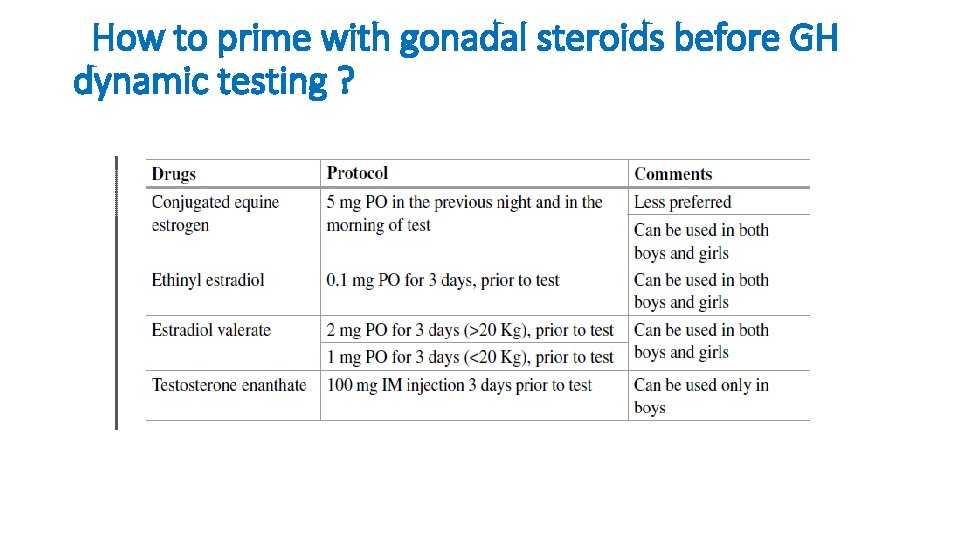
How to prime with gonadal steroids before GH dynamic testing ?
what's the benefit “ priming ” prior to GH dynamic testing ? • priming in prepubertal children of pubertal age improves specificity without compromising the sensitivity • Horm Res Paediatr 2016
§ Not recommended sex steroid to patients that were already on GH treatment § Horm Res Paediatr 2016
Which is the preferred GH dynamic test ? § Insulin-induced hypoglycemia is gold standard for the diagnosis of GHD. § Colonidine and glucagon stimulation tests are commonly performed in clinical practice. Clinical Rounds in Endocrinology 2016
Why two dynamic tests is needed in the diagnosis of GHD ? § Because of low specificity of these tests § Two tests should be abnormal. § There is no evidence against performing both tests sequentially on the same day Horm Res Paediatr 2016 Clinical Rounds in Endocrinology 2016 Up to date 2017
Who needs one provocative test? A single dynamic test is sufficient to diagnose GHD in those with • structural pituitary defects • Multiple pituitary hormone deficiencies(other pituitary hormone defects) • Genetic defect • History of irradiation Arch Dis Child 2016 Up to date 2017
Provocative test Pharmacologic stimuli include § L-dopa , clonidine, § Glucagon , arginine, insulin-induced hypoglycemia. § The last three tests have the highest specificity § Are still subject to false-positive results Up to date 2017
Provocative test Arginine • An intravenous infusion of 0. 5 g/kg body weight (to a maximum of 30 - 40 g) is given over 30 minutes • GH is measured at 0, 30, 60, 90, and 120 minutes • The maximum GH peak is expected at about 60 minutes. by adding a dose of L-Dopa orally just prior to the administration of arginine • L-Dopa is a relatively weak stimulant of GH release Up to date 2017
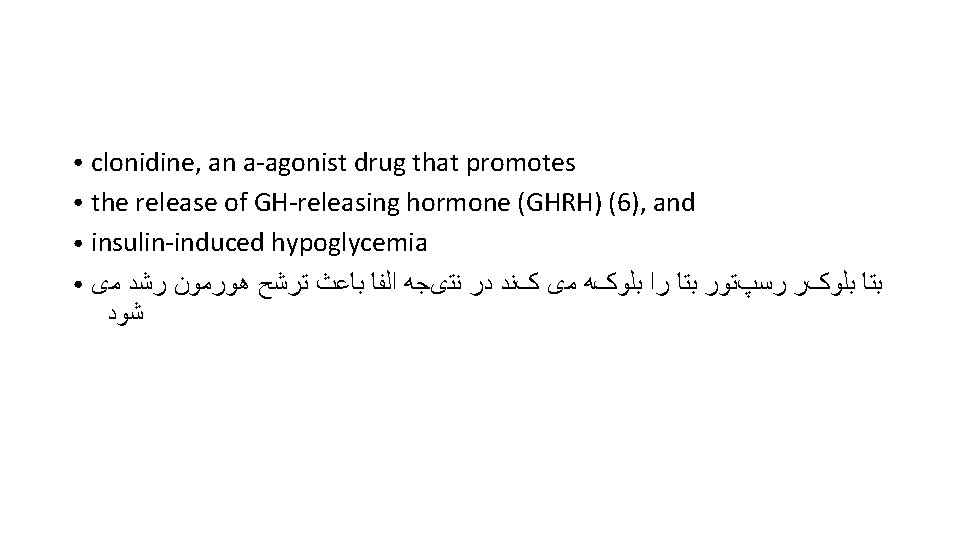
Provocative test Colonidine § stimulation of GHRH via alpha-adrenergic pathways § 5 mcg/kg (0. 1 -015 mg/m 2 ) maximum 250 mcg § GH is measured at 0, 30, 60 and 90 minutes § peak GH secretion typically occurs about one hour after the stimulus is given Up to date 2017 CLINICAL SCIENCE 2016
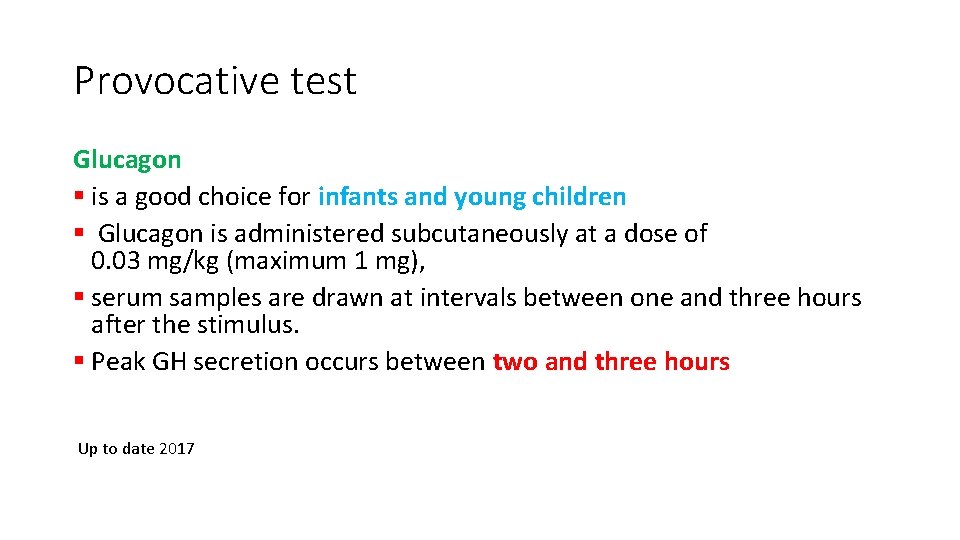
Provocative test Glucagon § is a good choice for infants and young children § Glucagon is administered subcutaneously at a dose of 0. 03 mg/kg (maximum 1 mg), § serum samples are drawn at intervals between one and three hours after the stimulus. § Peak GH secretion occurs between two and three hours Up to date 2017
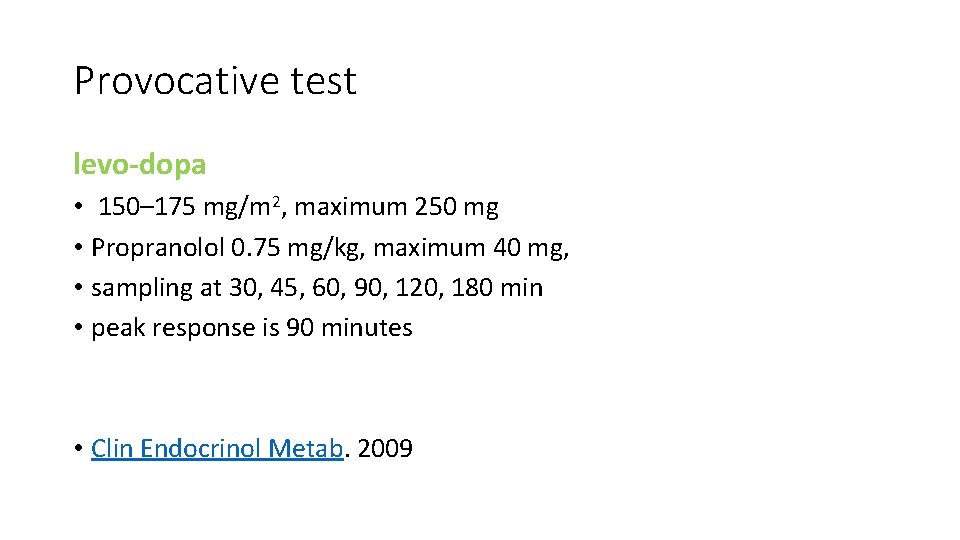
Provocative test levo-dopa • 150– 175 mg/m 2, maximum 250 mg • Propranolol 0. 75 mg/kg, maximum 40 mg, • sampling at 30, 45, 60, 90, 120, 180 min • peak response is 90 minutes • Clin Endocrinol Metab. 2009
Provocative test insulin-induced hypoglycemia § potent stimulant of GH release § Most specific tests for GHD Up to date 2017
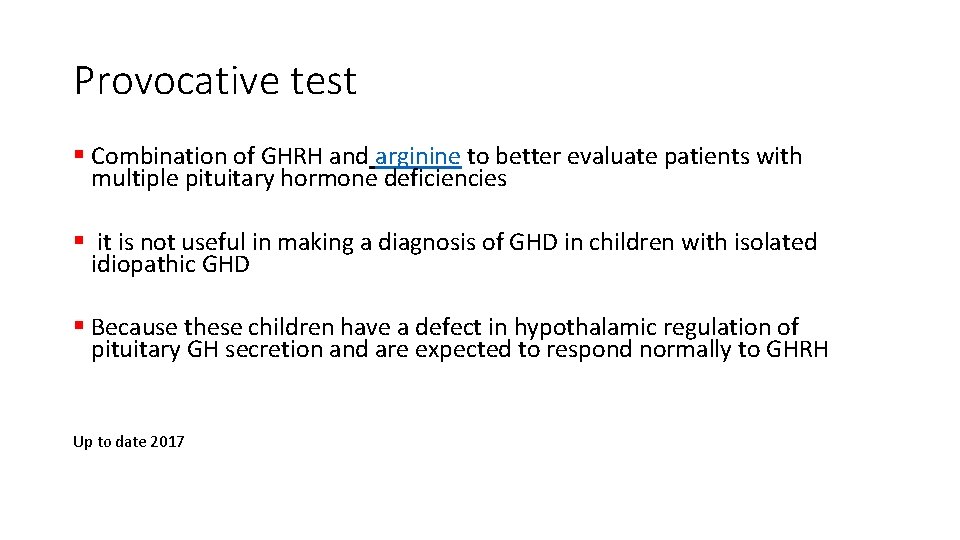
Provocative test § Combination of GHRH and arginine to better evaluate patients with multiple pituitary hormone deficiencies § it is not useful in making a diagnosis of GHD in children with isolated idiopathic GHD § Because these children have a defect in hypothalamic regulation of pituitary GH secretion and are expected to respond normally to GHRH Up to date 2017
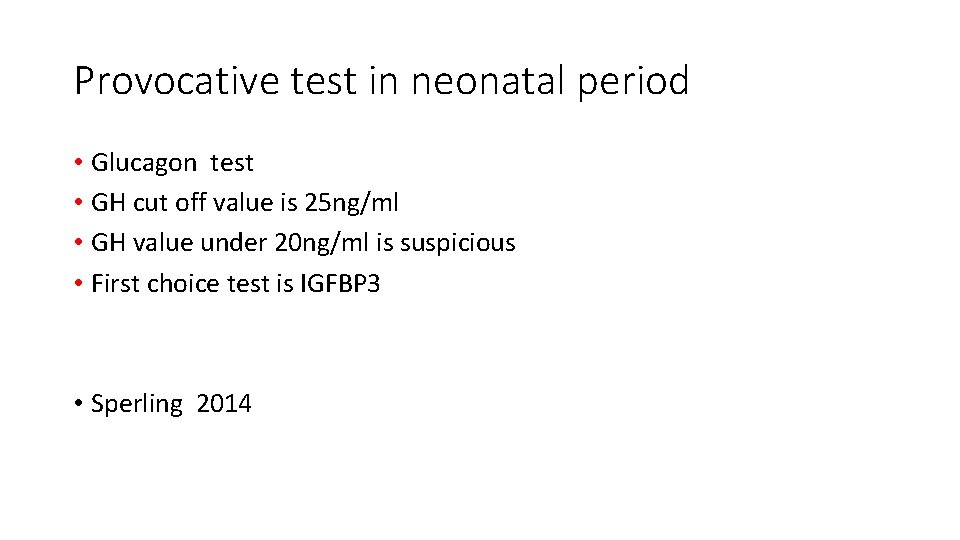
Provocative test in neonatal period • Glucagon test • GH cut off value is 25 ng/ml • GH value under 20 ng/ml is suspicious • First choice test is IGFBP 3 • Sperling 2014
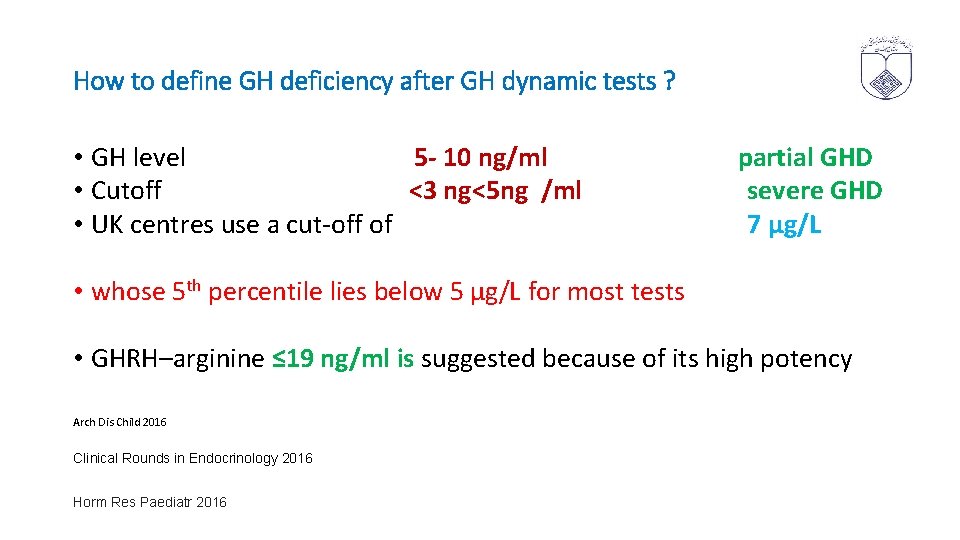
How to define GH deficiency after GH dynamic tests ? • GH level 5 - 10 ng/ml partial GHD • Cutoff <3 ng<5 ng /ml severe GHD • UK centres use a cut-off of 7 µg/L • whose 5 th percentile lies below 5 μg/L for most tests • GHRH–arginine ≤ 19 ng/ml is suggested because of its high potency Arch Dis Child 2016 Clinical Rounds in Endocrinology 2016 Horm Res Paediatr 2016
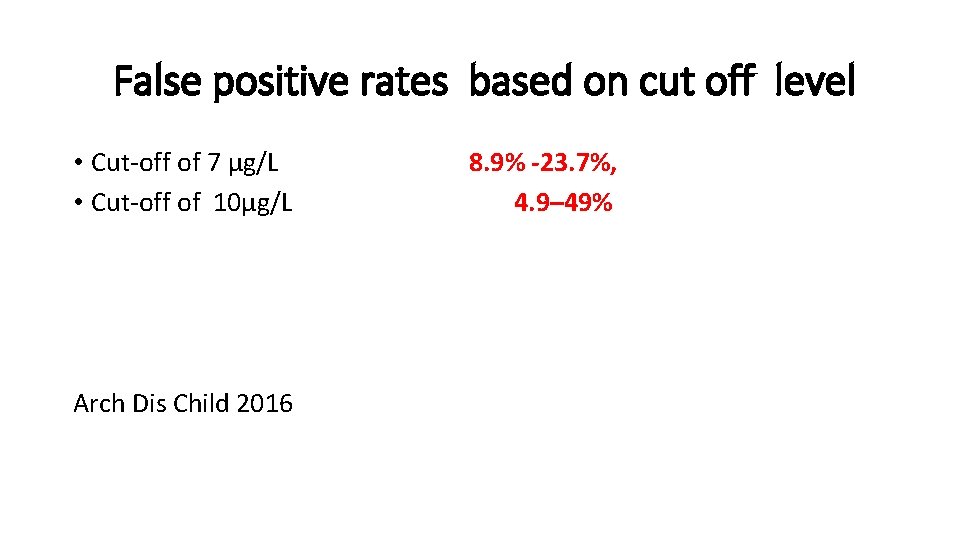
False positive rates based on cut off level • Cut-off of 7 µg/L 8. 9% -23. 7%, • Cut-off of 10µg/L 4. 9– 49% Arch Dis Child 2016
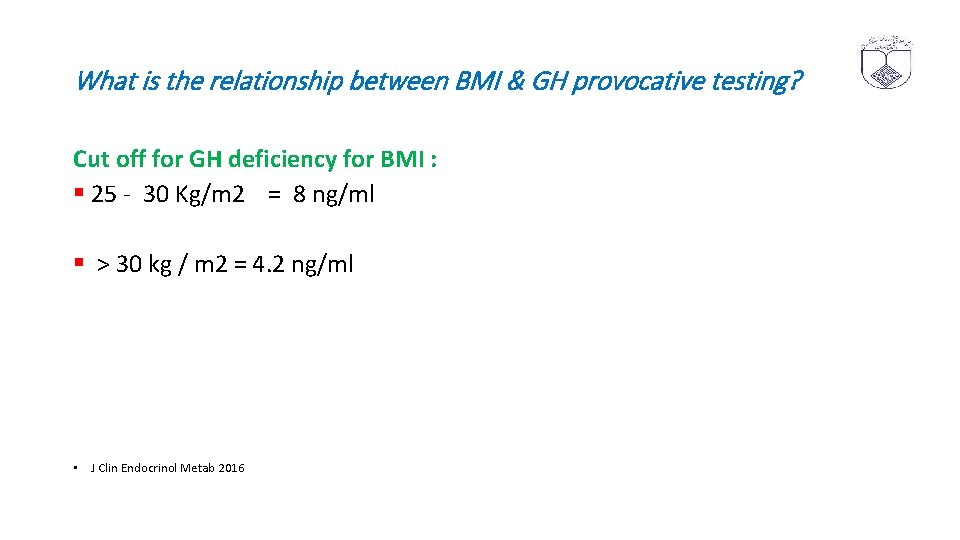
What is the relationship between BMI & GH provocative testing? Cut off for GH deficiency for BMI : § 25 - 30 Kg/m 2 = 8 ng/ml § > 30 kg / m 2 = 4. 2 ng/ml • J Clin Endocrinol Metab 2016
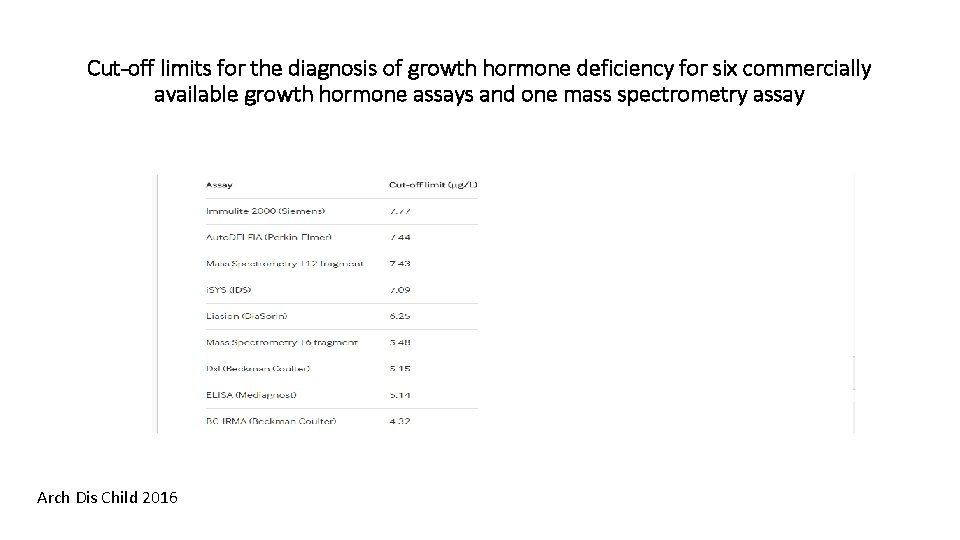
Cut-off limits for the diagnosis of growth hormone deficiency for six commercially available growth hormone assays and one mass spectrometry assay Arch Dis Child 2016
MRI abnormalities associated with • severe short stature • Greater catch-up growth in response to GH treatment • predict development of additional hormonal deficiencies • Severe GHD peak GH <3 mcg/L • Abnormalized GH secretion in adulthood • Curr Opin Endocrinol Diabetes Obes. 2013
Genetic Testing • i. GHD Autosomal recessive, autosomal dominant, and X-linked recessive • Severe i. GHD and a family history of GHD testing for Mutation in GH 1 and GHRH receptor, GHSR 1 A • Mutations in PROP 1, POU 1 F 1, HESX 1 associated with MPHD • HMGA 2 mutation had severe short stature, low IGF-I, abnormal response to provocative GH testing, and abnormal MRI, and responded well to growth hormone therapy • Curr Opin Endocrinol Diabetes Obes. 2013
When and how should testing be performed to determine whether an individual has persistent GHD?
Transitional period • Mid-to-late teens until six to seven years after reaching near-adult height • The transition period is the time from late puberty to establishment of adult muscle and bone composition, and encompasses attainment of AH Horm Res Paediatr 2016 Up to date 2017
Transitional period • 50 % of children with isolated idiopathic GHD do not have persistent disease on retesting during adulthood • 96 % of children with MPHD have persistent GHD. • It may be possibly due to recovery from transient disruption of neuroendocrine alteration in GH–IGF 1 axis. Clinical Rounds in Endocrinology 2016
When should retesting be done? § Retesting as near-adult height , growth rate <2. 0 to 2. 5 cm/year § Retesting in mid-puberty would reduce the length of GH treatment by three years or more § Retesting at the end of the transition phase (age in mid-20 s). not optimal Up to date 2017
When should retesting be done? § Retesting for high risk patients (genetic, structural, or organic GHD) should be later § For patients who have a history of cranial radiation therapy, the results of retesting should not be considered definitive because radiation tends to cause progressive damage to the hypothalamus and pituitary. § They should be retested for GHD for five to ten years after completion of radiation therapy Up to date 2017
How we reassessment during transition to adulthood ? • Testing can be performed after a trial of at least 1 month off GH treatment in late adolescent Horm Res Paediatr 2016
Interpretation of IGF 1 test after GH off • A normal IGF-I result (>0 SD) suggests that permanent GHD is unlikely, and GH therapy can be stopped • i. GF 1< -2 SD for age and gender suggests the possibility of permanent GHD. Should perform GH stimulation test to confirm the diagnosis • A significant number of patients with MPHD can have normal IGF-I Thus, the results of IGF-I must be interpreted carefully Up to date 2017 Horm Res Paediatr 2016
Diagnosis in Transitional period • One stimulation test is generally considered sufficient • Up to date 2017
Who should not be tested for adult - onset GHD ? q Persistent GHD : • Multiple ( ≥ 3) pituitary hormone deficiencies • Genetic mutation • structural defect • Ectopic posterior pituitary gland associated with pituitary stalk agenesis, Hypoplastic absent anterior pituitary, • optic nerve hypoplasia/septo-optic dysplasia • Organic causes (Radiation doses >40 Gy, brain surgery ) Up to date 2017 Horm Res Paediatr 2016
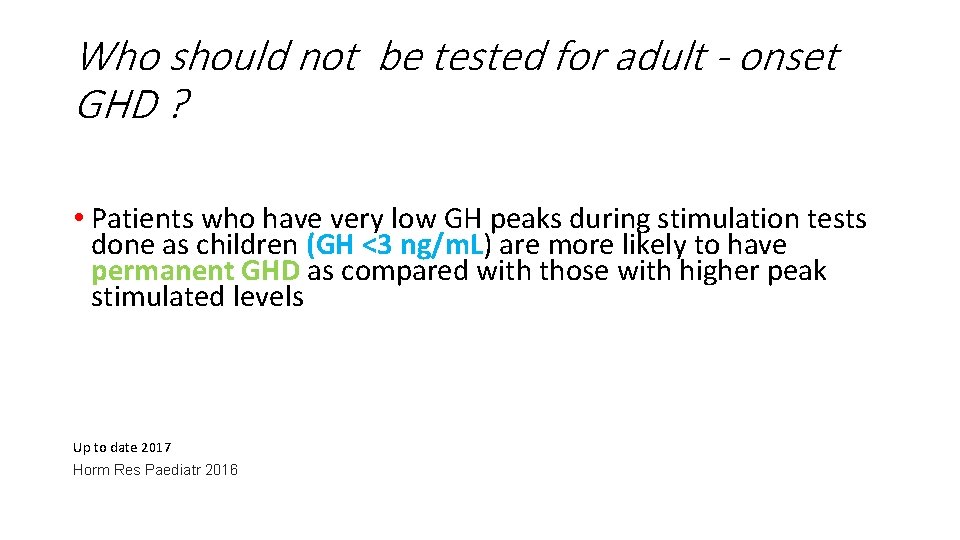
Who should not be tested for adult - onset GHD ? • Patients who have very low GH peaks during stimulation tests done as children (GH <3 ng/m. L) are more likely to have permanent GHD as compared with those with higher peak stimulated levels • Up to date 2017
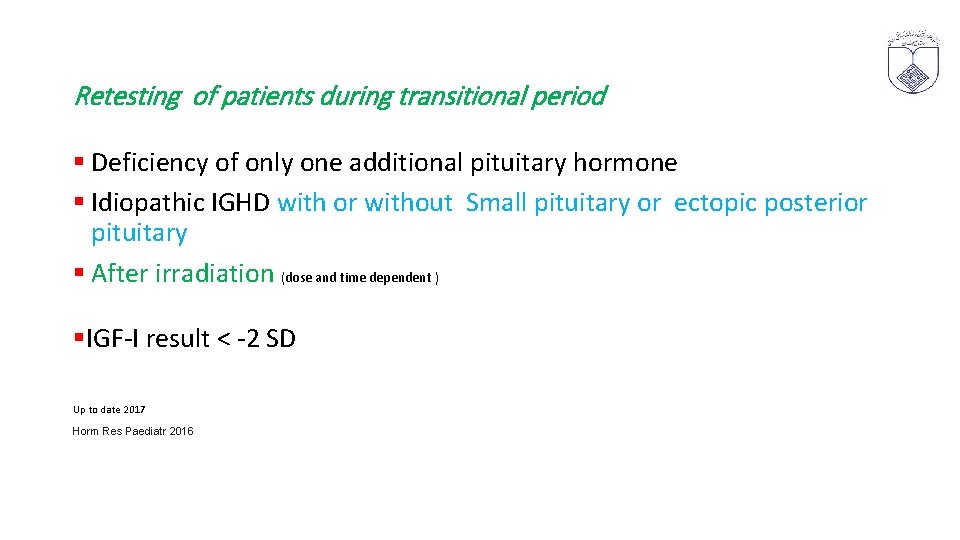
Retesting of patients during transitional period § Deficiency of only one additional pituitary hormone § Idiopathic IGHD with or without Small pituitary or ectopic posterior pituitary § After irradiation (dose and time dependent ) §IGF-I result < -2 SD Up to date 2017 Horm Res Paediatr 2016
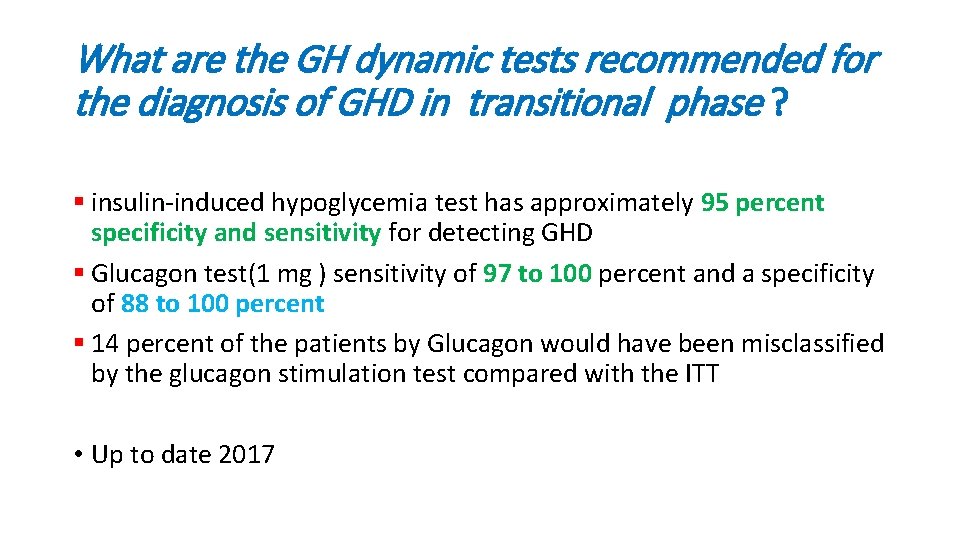
What are the GH dynamic tests recommended for the diagnosis of GHD in transitional phase ? § insulin-induced hypoglycemia test has approximately 95 percent specificity and sensitivity for detecting GHD § Glucagon test(1 mg ) sensitivity of 97 to 100 percent and a specificity of 88 to 100 percent § 14 percent of the patients by Glucagon would have been misclassified by the glucagon stimulation test compared with the ITT • Up to date 2017
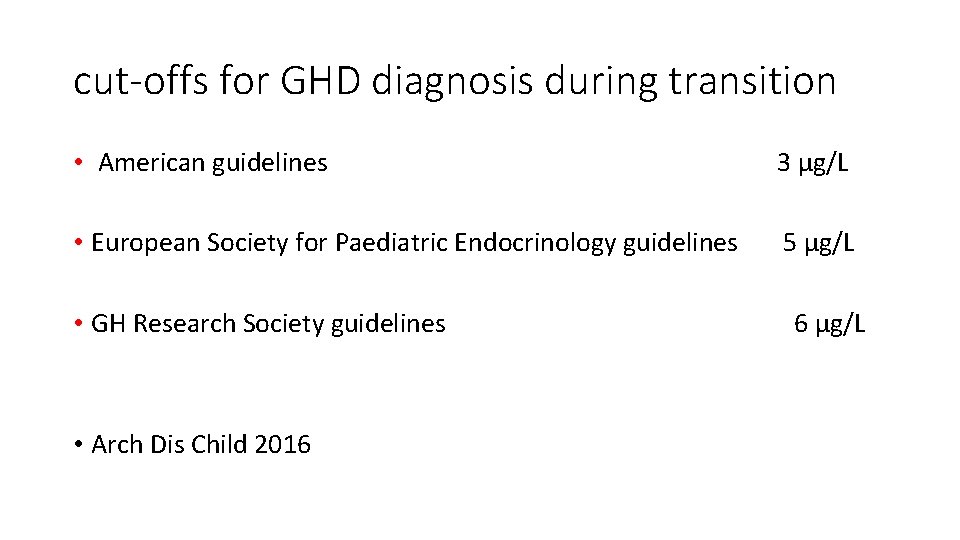
cut-offs for GHD diagnosis during transition • American guidelines 3 µg/L • European Society for Paediatric Endocrinology guidelines 5 µg/L • GH Research Society guidelines 6 µg/L • Arch Dis Child 2016
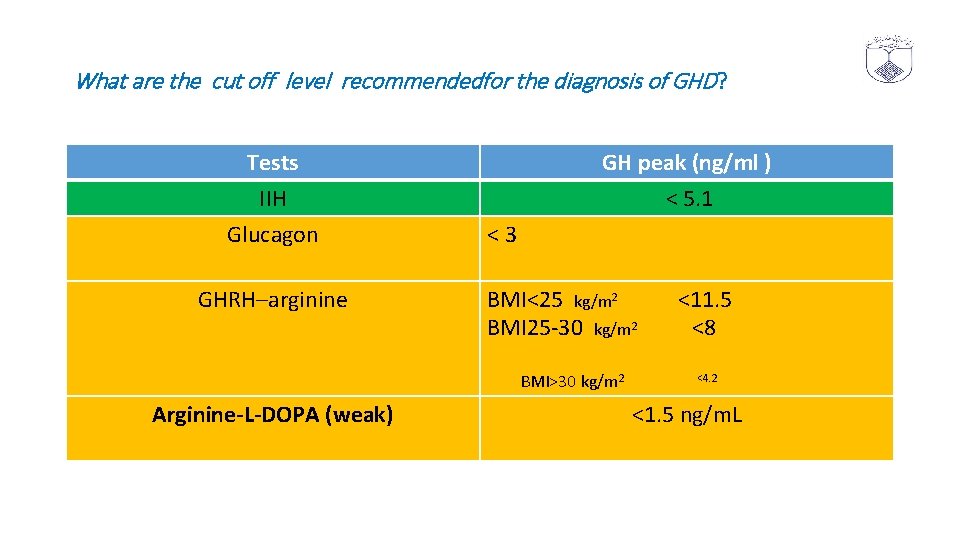
What are the cut off level recommendedfor the diagnosis of GHD? Tests IIH Glucagon GHRH–arginine GH peak (ng/ml ) < 5. 1 < 3 BMI<25 kg/m 2 <11. 5 BMI 25 -30 kg/m 2 <8 BMI>30 kg/m 2 <4. 2 Arginine-L-DOPA (weak) <1. 5 ng/m. L
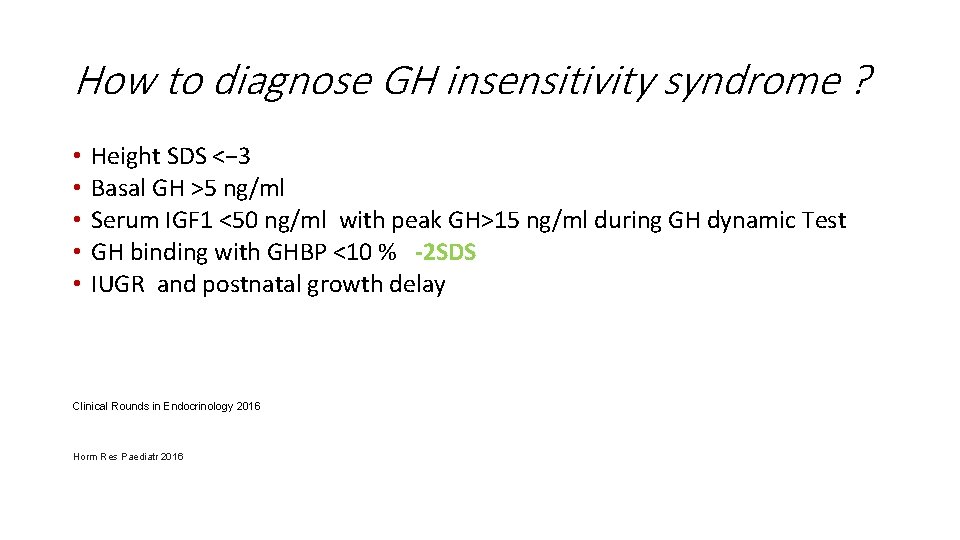
How to diagnose GH insensitivity syndrome ? • • • Height SDS <− 3 Basal GH >5 ng/ml Serum IGF 1 <50 ng/ml with peak GH>15 ng/ml during GH dynamic Test GH binding with GHBP <10 % -2 SDS IUGR and postnatal growth delay Clinical Rounds in Endocrinology 2016 Horm Res Paediatr 2016
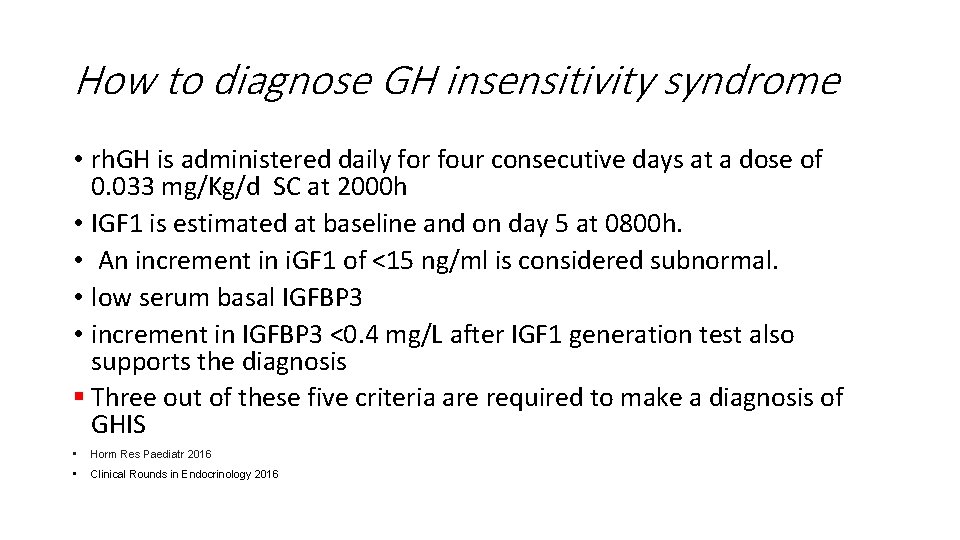
How to diagnose GH insensitivity syndrome • rh. GH is administered daily for four consecutive days at a dose of 0. 033 mg/Kg/d SC at 2000 h • IGF 1 is estimated at baseline and on day 5 at 0800 h. • An increment in i. GF 1 of <15 ng/ml is considered subnormal. • low serum basal IGFBP 3 • increment in IGFBP 3 <0. 4 mg/L after IGF 1 generation test also supports the diagnosis § Three out of these five criteria are required to make a diagnosis of GHIS • Horm Res Paediatr 2016 • Clinical Rounds in Endocrinology 2016
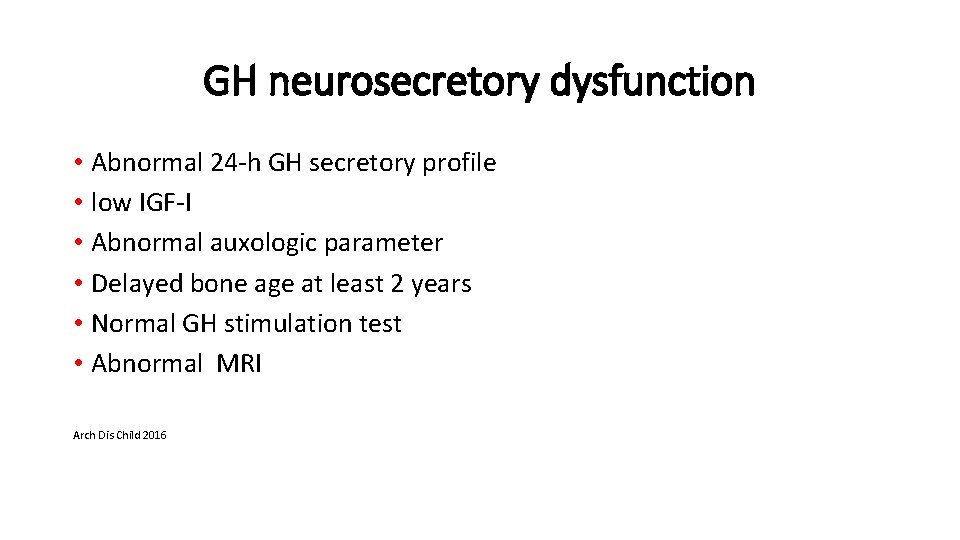
GH neurosecretory dysfunction • Abnormal 24 -h GH secretory profile • low IGF-I • Abnormal auxologic parameter • Delayed bone age at least 2 years • Normal GH stimulation test • Abnormal MRI Arch Dis Child 2016
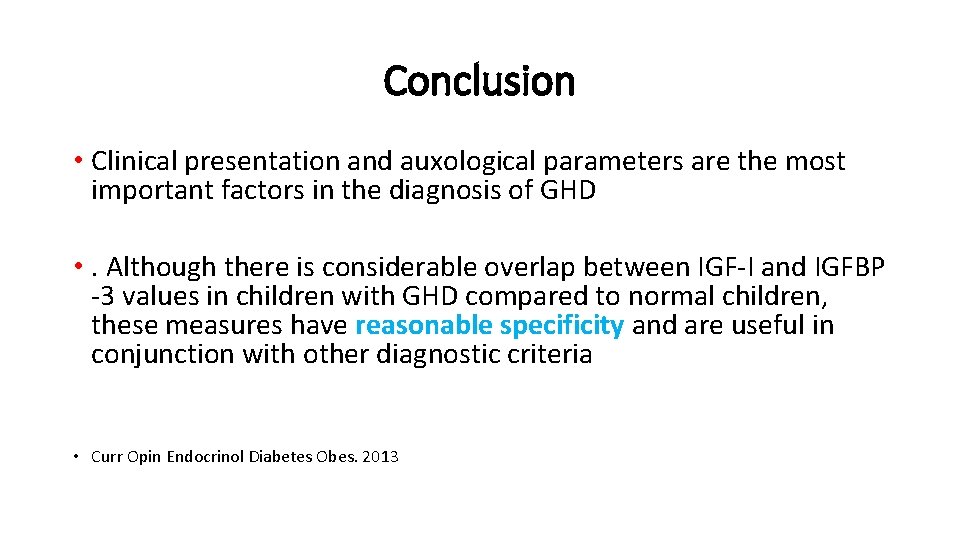
Conclusion • Clinical presentation and auxological parameters are the most important factors in the diagnosis of GHD • . Although there is considerable overlap between IGF-I and IGFBP -3 values in children with GHD compared to normal children, these measures have reasonable specificity and are useful in conjunction with other diagnostic criteria • Curr Opin Endocrinol Diabetes Obes. 2013
Conclusion • Abnormal findings on pituitary MRI indicate a relatively high likelihood that GHD will persist into adulthood and may suggest that subsequent pituitary deficiencies may develop • Children with i. GHD and family history of GHD should have screening for GH 1 and GHRHR mutation • provocative GH testing are poorly reproducible • Curr Opin Endocrinol Diabetes Obes. 2013
Diagnosis of GH deficiency in an adult
Adult GH deficiency • Body composition • Bone mineral density and fractures • Quality of life • Cardiovascular risk factors (dyslipidemia , increased inflammatory markers , endothelial dysfunction ) • Mortality
DIAGNOSIS • Subnormal IGF-1 • Subnormal serum GH response to a potent stimulus
Who should be tested for adult - onset GHD ? • Hypothalamic or pituitary disease • History of GH deficiency in childhood due to an organic disease • Mid-line craniofacial anomalies such as optic nerve hypoplasia/septooptic dysplasia • Sheehan syndrome • Up to date 2017
Who should be tested for adult - onset GHD ? § Traumatic brain injury § subarachnoid hemorrhage § History of cranial irradiation § History of surgery in hypothalamic– pituitary region § Congenital anomalies, agenesis of the hypothalamic-pituitary stalk Clinical Rounds in Endocrinology 2016
Who should be tested for adult - onset GHD ? • Those with organic disease and having MPHD <3, low serum IGF 1 • A single GH dynamic test should be done to establish a diagnosis of GHD • Up to date 2017
Who should not be tested for adult - onset GHD • Adults with organic disease and having MPHD ≥ 3 , a low IGF 1 is highly suggestive of GHD and GH dynamic tests may not be necessary • Clinical Rounds in Endocrinology 2016 • Up to date 2017
Who should not be tested for adult - onset GHD ? • Patients who have very low GH peaks during stimulation tests done as children (GH <3 ng/m. L) are more likely to have permanent GHD as compared with those with higher peak stimulated levels Up to date 2017 Horm Res Paediatr 2016
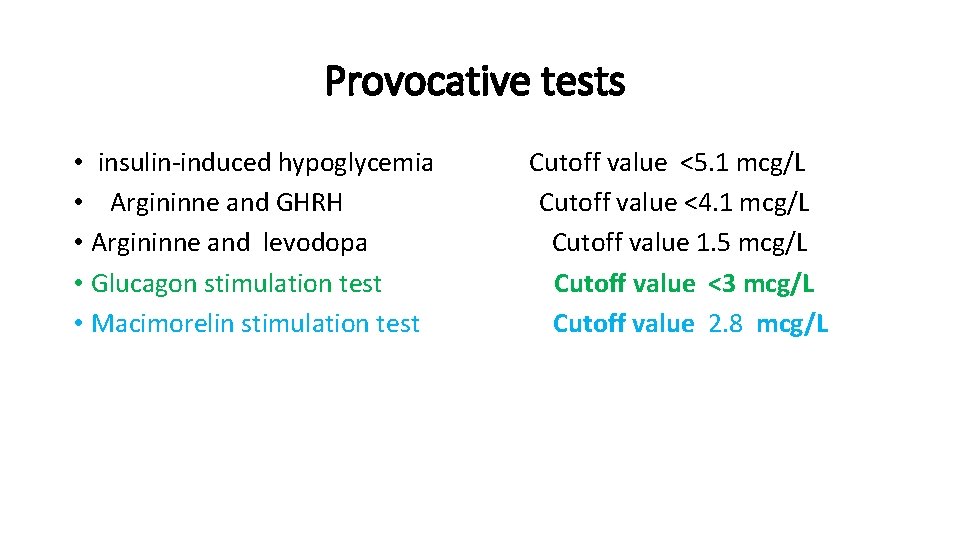
Provocative tests • insulin-induced hypoglycemia Cutoff value <5. 1 mcg/L • Argininne and GHRH Cutoff value <4. 1 mcg/L • Argininne and levodopa Cutoff value 1. 5 mcg/L • Glucagon stimulation test Cutoff value <3 mcg/L • Macimorelin stimulation test Cutoff value 2. 8 mcg/L
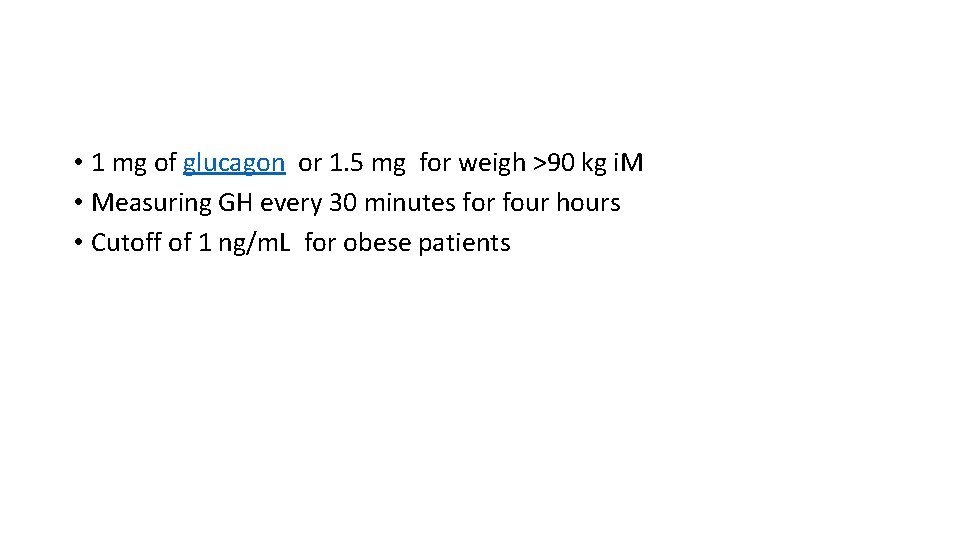
• 1 mg of glucagon or 1. 5 mg for weigh >90 kg i. M • Measuring GH every 30 minutes for four hours • Cutoff of 1 ng/m. L for obese patients
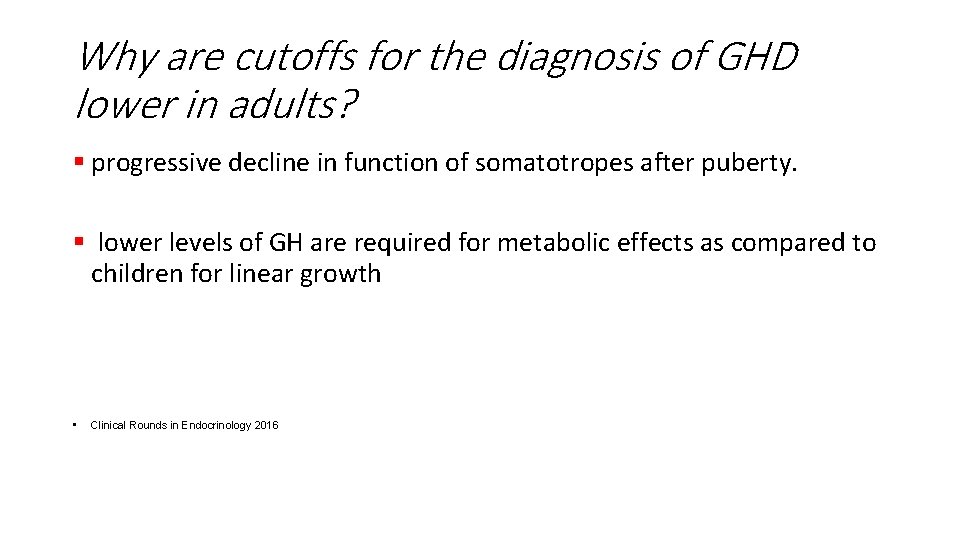
Why are cutoffs for the diagnosis of GHD lower in adults? § progressive decline in function of somatotropes after puberty. § lower levels of GH are required for metabolic effects as compared to children for linear growth • Clinical Rounds in Endocrinology 2016
Do all adults need to GH therapy ? • Mild GHD may not have clinically important effects during adulthood • Because the metabolic effects of GH are seen at low doses • whereas the same individual needs high concentrations of GH for stimulate growth. • Continued GH treatment in adulthood is not necessary for patients who remain asymptomatic when GH is withdrawn without underlying genetic, organic, or structural causes , particularly if the results of GH testing during the transition period are equivocal • Up to date 2017
References: • Up to date 2017 • Clinical Rounds in Endocrinology 2016 • Horm Res Paediatr 2016 • J Clin Endocrinol Metab 2016
What is the “ ternary complex ” in GH - IGF axis ? • • • The “ternary complex” comprises of IGF 1, IGFBP 3, and acid labile subunit (ALS) in equimolar ratio. Serum IGF 1 and ALS are synthesized in hepatocytes, while IGFBP 3 in the Kupffer cells of the liver. All the components of ternary complex including IGF 1, IGFBP 3, and ALS are GH-dependent. The ternary complex prolongs the half-life of IGF 1 (from 10 min to 12– 15 h) and regulates the bioavailability of IGF 1 to target sites. Therefore, patients with mutation of ALS gene have reduced serum levels of IGF 1 and IGFBP 3. However, growth impairment in these children is modest due to preserved local IGF 1 generation at the growth plate Clinical round
What is septo-optic dysplasia ? • Septo-optic dysplasia (SOD) includes midline defects of brain (absence of septum • pellucidum, corpus callosum agenesis), optic nerve dysplasia, and pituitary • hypoplasia. Two out of these three abnormalities are required for the diagnosis • of SOD. Familial forms of SOD are caused by HESX 1 transcription factor • defect and are associated with multiple pituitary hormone defi ciency including • vasopressin
• As many as 3 to 30 percent of children with GHD have an affected parent, sibling, or child • POU 1 F 1 autosomal recessive • PROP 1 mutations • LHX 3 GHRH receptor gene defects • LHX 4 OTX 2 • TBX 19 (TPIT), SOX 2, SOX 3 [21 -23], and GLI 2 • Deletions and mutations of GH 1 causes of familial GH • Up to date
When does GH therapy stop • small for gestational age, • chronic kidney disease • , Turner syndrome, • Prader-Willi syndrome? ? When achieved to normal height
Provocative tests • If IGF-1 is equivocal, a subnormal GH response to a provocative test will confirm the diagnosis. Either insulin-induced hypoglycemia or the combination of arginine and GH-releasing hormone (GHRH) response of 4. 1 ng/m. L • (or levodopa [L-DOPA]) is a potent stimulus of GH release. A subnormal increase in the serum GH concentration in a patient who has organic pituitary disease confirms the diagnosis of GH deficiency in those whose serum IGF-1 was equivocal • ther stimuli, such as arginine alone, clonidine, L-DOPA, and the combination of arginine and L-DOPA are much weaker and therefore more likely to give false-positive results. All tests of GH secretion are more likely to give false-positive results in obesity. All are performed in the morning after an overnight fast.
Serum GH concentrations are currently measured using a variety of methods against a variety of standards. Normal values were established using polyclonal radioimmunoassays and purified pituitary standards. Currently used immunometric assays with monoclonal antibodies and recombinant standards have higher specificity, but the use of different standards and antibodies withspecificities for different GH isoforms has resulted in • large discrepancies between assays • Hormon rsech • •
Who should be tested for adult - onset GHD § Pituitary/hypothalamic structural defect § Mid-line craniofacial anomalies such as optic nerve hypoplasia/septooptic dysplasia § Congenital anomalies, agenesis of the hypothalamic-pituitary stalk § Brain surgery § Radiation doses >40 Gy) Up to date 2017
Who should not be tested for adult - onset GHD • MPHD (≥ 3 hormone Deficiency • Those With a low IGF 1 is highly suggestive of GHD , dynamic tests may not be necessary
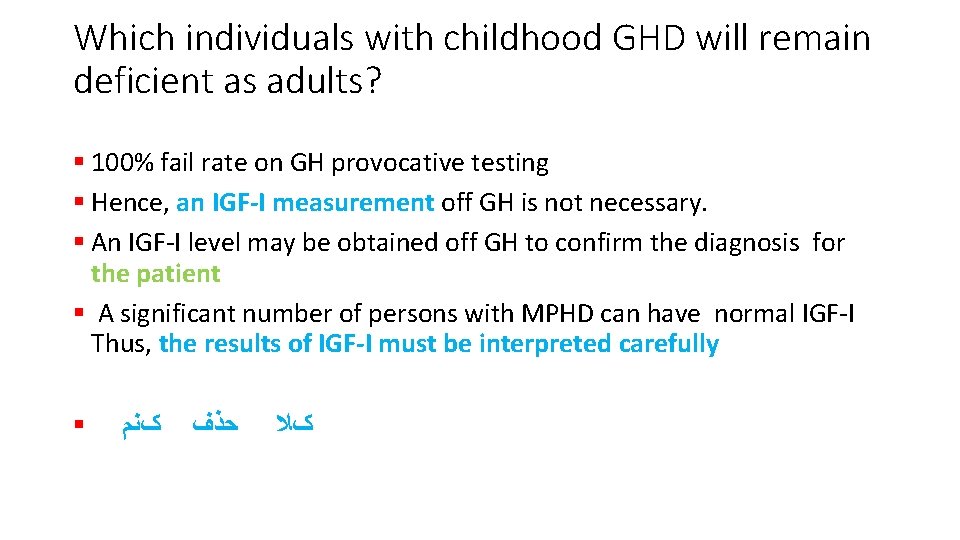
Which individuals with childhood GHD will remain deficient as adults? § 100% fail rate on GH provocative testing § Hence, an IGF-I measurement off GH is not necessary. § An IGF-I level may be obtained off GH to confirm the diagnosis for the patient § A significant number of persons with MPHD can have normal IGF-I Thus, the results of IGF-I must be interpreted carefully § کﻨﻢ ﺣﺬﻑ کﻼ
• progressive decline in function of somatotropes after puberty • low levels of GH are required in adults
Who should be tested for adult - onset GHD ? • These structural defects in a short child is highly predictive MPHD • The presence of these abnormalities is also suggestive of irreversible GHD Clinical Rounds in Endocrinology 2016 Up to date 2017
Who should be tested for adult - onset GHD ? § Those with organic brain disease and having <3 hormone deficiency § serum IGF 1 and a single GH dynamic test should be done to establish a diagnosis of GHD.
Adult GH deficiency • Body composition • Bone mineral density and fractures • Quality of life • Cardiovascular risk factors • Mortality
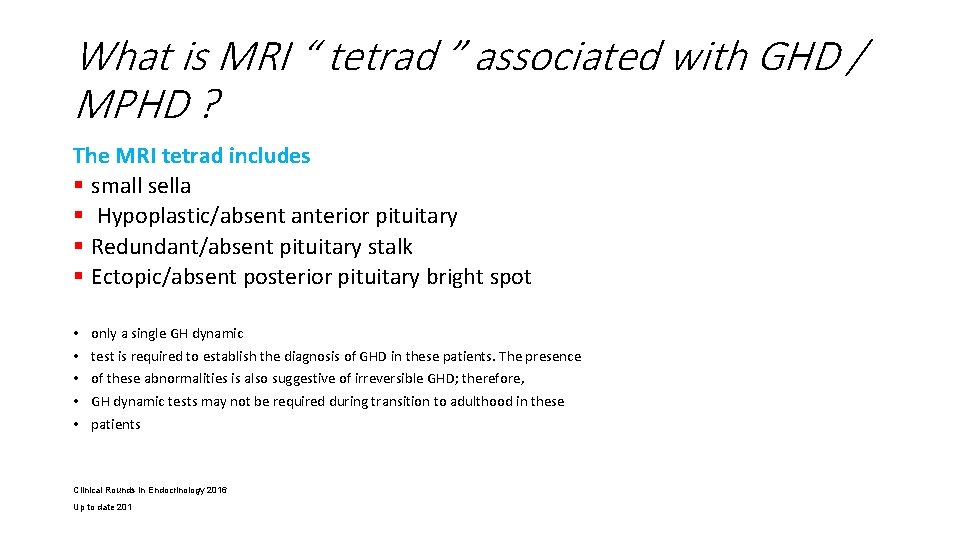
What is MRI “ tetrad ” associated with GHD / MPHD ? The MRI tetrad includes § small sella § Hypoplastic/absent anterior pituitary § Redundant/absent pituitary stalk § Ectopic/absent posterior pituitary bright spot • • • only a single GH dynamic test is required to establish the diagnosis of GHD in these patients. The presence of these abnormalities is also suggestive of irreversible GHD; therefore, GH dynamic tests may not be required during transition to adulthood in these patients Clinical Rounds in Endocrinology 2016 Up to date 201
What is the “ ternary complex ” in GH - IGF axis • IGF 1, IGFBP 3, and acid labile subunit (ALS) • The ternary complex prolongs • the half-life of IGF 1 (from 10 min to 12– 15 h) and regulates the bioavailability • of IGF 1 to target sites
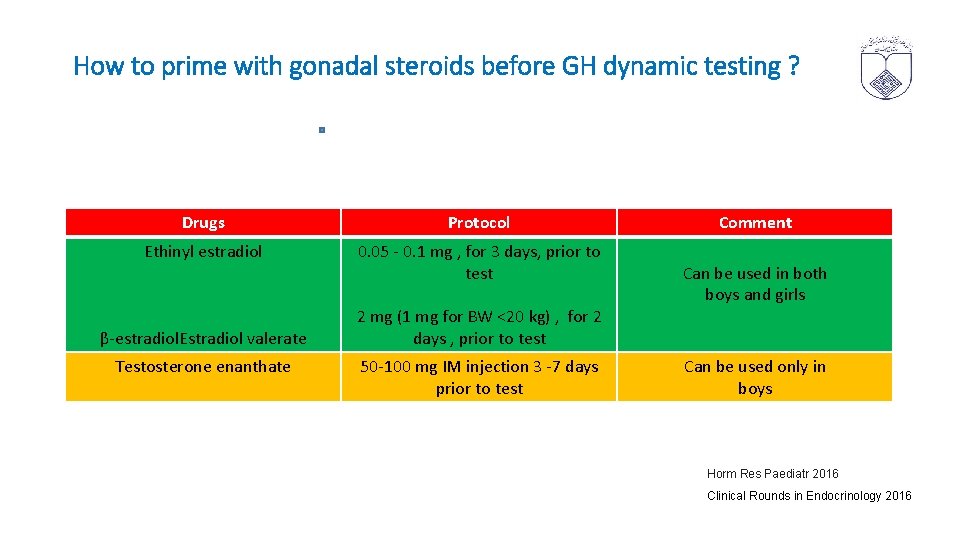
How to prime with gonadal steroids before GH dynamic testing ? Drugs Protocol Ethinyl estradiol 0. 05 - 0. 1 mg , for 3 days, prior to test β-estradiol. Estradiol valerate Testosterone enanthate 2 mg (1 mg for BW <20 kg) , for 2 days , prior to test 50 -100 mg IM injection 3 -7 days prior to test Comment Can be used in both boys and girls Can be used only in boys Horm Res Paediatr 2016 Clinical Rounds in Endocrinology 2016
Growth hormone secretion during neonatal period • Normal neonates have random GH levels higher than older children and adults in the first 5– 7 days of life
• he reproducibility of 24 -h GH profiles is superior to that of GH stimulation tests but it differentiates poorly between GH deficient and normal short children and has a lower sensitivity, failing to identify 57% of children classified as GHD via stimulation testing
• Measurement of GH by mass spectrometry (MS) has the potential to circumvent many of the problems associated with immunoassays as it allows recognition by analyte mass rather than epitope. MS measurement of GH has been demonstrated to be completely independent of the serum concentration of GHBP 15 and, unlike immunoassays, has the potential to establish a reproducible and sustainable cut-off concentration.
• Common protocols for priming include intramuscular injection of testosterone (100 mg intramuscular, 7– 10 days) before testing for boys and the administration of oral oestrogen (eg, 10– 20 µg ethinyloestradiol) for 48– 72 h prior to testing in girls. In order to avoid the need for an injection (potentially with an additional hospital visit) some paediatric endocrinologists will prime boys with oestrogen preparations such as stilboestrol or ethinyloestradiol.
• d that obesity is linked to reduced spontaneous GH secretion, 20 reduced peak GH concentrations to stimulation testing • sex steroids that augments the pulse amplitude of GH secretion, and increases IGF-I concentrations and anterior pituitary siz • hildren receiving medications that may affect endogenous GH secretion, including oral or inhaled corticosteroids (23, 24), antipsychotic medications (25, 26), and ondansetron (27), were also excluded
• hortened half-life of GH or decreased GH production and secretion (16). The possible causes of decreased GH production and secretion are dysregulation of the GHRH, somatostatin, and ghrelin pathways (17, 18), hyperinsulinemia (19), or increased free fatty acid (FFA) level
Who does need an urgent evaluation for GHD? § Severe short stature (height <− 3 SD) § Height <− 2 SD with height velocity <− 1 SD over 1 year § Height velocity <− 2 SD over 1 year § Child with sellar–suprasellar mass irrespective of auxological criteria § short Child with signs and symptoms of an intracranial lesion § Neonate with symptoms and signs of GHD/MPHD Clinical Rounds in Endocrinology 2016
Interpretation of results For the patient with • Severe GHD, IGF-I and IGFBP-3 are reduced • Milder GHD, IGF-system provide a meaningful measure of functional GH secretion and more effectively than does provocative GH testing, • The fact that IGF-I and IGFBP-3 do not correlate with results of provocative GH testing Up to date 2017
• The fact that IGF-I and IGFBP-3 do not invariably correlate with results of provocative GH testing speaks more directly to the inadequacies of our direct assessment of GH secretion than to limitations of IGF system assays? ? ? ? ? ? ?
What is the utility of random GH estimation in the diagnosis of GHD ? Beyond the neonatal period • A low GH at the time of hypoglycemia is alone insufficient to diagnose GHD due to low specificity • Random GH >5 ng/ml in the presence of low IGF 1 is diagnostic of GH insensitivity Horm Res Paediatr 2016
What is the need for GH dynamic tests in the evaluation of GHD ? • Auxologic assessment is the best index • IGF 1 but influenced by many factors other than GH • Because of these limitations, GH dynamic tests are employed for the evaluation of GHD. Clinical Rounds in Endocrinology 2016
Why is there a need for two dynamic tests in the diagnosis of GHD ? • is possible that combining tests might yield different results from tests performed on separate days ﺑﺎﺯ ﻧگﺮی • Horm Res Paediatr 2016
• • obesity is linked to reduced spontaneous GH secretion, 20 reduced peak GH concentrations to stimulation Testing 2 glucagon is a potent insulin secretagogue. suggests that a glucagon dose of 15 pug/kg isconsistent cortisol levels are obtained after intramuscular administration than after the subcutaneous arginine, while having a direct action on the hypothalamus, are also insulin secretagogues. L dopa effect of nausea limits use, although concomitant administration of propranolol minimises this
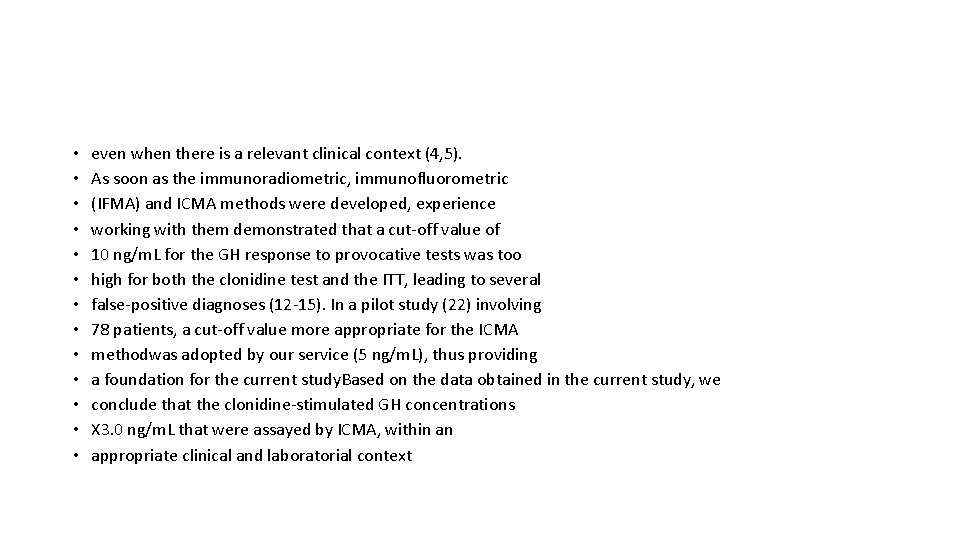
• • • • even when there is a relevant clinical context (4, 5). As soon as the immunoradiometric, immunofluorometric (IFMA) and ICMA methods were developed, experience working with them demonstrated that a cut-off value of 10 ng/m. L for the GH response to provocative tests was too high for both the clonidine test and the ITT, leading to several false-positive diagnoses (12 -15). In a pilot study (22) involving 78 patients, a cut-off value more appropriate for the ICMA methodwas adopted by our service (5 ng/m. L), thus providing a foundation for the current study. Based on the data obtained in the current study, we conclude that the clonidine-stimulated GH concentrations X 3. 0 ng/m. L that were assayed by ICMA, within an appropriate clinical and laboratorial context