
Some Leaders Are Born Women Geraldine Ferraro Leah
“Some Leaders Are Born Women” – Geraldine Ferraro Leah Busam, Senior Director for Student Affairs Xavier University Student Organizations Academy September 16, 2017
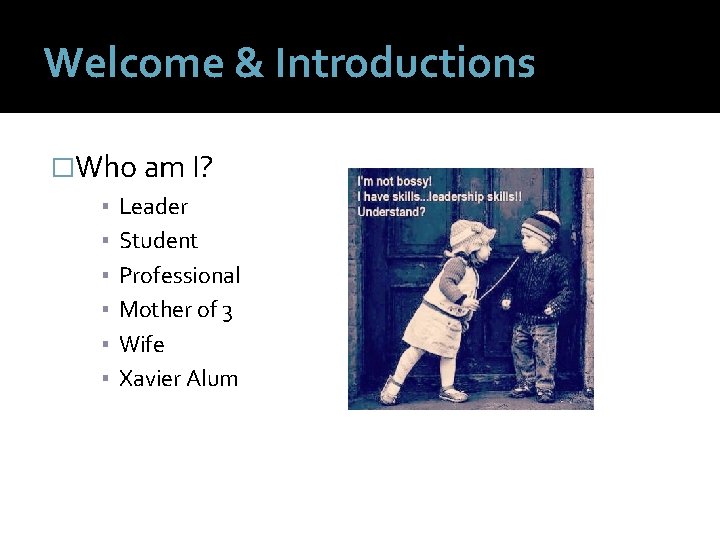
Welcome & Introductions �Who am I? ▪ ▪ ▪ Leader Student Professional Mother of 3 Wife Xavier Alum
Welcome & Introductions � Our time together Agenda ▪ Participation is expected! ▪ We’ll use polls, discussion, and active listening A few caveats ▪ Gender binary ▪ No right or wrong answers ▪ Not about advancing political agenda

Let’s Take a Poll �Please follow the instructions: Text LEAHBUSAM 982 to 37607


Female Representation in Leadership Roles �Women by the # 50% of the US population 47% of the workforce � As chief executives at S&P 500 companies = 5. 8% � In political leadership = Less than 20% of Congress Less than 25% of seats in state legislatures Only 5 governor seats
Female “Success” Rates � At universities Women attend college at higher rates than men Women earn more degrees than men � At Xavier Women earn more degrees than men Student representation ▪ Women = 54% of all undergrads ▪ Women = 63% of all graduate students 6 -year grad rates= 74% for women, 68% for men � Student organization leaders Women hold 64% of student organization officer positions
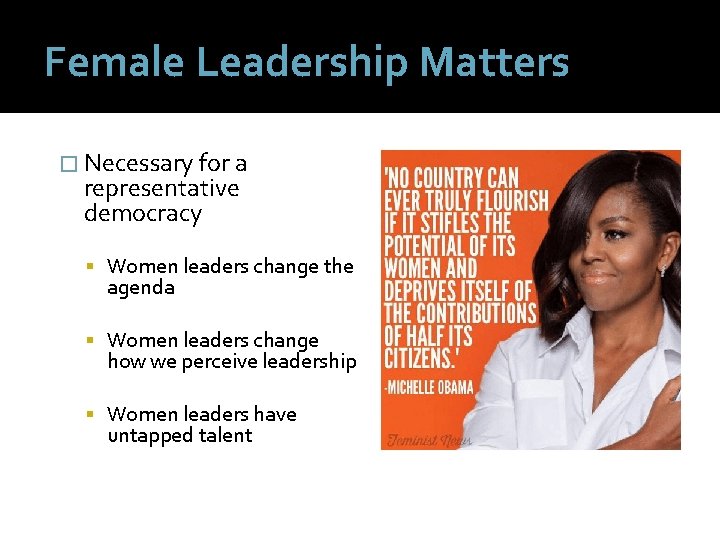
Female Leadership Matters � Necessary for a representative democracy Women leaders change the agenda Women leaders change how we perceive leadership Women leaders have untapped talent
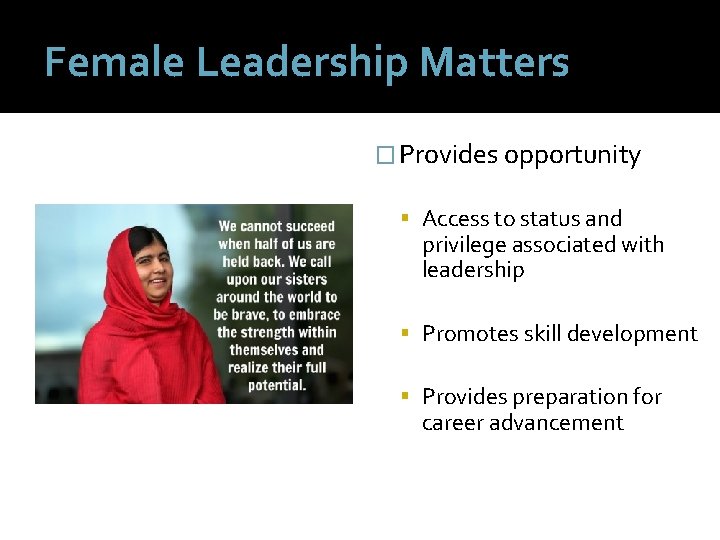
Female Leadership Matters � Provides opportunity Access to status and privilege associated with leadership Promotes skill development Provides preparation for career advancement
Characteristics of Leaders �Let’s take another poll What are the characteristics of women as leaders? What are the characteristics of men as leaders?


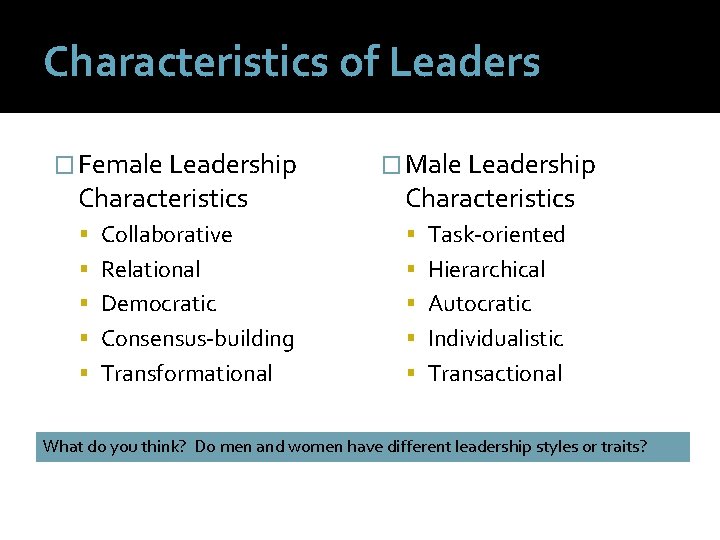
Characteristics of Leaders � Female Leadership Characteristics � Male Leadership Characteristics Collaborative Task-oriented Relational Hierarchical Democratic Autocratic Consensus-building Individualistic Transformational Transactional What do you think? Do men and women have different leadership styles or traits?
Females in Leadership Roles �Some research suggests that Women are more focused on impact Women are less interested in power Women are less interested in getting to the next leadership role � Female leaders are more common in the education, environment, and healthcare sectors. � Male leaders are more common in the financial, engineering, military, and political realms.
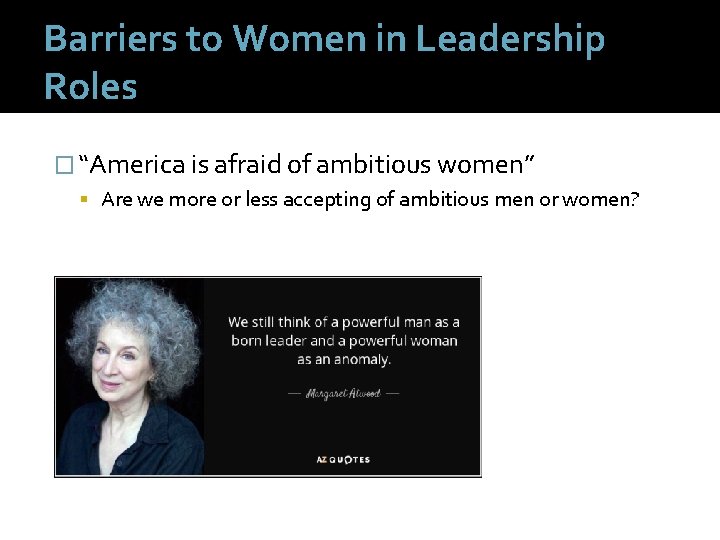
Barriers to Women in Leadership Roles � “America is afraid of ambitious women” Are we more or less accepting of ambitious men or women?
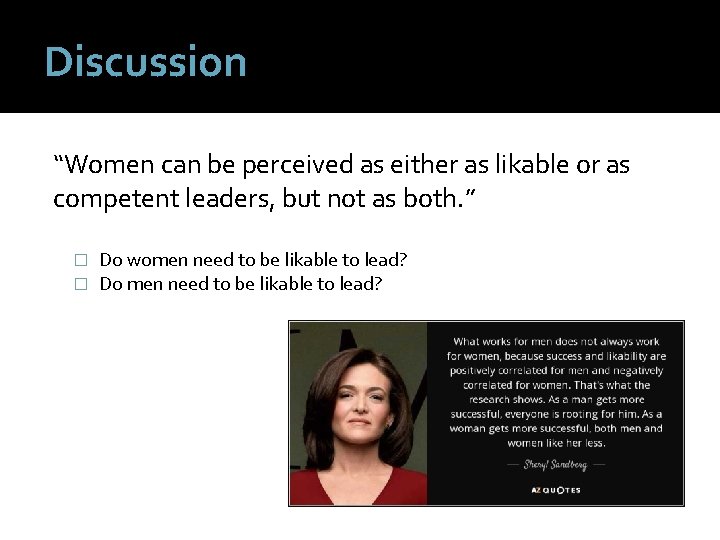
Discussion “Women can be perceived as either as likable or as competent leaders, but not as both. ” � � Do women need to be likable to lead? Do men need to be likable to lead?
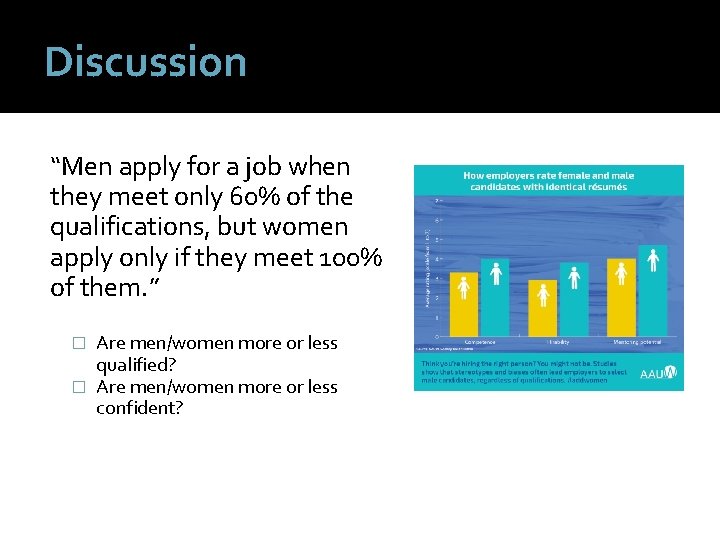
Discussion “Men apply for a job when they meet only 60% of the qualifications, but women apply only if they meet 100% of them. ” Are men/women more or less qualified? � Are men/women more or less confident? �
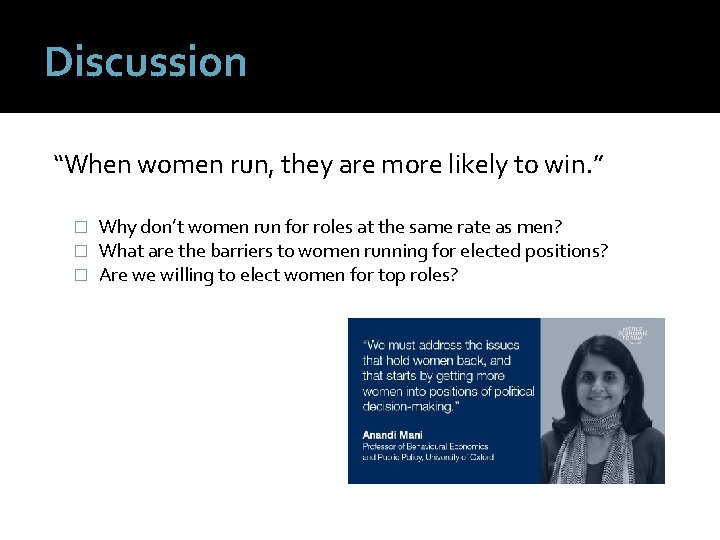
Discussion “When women run, they are more likely to win. ” � � � Why don’t women run for roles at the same rate as men? What are the barriers to women running for elected positions? Are we willing to elect women for top roles?
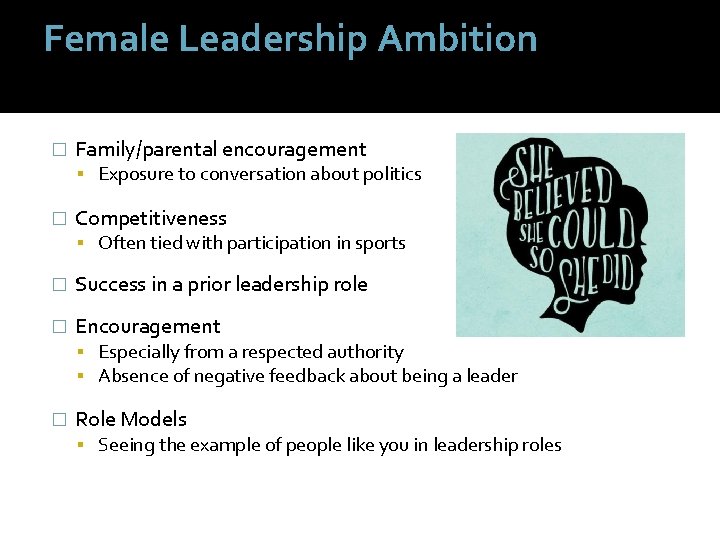
Female Leadership Ambition � Family/parental encouragement Exposure to conversation about politics � Competitiveness Often tied with participation in sports � Success in a prior leadership role � Encouragement Especially from a respected authority Absence of negative feedback about being a leader � Role Models Seeing the example of people like you in leadership roles
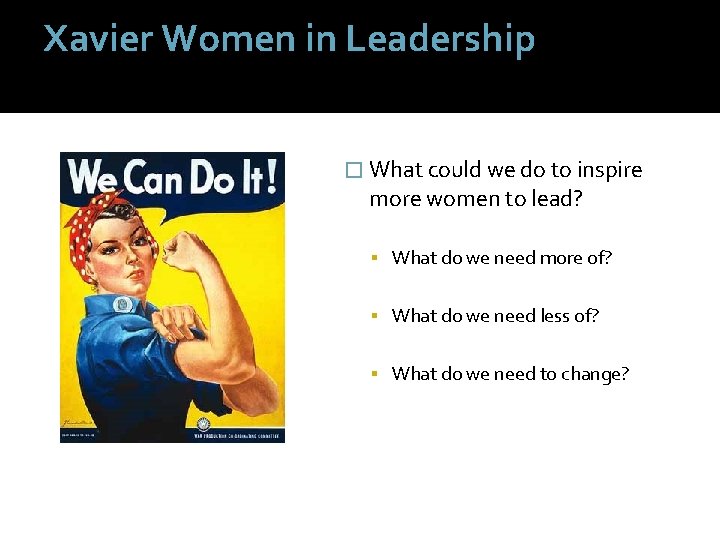
Xavier Women in Leadership � What could we do to inspire more women to lead? What do we need more of? What do we need less of? What do we need to change?
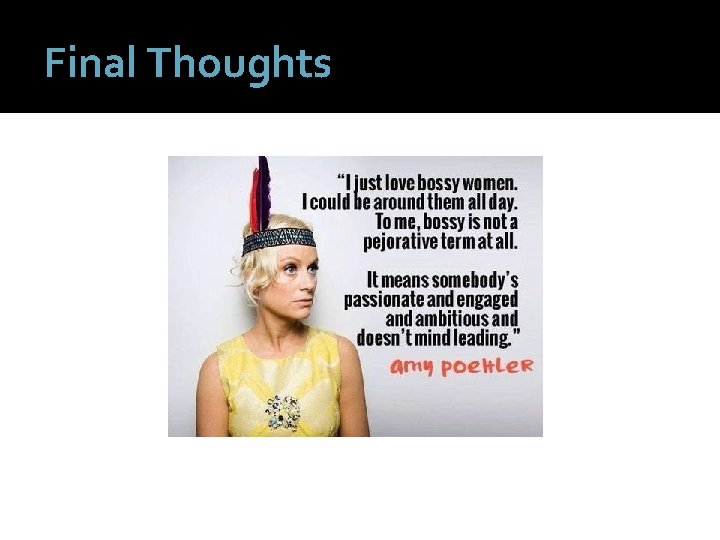
Final Thoughts
- Slides: 22