
Some common microbiological apparatus and Aseptic technique Lab
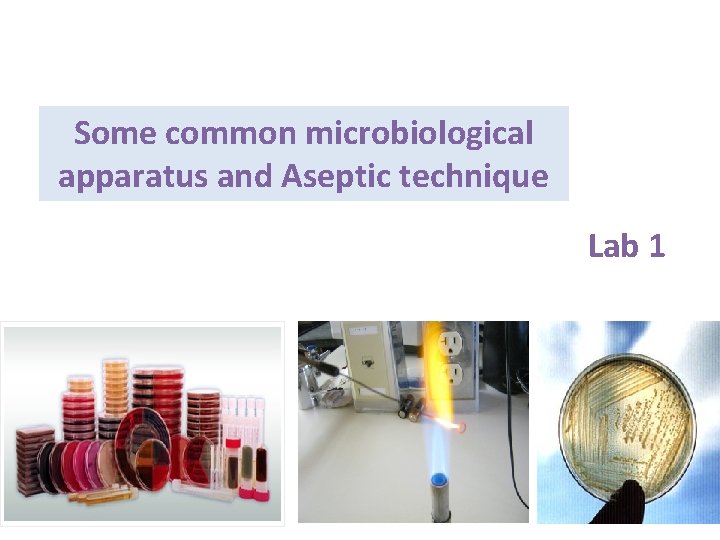
Some common microbiological apparatus and Aseptic technique Lab 1
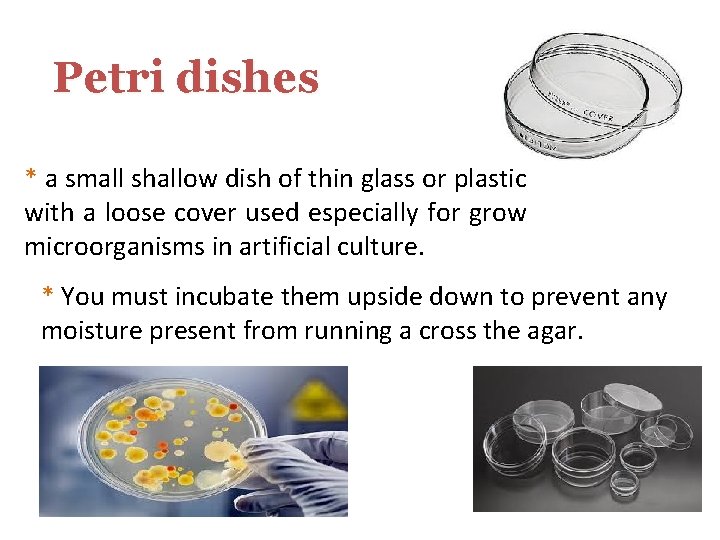
Petri dishes * a small shallow dish of thin glass or plastic with a loose cover used especially for grow microorganisms in artificial culture. * You must incubate them upside down to prevent any moisture present from running a cross the agar.
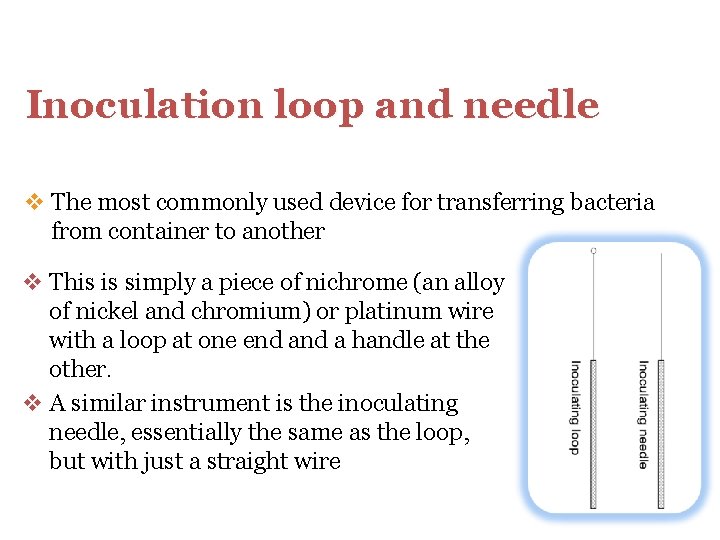
Inoculation loop and needle v The most commonly used device for transferring bacteria from container to another v This is simply a piece of nichrome (an alloy of nickel and chromium) or platinum wire with a loop at one end a handle at the other. v A similar instrument is the inoculating needle, essentially the same as the loop, but with just a straight wire
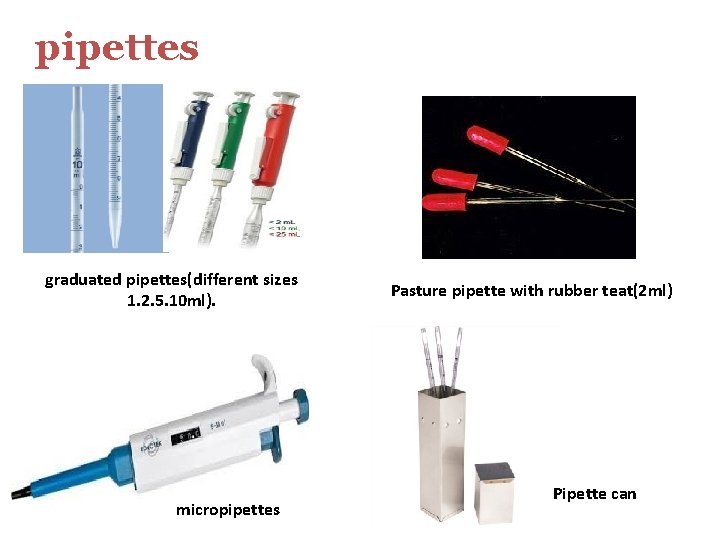
pipettes graduated pipettes(different sizes 1. 2. 5. 10 ml). micropipettes Pasture pipette with rubber teat(2 ml) Pipette can
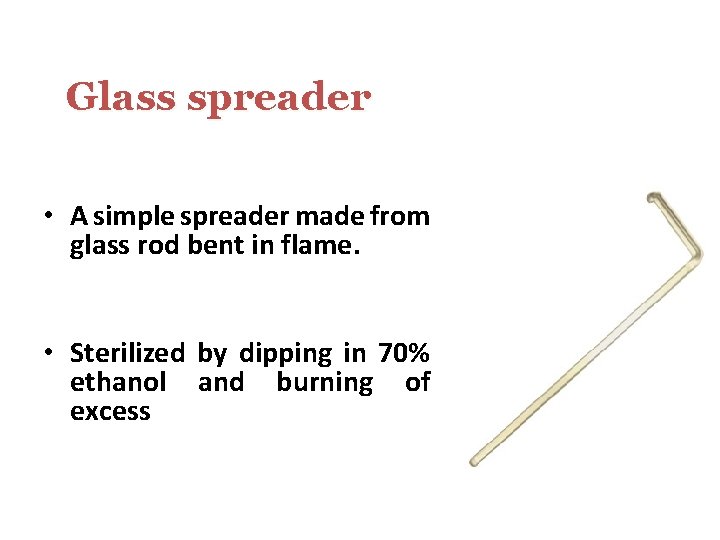
Glass spreader • A simple spreader made from glass rod bent in flame. • Sterilized by dipping in 70% ethanol and burning of excess
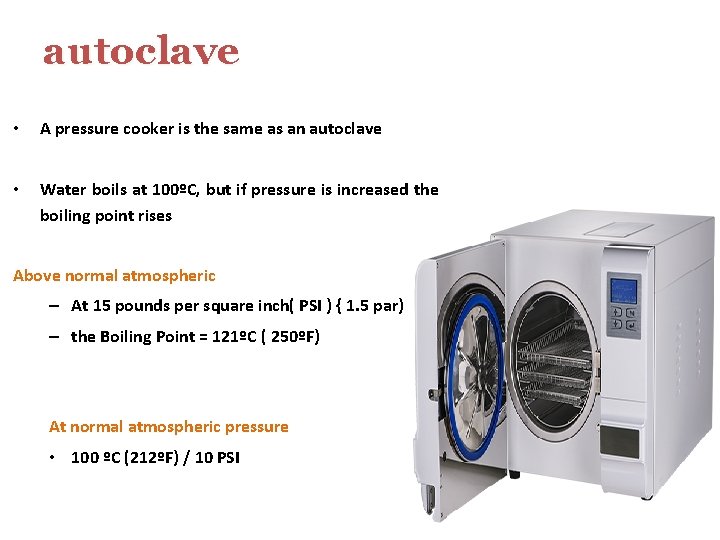
autoclave • A pressure cooker is the same as an autoclave • Water boils at 100ºC, but if pressure is increased the boiling point rises Above normal atmospheric – At 15 pounds per square inch( PSI ) { 1. 5 par) – the Boiling Point = 121ºC ( 250ºF) At normal atmospheric pressure • 100 ºC (212ºF) / 10 PSI
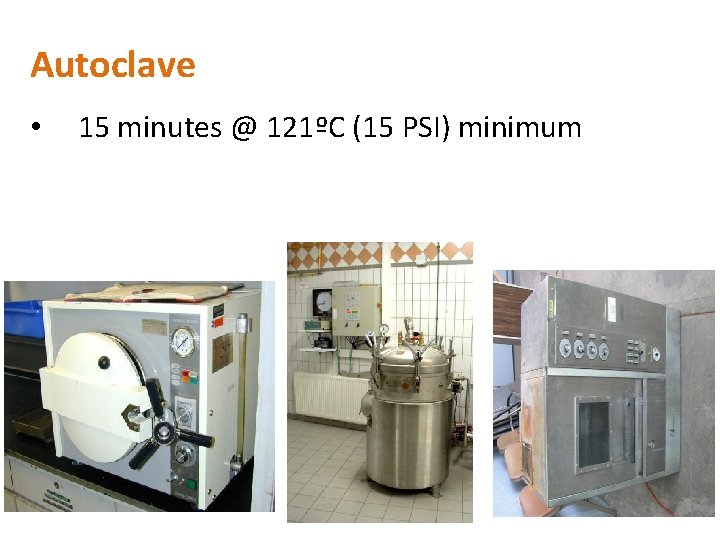
Autoclave • 15 minutes @ 121ºC (15 PSI) minimum
Part (2) Sterility and aseptic techniques
• In the microbiology lab we use aseptic technique to: 1 • Prevent contamination of the specific microorganism we are working with. 2 • Prevent contamination of the room and personnel with the microorganism we are working with . SOURCES OF CONTAMINATION 1. 2. 3. 4. 5. 6. 7. The Atmosphere The Breath The Hands Clothing The Hair The Working Surface Equipment
Sterility: Complete absence of viable cells or spores of microorganisms Aseptic techniques: It is the name given to the procedures used by microbiologists to prevent microbial contamination of themselves, which may result in infection, contamination of the environment.
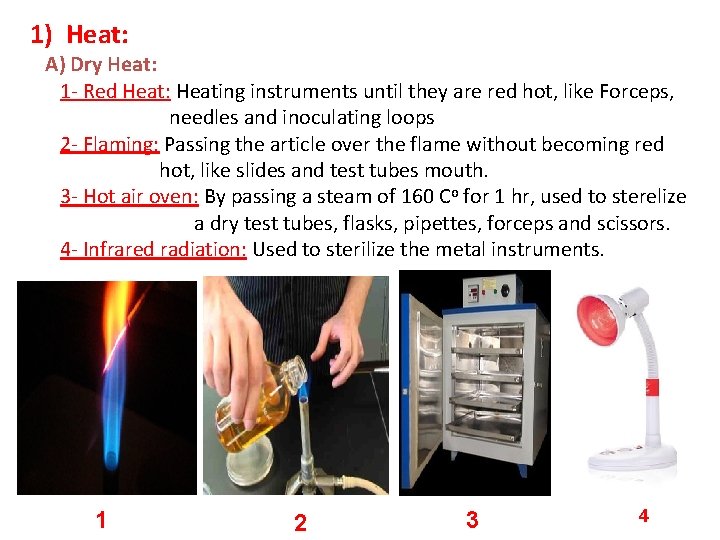
1) Heat: A) Dry Heat: 1 - Red Heat: Heating instruments until they are red hot, like Forceps, needles and inoculating loops 2 - Flaming: Passing the article over the flame without becoming red hot, like slides and test tubes mouth. 3 - Hot air oven: By passing a steam of 160 Co for 1 hr, used to sterelize a dry test tubes, flasks, pipettes, forceps and scissors. 4 - Infrared radiation: Used to sterilize the metal instruments. 1 2 3 4
• B) Moist Heat: 1 - At temperature bellow 100 Co: Like Pasteurization. It used to sterilize the vaccines, serum and milk. 2 - At temperature of 100 Co: At boiling 3 - At temperature above 100 Co: The most effective one, as employed in autoclave.
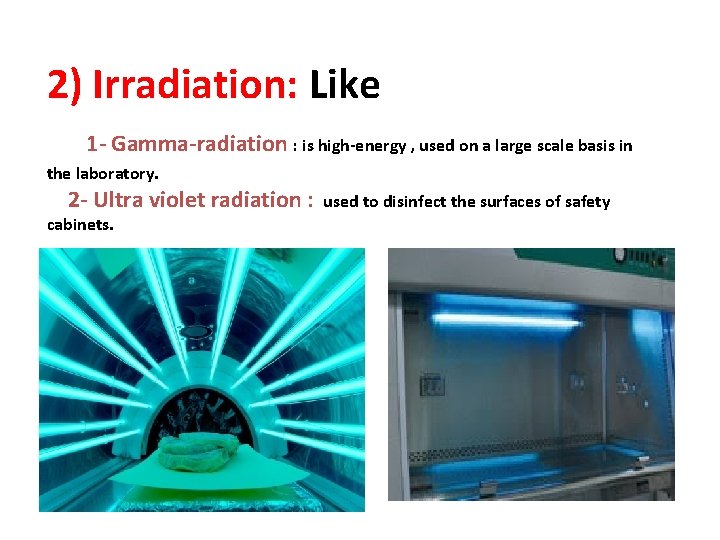
2) Irradiation: Like 1 - Gamma-radiation : is high-energy , used on a large scale basis in the laboratory. 2 - Ultra violet radiation : cabinets. used to disinfect the surfaces of safety
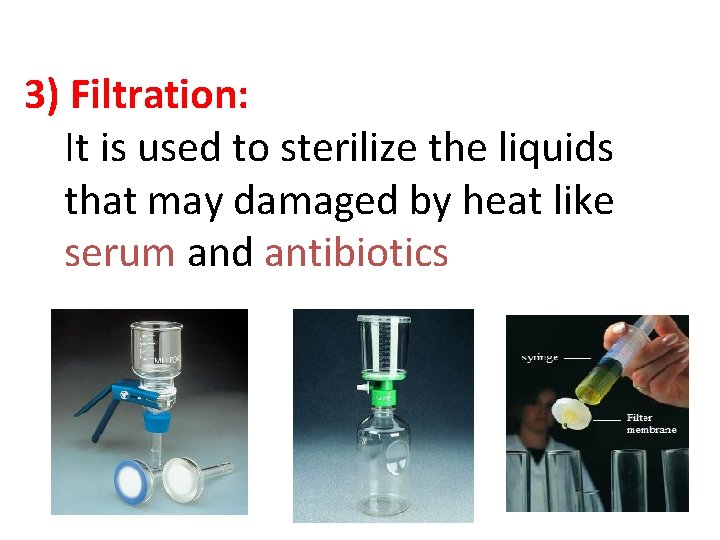
3) Filtration: It is used to sterilize the liquids that may damaged by heat like serum and antibiotics
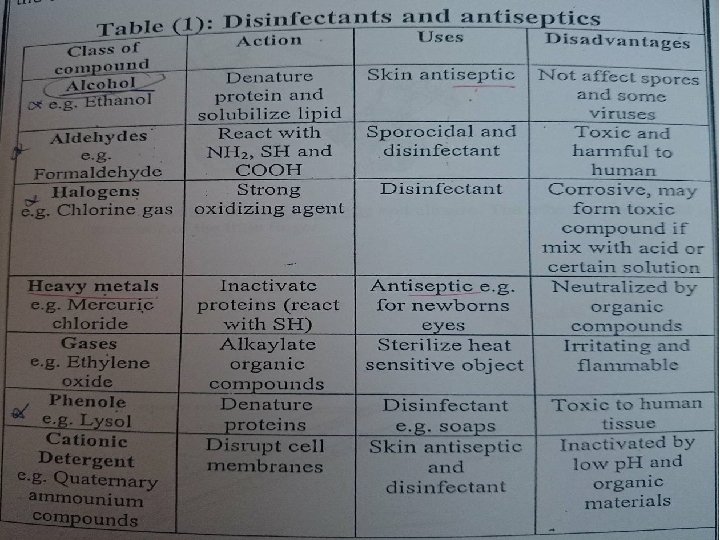
4) Chemical methods: By using different types of chemicals as antiseptics ( harmless for living tissue )and disinfectants, ( harmful ) like: 70% ethanol, chloroform, formaldehyde, ethylene oxide, …. etc.
Antiseptics Versus Disinfectant Antiseptics * Use on skin and mucous membranes to kill microorganisms * Not for use on inanimate objects Disinfectant : * Use to kill microorganisms on inanimate objects * Not for use on skin or mucous membranes
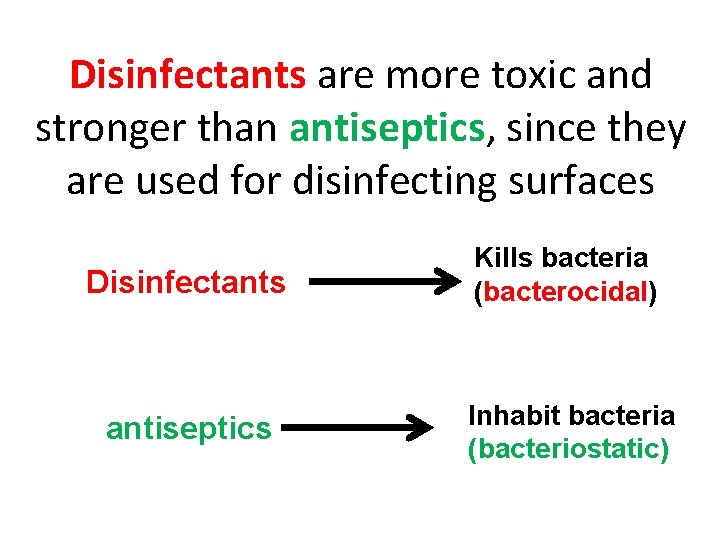
Disinfectants are more toxic and stronger than antiseptics, since they are used for disinfecting surfaces Disinfectants Kills bacteria (bacterocidal) antiseptics Inhabit bacteria (bacteriostatic)
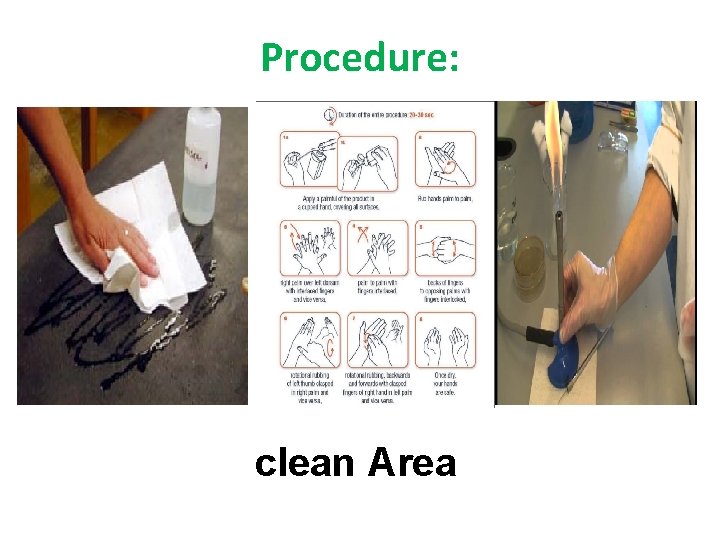
Procedure: clean Area
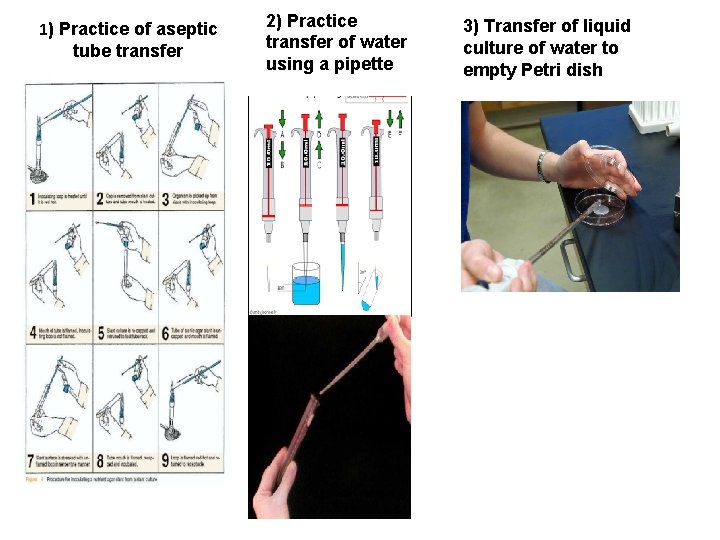
1) Practice of aseptic tube transfer 2) Practice transfer of water using a pipette 3) Transfer of liquid culture of water to empty Petri dish
- Slides: 20