
Some Aspects of Connected Speech Assimilation 1 from
- Slides: 16
Some Aspects of Connected Speech
• Assimilation 1. from Latin" to become like” 2. one sound is influenced by a neighboring sound. 3. One sound moves phonetically in the direction of its neighbor. 4. process or result of two sounds 5. Sounds become identical or similar.
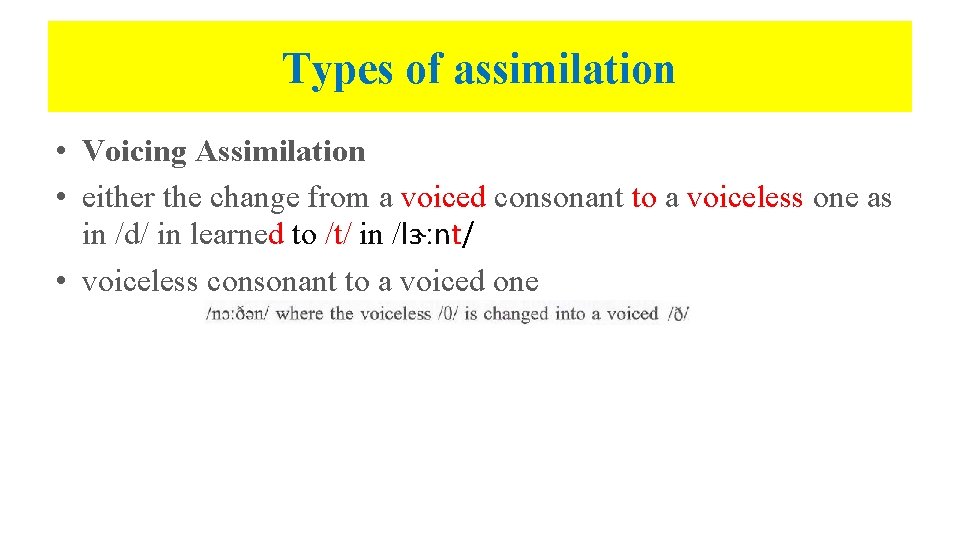
Types of assimilation • Voicing Assimilation • either the change from a voiced consonant to a voiceless one as in /d/ in learned to /t/ in /lɝːnt/ • voiceless consonant to a voiced one
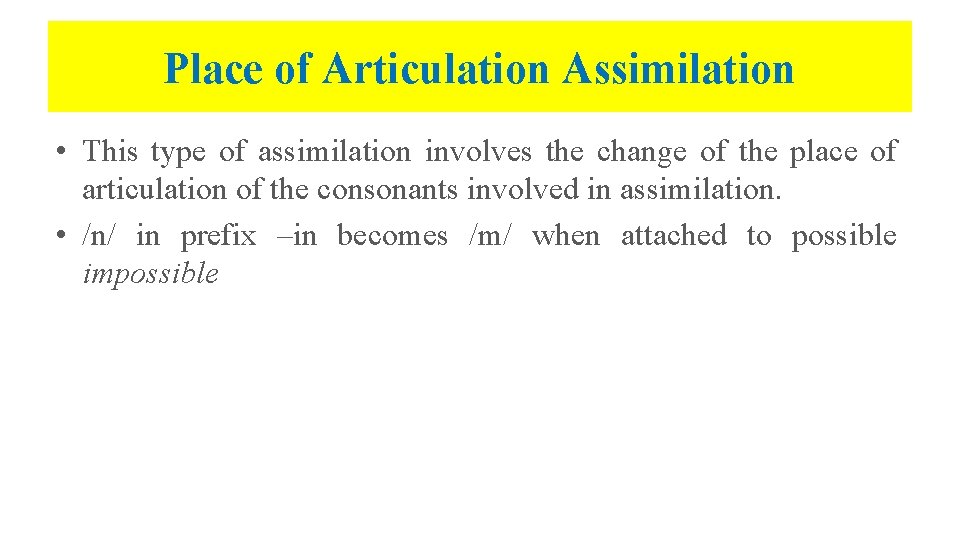
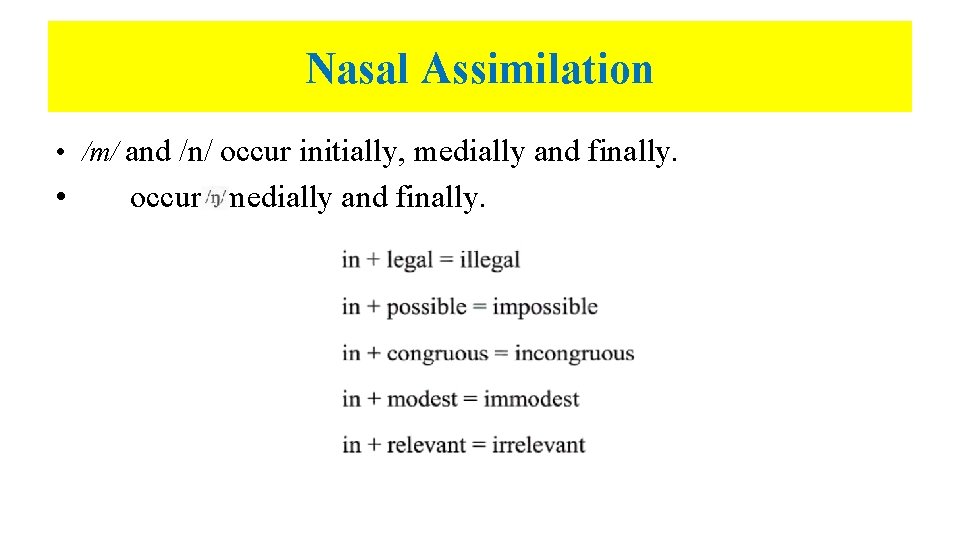
Place of Articulation Assimilation • This type of assimilation involves the change of the place of articulation of the consonants involved in assimilation. • /n/ in prefix –in becomes /m/ when attached to possible impossible
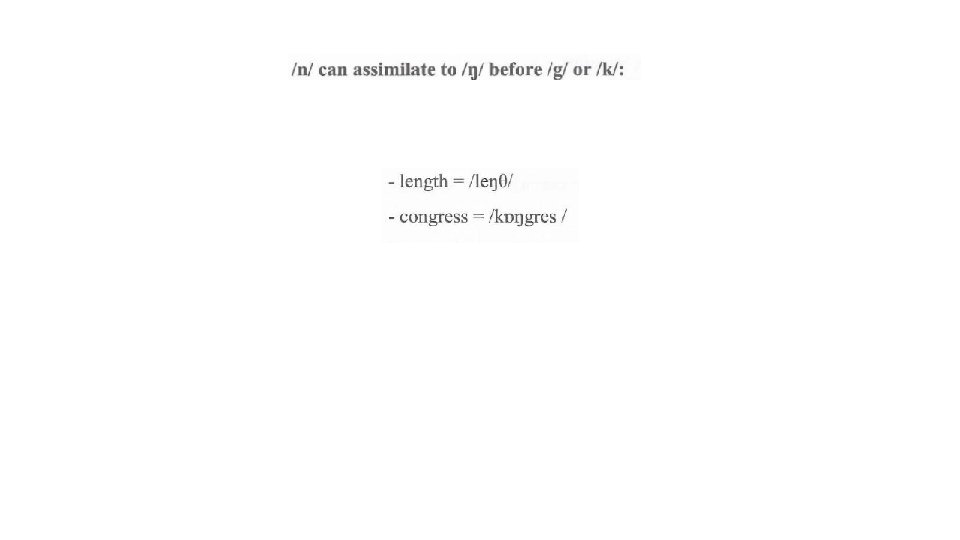
Nasal Assimilation • /m/ and /n/ occur initially, medially and finally. • occurs medially and finally.
• two consonants have the same place of articulation, as shown by the examples above, they are called homorganic consonants.
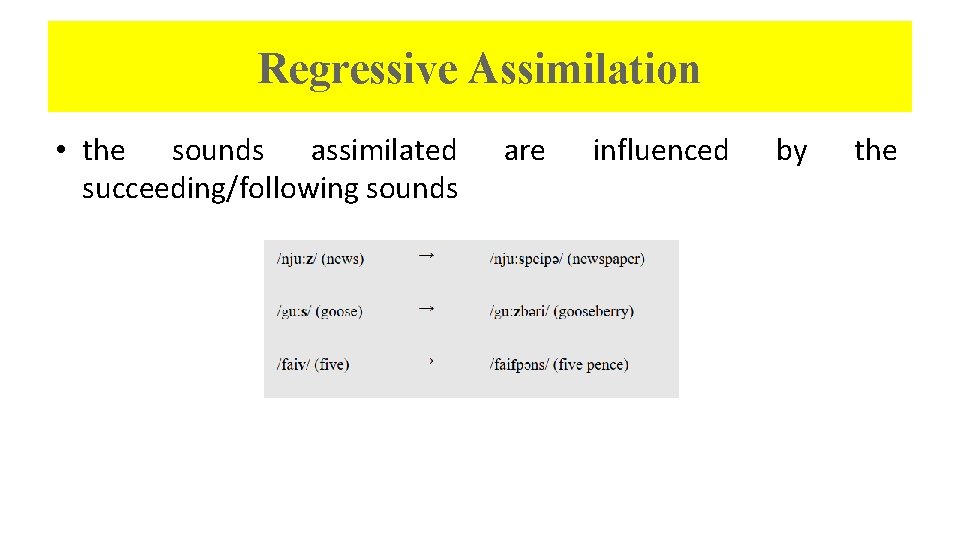
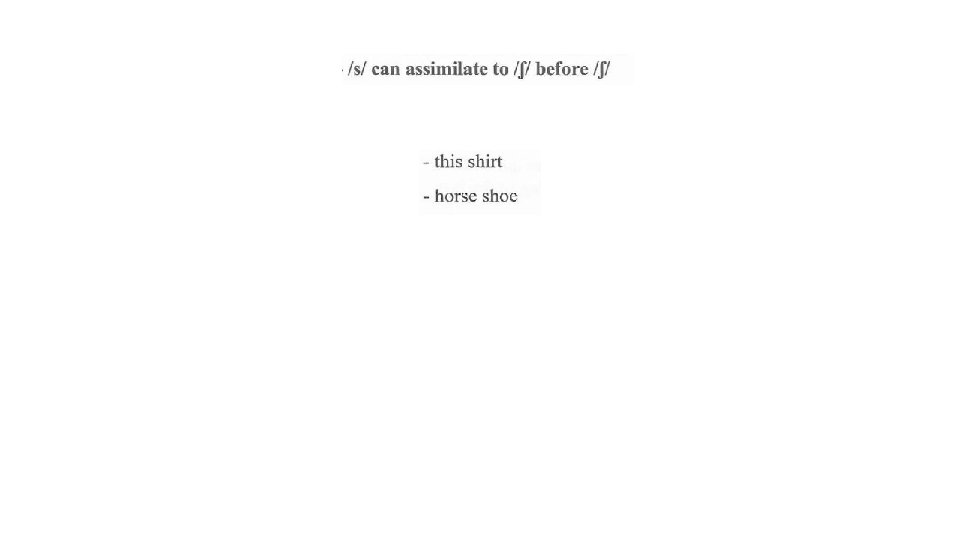
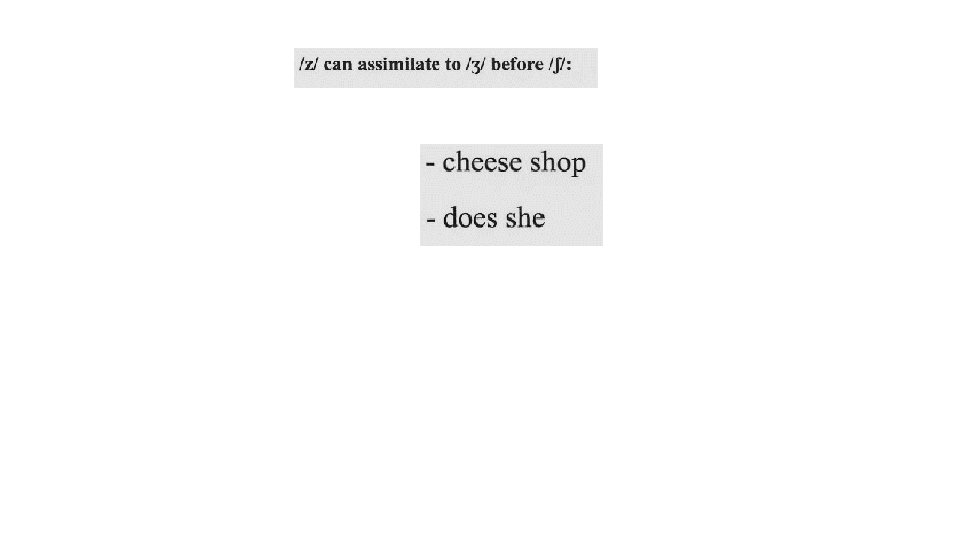
Regressive Assimilation • the sounds assimilated succeeding/following sounds are influenced by the
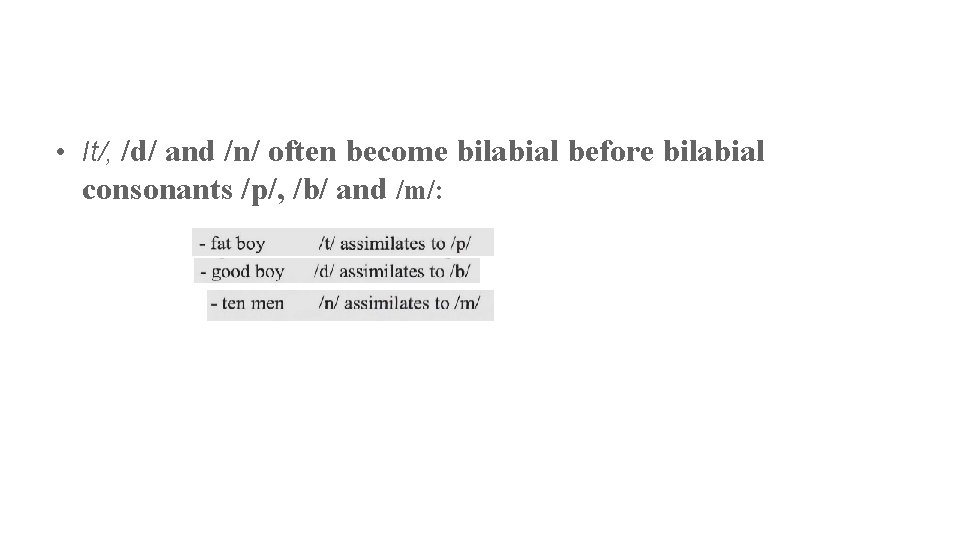
• It/, /d/ and /n/ often become bilabial before bilabial consonants /p/, /b/ and /m/:
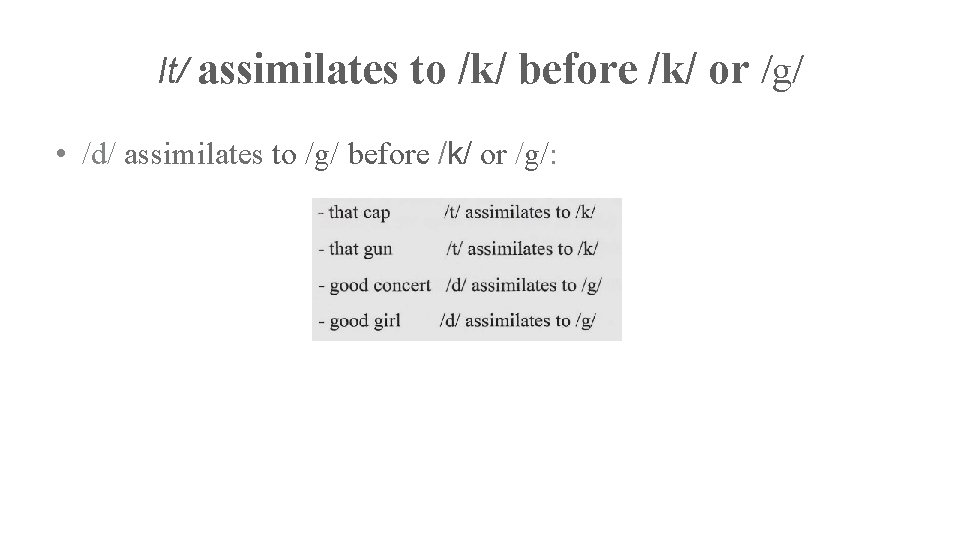
It/ assimilates to /k/ before /k/ or /g/ • /d/ assimilates to /g/ before /k/ or /g/:
Elision • Elision may be defined as the disappearance of sounds.
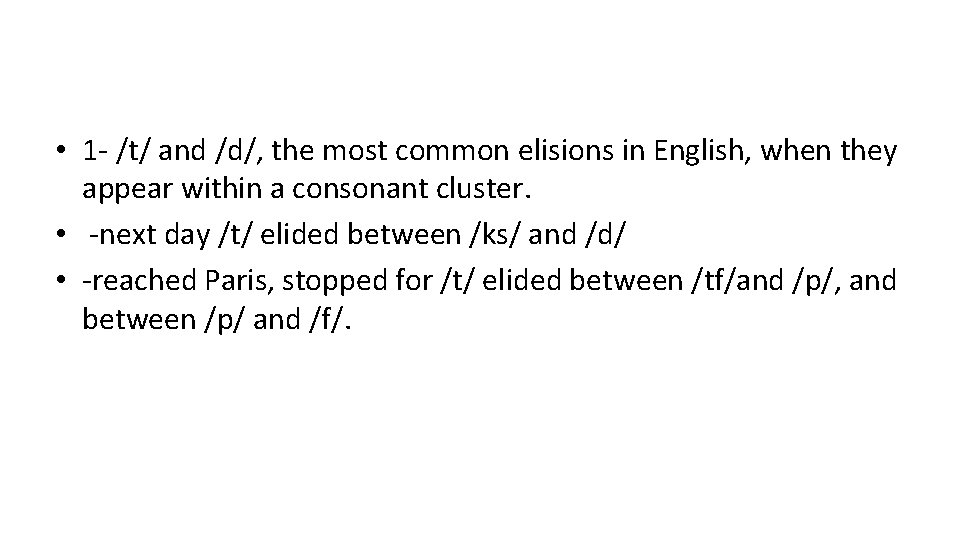
• 1 - /t/ and /d/, the most common elisions in English, when they appear within a consonant cluster. • -next day /t/ elided between /ks/ and /d/ • -reached Paris, stopped for /t/ elided between /tf/and /p/, and between /p/ and /f/.
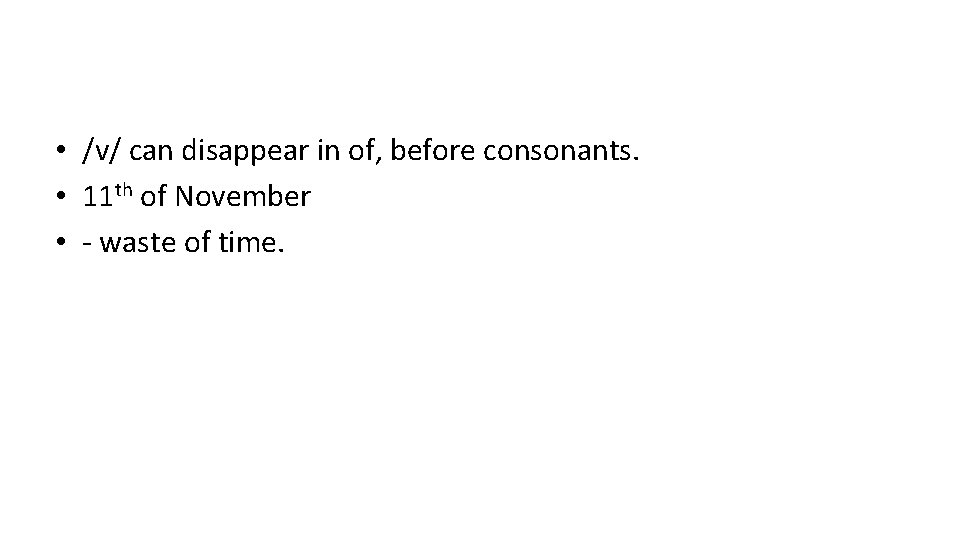
• /v/ can disappear in of, before consonants. • 11 th of November • - waste of time.
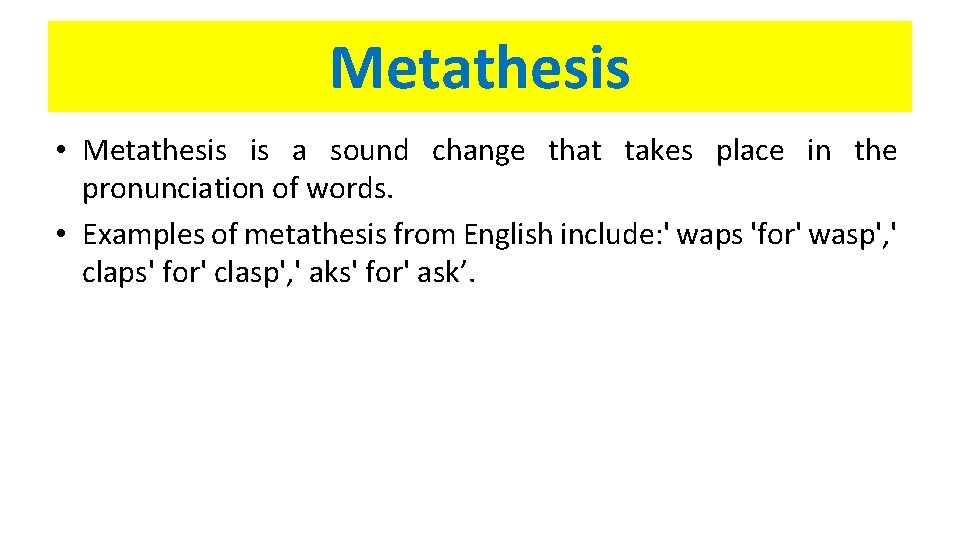
Metathesis • Metathesis is a sound change that takes place in the pronunciation of words. • Examples of metathesis from English include: ' waps 'for' wasp', ' claps' for' clasp', ' aks' for' ask’.