
Somatosensory System The Integument aka Skin Giant washable
Somatosensory System
The Integument (aka “Skin”) • Giant, washable, stretchable, water-proof sensory organ…The boundary between you and not-you • 6 -10 pounds • 12 -20 sq-ft
The Integument • Epidermis (Thin outer layer) • Dermis (Thick inner layer) • Humans “shed” 50 million epidermal cells per day (Whole ecosystems are based upon the accumulations of household dander)
The Skin (Integument) Glabrous Skin Smooth, thick skin on palms and soles of our feet Epidermis = 1. 5 mm Dermis = 3 mm Hairy Skin Thin skin populated with hair follicles Epidermis = 0. 1 mm Dermis = 1 -2 mm Sweat Glands Eccrine – secrete saline (heat regulation) Sebaceous – secrete complex cell cytoplasm (signaling? ) (Primary source of human body odor)

The Skin (Integument)

Mechanoreceptors Other somatosensory transducers Free nerve endings: Temperature (hot; cold) Proprioception (limb/muscle state) Nocioception (pain)
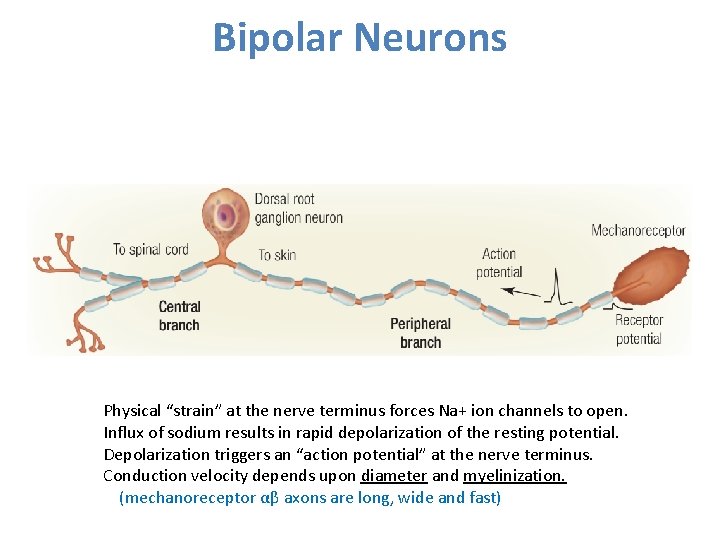
Bipolar Neurons Physical “strain” at the nerve terminus forces Na+ ion channels to open. Influx of sodium results in rapid depolarization of the resting potential. Depolarization triggers an “action potential” at the nerve terminus. Conduction velocity depends upon diameter and myelinization. (mechanoreceptor αβ axons are long, wide and fast)
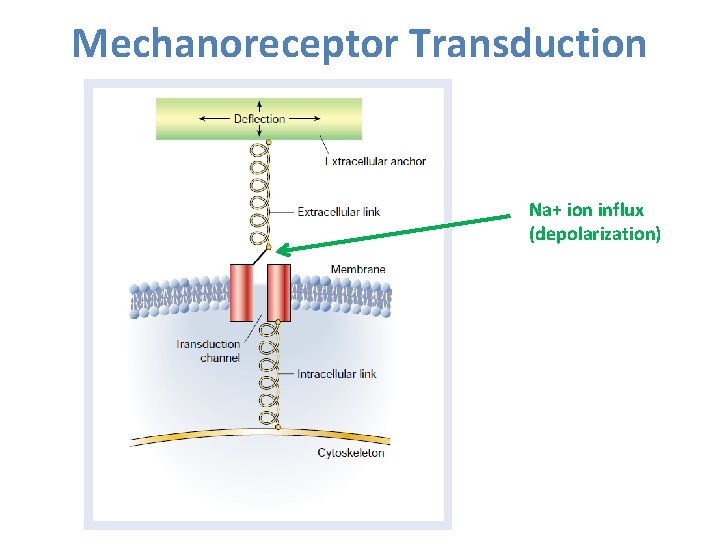
Mechanoreceptor Transduction Na+ ion influx (depolarization)
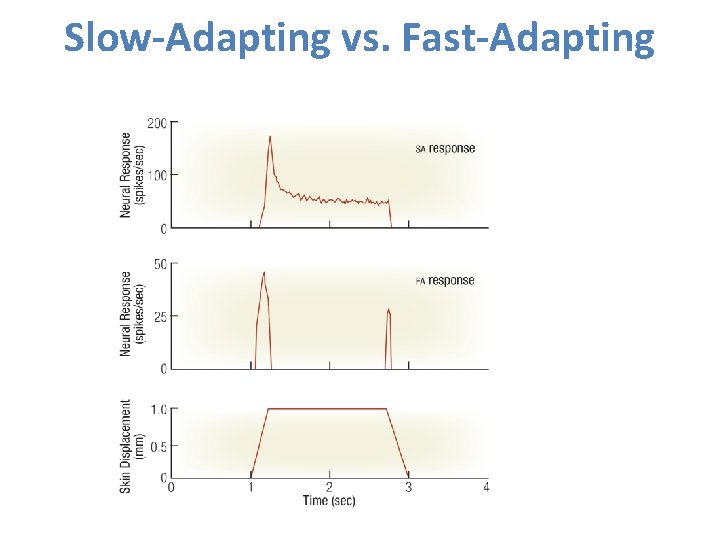
Slow-Adapting vs. Fast-Adapting
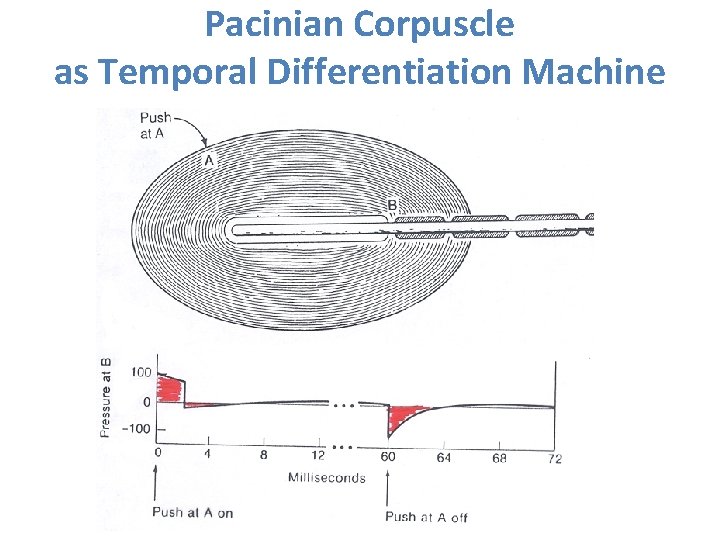
Pacinian Corpuscle as Temporal Differentiation Machine
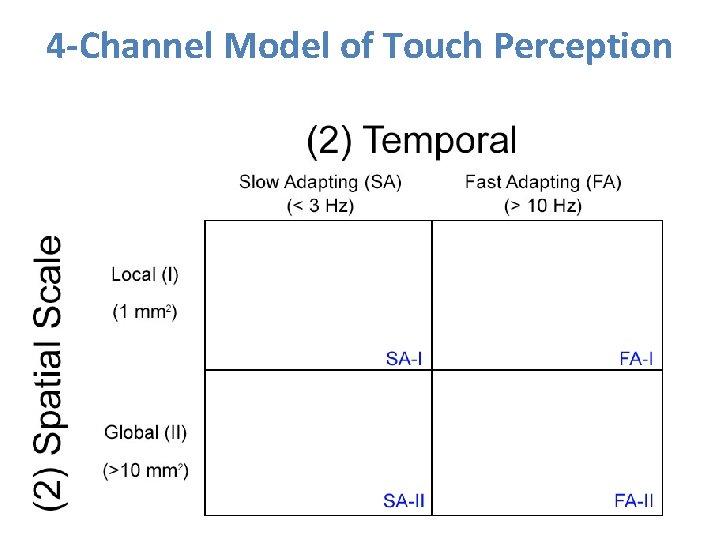
4 -Channel Model of Touch Perception
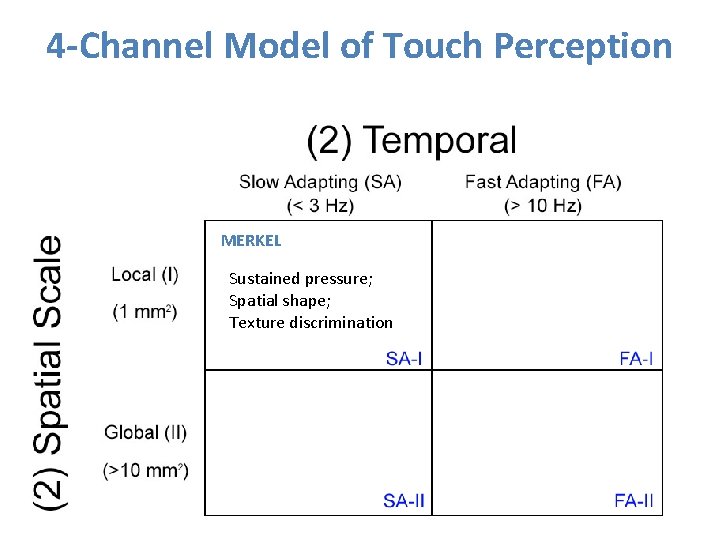
4 -Channel Model of Touch Perception MERKEL Sustained pressure; Spatial shape; Texture discrimination
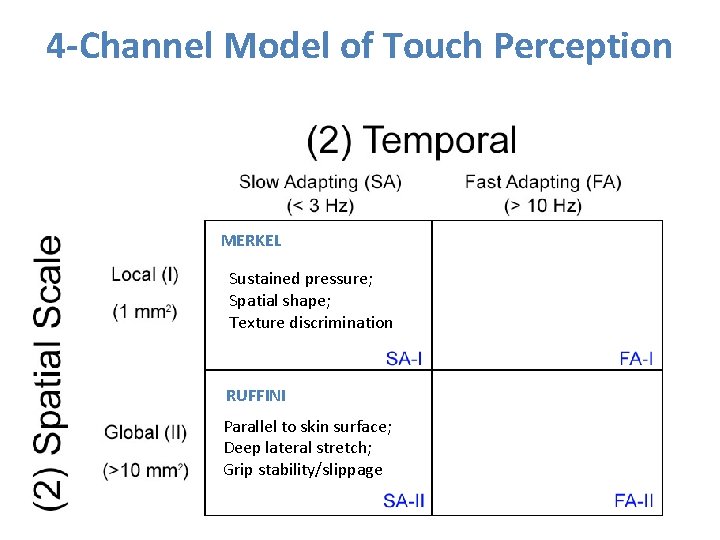
4 -Channel Model of Touch Perception MERKEL Sustained pressure; Spatial shape; Texture discrimination RUFFINI Parallel to skin surface; Deep lateral stretch; Grip stability/slippage
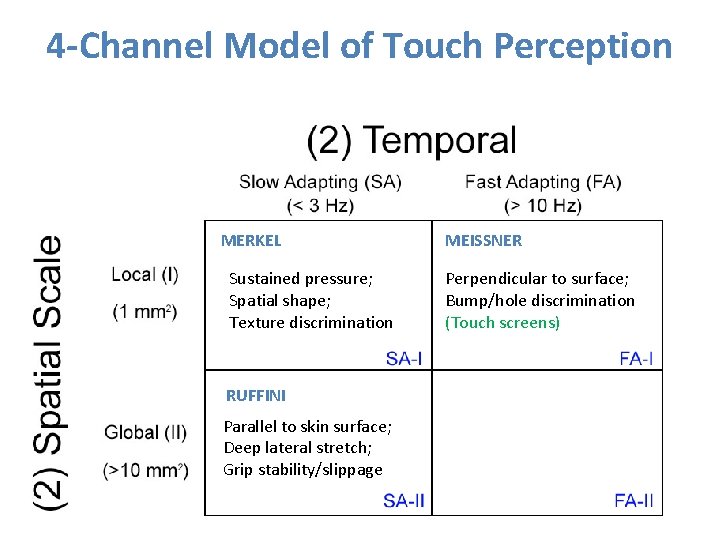
4 -Channel Model of Touch Perception MERKEL Sustained pressure; Spatial shape; Texture discrimination RUFFINI Parallel to skin surface; Deep lateral stretch; Grip stability/slippage MEISSNER Perpendicular to surface; Bump/hole discrimination (Touch screens)
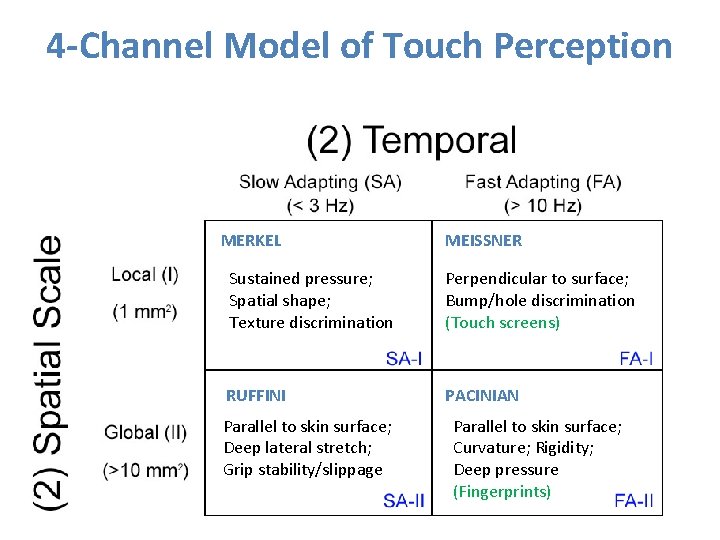
4 -Channel Model of Touch Perception MERKEL MEISSNER Sustained pressure; Spatial shape; Texture discrimination Perpendicular to surface; Bump/hole discrimination (Touch screens) RUFFINI PACINIAN Parallel to skin surface; Deep lateral stretch; Grip stability/slippage Parallel to skin surface; Curvature; Rigidity; Deep pressure (Fingerprints)

Ascending Pathways
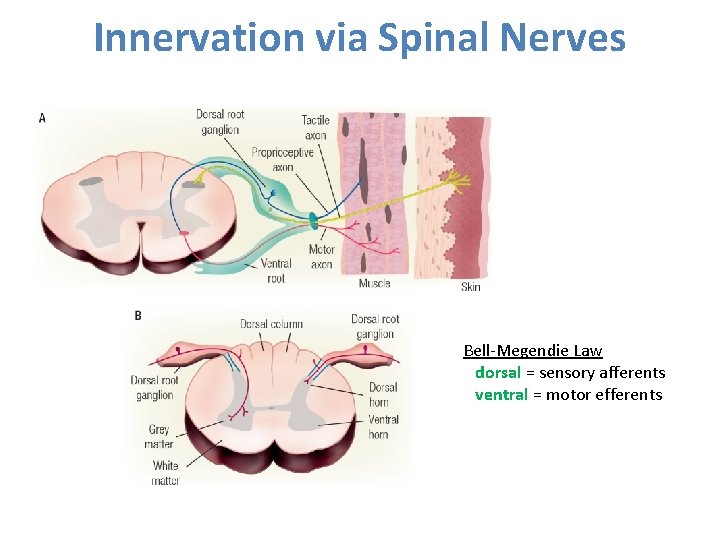
Innervation via Spinal Nerves Bell-Megendie Law dorsal = sensory afferents ventral = motor efferents
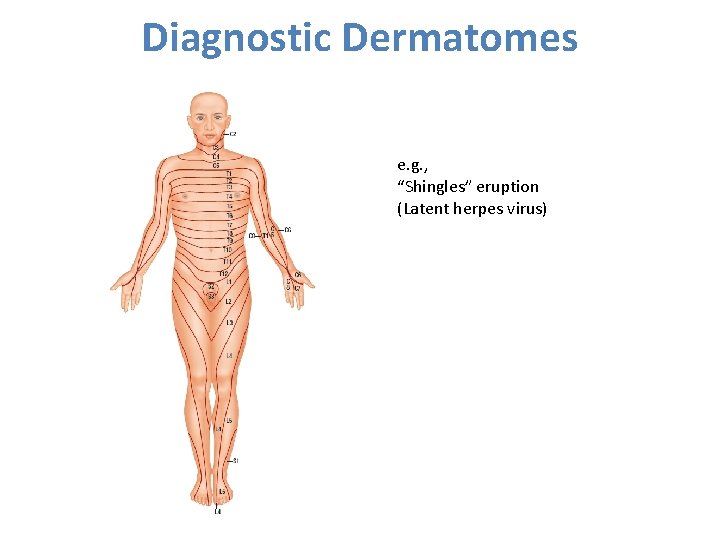
Diagnostic Dermatomes e. g. , “Shingles” eruption (Latent herpes virus)
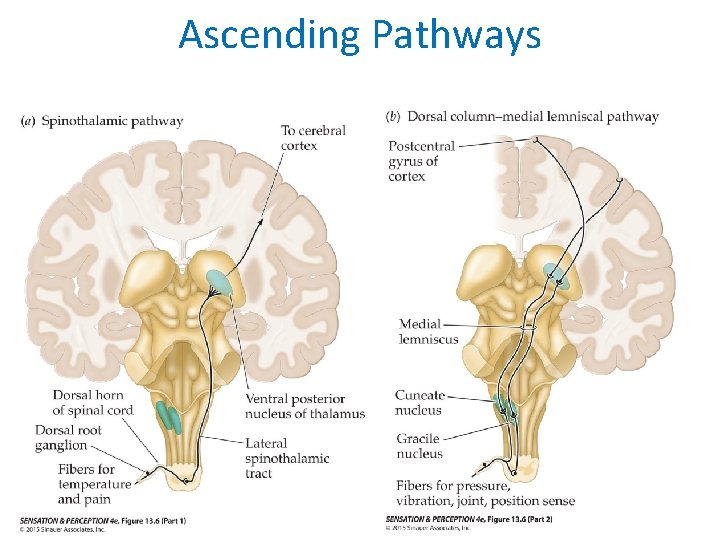
Ascending Pathways
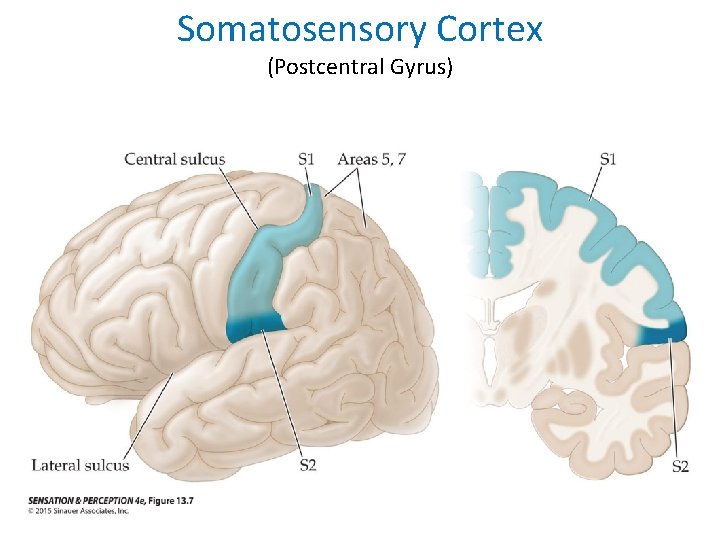
Somatosensory Cortex (Postcentral Gyrus)
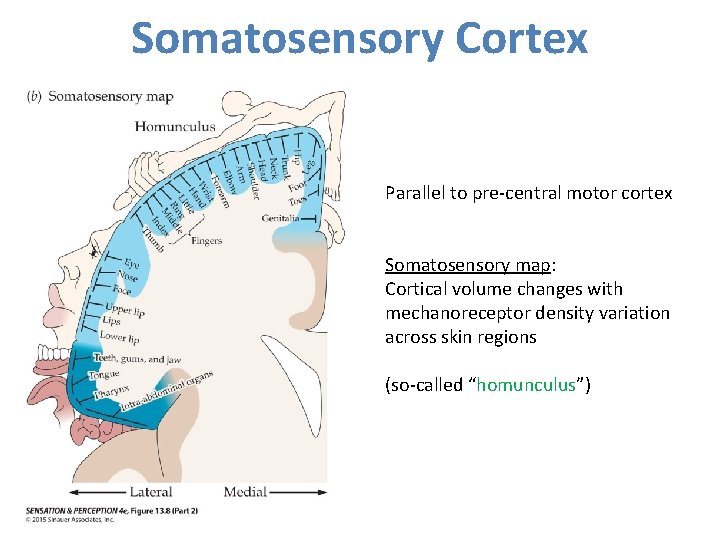
Somatosensory Cortex Parallel to pre-central motor cortex Somatosensory map: Cortical volume changes with mechanoreceptor density variation across skin regions (so-called “homunculus”)
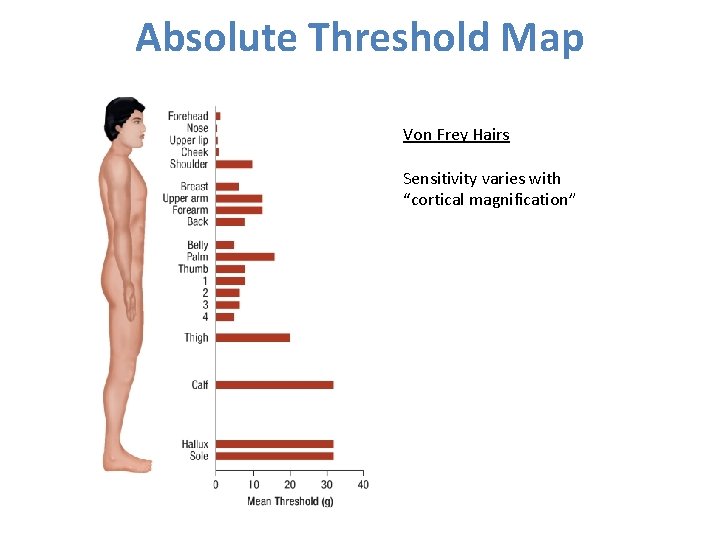
Absolute Threshold Map Von Frey Hairs Sensitivity varies with “cortical magnification”
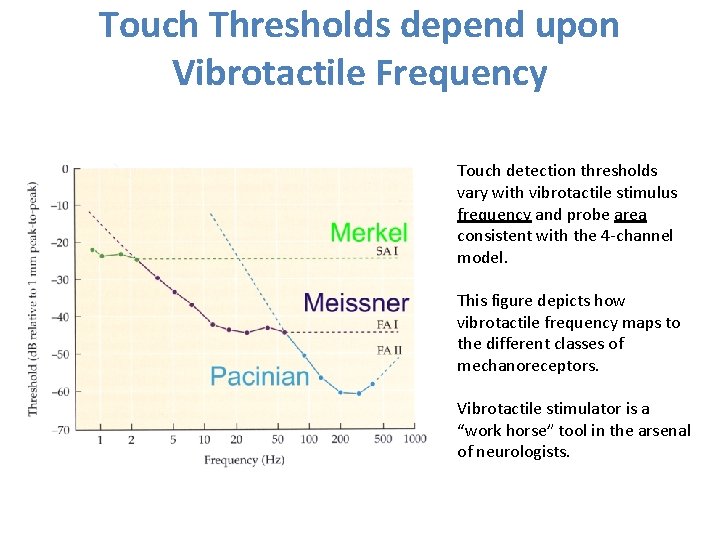
Touch Thresholds depend upon Vibrotactile Frequency Touch detection thresholds vary with vibrotactile stimulus frequency and probe area consistent with the 4 -channel model. This figure depicts how vibrotactile frequency maps to the different classes of mechanoreceptors. Vibrotactile stimulator is a “work horse” tool in the arsenal of neurologists.
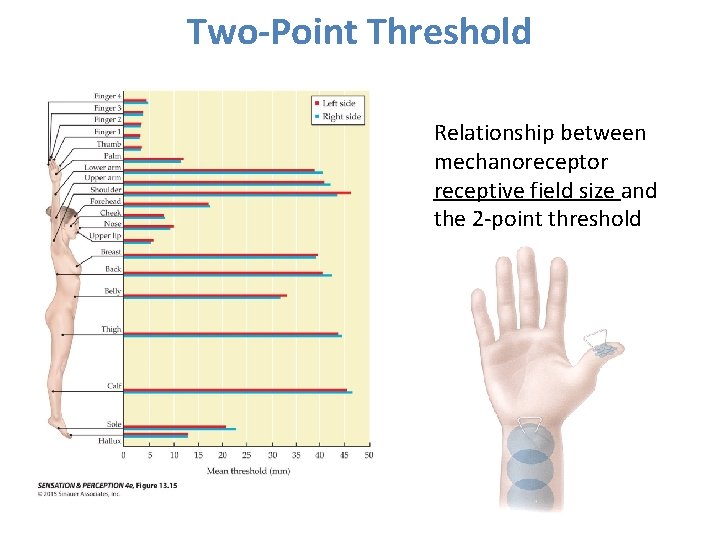
Two-Point Threshold Relationship between mechanoreceptor receptive field size and the 2 -point threshold
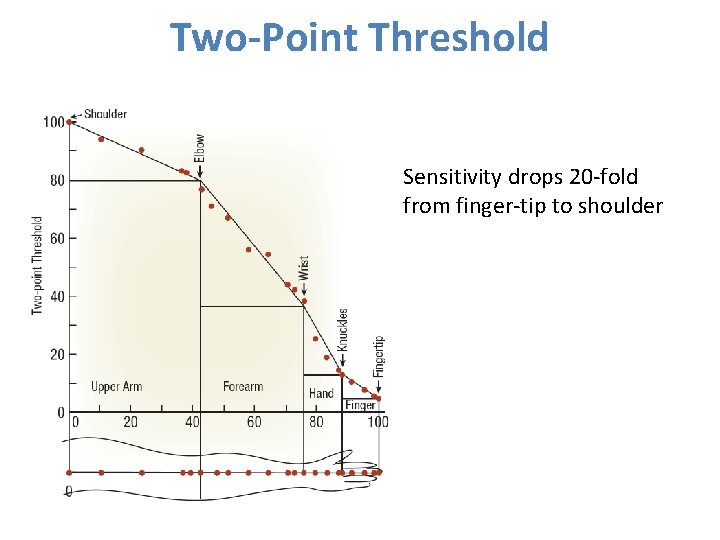
Two-Point Threshold Sensitivity drops 20 -fold from finger-tip to shoulder
- Slides: 25