
Somatic Cells aka Body Cells Gamate Cells aka


§ Somatic Cells – aka Body Cells § Gamate Cells – aka Sex Cells
Genes § Is a segment of DNA that controls the protein production and the cell cycle.
Dominant Trait § Is an OBSERVABLE trait of an organism that masks (hides) the recessive form of a trait.
Recessive Trait § Is a trait of an organism that can be hidden by the dominant form of a trait
Alleles § Is an alternative form of a gene.

Homozygous Recessive § Both alleles are recessive Ex: tt - short T – tall t - short
Homozygous Dominant § § Both alleles are recessive Ex – TT = Tall T – Tall t – short

Heterozygous § One Dominant allele & One Recessive allele Tt – Tall T- Tall t - short
Pedigree Charts The family tree of genetics Created by Lauren Almaguer, CDC Science Ambassador, 2004
Overview I. What is a pedigree? a. b. II. Definition Uses Constructing a pedigree a. b. III. Symbols Connecting the symbols Interpreting a pedigree
What is a Pedigree? § A pedigree is a chart of the genetic history of family over several generations. § Scientists or a genetic counselor would find out about your family history and make this chart to analyze.
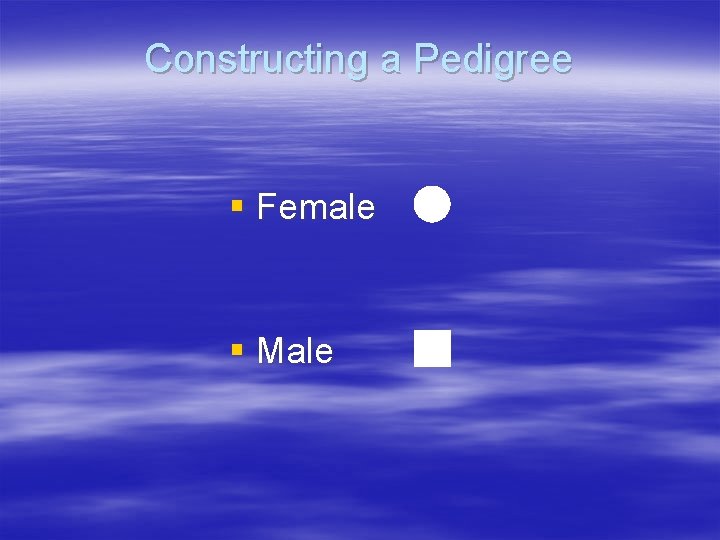
Constructing a Pedigree § Female § Male
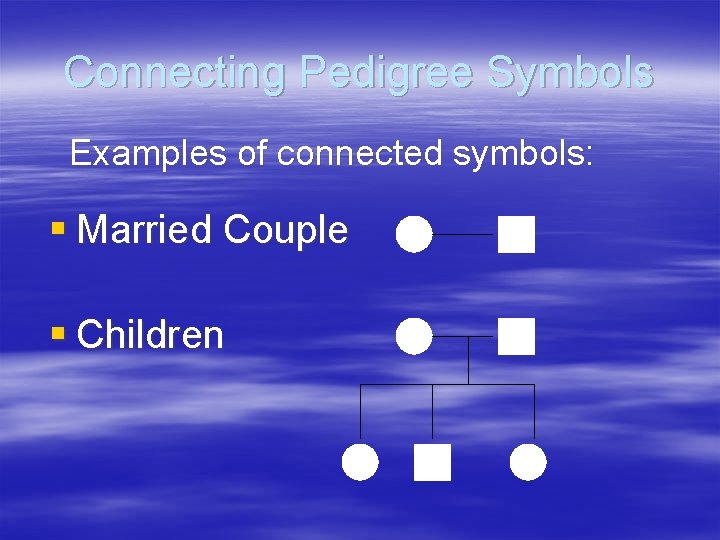
Connecting Pedigree Symbols Examples of connected symbols: § Married Couple § Children
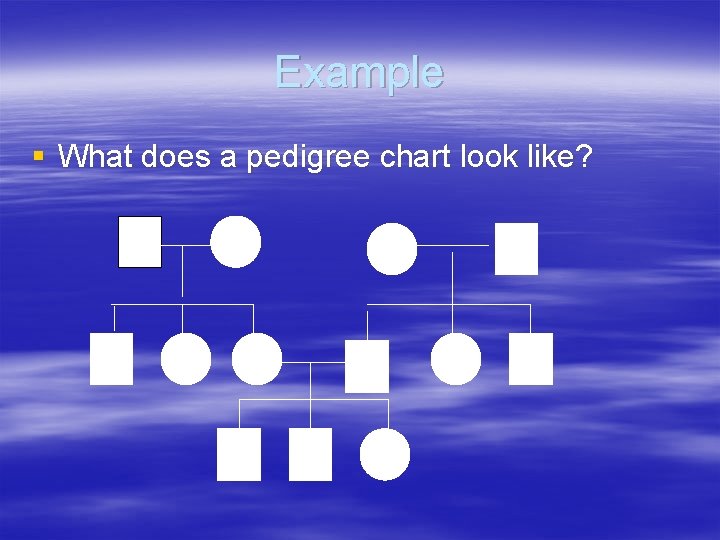
Example § What does a pedigree chart look like?
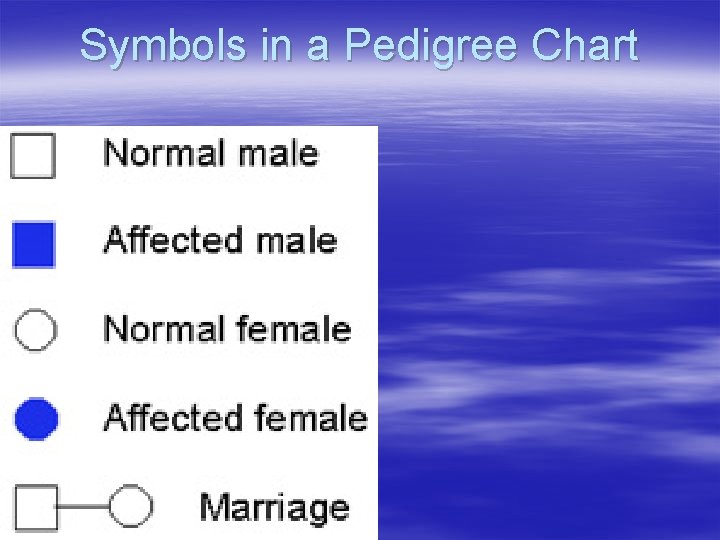
Symbols in a Pedigree Chart
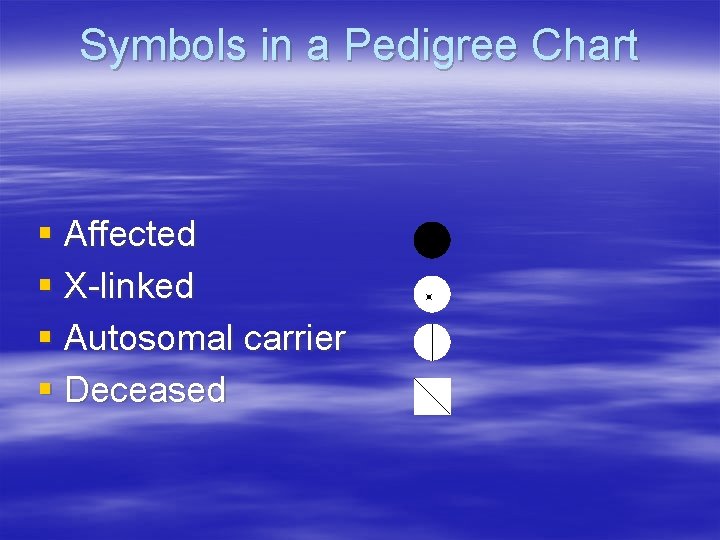
Symbols in a Pedigree Chart § Affected § X-linked § Autosomal carrier § Deceased
Interpreting a Pedigree Chart 1. Determine if the pedigree chart shows an autosomal or X-linked disease. – If most of the males in the pedigree are affected the disorder is X-linked – If it is a 50/50 ratio between men and women the disorder is autosomal.
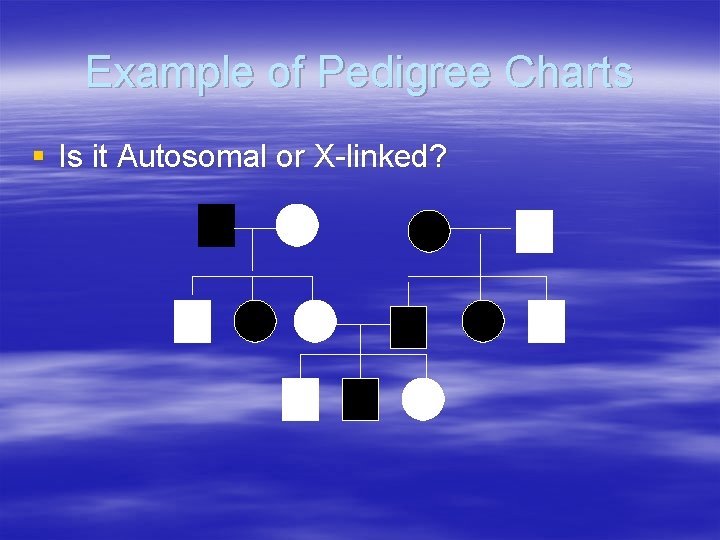
Example of Pedigree Charts § Is it Autosomal or X-linked?
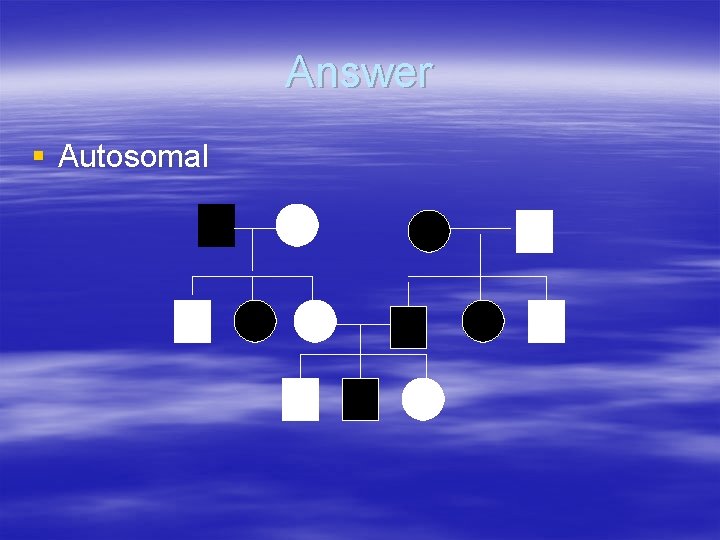
Answer § Autosomal
Interpreting a Pedigree Chart 2. Determine whether the disorder is dominant or recessive. – If the disorder is dominant, one of the parents must have the disorder. – If the disorder is recessive, neither parent has to have the disorder because they can be heterozygous.
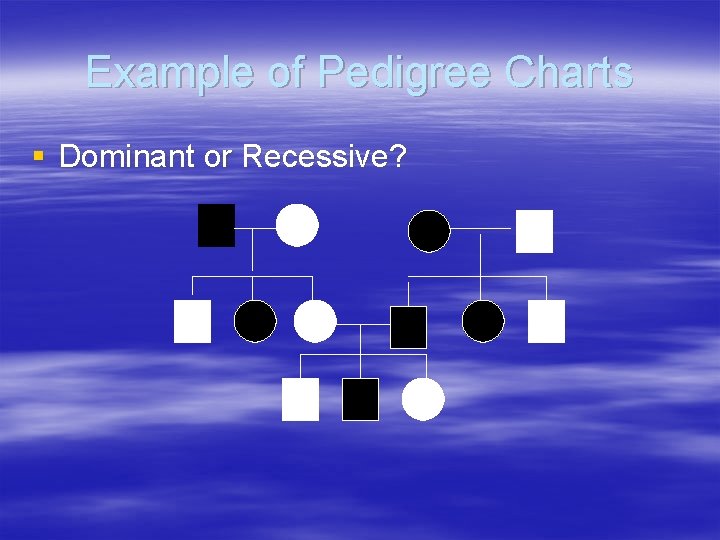
Example of Pedigree Charts § Dominant or Recessive?
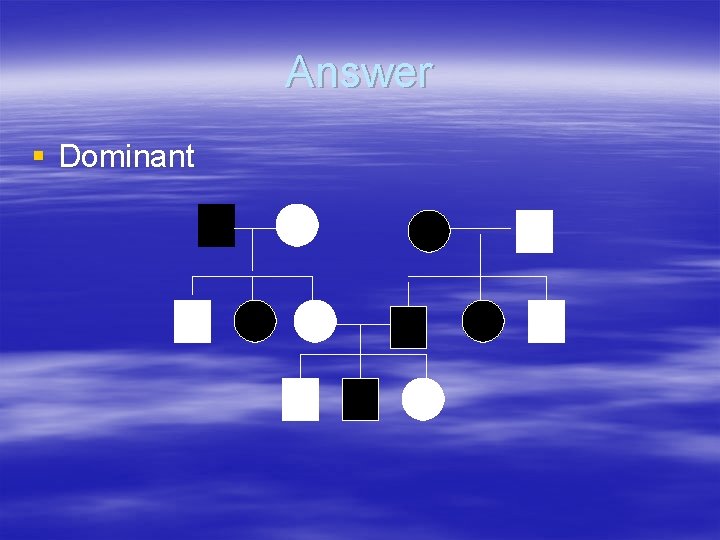
Answer § Dominant
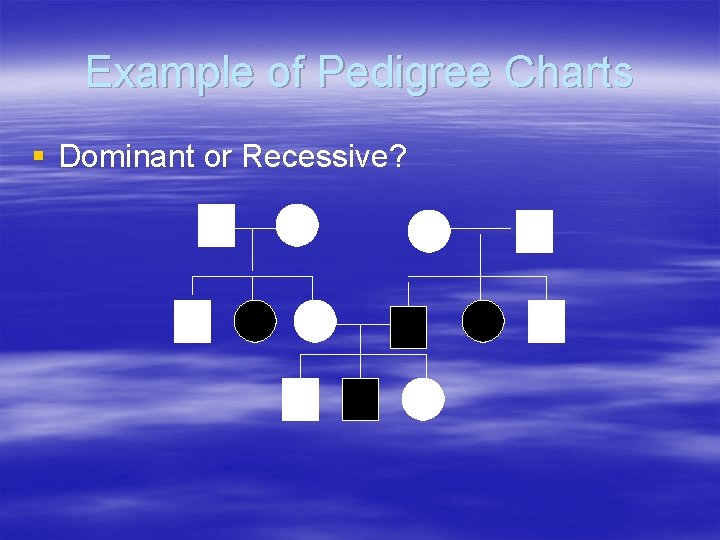
Example of Pedigree Charts § Dominant or Recessive?
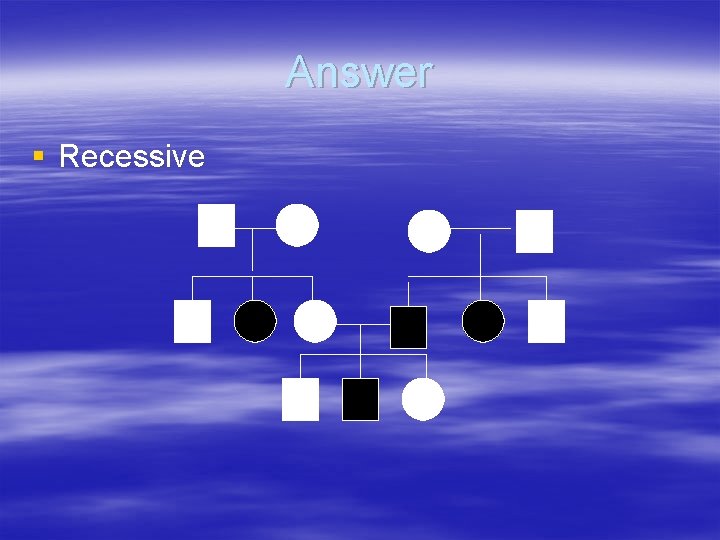
Answer § Recessive
Summary § Pedigrees are family trees that explain your genetic history. § Pedigrees are used to find out the probability of a child having a disorder in a particular family. § To begin to interpret a pedigree, determine if the disease or condition is autosomal or Xlinked and dominant or recessive.
- Slides: 26