
Solving the puzzle of Biologic Use in Pediatric
Solving the puzzle of Biologic Use in Pediatric IBD SARAH SMITH, PHARM D, BCPS ASSOCIATE PROFESSOR ST. JOHN’S UNIVERSITY COLLEGE OF HEALTH SCIENCES AND PHARMACY JANUARY 30, 2018
Objectives Compare biologic agents; classes, efficacy, and adverse reactions Examine the use of combination therapy in pediatric IBD Review therapeutic drug monitoring application to biologic agents and IBD Evaluate the use of biosimilar agents for treatment pediatric IBD
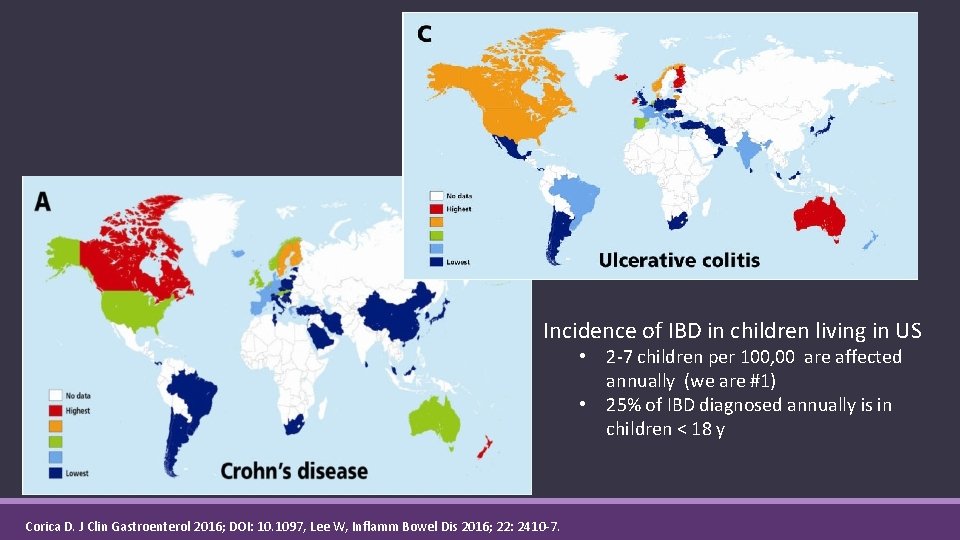
Incidence of IBD in children living in US • 2 -7 children per 100, 00 are affected annually (we are #1) • 25% of IBD diagnosed annually is in children < 18 y Corica D. J Clin Gastroenterol 2016; DOI: 10. 1097, Lee W, Inflamm Bowel Dis 2016; 22: 2410 -7.

Background Pediatric patients with IBD experience ◦ Linear growth stunting ◦ Delay onset of puberty ◦ Reduced bone mass index Pediatric patients often have a more rapid, aggressive progression and extensive intestinal involvement ◦ Example 70 -80% of children diagnosed UC present with pancolitis Biological therapy is used more frequently in adolescents (20%) compared to adults (8%) Corica D. J Clin Gastroenterol 2016; DOI: 10. 1097, Lee W, Inflamm Bowel Dis 2016; 22: 2410 -7.

Types of IBD Crohn’s Disease Ulcerative Colitis Male = Female Male ↓ Growth velocity 50% ↓ Growth velocity 3 -10% families Any part of the gastrointestinal tract Colon Entire thickness of bowel wall Limited to mucosa Skip lesions or patches Continuous Indeterminate colitis Overlapping features 10% of pediatric patients
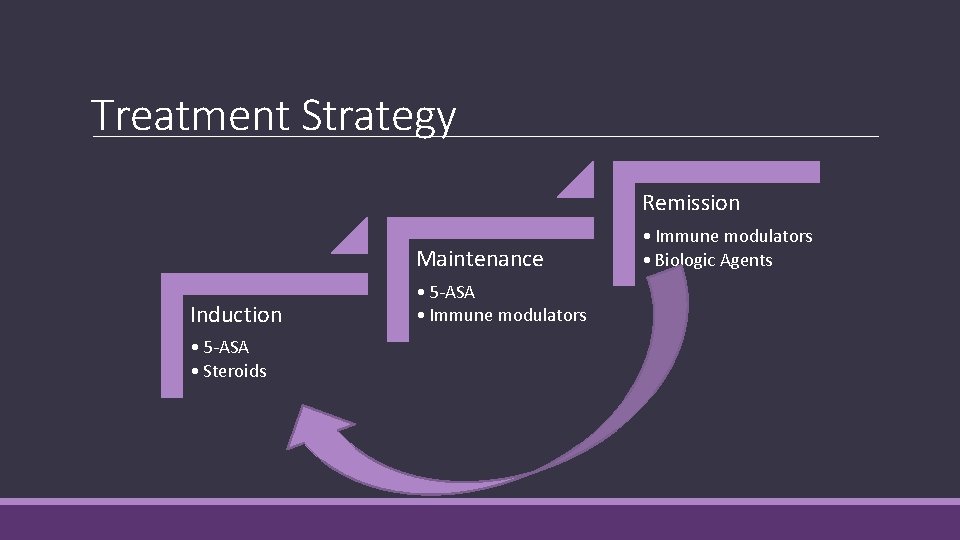
Treatment Strategy Remission Maintenance Induction • 5 -ASA • Steroids • 5 -ASA • Immune modulators • Biologic Agents
Goals of Treatment 1. Induce and maintain clinical remission 2. Achieve normal growth 3. Provide the best quality of life 4. Promote psychological health 5. Minimize toxicity 6. Achieve mucosal healing endoscopically
Therapies for Moderate to Severe IBD
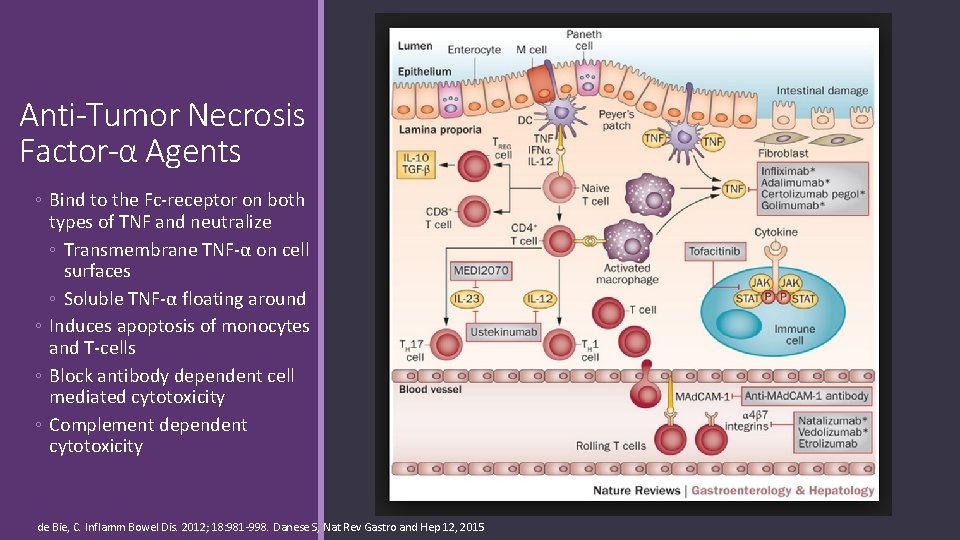
Anti-Tumor Necrosis Factor-α Agents ◦ Bind to the Fc-receptor on both types of TNF and neutralize ◦ Transmembrane TNF-α on cell surfaces ◦ Soluble TNF-α floating around ◦ Induces apoptosis of monocytes and T-cells ◦ Block antibody dependent cell mediated cytotoxicity ◦ Complement dependent cytotoxicity de Bie, C. Inflamm Bowel Dis. 2012; 18: 981 -998. Danese S, Nat Rev Gastro and Hep 12, 2015
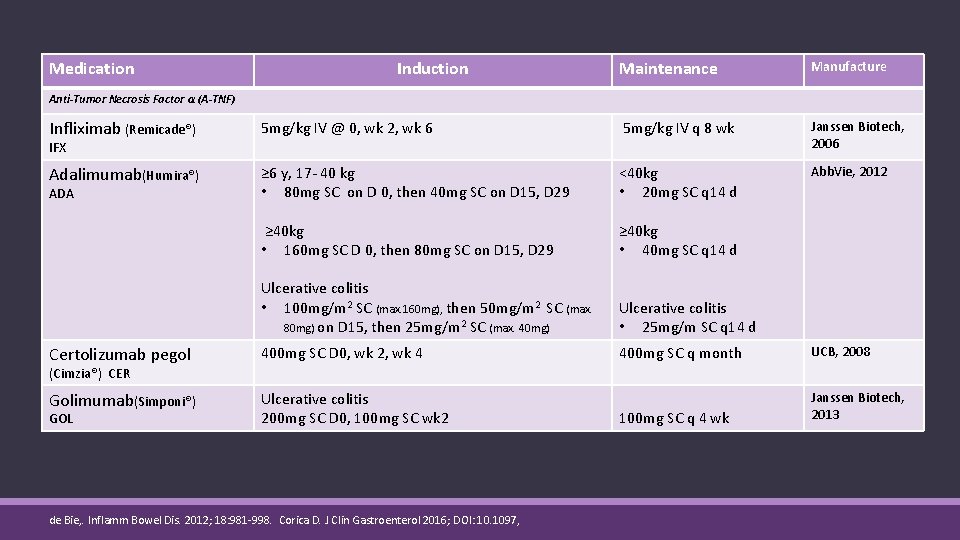
Medication Induction Maintenance Manufacture Anti-Tumor Necrosis Factor α (A-TNF) Infliximab (Remicade®) 5 mg/kg IV @ 0, wk 2, wk 6 5 mg/kg IV q 8 wk Janssen Biotech, 2006 Adalimumab(Humira®) ≥ 6 y, 17 - 40 kg • 80 mg SC on D 0, then 40 mg SC on D 15, D 29 <40 kg • 20 mg SC q 14 d Abb. Vie, 2012 ≥ 40 kg • 160 mg SC D 0, then 80 mg SC on D 15, D 29 ≥ 40 kg • 40 mg SC q 14 d Ulcerative colitis • 100 mg/m 2 SC (max. 160 mg), then 50 mg/m 2 SC (max. 80 mg) on D 15, then 25 mg/m 2 SC (max. 40 mg) Ulcerative colitis • 25 mg/m SC q 14 d Certolizumab pegol 400 mg SC D 0, wk 2, wk 4 400 mg SC q month UCB, 2008 Golimumab(Simponi®) Ulcerative colitis 200 mg SC D 0, 100 mg SC wk 2 100 mg SC q 4 wk Janssen Biotech, 2013 IFX ADA (Cimzia®) CER GOL de Bie, . Inflamm Bowel Dis. 2012; 18: 981 -998. Corica D. J Clin Gastroenterol 2016; DOI: 10. 1097,
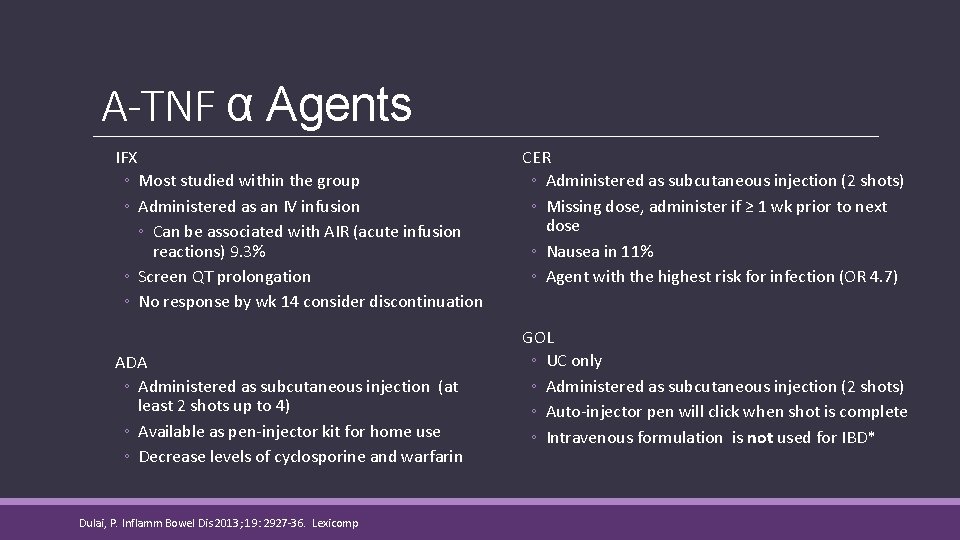
A-TNF α Agents IFX ◦ Most studied within the group ◦ Administered as an IV infusion ◦ Can be associated with AIR (acute infusion reactions) 9. 3% ◦ Screen QT prolongation ◦ No response by wk 14 consider discontinuation ADA ◦ Administered as subcutaneous injection (at least 2 shots up to 4) ◦ Available as pen-injector kit for home use ◦ Decrease levels of cyclosporine and warfarin Dulai, P. Inflamm Bowel Dis 2013; 19: 2927 -36. Lexicomp CER ◦ Administered as subcutaneous injection (2 shots) ◦ Missing dose, administer if ≥ 1 wk prior to next dose ◦ Nausea in 11% ◦ Agent with the highest risk for infection (OR 4. 7) GOL ◦ UC only ◦ Administered as subcutaneous injection (2 shots) ◦ Auto-injector pen will click when shot is complete ◦ Intravenous formulation is not used for IBD*
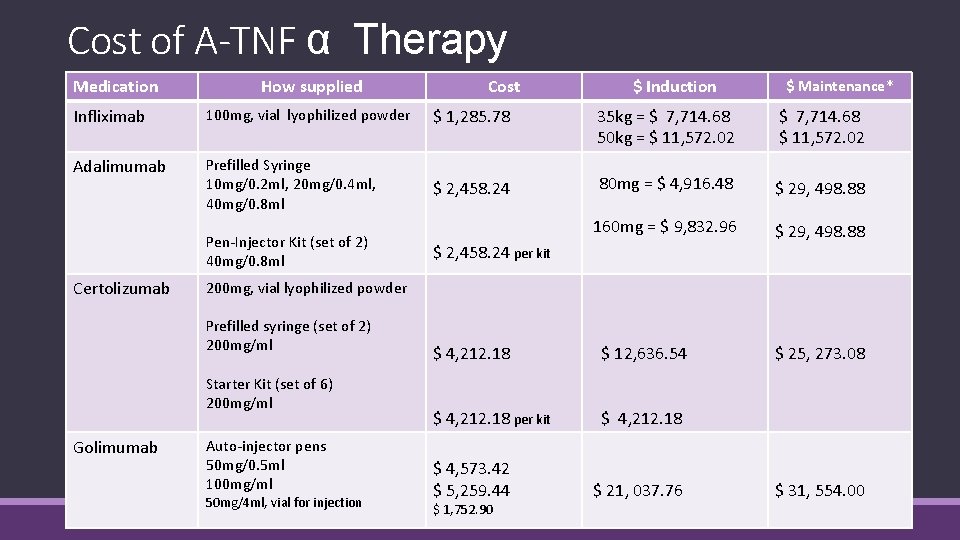
Cost of A-TNF α Therapy Medication How supplied Cost $ Induction $ Maintenance* Infliximab 100 mg, vial lyophilized powder $ 1, 285. 78 35 kg = $ 7, 714. 68 50 kg = $ 11, 572. 02 $ 7, 714. 68 $ 11, 572. 02 Adalimumab Prefilled Syringe 10 mg/0. 2 ml, 20 mg/0. 4 ml, 40 mg/0. 8 ml $ 2, 458. 24 80 mg = $ 4, 916. 48 $ 29, 498. 88 160 mg = $ 9, 832. 96 $ 29, 498. 88 Pen-Injector Kit (set of 2) 40 mg/0. 8 ml Certolizumab 200 mg, vial lyophilized powder Prefilled syringe (set of 2) 200 mg/ml Starter Kit (set of 6) 200 mg/ml Golimumab $ 2, 458. 24 per kit Auto-injector pens 50 mg/0. 5 ml 100 mg/ml 50 mg/4 ml, vial for injection $ 4, 212. 18 $ 12, 636. 54 $ 4, 212. 18 per kit $ 4, 212. 18 $ 4, 573. 42 $ 5, 259. 44 $ 1, 752. 90 $ 21, 037. 76 $ 25, 273. 08 $ 31, 554. 00
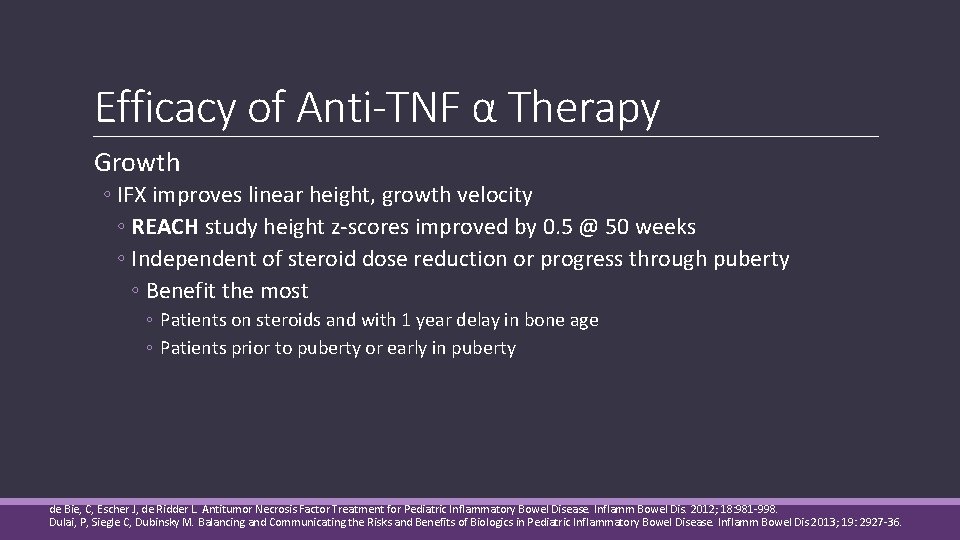
Efficacy of Anti-TNF α Therapy Growth ◦ IFX improves linear height, growth velocity ◦ REACH study height z-scores improved by 0. 5 @ 50 weeks ◦ Independent of steroid dose reduction or progress through puberty ◦ Benefit the most ◦ Patients on steroids and with 1 year delay in bone age ◦ Patients prior to puberty or early in puberty de Bie, C, Escher J, de Ridder L. Antitumor Necrosis Factor Treatment for Pediatric Inflammatory Bowel Disease. Inflamm Bowel Dis. 2012; 18: 981 -998. Dulai, P, Siegle C, Dubinsky M. Balancing and Communicating the Risks and Benefits of Biologics in Pediatric Inflammatory Bowel Disease. Inflamm Bowel Dis 2013; 19: 2927 -36.
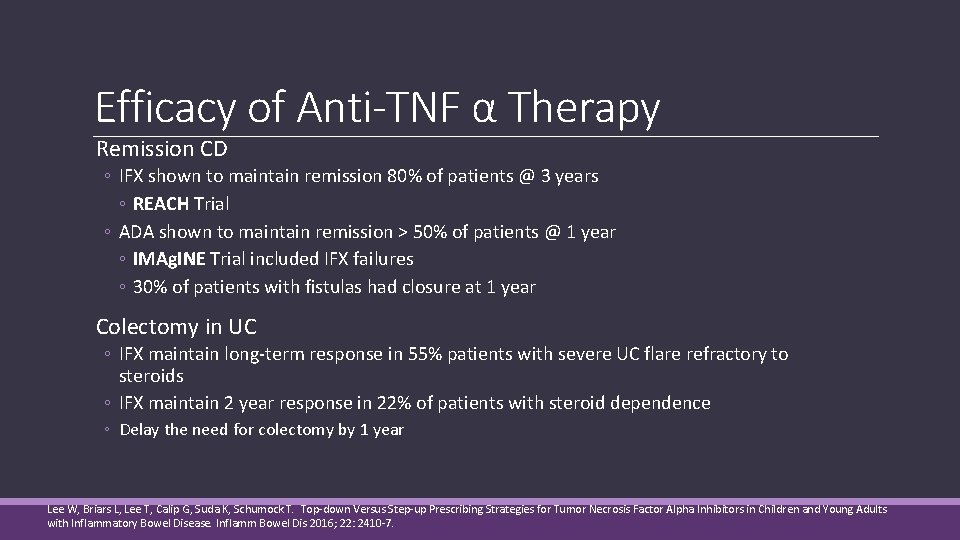
Efficacy of Anti-TNF α Therapy Remission CD ◦ IFX shown to maintain remission 80% of patients @ 3 years ◦ REACH Trial ◦ ADA shown to maintain remission > 50% of patients @ 1 year ◦ IMAg. INE Trial included IFX failures ◦ 30% of patients with fistulas had closure at 1 year Colectomy in UC ◦ IFX maintain long-term response in 55% patients with severe UC flare refractory to steroids ◦ IFX maintain 2 year response in 22% of patients with steroid dependence ◦ Delay the need for colectomy by 1 year Lee W, Briars L, Lee T, Calip G, Suda K, Schumock T. Top-down Versus Step-up Prescribing Strategies for Tumor Necrosis Factor Alpha Inhibitors in Children and Young Adults with Inflammatory Bowel Disease. Inflamm Bowel Dis 2016; 22: 2410 -7.
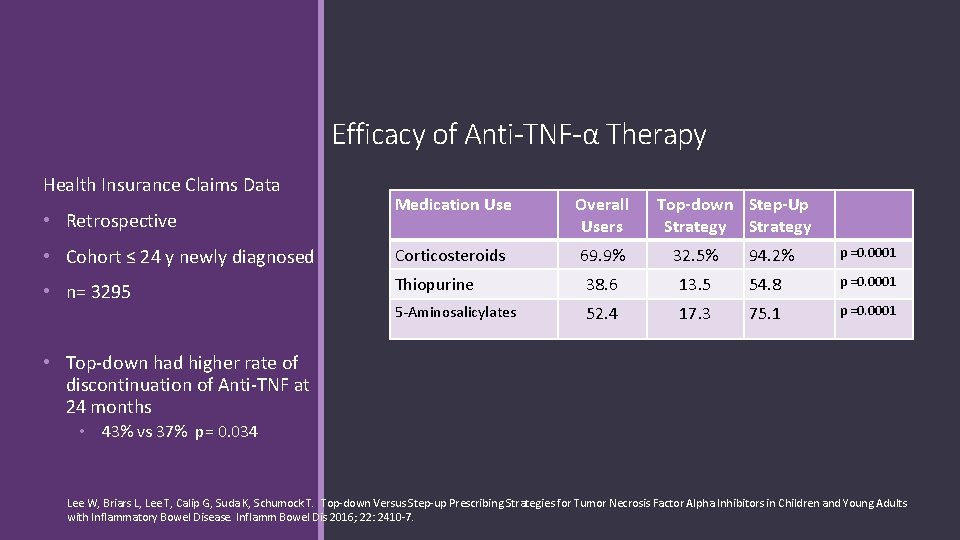
Efficacy of Anti-TNF-α Therapy Health Insurance Claims Data Medication Use Overall Users • Cohort ≤ 24 y newly diagnosed Corticosteroids 69. 9% 32. 5% • n= 3295 Thiopurine 38. 6 5 -Aminosalicylates 52. 4 • Retrospective Top-down Step-Up Strategy 94. 2% p =0. 0001 13. 5 54. 8 p =0. 0001 17. 3 75. 1 p =0. 0001 • Top-down had higher rate of discontinuation of Anti-TNF at 24 months • 43% vs 37% p= 0. 034 Lee W, Briars L, Lee T, Calip G, Suda K, Schumock T. Top-down Versus Step-up Prescribing Strategies for Tumor Necrosis Factor Alpha Inhibitors in Children and Young Adults with Inflammatory Bowel Disease. Inflamm Bowel Dis 2016; 22: 2410 -7.
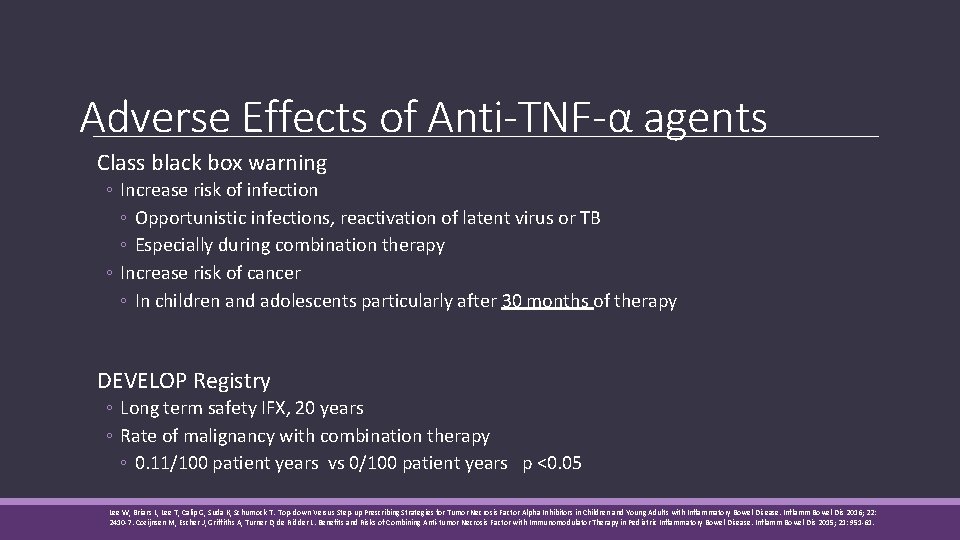
Adverse Effects of Anti-TNF-α agents Class black box warning ◦ Increase risk of infection ◦ Opportunistic infections, reactivation of latent virus or TB ◦ Especially during combination therapy ◦ Increase risk of cancer ◦ In children and adolescents particularly after 30 months of therapy DEVELOP Registry ◦ Long term safety IFX, 20 years ◦ Rate of malignancy with combination therapy ◦ 0. 11/100 patient years vs 0/100 patient years p <0. 05 Lee W, Briars L, Lee T, Calip G, Suda K, Schumock T. Top-down Versus Step-up Prescribing Strategies for Tumor Necrosis Factor Alpha Inhibitors in Children and Young Adults with Inflammatory Bowel Disease. Inflamm Bowel Dis 2016; 22: 2410 -7. Cozijnsen M, Escher J, Griffiths A, Turner D, de Ridder L. Benefits and Risks of Combining Anti-tumor Necrosis Factor with Immunomodulator Therapy in Pediatric Inflammatory Bowel Disease. Inflamm Bowel Dis 2015; 21: 951 -61.
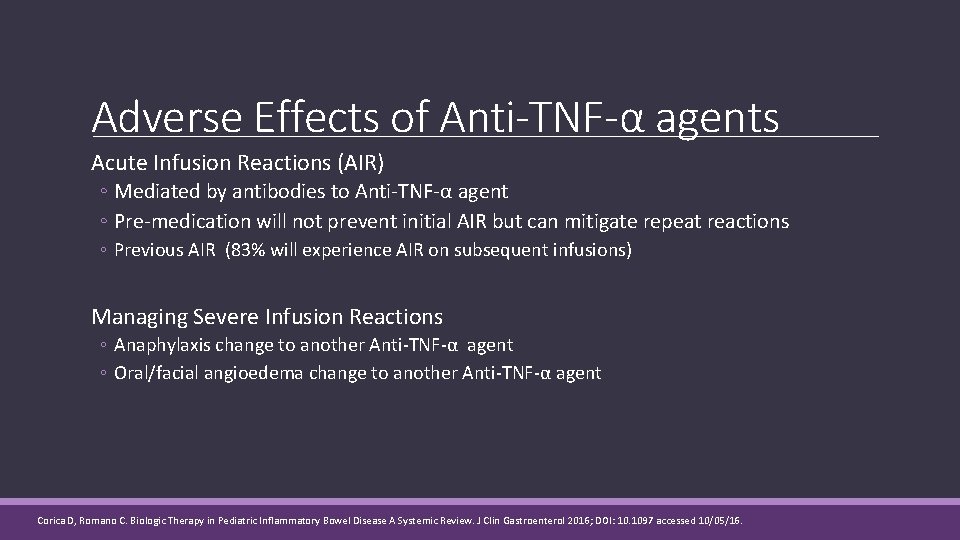
Adverse Effects of Anti-TNF-α agents Acute Infusion Reactions (AIR) ◦ Mediated by antibodies to Anti-TNF-α agent ◦ Pre-medication will not prevent initial AIR but can mitigate repeat reactions ◦ Previous AIR (83% will experience AIR on subsequent infusions) Managing Severe Infusion Reactions ◦ Anaphylaxis change to another Anti-TNF-α agent ◦ Oral/facial angioedema change to another Anti-TNF-α agent Corica D, Romano C. Biologic Therapy in Pediatric Inflammatory Bowel Disease A Systemic Review. J Clin Gastroenterol 2016; DOI: 10. 1097 accessed 10/05/16.
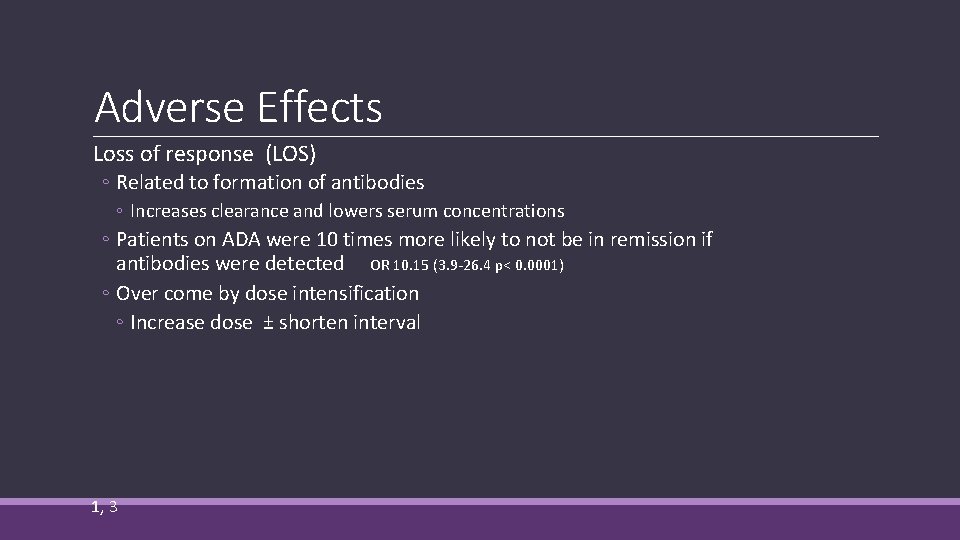
Adverse Effects Loss of response (LOS) ◦ Related to formation of antibodies ◦ Increases clearance and lowers serum concentrations ◦ Patients on ADA were 10 times more likely to not be in remission if antibodies were detected OR 10. 15 (3. 9 -26. 4 p< 0. 0001) ◦ Over come by dose intensification ◦ Increase dose ± shorten interval 1, 3
Adverse Effects of Anti-TNF-α agents Risk Factors for Antibody Development ◦ Female ◦≤ 5 y ◦ Immunosuppressive therapy for < 4 months ◦ Episodic treatment ◦ Insufficient exposure to drug Development of Antibodies occurs in 38% of patients ( IFX or ADA) Corica D, Romano C. Biologic Therapy in Pediatric Inflammatory Bowel Disease A Systemic Review. J Clin Gastroenterol 2016; DOI: 10. 1097 accessed 10/05/16
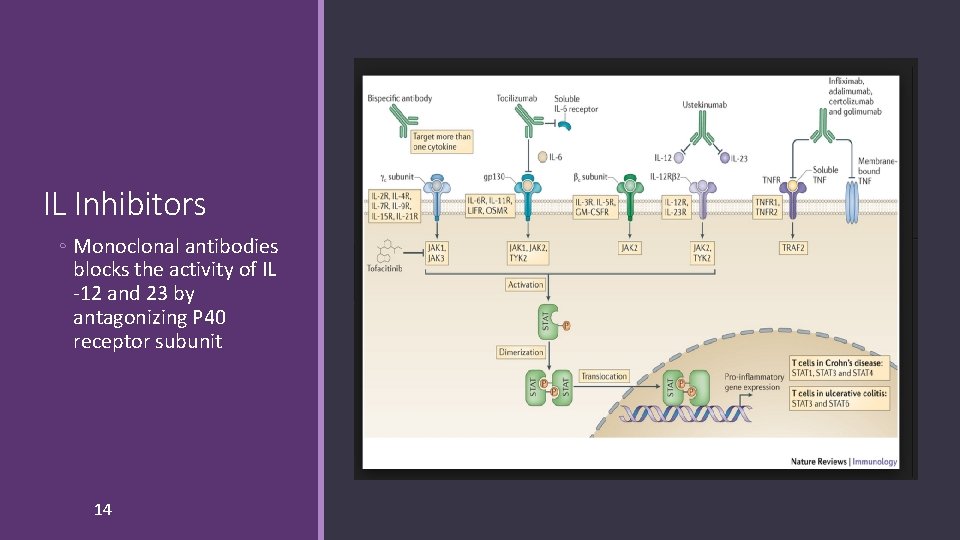
IL Inhibitors ◦ Monoclonal antibodies blocks the activity of IL -12 and 23 by antagonizing P 40 receptor subunit 14
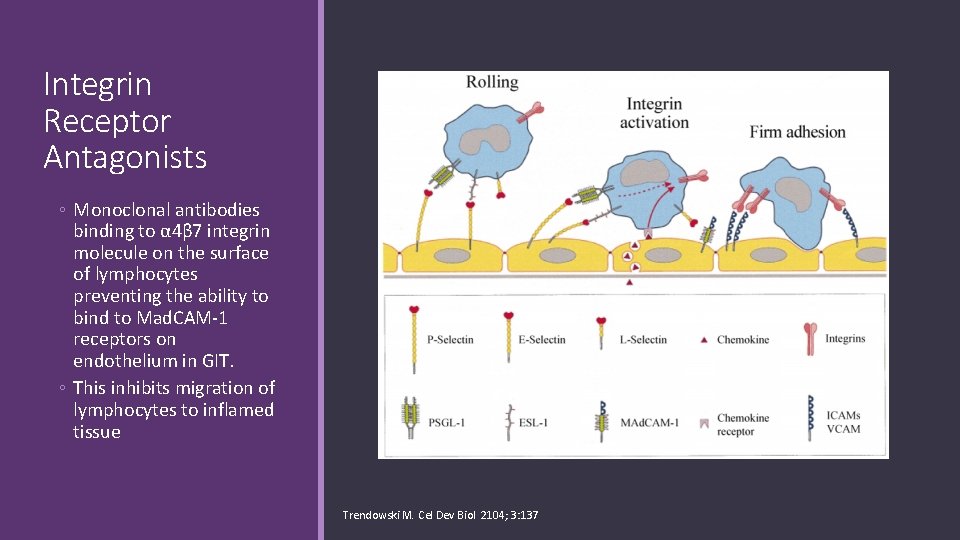
Integrin Receptor Antagonists ◦ Monoclonal antibodies binding to α 4β 7 integrin molecule on the surface of lymphocytes preventing the ability to bind to Mad. CAM-1 receptors on endothelium in GIT. ◦ This inhibits migration of lymphocytes to inflamed tissue Trendowski M. Cel Dev Biol 2104; 3: 137
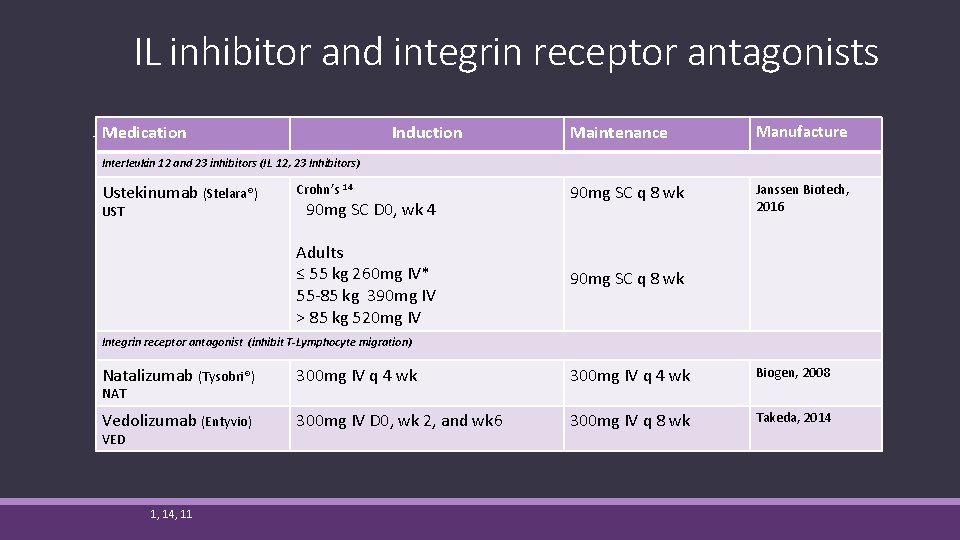
IL inhibitor and integrin receptor antagonists Medication Induction Maintenance Manufacture Crohn’s 14 90 mg SC q 8 wk Janssen Biotech, 2016 Adults ≤ 55 kg 260 mg IV* 55 -85 kg 390 mg IV > 85 kg 520 mg IV 90 mg SC q 8 wk Interleukin 12 and 23 inhibitors (IL 12, 23 Inhibitors) Ustekinumab (Stelara®) UST 90 mg SC D 0, wk 4 Integrin receptor antagonist (inhibit T-Lymphocyte migration) Natalizumab (Tysobri®) 300 mg IV q 4 wk Biogen, 2008 Vedolizumab (Entyvio) 300 mg IV D 0, wk 2, and wk 6 300 mg IV q 8 wk Takeda, 2014 NAT VED 1, 14, 11
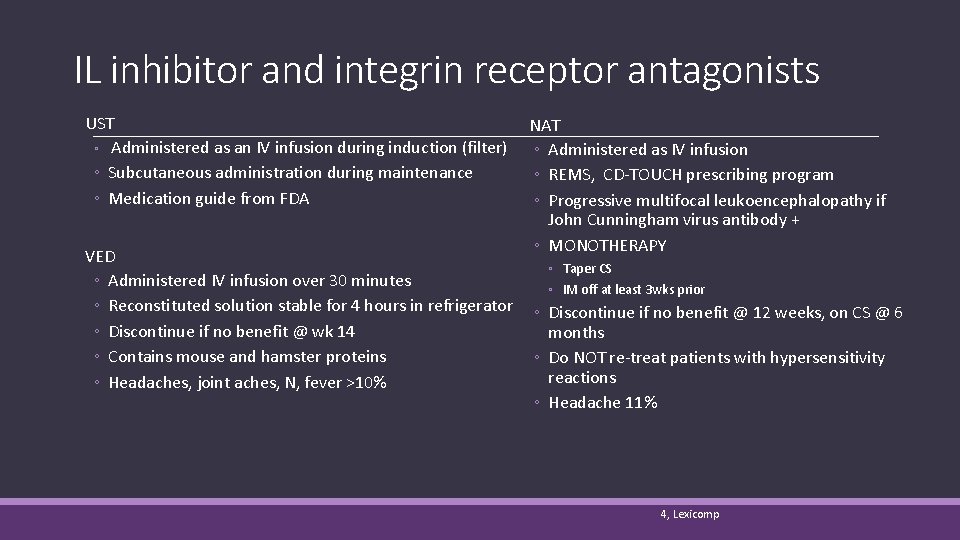
IL inhibitor and integrin receptor antagonists UST ◦ Administered as an IV infusion during induction (filter) ◦ Subcutaneous administration during maintenance ◦ Medication guide from FDA VED ◦ Administered IV infusion over 30 minutes ◦ Reconstituted solution stable for 4 hours in refrigerator ◦ Discontinue if no benefit @ wk 14 ◦ Contains mouse and hamster proteins ◦ Headaches, joint aches, N, fever >10% NAT ◦ Administered as IV infusion ◦ REMS, CD-TOUCH prescribing program ◦ Progressive multifocal leukoencephalopathy if John Cunningham virus antibody + ◦ MONOTHERAPY ◦ Taper CS ◦ IM off at least 3 wks prior ◦ Discontinue if no benefit @ 12 weeks, on CS @ 6 months ◦ Do NOT re-treat patients with hypersensitivity reactions ◦ Headache 11% 4, Lexicomp
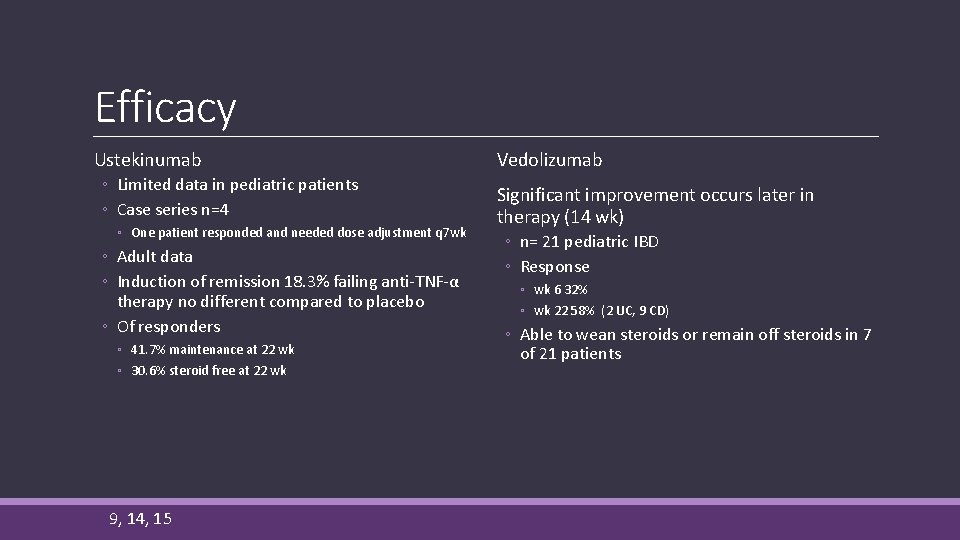
Efficacy Ustekinumab ◦ Limited data in pediatric patients ◦ Case series n=4 ◦ One patient responded and needed dose adjustment q 7 wk ◦ Adult data ◦ Induction of remission 18. 3% failing anti-TNF-α therapy no different compared to placebo ◦ Of responders ◦ 41. 7% maintenance at 22 wk ◦ 30. 6% steroid free at 22 wk 9, 14, 15 Vedolizumab Significant improvement occurs later in therapy (14 wk) ◦ n= 21 pediatric IBD ◦ Response ◦ wk 6 32% ◦ wk 22 58% (2 UC, 9 CD) ◦ Able to wean steroids or remain off steroids in 7 of 21 patients
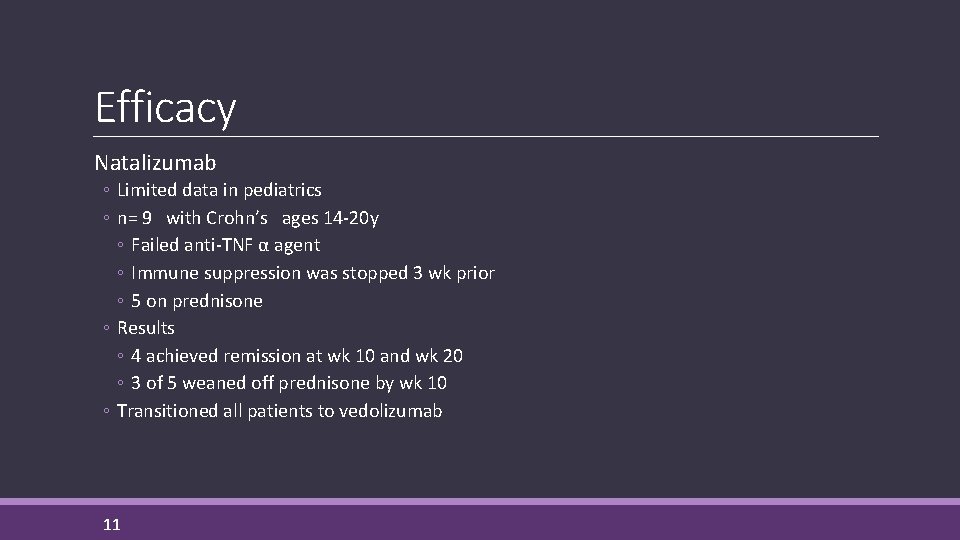
Efficacy Natalizumab ◦ Limited data in pediatrics ◦ n= 9 with Crohn’s ages 14 -20 y ◦ Failed anti-TNF α agent ◦ Immune suppression was stopped 3 wk prior ◦ 5 on prednisone ◦ Results ◦ 4 achieved remission at wk 10 and wk 20 ◦ 3 of 5 weaned off prednisone by wk 10 ◦ Transitioned all patients to vedolizumab 11
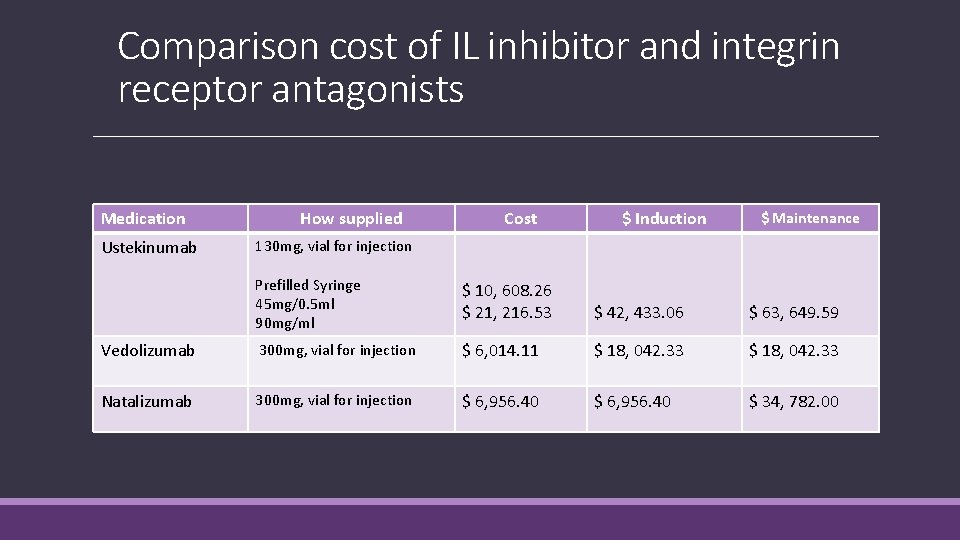
Comparison cost of IL inhibitor and integrin receptor antagonists Medication Ustekinumab How supplied Cost $ Induction $ Maintenance 130 mg, vial for injection Prefilled Syringe 45 mg/0. 5 ml 90 mg/ml $ 10, 608. 26 $ 21, 216. 53 $ 42, 433. 06 $ 63, 649. 59 Vedolizumab 300 mg, vial for injection $ 6, 014. 11 $ 18, 042. 33 Natalizumab 300 mg, vial for injection $ 6, 956. 40 $ 34, 782. 00
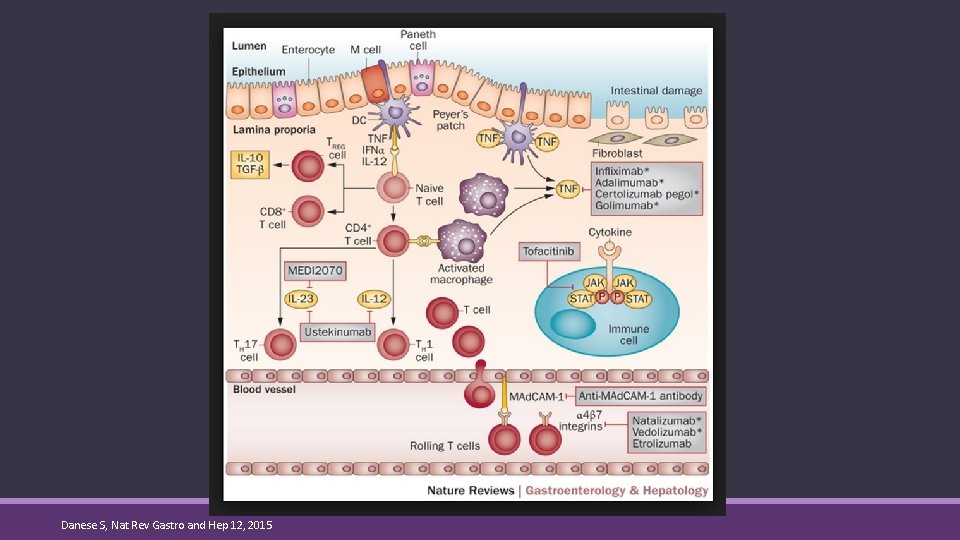
Danese S, Nat Rev Gastro and Hep 12, 2015
Combination Therapy Unclear if combination therapy is better than monotherapy ◦ Combination therapy Anti-TNF + immune modulator ◦ In pediatric patients with Crohn’s ◦ Not difference in maintenance of remission, endoscopy score, need to optimize regimen ◦ Pediatric patients with UC ◦ No difference in 8 and 54 wk remission, mucosal healing rates, or colectomy rates at 3, 6, 12 and 24 months Dulai, P, Siegle C, Dubinsky M. Balancing and Communicating the Risks and Benefits of Biologics in Pediatric Inflammatory Bowel Disease. Inflamm Bowel Dis 2013; 19: 2927 -36. Cozijnsen M, Escher J, Griffiths A, Turner D, de Ridder L. Benefits and Risks of Combining Anti-tumor Necrosis Factor with Immunomodulator Therapy in Pediatric Inflammatory Bowel Disease. Inflamm Bowel Dis 2015; 21: 951 -61.
Combination Therapy Combination therapy may be considered for induction ◦ Benefit to reach remission is modest ◦ Related to increased serum levels of Anti-TNF agent and decrease immunogenicity ◦ Patients with high risk for disease complications may benefit from combination therapy ◦ Growth retardation ◦ Formation of strictures ◦ Need for surgery ◦ Immune modulator (thiopurine) is discontinued once in maintenance Dulai, P, Siegle C, Dubinsky M. Balancing and Communicating the Risks and Benefits of Biologics in Pediatric Inflammatory Bowel Disease. Inflamm Bowel Dis 2013; 19: 2927 -36. Cozijnsen M, Escher J, Griffiths A, Turner D, de Ridder L. Benefits and Risks of Combining Anti-tumor Necrosis Factor with Immunomodulator Therapy in Pediatric Inflammatory Bowel Disease. Inflamm Bowel Dis 2015; 21: 951 -61.
Combination Therapy Adverse effects associated with combination therapy ◦ Higher malignancy rate compared to monotherapy ◦ Related to thiopurine use not only in combination but at anytime during treatment ◦ More serious infections in anti-TNF + thiopurine group compared to anti-TNF alone ◦ 6. 2/100 vs 3. 5/100 patient years p < 0. 05 ◦ Neutropenia/leukopenia occur more frequently during combination therapy Cozijnsen M, Escher J, Griffiths A, Turner D, de Ridder L. Benefits and Risks of Combining Anti-tumor Necrosis Factor with Immunomodulator Therapy in Pediatric Inflammatory Bowel Disease. Inflamm Bowel Dis 2015; 21: 951 -61.
Therapeutic Drug Monitoring Drug Concentrations ◦ Good check for absorption, exposure and compliance ◦ Identify a maximum concentration correlating with efficacy ◦ Correlation to efficacy has been established (continuing) ◦ Optimization of Anti-TNF therapy may allow for monotherapy or decrease time spent on combination therapy Anti-drug Antibody Concentrations ◦ Prevent unnecessary use of combination therapy ◦ Determine the need for dose intensification or change in therapy Jossen J, Dubinsky M. Therapeutic Drug Monitoring in Inflammatory Bowel Disease. Curr Opin Pediatr 2016; 28: 620 -5.
Therapeutic Drug Monitoring Studies have demonstrated…. ◦ Formation of anti-drug antibodies correlates with lower serum levels ◦ Association between higher serum levels and response to induction and length of remission ◦ Subtherapeutic levels and low anti-drug antibodies managed with dose escalation improves outcomes more compared to changing therapy ◦ Proactive TDM resulted in 86% of patients remaining on IFX at 5 y compared to 52% monitored traditionally ◦ Using algorithmic approach in patients with failure due to antibodies decreased cost by 56% while sustaining outcomes Joosse M, Samsom J, van der Woude J, Escher J, van Gelder T. The Role of Therapeutics Drug Monitoring of Anti-Tumor Necrosis Factor Alpha Agents in Children and Adolescents with Inflammatory Bowel Disease. Inflamm Bowel Dis 2015: 21: 2214 -2221.
TDM and fit for pediatrics Overcoming effects of anti-drug antibodies on loss of response ◦ Low titers of antibodies (1: 100) can be over come by dose modification ◦ Increase dose and/or decrease frequency ◦ Prevents inadvertently changing therapy prematurely ◦ 50% of patients will lose response over time Joosse M, Samsom J, van der Woude J, Escher J, van Gelder T. The Role of Therapeutics Drug Monitoring of Anti-Tumor Necrosis Factor Alpha Agents in Children and Adolescents with Inflammatory Bowel Disease. Inflamm Bowel Dis 2015: 21: 2214 -2221.
Therapeutic Drug Monitoring Predictive of sustained response ◦ IFX serum levels at 14 weeks predictive of sustained remission at 54 weeks in CD ◦ 3 mcg/ml PPV 64% ◦ 4 mcg/ml PPV 76% ◦ 7 mcg/ml PPV 100% ◦ Patients with UC in remission at 54 wk ◦ IFX serum levels at week 14 ◦ 4. 7 mcg/ml patients in remission compared to 2. 6 mcg/ml patients not in remission p= 0. 03 Jossen J, Dubinsky M. Therapeutic Drug Monitoring in Inflammatory Bowel Disease. Curr Opin Pediatr 2016; 28: 620 -5. Dulai P, Singh S, Casteele N, Boland B, Sandborn W. How Will Evolving Future Therapies and Strategies Change How We Position the Use of Biologics in Moderate to Severely Active Inflammatory Bowel Disease. Inflamm Bowel Dis 2016; 22: 998 -1009.
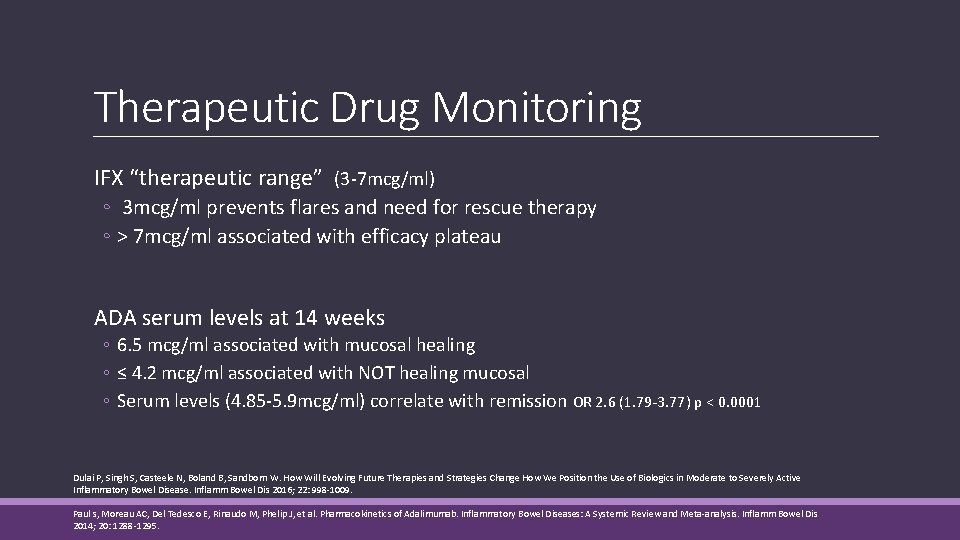
Therapeutic Drug Monitoring IFX “therapeutic range” (3 -7 mcg/ml) ◦ 3 mcg/ml prevents flares and need for rescue therapy ◦ > 7 mcg/ml associated with efficacy plateau ADA serum levels at 14 weeks ◦ 6. 5 mcg/ml associated with mucosal healing ◦ ≤ 4. 2 mcg/ml associated with NOT healing mucosal ◦ Serum levels (4. 85 -5. 9 mcg/ml) correlate with remission OR 2. 6 (1. 79 -3. 77) p < 0. 0001 Dulai P, Singh S, Casteele N, Boland B, Sandborn W. How Will Evolving Future Therapies and Strategies Change How We Position the Use of Biologics in Moderate to Severely Active Inflammatory Bowel Disease. Inflamm Bowel Dis 2016; 22: 998 -1009. Paul s, Moreau AC, Del Tedesco E, Rinaudo M, Phelip J, et al. Pharmacokinetics of Adalimumab. Inflammatory Bowel Diseases: A Systemic Review and Meta-analysis. Inflamm Bowel Dis 2014; 20: 1288 -1295.
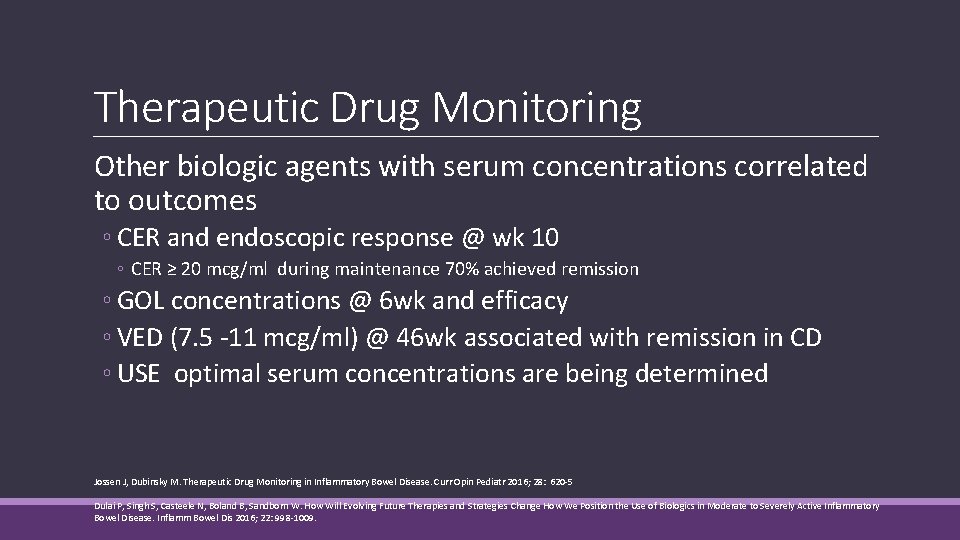
Therapeutic Drug Monitoring Other biologic agents with serum concentrations correlated to outcomes ◦ CER and endoscopic response @ wk 10 ◦ CER ≥ 20 mcg/ml during maintenance 70% achieved remission ◦ GOL concentrations @ 6 wk and efficacy ◦ VED (7. 5 -11 mcg/ml) @ 46 wk associated with remission in CD ◦ USE optimal serum concentrations are being determined Jossen J, Dubinsky M. Therapeutic Drug Monitoring in Inflammatory Bowel Disease. Curr Opin Pediatr 2016; 28: 620 -5 Dulai P, Singh S, Casteele N, Boland B, Sandborn W. How Will Evolving Future Therapies and Strategies Change How We Position the Use of Biologics in Moderate to Severely Active Inflammatory Bowel Disease. Inflamm Bowel Dis 2016; 22: 998 -1009.
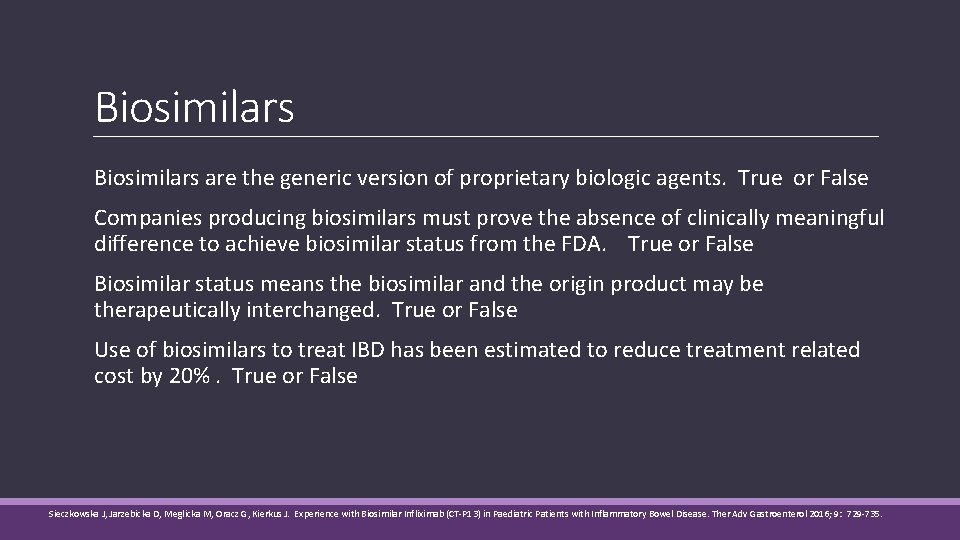
Biosimilars are the generic version of proprietary biologic agents. True or False Companies producing biosimilars must prove the absence of clinically meaningful difference to achieve biosimilar status from the FDA. True or False Biosimilar status means the biosimilar and the origin product may be therapeutically interchanged. True or False Use of biosimilars to treat IBD has been estimated to reduce treatment related cost by 20%. True or False Sieczkowska J, Jarzebicka D, Meglicka M, Oracz G, Kierkus J. Experience with Biosimilar Infliximab (CT-P 13) in Paediatric Patients with Inflammatory Bowel Disease. Ther Adv Gastroenterol 2016; 9: 729 -735.
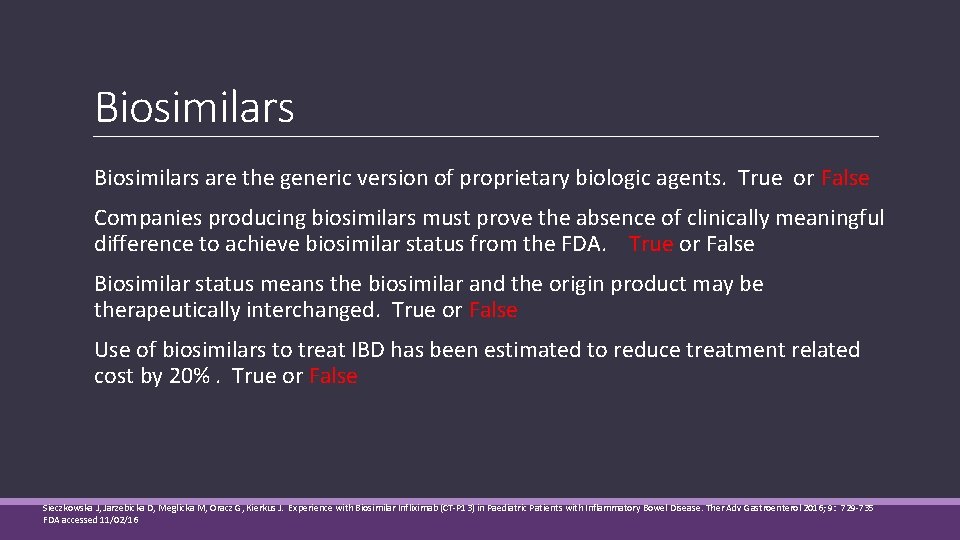
Biosimilars are the generic version of proprietary biologic agents. True or False Companies producing biosimilars must prove the absence of clinically meaningful difference to achieve biosimilar status from the FDA. True or False Biosimilar status means the biosimilar and the origin product may be therapeutically interchanged. True or False Use of biosimilars to treat IBD has been estimated to reduce treatment related cost by 20%. True or False Sieczkowska J, Jarzebicka D, Meglicka M, Oracz G, Kierkus J. Experience with Biosimilar Infliximab (CT-P 13) in Paediatric Patients with Inflammatory Bowel Disease. Ther Adv Gastroenterol 2016; 9: 729 -735 FDA accessed 11/02/16
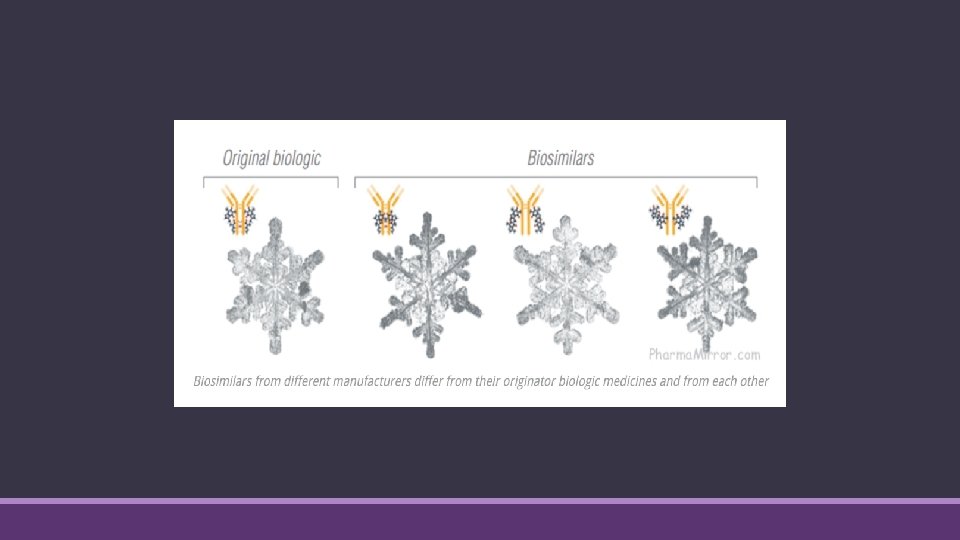
Biosimilars are the generic version of proprietary biologic agents. True or False Companies producing biosimilars must prove the absence of clinically meaningful difference to achieve biosimilar status from the FDA. True or False Biosimilar status means the biosimilar and the origin product may be therapeutically interchanged. True or False Use of biosimilars to treat IBD has been estimated to reduce treatment related cost by 20%. True or False Sieczkowska J, Jarzebicka D, Meglicka M, Oracz G, Kierkus J. Experience with Biosimilar Infliximab (CT-P 13) in Paediatric Patients with Inflammatory Bowel Disease. Ther Adv Gastroenterol 2016; 9: 729735 FDA accessed 11/02/16
Biosimilars Experience in pediatric IBD ◦ IFX biosimilar CT-P 13 (Inflectra) ◦ 39 pediatric patients ◦ 32 with CD and 7 with UC all in remission on IFX ◦ Changed to Inflectra because of IFX shortage ◦ Remained in remission at early follow up Place in Therapy ◦ Do not switch patients to biosimilar agents if current regimen is effective Sieczkowska J, Jarzebicka D, Meglicka M, Oracz G, Kierkus J. Experience with Biosimilar Infliximab (CT-P 13) in Paediatric Patients with Inflammatory Bowel Disease. Ther Adv Gastroenterol 2016; 9: 729 -735 FDA accessed 11/02/16
Biosimilars CT-P 13 used for induction therapy • n= 36 pediatric patients with CD • CT-P 13 5 mg/kg at weeks 0, 2, and 6 Results • 86% experienced a clinical response • 67% experienced remission after three doses • AIR occurred in 1 patient leading to discontinuation Conclusion • Induction with CT-P 13 in children with CD is effective. Profile is similar to IFX Sieczkowska-Golub J, et al. JPGN 2017; 65: 285 -88.
Biosimilars Available in US ◦ Amjevita (biosimilar to ADA) ◦ Inflectra (biosimilar to IFX) In the Pipeline ◦ CER ◦ UST
Conclusions Biologicals are improving outcomes in pediatric patients with IBD. Optimization of therapy will include monitoring serum concentrations of medication, anti-drug antibodies, and precise timing of combination therapy. The use of biosimilars in pediatric patients with IBD is taking shape becoming widely used in European countries.
References 1. 2. 3. 4. 5. 6. 7. 8. 9. 10. 11. 12. 13. 14. 15. de Bie, C, Escher J, de Ridder L. Antitumor Necrosis Factor Treatment for Pediatric Inflammatory Bowel Disease. Inflamm Bowel Dis. 2012; 18: 981 -998. Denson L, The Role of the Innate and Adaptive Immune System in Pediatric Inflammatory Bowel Disease. Inflamm Bowel Dis. 2013; 19: 2011 -20. Paul s, Moreau AC, Del Tedesco E, Rinaudo M, Phelip J, et al. Pharmacokinetics of Adalimumab. Inflammatory Bowel Diseases: A Systemic Review and Meta-analysis. Inflamm Bowel Dis 2014; 20: 1288 -1295. Dulai, P, Siegle C, Dubinsky M. Balancing and Communicating the Risks and Benefits of Biologics in Pediatric Inflammatory Bowel Disease. Inflamm Bowel Dis 2013; 19: 2927 -36. Cozijnsen M, Escher J, Griffiths A, Turner D, de Ridder L. Benefits and Risks of Combining Anti-tumor Necrosis Factor with Immunomodulator Therapy in Pediatric Inflammatory Bowel Disease. Inflamm Bowel Dis 2015; 21: 951 -61. Joosse M, Samsom J, van der Woude J, Escher J, van Gelder T. The Role of Therapeutics Drug Monitoring of Anti-Tumor Necrosis Factor Alpha Agents in Children and Adolescents with Inflammatory Bowel Disease. Inflamm Bowel Dis 2015: 21: 2214 -2221. Corica D, Romano C. Biologic Therapy in Pediatric Inflammatory Bowel Disease A Systemic Review. J Clin Gastroenterol 2016; DOI: 10. 1097 accessed 10/05/16. Dulai P, Singh S, Casteele N, Boland B, Sandborn W. How Will Evolving Future Therapies and Strategies Change How We Position the Use of Biologics in Moderate to Severely Active Inflammatory Bowel Disease. Inflamm Bowel Dis 2016; 22: 998 -1009. Sieczkowska J, Jarzebicka D, Meglicka M, Oracz G, Kierkus J. Experience with Biosimilar Infliximab (CT-P 13) in Paediatric Patients with Inflammatory Bowel Disease. Ther Adv Gastroenterol 2016; 9: 729 -735. Singh N, Deshpande R, Rabizadeh S, Dubinsky M. World Experience with Natalizumab at a Tertiary Care Pediatric IBD Center. JPGN 2016; 62: 863 -866. Jossen J, Dubinsky M. Therapeutic Drug Monitoring in Inflammatory Bowel Disease. Curr Opin Pediatr 2016; 28: 620 -5. Lee W, Briars L, Lee T, Calip G, Suda K, Schumock T. Top-down Versus Step-up Prescribing Strategies for Tumor Necrosis Factor Alpha Inhibitors in Children and Young Adults with Inflammatory Bowel Disease. Inflamm Bowel Dis 2016; 22: 2410 -7. Bishop C, Simon H, Suskind D, Lee D, Wahbeh G. Ustekinumab in Pediatric Crohn Disease Patients. JPGN 2016; 63: 348 -351. Conrad M, Stein R, Maxwell E, Albenberg L, Baldassano R, Dawany N, et al. Vedolizumab Therapy in Servere Pediatric Inflammatory Bowel Disease. Inflamm Bowel Dis 2016; 22: 2425 -2431. Biologic Response Modifiers in Infants and Children. Pediatrics DOI: 10. 1542/peds 2016 -1209. 16. Sieczkowska-Golub J, et al. Induction Therapy with Biosimilar Infliximab in Children with Crohn Disease. JPGN 2017; 65: 285 -88.
- Slides: 45