
Solvent Emissions and Air Quality Defining the Air
- Slides: 26
Solvent Emissions and Air Quality Defining the Air Quality Challenge John Stark, R. S. City of Wichita Air Quality/Haz. Mat Program Supervisor
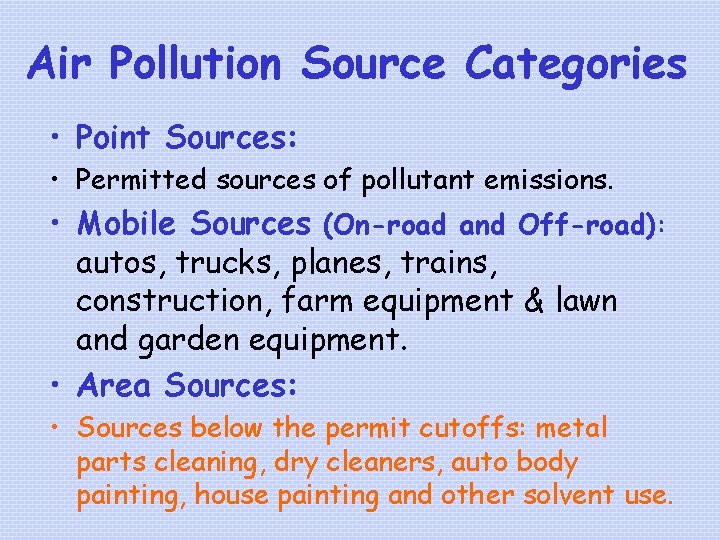
Air Pollution Source Categories • Point Sources: • Permitted sources of pollutant emissions. • Mobile Sources (On-road and Off-road): autos, trucks, planes, trains, construction, farm equipment & lawn and garden equipment. • Area Sources: • Sources below the permit cutoffs: metal parts cleaning, dry cleaners, auto body painting, house painting and other solvent use.
Area Sources • Sources below the permit cutoffs: – – – metal parts cleaning dry cleaners auto body painting house painting (“oil” paints/stains) other solvent uses • The 3 R’s of Solvent Use - Reuse, Reduce, Recycle
New Federal Area Source Rule • Paint Stripping & Miscellaneous Surface Coating Operations • 40 CFR 63, Subpart HHHHHH • Commonly called the “ 6 H Rule”
Solvent Usage • A major contributor to air and water pollution. • A leading source of hazardous waste. • Chlorinated solvents are a major contributor to ozone depletion. • The Clean Air Act Amendments of 1990 mandate a reduction in the amounts of solvents released into the atmosphere.
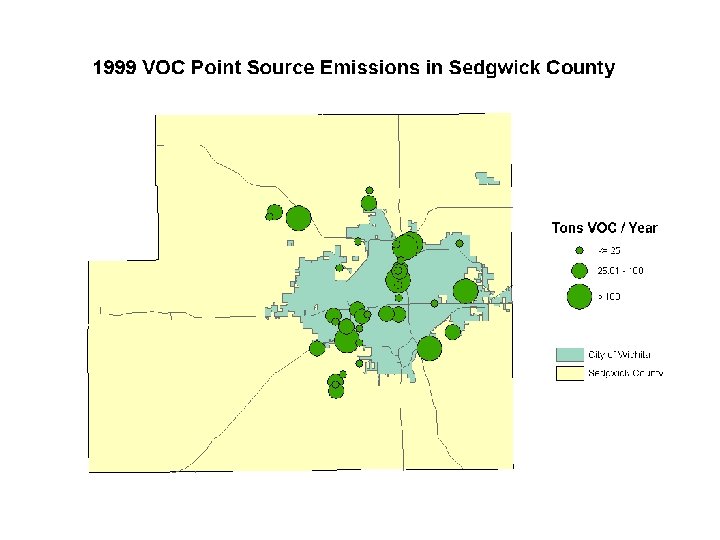
Annual VOC Emissions Sedgwick County - 1999
The Ozone Connection • Ozone, or smog, is a colorless gas composed of three oxygen atoms. • Ozone occurs naturally about 10 to 30 miles above the earth and protects us from the sun’s harmful ultraviolet rays. • However, at ground-level in the air we breathe, ozone poses serious risks to human health.
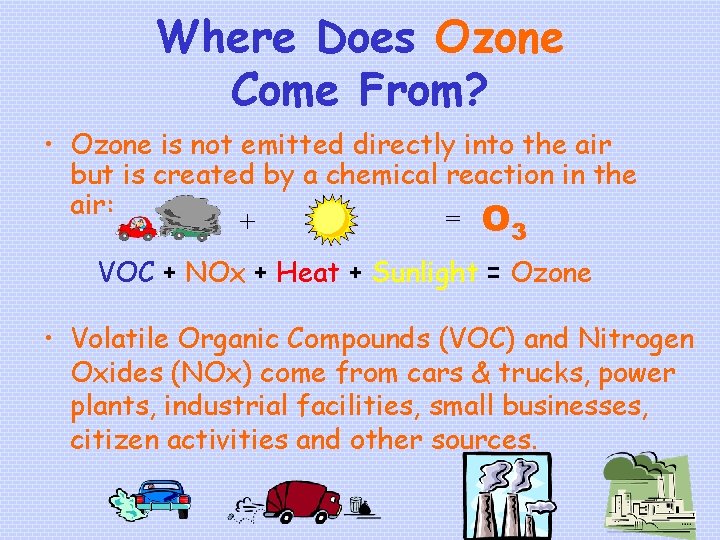
Where Does Ozone Come From? • Ozone is not emitted directly into the air but is created by a chemical reaction in the air: = O 3 + VOC + NOx + Heat + Sunlight = Ozone • Volatile Organic Compounds (VOC) and Nitrogen Oxides (NOx) come from cars & trucks, power plants, industrial facilities, small businesses, citizen activities and other sources.
Ozone • Is a Seasonal Pollutant • Highest pollution levels in summer – (May-September) • Hot, sunny afternoons & evenings typically have the highest ozone concentrations
What is Ozone Pollution? • Every day, the average adult breathes over 3, 000 gallons of air, and children breathe even more air per pound of body weight. • Ozone pollution has many effects on public health. Some of these are very serious. • In the air we breathe, ozone poses serious risks to human health. • Environmental repercussions - Ozone also adversely affects domestic and native plants and animals.
Why is Ozone Bad to Breathe? • Ozone can irritate lung and airways, and cause inflammation much like a sunburn on your lungs. • Ozone can aggravate respiratory illnesses such as asthma. • 10 to 20 % of all summertime respiratoryrelated hospital visits in the US are associated with ozone pollution.
Health Effects of Exposure to Ozone • Coughing • Nose and throat irritation • Chest pain • Reduced lung function • Increased susceptibility to respiratory illnesses • Aggravation of asthma • Children and people with chronic lung diseases are particularly at risk
Health Effects of Exposure to Ozone Asthma is the fastest growing childhood disease in the United States
EPA’s Revised Standard for Ozone • Recent health effects studies showed that EPA’s 1997 ozone standard was not protective of public health. • In March 2008, EPA proposed a new, stricter 8 hour ozone standard. • The new standard is now in effect and will be used to designate nonattainment areas. • The ozone standard is based on the fourth highest reading per year averaged over 3 years.
Economic Effects of Ozone (Non. Attainment) • Increased costs to industry/commerce for air pollution controls • Possible Motor Vehicle Inspection & Maintenance (I & M) Programs • Government - More extensive Administrative and Planning requirements for transportation and other services • Less local control of funding priorities
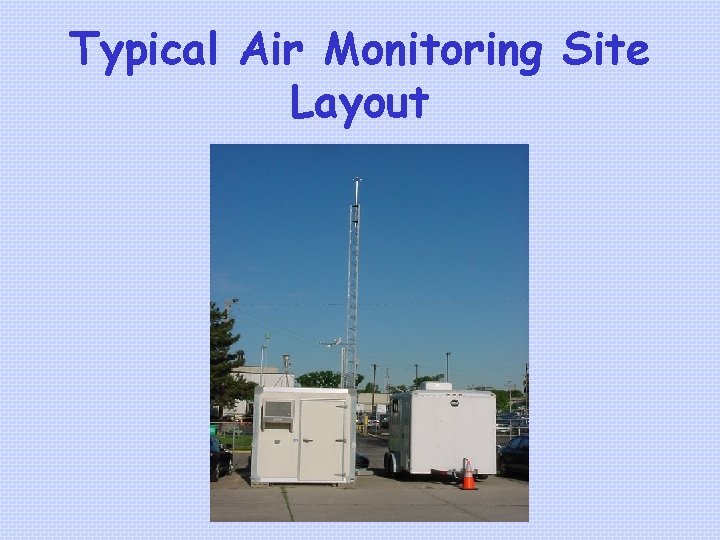
Typical Air Monitoring Site Layout
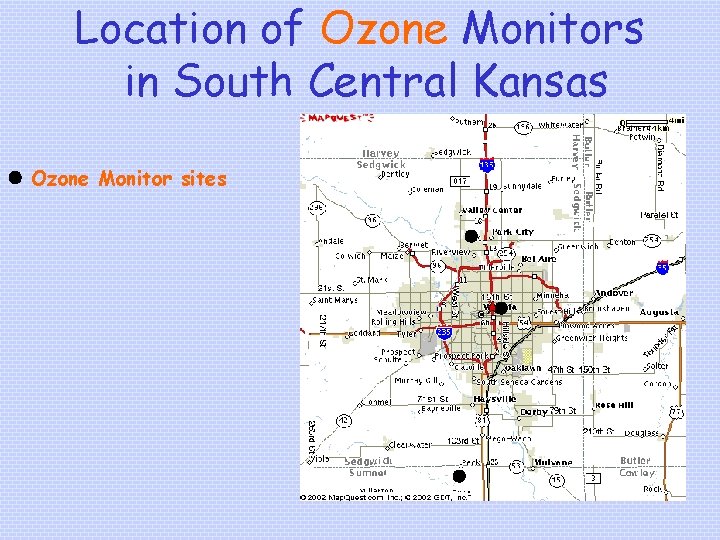
Location of Ozone Monitors in South Central Kansas l Ozone Monitor sites l l l
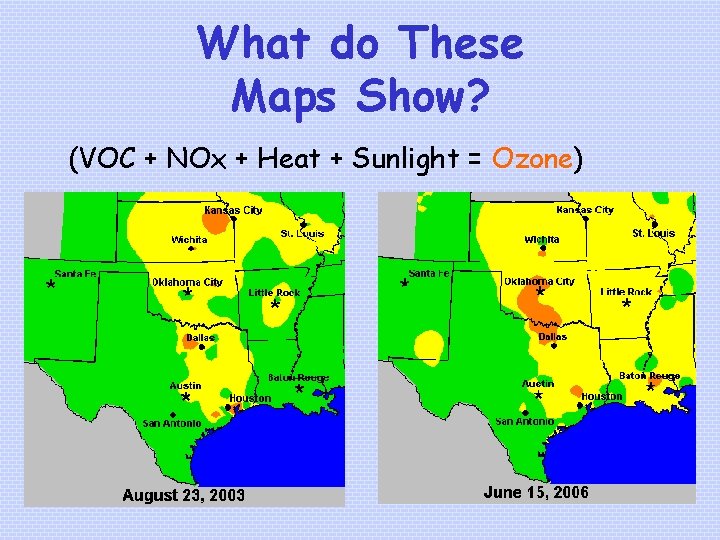
What do These Maps Show? (VOC + NOx + Heat + Sunlight = Ozone)
Ozone Pollution • The color maps you just saw show ozone smog levels for the south central part of the US. • WHERE IS IT COMING FROM? • Possible sources • Wichita citizens and businesses create our own urban air pollution. • Ozone precursor compounds are transported to the Wichita urban area from Mexico, Texas, & Oklahoma by our south winds. • Combination of the two above scenarios
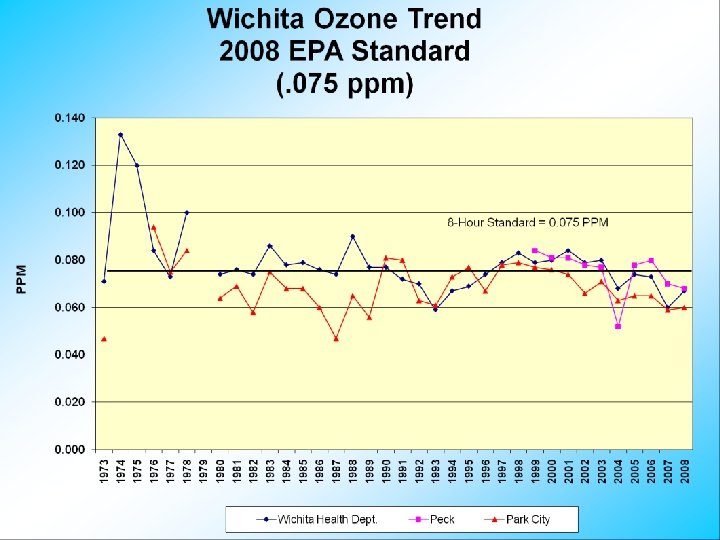
EPA’s New Ozone Standard Impact on Wichita Urban Area • As of 2008, we are in attainment with the new eight hour standard. • Good News - Our ozone levels for 2007 and 2008 are lower than we have had for several years. This appears to be related to the cool, wet summers we have had recently. • Concern – Some longer term trend data indicates actions may be needed to maintain the new standard. • What will be the effects of the recession?
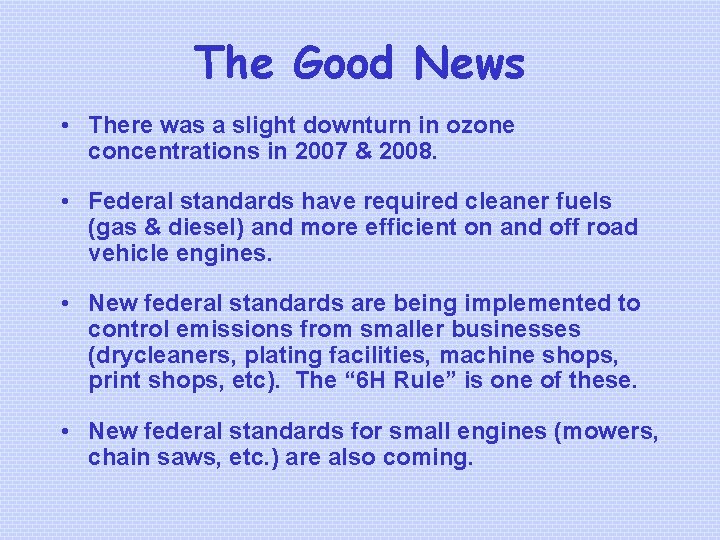
The Good News • There was a slight downturn in ozone concentrations in 2007 & 2008. • Federal standards have required cleaner fuels (gas & diesel) and more efficient on and off road vehicle engines. • New federal standards are being implemented to control emissions from smaller businesses (drycleaners, plating facilities, machine shops, print shops, etc). The “ 6 H Rule” is one of these. • New federal standards for small engines (mowers, chain saws, etc. ) are also coming.
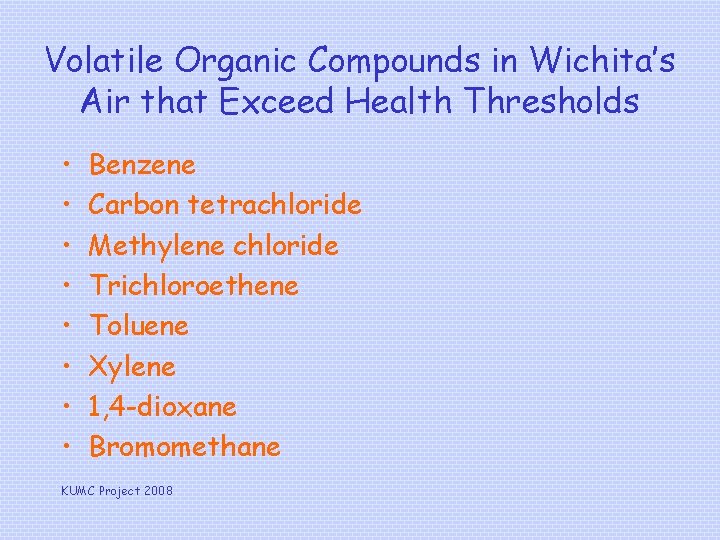
Volatile Organic Compounds in Wichita’s Air that Exceed Health Thresholds • • Benzene Carbon tetrachloride Methylene chloride Trichloroethene Toluene Xylene 1, 4 -dioxane Bromomethane KUMC Project 2008
The Health, Environmental, & Economic Effects of Air Pollution Reduce the Quality of Life for All Of Us
John Stark, R. S. Wichita Department of Environmental Health • To view an e-copy of the presentation- www. wichita. gov/City. Offices/Health/Environmental/ Presentations • For questions or further information call or email • 316 -268 -8449 • JStark@wichita. gov