
Solutions Review Pt 2 Electrolytes vs Nonelectrolytes Electrolytes

- Slides: 18
Solutions Review Pt 2 Electrolytes vs Non-electrolytes
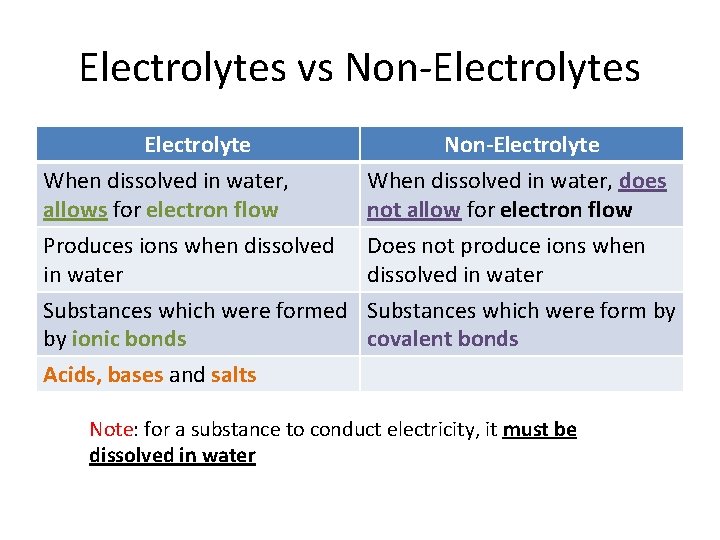
Electrolytes vs Non-Electrolytes Electrolyte When dissolved in water, allows for electron flow Non-Electrolyte When dissolved in water, does not allow for electron flow Produces ions when dissolved in water Does not produce ions when dissolved in water Substances which were formed Substances which were form by by ionic bonds covalent bonds Acids, bases and salts Note: for a substance to conduct electricity, it must be dissolved in water
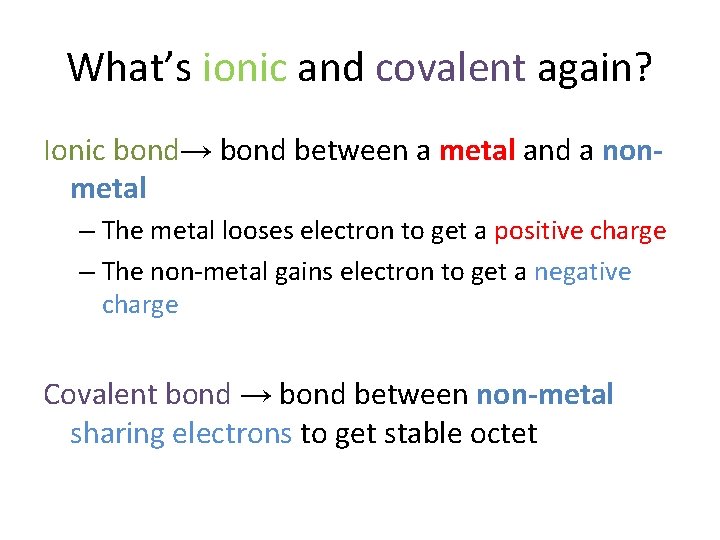
What’s ionic and covalent again? Ionic bond→ bond between a metal and a nonmetal – The metal looses electron to get a positive charge – The non-metal gains electron to get a negative charge Covalent bond → bond between non-metal sharing electrons to get stable octet
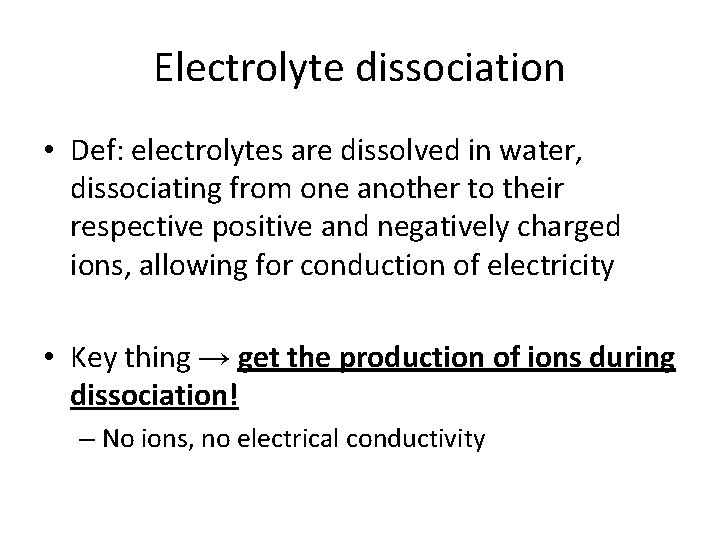
Electrolyte dissociation • Def: electrolytes are dissolved in water, dissociating from one another to their respective positive and negatively charged ions, allowing for conduction of electricity • Key thing → get the production of ions during dissociation! – No ions, no electrical conductivity
Examples of electrolyte dissociation Salts Na. Cl(s)→Na+(aq) + Cl-(aq) Ca. Cl 2(s)→Ca 2+(aq) + 2 Cl-(aq) Acids H 2 SO 4(s)→ 2 H+(aq) + SO 42 -(aq) HCl(s)→H+(aq) + Cl-(aq) Bases KOH(s)→K+(aq) + OH-(aq) Na. OH(s)→Na+(aq) + OH-(aq)
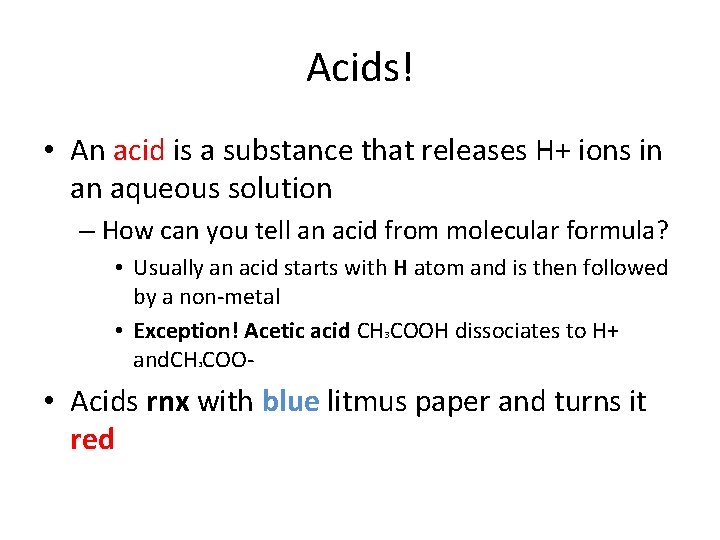
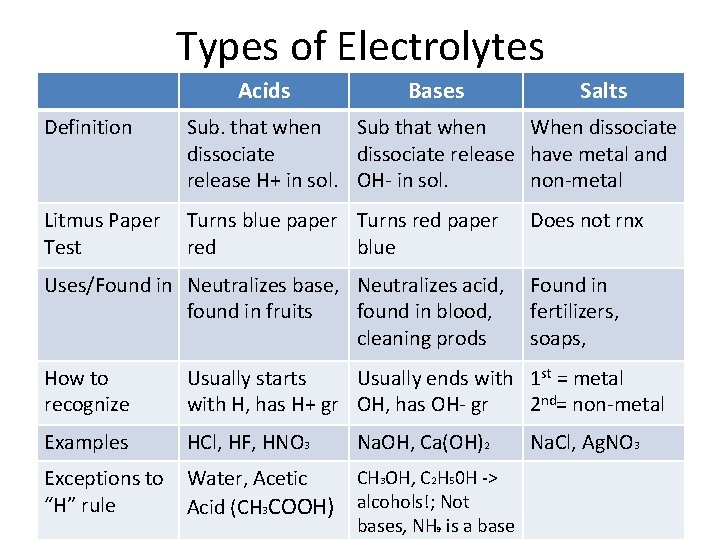
Acids! • An acid is a substance that releases H+ ions in an aqueous solution – How can you tell an acid from molecular formula? • Usually an acid starts with H atom and is then followed by a non-metal • Exception! Acetic acid CH 3 COOH dissociates to H+ and. CH COO 3 • Acids rnx with blue litmus paper and turns it red
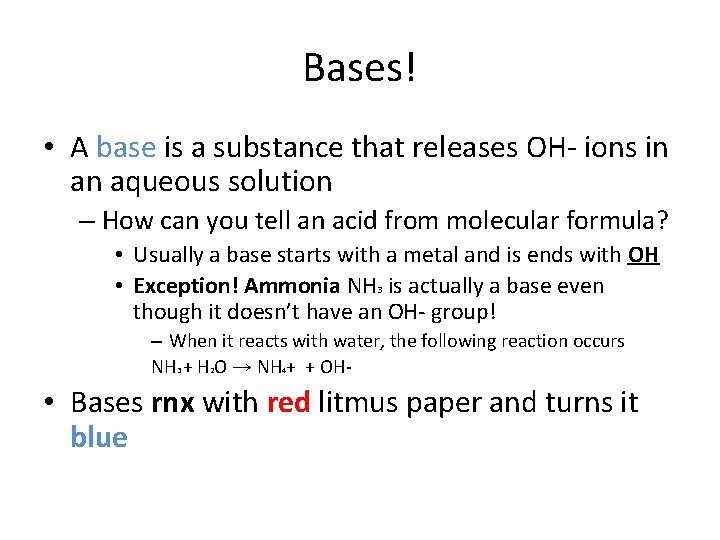
Bases! • A base is a substance that releases OH- ions in an aqueous solution – How can you tell an acid from molecular formula? • Usually a base starts with a metal and is ends with OH • Exception! Ammonia NH 3 is actually a base even though it doesn’t have an OH- group! – When it reacts with water, the following reaction occurs NH 3 + H 2 O → NH + + OH 4 • Bases rnx with red litmus paper and turns it blue
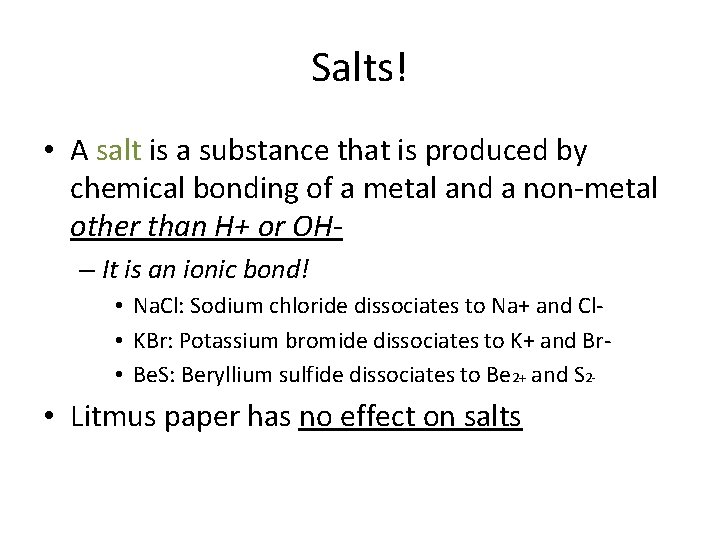
Salts! • A salt is a substance that is produced by chemical bonding of a metal and a non-metal other than H+ or OH– It is an ionic bond! • Na. Cl: Sodium chloride dissociates to Na+ and Cl • KBr: Potassium bromide dissociates to K+ and Br • Be. S: Beryllium sulfide dissociates to Be 2+ and S 2 - • Litmus paper has no effect on salts
Types of Electrolytes Acids Bases Salts Definition Sub. that when Sub that when When dissociate release have metal and release H+ in sol. OH- in sol. non-metal Litmus Paper Test Turns blue paper Turns red paper red blue Uses/Found in Neutralizes base, Neutralizes acid, found in fruits found in blood, cleaning prods Does not rnx Found in fertilizers, soaps, How to recognize Usually starts Usually ends with 1 st = metal with H, has H+ gr OH, has OH- gr 2 nd= non-metal Examples HCl, HF, HNO 3 Exceptions to “H” rule CH 3 OH, C 2 H 50 H -> Water, Acetic Acid (CH 3 COOH) alcohols!; Not Na. OH, Ca(OH)2 bases, NH 9 is a base Na. Cl, Ag. NO 3
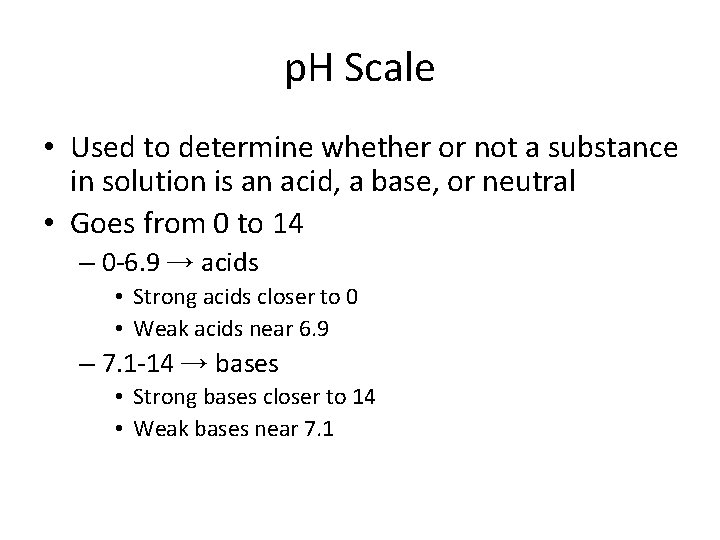
p. H Scale • Used to determine whether or not a substance in solution is an acid, a base, or neutral • Goes from 0 to 14 – 0 -6. 9 → acids • Strong acids closer to 0 • Weak acids near 6. 9 – 7. 1 -14 → bases • Strong bases closer to 14 • Weak bases near 7. 1
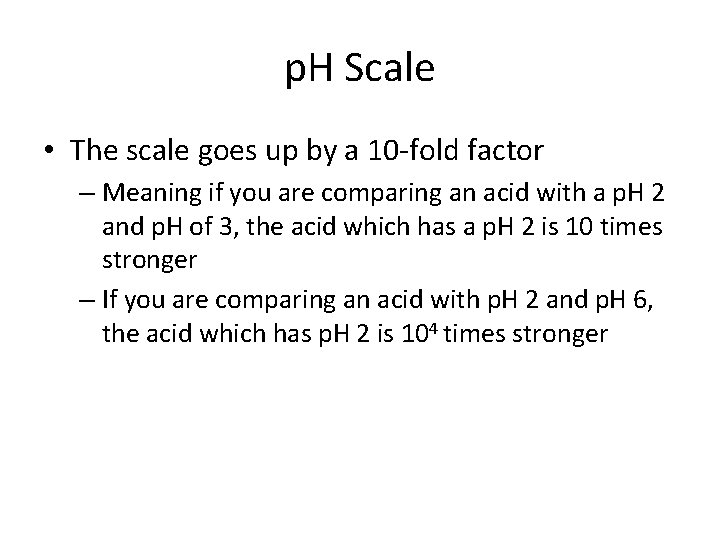
p. H Scale • The scale goes up by a 10 -fold factor – Meaning if you are comparing an acid with a p. H 2 and p. H of 3, the acid which has a p. H 2 is 10 times stronger – If you are comparing an acid with p. H 2 and p. H 6, the acid which has p. H 2 is 104 times stronger
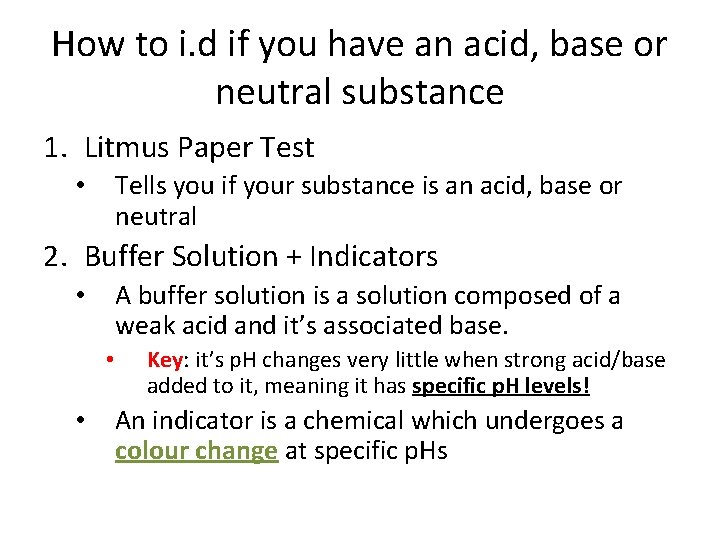
How to i. d if you have an acid, base or neutral substance 1. Litmus Paper Test Tells you if your substance is an acid, base or neutral • 2. Buffer Solution + Indicators A buffer solution is a solution composed of a weak acid and it’s associated base. • • • Key: it’s p. H changes very little when strong acid/base added to it, meaning it has specific p. H levels! An indicator is a chemical which undergoes a colour change at specific p. Hs
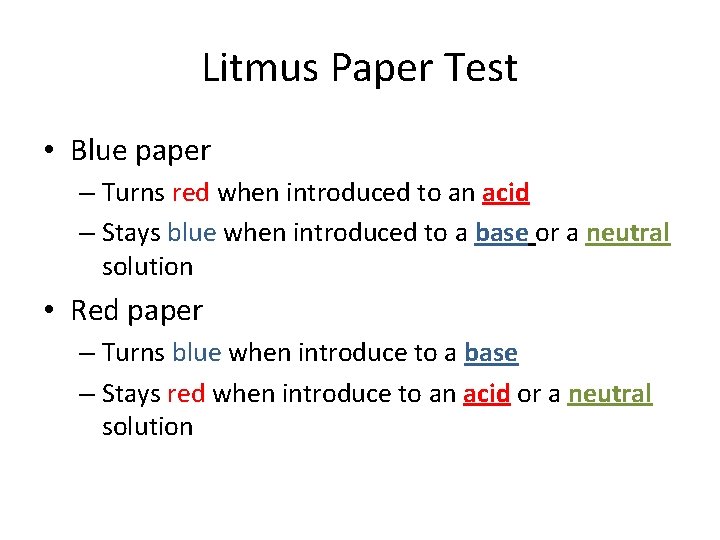
Litmus Paper Test • Blue paper – Turns red when introduced to an acid – Stays blue when introduced to a base or a neutral solution • Red paper – Turns blue when introduce to a base – Stays red when introduce to an acid or a neutral solution
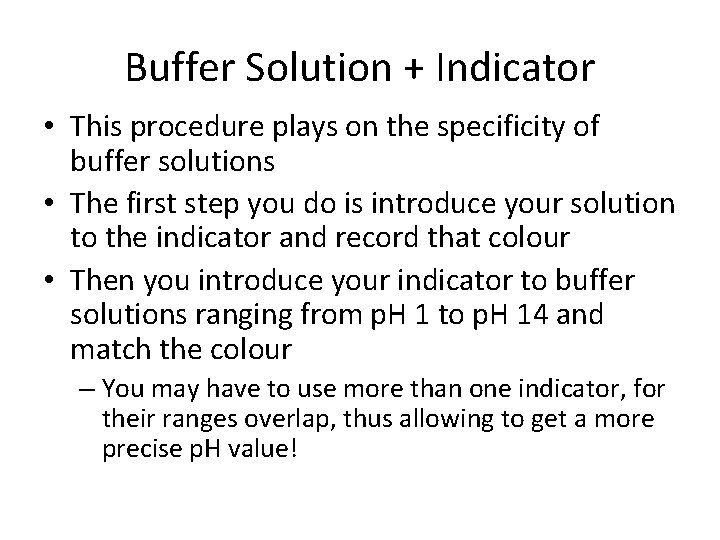
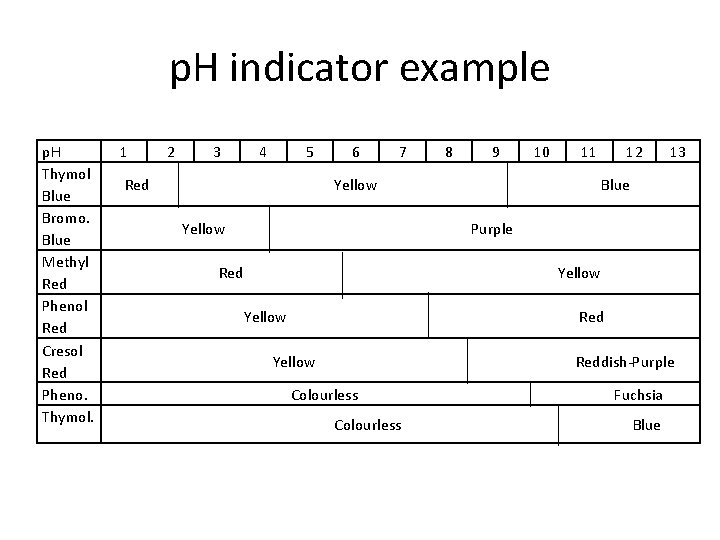
Buffer Solution + Indicator • This procedure plays on the specificity of buffer solutions • The first step you do is introduce your solution to the indicator and record that colour • Then you introduce your indicator to buffer solutions ranging from p. H 1 to p. H 14 and match the colour – You may have to use more than one indicator, for their ranges overlap, thus allowing to get a more precise p. H value!
p. H indicator example p. H Thymol Blue Bromo. Blue Methyl Red Phenol Red Cresol Red Pheno. Thymol. 1 2 3 4 5 Red 6 7 8 9 10 11 Yellow 12 13 Blue Purple Red Yellow Reddish-Purple Colourless Fuchsia Blue
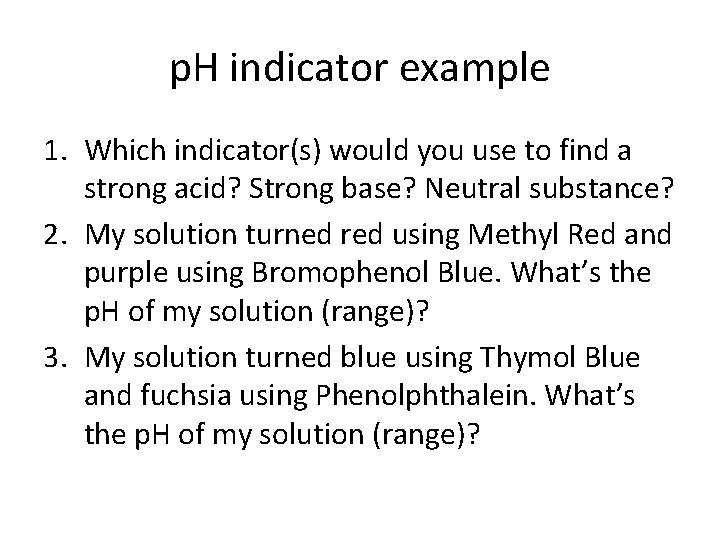
p. H indicator example 1. Which indicator(s) would you use to find a strong acid? Strong base? Neutral substance? 2. My solution turned red using Methyl Red and purple using Bromophenol Blue. What’s the p. H of my solution (range)? 3. My solution turned blue using Thymol Blue and fuchsia using Phenolphthalein. What’s the p. H of my solution (range)?
Mnemonic to remember for acids and bases Acids are red, bases are blue, water is neutral, what about you? Acid → turn blue litmus paper red Bases → turn red litmus paper blue Water → as a neutral substance, does not rnx with litmus paper (same as salts)