
Solutions and Properties of Matter Physical Science Formation
- Slides: 9
Solutions and Properties of Matter Physical Science
Formation � Recall that a solution is a homogeneous mixture of two or more substances. � When forming a solution there are two parts: � Solute � Solvent � One of these two substances is dissolved inside the other
Forming a Solution � Solute-A substance whose particles are dissolved in a solution. � Solvent-the substance in which the solute dissolves in.
Solubility � The maximum amount of a solute that dissolves in a given amount of solvent at a constant temperature � To determine whether something is soluble or not depends on the attraction of the solute and the solvent � Insoluble =lack of attraction
Solubility � There are three different levels of solubility �Saturated �Unsaturated �Supersaturated
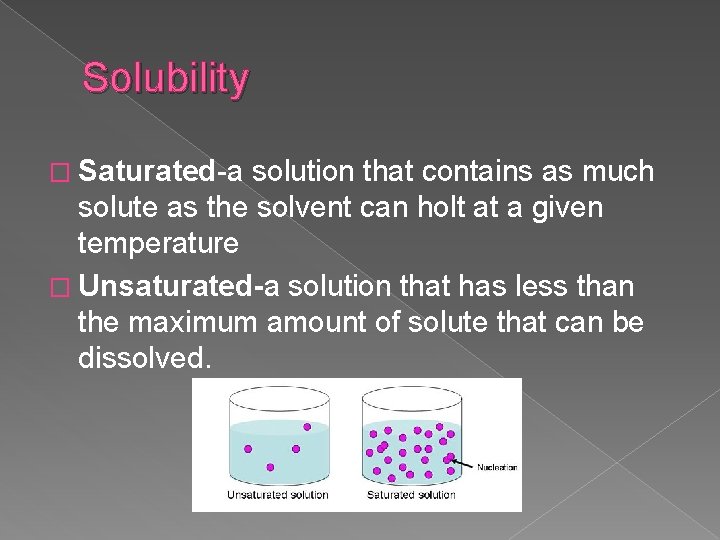
Solubility � Saturated-a solution that contains as much solute as the solvent can holt at a given temperature � Unsaturated-a solution that has less than the maximum amount of solute that can be dissolved.
Solubility � Supersaturated- a solution that contains more solute than it can normally hold at a given temperature.
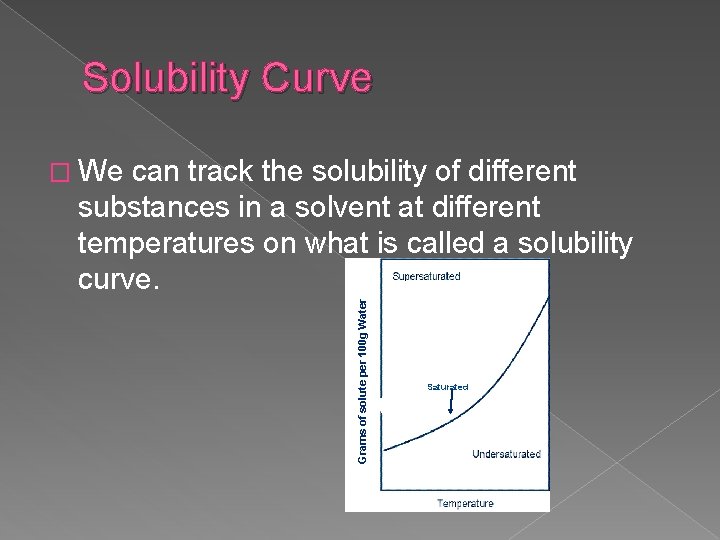
Solubility Curve can track the solubility of different substances in a solvent at different temperatures on what is called a solubility curve. Grams of solute per 100 g Water � We Saturated
Dilute vs. Concentrated Solutions �A dilute solution is a solution in which there is a small amount of solute (the thing that gets dissolved) compared to the total amount of possible solute that can be dissolved in the solvent (the thing that does the dissolving). � A concentrated solution is when there is a lot or all solute that can possibly fit in the solvent.