
SolutionFocused Counseling A Top Ten List of Techniques


- Slides: 26
Solution-Focused Counseling A Top Ten List of Techniques for School Counselors Catherine Griffith, Ph. D. University of Massachusetts Amherst ASCA Conference, 2015
Introductions • Name • Where are you from? • What do you do? • What age group do you work with? • What experience do you have with SFC? • What are you hoping to learn?
Agenda • Overview of Solution-Focused Counseling (SFC) • Techniques & Roleplays • Putting it all Together • Q&A
But First… � Think of a small impact issue you’ve been experiencing lately: � Staying organized � Getting things done on time � Health goal (losing weight, quitting smoking) � Getting along with a coworker � Issue with a student � A goal you’d like to set
Overview of SFBC
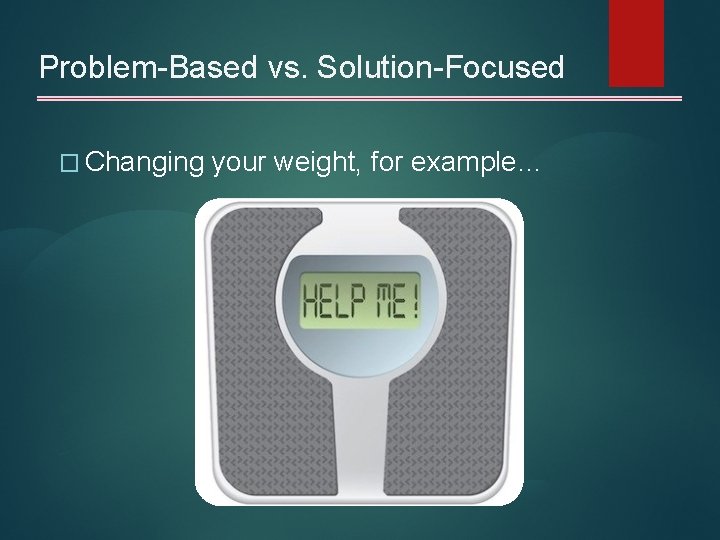
Problem-Based vs. Solution-Focused � Changing your weight, for example…
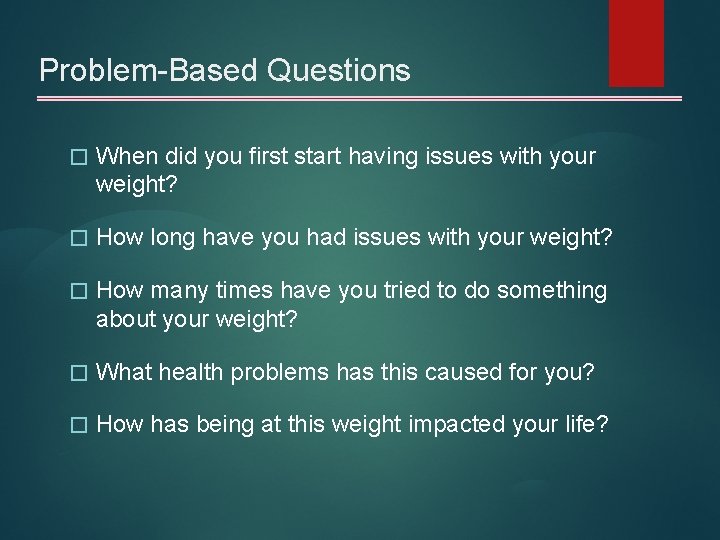
Problem-Based Questions � When did you first start having issues with your weight? � How long have you had issues with your weight? � How many times have you tried to do something about your weight? � What health problems has this caused for you? � How has being at this weight impacted your life?
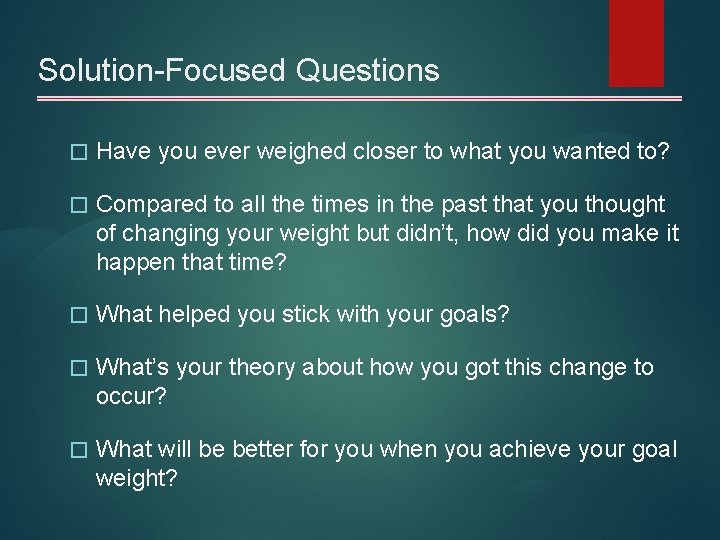
Solution-Focused Questions � Have you ever weighed closer to what you wanted to? � Compared to all the times in the past that you thought of changing your weight but didn’t, how did you make it happen that time? � What helped you stick with your goals? � What’s your theory about how you got this change to occur? � What will be better for you when you achieve your goal weight?
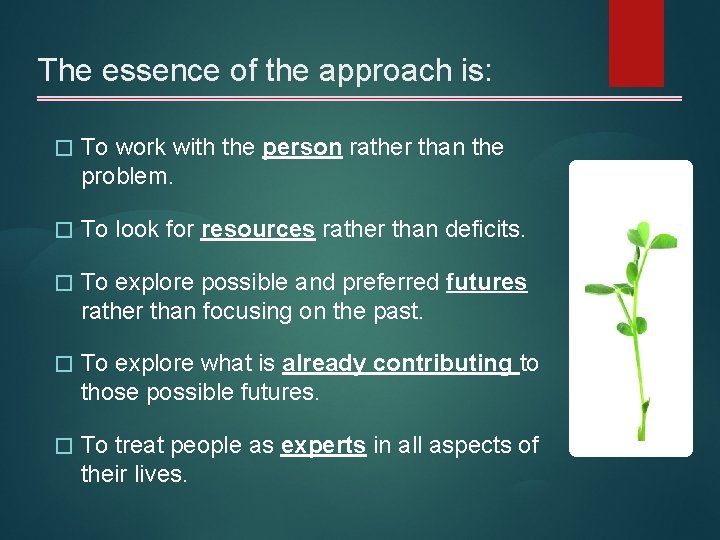
The essence of the approach is: � To work with the person rather than the problem. � To look for resources rather than deficits. � To explore possible and preferred futures rather than focusing on the past. � To explore what is already contributing to those possible futures. � To treat people as experts in all aspects of their lives.
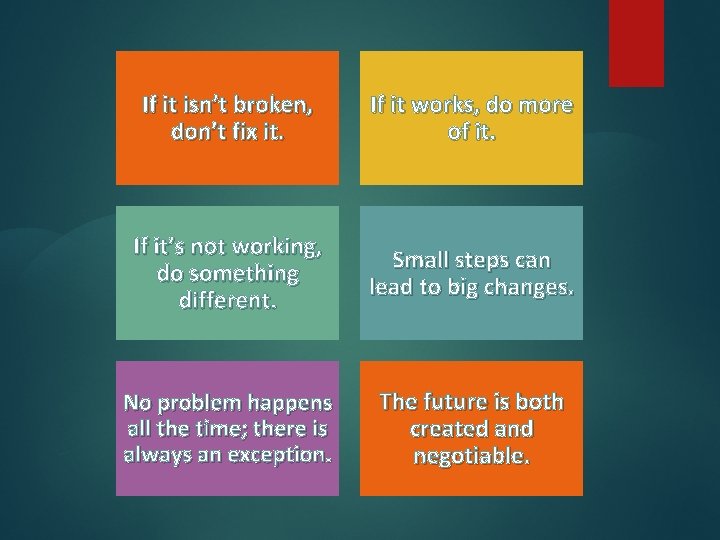
If it isn’t broken, don’t fix it. If it works, do more of it. If it’s not working, do something different. Small steps can lead to big changes. No problem happens all the time; there is always an exception. The future is both created and negotiable.
What about the evidence? � � 89 relevant studies: � 2 meta - analyses � 3 systematic reviews � 75 published follow-up studies � 9 randomized controlled trials showing benefit from SFBT Effectiveness data are available from more than 2900 cases with a success rate exceeding 60% and requiring an average of 3 -5 sessions
Top Ten Techniques
The Columbo Approach
The Miracle Question What Else?
Finding Exceptions
Scaling Questions
Coping Questions Relationship Questions
The Overcoming the Urge Question
9 Task Setting
1 0 Better? What’s
Putting It All Together
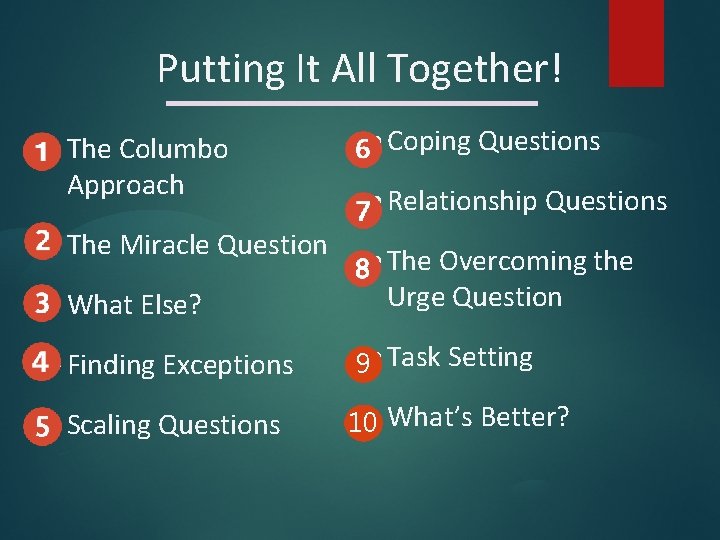
Putting It All Together! • The Columbo Approach • The Miracle Question • What Else? • Finding Exceptions • Scaling Questions • Coping Questions • Relationship Questions • The Overcoming the Urge Question 9 • Task Setting 10 • What’s Better?
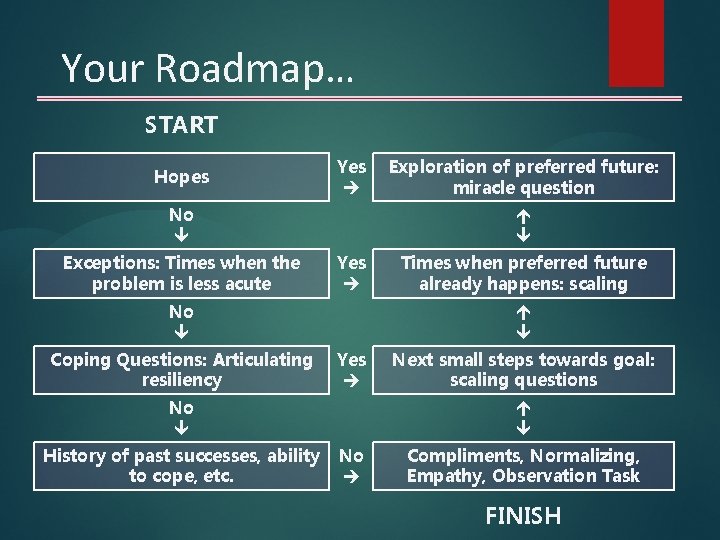
Your Roadmap… START Hopes Yes No Exceptions: Times when the problem is less acute Yes No Coping Questions: Articulating resiliency Times when preferred future already happens: scaling Yes No History of past successes, ability to cope, etc. Exploration of preferred future: miracle question Next small steps towards goal: scaling questions No Compliments, Normalizing, Empathy, Observation Task FINISH
Questions?
Thank You! Email: cagriffith@umass. edu Materials: catherinegriffith. com