
Solute transport Plant Cells Membrane Nutrients traffic Regulation
Solute transport Plant Cells. . Membrane. . Nutrients traffic. . Regulation. . Dr. Abdul Latif Khan
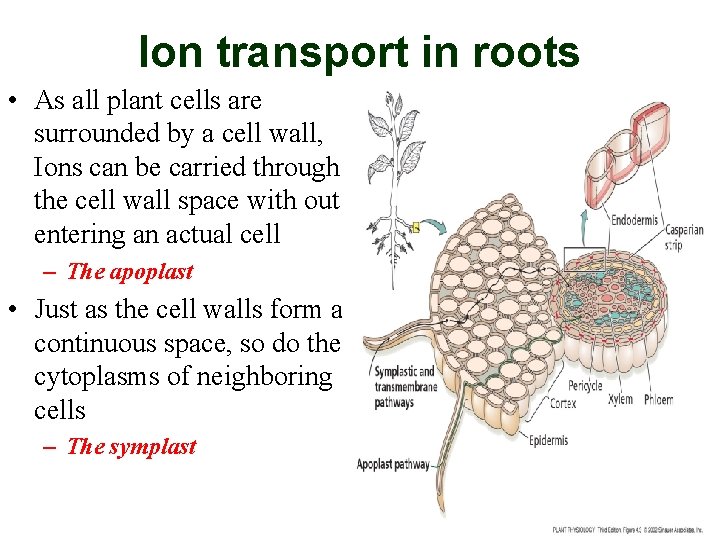
Ion transport in roots • As all plant cells are surrounded by a cell wall, Ions can be carried through the cell wall space with out entering an actual cell – The apoplast • Just as the cell walls form a continuous space, so do the cytoplasms of neighboring cells – The symplast
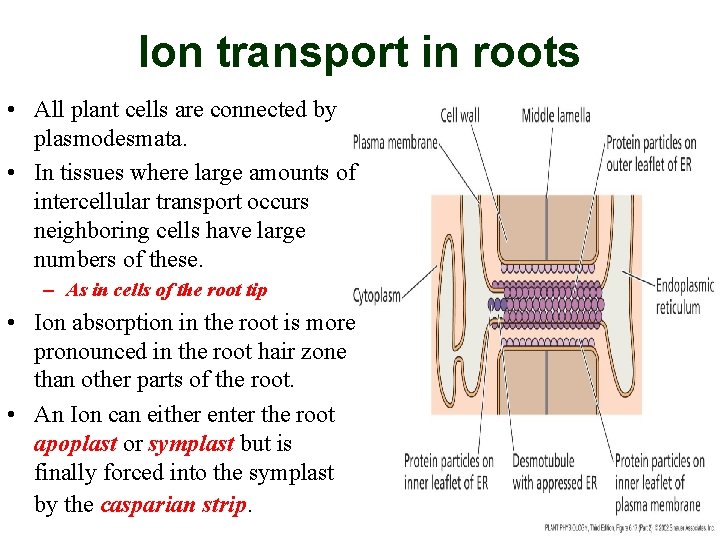
Ion transport in roots • All plant cells are connected by plasmodesmata. • In tissues where large amounts of intercellular transport occurs neighboring cells have large numbers of these. – As in cells of the root tip • Ion absorption in the root is more pronounced in the root hair zone than other parts of the root. • An Ion can either enter the root apoplast or symplast but is finally forced into the symplast by the casparian strip.
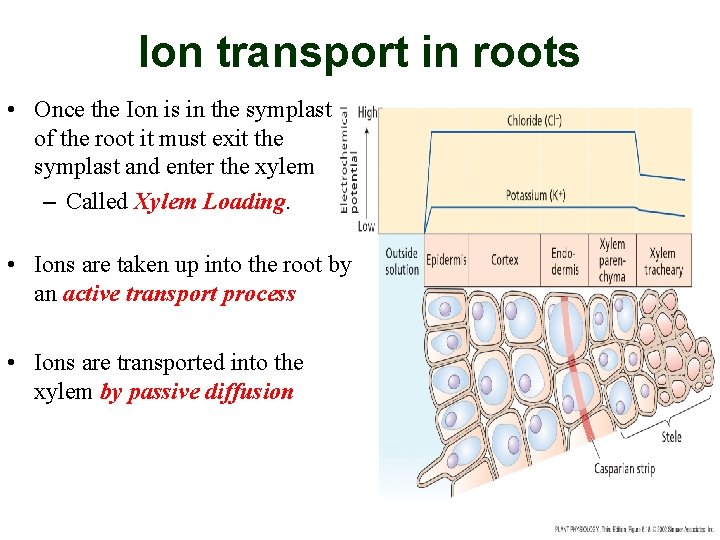
Ion transport in roots • Once the Ion is in the symplast of the root it must exit the symplast and enter the xylem – Called Xylem Loading. • Ions are taken up into the root by an active transport process • Ions are transported into the xylem by passive diffusion
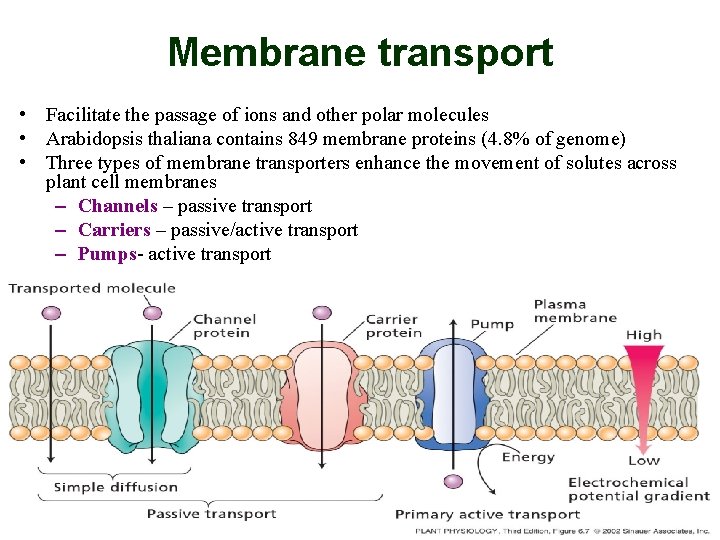
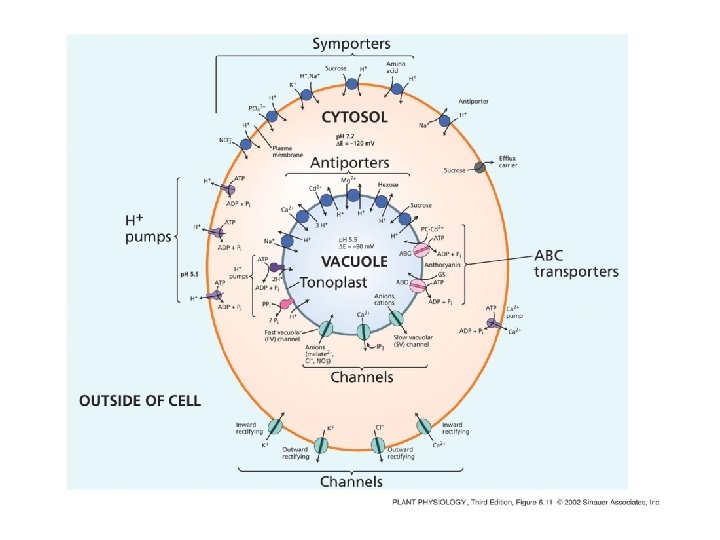
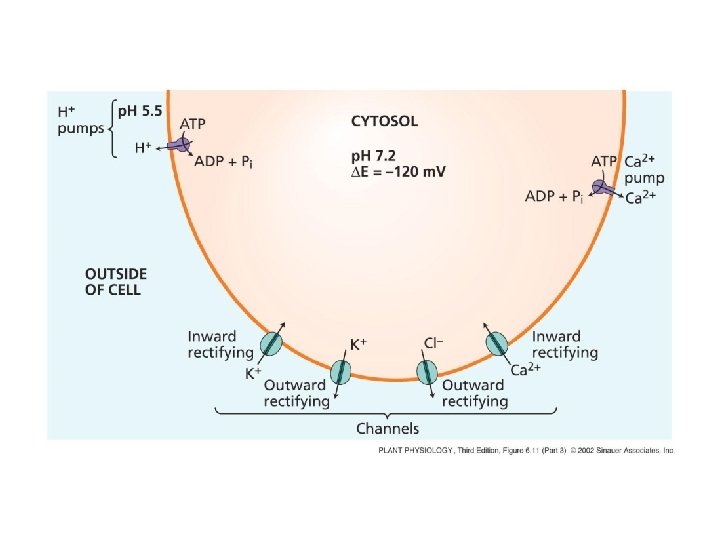
Membrane transport • Facilitate the passage of ions and other polar molecules • Arabidopsis thaliana contains 849 membrane proteins (4. 8% of genome) • Three types of membrane transporters enhance the movement of solutes across plant cell membranes – Channels – passive transport – Carriers – passive/active transport – Pumps- active transport

Passive transport Diffusion: Diffusion is the net movement of material from an area of high concentration to an area with lower concentration Facilitated diffusion: Facilitated diffusion, also called carriermediated diffusion, is the movement of molecules across the cell membrane via special transport proteins that are embedded within the cellular membrane. Osmosis: Osmosis is the diffusion of water molecules across a selectively permeable membrane.
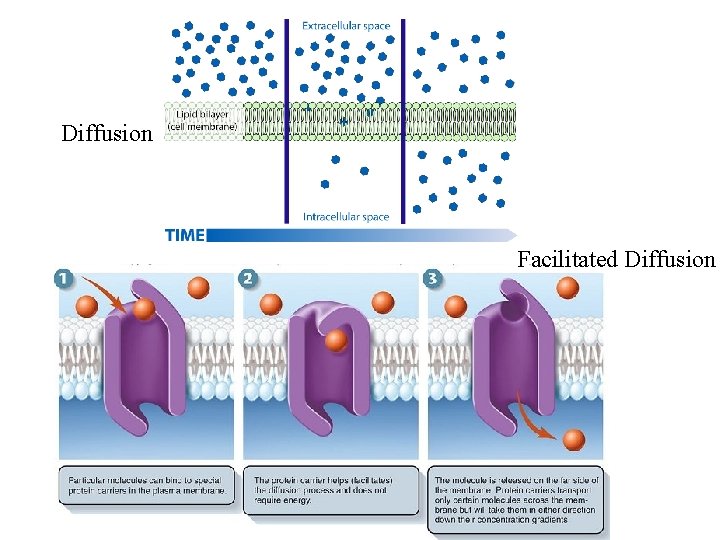
Diffusion Facilitated Diffusion
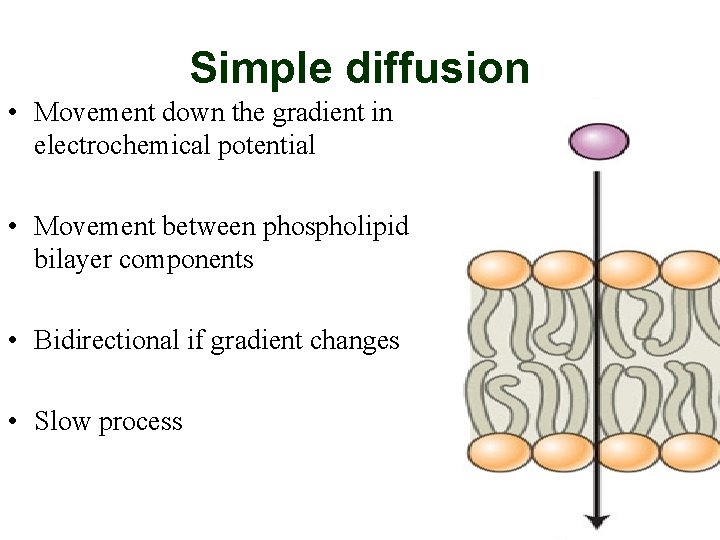
Simple diffusion • Movement down the gradient in electrochemical potential • Movement between phospholipid bilayer components • Bidirectional if gradient changes • Slow process
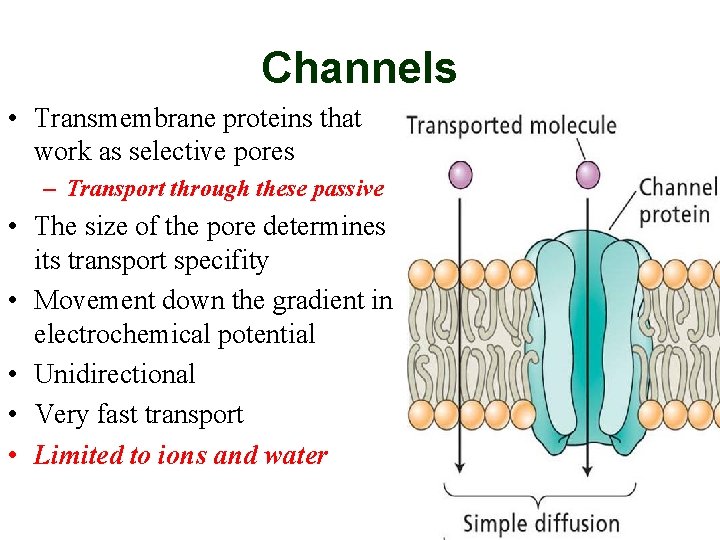
Channels • Transmembrane proteins that work as selective pores – Transport through these passive • The size of the pore determines its transport specifity • Movement down the gradient in electrochemical potential • Unidirectional • Very fast transport • Limited to ions and water
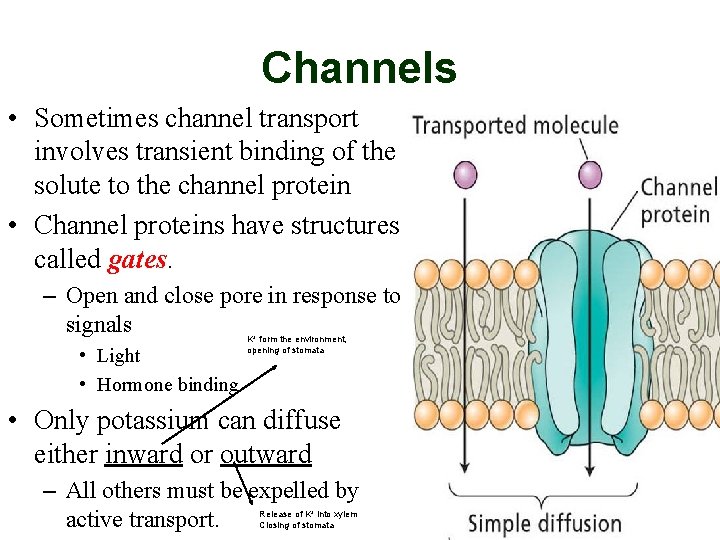
Channels • Sometimes channel transport involves transient binding of the solute to the channel protein • Channel proteins have structures called gates. – Open and close pore in response to signals • Light • Hormone binding K+ form the environment, opening of stomata • Only potassium can diffuse either inward or outward – All others must be expelled by active transport. Release of K+ into xylem Closing of stomata
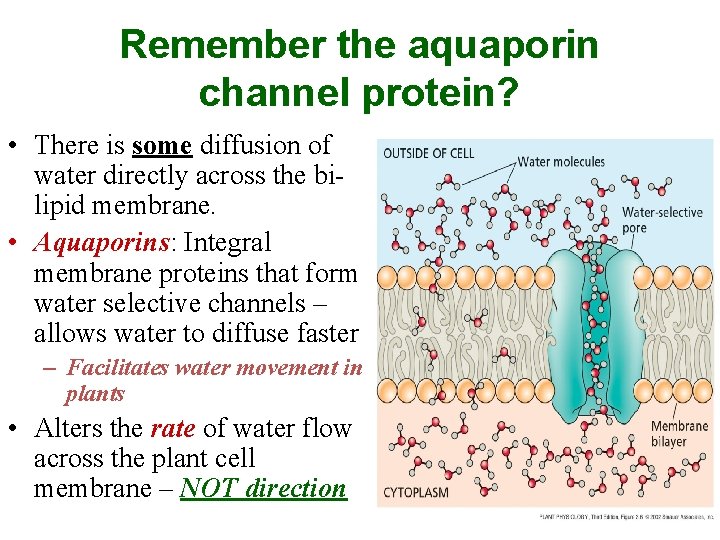
Remember the aquaporin channel protein? • There is some diffusion of water directly across the bilipid membrane. • Aquaporins: Integral membrane proteins that form water selective channels – allows water to diffuse faster – Facilitates water movement in plants • Alters the rate of water flow across the plant cell membrane – NOT direction
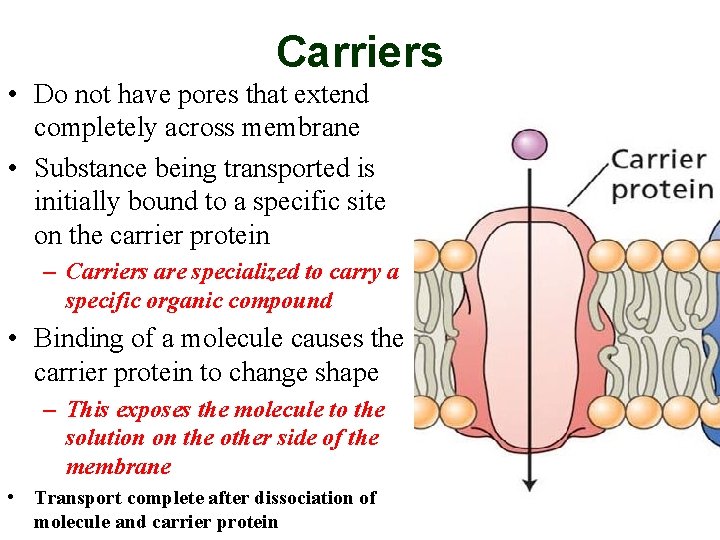
Carriers • Do not have pores that extend completely across membrane • Substance being transported is initially bound to a specific site on the carrier protein – Carriers are specialized to carry a specific organic compound • Binding of a molecule causes the carrier protein to change shape – This exposes the molecule to the solution on the other side of the membrane • Transport complete after dissociation of molecule and carrier protein
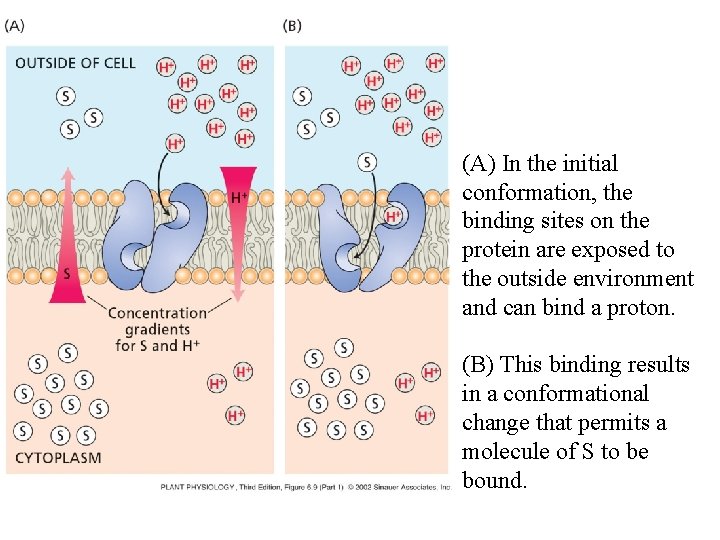
(A) In the initial conformation, the binding sites on the protein are exposed to the outside environment and can bind a proton. (B) This binding results in a conformational change that permits a molecule of S to be bound.
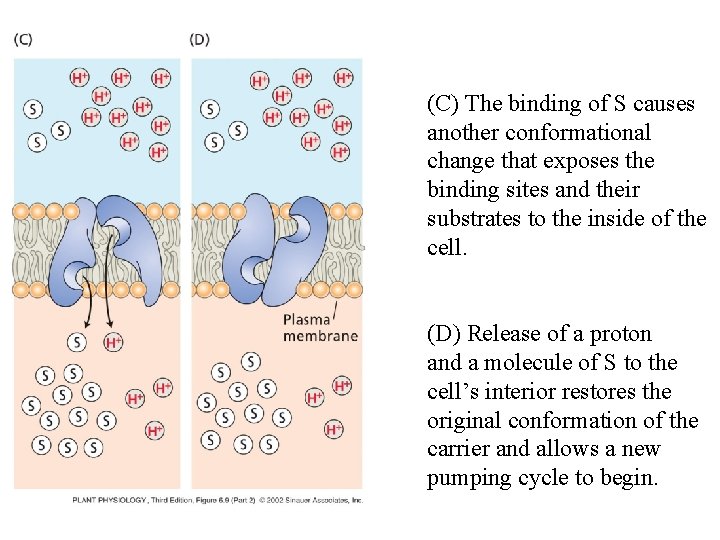
(C) The binding of S causes another conformational change that exposes the binding sites and their substrates to the inside of the cell. (D) Release of a proton and a molecule of S to the cell’s interior restores the original conformation of the carrier and allows a new pumping cycle to begin.
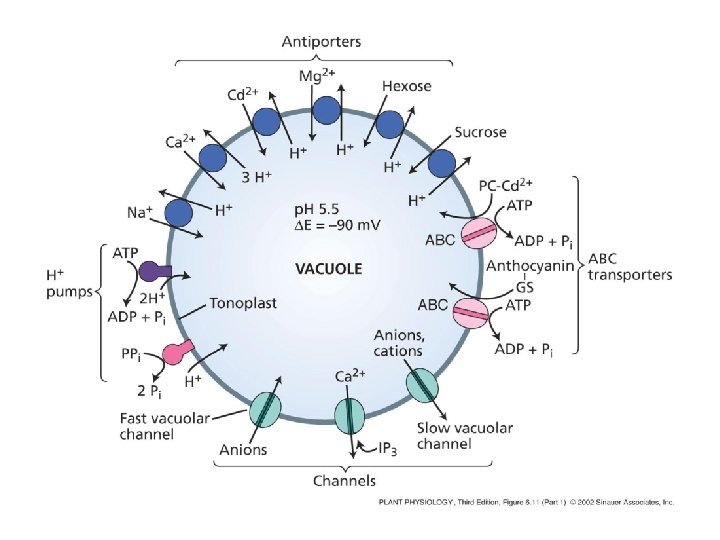
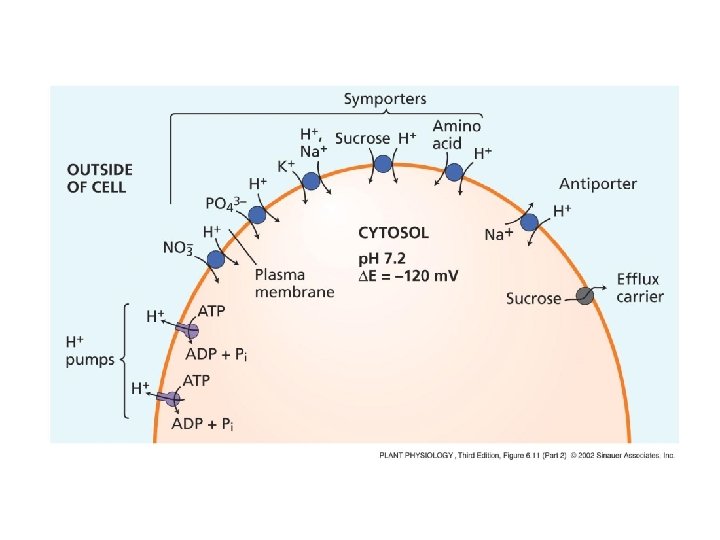
Active transport • Movement of molecules (ions, glucose and amino acids) across a cell membrane in the direction against their concentration gradient, i. e. moving from an area of lower concentration to an area of higher concentration • It uses chemical energy : ATP - ADP • Two types: Primary and Secondary • Primary active transport: directly uses metabolic energy to transport molecules across a membrane • transmembrane ATPases: sodium potassium pump, calcium pump, proton pump • vacuolar ATPase • ABC (ATP binding cassette) transporter
Active transport • Secondary active transport: coupled transport or co-transport, energy is used to transport molecules across a membrane • Two types: Antiport and Symport • Antiport: two species of ion or other solutes are pumped in opposite directions across a membrane • e. g. sodium-calcium antiporter: three sodium ions into the cell to transport one calcium out • Symport: downhill movement of one solute from high to low concentration
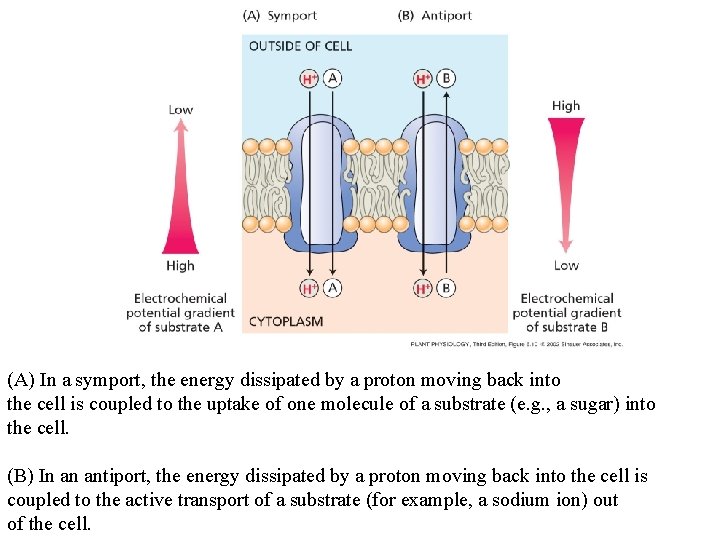
(A) In a symport, the energy dissipated by a proton moving back into the cell is coupled to the uptake of one molecule of a substrate (e. g. , a sugar) into the cell. (B) In an antiport, the energy dissipated by a proton moving back into the cell is coupled to the active transport of a substrate (for example, a sodium ion) out of the cell.
- Slides: 22