
SOLUBILITY NOTES Solution A solution is a type
SOLUBILITY NOTES
Solution �A solution is a type of mixture, called a homogeneous mixture, that is the same throughout
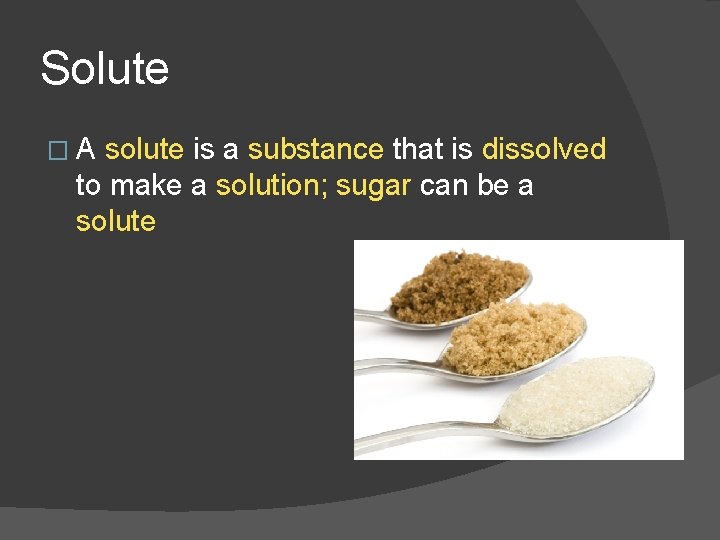
Solute �A solute is a substance that is dissolved to make a solution; sugar can be a solute
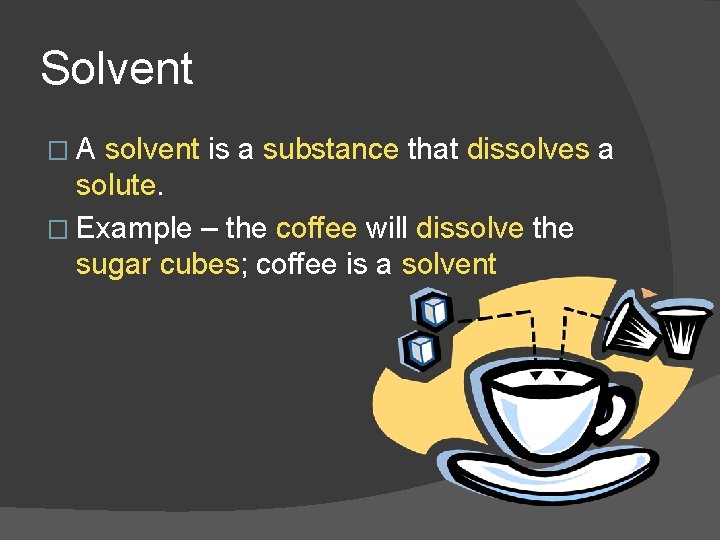
Solvent �A solvent is a substance that dissolves a solute. � Example – the coffee will dissolve the sugar cubes; coffee is a solvent
Solubility �A measure of how much of one substance dissolves in a given amount of another substance at a given temperature
High Solubility �A large amount of a substance can dissolve in another substance it is said that it has high solubility � Example – ammonia (a household chemical) is a solution of ammonia in water; a large amount of ammonia can dissolve in water, giving it high solubility
Low Solubility � When small amounts of a substance will dissolve in water � Example – only a small amount of carbon dioxide will dissolve in water, so carbon dioxide has low solubility

Insoluble � When a substance will NOT dissolve in water � Example – Oils do not dissolve in water, so oils are said to be insoluble in water
Saturated Solutions � Saturated solutions contain the maximum amount of solute that can be dissolved in the solvent at a given temperature �Solute = highly soluble, solution will be concentrated (VERY sweet tea) �Solute = low solubility, solution will be dilute (watered down orange juice)
Temperature � An increase in temperature on solid solutes = �Dissolve more quickly �Greater amount can be dissolved � An increase in temperature on gases = �Less soluble in water �Example – when you boil water, you can see the tiny bubbles that rise to the surface, any air that is dissolved in water comes out of the solution
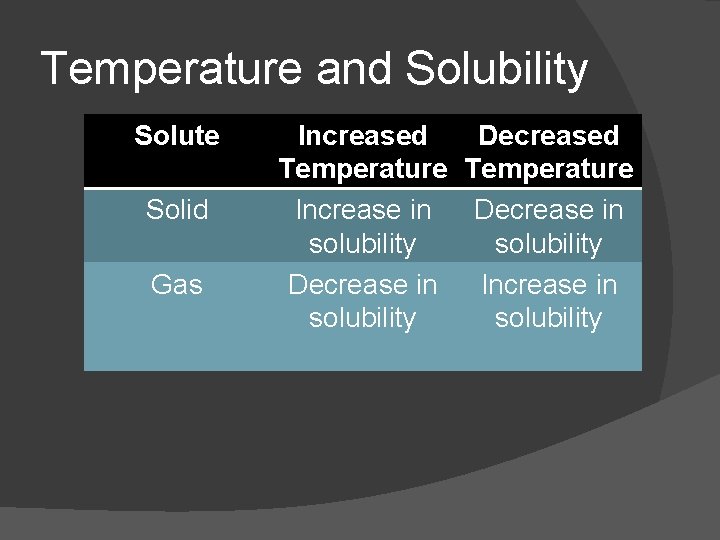
Temperature and Solubility Solute Solid Gas Increased Decreased Temperature Increase in Decrease in solubility Decrease in Increase in solubility
- Slides: 11