
Solubility and the Rate of Dissolution In order

Solubility and the Rate of Dissolution

In order to understand solutions, you have to understand 2 words: The substance being dissolved Solute: ________________ The substance doing the dissolving Solvent: ________________ solvent water solute salt aqueous solution

Why is water such a great solvent? Water is a great solvent because it is made of very POLAR molecules that have a positive pole and a negative pole. Which side of water is positive, and which side is negative? δδ+
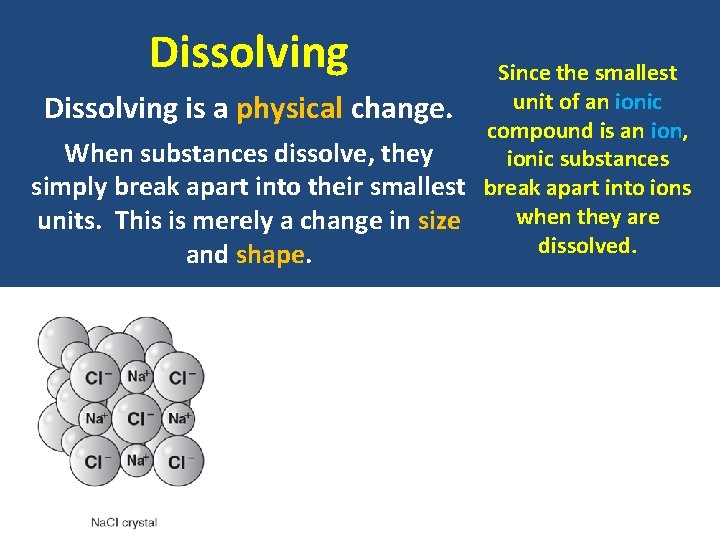
Dissolving Since the smallest unit of an ionic Dissolving is a physical change. compound is an ion, When substances dissolve, they ionic substances simply break apart into their smallest break apart into ions when they are units. This is merely a change in size dissolved. and shape.

Solubility describes how well a substance will dissolve in a solvent like water. It is an intensive physical property. If a substance is soluble, it will dissolve in a solvent like water. If a substance is insoluble, it will NOT dissolve. Pb. I 2 is an insoluble solid.

Use your solubility rules to determine if the compounds on your notes are soluble or insoluble. I S S
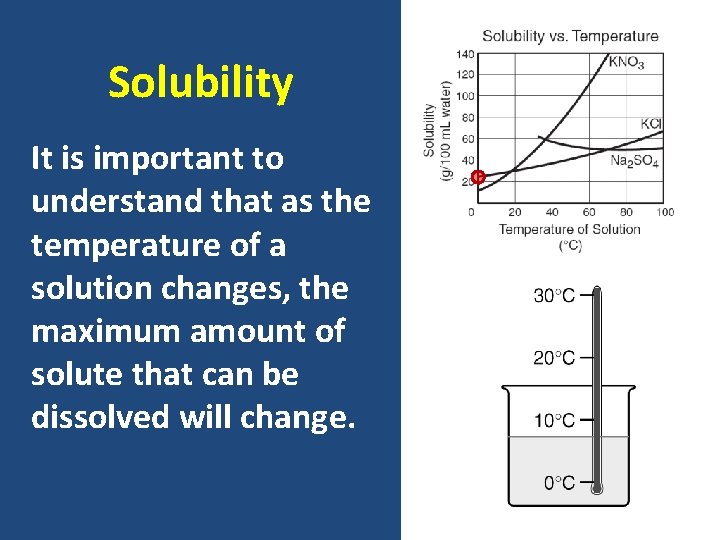
Solubility It is important to understand that as the temperature of a solution changes, the maximum amount of solute that can be dissolved will change.

Solubility curves are a reference tool that allows you to tell how much of a solute will dissolve in a certain amount of water at a certain temperature.
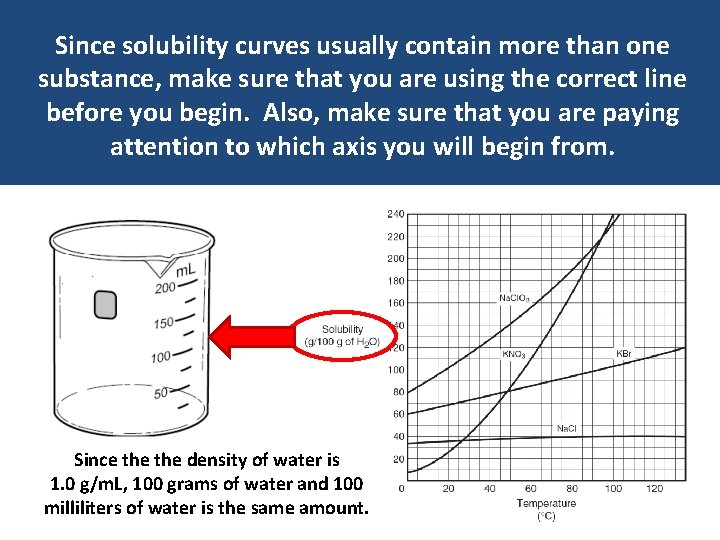
Since solubility curves usually contain more than one substance, make sure that you are using the correct line before you begin. Also, make sure that you are paying attention to which axis you will begin from. Since the density of water is 1. 0 g/m. L, 100 grams of water and 100 milliliters of water is the same amount.

Approximately how many grams of KBr can be dissolved in 100 grams of water at 95 o. C? Approximately 100 grams of KBr
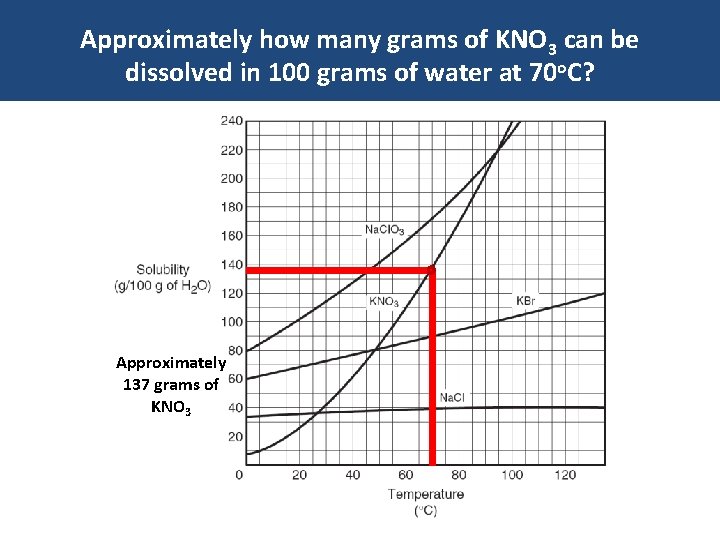
Approximately how many grams of KNO 3 can be dissolved in 100 grams of water at 70 o. C? Approximately 137 grams of KNO 3
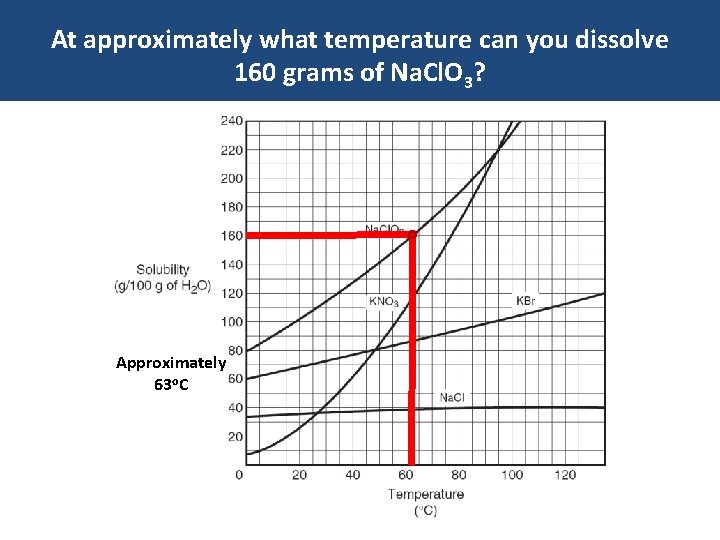
At approximately what temperature can you dissolve 160 grams of Na. Cl. O 3? Approximately 63 o. C
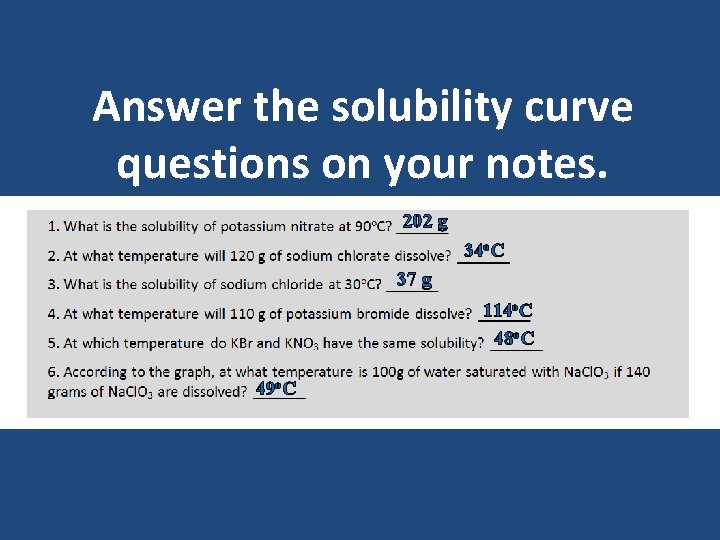
Answer the solubility curve questions on your notes. 202 g 34 o. C 37 g 114 o. C 48 o. C 49 o. C
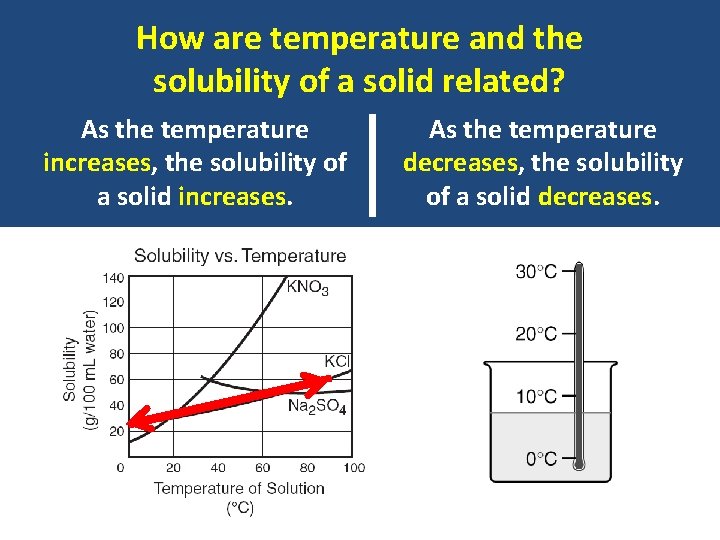
How are temperature and the solubility of a solid related? As the temperature increases, the solubility of a solid increases. As the temperature decreases, the solubility of a solid decreases.
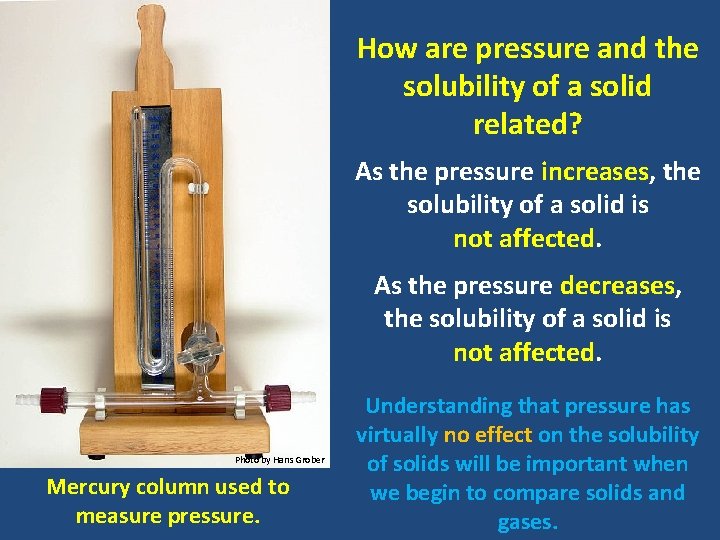
How are pressure and the solubility of a solid related? As the pressure increases, the solubility of a solid is not affected. As the pressure decreases, the solubility of a solid is not affected. Photo by Hans Grober Mercury column used to measure pressure. Understanding that pressure has virtually no effect on the solubility of solids will be important when we begin to compare solids and gases.
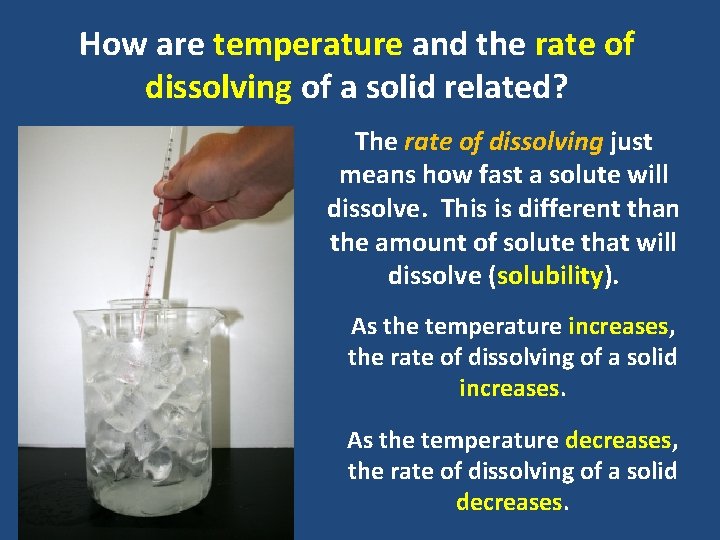
How are temperature and the rate of dissolving of a solid related? The rate of dissolving just means how fast a solute will dissolve. This is different than the amount of solute that will dissolve (solubility). As the temperature increases, the rate of dissolving of a solid increases. As the temperature decreases, the rate of dissolving of a solid decreases.
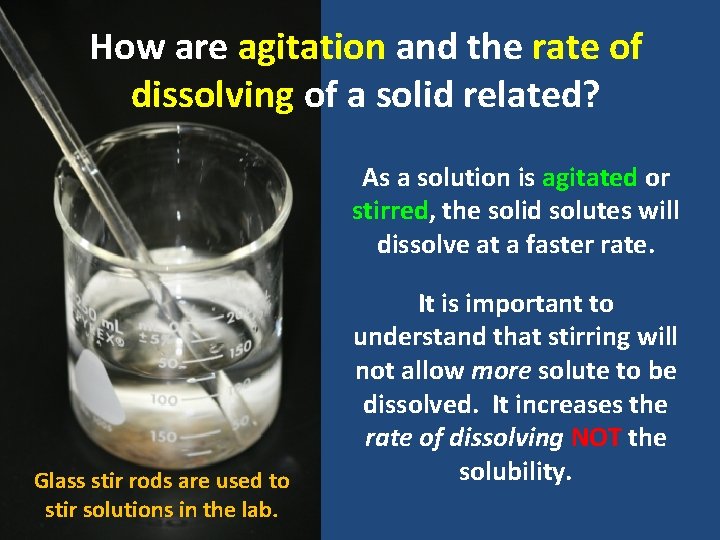
How are agitation and the rate of dissolving of a solid related? As a solution is agitated or stirred, the solid solutes will dissolve at a faster rate. Glass stir rods are used to stir solutions in the lab. It is important to understand that stirring will not allow more solute to be dissolved. It increases the rate of dissolving NOT the solubility.
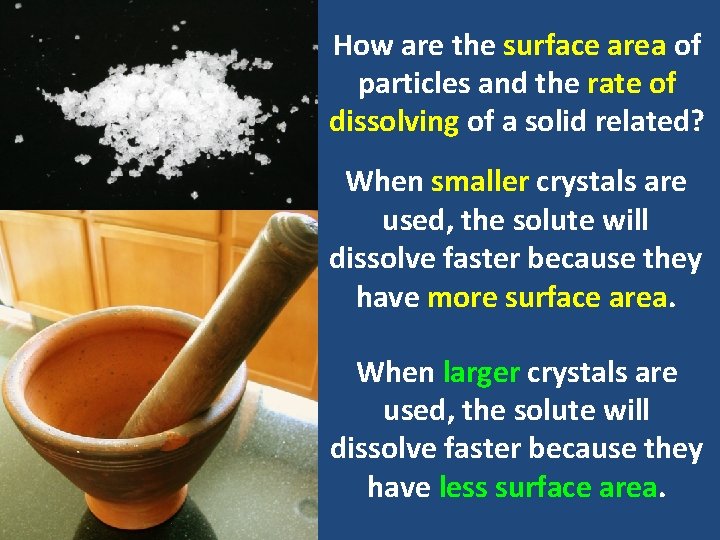
How are the surface area of particles and the rate of dissolving of a solid related? When smaller crystals are used, the solute will dissolve faster because they have more surface area. When larger crystals are used, the solute will dissolve faster because they have less surface area.
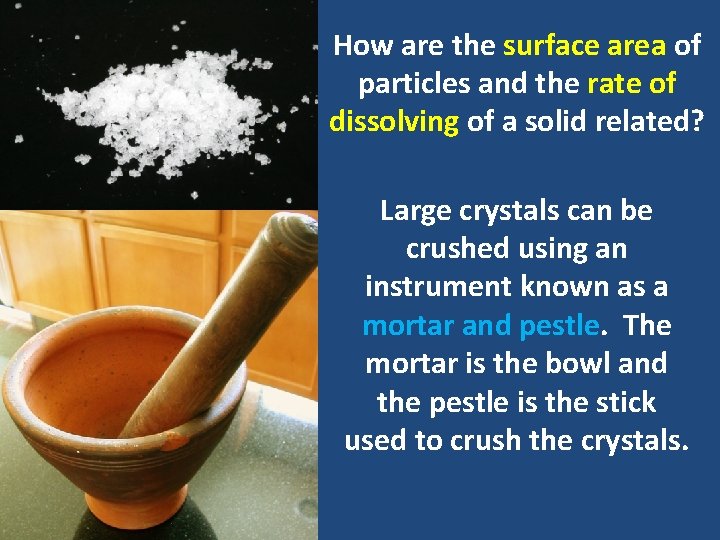
How are the surface area of particles and the rate of dissolving of a solid related? Large crystals can be crushed using an instrument known as a mortar and pestle. The mortar is the bowl and the pestle is the stick used to crush the crystals.
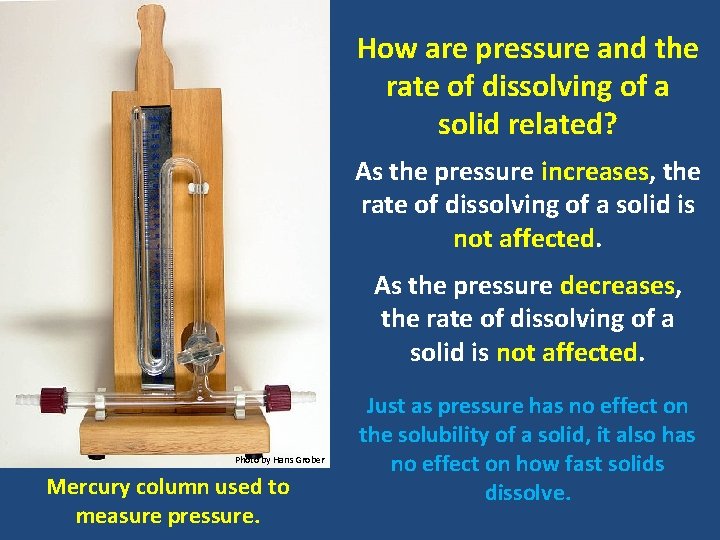
How are pressure and the rate of dissolving of a solid related? As the pressure increases, the rate of dissolving of a solid is not affected. As the pressure decreases, the rate of dissolving of a solid is not affected. Photo by Hans Grober Mercury column used to measure pressure. Just as pressure has no effect on the solubility of a solid, it also has no effect on how fast solids dissolve.
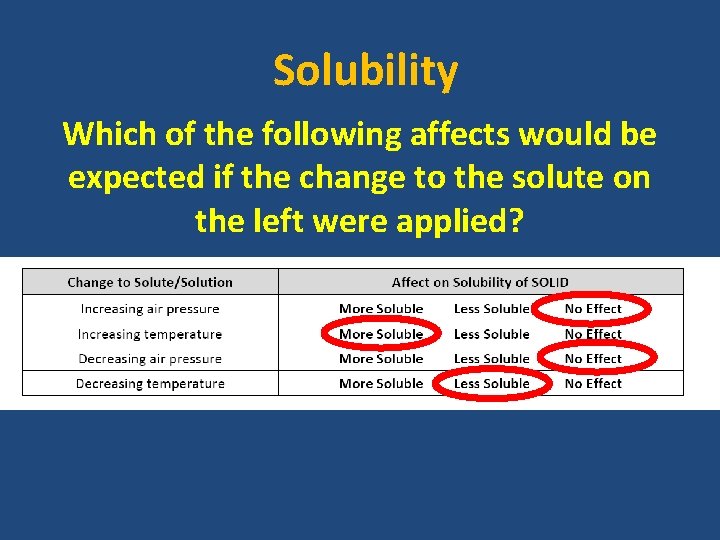
Solubility Which of the following affects would be expected if the change to the solute on the left were applied?
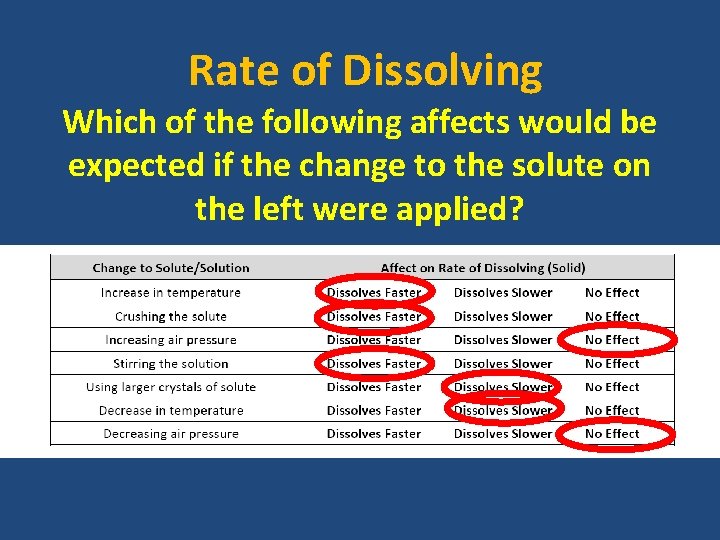
Rate of Dissolving Which of the following affects would be expected if the change to the solute on the left were applied?
- Slides: 22