
Solids Liquids and Gases Quiz Review The graph


- Slides: 12
Solids, Liquids, and Gases Quiz Review
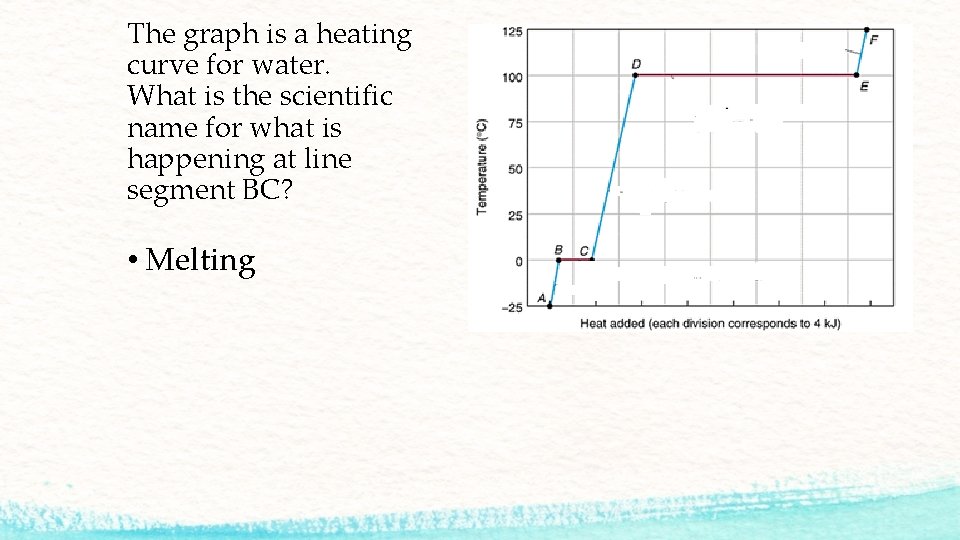
The graph is a heating curve for water. What is the scientific name for what is happening at line segment BC? • Melting
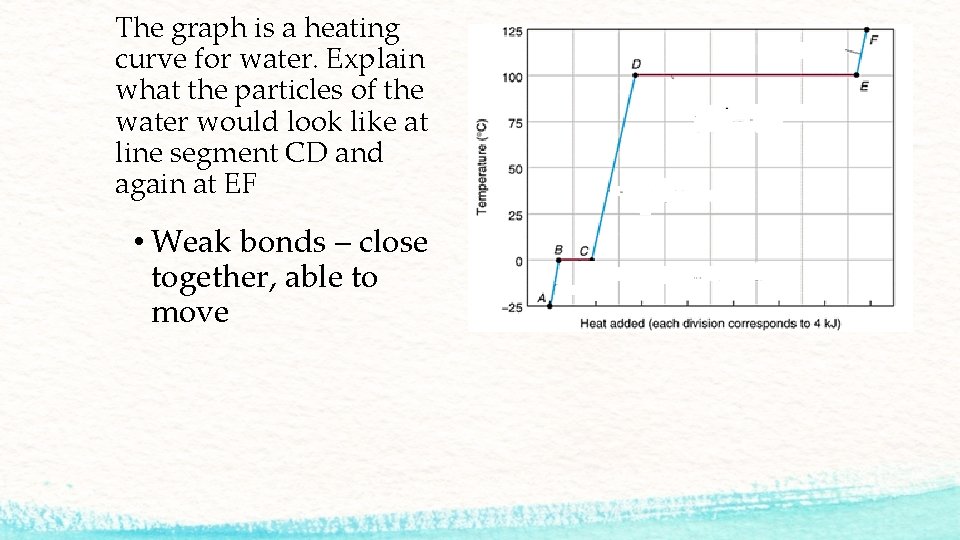
The graph is a heating curve for water. Explain what the particles of the water would look like at line segment CD and again at EF • Weak bonds – close together, able to move
Define solid • Has a definite shape and a definite volume
Define liquid • Has the ability to flow
Define gas • Particles are spread very far apart and move very fast
You take a water bottle and fill it up to the top. You want it really cold so you stick it in the freezer. You forget about it overnight and when you take it out in the morning, you realize there is a crack going down the side of your water bottle. Explain in terms of the water molecules (particles) why this happened. Water expands when cooled down – particles bond together in a way that leaves gaps, causing it to expand
What are the 3 parts of the kinetic theory? A. All matter is made up of small particles B. Particles are in constant, random motion C. Particles collide with one another and the walls of their container
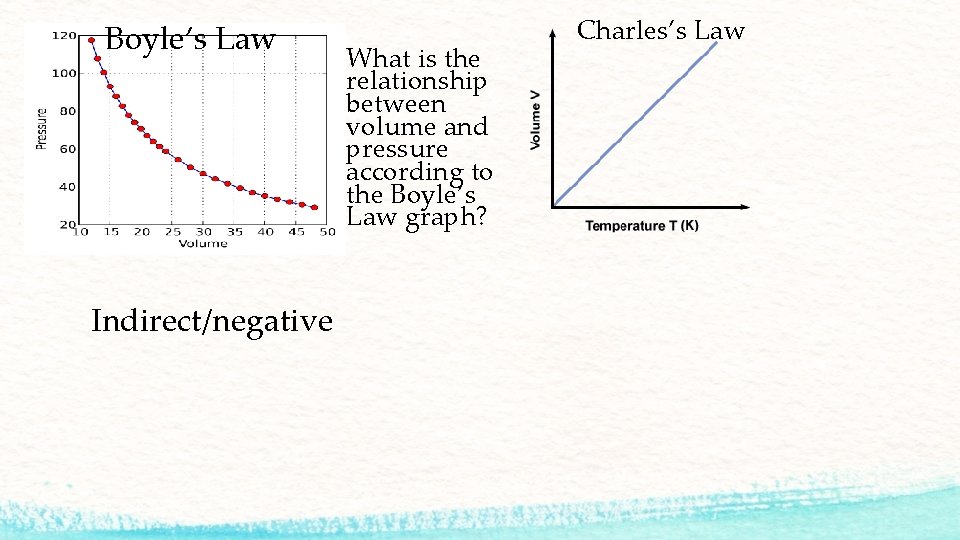
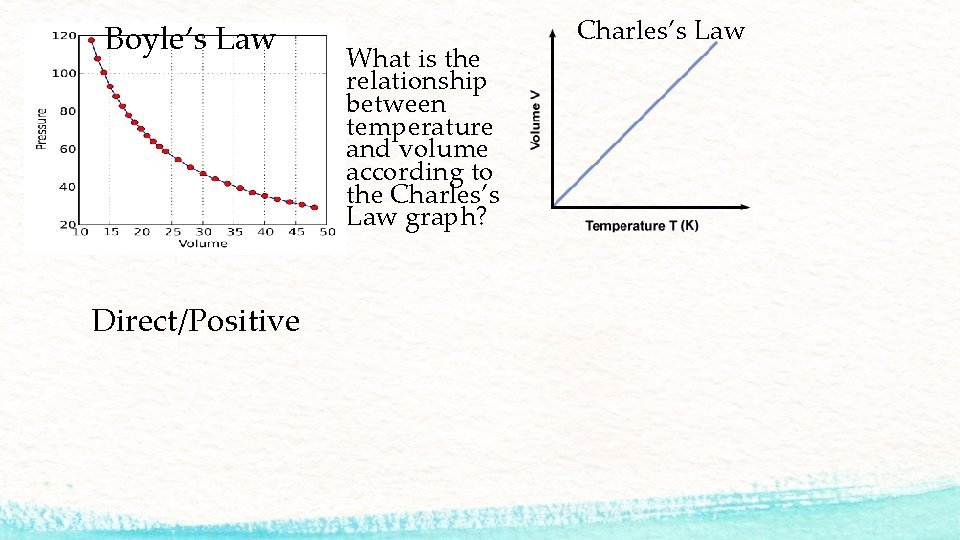
Boyle’s Law Indirect/negative What is the relationship between volume and pressure according to the Boyle’s Law graph? Charles’s Law
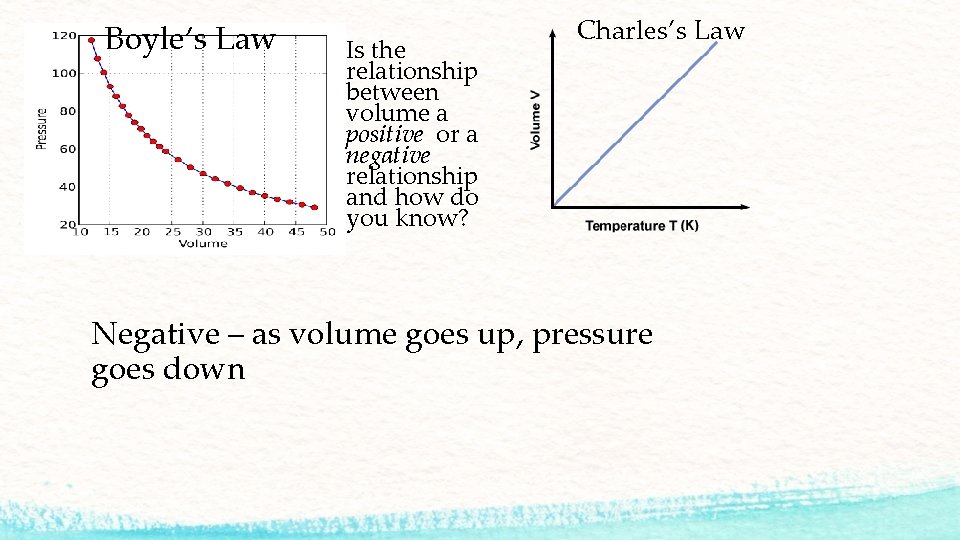
Boyle’s Law Is the relationship between volume a positive or a negative relationship and how do you know? Charles’s Law Negative – as volume goes up, pressure goes down
Boyle’s Law Direct/Positive What is the relationship between temperature and volume according to the Charles’s Law graph? Charles’s Law
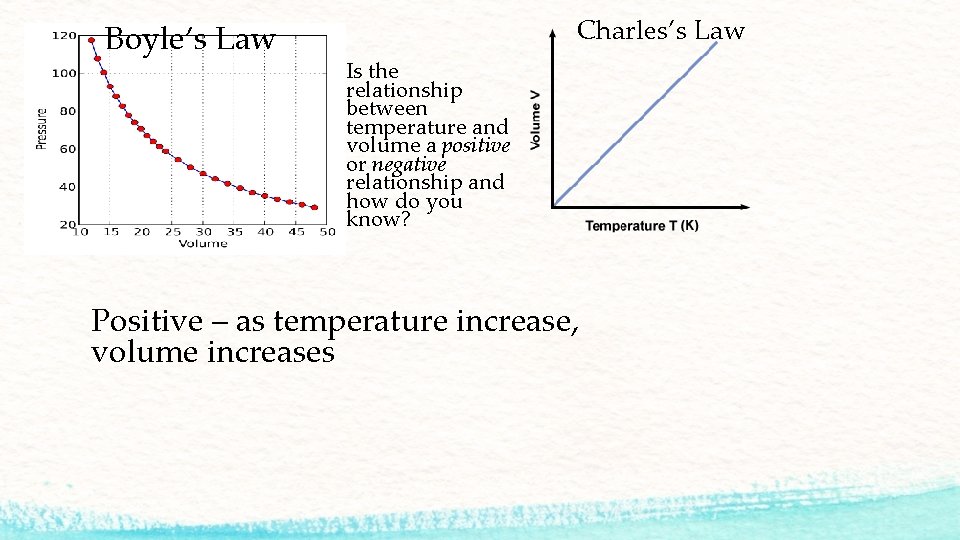
Boyle’s Law Charles’s Law Is the relationship between temperature and volume a positive or negative relationship and how do you know? Positive – as temperature increase, volume increases