
Solid Waste Management Neil Hutzler Fall 2008 Sources


- Slides: 59
Solid Waste Management Neil Hutzler Fall 2008
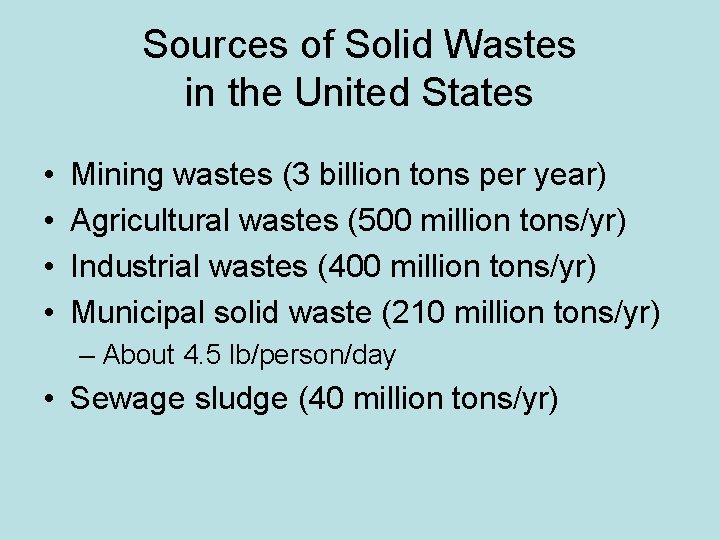
Sources of Solid Wastes in the United States • • Mining wastes (3 billion tons per year) Agricultural wastes (500 million tons/yr) Industrial wastes (400 million tons/yr) Municipal solid waste (210 million tons/yr) – About 4. 5 lb/person/day • Sewage sludge (40 million tons/yr)
Source: USEPA
Source of Solid Wastes • Mining waste consist mainly of rock and soil overburden from mining operations – an earth moving project • Agricultural wastes are typically organic residuals – biodegradable and recyclable • Industrial wastes are widely varied – have the potential of being hazardous • Municipal solid wastes (MSW) vary greatly in quantity and composition • We will focus on the management of MSW
Composition of Solid Wastes • Garbage (food rejects, organic wastes) • Rubbish (nonputresible wastes) – Combustables (paper, plastic, wood, etc. ) – Noncombustables (metal, glass, dirt, etc. ) • Yard wastes • Other materials (almost anything can be found in MSW) • Water (about 15 to 20% of MSW is water)
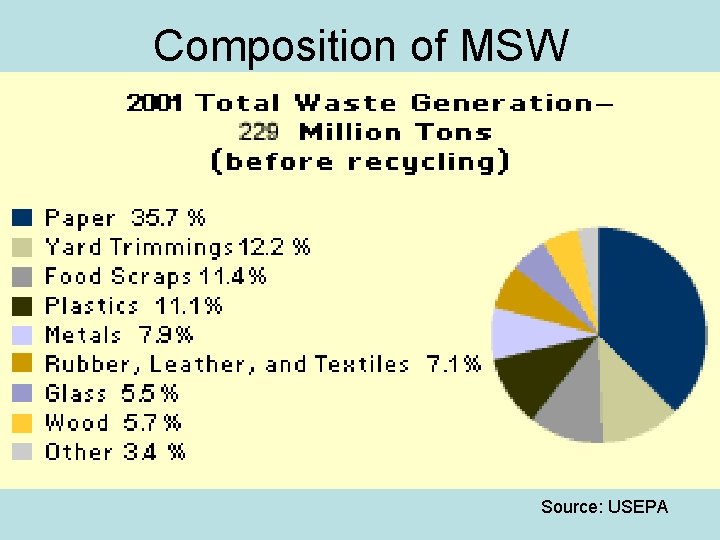
Composition of MSW Source: USEPA
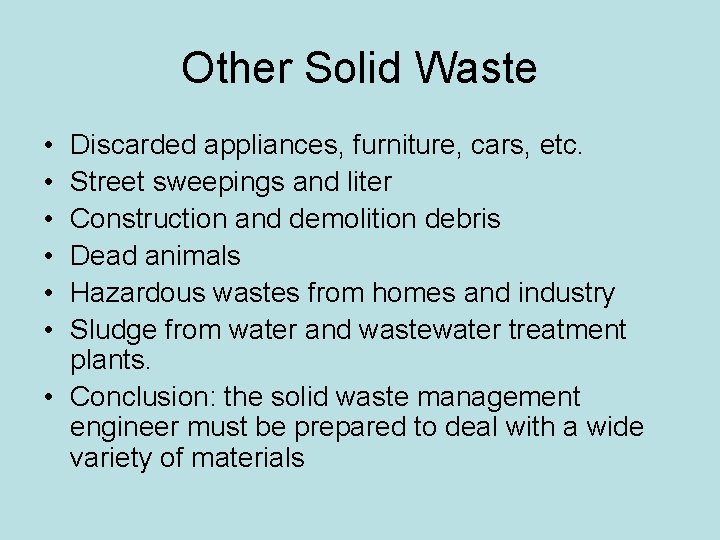
Other Solid Waste • • • Discarded appliances, furniture, cars, etc. Street sweepings and liter Construction and demolition debris Dead animals Hazardous wastes from homes and industry Sludge from water and wastewater treatment plants. • Conclusion: the solid waste management engineer must be prepared to deal with a wide variety of materials
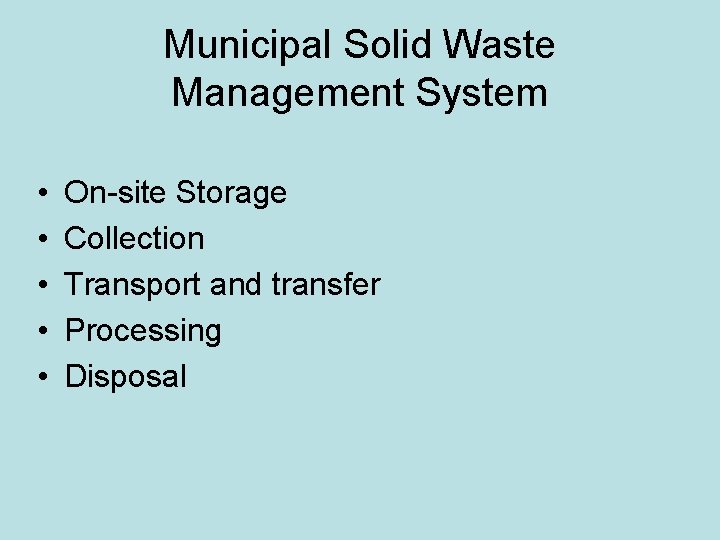
Municipal Solid Waste Management System • • • On-site Storage Collection Transport and transfer Processing Disposal
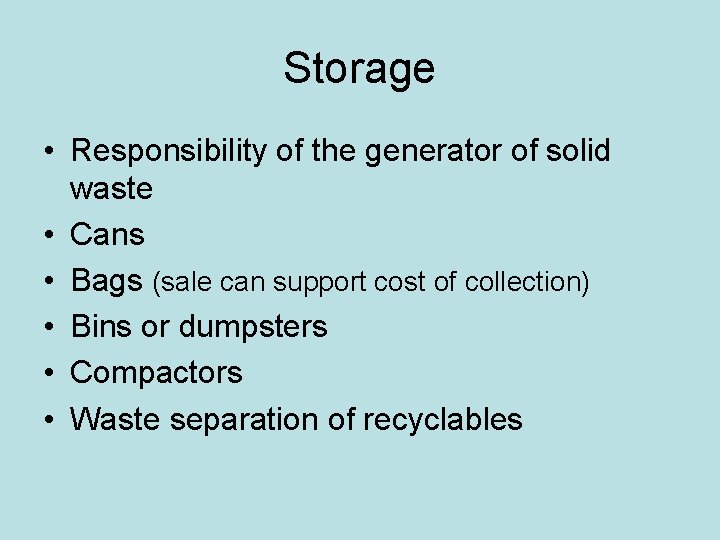
Storage • Responsibility of the generator of solid waste • Cans • Bags (sale can support cost of collection) • Bins or dumpsters • Compactors • Waste separation of recyclables
MSW Collection • Type of collection service – – Self Curbside pickup (most common) Set out, set back Backyard (most expensive) • Frequency of collection – – – Daily (large generators) Once per week (most common in northern states) Twice per week (most common in southern states) On demand (discards, special wastes) Less frequent for recyclables • Crew size (1 to 3 for curbside pick up, more for others)
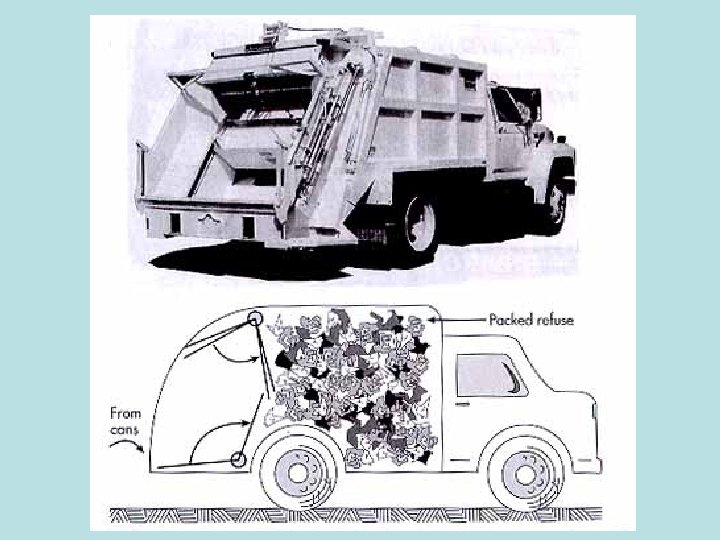
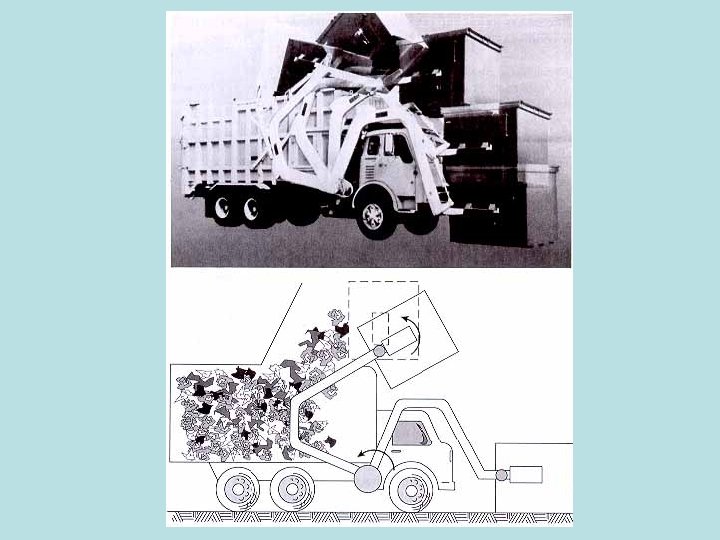
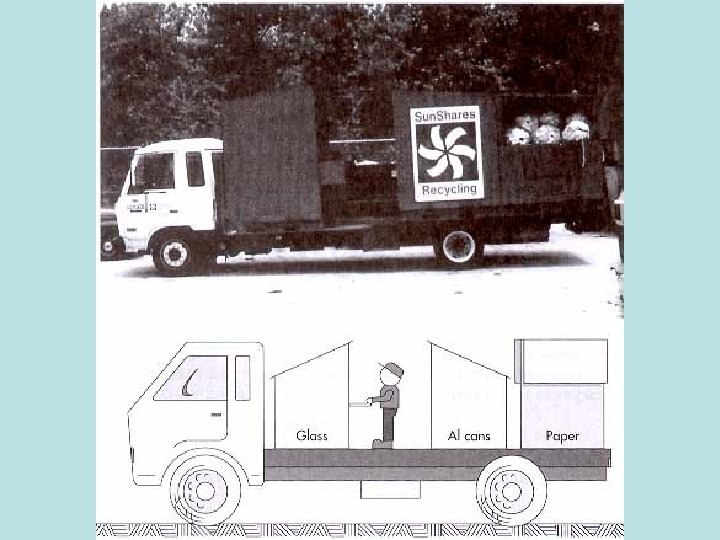
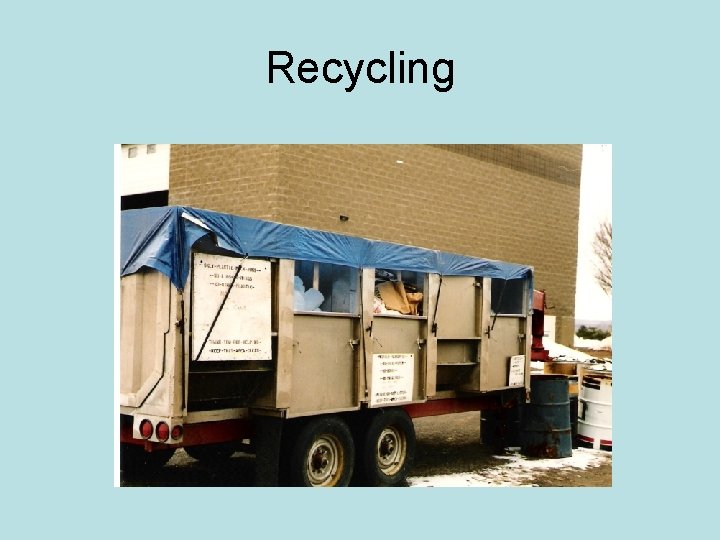
Types of Collection Vehicles • Packer trucks (to increase density of MSW and mass of collection, compacted density ~900 lb/yd 3) – – – Rear loading Side loading Front loading Manual loading Mechanical loading Chassis specified by volume (e. g. , 20 yd 3) • Roll-off trucks (container left at site) • Truck for collection of recyclables
Source: USEPA
Source: USEPA
Recycling
MSW Collection • Collection Route Design – Macro routing – Districting – Micro routing
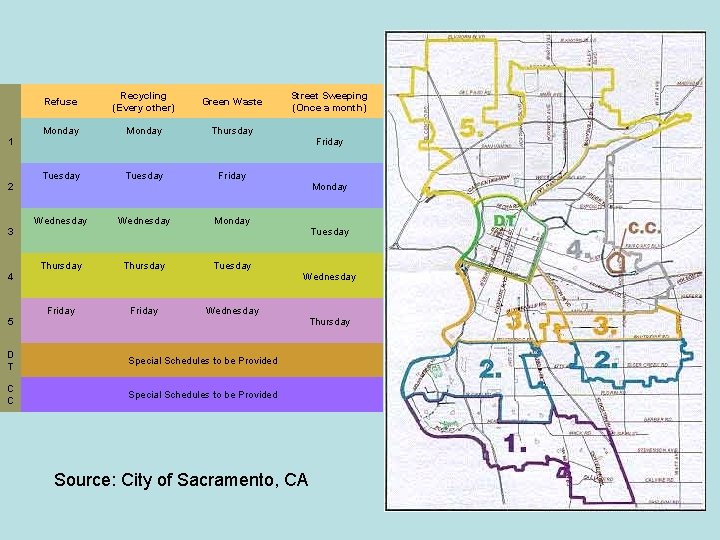
1 2 3 4 5 Refuse Recycling (Every other) Green Waste Monday Thursday Tuesday Friday Wednesday D T Special Schedules to be Provided C C Special Schedules to be Provided Street Sweeping (Once a month) Friday Monday Tuesday Wednesday Thursday Source: City of Sacramento, CA
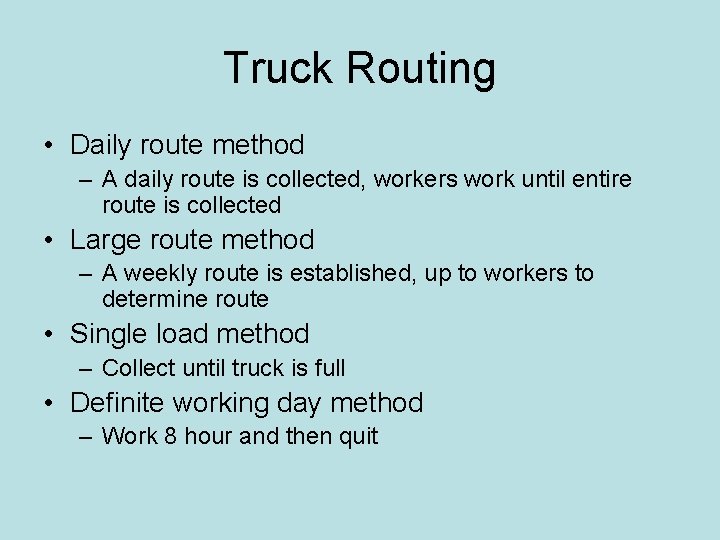
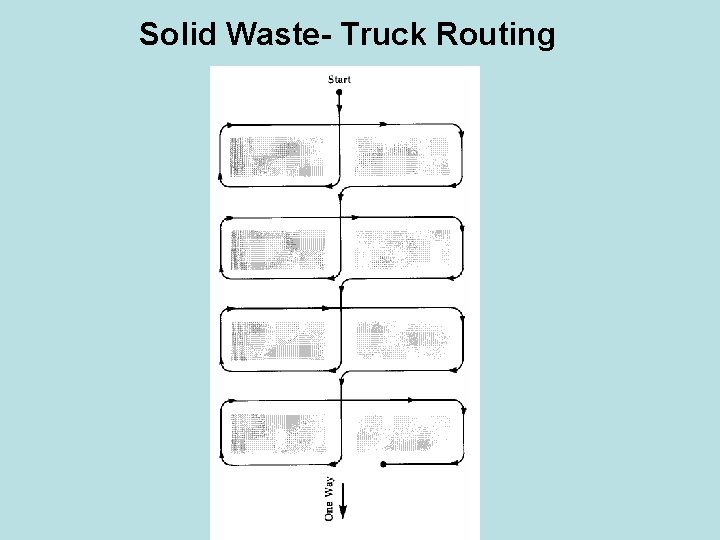
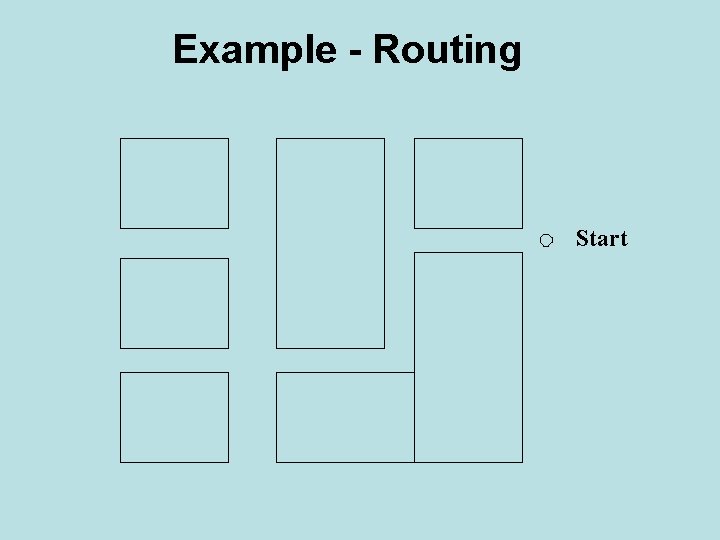
Truck Routing • Daily route method – A daily route is collected, workers work until entire route is collected • Large route method – A weekly route is established, up to workers to determine route • Single load method – Collect until truck is full • Definite working day method – Work 8 hour and then quit
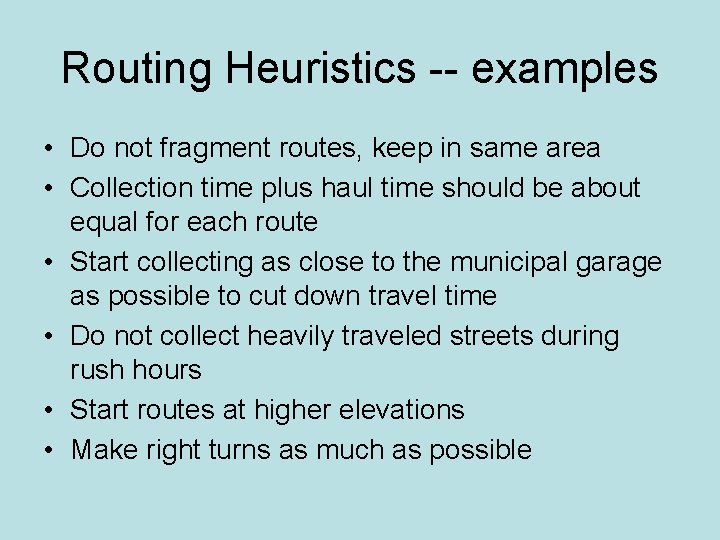
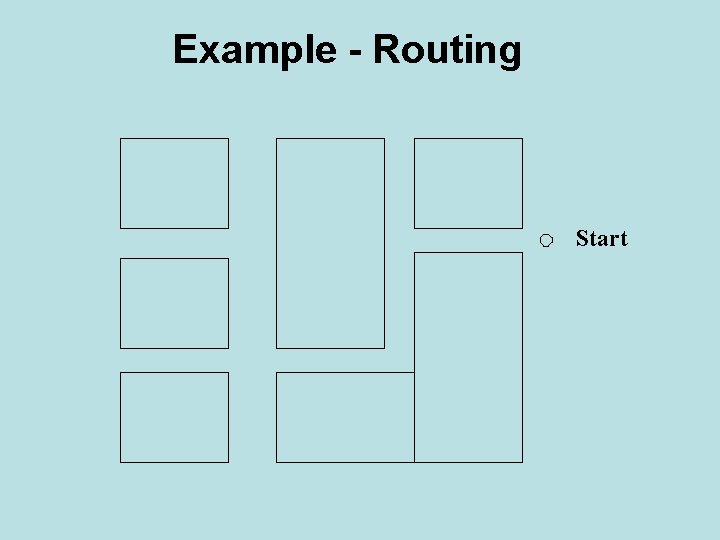
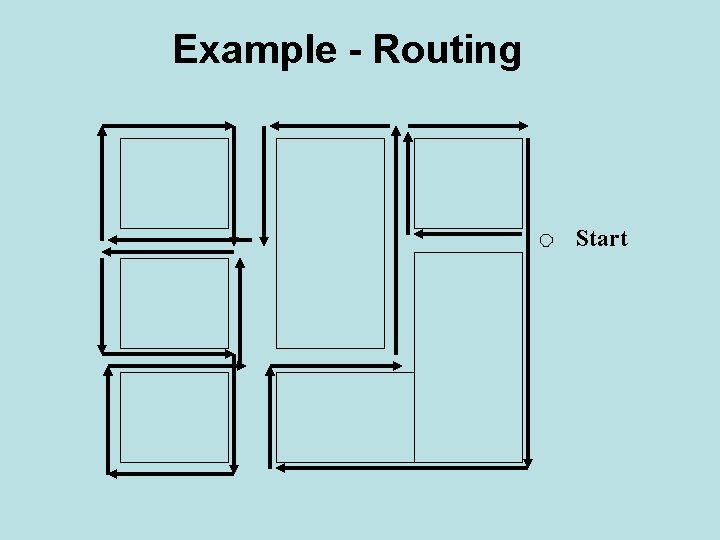
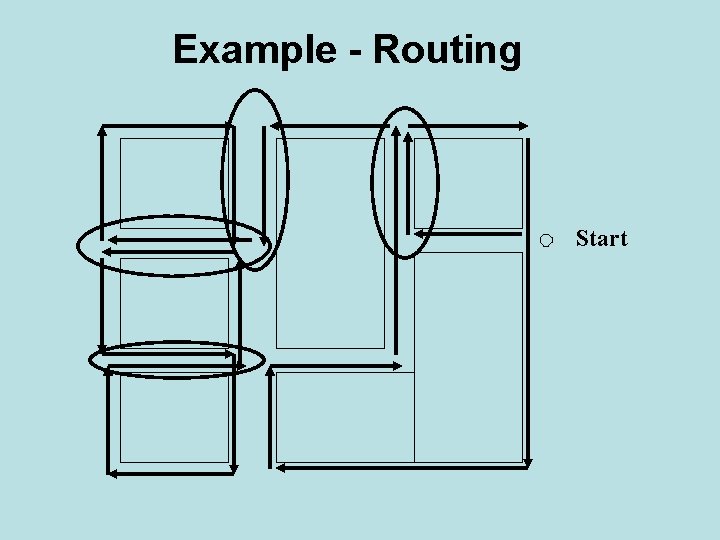
Routing Heuristics -- examples • Do not fragment routes, keep in same area • Collection time plus haul time should be about equal for each route • Start collecting as close to the municipal garage as possible to cut down travel time • Do not collect heavily traveled streets during rush hours • Start routes at higher elevations • Make right turns as much as possible
Solid Waste- Truck Routing
Example - Routing Start
Example - Routing Start
Example - Routing Start
Example - Routing Start
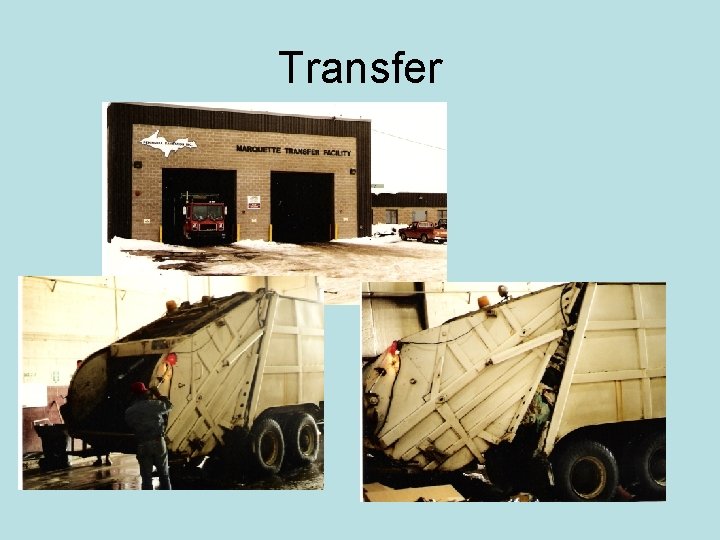
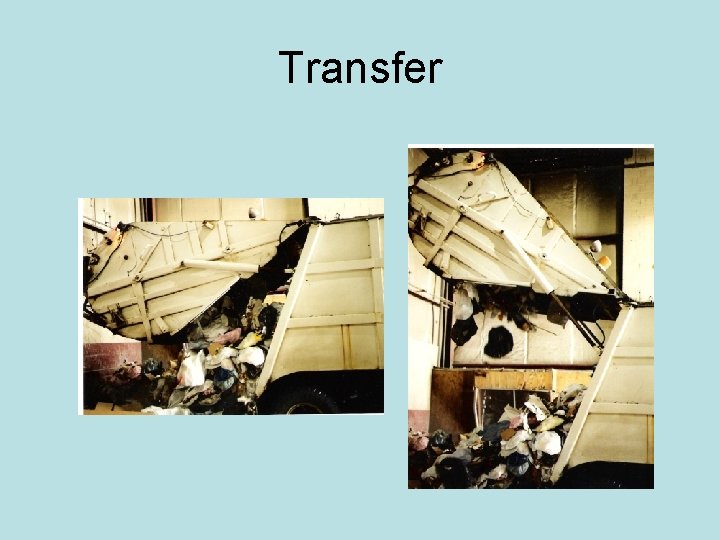
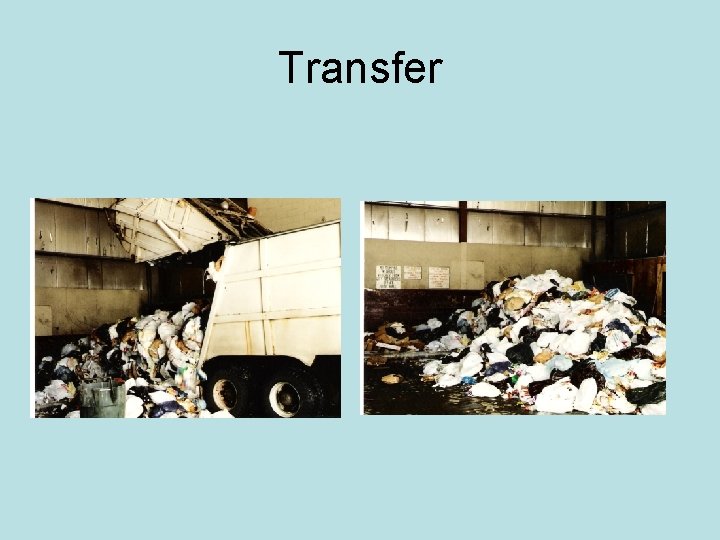
Transfer • In cases where the processing and disposal sites are near the collection area, the collection vehicle also hauls the full load to the site. Need to balance size to minimize number of hauls versus maneuverability needed for collection • As distances increase the solid waste engineer should consider transferring the waste to a larger vehicle (e. g. , semi trailer, rail car, barge)
Transfer
Transfer
Transfer
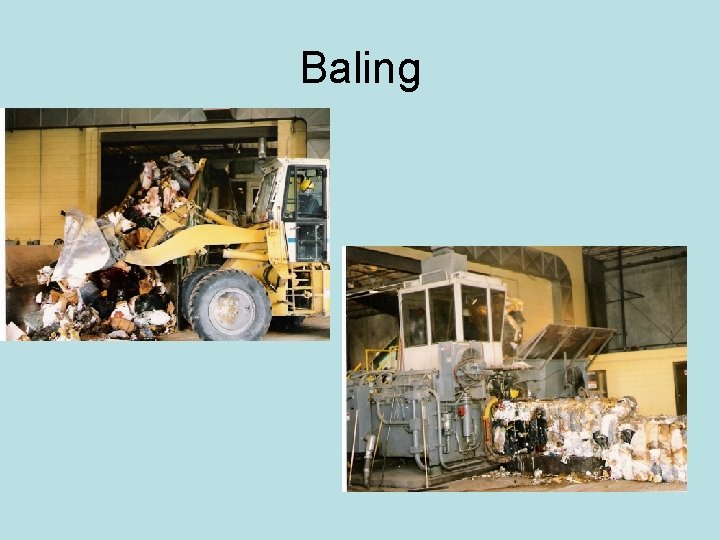
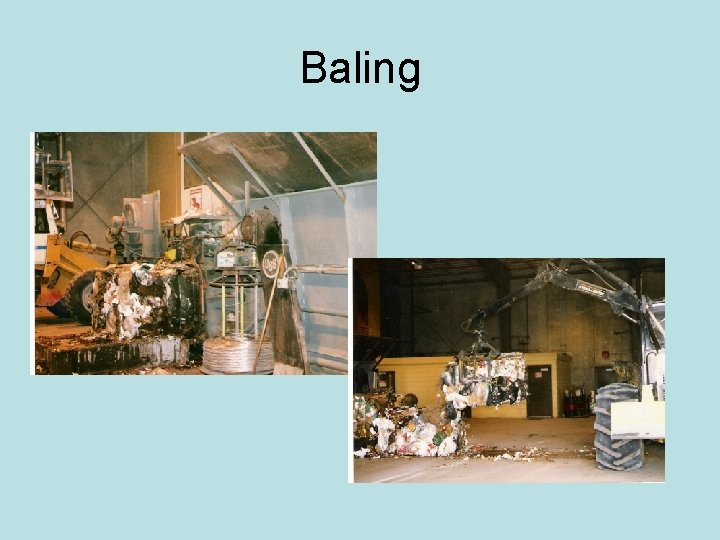
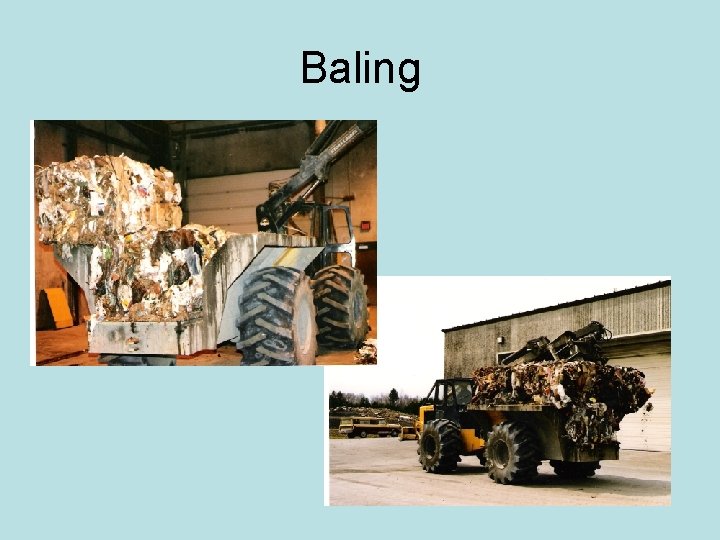
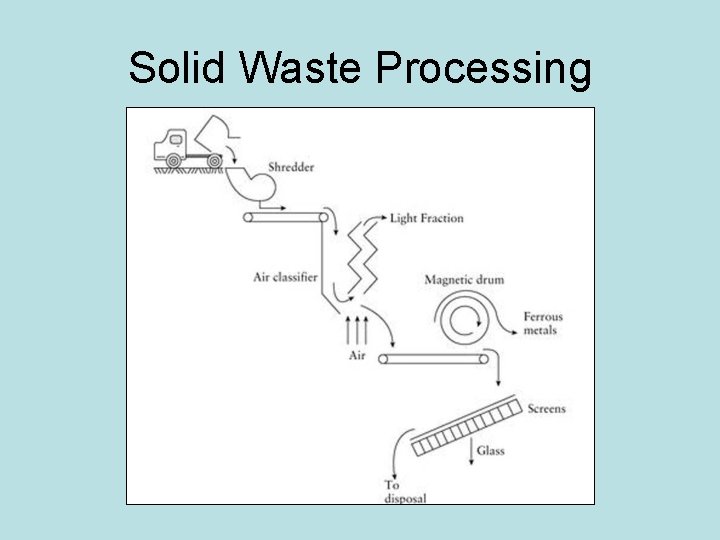
Solid Waste Processing • Objectives of Processing include – Volume reduction (baling, shredding, incineration (also reduces mass) – Size reduction (shredding, grinding) – Component separation (hand sorting, screening, magnetic separation, air classification) – Resource recovery (composting, energy recovery, materials recovery)
Baling
Baling
Baling
Solid Waste Disposal • No matter what processing is done, there will be some residue that needs to be disposed of safely • Options for disposal – Modern, engineered landfill
Solid Waste - Sanitary Landfill Is defined as a land disposal site employing an engineered method of disposing of solid wastes on land in a manner that minimizes environmental hazards by spreading the solid wastes to the smallest practical volume, and applying and compacting cover material at the end of each day.
Solid Waste - Sanitary Landfill Site Considerations: • Public Opinion • Proximity of major roadways • Speed Limits • Load limits on roadways • Bridge capacities • Underpass limitations • Traffic patterns and congestion • Haul distance (time) • Detours • Hydrology
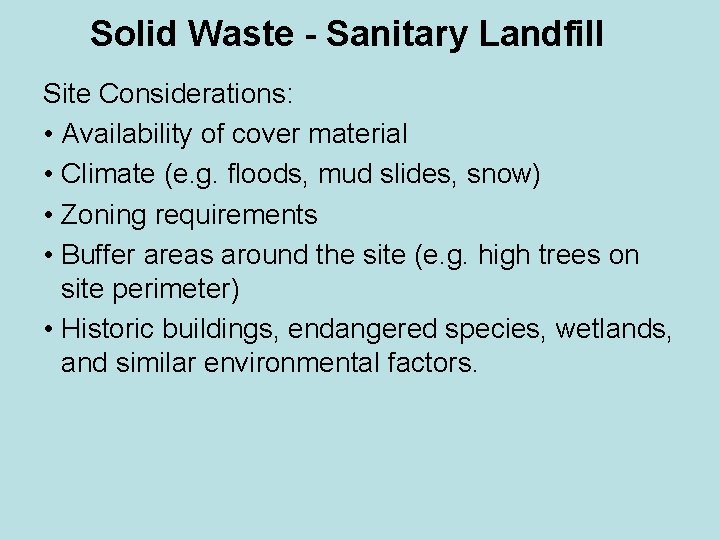
Solid Waste - Sanitary Landfill Site Considerations: • Availability of cover material • Climate (e. g. floods, mud slides, snow) • Zoning requirements • Buffer areas around the site (e. g. high trees on site perimeter) • Historic buildings, endangered species, wetlands, and similar environmental factors.
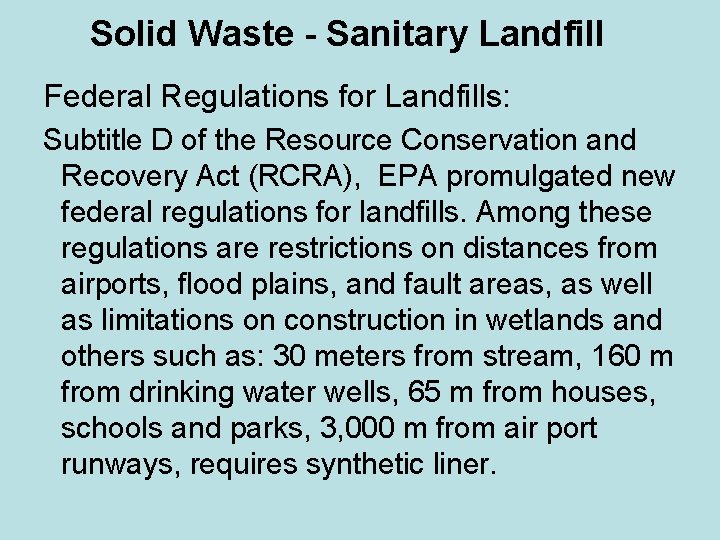
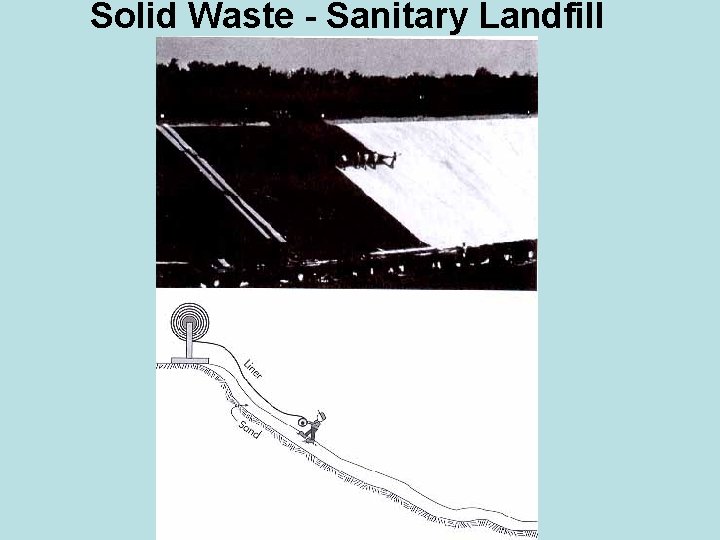
Solid Waste - Sanitary Landfill Federal Regulations for Landfills: Subtitle D of the Resource Conservation and Recovery Act (RCRA), EPA promulgated new federal regulations for landfills. Among these regulations are restrictions on distances from airports, flood plains, and fault areas, as well as limitations on construction in wetlands and others such as: 30 meters from stream, 160 m from drinking water wells, 65 m from houses, schools and parks, 3, 000 m from air port runways, requires synthetic liner.
Solid Waste - Sanitary Landfill
Solid Waste - Sanitary Landfill
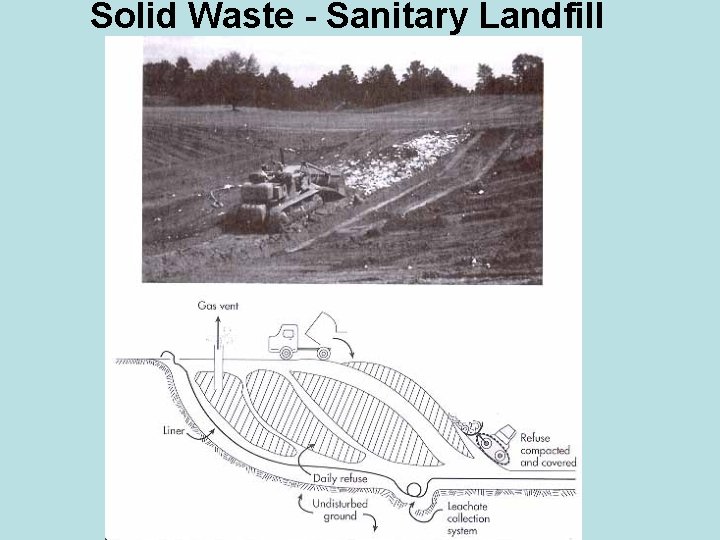
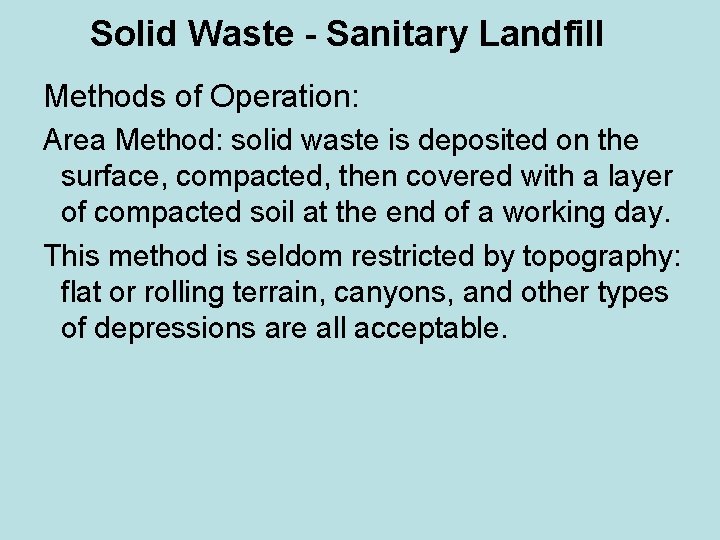
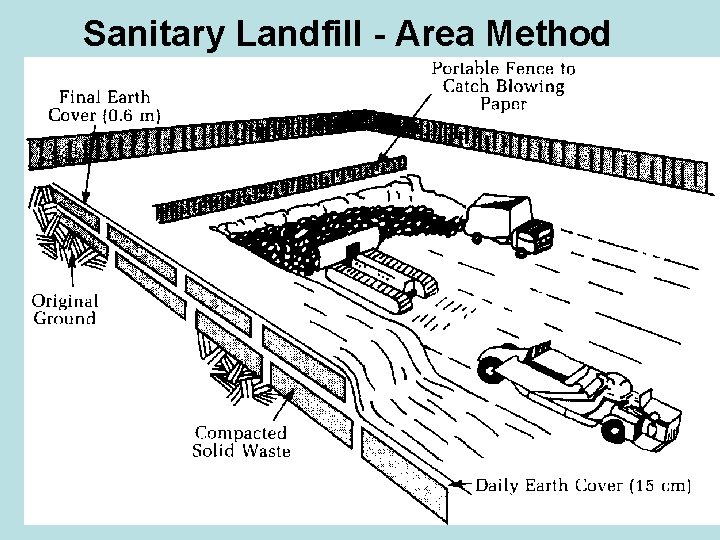
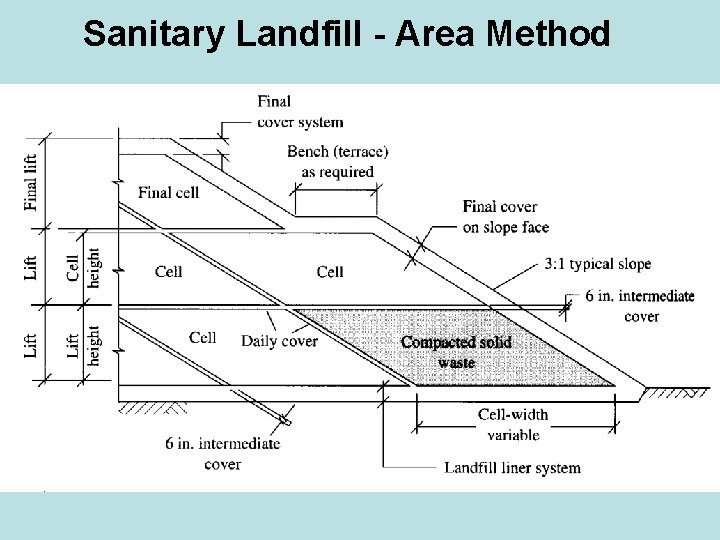
Solid Waste - Sanitary Landfill Methods of Operation: Area Method: solid waste is deposited on the surface, compacted, then covered with a layer of compacted soil at the end of a working day. This method is seldom restricted by topography: flat or rolling terrain, canyons, and other types of depressions are all acceptable.
Sanitary Landfill - Area Method
Sanitary Landfill - Area Method
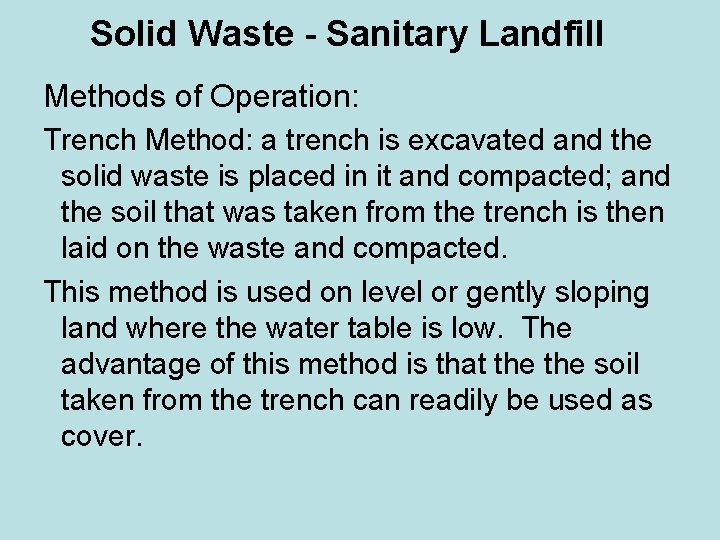
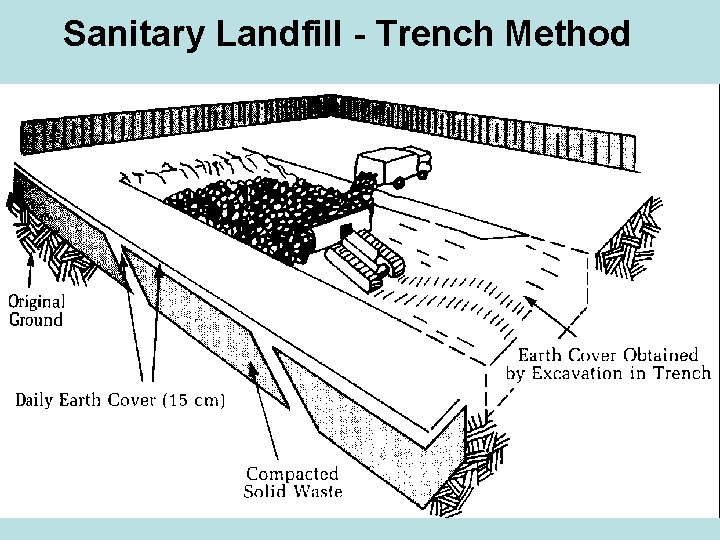
Solid Waste - Sanitary Landfill Methods of Operation: Trench Method: a trench is excavated and the solid waste is placed in it and compacted; and the soil that was taken from the trench is then laid on the waste and compacted. This method is used on level or gently sloping land where the water table is low. The advantage of this method is that the soil taken from the trench can readily be used as cover.
Sanitary Landfill - Trench Method
Balefill
Balefill
Solid Waste Processing
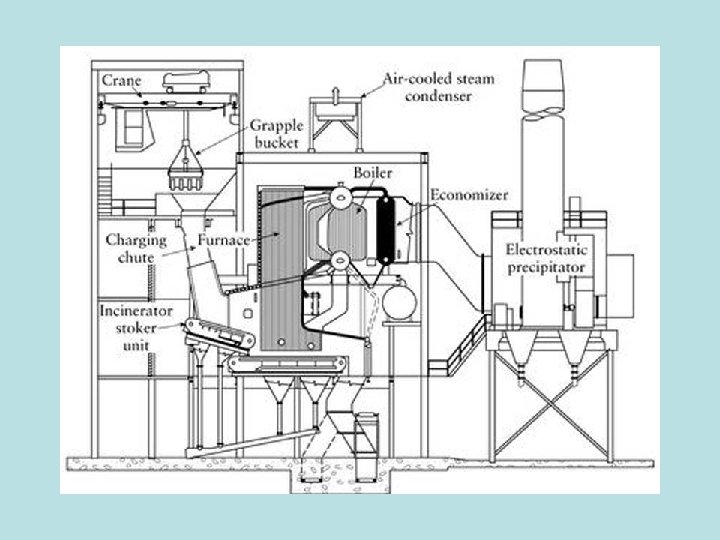
Incineration
Solid Waste - Sanitary Landfill Environmental Considerations: A well designed and operated landfill will minimize vectors (carrier of disease), water and air pollution. Burning is not permitted in a landfill. Keeping the waste covered will prevent the production of flies, control of rodents and fires. Two other areas of pollution are landfill gases and leachate.
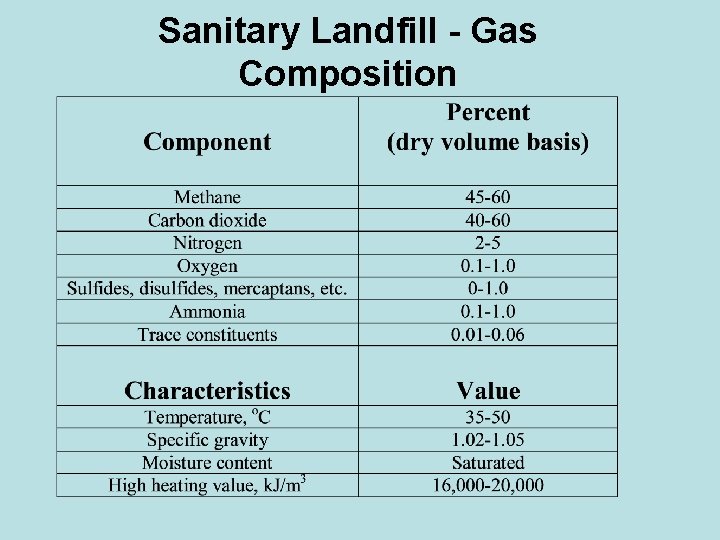
Solid Waste - Sanitary Landfill Gases: Principal gaseous products emitted from a landfill (methane and carbon dioxide) are the results of microbial decomposition. During the early life of a land fill, the gas is primarily carbon dioxide. But as it matures, methane is produced in about equal quantities as carbon dioxide. Methane has an economic value. There also trace quantities of volatile organic chemicals deposited from industrial wastes that can be a concern.
Sanitary Landfill - Gas Composition
Gas Collection System • • Impermeable cap Granular material Collection pipes Gas treatment
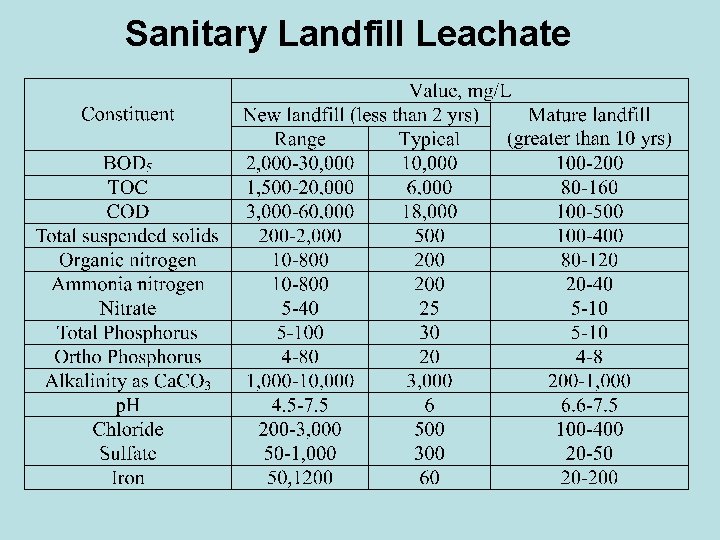
Solid Waste - Sanitary Landfill Leachate: Liquid that passes through the landfill and that has extracted dissolved and suspended matter from it is called leachate. Liquid enters the landfill from external sources such as rainfall, surface drainage, groundwater, and the liquid in and produced from the decomposition of the waste.
Sanitary Landfill Leachate
Leachate Collection System • • • Impermeable liner Granular material Collection piping Leachate storage tank Leachate is trucked to a wastewater treatment facility
Reclamation • What should be done with a landfill that has reached completion? • Place final cover • Maintain gas and leachate collection systems until no more gas or leachate have been produced • Revegetate the surface • Do not build any structures on top • Typically converted to a recreational area
Questions?