
SOLID WASTE MANAGEMENT Any material that is discarded



- Slides: 41
SOLID WASTE MANAGEMENT
• Any material that is discarded , useless or unwanted is considered as a waste • Waste management is the collection, transport , processing, recycling or disposal and monitoring of waste materials
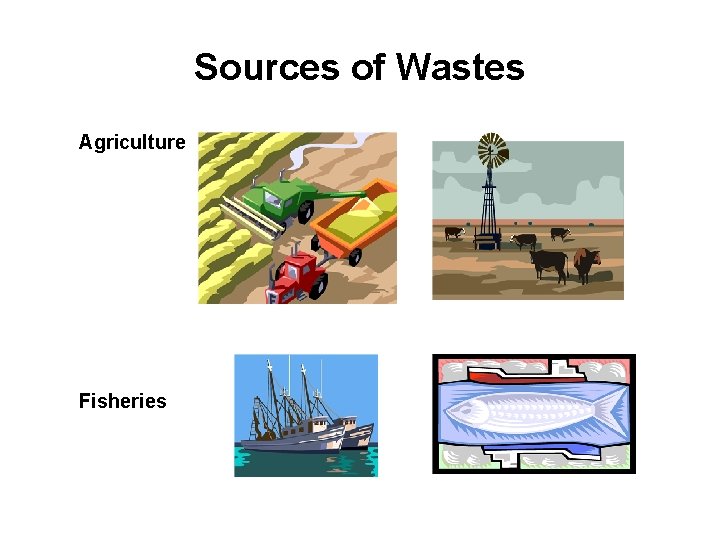
Sources of Wastes Agriculture Fisheries
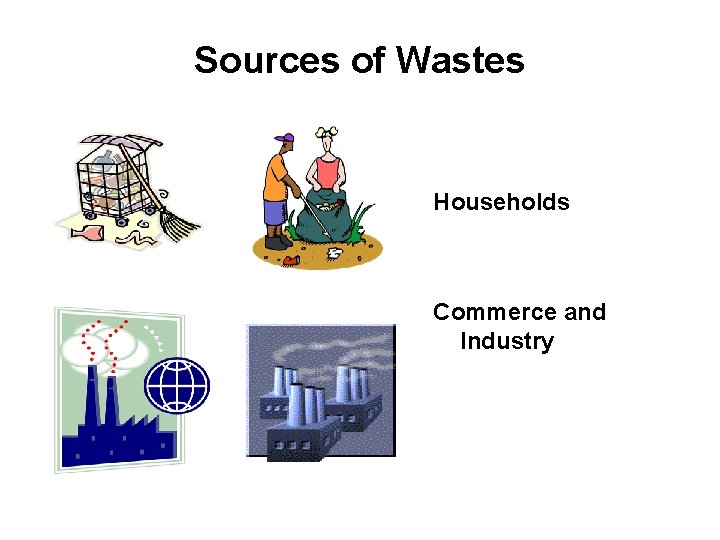
Sources of Wastes Households Commerce and Industry
SOLID WASTE MANAGEMENTObjectieves • • • Public hygiene and health Reuse , Recovery and Recycle Energy generation Sustainable development Aesthetics
EFFECTS OF WASTE IF NOT MANAGED WISELY • • Affects our health Affects our socio-economic conditions Affects our coastal and marine environment Affects our climate
Waste- Definition & Classification Any material which is not needed by the owner, producer or processor. Classification • • • Domestic waste Factory waste Waste from oil factory E-waste Construction waste Agricultural waste Food processing waste Bio-medical waste Nuclear waste
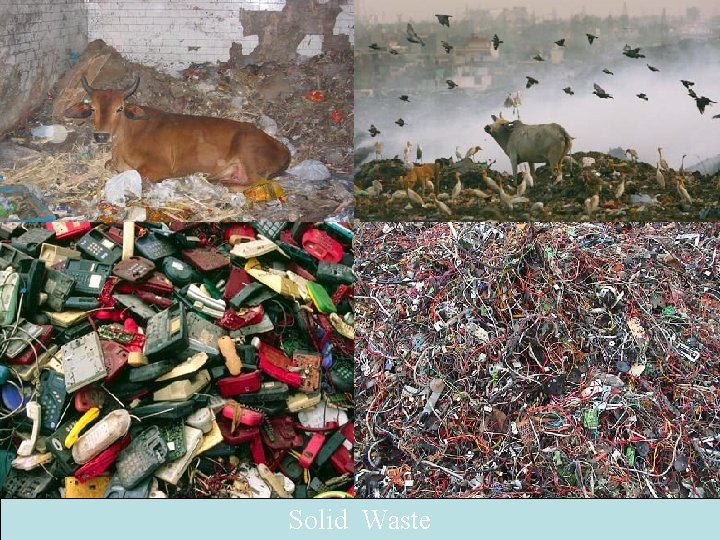
Solid Waste
Classification of Wastes • Solid waste- vegetable waste, kitchen waste, household waste etc. • E-waste- discarded electronic devices like computer, TV, music systems etc. • Liquid waste- water used for different industries eg tanneries, distillaries, thermal power plants • Plastic waste- plastic bags, bottles, buckets etc. • Metal waste- unused metal sheet, metal scraps etc. • Nuclear waste- unused materials from nuclear power plants
EFFECTS OF WASTE… • GHGs are accumulating in Earth’s atmosphere as a result of human activities, causing global mean surface air temperature and subsurface ocean temperature to rise. • Rising global temperatures are expected to raise sea levels and change precipitation and other local climate conditions. • Changing regional climates could alter forests, crop yields, and water supplies. • This could also affect human health, animals, and many types of ecosystems. • Deserts might expand into existing rangelands, and features of some of our national parks might be permanently altered.
EFFECTS OF WASTE… - Some countries are expected to become warmer, although sulfates might limit warming in some areas. - Scientists are unable to determine which parts of those countries will become wetter or drier, but there is likely to be an overall trend toward increased precipitation and evaporation, more intense rainstorms, and drier soils. - Whether rainfall increases or decreases cannot be reliably projected for specific areas.
WHAT SHOULD BE DONE • Reduce Waste - Reduce office paper waste by implementing a formal policy to duplex all draft reports and by making training manuals and personnel information available electronically. - Improve product design to use less materials. - Redesign packaging to eliminate excess material while maintaining strength. - Work with customers to design and implement a packaging return program. - Switch to reusable transport containers. - Purchase products in bulk.
WHAT SHOULD BE DONE Reuse - Reuse corrugated moving boxes internally. - Reuse office furniture and supplies, such as interoffice envelopes, file folders, and paper. - Use durable towels, tablecloths, napkins, dishes, cups, and glasses. - Use incoming packaging materials for outgoing shipments. - Encourage employees to reuse office materials rather than purchase new ones.
WHAT SHOULD BE DONE Donate/Exchange - old books - old clothes - old computers - excess building materials - old equipment to local organizations
WHAT SHOULD BE DONE Employee Education - Develop an “office recycling procedures” packet. - Send out recycling reminders to all employees including environmental articles. - Train employees on recycling practices prior to implementing recycling programs. - Conduct an ongoing training process as new technologies are introduced and new employees join the institution.
Municipal solid waste disposal methods • • Composting Sanitary landfill Incineration and pyrolysis Reuse, recovery and recycle
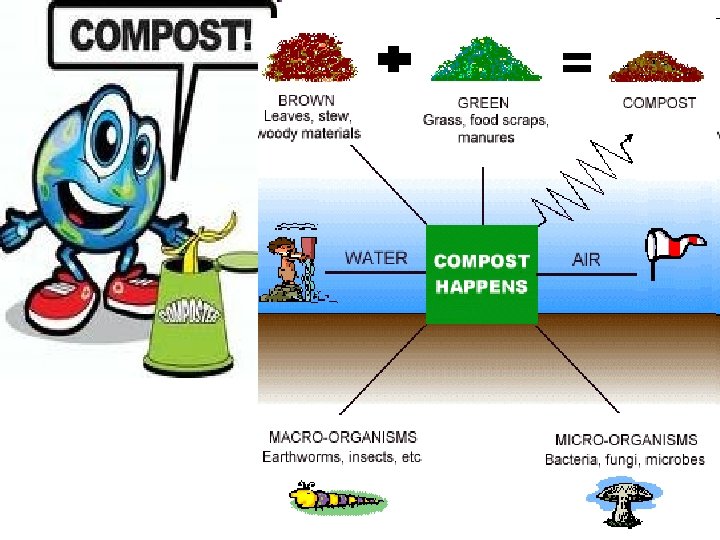
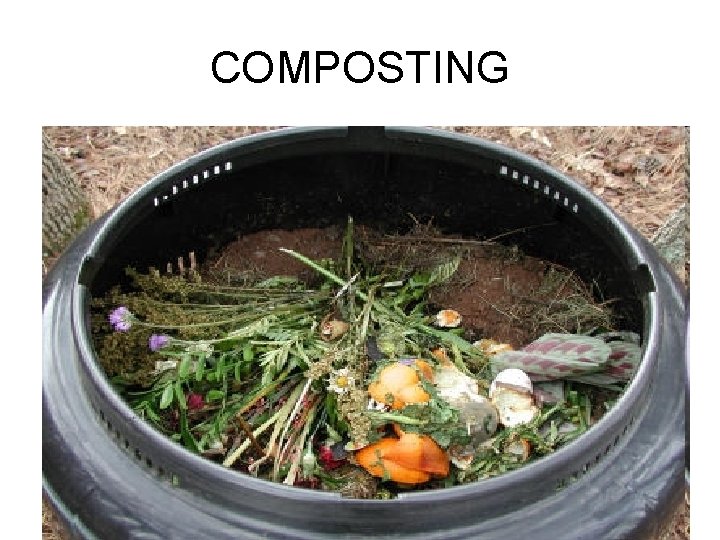
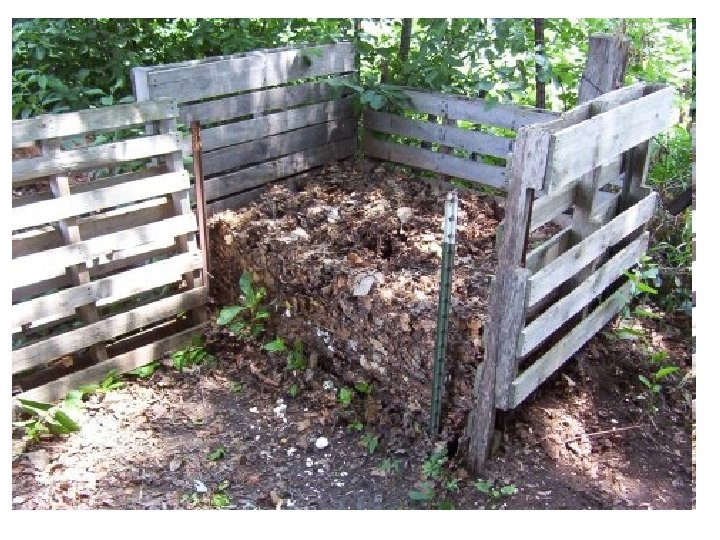
COMPOSTING • Aerobic decomposition of organic matter by bacteria and fungi • To ensure a reasonable composting rate following parameters are to be maintained • Temp-25 - 50 0 C • p. H – 5 - 8 • Moisture -50 -70% • The material to be composted has to be segregated to remove non bio-degradable materials like glass , plastics , metals and alloys
COMPOSTING
• A proper mix of nutrients like animal waste, sewage sludge is necessary to ensure proper growth of bacteria and fungi • Excess compaction may be avoided • Porous structure should be maintained to ensure free circulation of air • This mixture is arranged in windrows of about 2. 5 m width • Turned twice a week
• Composting process takes about 4 to 6 weeks • Color of mass becomes dark and organic matter in the solid waste transforms to a stable humus • Continuous aeration and mixing • Composted solid waste is a good nutrient and can be used as a manure after addition of certain conditioners
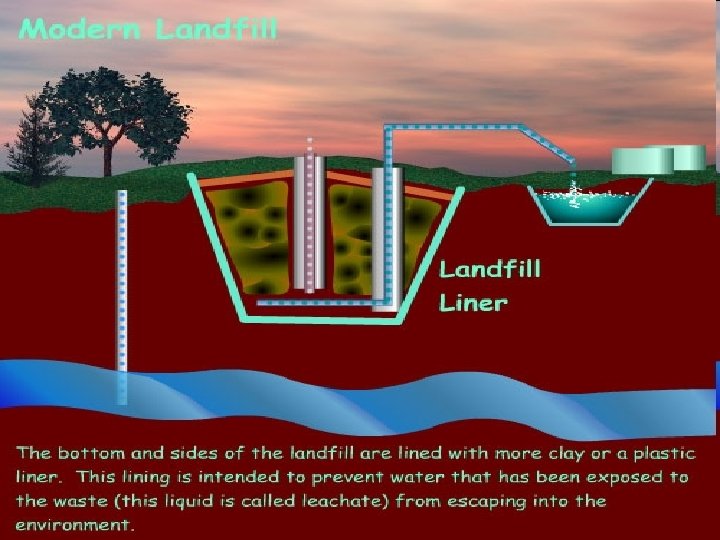
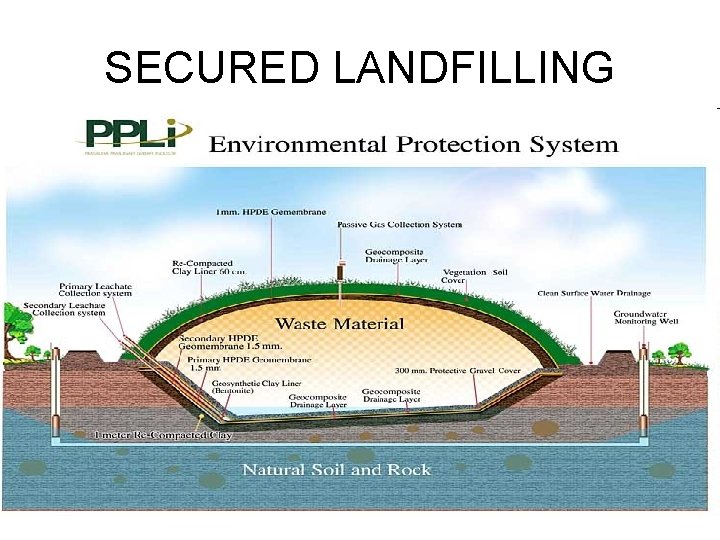
LANDFILLING • • • Features Careful and scientific site selection Controlled dumping Compaction of waste Provision for collecting leachates
• Organic wastes are degraded by soil microorganisms • Microbes utilize the oxygen present inside the landfill • Followed by anaerobic decomposition • Water soluble organic compounds generated in this process percolates through the landfill soils
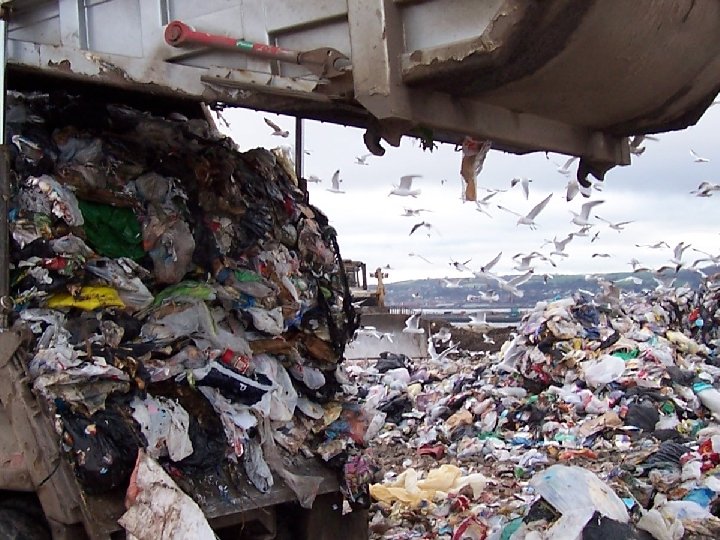
• Land occupied by the land fill becomes unproductive • Insects, rodents, scavenger birds, bad odor are some of the aesthetic problems associated with sanitary landfill • Emission of methane and CO 2 and leachate contamination of ground water and soil are the environmental issues connected with sanitary landfill
THERMAL PROCESSES • Controlled combustion or conversion by application of heat • Incineration • Organic matter in the solid waste is burnt in excess oxygen to produce gaseous products and a stable incombustible residue • Considerable reduction in the volume of the waste • Land required for the lanfill vastly reduced
• Residue can be easily and safely disposed • High capital and operation costs, emission of air pollutants • Air pollutants can be removed by scrubbers and electrostatic precipitators • Care should be taken to remove polymeric materials since toxic dioxin is generated during incineration
• Pyrolysis • The combustible organic matter in the solid waste decompose thermally in a pyrolysis reactor kept at a temp of 600 - 10000 C in an oxygen free environment • The pyrolysis process yields compounds like tar , oils gaseous phases containing fuel gases like hydrogen , methane, CO etc. • Solid residue will be carbon and inert materials like glass , metals , silca etc. • Pyrolysis produces less emissions and produces fuel gas as a byproduct • Chlorine contained polymers also can be handled
HAZARDOUS WASTE MANAGEMENT • In common hazardous waste treatment facilities, incineration, pyrolysis, detoxification, neutralization can be carried out and the waste is further concentrated stabilized and solidified and ultimately disposed in a secure landfill
BIOMEDICAL WASTE MANAGEMENT • Waste from hospital, clinics, research laboratories, animal husbandry facilities etc • Types of wastes • Human anatomical wastes • Animal wastes • Microbiology and biotechnological wastes (cell cultures, toxins, vaccines) • Waste sharps (needles, syringes) • Discarded medicines and drugs • Soiled waste (contaminated with blood and body fluids including cotton dressings)
Treatment /Disposal methods • • Incineration Deep burial Secured landfilling Chemical disinfection Steam sterilization (Auto claving) Thermal deactivation Irradiation and microwave treatment
SECURED LANDFILLING
AUTOCLAVING • Steam sterilization is also known as autoclaving • The waste is placed in a sealed chamber and exposed to steam at a preset temperature and pressure for a specified time • Processing temp is about 1210 C with processing time of around 12 minutes • There is no volume reduction of waste • Generation of offensive odor and toxic emissions are also possible • For large volumes of wastes continuous sterilization units have been devoloped
Chemical disinfection • Involves treating the medical wastes with liquid chemical disinfectant • The wastes have to be prepared by grinding them therefore the chemical disinfectant can penetrate and disinfect the entire mass • The particle size, porosity and permeability • will affect the process of disinfection
Thermal deactivation • Involves raising the temp to such a level that all infectious agents are destroyed • This process is used mainly in treating liquid wastes which is heated to a preset temperature for a specified period and then is destroyed • Irradiation is a process by which ultraviolet or ionizing radiation is used for destroying infectious diseases. The waste is first shredded and sprayed with water • The mass is then heated with microwave radiation under high temperature
E-waste • E-waste management • Reuse--- repairing or upgrading the used electronic equipment • Donate ---- donating reusable electronic equipments to schools or other non profit organizations • Recycle---- take back programs of electronic goods, heavy metals, plastics, glass etc can be recycled • Dispose --- disposed in secure landfills ---pretreatment is necessary --- size reduction techniques, like crushing , grinding or mechanical compaction is used
Color coded bins
• Have Bio Hazard Label on red, yellow, blue and white bins, Cytotoxic Label on black bin. • Collect the domestic waste (eatables, wrappers, fruit peels, papers etc. ) in green bin • Yellow bins needles syringes • 1. Dispose body parts which has been segregated in yellow bin / bag by handing over to Common Bio. Medical Waste Treatment Facility if available or otherwise Incinerate it. • Don’t dispose infectious waste into black and green bin. • Waste sharps– white container