
SOLID WASTE DISPOSAL PART1 PRESENTED BY Brig Shaukat
SOLID WASTE DISPOSAL PART-1 PRESENTED BY Brig. Shaukat 1
By the end of this lecture students will be able to: � Define solid waste and give its types and hazards � Describe the management of solid waste � Discuss methods of disposal of solid waste � Discuss excreta disposal � Describe criteria for sanitary latrine � Describe septic tank and water carriage system � Understand modern sewage treatment via flow diagram � Enlist other methods of sewage disposal 2

� Non liquid non soluble materials ranging from municipal garbage to industrial wastes that contain complex and sometimes hazardous substances 3
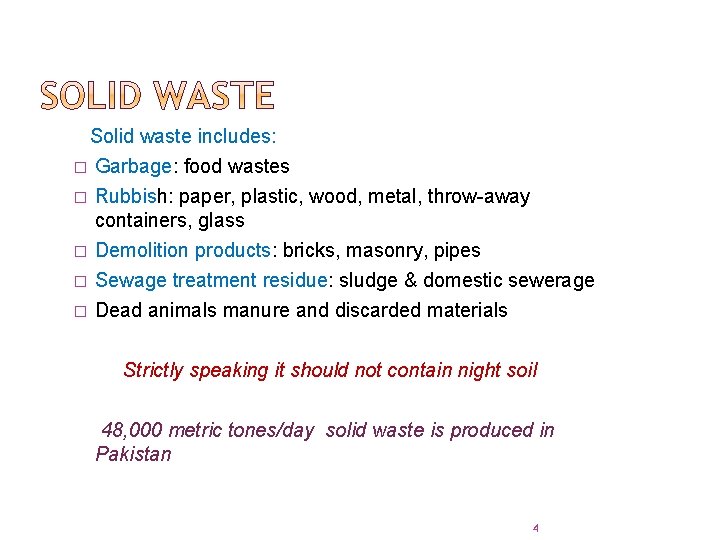
Solid waste includes: � Garbage: food wastes � � Rubbish: paper, plastic, wood, metal, throw-away containers, glass Demolition products: bricks, masonry, pipes Sewage treatment residue: sludge & domestic sewerage Dead animals manure and discarded materials Strictly speaking it should not contain night soil 48, 000 metric tones/day solid waste is produced in Pakistan 4
� Street refuse � Market refuse � Stable litter � Industrial refuse � Domestic refuse 5
� Fly breeding. � Rodents and vermin : Attracted by the garbage � Pathogenesis: conveyed to man’s food through flies and dust. � Water pollution � Air pollution � Nuisance : unsightly appearance and bad odors 6
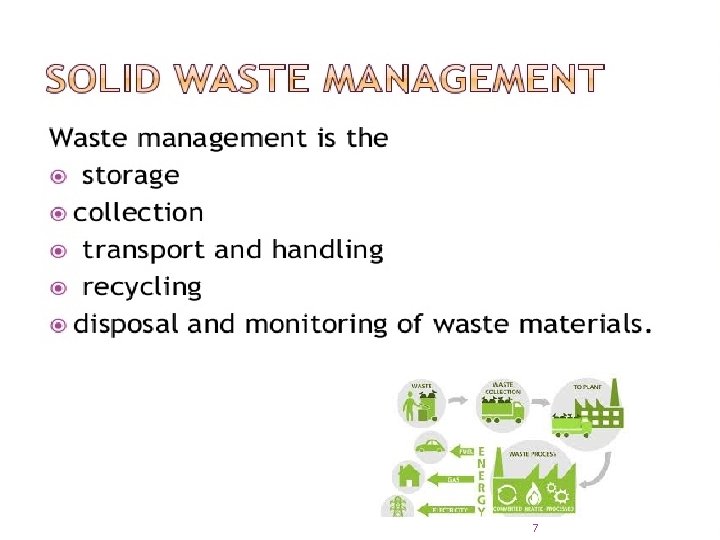
7
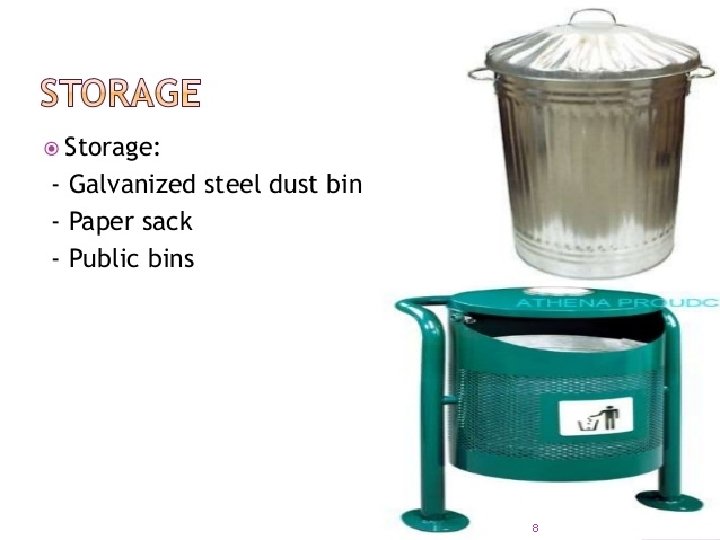
8
9

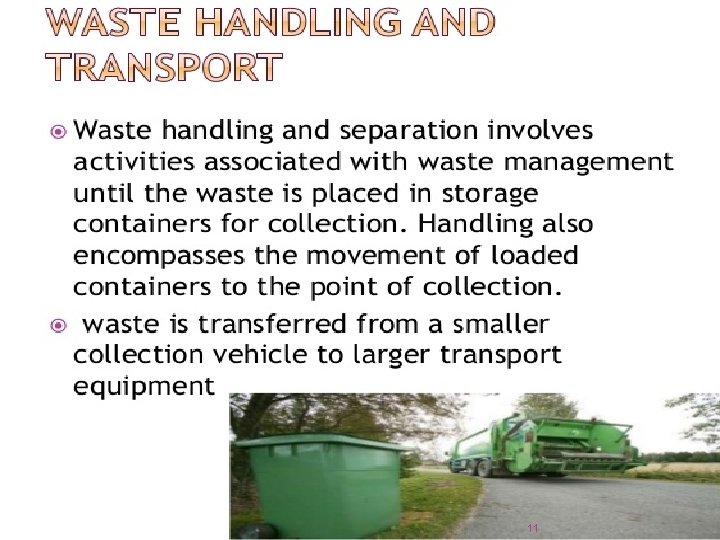
� Dustless refuse collectors – used in western countries and have a totally enclosed body 10
11
- 12
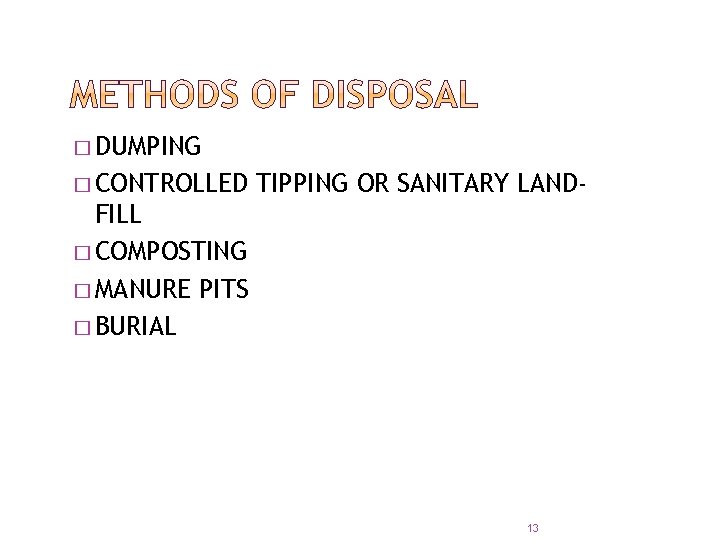
� DUMPING � CONTROLLED TIPPING OR SANITARY LAND- FILL � COMPOSTING � MANURE PITS � BURIAL 13
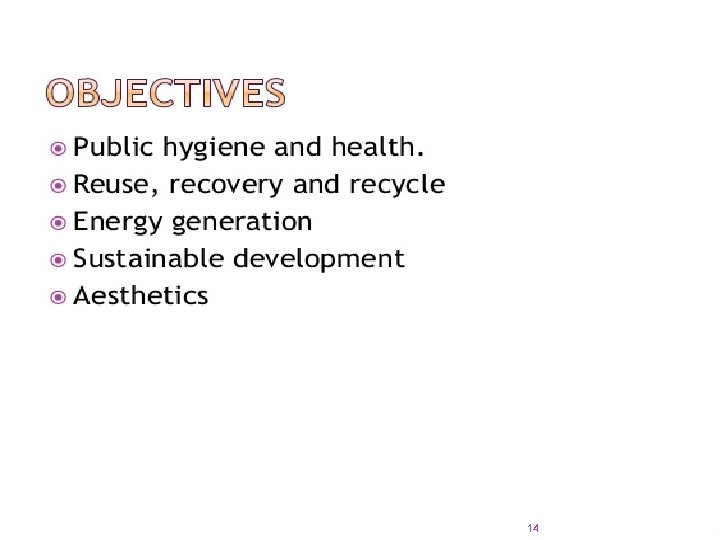
14
� � � Refuse is dumped in low lying areas Mainly for dry refuse Bacterial action -- refuse is reduced in volume and converted into humus Drawbacks: ü ü Exposed to flies and rodents Source of nuisance from smell and unsightly appearance Dispersed by wind Pollution of surface and ground water 15
16
17
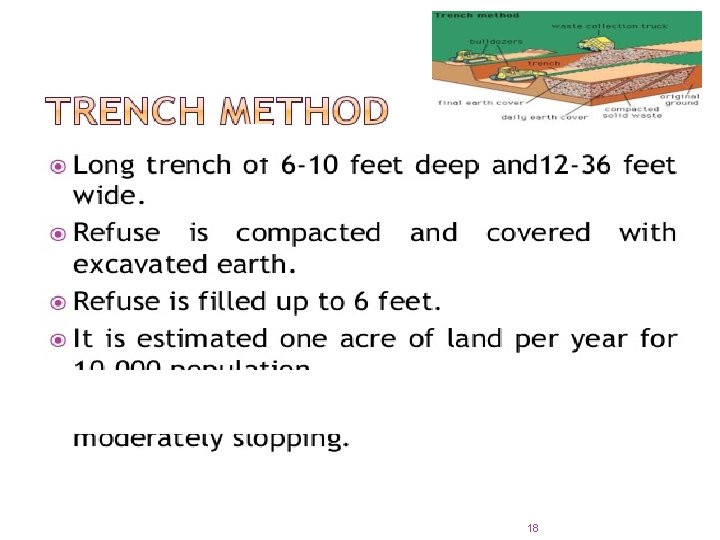
18
� Situated where the terrain is moderately sloping. 19
20
21
22
23
24

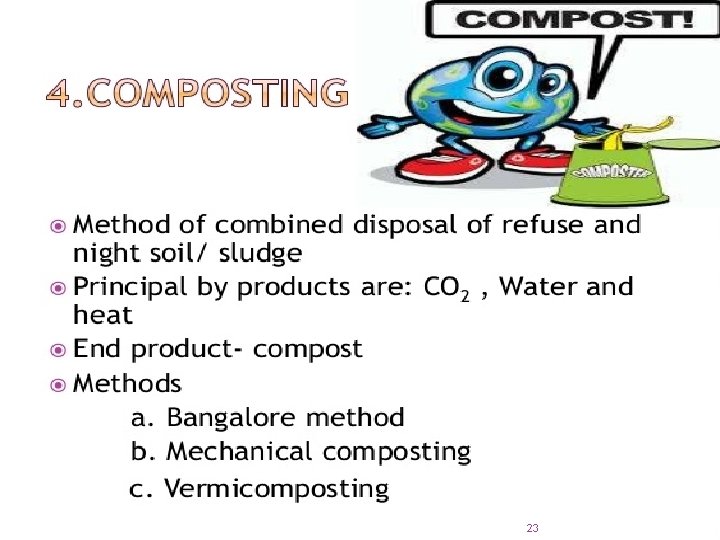
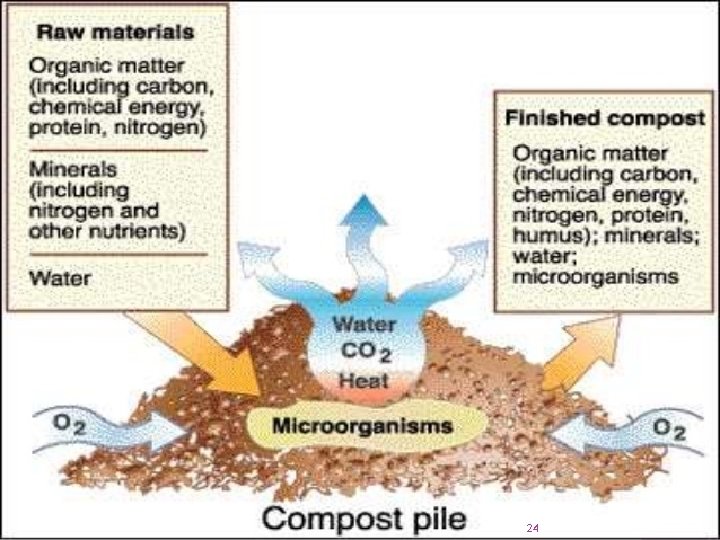
� Bangalore Method (Anaerobic Method) � Hot fermentation process � Trenches are dug 3 ft deep 5 -8 ft broad 15 -30 ftlong � First layer of refuse 6 in then night soil 2 in then alternate layers are added, heap rises 1 ft above ground level. The top layer of refuse 9 in thick atleast, then covered with excavated earth � Within 7 days 60 deg C heat is generated in the compost mass, heat persists 2 -3 wks, decomposition occurs and all pathogens killed 25
� Mechanical composting � Compost is manufactured on a large scale by processing raw materials � The refuse is cleaned of non grindable materials like rags, bones metal glass— pulverised in a pulverising equipment--- size of articles is reduced to <2 in--- then mixed with sewage sludge or nightsoil in a rotating machine and incubated � Completes in 4 -6 wks 26
27
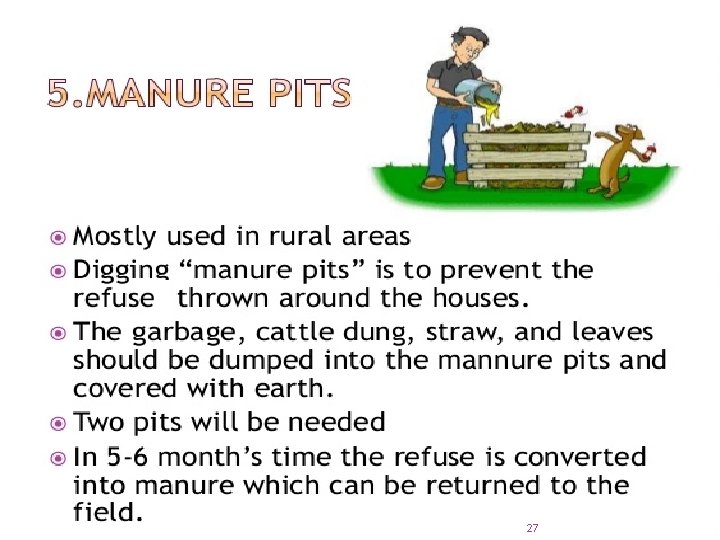
� It is suitable for small camps � A trench is excavated (1. 5 m wide and 2 m deep) � The refuse is covered with 20 -30 cm of earth � When the level in the trench is 40 cm from the ground level, it is filled with earth and compacted, and left for 4— 6 months 28
- Slides: 28