
Solid State Lattices 1 Na Cl Lattice Face


- Slides: 18
Solid State Lattices 1
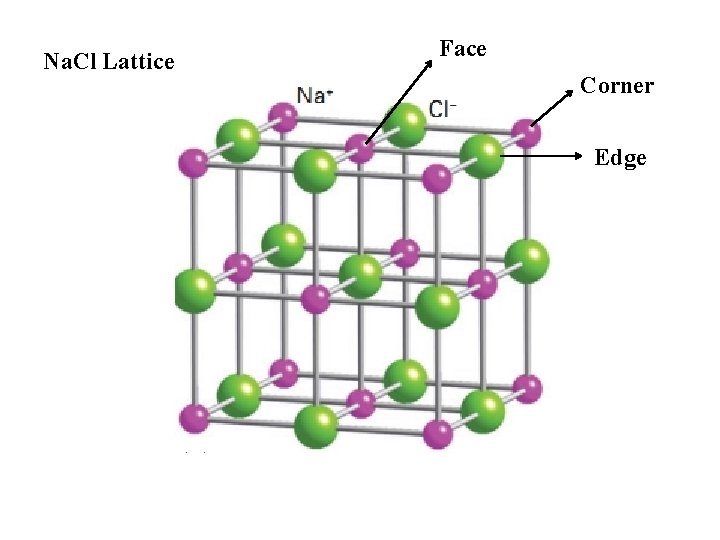
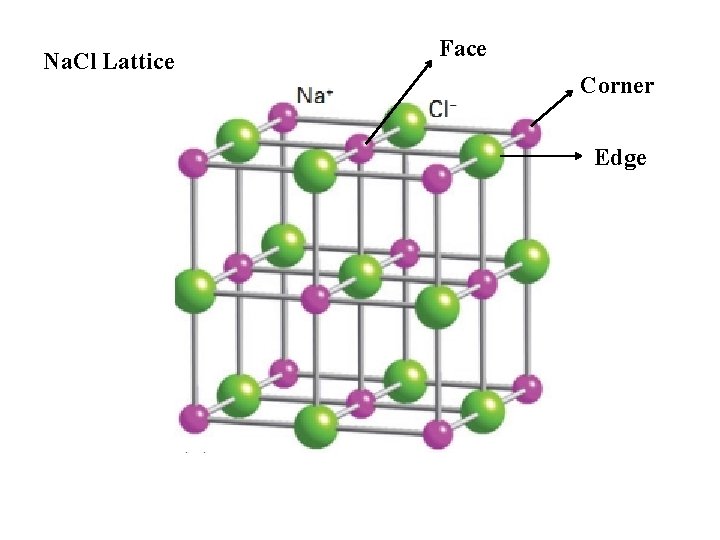
Na. Cl Lattice Face Corner Edge
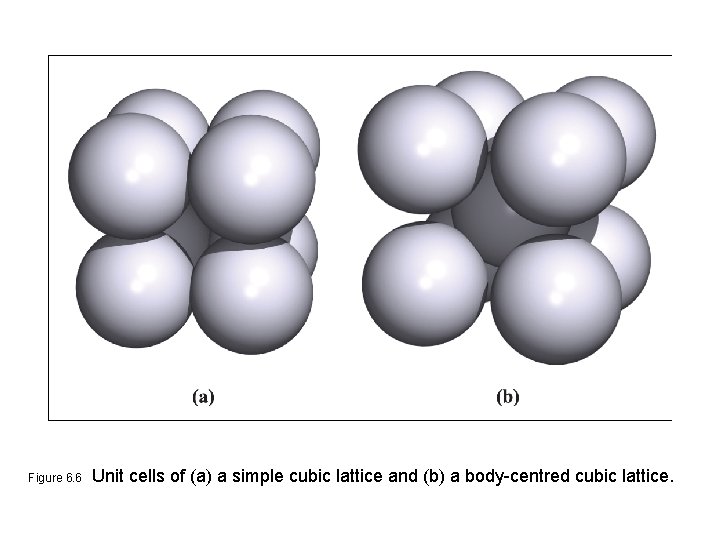
Figure 6. 6 Unit cells of (a) a simple cubic lattice and (b) a body-centred cubic lattice.
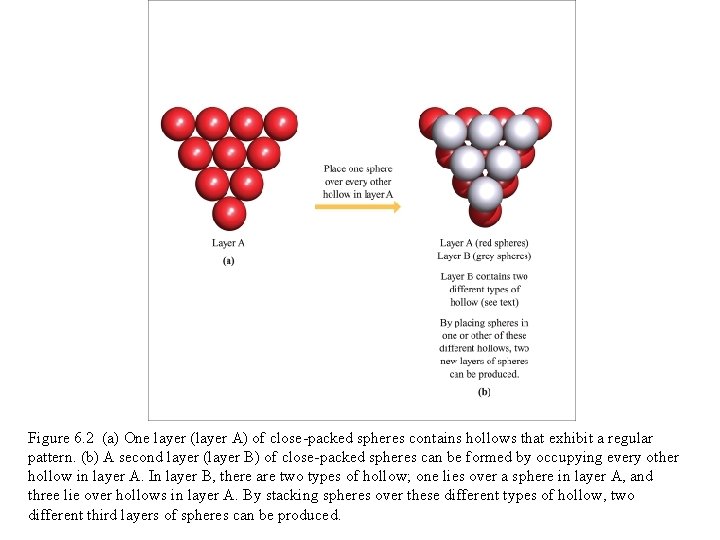
Figure 6. 2 (a) One layer (layer A) of close-packed spheres contains hollows that exhibit a regular pattern. (b) A second layer (layer B) of close-packed spheres can be formed by occupying every other hollow in layer A. In layer B, there are two types of hollow; one lies over a sphere in layer A, and three lie over hollows in layer A. By stacking spheres over these different types of hollow, two different third layers of spheres can be produced.
The blue spheres in diagram (c) form a new layer C; this gives an ABC sequence of layers. Diagram (d) shows that the second possible third layer replicates layer A; this gives an ABA sequence. (Continued) Figure 6. 2
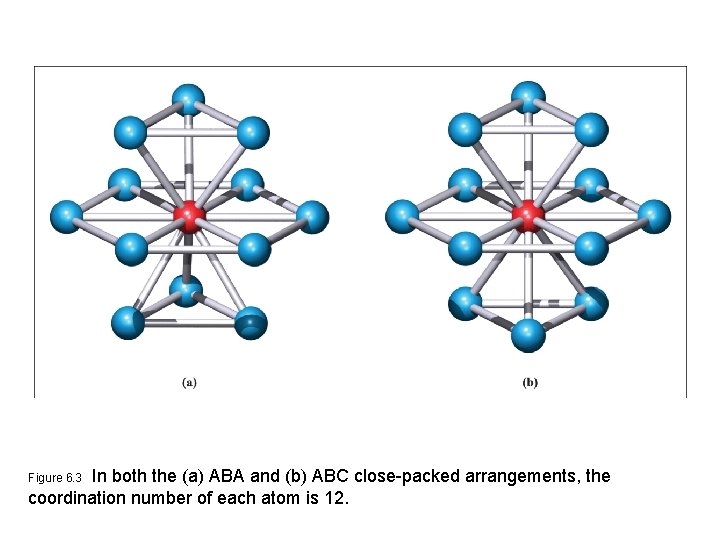
In both the (a) ABA and (b) ABC close-packed arrangements, the coordination number of each atom is 12. Figure 6. 3
Unit cells of (a) a cubic close-packed (face-centred cubic) lattice and (b) a hexagonal close-packed lattice. Figure 6. 4
Na. Cl Lattice Face Corner Edge
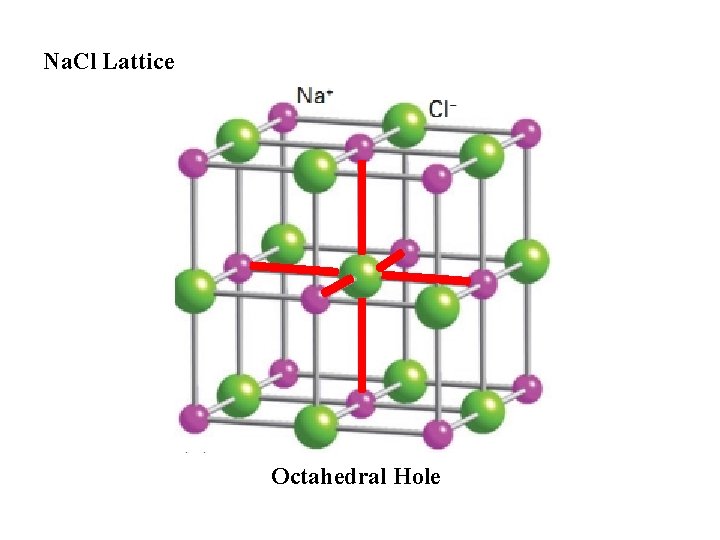
Na. Cl Lattice Octahedral Hole
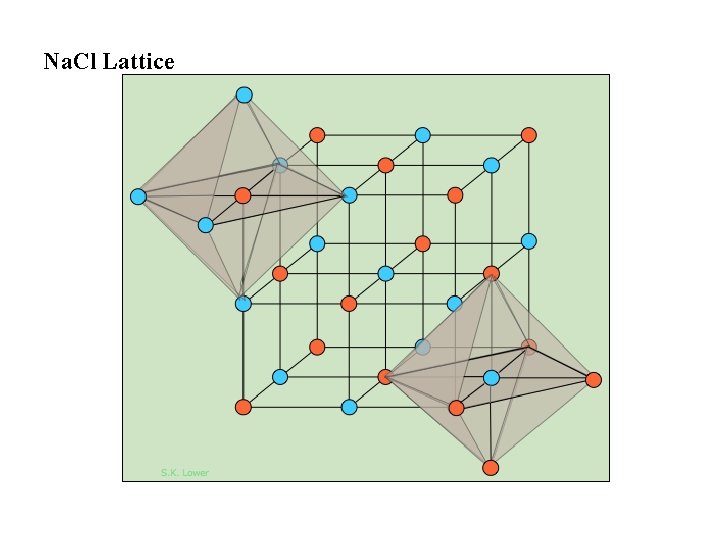
Na. Cl Lattice
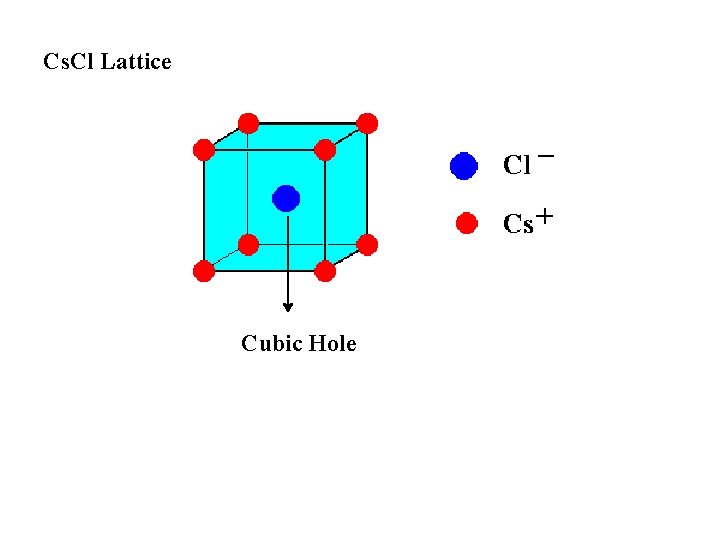
Cs. Cl Lattice Cubic Hole
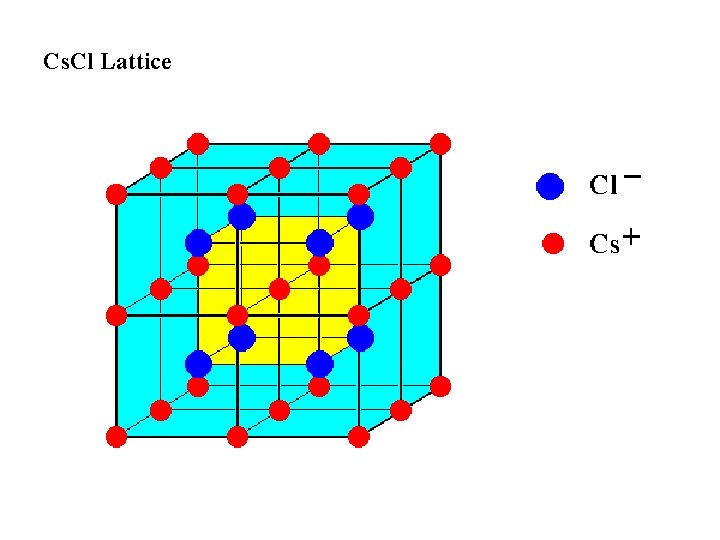
Cs. Cl Lattice
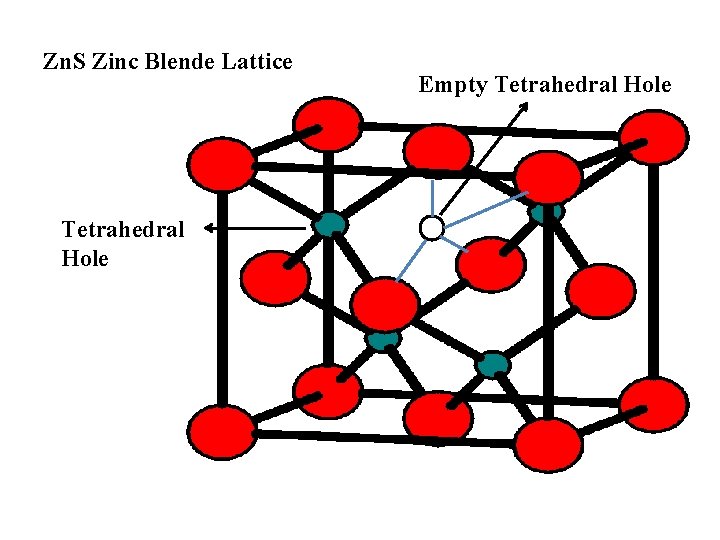
Zn. S Zinc Blende Lattice Tetrahedral Hole Empty Tetrahedral Hole
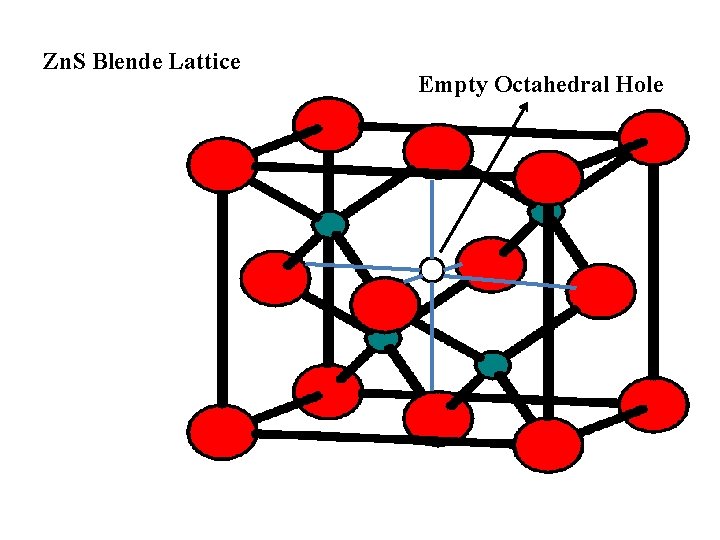
Zn. S Blende Lattice Empty Octahedral Hole
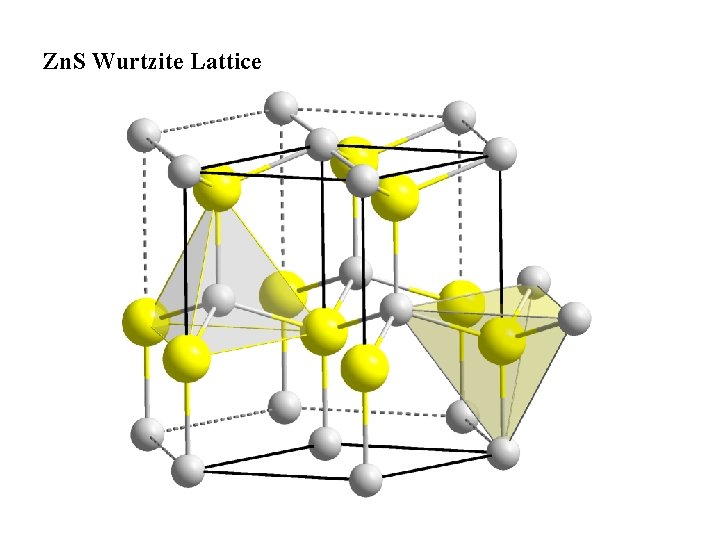
Zn. S Wurtzite Lattice
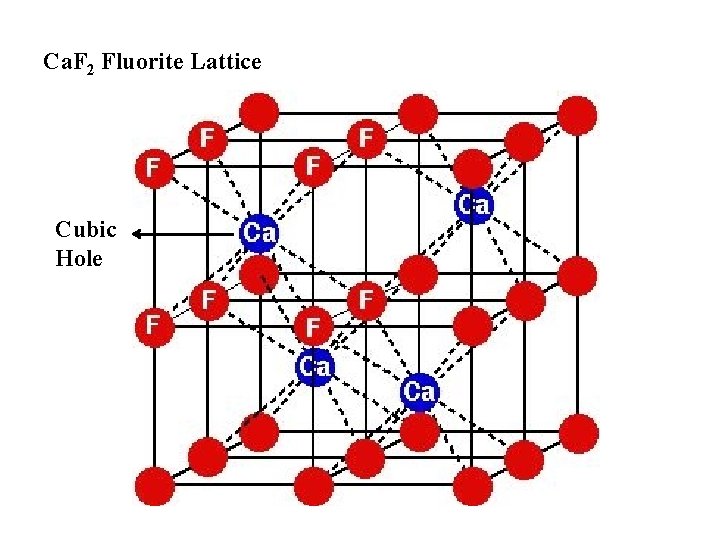
Ca. F 2 Fluorite Lattice Cubic Hole
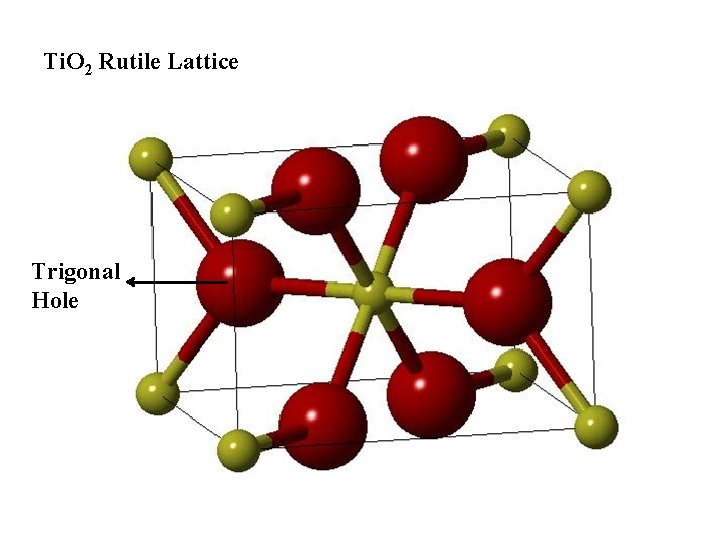
Ti. O 2 Rutile Lattice Trigonal Hole
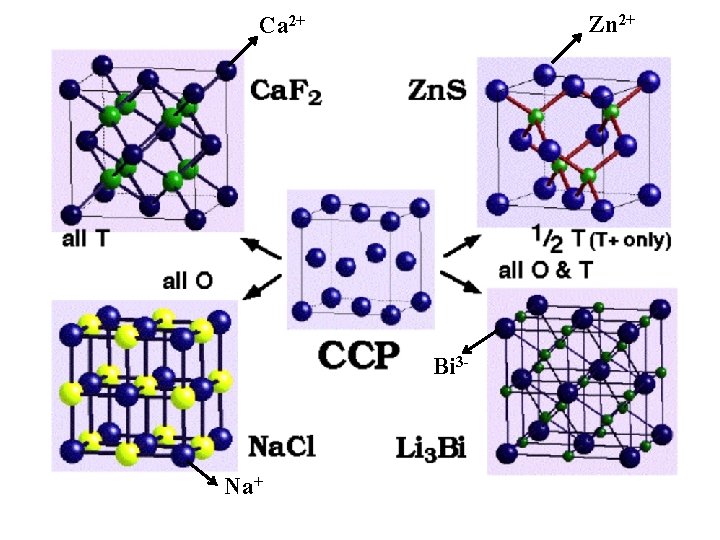
Zn 2+ Ca 2+ Bi 3 - Na+